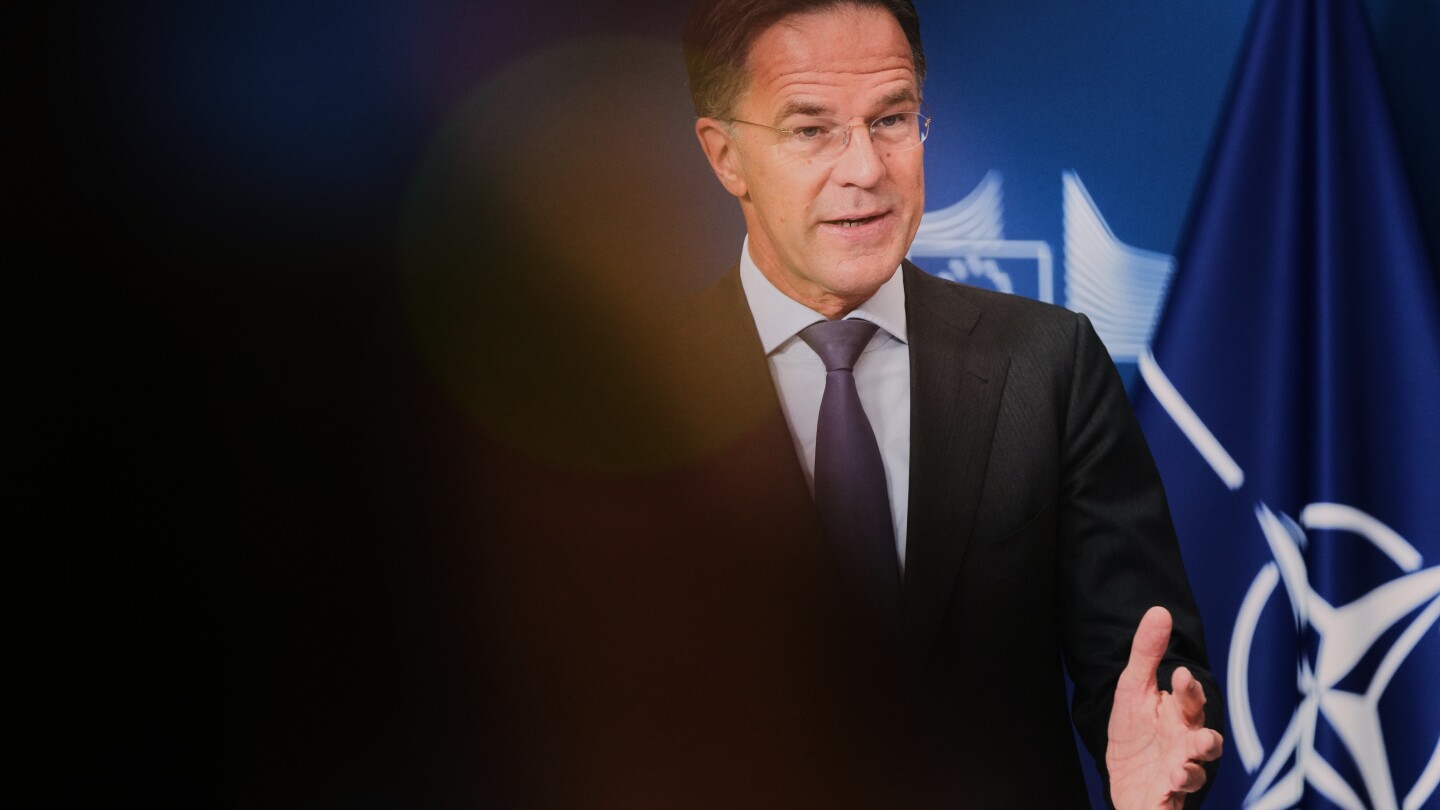
BRUSSELS (AP) — NATO defense ministers are set to gather on Wednesday to address the urgent need for increased military support for Ukraine, as weapon and ammunition deliveries to the war-torn nation have significantly declined in recent months. The meeting will also focus on a proposal from NATO’s commander to remove restrictions on the use of alliance aircraft and equipment, aiming to enhance the defense of NATO’s eastern border with Russia, Belarus, and Ukraine. This comes amid escalating concerns over a series of mysterious drone incidents and airspace violations by Russian warplanes, which some leaders interpret as President Vladimir Putin testing NATO’s defensive capabilities. Moscow has denied these allegations, dismissing claims of probing NATO’s defenses. Meanwhile, Russia’s ongoing conventional war against Ukraine has shifted focus to targeting the country’s power grid, leaving civilians vulnerable to harsh winter conditions. According to the Kiel Institute, Western military aid to Ukraine plummeted by 43% in July and August compared to the first half of the year, despite European allies purchasing American weapons under the Prioritized Ukraine Requirements List (PURL). Notably, countries like Denmark, the Netherlands, Norway, and Sweden have been actively contributing, while others, including Italy and Spain, have lagged behind. A senior NATO diplomat warned that if Ukraine falls, defense expenditures could far exceed NATO’s current target of 5% of GDP. The diplomat, speaking anonymously, highlighted economic challenges faced by some member states, with France opting to invest in Europe’s defense industry rather than participating in PURL. NATO’s efforts to bolster its eastern flank include the establishment of air defense operations like Eastern Sentry, following Russian drone incursions into Polish airspace. However, restrictions on the use of fighter jets and other equipment continue to hinder NATO’s effectiveness. U.S. Lt. Gen. Alex Grynkewich, NATO’s Supreme Allied Commander, is conducting a review of the alliance’s needs to address these challenges, with plans to present his findings to member countries early next year.
分类: politics
-
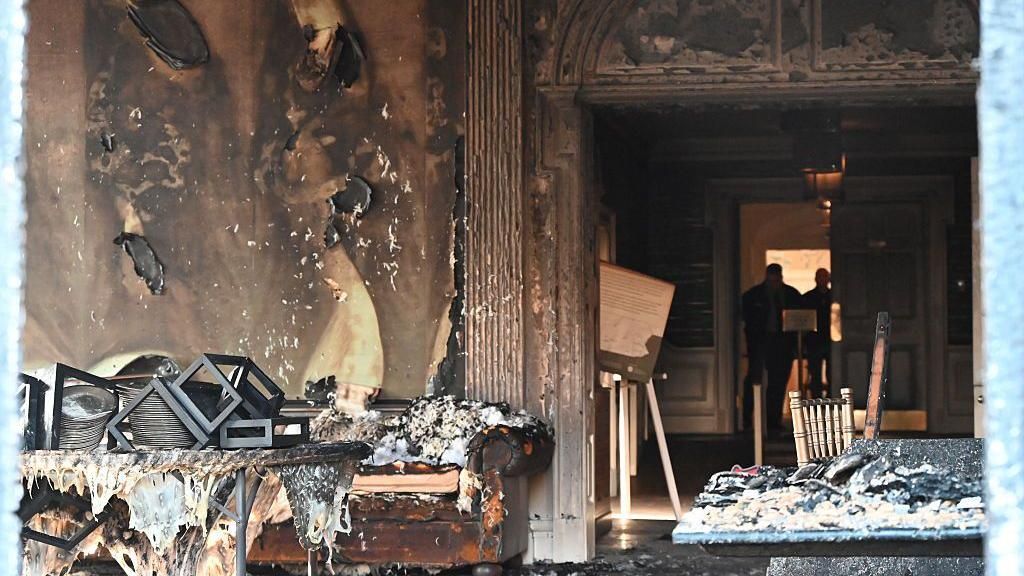
Man who set fire to Pennsylvania governor’s mansion sentenced to 25 to 50 years in prison
In a significant legal development, Cody Balmer, a 38-year-old arsonist, has been sentenced to 25 to 50 years in state prison for setting fire to Pennsylvania Governor Josh Shapiro’s residence in April. The sentencing was part of a plea deal, with Balmer pleading guilty to charges including attempted murder, aggravated arson, 22 counts of arson, burglary, and other offenses during a court hearing on Tuesday. The incident, which occurred during Passover, severely damaged the official residence in Harrisburg, though all occupants, including Governor Shapiro, his family, and staff, escaped unharmed. Governor Shapiro expressed his family’s support for the plea agreement, emphasizing their reliance on faith during the recovery process. The attack is part of a broader trend of political violence in the U.S., including high-profile cases involving Michigan Governor Gretchen Whitmer, former President Donald Trump, and others. Balmer admitted to using Molotov cocktails in the attack and harboring intense animosity toward Shapiro, even stating he would have assaulted the governor with a hammer if given the chance. Shapiro, a Democrat and former state attorney general, has been a prominent political figure, often mentioned as a potential future presidential candidate.
-
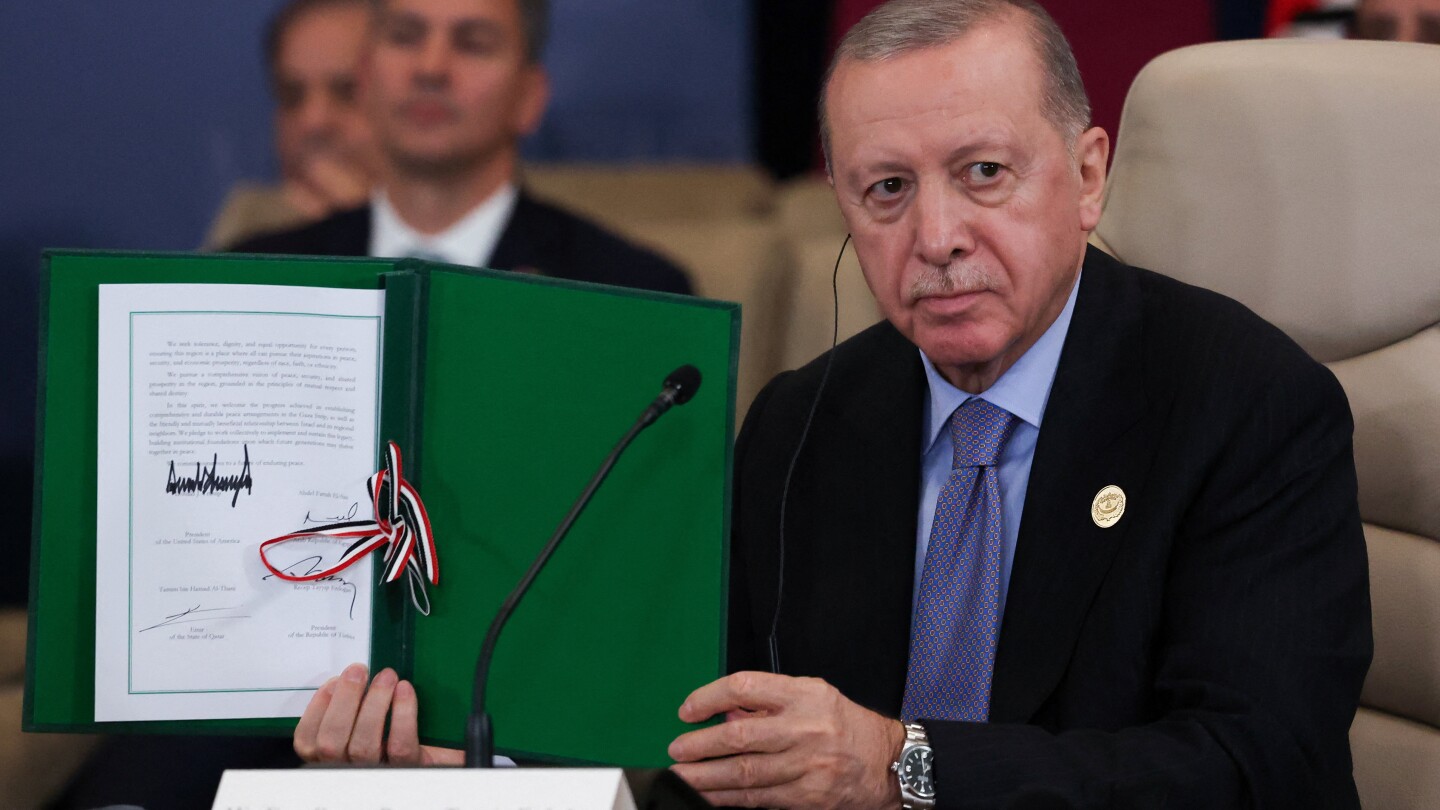
Erdogan opposed Netanyahu’s attendance at summit, Turkish official confirms
Turkish President Recep Tayyip Erdogan orchestrated a diplomatic effort to prevent Israeli Prime Minister Benjamin Netanyahu from attending a high-level summit in Egypt, according to a senior official. The summit, held at the Red Sea resort of Sharm el-Sheikh, aimed to support the ceasefire in Gaza. Omer Celik, spokesman for Erdogan’s ruling party, confirmed that Turkey had actively worked to block Netanyahu’s participation, marking the first public acknowledgment of Ankara’s role in the matter. Erdogan, a vocal critic of Netanyahu’s military actions in Gaza, reportedly gained support from several nations to ensure the Israeli leader’s absence. Netanyahu’s office initially accepted a last-minute invitation but later cited a Jewish holiday as the reason for his withdrawal. Erdogan, who maintains ties with Hamas, signed a four-party declaration alongside U.S. President Donald Trump and the leaders of Egypt and Qatar. In a speech, Erdogan hailed the declaration as a significant step toward halting what he described as ‘genocide’ in Gaza, a claim Israel strongly denies. The Turkish president also emphasized the long-term challenges of rebuilding Gaza, stating that the devastation may never be fully repaired. Meanwhile, Erdogan’s plane aborted its landing at Sharm el-Sheikh due to a runway issue, dismissing rumors of a boycott threat.
-
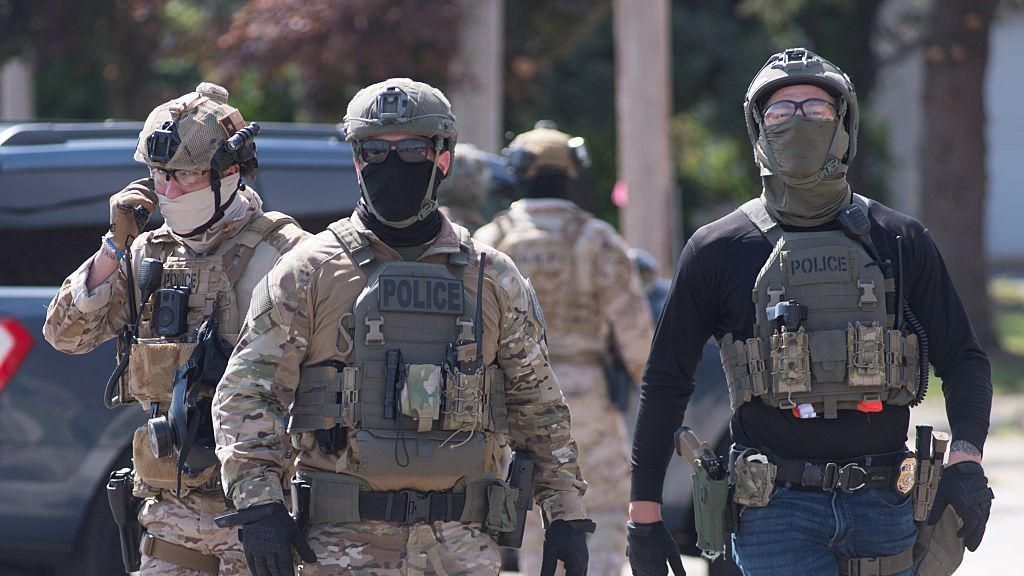
Trump administration looks for ways to pay federal officers during shutdown
As the US government shutdown enters its third week, federal law enforcement officers, deemed ‘essential,’ are required to continue working despite not receiving their salaries. The Trump administration is actively seeking alternative funding mechanisms to ensure these officers are compensated, even as Democrats and Republicans remain deadlocked over the budget impasse. President Donald Trump has already authorized the use of previously allocated Pentagon funds to pay military personnel, but the financial resources needed to cover law enforcement officers remain unclear. A spokesperson for the Office of Management and Budget (OMB) confirmed that alternative payment solutions are being explored. Affected agencies include the FBI, Drug Enforcement Agency (DEA), US Border Patrol, and Immigration and Customs Enforcement (ICE). Meanwhile, Vice-President JD Vance has warned of further ‘painful’ cuts if the shutdown persists. Approximately 750,000 federal employees, or 40% of the workforce, have been furloughed or sent home without pay, with layoffs already affecting at least seven agencies. In a separate development, Homeland Security Secretary Kristi Noem announced an ‘innovative’ method to ensure Coast Guard members are paid, though details were not disclosed. Additionally, tariff revenue is being redirected to fund the Special Supplementation Nutrition Program for Women, Infants, and Children (WIC), which supports over 6.5 million beneficiaries. However, the National WIC Association cautioned that this is not a permanent solution, and prolonged shutdown could jeopardize millions of recipients. Congressional Democrats are reportedly drafting legislation to safeguard WIC funding, emphasizing its importance beyond the annual budget process. The Senate is set to vote again on government funding, though passage remains unlikely.
-
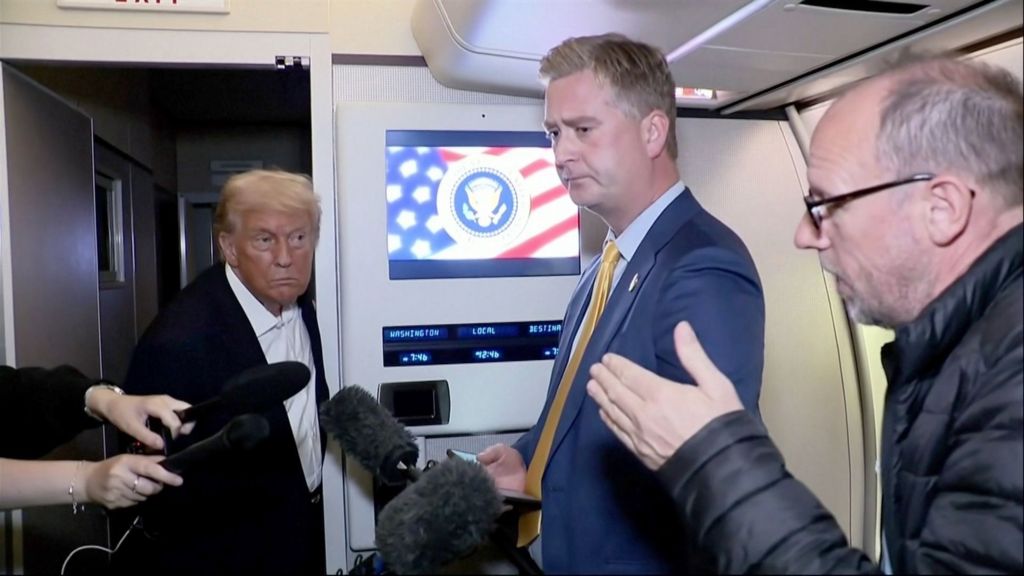
Trump: ‘I’m talking about rebuilding Gaza’
During a press briefing aboard Air Force One, President Donald Trump addressed questions regarding the stability of the recently negotiated ceasefire in Gaza. The BBC’s Tom Bateman pressed the President on whether the fragile truce would hold. Trump responded by emphasizing his focus on the broader vision of rebuilding Gaza, stating, ‘I’m talking about rebuilding Gaza.’ This statement underscores the administration’s commitment to not only maintaining peace but also fostering long-term development in the region. The ceasefire, brokered amidst escalating tensions, has been a critical point of discussion in international diplomacy. Trump’s remarks suggest a shift from immediate conflict resolution to sustainable reconstruction efforts, potentially signaling a new phase in U.S. foreign policy in the Middle East.
-
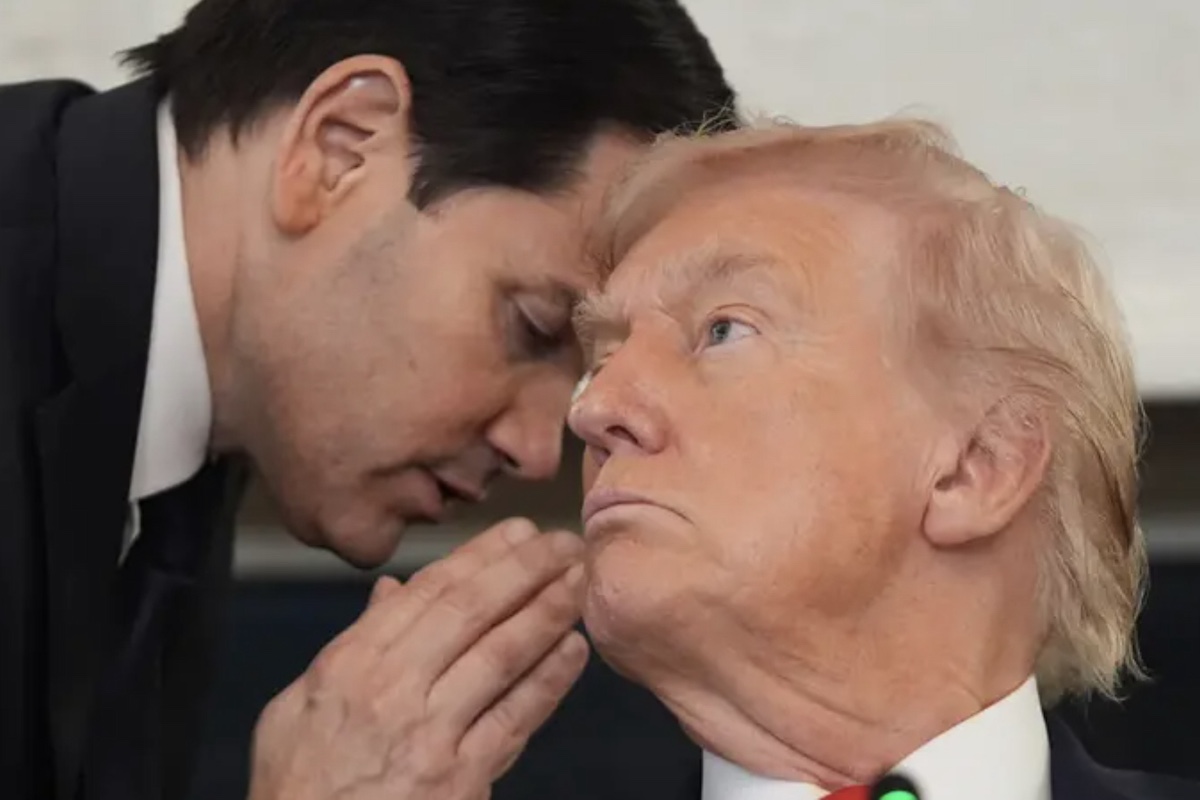
Can Trump’s ‘shock and awe’ doctrine extend beyond Gaza?
U.S. President Donald Trump’s recent visit to Israel and Egypt marked a pivotal moment in his second term, as he oversaw the initial implementation of the Gaza peace agreement. This accord, aimed at ending the two-year conflict in the region, is being hailed as a potential cornerstone of Trump’s foreign policy legacy, potentially surpassing the Abraham Accords of his first term, which normalized relations between Israel and several Arab nations. The swift negotiation of this ceasefire has brought renewed attention to the so-called ‘Trump Doctrine’—a high-energy, unconventional approach to global diplomacy. Central to this doctrine is a leaner, more agile decision-making structure within the administration. Secretary of State Marco Rubio, who also serves as National Security Adviser, has streamlined the National Security Council, reducing staff from 350 to 150. This restructuring has enabled faster, more decisive action, though it has not been without controversy. For instance, the use of Signal app group chats for classified discussions led to security concerns and the ousting of Trump’s first national security adviser, Michael Waltz. Rubio has since implemented a more sustainable communication method, relying on direct channels with key advisers like Chief of Staff Susie Wiles. The administration’s reliance on special envoys, such as Steve Witkoff and Jared Kushner, has also drawn both praise and criticism. While their unorthodox roles have facilitated high-level negotiations, questions about conflicts of interest persist. Trump’s personal diplomacy, characterized by a ‘shock and awe’ approach, has been instrumental in securing the Gaza deal. His ability to balance public support for Israeli Prime Minister Benjamin Netanyahu with private interventions, such as preventing the annexation of the West Bank, underscores his unique style. However, the sustainability of these breakthroughs remains uncertain. Critics point to the vagueness of Trump’s 20-point peace plan and the potential for it to unravel. As Trump pursues separate diplomatic deals with China, Russia, Iran, and North Korea, the true test of his doctrine will be whether he can drive a wedge between these adversaries and weaken their strategic alliances. The Gaza accord may be a significant achievement, but its long-term impact on global geopolitics is yet to be seen.
-
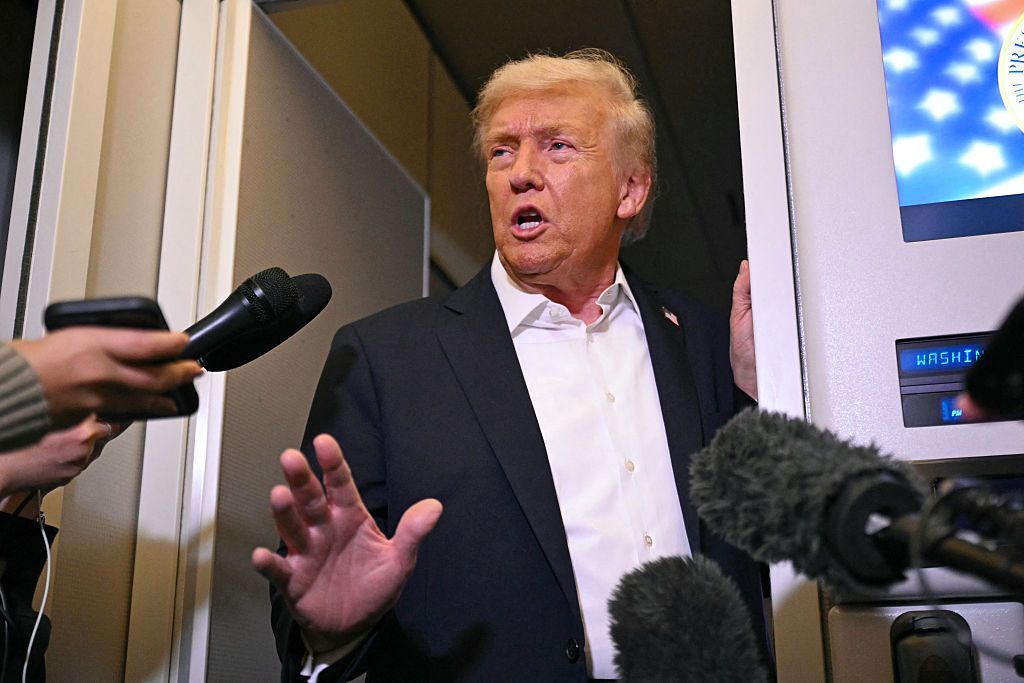
24 hours with Trump on diplomatic tornado through Middle East
In a whirlwind diplomatic tour, former U.S. President Donald Trump heralded a ‘historic day’ as a ceasefire agreement in Gaza came into effect, marking a pivotal moment after two years of devastating conflict. Trump, speaking to the BBC’s Tom Bateman aboard Air Force One, described the deal as a turning point in the millennia-long strife of the region, asserting that ‘everlasting peace’ had been achieved under his leadership. The agreement, brokered in Doha, saw the cessation of major combat operations, the release of hostages held by Hamas in exchange for Palestinian prisoners, and the partial withdrawal of Israeli troops from Gaza. Trump’s visit to Israel was marked by grand gestures, including a fly-by of a beach displaying a giant ‘thank you’ sign and a red-carpet welcome from Israeli Prime Minister Benjamin Netanyahu. However, the fragility of the truce and the challenges of rebuilding Gaza loom large, with Trump’s optimism met by skepticism about the sustainability of the peace. The U.S. president’s speech in the Knesset, where he was hailed as the ‘president of peace,’ was a mix of celebration and political rhetoric, as he attacked his domestic opponents and appealed for Netanyahu’s pardon. The day concluded in Sharm el-Sheikh, Egypt, where Trump presided over a signing ceremony, declaring it had taken ‘3,000 years’ to reach this point, yet acknowledging the long road ahead for lasting peace in the Middle East.
-
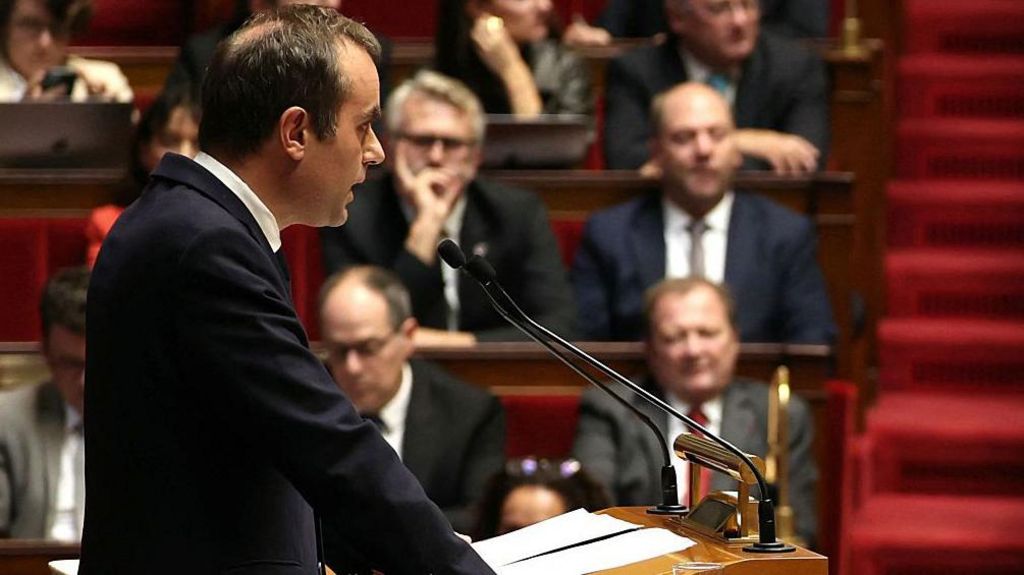
French PM backs suspending Macron’s pension reform in bid to save government
In a dramatic move ahead of crucial confidence votes, French Prime Minister Sébastien Lecornu announced his support for suspending the contentious 2023 pension reforms. The reforms, which raised the retirement age from 62 to 64, were a cornerstone of President Emmanuel Macron’s second term but sparked widespread protests and political unrest. Lecornu, who was reappointed prime minister just days after resigning, faces a precarious political landscape and relies on the support of Socialist MPs to maintain his government’s stability. Addressing parliament, he proposed suspending the reforms until the 2027 presidential election, a statement met with applause from left-wing parties. Opposition factions, including far-right and far-left groups, have called for confidence votes, known as ‘censure’ motions, scheduled for Thursday. They are demanding early parliamentary elections. The Socialists have conditioned their support on an explicit commitment to suspend Macron’s pension reforms entirely. Laurent Baumel, a Socialist MP, emphasized that Lecornu’s political survival hinges on this promise. The reforms, enacted in March 2023 using a constitutional mechanism to bypass a parliamentary vote, remain a divisive issue, with Lecornu acknowledging their legacy as a ‘wound on democracy.’ He also highlighted the financial implications of suspending the reforms, estimating costs of €400 million in 2026 and €1.8 billion in 2027, which would require compensatory savings. Amid France’s economic challenges, including a budget deficit projected at 5.4% of GDP and public debt nearing 114% of GDP, Lecornu’s ability to navigate these crises will determine his tenure.
-
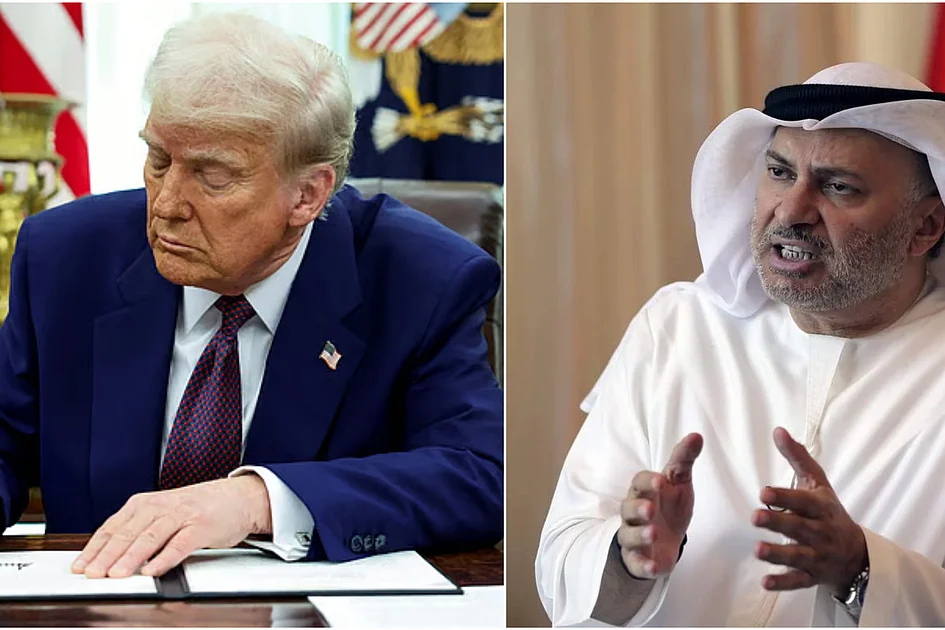
UAE President’s adviser says Trump deserves recognition for halting Gaza war
Dr. Anwar Gargash, a prominent Emirati politician and adviser to the UAE President, has publicly acknowledged US President Donald Trump for his pivotal role in bringing an end to the Gaza war. Speaking at a recent event, Dr. Gargash emphasized that Trump’s unwavering support for the peace plan, which was formalized as the official American initiative, played a crucial role in rallying international consensus during the Sharm El-Sheikh summit in Egypt. ‘From this point, a new phase of discussions and details begins, after the war of extermination has ended and the region has been saved from the repercussions of endless escalation,’ he stated. Earlier, Trump had commended the UAE for its significant contributions to advancing the peace plan. During a high-profile summit in Sharm El-Sheikh, Trump, alongside leaders from Egypt, Qatar, and Turkey, signed a comprehensive ceasefire agreement, marking a historic step toward regional stability. In his address, Trump hailed the agreement as a ‘triumph,’ expressing gratitude to the Arab and Islamic nations, particularly the UAE, Egypt, Türkiye, and Qatar, for their mediation efforts. ‘The momentous breakthrough that we’re here to celebrate tonight is more than the end of the war in Gaza. It’s, with God’s help, it will be the new beginning for an entire beautiful Middle East,’ Trump declared. He further emphasized the potential for a prosperous and united region, free from the scourge of terrorism. This development underscores the UAE’s growing influence in international diplomacy and its commitment to fostering peace in the Middle East.
-

China announces countermeasures against five US-linked subsidiaries of Hanwha Ocean
In a significant diplomatic move, China has announced countermeasures targeting five US-linked subsidiaries of Hanwha Ocean, a major South Korean shipbuilding company. The decision, revealed on October 14, 2025, underscores escalating tensions between Beijing and Washington amid ongoing geopolitical disputes. The Chinese government cited national security concerns and the need to protect its economic interests as the primary reasons for the sanctions. These measures are expected to impact trade relations and business operations between the involved parties. The announcement follows a series of recent diplomatic maneuvers by China in response to perceived threats from foreign entities. Analysts suggest that this action could further strain US-China relations, potentially influencing global trade dynamics and regional stability.