分类: politics

  • Does the US have the right to take over Greenland?

    Does the US have the right to take over Greenland?

    The geopolitical landscape witnessed a remarkable development when former President Donald Trump publicly expressed interest in acquiring Greenland, sparking intense debate about territorial sovereignty and international law. This proposition, while unprecedented in modern diplomacy, raises fundamental questions about the legal frameworks governing territorial transfers between nations.

    Greenland, while geographically massive, operates under a unique political arrangement as an autonomous territory within the Kingdom of Denmark. The island gained self-governing status in 2009, controlling most domestic affairs, while Denmark retains responsibility for foreign policy, security, and financial matters. This complex relationship creates a multifaceted decision-making process that would require involvement from both Greenland’s Parliament (Inatsisartut) and the Danish government for any territorial transfer to occur.

    From an international law perspective, the concept of acquiring territory through purchase or annexation without consent violates fundamental principles of sovereignty established by the United Nations Charter. The 1933 Montevideo Convention on the Rights and Duties of States further reinforces that territorial integrity cannot be compromised through coercion or non-consensual arrangements. Historical precedents like the 1867 Alaska Purchase and the 1917 acquisition of the Danish West Indies (now U.S. Virgin Islands) involved mutually agreed-upon treaties between sovereign nations, establishing a legal framework that would be necessary for any potential transfer of Greenland.

    The strategic significance of Greenland cannot be overstated, with its geographic position offering substantial advantages for Arctic military presence and climate research capabilities. However, any discussion of acquisition faces formidable practical obstacles, including the political will of Greenland’s population, which has demonstrated strong resistance to such proposals. The economic considerations alone—including the territory’s extensive mineral resources and fishing rights—would necessitate complex negotiations that extend far beyond simple financial valuation.

    This proposition ultimately serves as a case study in the limitations of power within the contemporary international system, demonstrating that even global superpowers must operate within established legal and diplomatic frameworks when considering territorial changes.

  • US forces killed 55 Venezuelan, Cuban military personnel in Maduro raid: tolls

    US forces killed 55 Venezuelan, Cuban military personnel in Maduro raid: tolls

    Newly released casualty figures reveal that 55 Venezuelan and Cuban military personnel lost their lives during a decisive US military operation that resulted in the capture of former Venezuelan leader Nicolas Maduro. Venezuelan authorities confirmed 23 service member fatalities, while Cuba reported 32 deaths among its armed forces and security personnel stationed in Caracas, marking the first official acknowledgment of losses from Saturday’s operation.

    The multi-phase assault commenced with precision airstrikes targeting military installations, culminating in a helicopter-borne special forces raid that extracted Maduro and his wife, Cilia Flores, from a secure compound. The captured leader subsequently appeared in a New York courtroom, pleading not guilty to comprehensive drug trafficking charges. Mexican President Claudia Sheinbaum has since called for assurances of a fair judicial process for the deposed leader.

    In the aftermath, Delcy Rodriguez, Maduro’s former deputy, assumed the role of interim president amid complex geopolitical pressures. US President Donald Trump expressed conditional willingness to collaborate, contingent upon Rodriguez granting American corporations access to Venezuela’s substantial oil reserves. This demand places the new leadership in a precarious position, requiring careful navigation between Washington’s expectations and maintaining support from Maduro’s influential political base.

    The transitional government faces immediate challenges, evidenced by the brief detention of 16 journalists covering Rodriguez’s parliamentary inauguration—a move signaling the persistent influence of hardline elements within the security apparatus. Opposition leader Maria Corina Machado launched scathing criticism against the interim administration, labeling Rodriguez as fundamentally untrustworthy and highlighting her historical ties to nations including Russia and China.

    Trump maintained strategic ambiguity, simultaneously endorsing Rodriguez while issuing stark warnings should she deviate from US objectives. Meanwhile, political analysts suggest the interim administration may pursue confidence-building measures, including potential releases of political prisoners and diplomatic re-engagement, as Venezuela prepares for constitutionally mandated elections within the coming month.

  • China’s top legislator meets ROK president

    China’s top legislator meets ROK president

    In a significant diplomatic engagement, Zhao Leji, Chairman of China’s National People’s Congress Standing Committee, held substantive talks with South Korean President Lee Jae-myung in Beijing on Tuesday. The high-level meeting built upon Monday’s presidential discussions, marking a concerted effort to advance Sino-ROK relations through legislative channels.

    Zhao emphasized the distinctive cooperative nature that has characterized bilateral ties throughout the three decades since diplomatic normalization. He articulated China’s commitment to implementing the strategic consensus reached by both nations’ leaders, particularly focusing on reinforcing neighborly friendship, expanding mutually beneficial cooperation, and strengthening public support foundations for long-term partnership stability.

    The Chinese legislative leader specifically highlighted the NPC’s willingness to sustain high-level exchange momentum with South Korea’s National Assembly. This parliamentary cooperation aims to enhance communication across multiple tiers and diverse fields while establishing legal safeguards for bilateral collaborative initiatives.

    President Lee reciprocated these sentiments, expressing South Korea’s readiness to deepen economic and cultural cooperation with China. He advocated for intensified exchanges between legislative bodies and political parties, coupled with enhanced people-to-people interactions to further bolster bilateral relationship development.

    The meeting represents a strategic parliamentary complement to executive-level diplomacy, demonstrating both nations’ multi-branch governmental approach to fostering stable, long-term strategic cooperation amid evolving regional dynamics.

  • US Congressman Doug LaMalfa dies unexpectedly at 65

    US Congressman Doug LaMalfa dies unexpectedly at 65

    The sudden passing of California Republican Congressman Doug LaMalfa at age 65 has triggered both political repercussions and heartfelt tributes from colleagues, including former President Donald Trump. LaMalfa’s unexpected death was announced Tuesday, though the specific cause remains undisclosed at this time.

    Former President Trump delivered an emotional tribute, characterizing LaMalfa as “a defender of everybody” and “a fantastic person” who maintained perfect voting alignment with his administration. “We express our tremendous sorrow at the loss of a great member – a great, great, great member,” Trump stated in his commemorative remarks.

    Representing California’s 1st Congressional District since 2013, LaMalfa brought unique agricultural expertise to Capitol Hill. The former rice farmer held a degree in agricultural business from California Polytechnic State University and dedicated his legislative career to water policy, agricultural interests, and advocating for rural communities. His congressional website highlighted his efforts to secure assistance for wildfire victims in his northern California district and his work to protect families from excessive regulation.

    Minnesota Congressman Tom Emmer remembered his colleague as “a staunch advocate for his constituents and rural America,” reflecting the bipartisan respect LaMalfa commanded during his tenure.

    The political implications of LaMalfa’s death are immediately significant. Combined with the recent resignation of Georgia Representative Marjorie Taylor Greene, another Trump ally, the Republican majority in the House of Representatives has shrunk to a razor-thin 218-213 margin. This leaves the GOP with merely a two-vote cushion, meaning the absence or defection of just three members could result in legislative defeats.

    Further compounding Republican concerns, news emerged Tuesday that Indiana Congressman Jim Baird had been hospitalized following a car accident. While statements indicated Baird is “expected to make a full recovery,” the incident underscores the fragility of the Republican majority.

    Currently, four House seats remain vacant, with Democrats favored to secure two of them in upcoming special elections in Texas and New Jersey. Under California law, Governor Gavin Newsom must call a special election within 14 days to fill LaMalfa’s vacant seat, setting the stage for another critical electoral contest.

  • AU applauds Guinea’s peaceful electoral triumph

    AU applauds Guinea’s peaceful electoral triumph

    The African Union has formally recognized Guinea’s recent presidential election as a landmark achievement in the nation’s journey toward reestablishing constitutional governance. In an official statement, AU Commission Chairperson Mahamoud Ali Youssouf commended the peaceful conduct of the December 28 vote, highlighting the demonstrated maturity of Guinean citizens throughout the electoral process.

    Youssouf extended congratulations to President-elect Mamady Doumbouya on his decisive victory, which was subsequently validated by Guinea’s Supreme Court following the release of provisional results by the General Directorate of Elections. The AU leadership specifically praised the collaborative efforts of national stakeholders—including election management bodies, political candidates, party coalitions, government institutions, and civil society organizations—for ensuring the electoral proceedings aligned with both international standards and Guinea’s domestic legal framework.

    Significantly, the AU chairperson called for a comprehensive reassessment of existing sanctions against Guinea, suggesting the peaceful transition warranted reconsideration of restrictive measures. The Union reaffirmed its commitment to providing ongoing support for Guinea’s democratic consolidation, rule of law enforcement, and national unity strengthening—elements deemed essential for sustainable development.

    The AU’s endorsement follows a period of political transition in Guinea and represents international recognition of the country’s progress toward institutional normalization through democratic mechanisms.

  • Canada’s Indigenous governor general to visit Greenland as Trump renews talk of annexing it

    Canada’s Indigenous governor general to visit Greenland as Trump renews talk of annexing it

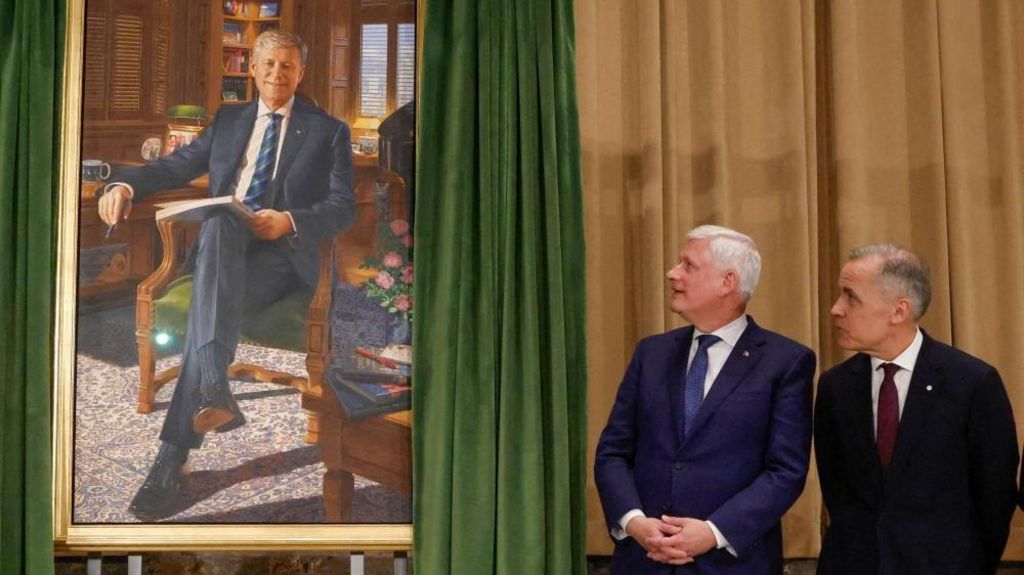
    In a strategic diplomatic move, Canada is deploying its highest-ranking Indigenous official and foreign minister to Greenland early next February. Prime Minister Mark Carney confirmed the visit would include Governor General Mary Simon, Canada’s first Indigenous governor general of Inuk descent, and Foreign Minister Anita Anand. The delegation plans to establish a Canadian consulate in Nuuk, Greenland’s capital.

    This development occurs against the backdrop of renewed territorial assertions from former U.S. President Donald Trump, who has repeatedly suggested American acquisition of Greenland and even referenced Canada becoming ‘the 51st state.’ Greenland, with its predominantly Inuit population of approximately 56,000, operates as a self-governing territory within the Kingdom of Denmark.

    Prime Minister Carney, during meetings with Danish Prime Minister Mette Frederiksen at Canada’s Paris embassy, emphatically stated that “the future of Greenland and Denmark are decided solely by the people of Denmark.” This position received robust international support as leaders from Canada, France, Germany, Italy, Poland, Spain, and the United Kingdom jointly affirmed Greenland’s sovereignty, recognizing the mineral-rich Arctic island “belongs to its people.”

    The diplomatic coordination took place alongside the Coalition of the Willing talks on Ukraine, with Carney specifically arranging meetings with Frederiksen and NATO’s secretary general. Both leaders emphasized their commitment to Arctic security cooperation within the NATO framework, with Frederiksen acknowledging Canada’s “respect for national sovereignty.”

    Professor Daniel Béland of McGill University highlighted the delicate balance Canada must maintain, noting that while demonstrating solidarity with Greenland is crucial for Arctic governance and international law principles, the Canadian government must simultaneously avoid jeopardizing ongoing trade negotiations with the United States.

  • The painful questions for Nato and the EU as Trump threatens Greenland

    The painful questions for Nato and the EU as Trump threatens Greenland

    PARIS – A high-stakes diplomatic gathering in Paris has revealed profound fractures in transatlantic relations as European leaders struggled to balance Ukraine peace negotiations with growing U.S. territorial ambitions toward Greenland. The meeting, attended by the U.S. delegation including Special Envoy Steve Witkoff and Senior Advisor Jared Kushner, occurred against a backdrop of escalating tension following recent U.S. military intervention in Venezuela and President Trump’s explicit interest in acquiring Greenland for national security purposes.

    Danish Prime Minister Mette Frederiksen faced immense pressure from European counterparts to avoid confrontation over Greenland, fearing potential repercussions for U.S. support in Ukraine. Despite efforts to separate the issues, leaders from major European nations issued a carefully worded statement acknowledging Greenland’s NATO status while asserting that “only Denmark and Greenland can decide matters concerning Denmark and Greenland.”

    The diplomatic communique, though welcomed by Greenland’s Premier Jens Frederik Nielsen, revealed Europe’s disunity as it lacked signatures from all EU members and NATO ally Britain. Camille Grande of the European Council on Foreign Relations noted that broader participation would have delivered a stronger message to Washington.

    This situation presents a stark geopolitical paradox: European leaders seek U.S. cooperation in protecting Ukrainian sovereignty from Russian aggression while responding to American threats against Danish territory. The irony intensifies considering both nations are NATO allies, with Denmark having recently pledged $4 billion toward Greenland’s defense infrastructure.

    President Trump has consistently expressed interest in Greenland, previously suggesting purchase and refusing to rule out military action. His Sunday remarks emphasized the island’s strategic importance, claiming Russian and Chinese naval presence justifies U.S. control—an assertion Denmark strongly contests.

    The U.S. maintains a military presence in Greenland through the Thule Air Base, established during the Cold War. While personnel has dwindled from 10,000 to approximately 200, recent developments suggest renewed American interest in Arctic security.

    European response has been notably cautious, with initial silence from major powers followed by tempered statements supporting Danish sovereignty. An anonymous EU official acknowledged the situation highlights “Europe’s fundamental weakness vis-à-vis Trump,” reflecting broader concerns about the bloc’s inability to present a unified front.

    Former U.S. Ambassador to NATO Juliane Smith warned this crisis “risks breaking the EU” and presents an existential dilemma for NATO. The alliance’s Article 5 collective defense clause doesn’t explicitly cover conflicts between member states, as demonstrated during the 1974 Cyprus conflict between Turkey and Greece.

    With Europe remaining heavily dependent on U.S. military capabilities despite increased defense spending commitments, the Greenland situation exposes fundamental power imbalances. As White House Deputy Chief of Staff bluntly stated, “Nobody’s going to fight the United States militarily over the future of Greenland.”

  • US Capitol riot anniversary exposes a country still divided

    US Capitol riot anniversary exposes a country still divided

    Five years after a violent mob stormed the U.S. Capitol, Washington remains a city—and a nation—profoundly divided over the meaning and legacy of January 6, 2021. The anniversary has become a focal point for competing commemorations that reflect the irreconcilable accounts of an event that continues to reshape the American political landscape.

    On one side, House Democrats convened an unofficial hearing inside the Capitol, featuring testimonies from law enforcement officers, former lawmakers, and civilians who endured the attack firsthand. Their mission, as stated by many involved in the original congressional investigation, is not to relitigate the past but to prevent its erasure—particularly in the wake of former President Donald Trump’s pardons for nearly all defendants charged in connection with the assault.

    A new Democratic report underscores concerns over dozens of pardoned rioters who were later charged with new crimes, warning that such clemency risks normalizing political violence.

    Conversely, Trump supporters, including figures associated with the far-right Proud Boys, staged a march retracing the route taken by the rioters in 2021. Organized by the group’s former leader, Enrique Tarrio—who received a pardon from Trump after being sentenced to 22 years for seditious conspiracy—the event was promoted as a memorial for those who died, including pro-Trump rioter Ashli Babbitt, and a protest against what organizers describe as excessive police force and politically motivated prosecutions.

    The starkly contrasting events mirror a broader political schism. Democrats assert that Trump incited the attack in a deliberate attempt to overturn a free and fair election. Republicans largely reject this narrative, instead emphasizing security failures and criticizing the Justice Department’s handling of subsequent investigations.

    House Speaker Mike Johnson, a staunch Trump ally, has yet to install a congressionally mandated plaque honoring Capitol Police officers, while Republican investigator Barry Loudermilk argues the anniversary has been exploited to advance a political narrative against Trump and his supporters.

    The unresolved legal and historical questions linger. Although former special counsel Jack Smith concluded the attack would not have occurred without Trump’s actions, the federal case was abandoned following Trump’s reelection, in accordance with Justice Department policy barring prosecution of a sitting president. Trump was impeached by the Democratic-controlled House but acquitted by the Republican-led Senate, leaving the nation’s divisions as raw as ever.

  • Somalia calls Israeli FM visit to Somaliland an ‘incursion’

    Somalia calls Israeli FM visit to Somaliland an ‘incursion’

    Somalia has vehemently denounced Israeli Foreign Minister Gideon Saar’s official visit to the breakaway region of Somaliland, characterizing the diplomatic mission as an “unauthorized incursion” into its sovereign territory. The high-profile arrival on Tuesday marks the first ministerial-level engagement since Israel extended formal recognition to Somaliland last month—a landmark decision for the self-declared republic that separated from Somalia in 1991.

    Despite maintaining its own government, currency, and military forces, Somaliland has struggled to achieve broad international acknowledgment due to concerns about encouraging separatist movements across Africa. The region’s strategic positioning along the critical shipping lanes of the Gulf of Aden has attracted foreign interest, with Israel potentially gaining improved access to the Red Sea and enhanced capabilities against Houthi rebels in Yemen.

    During joint press conferences, Israeli officials described the recognition as “the moral thing to do,” while Somaliland President Abdirahman Abdullahi Mohamed praised the move as “courageous” and anticipated significant economic and development opportunities. However, Somalia’s foreign ministry asserted its right to pursue “all appropriate diplomatic and legal measures” to protect its territorial integrity, receiving support from the African Union Peace and Security Council which strongly condemned Israel’s recognition and demanded its immediate revocation.

    The diplomatic development has drawn mixed international reactions, with the United States supporting Israel’s position while Egypt, Turkey, the Gulf Cooperation Council, and the Organisation of Islamic Cooperation expressed criticism. The European Union emphasized the importance of respecting Somalia’s sovereignty. Adding to regional tensions, the Islamist militant group Al-Shabaab has threatened to combat any Israeli military presence in Somaliland, potentially escalating security challenges in the volatile Horn of Africa region.

    Historical context reveals that Somaliland briefly existed as an independent state in June 1960 after gaining independence from Britain before voluntarily uniting with Italian-administered Somalia. Somaliland leadership contends this union was never properly ratified and became invalid following Somalia’s governmental collapse in 1991.

  • Trump supporters across US react to Venezuela operation

    Trump supporters across US react to Venezuela operation

    A complex tapestry of reactions has emerged from former President Donald Trump’s support base following the recent U.S. military operation that resulted in the seizure of Venezuelan leader Nicolás Maduro. The dramatic development has exposed significant divisions within the political movement, highlighting contrasting perspectives on American interventionism.

    Initial responses from Trump loyalists revealed enthusiastic approval from certain quarters, with many celebrating the operation as a decisive blow against a controversial socialist leader long criticized by Washington. These supporters framed the action as a demonstration of American strength and a continuation of Trump’s hardline approach toward leftist regimes in Latin America.

    However, a substantial contingent within the Trump coalition expressed reservations about the long-term implications and potential consequences of such direct military involvement. These cautious voices raised questions about the operation’s timing, legal justification, and possible geopolitical fallout, reflecting a more non-interventionist streak that has gained traction within certain conservative circles.

    The divergent reactions underscore the ongoing ideological evolution within Trump’s political base, which has historically balanced nationalist rhetoric with varying attitudes toward foreign military engagements. This internal debate occurs against the backdrop of escalating tensions between Washington and Caracas, with Venezuela remaining a persistent foreign policy challenge through multiple U.S. administrations.

    Analysts suggest the mixed response illustrates the complex foreign policy expectations among Trump’s supporters, who simultaneously demand assertive American leadership while remaining wary of extended foreign entanglements. The operation and its aftermath are likely to fuel continued discussion about the proper scope of U.S. military action in pursuing international objectives.