分类: politics

  • Bangladesh’s political crossroads: An election guide

    Bangladesh’s political crossroads: An election guide

    Bangladesh stands poised for a transformative democratic exercise as the nation of 170 million prepares for its first parliamentary elections since the dramatic ousting of long-serving Prime Minister Sheikh Hasina in August 2024. Scheduled for February 12, 2026, this electoral process represents a critical juncture for the Muslim-majority country following months of political upheaval.

    The political landscape has undergone radical restructuring since the student-led revolution ended Hasina’s 15-year autocratic regime. Nobel Peace laureate Muhammad Yunus, who returned from exile to lead an interim government as chief advisor, will oversee the transition. The 85-year-old reform advocate describes inheriting a ‘completely broken’ political system and has championed constitutional reforms aimed at preventing authoritarian resurgence. These proposed changes, subject to a same-day referendum, seek to establish stronger checks and balances among governmental branches.

    Electoral dynamics feature a reconfigured party spectrum. The Bangladesh Nationalist Party (BNP), led by Tarique Rahman following his return from 17 years of exile, emerges as the frontrunner. The party alliance incorporates leftist, centrist, and minor Islamist groups, navigating a complex political environment where the formerly dominant Awami League now operates under an official ban.

    Notably, Jamaat-e-Islami—the country’s largest Islamist organization—seeks political rehabilitation after years of suppression under Hasina. Leading a coalition of over ten parties, including the National Citizen Party formed by revolutionary student leaders, the alliance represents diverse ideological currents within Bangladeshi society.

    The military establishment remains a crucial stabilizing force, having notably abstained from intervening during the anti-Hasina protests. Continued patrols by armed forces alongside police underscore the security apparatus’s ongoing role in maintaining order.

    Internationally, Bangladesh’s diplomatic alignments show significant realignment. Relations with India—formerly Hasina’s primary ally—have cooled considerably, while Yunus’s first state visit to China signals strategic reorientation. Enhanced engagement with Pakistan further illustrates Dhaka’s shifting foreign policy priorities.

    This election, described by EU observers as potentially ‘the biggest democratic process of 2026,’ occurs against a backdrop of profound societal transformation and carries implications for regional stability and democratic governance models worldwide.

  • Former Fed chairs condemn criminal investigation into Jerome Powell

    Former Fed chairs condemn criminal investigation into Jerome Powell

    In a remarkable show of institutional solidarity, three former Federal Reserve chairs have joined forces with seven other economic policy leaders to condemn what they characterize as an unprecedented Justice Department investigation targeting current Fed Chair Jerome Powell.

    The coalition—which includes former Treasury Secretaries Janet Yellen, Lawrence Summers, Tim Geithner, and Jacob Lew alongside ex-Fed chairs Ben Bernanke and Alan Greenspan—issued a forceful statement on Monday decrying the criminal probe as a direct threat to central bank independence.

    ‘This investigation represents an extraordinary departure from established norms,’ the signatories declared. ‘The Federal Reserve’s operational autonomy and the public’s perception of that independence remain fundamental pillars of American economic stability.’

    The unusual intervention came just one day after Powell revealed in an unscheduled video statement that federal prosecutors had served subpoenas and threatened criminal indictment over his congressional testimony regarding Federal Reserve facility renovations. Powell characterized the investigation as ‘unprecedented’ and suggested it stemmed from President Trump’s persistent dissatisfaction with interest rate policy.

    ‘The Justice Department’s actions must be viewed within the broader context of sustained administrative pressure on the Fed,’ Powell asserted, referencing Trump’s very public campaign for lower interest rates to reduce government borrowing costs and stimulate lending.

    Notably, the signatories span both political parties, having been appointed by Democratic and Republican administrations alike. Their statement emphasized that such investigative tactics against a sitting Fed chair ‘have no place in the United States, whose greatest strength is the rule of law’ and warned that similar practices in emerging economies ‘produce highly negative consequences for inflation and broader economic functioning.’

    The White House has distanced itself from the probe, with President Trump claiming he didn’t ‘know anything’ about the investigation. Legal analysts suggest any attempt to remove Powell would trigger immediate market turbulence and complex litigation regarding the limits of presidential authority over the central bank.

  • Myanmar pro-military party claims Suu Kyi’s seat in junta-run poll

    Myanmar pro-military party claims Suu Kyi’s seat in junta-run poll

    Myanmar’s military-aligned Union Solidarity and Development Party (USDP) has declared victory in the parliamentary constituency previously held by deposed democratic leader Aung San Suu Kyi, according to an anonymous party official. The announcement comes during the second phase of a month-long electoral process that critics condemn as a calculated maneuver to legitimize military rule.

    The current voting process, scheduled to conclude on January 25, represents the first nationwide election since the military’s 2021 seizure of power. The junta administration maintains these elections will facilitate the return of civilian governance, but democracy advocates and international observers assert the process is fundamentally compromised.

    Political analysts identify the USDP as the primary political proxy for Myanmar’s armed forces. Official results from the initial voting phase in December indicated the party secured approximately 90% of lower house seats. The anonymous USDP representative additionally claimed victory in 15 of 16 contested lower house seats within Yangon region, though no official margin of victory was disclosed.

    United Nations human rights expert Tom Andrews characterized the electoral process as engineered to ensure military domination. ‘The junta manufactured these polls to create a facade of legitimacy while violence and repression continue unabated,’ Andrews stated in a recent declaration.

    The electoral landscape remains severely constrained by ongoing civil conflict. Significant portions of Myanmar’s territory, controlled by rebel factions opposing military rule, are excluded from voting operations. According to the Armed Conflict Location & Event Data Project (ACLED), the conflict has resulted in approximately 90,000 fatalities across all sides since the coup.

    Concurrent with the elections, the junta has intensified suppression measures. New legislation criminalizes protest or criticism of the electoral process with penalties reaching ten years imprisonment. Over 330 individuals currently face prosecution under these provisions, while the Assistance Association for Political Prisoners documents more than 22,000 political detainees, including Aung San Suu Kyi.

    Myanmar’s constitutional framework, established during previous military governance, automatically reserves one-quarter of parliamentary seats for armed forces personnel, irrespective of electoral outcomes.

  • Venezuela releases more political prisoners as pressure builds

    Venezuela releases more political prisoners as pressure builds

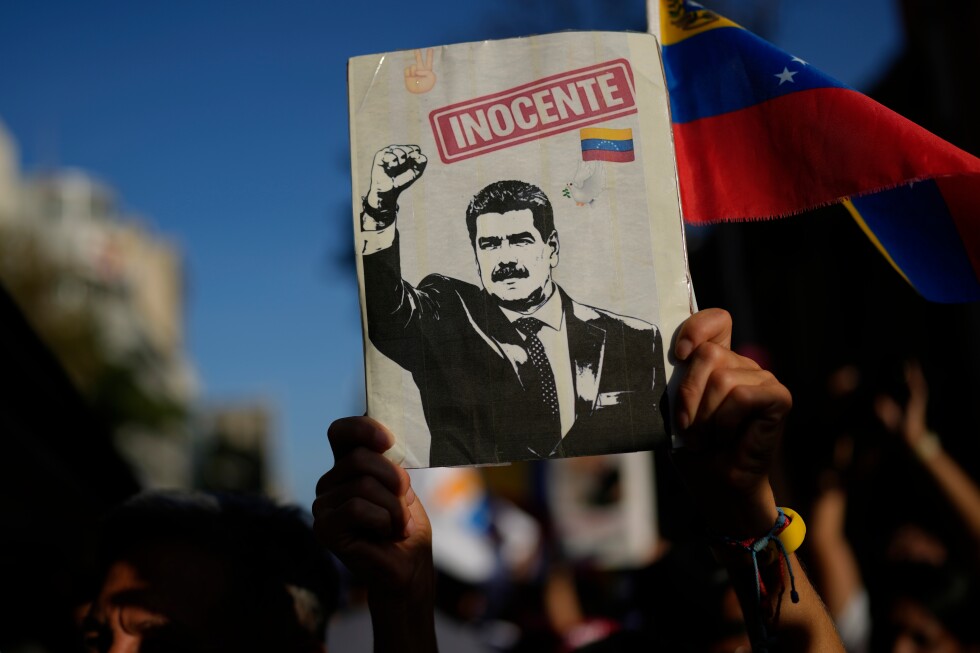
    Venezuela’s government has announced the release of dozens more political detainees amid mounting international pressure and diplomatic maneuvers following the military ouster of long-term autocrat Nicolas Maduro. The interim administration of Delcy Rodriguez, while maintaining its allegiance to Maduro’s legacy, is engaging in multifaceted negotiations with Washington seeking to leverage Venezuela’s substantial oil reserves.

    According to official statements from Caracas, 116 political prisoners gained freedom in recent hours, though opposition groups and human rights organizations report significantly lower figures—approximately 50 releases since last Thursday based on AFP calculations using NGO and opposition data. The discrepancy highlights ongoing tensions in Venezuela’s transitional process.

    The developments occur against a backdrop of intensified diplomatic activity. US envoys visited Caracas Friday to discuss reopening Washington’s embassy after seven years of severed relations. President Trump expressed openness to meeting with Rodriguez, noting their administrations were collaborating “really well.”

    Meanwhile, Venezuelan opposition leader Maria Corina Machado conducted high-level diplomacy at the Vatican, urging Pope Leo XIV to “intercede for all Venezuelans who remain kidnapped and disappeared.” Machado emphasized the opposition’s recognition of Edmundo Gonzalez Urrutia’s legitimacy as the true victor of the disputed 2024 presidential elections and sought papal support for Venezuela’s “transition to democracy.”

    Despite these developments, frustration grows among families awaiting releases. Approximately 40 relatives remained camped outside El Rodeo prison Monday, with some reporting that freed prisoners were whisked away through back exits without reuniting with waiting families. Human rights groups estimate between 800-1,200 political prisoners remain detained in Venezuela, leading UN experts to note that current release numbers “fall far short of Venezuela’s international human rights obligations.”

  • Iran blames US and Israel for unrest as Tehran says protests are ‘under control’

    Iran blames US and Israel for unrest as Tehran says protests are ‘under control’

    Iranian Foreign Minister Abbas Araqchi has launched a forceful condemnation of the United States, alleging deliberate instigation of violent unrest amid nationwide protests that have resulted in a near-total internet blackout and significant casualties. Speaking on Monday, Araqchi asserted that while the situation remained “under total control,” Washington had actively encouraged violence through threatening rhetoric against Tehran.

    The diplomatic official claimed President Donald Trump’s public warnings had effectively prompted armed groups to target both demonstrators and security forces in an attempt to justify foreign intervention. Iranian authorities purportedly possess footage showing weapons being distributed on streets and intend to release detainee confessions shortly.

    Araqchi characterized the protests, which erupted on December 28 initially over economic grievances, as having been transformed into a “terrorist war against the country” with assistance from foreign intelligence agencies including Israel’s Mossad. He maintained security forces initially exercised restraint until “armed terrorist” groups infiltrated legitimate demonstrations.

    According to Iran Human Rights, a Norway-based NGO, at least 192 people have died in the most significant anti-government protests in over three years. Official death tolls from Iranian authorities remain unavailable, and independent verification remains impossible amid the communication blackout.

    The cyber isolation entered its fourth day, with monitoring group NetBlocks confirming a “national internet blackout” with only minimal, unstable connectivity. This digital curtain has severely limited information flow both within and outside the country.

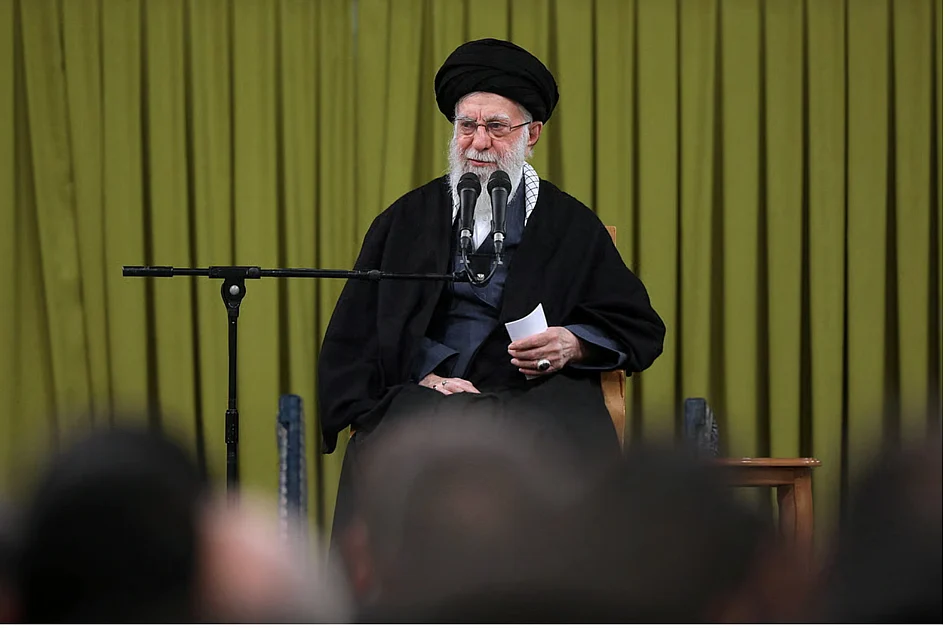
    Supreme Leader Ayatollah Ali Khamenei delivered a sharp response to Trump’s rhetoric through social media, drawing historical parallels to arrogant rulers who were “overthrown when they were at the height of their pride.”

    The United Nations has called for restraint, with Secretary-General Antonio Guterres expressing concern over reports of “violence & excessive use of force” while urging restoration of internet services. Meanwhile, Washington is reportedly considering coercive measures including cyber attacks, enhanced sanctions, and potential military strikes.

    Iranian Parliamentary Speaker Mohammad Baqer Qalibaf issued a stark warning against American aggression, stating that any attack would make Israeli territories and all US bases and ships “legitimate targets.” State media has called for nationwide rallies to denounce what authorities describe as “terrorist actions led by the United States and Israel.”

  • Trump says working well with Venezuela’s new leaders, open to meeting

    Trump says working well with Venezuela’s new leaders, open to meeting

    In a significant shift in U.S.-Venezuela relations, President Donald Trump has announced his administration is collaborating effectively with Venezuela’s interim leadership under Delcy Rodriguez, expressing willingness to engage in direct diplomatic meetings. This development follows the dramatic capture of former leader Nicolas Maduro by U.S. special forces just over a week ago, who now faces drug trafficking charges in New York.

    Speaking aboard Air Force One on Sunday, Trump revealed his expectations to meet both with interim leader Rodriguez and opposition figure Maria Corina Machado this week, despite previous skepticism about Machado’s leadership capabilities. The administration’s surprising acceptance of Rodriguez—a former Maduro ally—as interim leader has raised eyebrows, particularly given Machado’s Nobel Peace Prize recognition last year, which she dedicated to Trump.

    This diplomatic opening comes as Venezuela initiates what Trump described as a ‘BIG WAY’ process of releasing political prisoners. While rights organizations estimate between 800-1,200 political detainees remain incarcerated, several prominent opposition figures have already been freed. Simultaneously, the Rodriguez government has signaled willingness to cooperate on U.S. oil access demands and reestablish diplomatic ties, with American envoys already visiting Caracas to discuss reopening the U.S. embassy.

    However, the transition faces challenges. The recent death in custody of a police officer accused of treason has drawn condemnation from opposition groups, while candlelight vigils continue outside prisons where families await loved ones’ release. Meanwhile, Trump’s efforts to attract oil investment face industry skepticism, with ExxonMobil’s CEO dismissing Venezuela as ‘uninvestable’ without comprehensive reforms—a position that drew sharp criticism from the president who suggested excluding the energy giant from future opportunities.

    Despite these complications, Trump maintains optimistic about Venezuela’s trajectory under U.S. influence, stating the nation now operates under de facto American control through enforced naval blockades of vital oil exports.

  • Son of ousted Iran shah urges security forces to ‘stand with people’

    Son of ousted Iran shah urges security forces to ‘stand with people’

    Reza Pahlavi, the US-based son of Iran’s deposed monarch, has issued a compelling appeal to Iranian government employees and security personnel, urging them to align with the burgeoning protest movement against the Islamic Republic. The exiled royal figure delivered his message through social media channels on Sunday, presenting security forces with a stark ethical choice.

    Pahlavi’s declaration emphasized that state employees and military personnel must decide between supporting the Iranian populace or becoming accomplices to what he termed ‘murderers of the people.’ His statement followed disturbing reports from human rights organizations alleging that Iranian authorities were implementing extreme measures, including ‘mass killing’ operations, to quell ongoing civil unrest.

    The opposition leader, who has emerged as a significant figurehead for the anti-regime movement, further advocated for the symbolic replacement of Islamic Republic flags outside Iranian diplomatic missions worldwide. He specifically called for the restoration of the pre-1979 revolutionary tricolor banner, describing the current standard as ‘disgraceful.’

    This symbolic gesture gained tangible momentum in London over the weekend, where protesters successfully replaced the Iranian embassy flag with the historical monarchical standard. The diplomatic incident prompted Iran’s foreign ministry to summon Britain’s ambassador to Tehran in formal protest, as reported by the official IRNA news outlet.

    The pre-revolutionary flag has transformed into a powerful emblem for international demonstrations supporting Iran’s domestic protest movement, representing growing global solidarity with those challenging the current regime.

  • How NATO works at a time of Trump’s Greenland threats

    How NATO works at a time of Trump’s Greenland threats

    BRUSSELS — The North Atlantic Treaty Organization (NATO) faces unprecedented internal strain as former U.S. President Donald Trump’s persistent assertions regarding Greenland’s acquisition challenge the alliance’s core principles. This geopolitical tension has escalated to the point where Danish leadership explicitly warns that military action against Greenland would fundamentally rupture NATO’s framework.

    Greenland, a semi-autonomous territory within the Kingdom of Denmark, has become an unexpected flashpoint in transatlantic relations. Trump’s reaffirmed stance that “we’re going to have Greenland one way or another,” coupled with the White House’s refusal to dismiss military options, has created diplomatic alarm across European capitals. The administration justified its position as preventive measures against Russian and Chinese expansion in the Arctic.

    Danish Prime Minister Mette Frederiksen delivered a stark warning: “Should the United States militarily attack another NATO nation, everything ceases—including our NATO membership.” This declaration underscores the grave implications of intra-alliance aggression.

    NATO’s historical context reveals why this situation proves particularly volatile. Established in 1949 by twelve nations to counter Soviet threats, the alliance has expanded to thirty-two members following Sweden’s 2024 accession. Its fundamental operating principle remains consensus decision-making, where each member holds veto power. The organization’s credibility rests upon Article 5’s collective defense pledge, invoked only once following the 9/11 attacks.

    Legal analysts note that Article 5 would prove ineffective in a U.S.-Denmark conflict due to required unanimity. Instead, Denmark could trigger Article 4 consultations for sovereignty threats, though such talks don’t mandate military response. The alliance lacks established mechanisms for resolving armed conflict between members.

    This scenario echoes the 2003 Iraq War division, where NATO members split between supporters and opponents of U.S. action. Current uncertainty surrounds which nations would endorse Trump’s Greenland position, highlighting the alliance’s fragility when confronted with internal power disparities.

    The United States remains NATO’s dominant military and financial contributor, making coherent opposition challenging without American leadership. Daily operations continue under former Dutch Prime Minister Mark Rutte’s diplomatic management, who maintains public neutrality while working to preserve U.S. engagement.

    Rutte recently emphasized Arctic security consensus while denying NATO crisis over Greenland: “All allies agree on Arctic importance due to increased Russian and Chinese activity risks.” The organization’s military command, always led by a senior U.S. officer based in Mons, Belgium, continues standard operations amid these political tensions.

  • Hungary grants asylum to Polish ex-justice minister

    Hungary grants asylum to Polish ex-justice minister

    Hungary has extended political asylum to Zbigniew Ziobro, Poland’s former Justice Minister, marking a significant escalation in diplomatic tensions within the European Union. Ziobro faces 26 criminal charges in his home country, primarily centered on allegations of embezzling approximately 25 million zloty ($7 million) from the state-controlled Foundation for Justice. These funds, intended for crime victim support and criminal rehabilitation programs, were allegedly diverted to purchase Israeli-made Pegasus spyware, which was then used to surveil political opponents.

    Ziobro, who served as Justice Minister from 2015 to 2023 under Poland’s right-wing Law and Justice (PiS) party, maintains his innocence, characterizing the charges as politically motivated persecution by the current government led by Prime Minister Donald Tusk. In a statement on social media platform X, Ziobro declared he accepted Hungary’s protection to ‘fight against political banditry and lawlessness,’ accusing Tusk of conducting a personal vendetta.

    This case represents the second instance of Hungary offering asylum to a former PiS official, following the 2023 grant to Ziobro’s former deputy, Michal Romanowski. Both cases involve allegations of corruption and abuse of power during their tenure.

    The asylum grant challenges fundamental EU principles regarding judicial cooperation and mutual trust among member states. Hungary’s decision aligns with Prime Minister Viktor Orban’s political strategy of positioning himself as a defender of national sovereignty against what he perceives as EU overreach. Orban’s government has faced similar criticism from Brussels regarding rule-of-law standards and judicial independence.

    The Pegasus spyware scandal has had profound implications for Polish politics. Current Foreign Minister Radoslaw Sikorski and members of Prime Minister Tusk’s family were among those allegedly targeted by the surveillance program. Additionally, Ziobro’s controversial judicial reforms during his ministry triggered prolonged conflict with EU institutions, resulting in the freezing of EU funds for Poland and multiple rulings against the country by the European Court of Justice.

    Legal experts note that if convicted in Poland, Ziobro could face up to 25 years imprisonment. His asylum status in Hungary effectively shields him from extradition, creating a complex legal and diplomatic standoff between the two EU member states.

  • China maintains strong momentum in anti-corruption drive

    China maintains strong momentum in anti-corruption drive

    China’s comprehensive anti-corruption campaign demonstrated unprecedented intensity throughout 2025, with authorities investigating 65 centrally administered officials—predominantly at ministerial rank or higher—according to data released by the country’s top disciplinary bodies. The sustained crackdown, which recorded nine major investigations launched in December alone, represents the Communist Party of China’s continued commitment to eliminating graft and misconduct at all levels of governance.

    Among the prominent figures facing scrutiny were Jiang Chaoliang, Jin Xiangjun, Lan Tianli, Liu Hui, Yi Huiman, and Zhang Shiping, reflecting the campaign’s reach into the highest echelons of power. Concurrently, grassroots enforcement saw 536,000 lower-ranking officials disciplined between January and November, with 20,000 cases referred for criminal prosecution, demonstrating the operation’s comprehensive scope.

    Internationally, China’s ‘Sky Net’ operation achieved remarkable success, repatriating 782 fugitives and recovering approximately $3.38 billion in illicit assets within just eleven months. Notable apprehensions included Zhou Jinghua, the final Asian-based fugitive on China’s ‘100 most-wanted’ list, who was extradited from Thailand in July. That same month witnessed the return of Liang Jinwen, one of the earliest top-tier corruption suspects, who surrendered after 28 years abroad and fully repatriated assets allegedly acquired through corruption in 1996.

    The campaign’s institutional foundations were strengthened through the implementation of the revised Supervision Law in June, which expanded supervisory powers and addressed previous systemic limitations. Additionally, the CPC conducted a four-month educational initiative targeting its approximately 100 million members to reinforce compliance with the party’s conduct standards, while disciplinary authorities publicly identified violators of the eight-point rules to enhance transparency and accountability.