分类: politics

  • Prosecution expected in relation to Denis Donaldson death

    Prosecution expected in relation to Denis Donaldson death

    Irish authorities have announced the commencement of criminal proceedings against an individual connected to the 2006 assassination of Denis Donaldson, a high-profile Sinn Féin official later exposed as a British intelligence operative. The development marks a significant breakthrough in the eighteen-year investigation into one of Northern Ireland’s most politically charged murders.

    Justice Minister Jim O’Callaghan confirmed the prosecution during a meeting with Donaldson’s daughter Jane Kearney and her family on Monday. Following the discussion, O’Callaghan issued an official statement indicating that Gardaí investigators had received directives to pursue charges against a suspect, with judicial processes already underway.

    The case represents a complex chapter in Anglo-Irish relations. Donaldson, once a pivotal figure in Sinn Féin’s political ascendancy, served as the party’s key administrator at Stormont following the Good Friday Agreement. His credibility collapsed in 2005 when he publicly admitted to functioning as a double agent for both British police and MI5 intelligence services over two decades of infiltration within republican political circles.

    Approximately one year after his confession, Donaldson was discovered fatally shot at an isolated cottage in Glenties, County Donegal. The Real IRA paramilitary group subsequently claimed responsibility for the execution-style killing, though no convictions have been obtained until now.

    The victim’s family has consistently demanded a comprehensive public inquiry into the circumstances surrounding Donaldson’s death and the security implications of his prolonged espionage activities. Minister O’Callaghan acknowledged these requests but emphasized that active judicial proceedings currently preclude the establishment of an investigative commission. He reaffirmed the Gardaí’s unwavering commitment to achieving justice through the court system.

  • Trump keeping Iran air strikes on the table: White House

    Trump keeping Iran air strikes on the table: White House

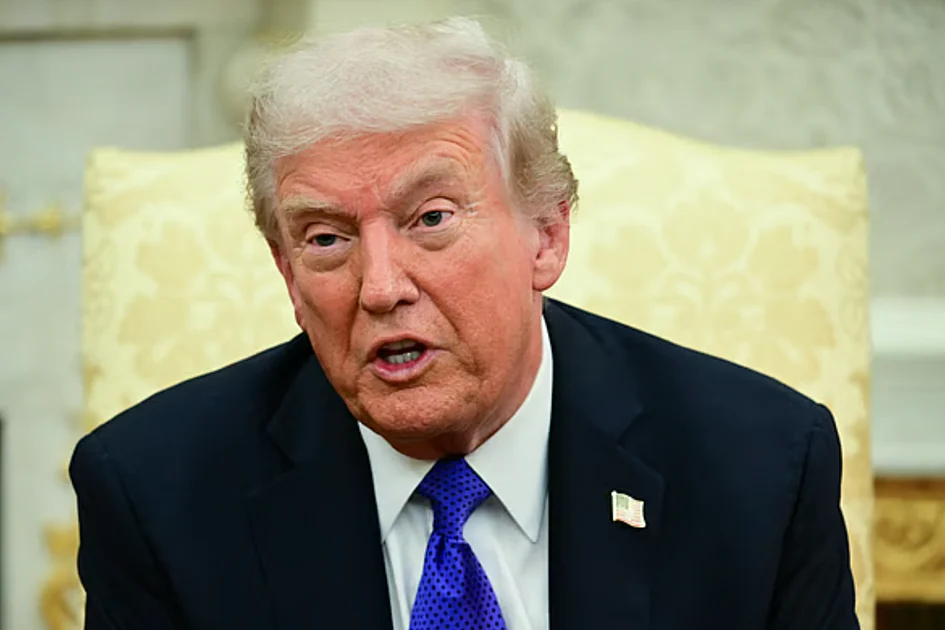
    The White House has confirmed that military strikes against Iran remain a viable option for President Trump as reports emerge of violent crackdowns on protesters within the country. Press Secretary Karoline Leavitt stated Monday that while diplomacy remains the preferred approach, the administration maintains all options available to address the escalating situation.

    Leavitt revealed a significant discrepancy between Iran’s public rhetoric and private communications, noting that Iranian officials have adopted a “far different tone” in confidential discussions with Special Envoy Steve Witkoff. This diplomatic channel remains active despite the absence of formal relations between the nations, with Iran’s Foreign Ministry confirming communications between top diplomat Abbas Araghchi and the American envoy.

    The administration’s position comes amid growing concerns about civilian casualties during widespread protests in Iran. Rights organizations report mounting fatalities as information gradually emerges despite Tehran’s implementation of an extensive internet blackout. Leavitt acknowledged these developments, stating the president “certainly doesn’t want to see people being killed in the streets of Tehran.”

    President Trump previously identified the killing of protesters as a clear red line, suggesting Sunday that Iran may have already crossed this threshold. While acknowledging Iran’s outreach for potential negotiations, Trump emphasized that the United States “may have to act before a meeting” occurs. The administration continues to monitor the situation closely, balancing diplomatic overtures with military preparedness.

  • Cyprus president’s top aide quits after online video alleging government corruption

    Cyprus president’s top aide quits after online video alleging government corruption

    NICOSIA, Cyprus — The director of the Cypriot presidential office, Charalambos Charalambous, has resigned from his position following the emergence of a controversial online video alleging corruption within President Nikos Christodoulides’ inner circle. The video, which surfaced on social media platforms, purportedly shows Charalambous—who is also the president’s brother-in-law—alongside a former energy minister and a prominent construction executive discussing their ability to secure foreign investments through their presidential connections.

    President Christodoulides accepted the resignation in what he characterized as an act of “self-confidence and trust” that the allegations would ultimately prove unfounded. In an official statement, the president praised Charalambous’ work ethic and integrity, describing his departure as “a loss of a valuable aide” during efforts to upgrade the country’s standing.

    The video contains multiple serious allegations, including claims that Christodoulides exceeded campaign finance limits during his 2023 presidential bid by accepting off-the-books cash donations. Most notably, it suggests the Cypriot government would intervene to block EU sanctions against Russian oligarchs in exchange for corporate payments.

    Cypriot authorities have denounced the video as a sophisticated disinformation campaign bearing “all the hallmarks” of previous Russian operations. According to an initial analysis by the Cyprus Security Services, the 8½-minute video exhibits characteristics consistent with organized Russian disinformation campaigns known as ‘Doppelganger’—a tactic previously employed against other EU nations, the United States, and Israel.

    The timing of the video’s release has raised suspicions among Cypriot officials, coming just one week after Cyprus assumed the rotating presidency of the European Union. President Christodoulides revealed that the EU had previously warned Cyprus about potential “hybrid” attacks during its presidency term. He confirmed that EU member states and other international partners are assisting in the investigation.

    Despite these explanations, opposition parties have launched scathing criticisms against the administration, arguing the video has revived concerns about systemic government corruption that have plagued Cyprus in the past. The scandal has created political turbulence for Christodoulides’ government as it begins its EU leadership role.

  • Dubai businessman decries ‘language of war’, says world does not need ‘new battles’

    Dubai businessman decries ‘language of war’, says world does not need ‘new battles’

    Prominent Dubai billionaire and philanthropist Khalaf Al Habtoor has issued a stern critique of U.S. President Donald Trump’s escalating international tactics, denouncing what he describes as a dangerous reliance on “exaggeration and the language of force” in global diplomacy. The comments come in direct response to a recent unprecedented U.S. military operation that resulted in the capture of Venezuelan President Nicolas Maduro, an event that has ignited intense global political debate.

    Al Habtoor expressed profound concern over Trump’s subsequent threats toward multiple sovereign nations and territories, including Mexico, Colombia, Cuba, Iran, and Greenland. The Emirati business magnate questioned the strategic wisdom of creating international enmities, particularly with traditional NATO allies, arguing that such aggressive posturing prioritizes populism over sustainable peace. He emphasized that while the “language of war and escalation may seem more populist, peace is the best option.”

    The billionaire advocated strenuously for diplomatic solutions, stating that legitimate U.S. security concerns should be addressed through negotiation and joint action with international partners rather than military confrontation. He warned that current approaches risk “opening doors to military confrontations that the world does not need today” and could sow “the seeds of conflict in more than one region.”

    Al Habtoor specifically referenced Trump’s assertion that the U.S. would “run” Venezuela and his claim of being “not afraid of boots on the ground” as particularly destabilizing rhetoric. He further highlighted the concerning declaration by Trump on January 12th that he was the “acting president of Venezuela,” despite the absence of any legal framework or official documentation supporting such a role.

    Calling for European nations to act as “an impregnable barrier against any rush that could lead to dangerous escalation,” Al Habtoor framed true leadership as the ability to manage differences and build consensus rather than ignite crises. The noted philanthropist, who has frequently provided aid to conflict zones, concluded that while peace may not be the easiest path, it remains the safest route to a stable and just global future, urging for “reason, wisdom, and self-control in addressing sensitive issues.”

  • Ugandan opposition leader Bobi Wine warns of protests if polls rigged

    Ugandan opposition leader Bobi Wine warns of protests if polls rigged

    Ugandan opposition figure and presidential contender Bobi Wine has issued a stark warning regarding potential electoral manipulation in the upcoming national vote. In an exclusive interview with AFP conducted Monday, the political challenger declared he would mobilize public demonstrations if President Yoweri Museveni’s administration attempts to rig Thursday’s election results.

    With over 20 million registered voters participating in the electoral process, the 81-year-old incumbent Museveni remains positioned to extend his 40-year governance tenure, largely due to his comprehensive authority over state institutions and security forces. His primary opposition emerges from 43-year-old Robert Kyagulanyi, professionally known as Bobi Wine, who previously contested the presidency in 2021 amid widespread allegations of electoral misconduct and government suppression.

    ‘The response to rigged elections will be peaceful mass protests,’ Wine stated from his Kampala residence. ‘We have empowered our supporters to act without awaiting formal instructions should democracy be subverted.’

    International monitoring organizations including the United Nations and Amnesty International have documented numerous pre-election violations by Ugandan authorities, citing hundreds of arrests targeting Wine’s supporters. This political tension reflects broader regional instability across East Africa, where youthful populations increasingly protest democratic backsliding and economic challenges.

    While acknowledging the likelihood of government violence against protesters, Wine emphasized strategic non-violent resistance. ‘History demonstrates that even violent regimes eventually yield to sustained peaceful opposition,’ he noted, adding that his movement had prepared supporters for potential state violence.

    Regarding international involvement, Wine expressed openness to United States intervention should election integrity be compromised, though he clarified that any external support should respect Ugandan sovereignty. ‘The ultimate responsibility for liberation and governance remains with the Ugandan people,’ he affirmed.

    The political climate intensified during Wine’s final campaign events in Kampala, where enthusiastic crowds gathered despite heavy security presence. Supporters expressed overwhelming enthusiasm for the opposition leader, with some comparing him to religious figures and others emphasizing desires for reduced corruption, expanded freedoms, and economic opportunity.

    As the campaign period concluded, significant police and security deployments monitored public gatherings, though dispersals occurred without reported violence. Wine’s concluding message emphasized identification with ordinary citizens: ‘Museveni doesn’t represent you—I am you, and you are me.’

  • Israel’s recently appointed UK ambassador banned from leaving state

    Israel’s recently appointed UK ambassador banned from leaving state

    Israel’s newly appointed ambassador to Britain, Tzachi Braverman, finds himself unable to assume his diplomatic post after being detained and questioned by Israeli police regarding allegations of obstructing an investigation into a classified military document leak. The incident, which occurred on Sunday, has triggered significant political repercussions and legal challenges.

    Braverman, who also serves as Prime Minister Benjamin Netanyahu’s chief of staff, faces accusations related to the unauthorized disclosure of sensitive information during the September 2024 Gaza conflict. The leaked document, purportedly from Hamas, suggested the group’s reluctance to release Israeli captives and end hostilities. Critics allege the leak was strategically timed to bolster public support for Netanyahu’s negotiation stance.

    The investigation took a dramatic turn when former Netanyahu spokesman Eliezer Feldstein publicly claimed that Braverman had offered to ‘shut down’ the leak inquiry in 2024. Both Braverman and the Prime Minister’s office have vehemently denied these allegations, counter-accusing Feldstein of fabrication.

    Following his release after a day of interrogation, Braverman was subjected to stringent restrictions including a 30-day travel ban preventing his departure to Britain and prohibitions on contacting officials at the Prime Minister’s office. His legal team has filed an appeal against these conditions, describing them as ‘extreme and exceptional’ given his imminent ambassadorial assignment.

    The political fallout has been immediate and divisive. Netanyahu’s Likud party decried the police action as a ‘persecution campaign’ against the prime minister and his associates. Opposition leader Yair Lapid has called for suspending Braverman’s diplomatic appointment, while Foreign Minister Gideon Saar cautioned against prejudicial actions that might violate fundamental rights to fair trial.

    This incident marks the second time Braverman has faced police questioning, having been investigated previously for allegedly altering timestamps related to Netanyahu’s initial response instructions during the October 2023 Hamas attack. The ambassador-designate’s predicament leaves Israel without representation in London following the conclusion of Tzipi Hotovely’s term in September.

  • UK: Starmer asked to sit on Gaza ‘Board of Peace’ by Trump administration

    UK: Starmer asked to sit on Gaza ‘Board of Peace’ by Trump administration

    British Prime Minister Keir Starmer has been formally invited to participate in a Gaza ‘Board of Peace’ initiative spearheaded by U.S. President Donald Trump, according to reports from The Times. This development signals strengthening diplomatic relations between the newly elected UK leader and the American administration.

    The proposed board, which Trump described as ‘being formed’ during recent press remarks, aims to oversee reconstruction efforts in the conflict-devastated Gaza Strip. The President characterized the body as comprising ‘the most important leaders of the most important nations,’ with approximately fifteen world leaders expected to participate, including those from the UK, Germany, France, Italy, Saudi Arabia, Qatar, Egypt, and Turkey.

    Notably, former UK Prime Minister Tony Blair, initially considered for a leadership role on the board, was reportedly removed from consideration late last year following pressure from several Arab and Muslim states. Blair’s legacy remains controversial due to his role in the 2003 invasion of Iraq alongside the United States.

    According to Financial Times reports, the board’s structure will include a smaller executive committee featuring Blair alongside Jared Kushner, the President’s son-in-law, and Trump adviser Steve Witkoff, though membership will be restricted to serving world leaders for the primary board.

    Substantial uncertainties surround the board’s operational framework and priorities, particularly regarding post-war governance structures for Gaza and the composition of an international security force. Israeli Prime Minister Benjamin Netanyahu’s opposition to Turkish participation in such a force has reportedly discouraged several potential partner nations, including Azerbaijan, Pakistan, Saudi Arabia, and Indonesia, from contributing troops.

    The initiative emerges against a backdrop of continued violence. Israeli forces have reportedly violated ceasefire agreements nearly 1,200 times over three months, resulting in 439 Palestinian fatalities through airstrikes, shelling, and home demolitions. A stringent blockade persists on Gaza, with closed border crossings severely restricting humanitarian aid access.

    According to Palestinian health authorities, the conflict has claimed over 71,400 Palestinian lives in Gaza since October 2023, including at least 20,000 children, highlighting the urgent humanitarian crisis confronting the region.

  • US sends more agents to Minneapolis despite furore over woman’s killing

    US sends more agents to Minneapolis despite furore over woman’s killing

    The U.S. Department of Homeland Security is escalating its presence in Minneapolis despite mounting political opposition, deploying hundreds of additional federal agents to the city following the fatal shooting of 37-year-old Renee Nicole Good by an immigration officer. Homeland Security Secretary Kristi Noem defended the officer’s actions during multiple television appearances on Sunday, characterizing Good’s behavior as “domestic terrorism” and maintaining the shooting was justified self-defense.

    The incident has ignited nationwide protests and created a sharp political divide. Minnesota Governor Tim Walz and Minneapolis Mayor Jacob Frey have vehemently contested the federal government’s narrative, citing viral footage that allegedly shows Good’s vehicle turning away from the officer and posing no immediate threat. Both Democratic leaders have demanded the withdrawal of federal agents from their city.

    Speaking from Air Force One, President Donald Trump characterized Good as “violent” and “very, very disrespectful to law enforcement,” adding that “these are professional agitators” who shouldn’t be tolerated. The administration’s position has drawn criticism from local officials who argue the investigation has been compromised by its exclusively federal nature, with the FBI leading the probe while excluding local authorities.

    Confrontations between protesters and federal agents continued through the weekend, with officers deploying pepper spray outside an Immigration and Customs Enforcement facility. Secretary Noem accused Democratic leaders of encouraging violence through their rhetoric, stating they had “extremely politicized and inappropriately talked about the situation on the ground in their city.”

    Meanwhile, activists have established makeshift memorials honoring Good, with community members laying flowers at sites throughout Minneapolis. The escalating tension occurs against the backdrop of ongoing immigration enforcement operations in residential areas and a separate highly politicized fraud investigation in Minnesota.

  • Iran ‘not seeking war but fully prepared for war’, FM Araqchi says

    Iran ‘not seeking war but fully prepared for war’, FM Araqchi says

    Iranian Foreign Minister Abbas Araqchi delivered a carefully calibrated message on Monday, asserting Tehran’s military preparedness while simultaneously expressing willingness for diplomatic engagement. “The Islamic Republic of Iran is not seeking war but is fully prepared for war,” Araqchi declared during a conference of foreign ambassadors in Tehran. “We are also ready for negotiations but these negotiations should be fair, with equal rights and based on mutual respect.”

    The statement comes amid escalating tensions following widespread protests that began on December 28 over economic hardships before evolving into broader anti-government demonstrations. According to U.S.-based rights group HRANA, the unrest has resulted in 490 protester fatalities and 48 security personnel deaths, with over 10,600 arrests—though these figures remain unverified independently due to Iran’s internet blackout implemented since Thursday.

    President Donald Trump acknowledged potential diplomatic channels, revealing that Iranian officials had expressed interest in negotiating their nuclear program. “Iran wants to negotiate, yes. We might meet with them,” Trump told reporters aboard Air Force One. However, he simultaneously emphasized that the United States was considering “a range of strong responses including military options” to address Tehran’s violent crackdown on protesters.

    The situation has prompted serious security concerns throughout the region. Iranian Parliament Speaker Mohammad Baqer Qalibaf, a former Revolutionary Guards commander, issued a stark warning: “In the case of an attack on Iran, the occupied territories (Israel) as well as all US bases and ships will be our legitimate target.”

    Iranian authorities have accused the United States and Israel of instigating the unrest, declaring three days of national mourning “in honor of martyrs killed in resistance against the United States and the Zionist regime.” State television broadcast footage showing large pro-government demonstrations in multiple cities and dozens of body bags at the Tehran coroner’s office, attributing the deaths to “armed terrorists.”

    The geopolitical implications extend beyond bilateral relations. Three Israeli sources confirmed their nation was on high alert for potential U.S. intervention, recalling the 12-day war between Iran and Israel in June 2025 that briefly involved American forces. Regional analysts suggest the protests represent one of the most significant challenges to Iran’s Islamic leadership since the 1979 revolution, particularly as Tehran continues recovering from last year’s conflict and weakened regional position.

  • Cuba denies being in talks with Trump on potential deal

    Cuba denies being in talks with Trump on potential deal

    Cuban President Miguel Diaz-Canel has issued a firm denial regarding any diplomatic negotiations with the United States government, directly contradicting claims made by former President Donald Trump. The Caribbean nation’s leadership has adopted a defiant stance following Trump’s threats of unspecified actions should Cuba refuse to ‘make a deal’ in the wake of Venezuelan leader Nicolas Maduro’s capture.

    Trump intensified pressure on Cuba through statements made aboard Air Force One and on his Truth Social platform, declaring an immediate cessation of all Venezuelan oil and financial support to Havana. The former president warned Cuba to negotiate ‘BEFORE IT IS TOO LATE,’ though he provided no specifics about the proposed terms or consequences of non-compliance.

    President Diaz-Canel clarified that beyond technical migration contacts, no substantive discussions exist between the two governments. In a show of national resolve, he affirmed Cuba’s readiness to ‘defend the homeland to the last drop of blood,’ underscoring the gravity of the escalating tensions.

    This confrontation revives historical animosities dating to the 1959 Cuban Revolution and the subsequent missile crisis that brought the world to the brink of nuclear war. The Trump administration previously reversed the détente initiated by President Obama, and the current developments signal a further deterioration in bilateral relations.

    The economic dimension adds complexity to the standoff. Cuba faces its most severe economic crisis in decades, exacerbated by the loss of subsidized Venezuelan oil. Interestingly, reports indicate Mexican oil exports to Cuba have recently surpassed those from Venezuela, potentially offering Havana an alternative energy source.

    The political landscape is further complicated by the involvement of figures like Senator Marco Rubio, whom Trump humorously suggested could serve as Cuba’s president. Rubio, a longtime critic of Cuba’s communist government, has consistently advocated for aggressive policies toward the island nation.