分类: politics

  • Death sentence sought for ex-South Korea leader Yoon over martial law decree

    Death sentence sought for ex-South Korea leader Yoon over martial law decree

    SEOUL, South Korea — In an unprecedented legal development, special prosecutors have formally requested capital punishment for former President Yoon Suk Yeol, who faces charges of rebellion for his controversial imposition of martial law in December 2024. The dramatic demand emerged during Tuesday’s hearing at Seoul Central District Court, where independent counsel Cho Eun-suk’s team presented their final arguments.

    Yoon, who was removed from office in April following the political crisis, maintains that his martial law declaration represented a peaceful effort to alert citizens to what he characterized as the dangerous obstructionism of the liberal opposition Democratic Party. He had previously denounced the legislature as ‘a den of criminals’ and ‘anti-state forces.’

    The December 2024 decree marked South Korea’s first implementation of martial law in over four decades, triggering traumatic national memories of military dictatorships from the 1970s-1980s. The order deployed armed troops throughout Seoul streets, surrounding the National Assembly and election offices—a move that evoked historical parallels to authoritarian regimes.

    In extraordinary overnight proceedings, lawmakers from across the political spectrum, including members of Yoon’s own party, rushed to block the presidential directive. Their successful assembly vote to overturn the decree created a constitutional crisis that plunged the nation into political chaos, disrupted high-level diplomacy, and unsettled financial markets.

    The court is anticipated to deliver its verdict in February, concluding a trial that has captivated the nation and highlighted deep political divisions. Yoon previously made history as South Korea’s first sitting president to be detained in January 2023, following his vehement resistance against impeachment attempts.

  • Hungary sets April 12 election date as Orbán faces tough challenge

    Hungary sets April 12 election date as Orbán faces tough challenge

    BUDAPEST, Hungary — Hungary’s political arena is poised for a transformative confrontation as President Tamás Sulyok officially designated April 12 for the nation’s parliamentary election. This electoral contest presents Prime Minister Viktor Orbán with his most formidable political challenge since assuming power in 2010, marking a potential watershed moment in Hungarian politics.

    The political landscape has been dramatically reshaped by the rapid ascent of Péter Magyar, a 44-year-old center-right attorney who has mobilized substantial support through an intensive grassroots campaign across Hungary’s rural regions. Magyar’s Tisza party has capitalized on widespread public discontent regarding economic stagnation, escalating living expenses, and deteriorating public services, positioning itself as a viable alternative to Orbán’s establishment.

    Orbán, the European Union’s longest-serving leader who has championed his vision of an “illiberal democracy,” now confronts an opposition movement that has consistently outperformed his Fidesz party in independent polling. The Prime Minister’s political strategy has centered on consolidating institutional control and media influence throughout his tenure, though critics maintain this has fostered systemic corruption.

    The electoral battle has been framed by Fidesz as a fundamental choice between peace and conflict, with government allies asserting that Tisza represents a Brussels-orchestrated initiative to establish a puppet administration that would redirect Hungarian resources toward supporting Ukraine’s military efforts. These allegations have been vehemently denied by the opposition.

    Magyar has committed to implementing comprehensive anti-corruption reforms and securing the release of billions in frozen EU funds contingent upon judicial independence enhancements, should he attain victory. Notably, Orbán has declined invitations for a televised debate with his challenger—a format he has avoided since his 2006 electoral defeat.

    The formal campaign period commences on February 21, initiating candidate signature collection and permitting political advertising, setting the stage for a historically significant electoral confrontation that could redefine Hungary’s political trajectory and its relationship with European institutions.

  • Japanese PM intends to dissolve lower house for snap election: Kyodo

    Japanese PM intends to dissolve lower house for snap election: Kyodo

    Prime Minister Sanae Takaichi of Japan has signaled her intention to dissolve the House of Representatives, setting the stage for a snap general election that could reshape the nation’s political landscape. According to Kyodo News sources, the Japanese leader communicated this decision to senior officials within the ruling Liberal Democratic Party (LDP) ahead of the regular Diet session scheduled for January 23rd.

    The anticipated dissolution could trigger one of two potential election timelines: either a campaign period commencing January 27th with voting on February 8th, or a later schedule beginning February 3rd with ballots cast on February 15th. This strategic move comes despite sustained criticism from both opposition parties and factions within the LDP itself, who accuse the Prime Minister of prioritizing political advantage over public welfare.

    Recent opinion polls indicate relatively robust public support for the Takaichi administration, particularly regarding its emphasis on economic measures addressing rising living costs. The Prime Minister has consistently highlighted livelihood issues, including inflation countermeasures, as central to her policy agenda.

    However, media analysts warn that dissolving the lower house at the start of the regular Diet session could significantly delay passage of the fiscal 2026 budget, potentially pushing final approval to April or beyond. Such a scenario would likely force the government to implement a provisional budget to maintain national operations—a stopgap measure expected to have substantial repercussions for public services and economic stability.

  • Trump sets meeting with Venezuelan opposition leader, Caracas under pressure

    Trump sets meeting with Venezuelan opposition leader, Caracas under pressure

    In a significant diplomatic development, former U.S. President Donald Trump is scheduled to meet with Venezuelan opposition leader Maria Corina Machado at the White House this Thursday. This high-profile meeting occurs amidst intensifying pressure on Venezuela’s interim leadership to accelerate the release of political prisoners detained under the previous regime of Nicolás Maduro.

    The engagement marks a notable shift in Washington’s approach toward Machado, who had been largely sidelined since U.S. forces apprehended long-term authoritarian leader Maduro on January 3. Concurrently, the Trump administration declared its intention to actively oversee Venezuela’s transitional governance.

    Despite this overture to the opposition, Trump has maintained working relations with acting president Delcy Rodriguez and other Maduro allies retained in power. The former president has issued stern warnings to Rodriguez regarding compliance with Washington’s directives, particularly concerning access to Venezuela’s substantial oil reserves, with explicit consequences for non-cooperation.

    Meanwhile, Venezuelan authorities announced the release of 116 additional individuals imprisoned during Maduro’s tenure, many detained for participating in protests following the controversial 2024 election. However, human rights organizations and opposition figures have questioned the official numbers, indicating that only approximately 50 prisoners have been freed thus far from an estimated 800-1,200 political detainees.

    Families of the imprisoned have maintained vigil outside correctional facilities, expressing growing frustration with the pace of releases. Manuel Mendoza, awaiting his son’s release at El Rodeo prison, articulated the collective anguish: ‘We simply ask that they keep their word. It’s already been four nights waiting out in the open air, suffering.’

    Machado has sought international intervention, recently appealing to Pope Leo XIV at the Vatican to ‘intercede for all Venezuelans who remain kidnapped and disappeared.’ Her political understudy, Edmundo Gonzalez Urrutia—who ran as the opposition’s presidential candidate in 2024 after Machado’s disqualification by Maduro-loyal institutions—emphasized that ‘every hour that passes is a new form of violence against families’ of detainees.

    Parallel to these developments, U.S. envoys have visited Caracas to discuss reopening the American embassy after a seven-year diplomatic hiatus. Trump expressed openness to meeting with Rodriguez directly, noting that his administration was collaborating ‘really well’ with Venezuela’s interim government. Regarding the prisoner releases, Trump remarked that he hoped those freed ‘will remember how lucky they got that the USA came along and did what had to be done.’

  • Nuuk, Copenhagen cautiously mull Greenland independence

    Nuuk, Copenhagen cautiously mull Greenland independence

    The geopolitical landscape of the Arctic is undergoing significant transformation as Greenland cautiously advances its independence aspirations from Denmark, while simultaneously navigating overtures from the United States. This complex triangular relationship represents a critical juncture in North Atlantic politics.

    Greenland, which transitioned from Danish colony to self-governing territory in 1979, has established a clear constitutional pathway toward potential sovereignty. The 2009 Self-Government Act, ratified by the Danish parliament, provides Article 21 stipulations that mandate independence negotiations must commence should Greenland’s population formally express this desire through democratic processes.

    The economic dimension presents substantial challenges for prospective sovereignty. Greenland’s economy remains heavily dependent on annual Danish subsidies totaling approximately 4.5 billion kroner ($703 million), constituting nearly 20% of the territory’s GDP. With an economic foundation primarily reliant on fisheries and facing demographic challenges including an aging population, economic self-sufficiency represents a significant hurdle.

    Political dynamics within Greenland reveal nuanced perspectives on independence timing. While polls indicate overwhelming support for eventual sovereignty among Greenlanders, there exists considerable divergence regarding the appropriate timeline. The current coalition government, enjoying 75% electoral support, advocates for gradual independence implementation based on a draft constitution from 2024. Conversely, the opposition Naleraq party has capitalized on recent geopolitical developments to advocate for accelerated separation.

    International dimensions further complicate the independence calculus. Former US President Donald Trump’s repeated expressions of interest in acquiring Greenland for national security purposes have introduced additional geopolitical considerations. Danish officials and historians have uniformly rejected such propositions, emphasizing that any determination regarding Greenland’s future must occur absent external coercion.

    Academic perspectives highlight the Nordic tradition of peaceful separation, citing historical precedents including Norway’s 1905 independence from Sweden and Iceland’s 1944 sovereignty declaration from Denmark. This established pattern suggests that should Greenland pursue independence, the process would likely follow diplomatic channels rather than confrontational approaches.

    The road to potential sovereignty involves multiple procedural requirements, including parliamentary approval in both Nuuk and Copenhagen followed by a Greenlandic referendum. This carefully structured process reflects the complex interdependence that has developed between Denmark and its largest territory over centuries of shared history.

  • Central bank chiefs voice ‘full solidarity’ with US Fed, Powell

    Central bank chiefs voice ‘full solidarity’ with US Fed, Powell

    In an extraordinary display of international unity, central bank governors from the world’s most influential financial institutions have issued a joint declaration expressing ‘full solidarity’ with Federal Reserve Chairman Jerome Powell amid an unprecedented legal challenge. The remarkable show of support comes as U.S. prosecutors have initiated criminal investigation proceedings against Powell, a move widely interpreted as an escalation of President Donald Trump’s ongoing campaign against the central bank’s independence.

    The coordinated statement, endorsed by the heads of the European Central Bank, Bank of England, and counterparts from Australia, Brazil, Canada, Denmark, South Korea, Sweden, Switzerland, along with the Bank for International Settlements chairman, emphasized that central bank independence represents ‘a cornerstone of price, financial and economic stability.’ The leaders unanimously praised Powell’s ‘integrity’ and ‘unwavering commitment to the public interest’ in executing his mandate.

    At the heart of the controversy lies a $2.5 billion renovation project of the Federal Reserve’s Washington headquarters, which President Trump has repeatedly criticized as mismanaged. The president had previously contemplated dismissing Powell over cost overruns for the historic building’s facelift and has publicly derided the Fed chair as a ‘numbskull’ and ‘moron’ regarding interest rate policies.

    Powell responded to the legal threats in a rare video statement Sunday, characterizing the renovation inquiry and related testimony demands as ‘pretexts’ for challenging the Fed’s interest rate decisions. He asserted that the criminal investigation threat directly results from the Federal Reserve’s commitment to setting rates based on economic assessments rather than presidential preferences, vowing to continue monetary policy decisions ‘without political fear or favor.’

  • Kelly sues Hegseth over attempted demotion

    Kelly sues Hegseth over attempted demotion

    A significant legal confrontation has emerged between U.S. Senator Mark Kelly (D-Arizona) and Defense Secretary Pete Hegseth, centering on allegations of unconstitutional retaliation for political speech. The lawsuit, filed by Senator Kelly, contends that the Pentagon unlawfully initiated proceedings to reduce his military retirement rank following his public criticism of the Trump administration’s policies.

    The dispute originated when Senator Kelly, a former Navy captain and NASA astronaut, participated in an instructional video alongside five fellow Democratic legislators last November. The video informed military personnel of their legal right to refuse unlawful orders, a position that drew fierce condemnation from then-President Donald Trump, who labeled the remarks ‘seditious’ on his Truth Social platform.

    In response, Defense Secretary Hegseth announced formal proceedings to review and potentially downgrade Kelly’s retirement grade—a move that could substantially reduce the senator’s pension benefits. Hegseth characterized Kelly’s statements as violations of the Uniform Code of Military Justice.

    Kelly’s legal challenge asserts multiple constitutional violations, arguing the Pentagon targeted him specifically for the content and viewpoint of his political speech without proper legal authority. The lawsuit emphasizes that no statutory provisions authorize the Defense Department to revisit retirement determinations based on post-service political expression, warning that such precedent could threaten the retirement security of all military veterans.

    The case highlights ongoing tensions between the Trump administration and military figures who have voiced dissent. Kelly, who has established himself as a centrist Democrat with defense expertise, previously criticized the administration’s deployment of National Guard troops in U.S. cities including Portland, Los Angeles, and Washington D.C.—deployments that have prompted separate legal challenges regarding their lawfulness.

    Neither the Pentagon nor the White House has offered immediate commentary on the pending litigation. The outcome could establish significant precedent regarding free speech protections for retired military personnel engaged in political discourse.

  • World central bank chiefs ‘stand in solidarity’ with US Fed chair Powell

    World central bank chiefs ‘stand in solidarity’ with US Fed chair Powell

    In an unprecedented show of institutional solidarity, central bank governors from eleven nations have issued a joint statement expressing their “full solidarity” with Federal Reserve Chairman Jerome Powell, who is currently facing a criminal investigation by the U.S. Department of Justice.

    The remarkable declaration comes after a year of sustained criticism from former President Donald Trump, who repeatedly attacked Powell’s monetary policy decisions and personally characterized the Fed chair as a “major loser” and “numbskull” in public statements.

    Among the signatories are some of the world’s most influential financial leaders, including Andrew Bailey of the Bank of England, Christine Lagarde of the European Central Bank, and Tiff Macklem of the Bank of Canada. Their collective statement emphasized the critical importance of central bank independence in setting interest rates without political interference.

    “Chair Powell has served with integrity, focused on his mandate and an unwavering commitment to the public interest,” the central bankers asserted in their coordinated message. They further described Powell as “a respected colleague who is held in the highest regard by all who have worked with him.”

    The Department of Justice probe, which former President Trump claims to know nothing about, represents an extraordinary development in the relationship between the executive branch and the traditionally independent Federal Reserve. Legal experts note that criminal investigations of sitting Fed chairs are exceptionally rare in American history.

    This coordinated international response underscores growing concerns among financial leaders about the potential politicization of central banking institutions and the preservation of monetary policy independence worldwide.

  • The BBC seeks to dismiss Trump’s $10B defamation lawsuit in a Florida court

    The BBC seeks to dismiss Trump’s $10B defamation lawsuit in a Florida court

    The British Broadcasting Corporation has initiated legal proceedings to quash former U.S. President Donald Trump’s $10 billion litigation, citing jurisdictional overreach and unsubstantiated claims. Court documents filed in Florida’s Southern District Court reveal the broadcaster’s motion to dismiss the case based on three fundamental arguments: lack of proper jurisdiction, improper venue selection, and failure to state a legally actionable claim.

    The controversy stems from the BBC’s documentary “Trump: A Second Chance?” which aired shortly before the 2024 presidential election. The program featured edited excerpts from Trump’s January 6, 2021 address, combining three distinct quotes from segments delivered nearly an hour apart into what appeared as a continuous statement. Among the omitted portions was Trump’s specific instruction for supporters to demonstrate peacefully.

    Legal representatives for the publicly-funded broadcaster will contend that the organization neither created, produced, nor distributed the documentary within Florida’s jurisdiction. They further challenge Trump’s assertion that the content was available on streaming platform BritBox in the United States, characterizing this claim as factually inaccurate.

    The BBC maintains that despite issuing an apology for the editorial approach taken in assembling the speech segments, the former president has failed to demonstrate actual malice—a critical requirement for defamation claims involving public figures. The corporation has simultaneously requested a suspension of discovery procedures pending the court’s decision on the dismissal motion, potentially avoiding the disclosure of extensive internal communications and production documents.

    Should the case proceed despite the BBC’s objections, trial proceedings are tentatively scheduled for 2027. The broadcaster affirmed its commitment to vigorous legal defense while declining further commentary on active litigation.

  • Trump hits Iran trade partners with tariffs as protest toll soars

    Trump hits Iran trade partners with tariffs as protest toll soars

    In a significant escalation of economic pressure, U.S. President Donald Trump has declared an immediate 25% tariff on any nation engaging in trade with Iran. The move aims to isolate Tehran financially as reports emerge of a brutal government crackdown on protests, with estimates suggesting hundreds of fatalities.

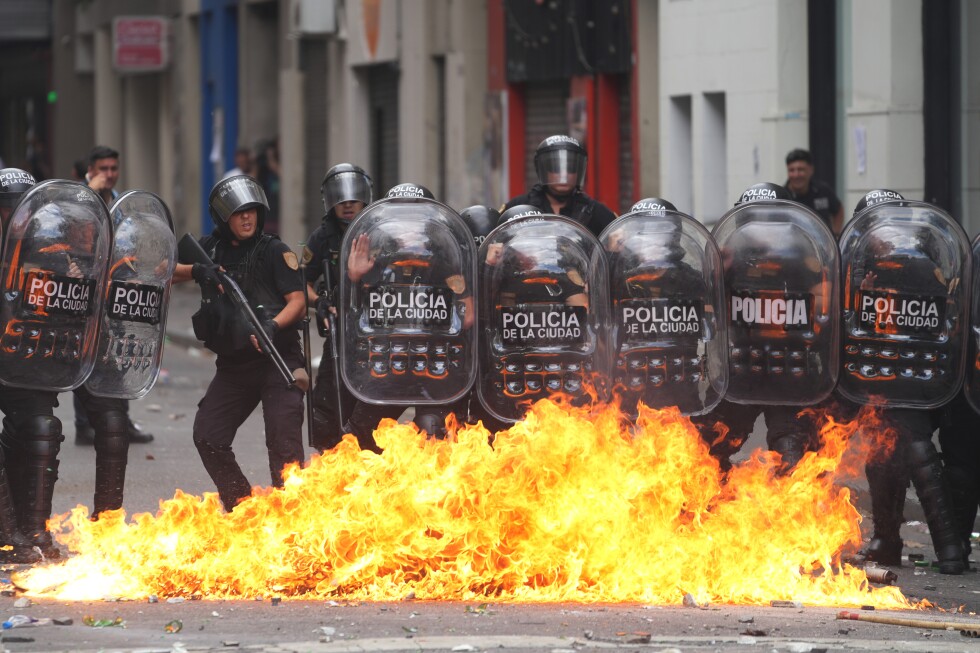
    Iranian authorities claim to have reestablished control following nationwide demonstrations that began last Thursday, which represent the most substantial challenge to the country’s clerical leadership since the 1979 Islamic Revolution. However, human rights organizations accuse the government of employing lethal force against protesters and obscuring the true scale of violence through a prolonged internet blackout.

    According to Iran Human Rights (IHR), a Norway-based NGO, at least 648 individuals, including nine minors, have been killed during the unrest. The organization cautioned that the actual death toll might be significantly higher—potentially exceeding 6,000—while approximately 10,000 people have been arrested. The internet shutdown has severely hampered independent verification of these figures.

    In response to the turmoil, Iranian officials staged mass pro-government rallies, which Supreme Leader Ayatollah Ali Khamenei characterized as evidence of the protest movement’s defeat. Foreign Minister Abbas Araghchi defended the internet restrictions, alleging they were necessary to counter “terrorist operations” directed from abroad.

    The White House reiterated that President Trump remains prepared to employ military force against Iran but is prioritizing diplomatic measures. Meanwhile, international leaders have expressed concern over the situation. German Chancellor Friedrich Merz declared that regimes relying solely on violence to maintain power are “effectively finished,” while French President Emmanuel Macron condemned the “state violence” targeting Iranian citizens.

    Analysts note that while the protests pose a serious challenge to the Islamic Republic, the regime’s extensive repressive apparatus, including the Revolutionary Guards Corps, continues to provide significant stability. The outcome remains uncertain as both domestic tensions and international pressures intensify.