分类: politics

  • Trump drops tariff threat on EU countries after striking framework for a deal over Greenland in Davos

    Trump drops tariff threat on EU countries after striking framework for a deal over Greenland in Davos

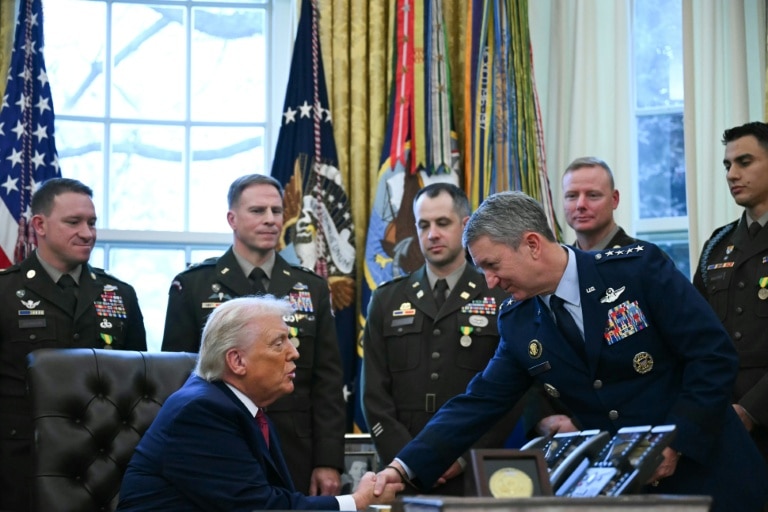
    In a significant diplomatic development at the World Economic Forum in Davos, President Donald Trump announced the suspension of threatened tariffs against eight European nations following the establishment of a preliminary agreement concerning Greenland and Arctic security. The breakthrough came during bilateral discussions with NATO Secretary General Mark Rutte on January 21, 2026.

    The agreement, described by Trump as ‘the ultimate long-term deal,’ effectively cancels planned 10% tariffs on goods from the United Kingdom, Denmark, Norway, Sweden, France, Germany, Netherlands, and Finland that were scheduled to commence February 1. Additionally, the administration withdrew the threat of escalating these tariffs to 25% beginning June 1.

    While specific details remain limited, the framework reportedly addresses US strategic interests in the Arctic region, including enhanced military presence opportunities and mineral resource access. Trump characterized the arrangement as providing the United States with ‘everything it wanted’ regarding Greenland while creating benefits for all NATO member nations.

    Political science expert Professor Michael A. Allen of Boise State University noted the agreement would enable the US to ‘increase its military presence in Greenland and work with NATO partners to achieve its goals.’

    European leaders expressed relief at the de-escalation of tensions. Danish Foreign Minister Lars Lokke Rasmussen stated, ‘The day is ending on a better note than it began,’ emphasizing the importance of addressing American security concerns while respecting Denmark’s territorial integrity.

    The negotiation process will be overseen by US Secretary of State Marco Rubio and Special Envoy Steve Witkoff, who will report directly to the president. Preliminary discussions suggest the possibility of limited territorial concessions for military infrastructure, though no official confirmation has been provided.

    Notably, President Trump explicitly ruled out military force to acquire Greenland during his Davos address, stating: ‘I don’t have to use force. I don’t want to use force. I won’t use force.’

  • US forces seize 7th oil tanker in Caribbean

    US forces seize 7th oil tanker in Caribbean

    The United States Southern Command has conducted its seventh interception of a Venezuela-associated oil tanker in the Caribbean Sea, escalating its month-long maritime enforcement operation. The motor vessel Sagitta was apprehended without resistance on Tuesday as part of Washington’s comprehensive strategy to control Venezuela’s petroleum exports.

    This latest seizure occurs within the framework of President Donald Trump’s December-declared ‘total and complete blockade’ targeting sanctioned vessels transiting to and from Venezuelan waters. The Southern Command affirmed its determination to ensure that “the only oil leaving Venezuela will be oil that is coordinated properly and lawfully.”

    The geopolitical confrontation intensified significantly following a January 3rd military operation where US forces attempted to capture Venezuelan President Nicolas Maduro and his wife. This unprecedented action drew widespread international criticism regarding violations of national sovereignty.

    Concurrently, Acting Venezuelan President Delcy Rodriguez announced receipt of $300 million from US-controlled sales of Venezuelan crude oil, representing a portion of an estimated $500 million total revenue. Rodriguez stated these funds would be channeled through public and private banking institutions, in coordination with the Central Bank of Venezuela, to stabilize foreign exchange markets.

    Despite Trump’s assertion that the US has extracted 50 million barrels of Venezuelan oil, maritime transport records indicate these volumes have not yet been exported. The administration simultaneously contemplates a $100 billion reconstruction plan for Venezuela’s deteriorated oil infrastructure.

    Tensions further escalated when Venezuela’s Ministry of the Interior denounced an artificially generated map circulating on Trump’s social media that depicted Venezuela, Canada, and Greenland as US territories. The ministry vehemently reaffirmed the nation’s sovereignty as the Bolivarian Republic of Venezuela.

    Adding another dimension to the complex situation, Trump revealed potential involvement for Venezuelan opposition figure Maria Corina Machado, though specific responsibilities remain undefined. This development follows Machado’s presentation of her Nobel Peace Prize to the US president during their recent meeting.

  • China seeks support to fight crimes against humanity

    China seeks support to fight crimes against humanity

    At the inaugural session of the UN Preparatory Committee for the Conference on Crimes Against Humanity, Chinese envoy Sun Lei delivered a powerful address calling for enhanced international collaboration to prevent and penalize atrocities constituting crimes against humanity. The senior diplomat, serving as charge d’affaires of China’s permanent mission to the UN, emphasized the critical importance of upholding international legal standards and preserving historical justice during Monday’s proceedings.

    The committee’s establishment follows UN General Assembly Resolution 79/122 adopted in 2024, which initiated the process toward drafting a comprehensive global convention addressing these severe offenses. Sun characterized crimes against humanity as grave violations that fundamentally threaten international peace and security, tracing their legal conceptualization to the post-World War II Nuremberg and Tokyo tribunals.

    Speaking on the 80th anniversary of the International Military Tribunal for the Far East, Sun highlighted how Japanese militarism inflicted profound suffering across China, Asia, and the global community. He described the Tokyo trials as historically irrefutable evidence of Japan’s aggression crimes, noting their pioneering role in developing international criminal jurisprudence while serving as a enduring clarion call for peace.

    The diplomat urged the international community to collectively safeguard the outcomes of WWII victory, maintain the international legal order, and prevent the resurgence of militarism. His remarks emerged amid escalating Sino-Japanese tensions following controversial November statements by Japanese Prime Minister Sanae Takaichi regarding potential intervention in Taiwan Strait scenarios, which China has vehemently opposed through formal diplomatic channels.

    Sun emphasized that in today’s complex global landscape marked by regional conflicts and geopolitical turbulence, strengthening mechanisms against crimes against humanity carries particular urgency and significance. China has consistently supported lawful punishment of such crimes and constructively participated in UN Sixth Committee discussions, submitting official government comments in late 2023.

    The Chinese representative concluded that combating these crimes must strictly adhere to the UN Charter and universally recognized international law principles, warning against recent politicization of humanitarian issues where certain states allegedly manipulate concepts of criminal accountability and human rights protection to interfere in sovereign nations’ internal affairs and justify armed aggression.

  • Trump threatens 200% tariff on French wine over backing for Gaza peace board

    Trump threatens 200% tariff on French wine over backing for Gaza peace board

    In a dramatic escalation of diplomatic tensions, former US President Donald Trump has issued an ultimatum to France, threatening to impose staggering 200% tariffs on French wine and champagne exports. The economic threat comes in direct response to French President Emmanuel Macron’s refusal to participate in Trump’s proposed ‘Board of Peace’ initiative aimed at addressing global conflicts, including the ongoing situation in Gaza.

    The confrontation emerged when Trump, reacting to Macron’s decision to abstain from joining the international peacekeeping board, declared: ‘Nobody wants him because he will be out of office very soon. I’ll put a 200% tariff on his wines and champagnes, and he’ll join, but he doesn’t have to join.’ This statement underscores Trump’s unconventional approach to international diplomacy, using economic leverage to compel political cooperation.

    Trump’s Board of Peace concept, initially proposed in September as a mechanism to resolve the Gaza conflict, has since expanded into a broader global initiative. Approximately 60 nations have received draft charters outlining membership requirements, including a substantial $1 billion contribution for extended participation beyond three years. The former president aims to finalize the board’s structure during the upcoming World Economic Forum in Davos, Switzerland.

    The tariff threat represents the latest chapter in ongoing trade tensions between Trump and European allies. Just days earlier, Trump had warned of imposing 10-25% tariffs on European nations unless they supported his controversial plan to purchase Greenland. French officials have characterized these tactics as diplomatic blackmail, with Agriculture Minister Annie Genevard condemning the approach as ‘shocking because it’s brutal, it’s done to force compliance.’

    The United States stands as the world’s largest importer of sparkling wines, purchasing approximately $1.75 billion worth in 2023. Such aggressive tariffs would devastate France’s champagne industry, recalling similar threats made in March during previous EU trade disputes. While those tariffs were never implemented, the renewed warning has sent shockwaves through European diplomatic and trade circles, raising concerns about the future of transatlantic relations should Trump return to power.

  • Australia passes tougher laws on guns, hate crime

    Australia passes tougher laws on guns, hate crime

    In a decisive legislative response to the December 14 terrorist shooting at Sydney’s Bondi Beach, the Australian Parliament has enacted comprehensive reforms strengthening gun control measures and hate crime legislation. The tragic incident during a Jewish festival resulted in 16 fatalities, including one perpetrator, and left dozens injured.

    The newly passed firearm regulations introduce a national buyback program, enhanced import restrictions, more rigorous background verifications for licensing, and limitations on permitted firearm categories. Concurrently, the hate crime legislation establishes mechanisms to designate organizations as ‘hate groups,’ targets individuals propagating extremist ideologies, and increases penalties for violence advocacy offenses.

    Prime Minister Anthony Albanese emphasized the government’s urgency in addressing these issues, stating at a Canberra press conference: ‘At Bondi, the terrorists had hate in their hearts, but they had guns in their hands. We have acted with unity to confront both threats decisively.’

    The alleged attackers, 24-year-old Naveed Akram and his 50-year-old father Sajid, targeted a Hanukkah celebration. Police neutralized Sajid at the scene while Naveed sustained critical injuries. Subsequent investigations revealed six firearms used in the assault, with Naveed facing 59 charges including murder and terrorism.

    This represents Australia’s most significant security legislation since the 1996 Port Arthur massacre that claimed 35 lives and established the National Firearms Register. The government will additionally form a royal commission examining antisemitism and social cohesion, while declaring a national day of mourning with flags at half-mast to honor the victims.

    Sociologist Margaret Gibson of Griffith University noted the importance of national rituals following such tragedies, stating they ‘demonstrate government leadership toward collective solidarity and unity in the face of violence that ruptures the sense of safety of community and nation.’

  • US hard-line stance sowing divisions

    US hard-line stance sowing divisions

    As the Trump administration marked its first anniversary of the second term, its assertive “America First” doctrine has generated significant international friction and raised concerns about global stability. During a comprehensive White House briefing, President Trump showcased what he described as 365 accomplishments since his January 20 inauguration, while simultaneously advancing controversial policies that have strained traditional alliances.

    The administration’s approach has particularly manifested in two contentious areas: immigration enforcement and territorial ambitions. Trump devoted substantial attention to immigration issues, publicly displaying mugshots of undocumented immigrants arrested in Minnesota and praising ICE agents. More remarkably, the president reaffirmed his interest in acquiring Greenland from Denmark, suggesting potential negotiations that would satisfy both NATO and U.S. interests without elaborating on specifics.

    European leaders have responded with firm resistance. European Commission President Ursula von der Leyen condemned newly announced tariffs targeting eight European nations supporting Denmark’s position on Greenland as a “mistake” that questions Washington’s reliability. French President Emmanuel Macron threatened retaliatory measures using the EU’s powerful economic tools, colloquially termed a “trade bazooka.”

    International relations experts warn that these policies represent a fundamental shift in global dynamics. According to Chen Hong of East China Normal University, the administration appears to be constructing a new form of hegemonic politics that challenges post-World War II international norms and sovereignty principles. The Chicago Council on Global Affairs has identified the U.S. as potentially “the primary driver of global disruption” due to its unpredictable alliance management.

    The administration’s withdrawal from key international agreements—including the Paris Climate Accord and World Health Organization—combined with its use of tariffs as foreign policy instruments, threatens to undermine multilateral frameworks. Researchers like He Yun of Tsinghua University predict these actions will accelerate regionalization trends as nations seek to reduce dependence on Washington and strengthen alternative security arrangements.

    Analysts from Pakistan’s Global Silk Route Research Alliance note that the preference for coercion over diplomacy violates UN Charter principles and jeopardizes international stability. As nations increasingly consider bloc formation and regional cooperation mechanisms, the international order faces potential restructuring toward transactional power dynamics rather than collective multilateral governance.

  • Danish leader says kingdom can’t negotiate sovereignty after Trump’s Greenland about-turn

    Danish leader says kingdom can’t negotiate sovereignty after Trump’s Greenland about-turn

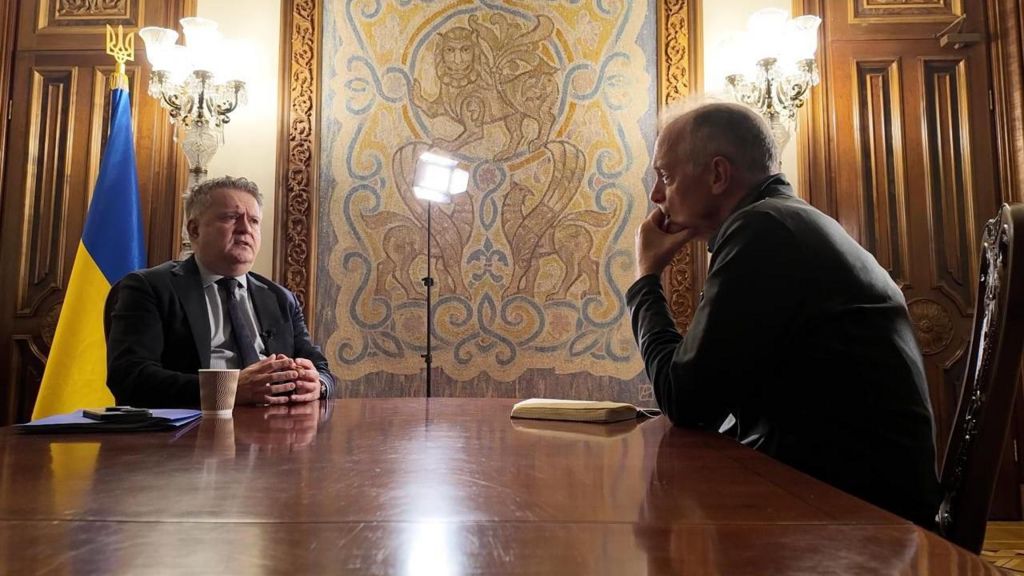
    COPENHAGEN, Denmark — Danish Prime Minister Mette Frederiksen has firmly asserted her nation’s sovereign rights over Greenland following controversial statements by U.S. President Donald Trump regarding Arctic security arrangements. The diplomatic clarification comes after Trump’s abrupt withdrawal of threatened tariffs on eight European nations—a coercive measure initially deployed to pressure Denmark into relinquishing control over the semiautonomous Arctic territory.

    President Trump had previously announced reaching a “framework of a future deal” on Arctic security with NATO leadership, specifically referencing the Golden Dome missile defense program—a $175 billion multilayered system that would potentially position U.S. weapons in space for the first time. However, Frederiksen stated she had received confirmation that no such agreement involving Danish sovereignty had been negotiated.

    The Danish leader emphasized that while Arctic security represents a legitimate concern for all NATO members, and that discussions between the U.S. president and NATO Secretary General Mark Rutte were “good and natural,” Denmark’s sovereignty remains non-negotiable. Frederiksen confirmed ongoing communications with Rutte surrounding his meeting with Trump in Davos.

    NATO leadership has been made fully aware of Denmark’s position that while political, security, and economic matters remain open for discussion, national sovereignty cannot be compromised. Frederiksen reiterated that only Denmark and Greenland possess the authority to make determinations concerning their bilateral relations and territorial integrity.

    The Prime Minister expressed Denmark’s willingness to engage in constructive dialogue regarding Arctic security enhancement, including potential collaboration on the Golden Dome program, provided such cooperation respects Danish territorial sovereignty. Meanwhile, NATO’s Rutte clarified in a Fox News interview that the future status of Greenland within the Danish kingdom had not been part of his discussions with Trump, noting the president’s primary focus remained on countering increased Chinese and Russian activity in the rapidly changing Arctic region.

  • Austrian ex-agent to go on trial in Russia spying case

    Austrian ex-agent to go on trial in Russia spying case

    A high-profile espionage trial commenced Thursday in Vienna’s criminal court against Egisto Ott, a former Austrian intelligence official accused of systematically leaking state secrets to Russia. The 63-year-old ex-agent faces multiple charges including abuse of office, corruption, and espionage activities allegedly conducted between 2015 and 2022.

    The case centers on Ott’s purported collaboration with Jan Marsalek, an Austrian executive of the collapsed German payment firm Wirecard, who remains a fugitive wanted for fraud and suspected ties to Russia’s FSB intelligence service. Prosecutors allege Ott received over €80,000 in payments for providing sensitive devices and confidential information that compromised Austria’s national security.

    According to the indictment, Ott’s actions risked inflicting “serious damage” to Austria’s reputation among allied intelligence services. His alleged activities included exploiting European databases and submitting assistance requests to Italy and Britain that inadvertently advanced Moscow’s interests.

    The prosecution details how Ott supposedly handed over interior ministry officials’ cell phones, exposing thousands of contacts and endangering Ukrainian and Chechen refugees in Austria. Most alarmingly, he allegedly provided Russia with an encrypted laptop containing secure communication hardware, which was subsequently transferred to Iran.

    Investigators discovered Ott had compiled what prosecutors termed an “assassination manual” following the 2019 Berlin murder of a Georgian-Chechen individual by Russian agents. The document allegedly provided instructions for conducting future assassinations within EU territory.

    The trial represents the latest development in Austria’s ongoing reckoning with Russian espionage activities, challenging the nation’s historical identity as a bridge between Moscow and the West. Ott, who was suspended in 2017 and briefly arrested in 2021, faces up to five years imprisonment if convicted.

  • Campaigning starts for Bangladesh’s first national election after Hasina’s ouster

    Campaigning starts for Bangladesh’s first national election after Hasina’s ouster

    DHAKA, Bangladesh — Bangladesh has commenced official campaigning for its first general elections since the 2024 uprising that culminated in the removal of long-serving Prime Minister Sheikh Hasina. The February 12 parliamentary vote represents a historic turning point for the South Asian nation, occurring under an interim administration led by Nobel Peace Prize recipient Muhammad Yunus.

    The electoral landscape has been fundamentally reshaped by the exclusion of Hasina’s formerly dominant Awami League party, which the interim government banned from participation. This development has created an unprecedented political vacuum, with the historically influential Bangladesh Nationalist Party (BNP) and a ten-party alliance led by the Islamist Jamaat-e-Islami organization emerging as primary contenders.

    Adding to the complex political dynamic is the National Citizen Party (NCP), a new political entity formed by student leaders who played instrumental roles in the July 2024 uprising. The alliance between Jamaat-e-Islami—long criticized by secular groups for challenging Bangladesh’s foundational secular principles—and the progressive NCP demonstrates the unusual political realignments characterizing this election.

    Tarique Rahman, chairman of the BNP and son of recently deceased former Prime Minister Khaleda Zia, has returned from seventeen years of exile in the United Kingdom and is widely perceived as a frontrunner for the premiership. Rahman commenced his campaign in Sylhet with plans for nationwide rallies, capitalizing on substantial support rooted in his mother’s political legacy.

    The interim government has repeatedly committed to ensuring peaceful and credible elections despite concerns about law and order following the violent crackdown that resulted in hundreds of casualties during the uprising. Yunus assumed leadership three days after Hasina departed for India on August 5, 2024.

    A distinctive feature of this electoral process involves a concurrent national referendum on the July National Charter, a proposed framework seeking constitutional reforms that would establish term limits for legislators, enhance presidential authority to counterbalance the prime minister’s power, and implement measures against corruption and money laundering. While the charter currently remains nonbinding, its supporters advocate for constitutional incorporation through the referendum process.

  • Trump announces Greenland ‘framework,’ backs off 8-nation tariffs

    Trump announces Greenland ‘framework,’ backs off 8-nation tariffs

    In a significant diplomatic development, former President Donald Trump revealed through social media on Wednesday that he has established a preliminary agreement framework with NATO Secretary General Mark Rutte concerning Greenland and broader Arctic regional interests. The announcement followed Trump’s address at the World Economic Forum in Switzerland where he emphasized Greenland’s strategic importance while explicitly dismissing military intervention as an option.

    The proposed arrangement, described by Trump as “the ultimate long-term deal,” would reportedly address multiple strategic concerns including regional security and mineral resource access. As an immediate consequence of this diplomatic progress, Trump declared the suspension of previously threatened tariffs against several European nations including Denmark, Finland, France, Germany, and the United Kingdom.

    These tariffs, initially proposed at 10% and potentially escalating to 25% by June, were intended as leverage against countries opposing U.S. ambitions regarding Greenland. The negotiation process will now be handled by a team including Vice President JD Vance, Secretary of State Marco Rubio, and Special Envoy Steve Witkoff.

    While Trump enthusiastically promoted the arrangement as beneficial for all NATO members, he notably declined to confirm whether the framework includes U.S. sovereignty over Greenland. The proposal reportedly includes considerations for a missile defense system referred to as “The Golden Dome,” though specific details remain undisclosed pending further negotiations.

    The development follows Trump’s forum speech where he characterized Greenland as “a core national security interest” while employing ambiguous language regarding consequences for nations opposing U.S. objectives. This Arctic diplomacy occurs alongside domestic policy discussions, including Trump’s recent executive order targeting institutional investors in the housing market and proposed credit card interest rate limitations.