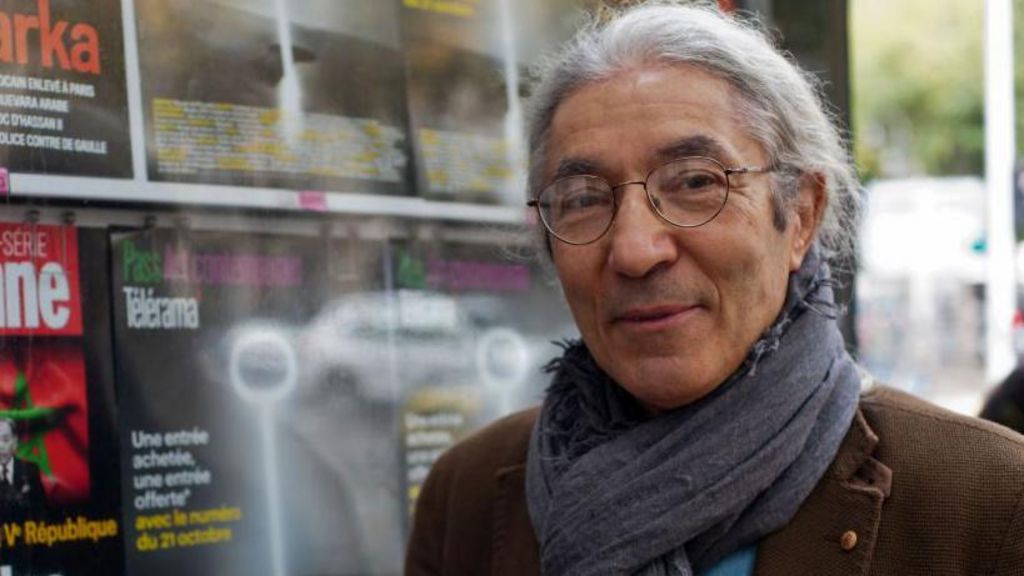
In a significant diplomatic development, Algerian President Abdelmadjid Tebboune has granted a pardon to French-Algerian writer Boualem Sansal, allowing him to leave the country nearly a year after his arrest. Sansal, 81, who is battling prostate cancer, was en route to Germany for medical treatment on a military plane on Wednesday evening. His release follows a direct appeal from German President Frank-Walter Steinmeier, who cited Sansal’s advanced age and fragile health as reasons for clemency. Steinmeier acted as a ‘trusted third party’ in the negotiations, leveraging his strong relationship with Algeria’s leader. French President Emmanuel Macron expressed gratitude to Tebboune for this ‘act of humanity,’ emphasizing France’s role in maintaining respect and calm throughout the process. Sansal had been sentenced to five years in prison in July for undermining national unity through remarks questioning Algeria’s borders. His case had exacerbated tensions between France and Algeria, already strained by France’s recognition of Moroccan sovereignty over Western Sahara and other diplomatic spats. The release marks a potential thaw in relations, though tensions persist, particularly over the imprisonment of French sportswriter Christophe Gleizes. French Foreign Minister Jean-Noël Barrot praised diplomatic efforts and expressed hope for Gleizes’s imminent release.
分类: politics
-
Court hears case to disqualify Central African Republic’s president from December election
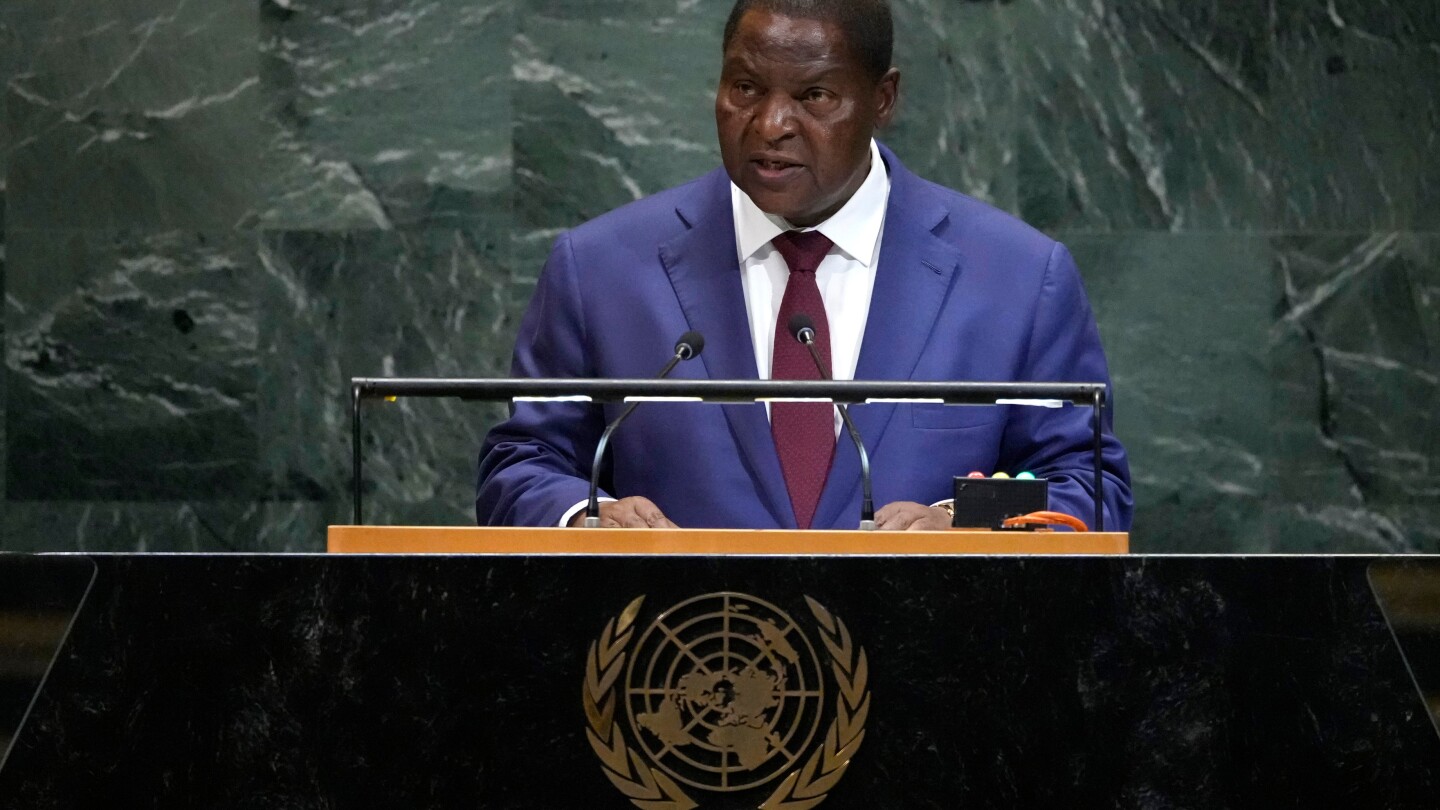
In Bangui, the capital of the Central African Republic (CAR), the nation’s constitutional court commenced hearings on Wednesday regarding a petition seeking to bar President Faustin Archange Touadera from contesting the upcoming December presidential election. The petition, lodged by the Observatory for Democratic Governance, a civil society organization, contends that Touadera fails to meet the constitutional prerequisites for presidential candidacy. Elysée Nguimalé, the group’s president, has raised concerns over the origin of Touadera’s name, asserting that it implies an ambiguous lineage. Nguimalé argued that the name ‘Touadera’ in the president’s native tongue translates to ‘a child abandoned by his maternal uncles,’ suggesting an unknown paternal lineage. This, he claims, violates Article 65 of the country’s Family Code, which mandates clear ancestry for presidential candidates. Territorial Administration Minister Bruno Yapandé dismissed the petition as an attempt to ‘sow confusion among the public.’ The court’s decision remains pending, with no clear timeline for a verdict. The controversy unfolds as Touadera seeks a third term, made possible by the abolition of term limits in 2023. The election is set against a backdrop of a lingering security crisis and Touadera’s efforts to secure Russian support. Meanwhile, opposition leader Anicet Georges Dologuélé faces potential statelessness after the government refused to issue him a passport. The final list of candidates for the December 28 election has yet to be released.
-
Trump’s decision that the US boycott the G20 summit is ‘their loss,’ South African president says
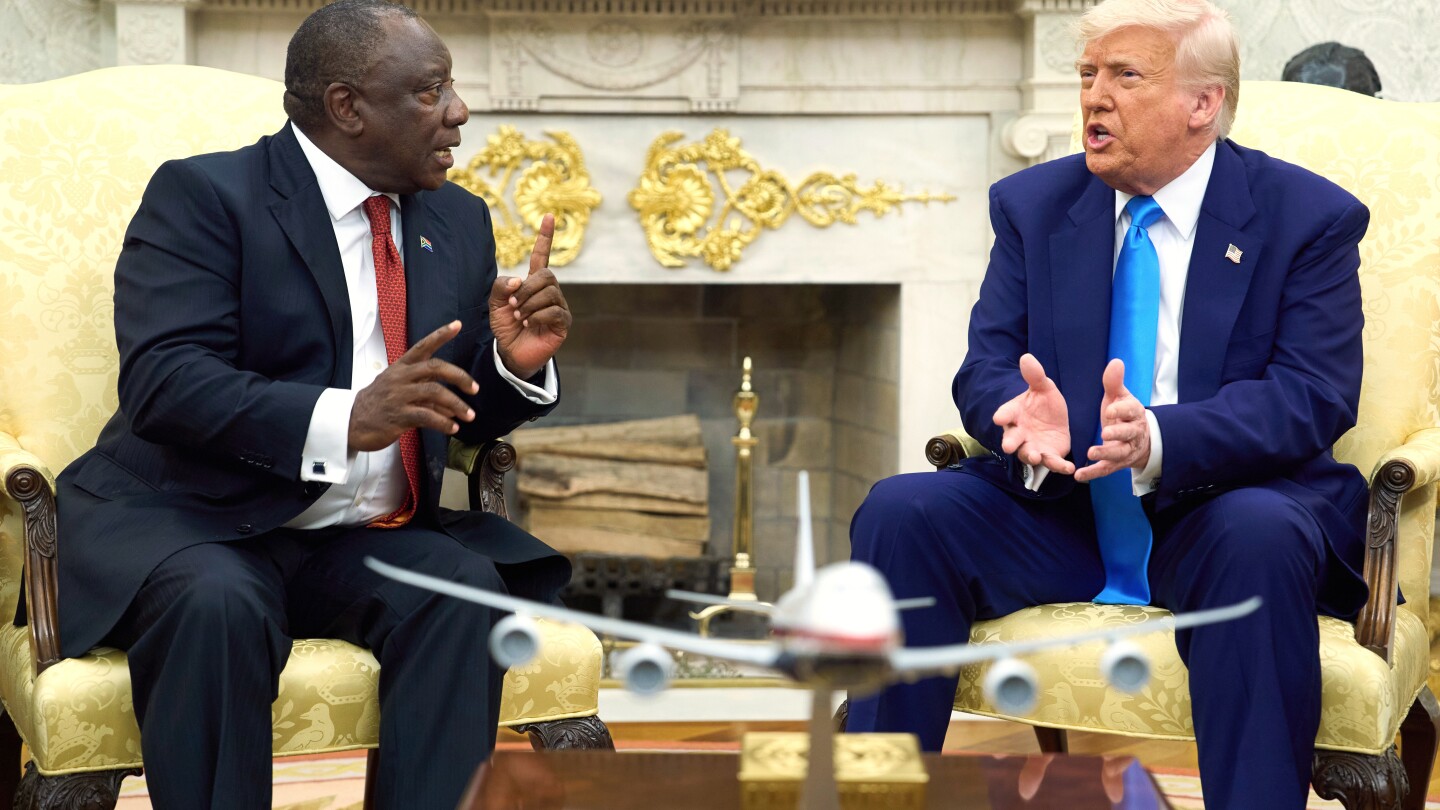
CAPE TOWN, South Africa — South African President Cyril Ramaphosa has labeled the United States’ decision to boycott the upcoming G20 summit in Johannesburg as “their loss.” The U.S. government’s absence from the November 22-23 meeting of global leaders was announced last week by President Donald Trump, who cited controversial and widely disputed claims about the persecution of South Africa’s white minority. Ramaphosa, speaking outside the South African Parliament on Wednesday, urged the U.S. to reconsider its stance, stating that boycott politics “doesn’t work” in his experience. He emphasized that the G20 summit would proceed as planned, with other heads of state in attendance, and that the U.S. absence would not hinder the event’s outcomes. Trump’s decision follows months of criticism directed at South Africa’s Black-led government, including its stance on Israel and allegations of anti-white racism. Ramaphosa also highlighted the U.S.’s role as the world’s largest economy, suggesting that its absence undermines its global influence. The G20, established in 1999, brings together major economies to address global economic and developmental challenges. The U.S. is set to assume the G20 presidency from South Africa at the end of the year. Trump’s claims about violence against Afrikaners have been echoed by conservative U.S. media figures and South African-born entrepreneur Elon Musk, who has accused the government of racism due to its affirmative action policies. Ramaphosa’s administration has dismissed these allegations as misinformation, while U.S.-South Africa relations have reached their lowest point since the end of apartheid in 1994.
-
Mainland says reunification to bring better lives for Taiwan people
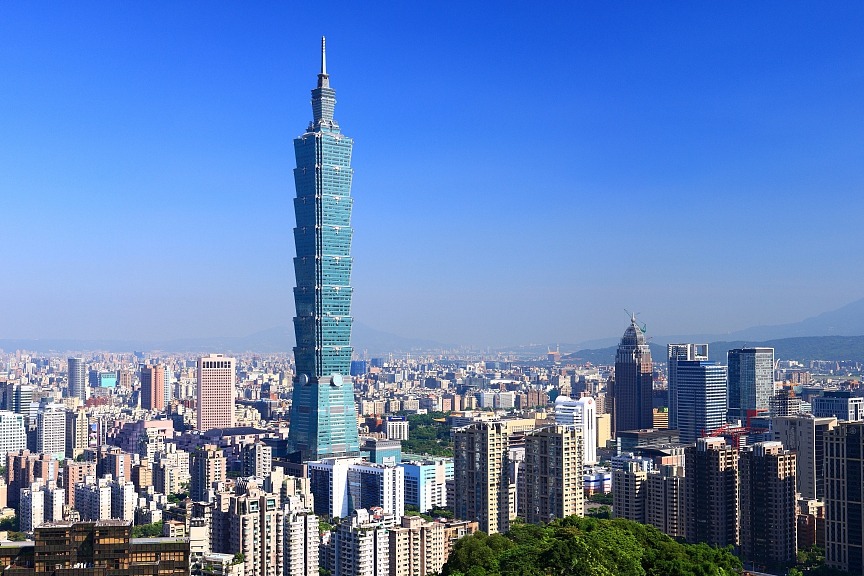
In a recent statement, Chen Binhua, spokesperson for the State Council Taiwan Affairs Office, emphasized the importance of resolving the Taiwan question and achieving national reunification for the betterment of Taiwan’s development and the well-being of its people. Speaking at a regular press briefing in Beijing, Chen highlighted that both sides of the Taiwan Strait are Chinese and are fully capable of jointly discussing and deciding on internal affairs to ensure the destiny of the Chinese nation remains in the hands of its people. Chen firmly stated that ‘Taiwan independence’ is not a viable path and that confrontation offers no solution. He underscored that advancing cross-Strait relations toward complete reunification is essential for ensuring lasting peace and shared prosperity. The 1992 Consensus, which upholds the one-China principle, was reiterated as the political foundation for cross-Strait relations and a cornerstone for regional peace and stability. Chen noted that this consensus has facilitated talks, agreements, and broad consensus between the two sides, promoting economic and social well-being while maintaining stability. The mainland expressed its willingness to collaborate with all political parties, groups, and individuals in Taiwan who support the one-China principle and oppose ‘Taiwan independence’ to engage in extensive consultations on cross-Strait relations and Taiwan’s future. Chen called on political parties and people from all walks of life in Taiwan to recognize the historical trend, uphold the overall interest of the Chinese nation, and work together with the mainland to safeguard peace and stability in the Strait, paving the way for national rejuvenation and reunification.
-
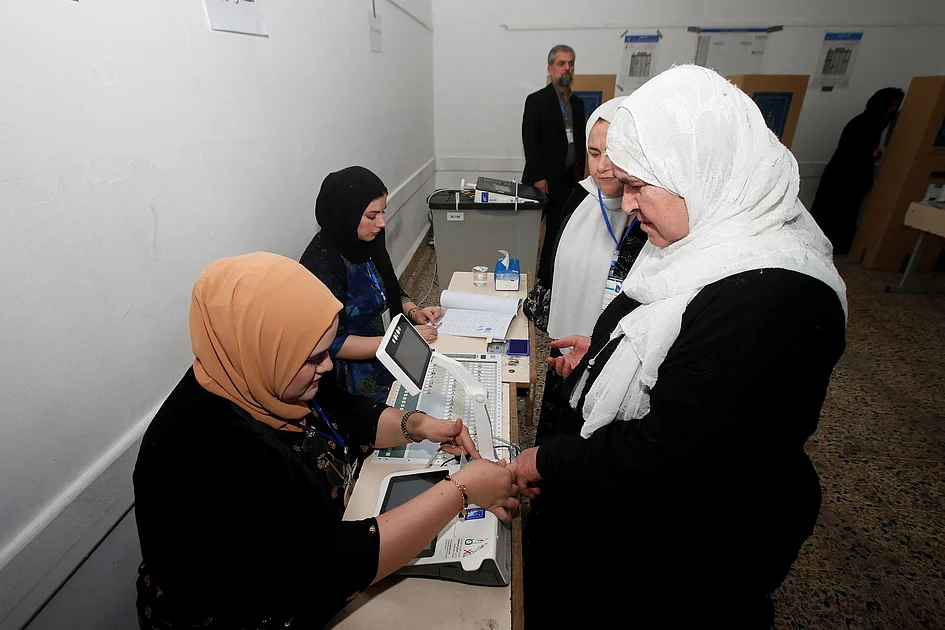
Iraqi voters turn out in numbers as region watches on
In a surprising development, Iraq’s parliamentary elections on Tuesday saw a significant voter turnout of over 55 percent, defying expectations and calls for a boycott by influential Shia cleric Moqtada Sadr. More than 12 million out of 21 million eligible voters participated, marking a sharp increase from the record low of 41 percent in 2021. This election, held at a critical juncture for Iraq and the broader Middle East, underscores the country’s fragile stability amid ongoing challenges of corruption, poor infrastructure, and regional proxy influences. Preliminary results are expected within 24 hours, with Prime Minister Mohammed Shia al-Sudani likely to secure a large bloc but fall short of a majority. Analysts view the high turnout as a positive sign for Iraq’s democracy, suggesting that Sadr’s influence may be waning. The election also highlighted the delicate balance Iraq must maintain between its allies, Iran and the United States, as the region undergoes significant geopolitical shifts. Despite voter optimism for change, many remain skeptical about the election’s ability to address systemic issues such as unemployment and mismanagement.
-
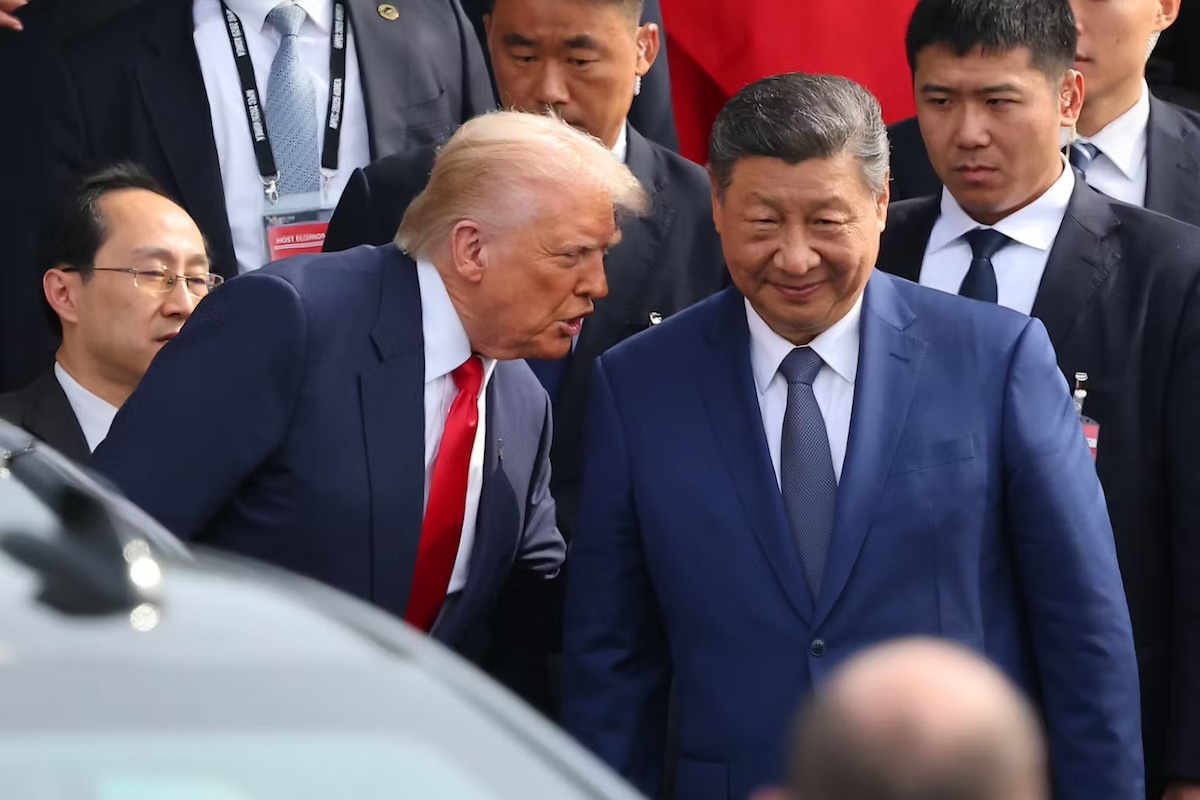
China’s moment: When Washington and Moscow both bow to Beijing
The recent Xi–Trump summit in South Korea has underscored China’s unprecedented rise on the global stage. Once a nation caught between the Cold War superpowers of the United States and the Soviet Union, China has now emerged as a pivotal player, wielding significant influence over both Washington and Moscow. This shift marks a dramatic transformation from the past, where China relied heavily on Soviet support and later on Russian military imports. Today, with Russia’s economy faltering under Western sanctions and its military weakened by the Ukraine conflict, Moscow has become increasingly dependent on Beijing. Bilateral trade between China and Russia reached a record $237 billion in 2024, with China serving as Russia’s largest trading partner and a critical supplier of dual-use goods essential for its defense industry. Meanwhile, China’s strategic leverage over the United States has also grown, particularly through its dominance in rare earth materials and global supply chains. During the recent trade turbulence, Beijing’s targeted countermeasures forced Washington back to the negotiating table, highlighting a shift from unilateral U.S. sanctions to a more balanced power dynamic. The Xi–Trump summit further revealed China’s ability to assert its interests on the global stage, with both Russia and the United States increasingly constrained by Beijing’s influence. As economic and security frictions intensify, China’s strategic use of its rare earth monopoly and its growing role in global politics signal a new era of power dynamics, where Beijing stands at the forefront of international affairs.
-
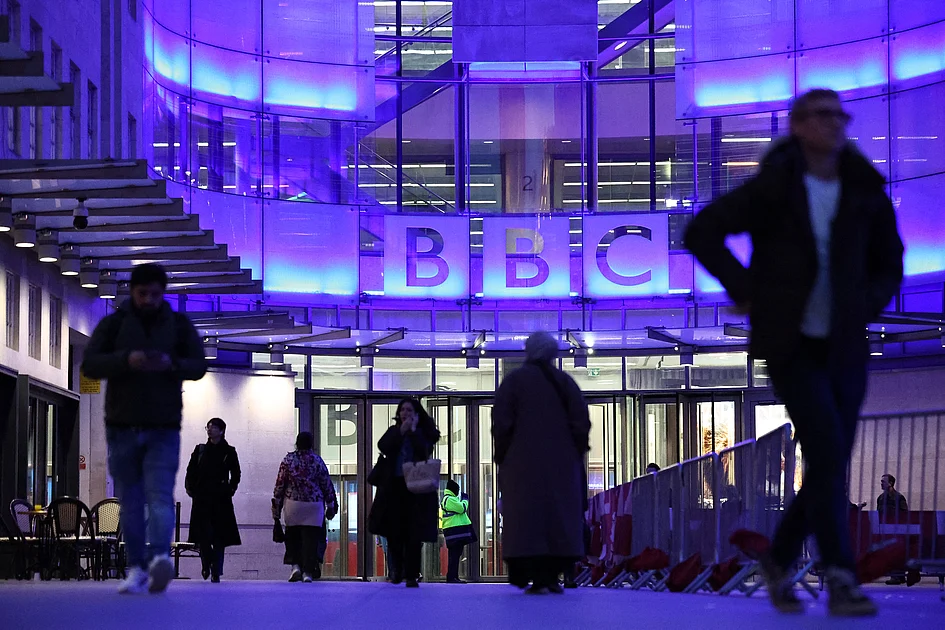
Trump claims ‘obligation’ to sue BBC over speech edit
US President Donald Trump has declared an ‘obligation’ to pursue legal action against the BBC, accusing the British broadcaster of misleading the public through a controversial edit of his speech. In a Fox News interview aired on Tuesday, Trump hinted at a potential defamation lawsuit, though he stopped short of confirming formal proceedings. This follows a letter from Trump’s legal team, seen by AFP, which threatened the BBC with a billion-dollar lawsuit. The BBC has since apologized for the edit, which allegedly gave the impression that Trump incited ‘violent action’ ahead of the 2021 Capitol assault. The broadcaster also announced a review of the letter and the resignation of its director general and top news executive over the controversy. Trump criticized the BBC, stating that it ‘defrauded the public’ and emphasized that Britain, ‘supposedly one of our great allies,’ has a stake in the broadcaster. The incident occurs during a politically sensitive period for the BBC, as it prepares to renegotiate its Royal Charter, set to expire in 2027. Trump has faced accusations of using lawsuits to suppress criticism in US media since his return to power in January. The BBC documentary featuring the edited speech aired last year, sparking widespread debate.
-
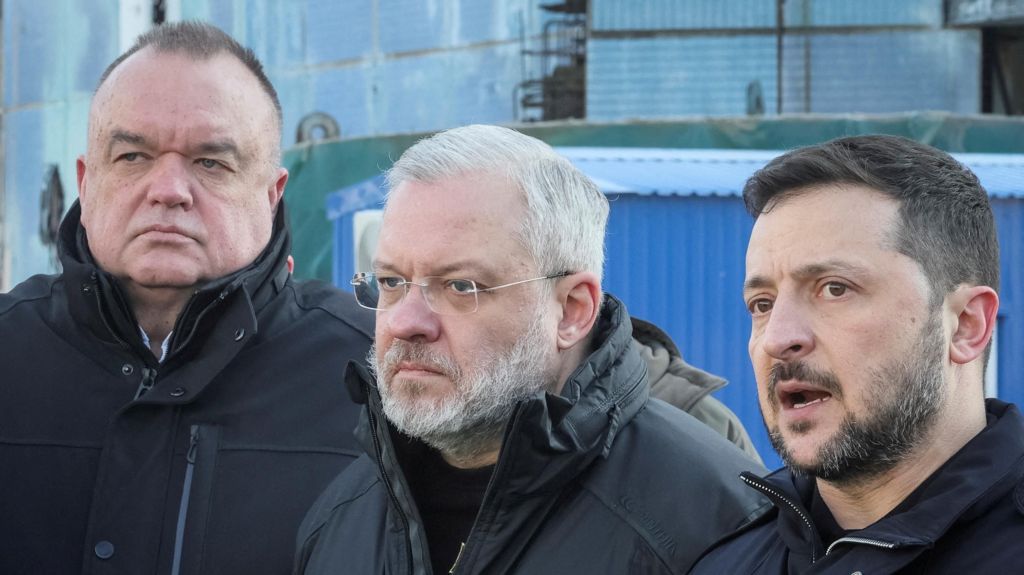
Major corruption scandal engulfs top Zelensky allies
In a significant development, Ukraine’s Energy Minister Svitlana Grynchuk and Justice Minister Herman Halushchenko have resigned following a major corruption investigation in the country’s energy sector. President Volodymyr Zelensky called for their removal on Wednesday, just days after anti-corruption bodies accused several individuals of orchestrating a massive embezzlement scheme, including at the national nuclear operator Enerhoatom. The scandal has implicated close associates of Zelensky, raising questions about his administration’s commitment to anti-corruption reforms. The National Anti-Corruption Bureau of Ukraine (Nabu) and the Specialised Anti-Corruption Prosecutor’s Office (Sap) revealed that the 15-month investigation uncovered the involvement of four government members, with approximately $100 million laundered and transferred abroad, including to Russia. The funds were allegedly funneled through an office in Kyiv linked to the family of former Ukrainian lawmaker and current Russian senator Andriy Derkach. The scandal has erupted amidst escalating Russian attacks on Ukrainian energy infrastructure, further complicating the nation’s efforts to secure its energy supply. This incident also highlights the persistent issue of corruption in Ukraine, despite the efforts of Nabu and Sap over the past decade. Earlier this year, nationwide protests erupted over changes that threatened the independence of these anti-corruption bodies, leading to concerns about Ukraine’s EU candidacy status. While Zelensky eventually reinstated their independence, the latest scandal has reignited doubts about his dedication to combating corruption.
-
Fifty-year mortgages and $2,000 cheques: What’s behind Trump’s affordability drive?
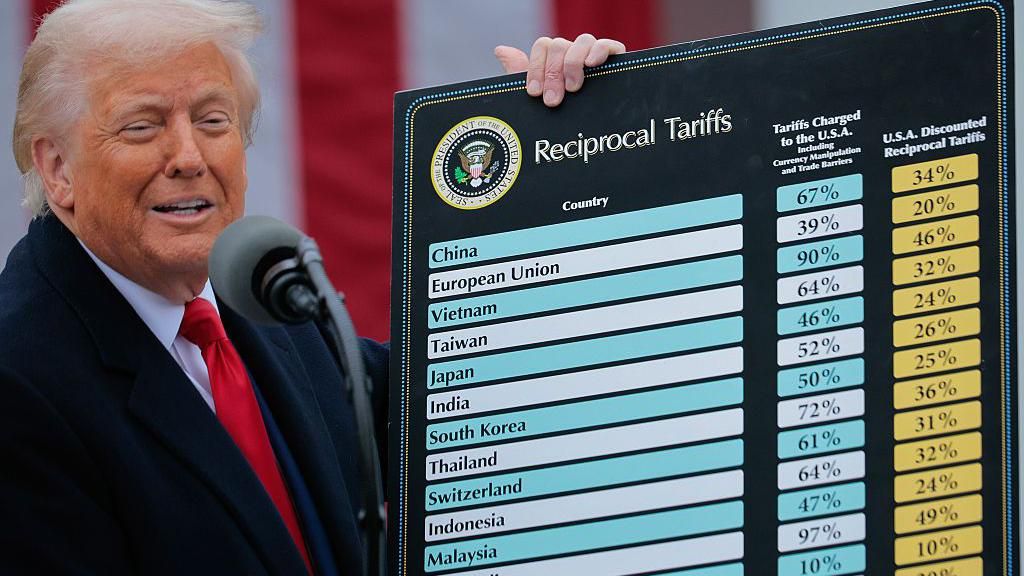
In response to growing public dissatisfaction with his economic policies, US President Donald Trump has proposed a $2,000 payment to most Americans, funded by tariff revenues. This idea, which Trump describes as a ‘subsidy,’ aims to address consumer concerns following the Republican Party’s poor performance in recent state elections. However, economists argue that the tariff revenue is insufficient to cover the cost of such payments, potentially requiring deficit financing. Treasury Secretary Scott Bessent has downplayed the likelihood of these payments, suggesting that tariff gains would instead lower tax rates under Trump’s 2025 spending package. Trump has also floated other ideas, including 50-year mortgages and redirecting expiring health insurance subsidies into direct cash payments. These proposals face significant challenges in Congress, where Republicans hold narrow majorities. Meanwhile, Trump’s administration continues to face criticism for its handling of rising costs in key sectors like beef and electricity. Despite these challenges, Trump’s political instincts remain sharp, as he seeks to recalibrate his policies to reflect public sentiment. His ability to connect with voters, however, is constrained by his position in the Oval Office, prompting discussions about potential nationwide speeches on the economy.
-
Ramaphosa says ‘boycott politics doesn’t work’ over Trump’s decision to skip G20 summit
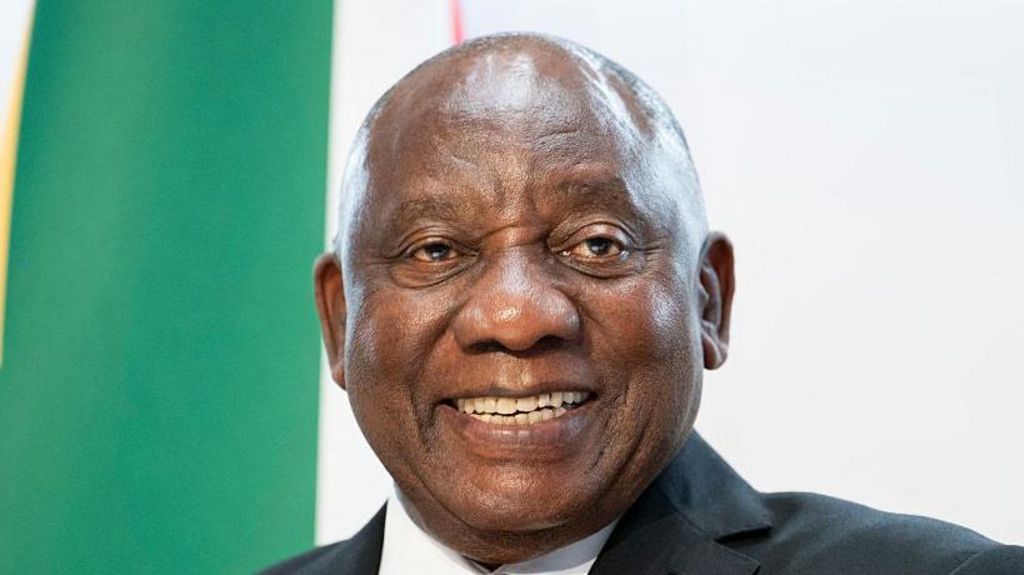
South African President Cyril Ramaphosa has strongly criticized the United States’ decision to boycott the upcoming G20 summit in Johannesburg, labeling it as a significant loss for the US. The decision, announced by US President Donald Trump, stems from unsubstantiated claims of white persecution in South Africa. Ramaphosa, speaking outside parliament, emphasized that the US’s absence would not hinder the summit’s proceedings, stating, ‘Boycott politics doesn’t work.’ He further highlighted that the US is relinquishing its crucial role as the world’s largest economy by opting out of the event. The G20 summit, scheduled for November 22-23, has been marred by controversy following Trump’s social media post calling South Africa’s hosting a ‘total disgrace.’ Trump initially planned to send Vice-President JD Vance in his stead but later retracted, reiterating his unfounded allegations of human rights abuses against Afrikaners. South Africa has firmly denied these claims, asserting that there is no evidence supporting the notion of white genocide or land confiscation without compensation. The government has labeled these accusations as baseless and lacking credible support. As the summit approaches, Ramaphosa remains steadfast in his commitment to ensuring its success, despite the US’s withdrawal.