分类: politics

  • Door is open to customs union talks with UK, EU says

    Door is open to customs union talks with UK, EU says

    In a significant diplomatic development, European Commissioner for Finance Valdis Dombrovskis has revealed the European Union’s willingness to explore enhanced trade relations with the United Kingdom, including potential discussions about a customs union arrangement. The announcement came following high-level talks with Chancellor Rachel Reeves and cabinet ministers in London on Monday.

    The Latvian commissioner, speaking exclusively to the BBC, emphasized Brussels’ “open-minded” approach to future cooperation, stating the bloc remains “ready to engage” should Britain seek closer economic integration. This position represents the most substantial indication yet of EU receptiveness to re-evaluating post-Brexit relations amid growing global instability.

    Dombrovskis outlined several areas of potential collaboration, notably suggesting that Britain and the EU could eliminate “most” food checks between territories if the UK aligns with EU sanitary and phytosanitary standards. Additionally, he confirmed advanced negotiations regarding a youth mobility scheme and expressed EU openness to revisiting Britain’s participation in the €150 billion SAFE defense loans program, despite previous negotiations collapsing in November.

    The meeting, which included European Commissioner for Trade Maroš Šefčovič alongside British ministers Peter Kyle and Nick Thomas Symonds, established a new diplomatic forum dubbed the “Quint” by officials. This group aims to coordinate responses to rapidly changing global trade and economic conditions through regular consultations.

    Chancellor Reeves articulated the pressing need for strengthened UK-EU cooperation, warning that “we are sliding towards a world where the rules are less clear.” She emphasized shared values and objectives between Britain and the EU regarding economic policy, trade, and security matters.

    The commissioner’s comments arrive amidst mounting pressure within the Labour party to reconsider customs union arrangements, despite the party’s manifesto explicitly ruling out rejoining either the EU customs union or single market. Justice Secretary David Lammy has previously advocated that such arrangements could stimulate economic growth.

    Dombrovskis acknowledged that single market access would require accepting freedom of movement principles, making such a scenario unlikely. However, he stressed the EU’s commitment to pragmatic cooperation where mutual interests align, particularly given recent global trade tensions that saw the European Commission threaten retaliatory tariffs against the United States before reaching a diplomatic resolution.

  • After months of acrimony, Colombia’s Petro is about to meet Trump

    After months of acrimony, Colombia’s Petro is about to meet Trump

    Colombian President Gustavo Petro is embarking on a critically important diplomatic mission to Washington for his first face-to-face meeting with US President Donald Trump, following months of escalating tensions and hostile exchanges between the two leaders. The high-stakes encounter at the White House on Tuesday will address multiple pressing issues including Venezuela’s political crisis, narcotics trafficking, oil security, and controversial US military operations targeting alleged drug vessels.

    The relationship between the two nations has been strained by Petro’s repeated condemnations of US foreign policy, including his comparison of US Immigration and Customs Enforcement agents to ‘Nazi brigades’ and accusations of American imperialistic treatment of other countries. Conversely, Trump has criticized Colombia’s anti-narcotics efforts, accusing Petro’s administration of insufficient action against cocaine flow and threatening expanded military strikes in the region.

    A significant breakthrough occurred following a January 3rd US military operation that seized Venezuela’s President Nicolás Maduro, after which the two leaders held what was described as a ‘cordial’ phone conversation that Colombian officials characterized as an ‘180-degree turn from both sides.’ US Senator Rand Paul of Kentucky played a pivotal role in facilitating this diplomatic opening, expressing his belief that relations were heading in the wrong direction and required intervention.

    Central to their discussions will be security concerns along the 1,367-mile Colombia-Venezuela border, where the National Liberation Army (ELN) guerrilla group maintains significant control over drug trafficking, extortion operations, and illegal mining activities. According to security analysts from Insight Crime, approximately 1,200 of ELN’s 6,000 members operate in Venezuela, often collaborating with corrupt elements within the Venezuelan military establishment.

    The meeting holds particular significance for US oil companies seeking to operate in Venezuela post-Maduro, as ELN forces pose substantial security threats to foreign investors and employees. Elizabeth Dickinson of International Crisis Group notes that asking Venezuelan military forces to combat ELN presents challenges due to their aligned financial interests in the group’s illicit operations.

    Despite recent tensions that led Colombia to temporarily suspend intelligence sharing with US agencies, military cooperation between the two nations has continued through the Drug Enforcement Administration and Colombian police forces. The outcome of this diplomatic encounter could significantly impact Colombia’s upcoming presidential election in August, where Petro supports Senator Iván Cepeda as his potential successor.

  • Witkoff, Araghchi expected to meet on Friday for possible nuclear deal discussions: Axios

    Witkoff, Araghchi expected to meet on Friday for possible nuclear deal discussions: Axios

    Senior American and Iranian diplomats are preparing for a pivotal meeting in Istanbul this Friday, signaling a potential breakthrough in nuclear negotiations. According to an Axios report published Monday, US Special Envoy Steve Witkoff and Iranian Foreign Minister Abbas Araghchi will convene in the Turkish capital to explore pathways toward a renewed nuclear agreement.

    The upcoming discussions, confirmed by two informed sources, represent the most significant direct diplomatic engagement between the two nations in recent months. The meeting occurs against a backdrop of escalating regional tensions and international concerns about Iran’s nuclear advancements.

    In a related development, Reuters has learned from a senior regional diplomat that several key Middle Eastern nations will participate in the Istanbul gathering. The anticipated attendance includes representatives from Saudi Arabia, the United Arab Emirates, Oman, and Egypt, indicating broad regional interest in stabilizing nuclear diplomacy.

    The planned meeting follows recent diplomatic movements, including Witkoff’s scheduled visit to Israel for consultations with Prime Minister Netanyahu. Meanwhile, Iranian officials have reportedly been evaluating diplomatic options with the United States to reduce mounting fears of military confrontation.

    This diplomatic initiative emerges as the region witnesses parallel developments, including Saudi Arabia’s recent suspension of 1,800 Umrah travel agencies due to performance issues, highlighting the interconnected nature of regional stability and economic concerns.

  • Federal officers in Minneapolis to get body cameras ‘effective immediately’

    Federal officers in Minneapolis to get body cameras ‘effective immediately’

    The U.S. Department of Homeland Security (DHS) has announced the immediate deployment of body cameras to all federal immigration agents operating in Minneapolis, Minnesota. This policy shift follows escalating tensions over the January deaths of two American citizens, Alex Pretti and Renee Good, during heightened immigration enforcement operations in the region.

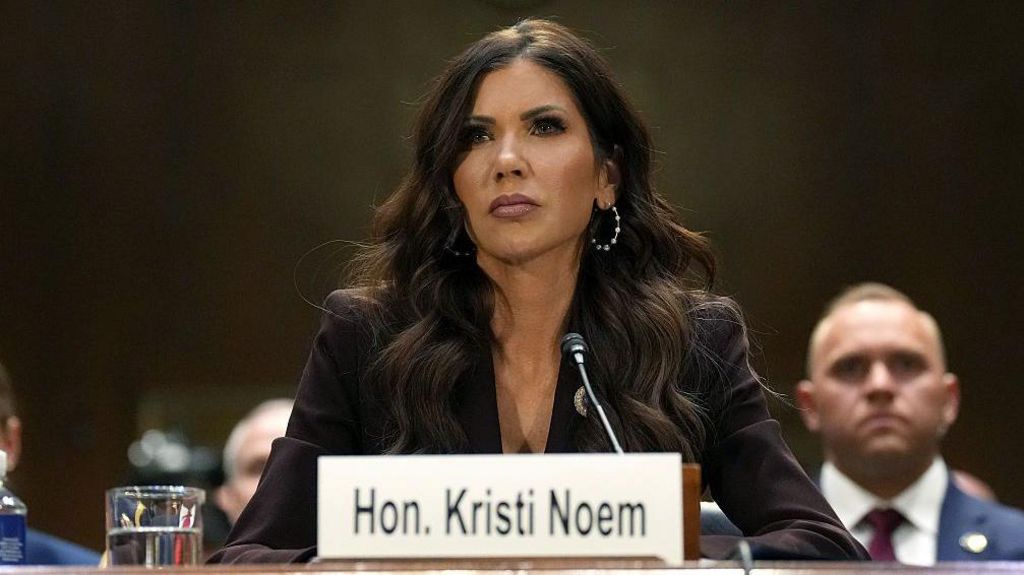
    DHS Secretary Kristi Noem confirmed the rollout via social media on Monday, coinciding with the Hennepin County Medical Examiner’s classification of Pretti’s January 24th death as a homicide. The examiner’s report specified Pretti sustained multiple gunshot wounds from one or more law enforcement officers before succumbing to injuries at Hennepin County Medical Center. While homicide denotes a human killing another, it does not automatically imply criminal wrongdoing.

    U.S. Customs and Border Protection disclosed that two agents involved in Pretti’s shooting were equipped with body cameras and have been placed on administrative leave. The U.S. Department of Justice has launched a civil rights investigation into the incident.

    Secretary Noem indicated plans to expand the body camera program nationally once funding becomes available. This commitment emerges amid a partial government shutdown, with Democrats insisting on immigration reforms—including universal body camera usage—as conditions for funding legislation.

    President Donald Trump endorsed the technology, stating body cameras ‘generally tend to be good for law enforcement because people can’t lie about what’s happening,’ estimating they’re ‘80% good for law enforcement.’

    In response to the shooting, the administration replaced Minneapolis-based U.S. Border Patrol Chief Gregory Bovino with former immigration official Tom Homan. Homan has met with local leaders including Governor Tim Walz and Minneapolis Mayor Michael Frey to address community tensions. Both officials have demanded complete withdrawal of federal agents from the capital region.

    Homan acknowledged authorities are developing plans to reduce federal presence in Minneapolis, though operational changes would depend on state and local cooperation with federal authorities. The administration has criticized Minneapolis’ sanctuary city policy prohibiting municipal employees from enforcing immigration laws.

    Mayor Frey emphasized prioritizing local police focus on community safety while maintaining selective cooperation with federal authorities. The ongoing deployment of over 3,000 federal immigration officers throughout Minnesota implements President Trump’s campaign promise to intensify immigration enforcement.

  • Jordan says will not be ‘launching pad for any military action against Iran’

    Jordan says will not be ‘launching pad for any military action against Iran’

    Jordan has formally communicated to Iranian leadership that it will not permit its territory or airspace to be utilized for military operations against the Islamic Republic. The assurance came during a diplomatic phone conversation on Monday between Jordan’s Deputy Prime Minister Ayman Safadi and Iranian Foreign Minister Abbas Araghchi.

    Safadi, who concurrently serves as Minister of Foreign Affairs and Expatriates, explicitly stated that the Hashemite Kingdom would not function as ‘a battleground in any regional conflict or a launching pad for any military action against Iran.’ The declaration arrives amidst heightened regional tensions and reported U.S. threats of potential strikes against Iranian targets.

    The Jordanian diplomat further emphasized Amman’s commitment to national sovereignty, declaring that Jordan ‘will not permit any party to violate its airspace or threaten its security and the safety of its citizens.’ This position aligns with similar statements recently issued by other regional powers, including the United Arab Emirates and Saudi Arabia, who have likewise declared their unwillingness to facilitate military actions against Iran.

    The diplomatic exchange represents a significant development in Middle Eastern geopolitics, demonstrating Jordan’s cautious approach to navigating complex international relationships while maintaining its security interests. The kingdom’s stance reflects broader regional concerns about potential escalation and the destabilizing effects of military confrontation in the already volatile Middle East.

  • Iran weighs nuclear diplomacy with US to cool fears of war

    Iran weighs nuclear diplomacy with US to cool fears of war

    Diplomatic channels between the United States and Iran show signs of reactivation as both nations demonstrate willingness to resume negotiations concerning Tehran’s nuclear program. According to a foreign ministry official speaking on Monday, Iranian authorities are currently evaluating the conditions for reengaging in dialogue with American representatives. This development emerges against a backdrop of escalating regional tensions, amplified by a substantial US naval presence near Iranian territorial waters following last month’s violent suppression of anti-government protests—the most severe domestic unrest since Iran’s 1979 revolution.

    Multiple sources indicate that US Special Envoy Steve Witkoff and Iranian Foreign Minister Abbas Araghchi may convene in Turkey within coming days, with Turkish officials reportedly facilitating de-escalation efforts. The potential meeting represents a significant diplomatic opening amid heightened military posturing from both sides. President Donald Trump, who previously abstained from direct intervention during Iran’s domestic crackdown, has subsequently intensified pressure on Tehran through both military deployments and demands for nuclear concessions.

    The negotiation framework remains contentious, with Washington historically insisting on three primary conditions: complete cessation of uranium enrichment, limitations on ballistic missile development, and termination of support for regional proxy forces. Iranian officials have consistently rejected these demands as violations of national sovereignty, though sources suggest Tehran might demonstrate flexibility regarding enrichment activities. Specifically, Iranian officials indicate readiness to transfer 400 kilograms of highly enriched uranium abroad and potentially accept zero enrichment under a consortium arrangement, provided the United States removes preconditions and reduces military assets near Iran’s borders.

    Satellite imagery analysis reveals preliminary reconstruction efforts at nuclear facilities in Isfahan and Natanz previously damaged during joint US-Israeli airstrikes in June last year. While new roofing appears on two destroyed structures, no comprehensive rebuilding is evident. The International Atomic Energy Agency continues seeking clarification regarding Iran’s current highly enriched uranium stockpiles, with Western nations expressing concern about potential weapons development—a claim Tehran consistently denies, maintaining its nuclear program serves exclusively peaceful purposes.

    The diplomatic impasse, stalled since May 2023 after five inconclusive negotiation rounds, centers on Iran’s insistence on maintaining domestic enrichment capabilities and retaining existing uranium stockpiles. Iranian sources suggest a potential compromise involving uranium shipment abroad and temporary enrichment pause in exchange for sanctions relief, indicating that ballistic missile programs rather than nuclear activities presently constitute the more significant negotiation obstacle.

  • Steve Bannon boasted about Farage ties in exchange with Epstein

    Steve Bannon boasted about Farage ties in exchange with Epstein

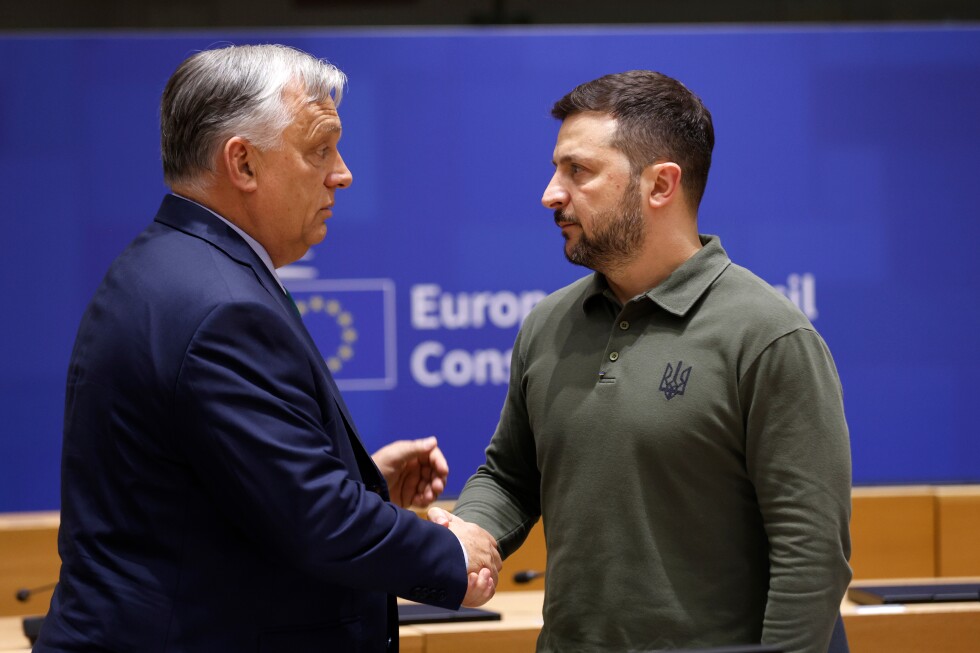
    Newly disclosed court documents reveal a March 2018 exchange between former Trump strategist Steve Bannon and convicted sex offender Jeffrey Epstein, exposing Bannon’s central role in coordinating Europe’s far-right political movements. In messages arranging a Paris meeting, Bannon boasted to Epstein about serving as advisor to Britain’s Nigel Farage alongside other prominent nationalist leaders including Italy’s Matteo Salvini, Germany’s Alternative für Deutschland (AfD), and Hungarian Prime Minister Viktor Orbán.

    The correspondence occurred hours after Bannon addressed France’s Front National party, declaring that ‘history is on our side and will bring us victory.’ Bannon specifically highlighted upcoming European Parliament elections, predicting nationalist parties could surge from 92 to 200 seats to block cryptocurrency legislation and advance their agenda. Epstein responded with ‘Roger that,’ acknowledging the strategic discussion.

    This collaboration developed less than two years after the Brexit referendum, where Farage had been a dominant campaign figure. The messages confirm earlier reports that throughout 2017-2018, Farage and Bannon discussed forming an international alliance of right-wing populists. The documents further reveal Epstein provided Bannon with accommodation on his private island and arranged European dinners during this period of their growing alliance.

    Subsequent messages from November 2018 show Bannon updating Epstein from Britain about being ‘pulled into the Brexit thing this morning with Nigel, Boris [Johnson] and [Jacob] Rees Mogg.’ Epstein advised extended stay in Britain, which Bannon described as a ‘hot mess.’

    The revelations gain contemporary significance with the emergence of a January 2025 photograph showing Bannon smiling alongside Matt Goodwin, Reform UK’s candidate in the critical Gorton and Denton by-election. Goodwin, an academic turned GB News presenter, previously documented attending Farage’s Washington events and private gatherings with Bannon, who declared Britain’s Conservative Party ‘finished’ and predicted Reform UK would lead a political realignment mirroring American populist movements.

  • ‘Unfounded’: UAE categorically denies claims it will oversee Gaza’s civilian administration

    ‘Unfounded’: UAE categorically denies claims it will oversee Gaza’s civilian administration

    The United Arab Emirates has issued a categorical denial of what it describes as “false and unfounded” reports suggesting the nation would assume civilian administration over Gaza. Reem Al Hashimy, Minister of State for International Cooperation, explicitly stated that governance and administrative responsibilities for Gaza remain the exclusive domain of the Palestinian people.

    In her official statement, Minister Al Hashimy emphasized the UAE’s unwavering commitment to enhancing humanitarian assistance for Gaza’s population while simultaneously advancing efforts toward lasting peace between Israelis and Palestinians. This commitment is demonstrated through the UAE’s participation as a founding member of the Board of Peace and its membership on the Gaza Executive Board.

    The diplomatic context dates to January, when UAE President Sheikh Mohamed bin Zayed Al Nahyan accepted a formal invitation from the United States to join the newly established Board of Peace. The Ministry of Foreign Affairs clarified that this decision reflects the UAE’s endorsement of the full implementation of US President Donald Trump’s comprehensive 20-point peace proposal for Gaza.

    Concurrently, Minister Al Hashimy’s appointment to the Gaza Executive Board positions her at the center of coordination efforts between the National Committee for the Administration of Gaza and the broader Board of Peace framework. According to White House documentation, this executive board will function as a support mechanism for the Office of the High Representative and the NCAG, focusing on ensuring effective governance structures and superior service delivery aimed at fostering peace, stability, and economic prosperity for Gaza’s inhabitants.

    The UAE’s diplomatic stance remains consistent with its previously articulated position regarding Palestinian self-determination, with senior officials having previously characterized any annexation attempts as crossing a “red line” while simultaneously expressing reservations about participating in international security forces for Gaza.

  • Former Jiangxi official sentenced to life for bribery

    Former Jiangxi official sentenced to life for bribery

    In a significant judicial ruling demonstrating China’s ongoing anti-corruption campaign, Tang Yijun, former senior official from Jiangxi province, has been sentenced to life imprisonment for extensive bribery offenses. The Xiamen Intermediate People’s Court in Fujian province delivered the verdict on Monday, concluding a high-profile case that has drawn national attention.

    The court established that between 2006 and 2022, Tang systematically exploited his influential positions—including serving as governor of Liaoning province, Party chief of Ningbo city in Zhejiang province, and minister of justice—to provide unlawful advantages to various organizations and individuals. His corrupt activities encompassed multiple sectors, facilitating company listings, orchestrating favorable land repurchase deals, securing bank loans, and manipulating legal case outcomes.

    In exchange for these illicit services, Tang accepted bribes exceeding 137 million yuan (approximately $19.7 million), according to official reports from China Central Television. The court determined that his actions constituted severe bribery crimes involving extraordinary sums of money, resulting in particularly substantial damage to state and public interests.

    Beyond the life imprisonment term, the court imposed additional penalties including permanent deprivation of Tang’s political rights and comprehensive confiscation of all personal assets. All illicit gains and associated proceeds recovered in the investigation will be transferred to the state treasury, with provisions for continued recovery of any outstanding amounts.

    The ruling underscores China’s intensified judicial efforts against corruption at senior governmental levels, reflecting the central government’s commitment to maintaining disciplinary integrity within the Communist Party of China and public institutions.

  • US envoy Witkoff to visit Israel, meet Netanyahu, Israeli officials say

    US envoy Witkoff to visit Israel, meet Netanyahu, Israeli officials say

    In a significant diplomatic development, US President Donald Trump’s senior envoy Steve Witkoff is scheduled to arrive in Israel on Tuesday for high-level meetings with Israeli Prime Minister Benjamin Netanyahu and military leadership. This visit occurs against a backdrop of escalating regional tensions with Iran and coincides with the Trump administration’s ongoing efforts to resolve the Gaza conflict.

    Concurrently, Iran and the United States are actively negotiating terms to resume nuclear discussions, with both nations demonstrating renewed willingness to revive diplomatic channels. This potential breakthrough aims to address longstanding nuclear disagreements and alleviate mounting concerns about potential military confrontation in the region.

    According to Israeli officials, Witkoff’s meetings will serve as preparatory discussions ahead of anticipated US-Iran negotiations. These talks follow weekend consultations between Israeli military chief Eyal Zamir and US General Dan Caine at the Pentagon, indicating coordinated strategic planning between the allies.

    The diplomatic movements unfold amid heightened military preparedness by US forces near Iranian territory. This military posture follows Iran’s violent suppression of anti-government protests last month—the most severe domestic unrest since the country’s 1979 revolution. The convergence of diplomatic initiatives and military posturing creates a complex geopolitical landscape where dialogue and deterrence proceed simultaneously.

    The upcoming discussions represent the most substantial effort in months to address the nuclear standoff through diplomatic means, potentially signaling a shift from the recent cycle of escalation that has raised global concerns about regional stability.