分类: politics

  • Former Chinese advisory body official sentenced to life for bribery

    Former Chinese advisory body official sentenced to life for bribery

    In a landmark ruling demonstrating China’s intensified anti-corruption campaign, the First Intermediate People’s Court of Hainan Province has sentenced Li Weiwei, a former high-ranking official within China’s political advisory system, to life imprisonment for extensive bribery offenses. The court established that Li abused multiple official positions over a sixteen-year period from 2008 to 2024, amassing illicit gains exceeding 117 million yuan (approximately $16.87 million).

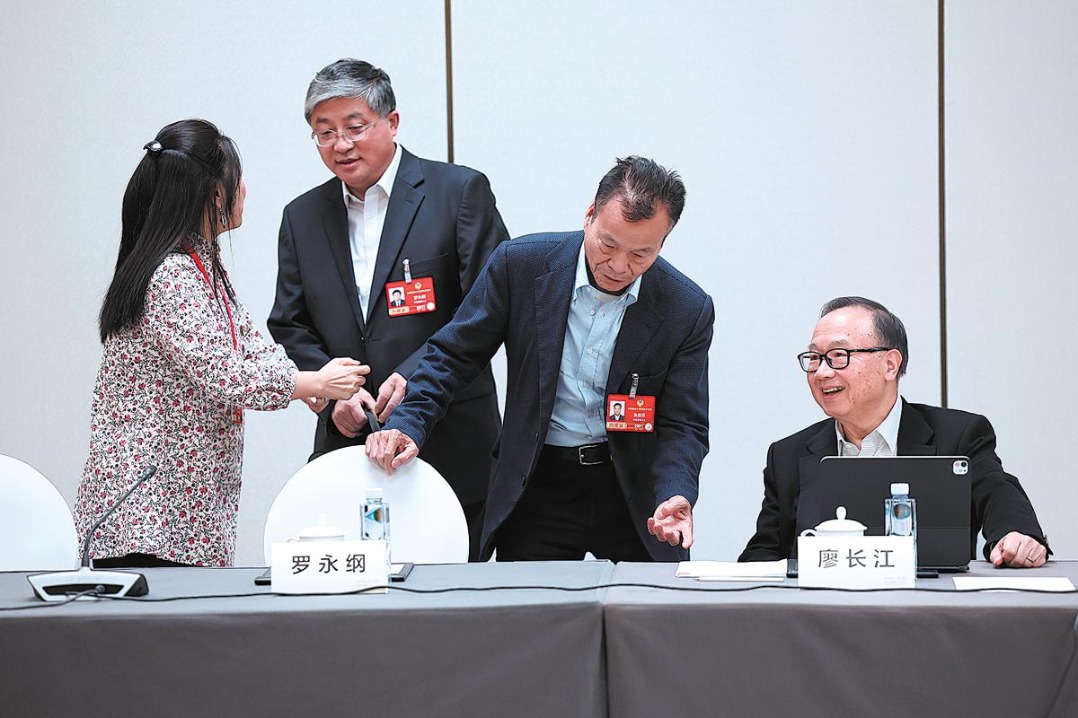
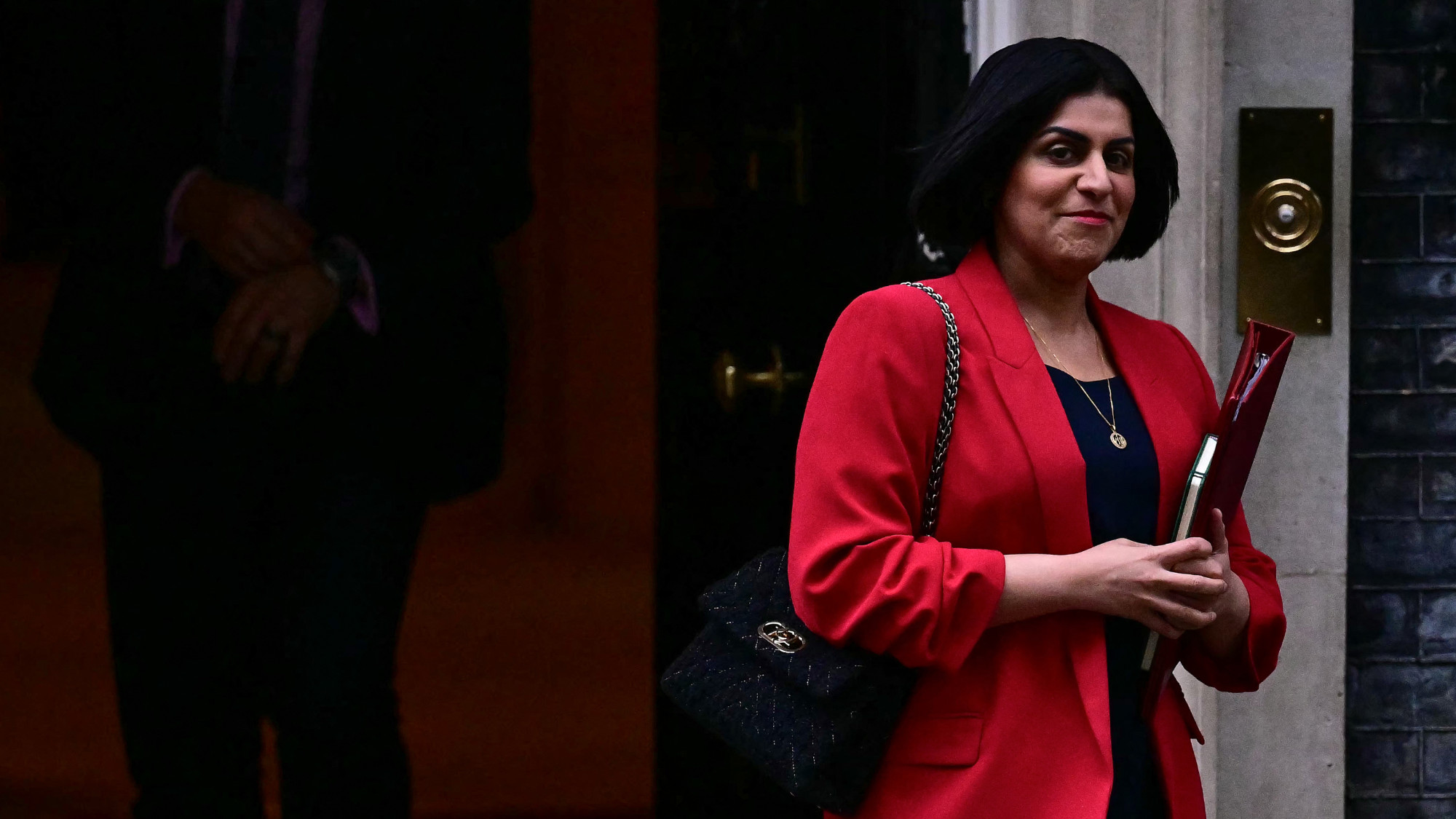
    During her extensive career, Li held several influential positions including membership on the Standing Committee of the Communist Party of China Hunan Provincial Committee, head of the United Front Work Department, and secretary of the Political and Legal Affairs Commission of the CPC Hunan Provincial Committee. Most recently, she served as deputy head of the Committee on Population, Resources and Environment under the 14th National Committee of the Chinese People’s Political Consultative Conference (CPPCC).

    The judicial investigation revealed that Li systematically exploited her authority to provide unlawful advantages to various entities in project contracting and business operations. The court characterized her actions as constituting particularly severe instances of bribery that inflicted substantial damage to national and public interests.

    In addition to the life sentence, the court imposed supplementary penalties including lifelong deprivation of political rights and comprehensive confiscation of all personal assets. All recovered illicit gains will be transferred to the state treasury, with ongoing efforts to reclaim any outstanding amounts.

    The sentencing acknowledged mitigating factors, including Li’s cooperation with investigators through truthful confession of previously unknown offenses, active return of illegal proceeds, and demonstrated remorse during judicial proceedings. These considerations contributed to the court’s decision to render a comparatively lighter punishment within statutory guidelines.

    Li’s case progressed through China’s legal system following her investigation initiation in July 2024 while still holding office, subsequent arrest in February 2025, and formal indictment in June 2025. The trial concluded on November 6, 2025, featuring comprehensive evidence presentation, cross-examinations by defense counsel, and final statements from the defendant.

  • Epstein told Ehud Barak to give Mandelson Israeli energy company role

    Epstein told Ehud Barak to give Mandelson Israeli energy company role

    Newly disclosed court documents have exposed extensive business communications between convicted sex offender Jeffrey Epstein and high-profile political figures, including former Israeli Prime Minister Ehud Barak and British politician Lord Peter Mandelson. The revelations detail Epstein’s involvement in attempted Middle Eastern energy deals and raise serious questions about inappropriate access to government information.

    According to the released correspondence, Epstein emailed Mandelson on August 2, 2013, stating he had instructed Barak to contact the British politician regarding the potential sale of Paz Oil Company, Israel’s largest fuel provider. At the time, Paz controlled approximately 30% of the Israeli fuel market and would later appear on a UN list of companies operating in illegal Israeli settlements.

    The email exchange occurred shortly after Barak concluded his term as Israel’s defense minister in March 2013. Epstein described Paz as “an Israeli oil business that will need to be sold” and explicitly told Mandelson “I told him to give you the task.” Mandelson expressed interest not only in Paz but also in Israel’s plans for transporting offshore gas to European markets.

    While the sale of Paz Oil didn’t materialize in 2013, controlling shareholder Zadik Bino did sell shares worth approximately $97 million that year due to regulatory requirements. The documents don’t clarify whether Barak ultimately contacted Mandelson about the potential deal.

    The correspondence further reveals that Mandelson, then chairman of lobbying firm Global Counsel, sought Epstein’s consultation in September 2013 regarding Israeli political consultant Asaf Eisin. Additional disclosures show that during his tenure as UK Business Secretary, Mandelson suggested to Epstein that JP Morgan’s head should “mildly threaten” the British chancellor regarding financial sector concerns.

    These revelations have prompted former Prime Minister Gordon Brown to call for an investigation into Mandelson’s apparent sharing of sensitive government information with Epstein. The controversy intensified with the release of a photograph allegedly showing Mandelson in his underwear at one of Epstein’s residences.

    Regarding his Israeli connections, the documents indicate Barak sought Epstein’s financial advisory services on multiple occasions. An FBI memo describes Epstein as “close to the former Prime Minister of Israel” and even suggests he “trained as a spy under him.” Barak visited Epstein’s New York townhouse more than 30 times between 2013 and 2017, and Epstein reportedly advised Barak on working with controversial technology company Palantir, which specializes in AI-powered military and surveillance technology.

    The ongoing release of Epstein-related documents continues to expose the extensive network of political and business connections maintained by the convicted financier, raising questions about the intersection of private business interests and government affairs.

  • Olympic officials from Africa quiz 2028 Los Angeles Summer Games leaders on visa concerns

    Olympic officials from Africa quiz 2028 Los Angeles Summer Games leaders on visa concerns

    MILAN — African representatives within the International Olympic Committee raised significant apprehensions regarding U.S. visa accessibility during discussions with Los Angeles 2028 organizers on Tuesday. The dialogue unfolded at an IOC conference where six future Olympic hosts presented progress updates, with the United States currently experiencing substantial domestic political tensions.

    IOC members from Ethiopia and Djibouti specifically questioned how the LA organizing committee would ensure “equal access” for international spectators and visitors attempting to enter the United States for the Summer Games in approximately two and a half years. The concerns were particularly relevant for residents from dozens of countries currently facing U.S. travel restrictions.

    Lydia Nsekera of Burundi, another African IOC member, later characterized the visa uncertainty as “a great worry for everybody,” including team officials. Although the Trump administration wasn’t explicitly mentioned during the Olympic meeting, the context of current U.S. immigration policies formed the subtext of discussions occurring just days before Vice President JD Vance’s scheduled appearance at the Winter Games opening ceremony.

    LA 2028 chairman Casey Wasserman addressed the assembly with prepared remarks acknowledging that “the world is complicated and unpredictable,” adding that organizers “are not naïve to this reality” and would “face it head on.” The concerns gained tangible dimension when Ethiopian IOC member Dagmawit Girmay Berhane revealed that people from 175 countries have already registered interest in purchasing tickets for the 2028 Summer Games.

    While the U.S. government has committed to visa exemptions for athletes and sports event participants, ordinary fans face standard visa application scrutiny. Berhane questioned how equal opportunity would be ensured for all ticket registrants seeking visa services. In response, U.S. Olympic Committee president Gene Sykes referenced a dedicated State Department office handling Games-related visa issues and noted that the upcoming men’s World Cup soccer tournament, co-hosted by the U.S., Canada and Mexico, would provide a practical test run for visa processing systems.

    Djibouti’s representative Aïcha Garad Ali suggested appointing a special “ambassador for visas” similar to Paris 2024’s successful initiative, which “facilitated life for us as African residents.” Sykes acknowledged this was “certainly something we can give consideration to.”

    Wasserman concluded by framing the Olympic Games as “the singular unifying force for the world” and urged focus on unity rather than division, describing Los Angeles as “not just a mirror of America, but a mirror of the world itself.” The chairman’s appearance occurred amidst unrelated personal scrutiny following the weekend release of government documents related to Jeffrey Epstein, containing flirtatious 2003 emails between Wasserman and Epstein associate Ghislaine Maxwell, for which Wasserman has expressed deep regret.

  • Trump urges Republicans to ‘take over’ voting ahead of midterm elections

    Trump urges Republicans to ‘take over’ voting ahead of midterm elections

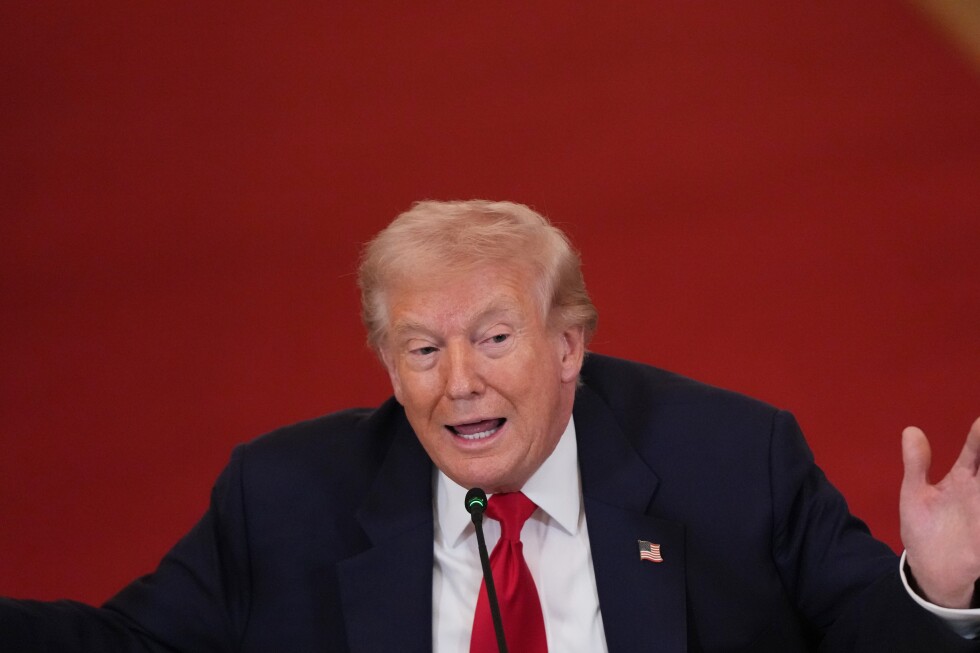
    Former President Donald Trump has escalated his campaign to transform American election administration, publicly urging Republican officials to seize control of voting processes nationwide. During a February 2 podcast appearance with former FBI deputy director Dan Bongino, Trump advocated for the nationalization of voting systems in 15 unspecified locations, marking his most direct intervention into election mechanics to date.

    This development occurs against the backdrop of mounting political challenges for Republicans as November’s midterm elections approach. The party faces growing public resistance to aggressive immigration enforcement operations—including a controversial January operation in Minneapolis that resulted in two fatalities—combined with persistent economic pressures affecting American households.

    Trump’s latest remarks follow a series of election-related controversies, including an FBI search at a Georgia election center last week connected to unsubstantiated fraud allegations from the 2020 presidential race. The former president has consistently promoted the false narrative that he won the 2020 election, despite losing to President Joe Biden.

    Analysts point to recent Democratic victories as evidence of shifting political dynamics. A Democratic candidate secured a state Senate seat in a traditionally Republican Texas district on Saturday, building upon previous Democratic successes in New Jersey and Virginia gubernatorial races, along with a progressive victory in New York City’s mayoral election.

    Trump’s presidency was marked by numerous legal challenges, including indictments in 2023 by federal prosecutors and the state of Georgia for alleged attempts to overturn the 2020 election results. These cases were subsequently dismissed following his 2024 re-election.

  • Trump lawyers call BBC’s Panorama defence ‘untenable’

    Trump lawyers call BBC’s Panorama defence ‘untenable’

    In a significant legal development, former U.S. President Donald Trump’s legal representatives have formally contested the BBC’s defensive maneuvers in an ongoing multi-billion dollar defamation lawsuit. The dispute centers on the editing of Trump’s January 6, 2021 address in the Panorama documentary “Trump: A Second Chance?” which aired shortly before the 2024 presidential election.

    The recent court filing from Trump’s attorneys characterizes the British broadcaster’s legal arguments as “untenable,” “misplaced,” and “unpersuasive.” This response comes after the BBC requested the Florida court to postpone the discovery phase—the process where both parties exchange relevant documents and evidence—pending a decision on their motion to dismiss the entire case by March 17.

    Trump’s legal team maintains that Florida courts have established rigorous standards for granting discovery stays, arguing that such a delay would be “premature” at this juncture. They contend that the BBC’s defense essentially constitutes mere denials and speculative predictions about what the plaintiff might prove, rather than providing compelling grounds for case dismissal.

    The core jurisdictional battle continues to unfold, with the BBC previously asserting that the Florida court lacks personal jurisdiction over the corporation and that the venue is improper. Conversely, Trump’s lawyers emphasize that Florida residents had access to the controversial program, thereby establishing sufficient grounds for the case to proceed in the state.

    A BBC spokesperson reiterated their commitment to defending the case while declining to comment further on ongoing proceedings. Although the broadcaster previously apologized for the editing approach, it has consistently rejected compensation demands and denied any basis for defamation or trade practices claims.

    Should the case advance beyond preliminary motions, a tentative trial date has been set for 2027, indicating the potential for prolonged legal proceedings between the former president and the international media organization.

  • South Sudan’s leader sacks aides after dead man appointed

    South Sudan’s leader sacks aides after dead man appointed

    In a significant administrative shakeup, South Sudanese President Salva Kiir has terminated two senior presidential staff members following a highly publicized incident involving the posthumous appointment of a deceased opposition figure to an electoral oversight panel.

    The controversy emerged when a presidential decree dated December 30th named Steward Soroba Budia, a member of the opposition United Democratic Party (UDP), to a committee tasked with overseeing election preparations. However, local media outlets quickly revealed that Budia had passed away five years prior, triggering widespread ridicule on social media platforms.

    Without specifying reasons for the dismissals, an official statement announced the removal of Presidential Press Secretary David Amour Major and Chief Administrator of the Ministry of Presidential Affairs Valentino Dhel Maluet. The communiqué, posted on the president’s official Facebook account and signed by Minister of Presidential Affairs Africano Mande Gedima, expressed the president’s ‘profound gratitude’ for their service while indicating they had been ‘relieved of their duties.’

    Prior to his dismissal, Amour had issued a statement explaining that the presidential office had relied on the ‘accuracy and currency’ of names submitted by unspecified ‘stakeholders’ for panel inclusion. ‘It is now evident that a thorough verification was not done by one of the stakeholders which resulted in this unfortunate administrative oversight,’ Amour stated, though he declined to identify the responsible party. The UDP has remained silent on the matter.

    The deceased appointee, Budia, had been a signatory to the 2018 peace agreement that aimed to stabilize South Sudan following years of conflict after gaining independence in 2011. President Kiir established the electoral panel with representatives from various political factions to facilitate December elections, though significant doubts persist regarding the feasibility of holding votes amid ongoing violence.

    The United Nations reports that recent fighting has displaced over 180,000 civilians, with Jonglei state experiencing particularly severe clashes between government forces and militants aligned with suspended Vice-President Riek Machar. Currently under house arrest facing charges of murder, treason, and crimes against humanity—all of which he denies—Machar remains a central figure in the country’s political landscape. Both Kiir and Machar were supposed to collaborate within a unity government established through the 2018 settlement, which ended a five-year civil war stemming from their power struggle.

  • Jailing of Pakistani rights lawyers marks ‘new wave’ in dissent crackdown, says former minister

    Jailing of Pakistani rights lawyers marks ‘new wave’ in dissent crackdown, says former minister

    Pakistan’s judicial system faces mounting international scrutiny following the unprecedented 17-year prison sentencing of two human rights lawyers over social media posts. Imaan Mazari, 32, and her spouse Hadi Ali Chattha, 33, were convicted under the country’s controversial Prevention of Electronic Crimes Act (PECA) for expressing solidarity with Baloch and Pashtun activists on platform X.

    The case has drawn sharp condemnation from human rights organizations and former government officials who describe it as part of a systematic crackdown on dissent. According to Amnesty International, the trial proceeded with ‘unusual haste,’ denying the defendants basic legal protections including access to counsel, family visitation rights, and the opportunity to present exculpatory evidence.

    Dr. Shireen Mazari, Imaan’s mother and former Federal Human Rights Minister, characterized the proceedings as ‘obviously pre-fabricated,’ noting that her daughter had been denied food and water during detention. The sentencing includes five years for ‘glorification of an offence,’ ten years for ‘cyberterrorism,’ and two years for disseminating ‘false information.’

    This case emerges against a backdrop of concerning constitutional amendments that have significantly altered Pakistan’s judicial landscape. The 26th Amendment (October 2024) transferred Supreme Court chief justice selection authority to parliamentary committees, while the 27th Amendment (January 2025) restructured the Judicial Commission to include parliamentary members, effectively marginalizing judicial representatives.

    Notably, the recent amendments granted lifelong immunity from prosecution to General Asim Munir, Chief of Defence Forces, while expanding his authority across all military branches. The United Nations Human Rights Committee has condemned these changes as attacks on judicial independence.

    The Mazari-Chattha case exemplifies a broader pattern of suppression, with at least nine journalists targeted under PECA legislation in early 2025 alone. Shahzad Akbar, former government adviser now in exile, highlighted the disproportionate nature of the sentencing: ‘A tweet and peaceful criticism of human rights violations result in 17-year sentence,’ compared to approximately 14 years for manslaughter convictions.

    As international pressure mounts, the defendants are expected to appeal their convictions while rights organizations demand immediate judicial reforms to protect freedom of expression and restore judicial independence in Pakistan.

  • Elite Yemeni fighters swap allegiances from UAE to Saudi Arabia

    Elite Yemeni fighters swap allegiances from UAE to Saudi Arabia

    A significant realignment of military loyalties is underway in southern Yemen as the National Resistance Forces (NRF) and other armed groups transition their allegiance from the United Arab Emirates to Saudi Arabia. This strategic shift follows Saudi Arabia’s recent demand for Emirati forces to withdraw from Yemeni Presidential Leadership Council (PLC)-controlled territories.

    The transformation became evident when Saudi Arabia backed the PLC’s call for UAE withdrawal after the Southern Transitional Council (STC) unilaterally seized territory under its control. The UAE announced its departure following a Saudi air strike targeting weapons shipments destined for separatists. Saudi forces subsequently moved swiftly to establish presence in key areas including Aden, Lahj, Hadhramaut, and the west coast.

    Veteran fighters like Ammar, a 49-year-old soldier with two decades of service, describe the loyalty shift as a matter of military protocol rather than political ideology. “In the army, we don’t follow politics; we follow our commander,” Ammar explained to Middle East Eye. “We were grateful to the Emirati officers, and we are happy to work with Saudi officers now. Both are working to save Yemen.”

    The transition extends beyond military presence to economic support. Saudi Arabia has assumed responsibility for paying January salaries to NRF fighters who previously received compensation from the UAE. Riyadh has also funded public servant salaries across PLC-controlled areas and taken over financing of humanitarian projects, including hospitals, that the UAE abruptly abandoned upon withdrawal.

    Younger soldiers express more nuanced perspectives, emphasizing that political awareness helps avoid being drawn into “wrong battles.” Gawed Sobaihi, a 34-year-old stationed at a checkpoint in Lahj governorate, noted the Yemeni national flag now flies where the STC’s “independence flag” once hung. “Once friction emerged between Saudi Arabia and the UAE, we decided to stand with Riyadh,” Sobaihi stated, referencing Saudi Arabia’s 2015 intervention against Houthi rebels.

    Saudi Arabia is now working to unify various military groups under Yemen’s Ministry of Defense, addressing significant pay disparities where some fighters receive Saudi riyals while others are paid in devalued Yemeni rials. “Standardizing pay across all forces will be vital for the unity of the military,” Sobaihi emphasized.

    However, seasoned Yemeni journalist Mohammed Ali questions the nature of this shifted loyalty, suggesting that when military allegiance changes based on financial support, it resembles mercenary work rather than genuine patriotism. “The country that provides basic services and pays public servants’ salaries in Yemen will inevitably earn the backing of the population,” Ali observed. “That loyalty once lay with the UAE; now it lies with Saudi Arabia. If another country steps in to cover salaries, that support will shift again.”

    While expressing gratitude for Saudi support, Ali hopes for long-term solutions that enable Yemen to rely on its own resources rather than external assistance, particularly through resumed fuel production and exports.

  • Xi calls for cooperation with Uruguay in multiple areas

    Xi calls for cooperation with Uruguay in multiple areas

    In a significant diplomatic engagement at Beijing’s Great Hall of the People, Chinese President Xi Jinping and Uruguayan President Yamandú Orsi convened on February 3, 2026, to chart a comprehensive roadmap for bilateral cooperation. The meeting marked a pivotal moment in Sino-Uruguayan relations, occurring exactly 38 years after the establishment of diplomatic ties between the two nations.

    President Xi articulated a vision for strengthened alignment of development strategies across multiple sectors, emphasizing traditional areas like trade, finance, agriculture, and infrastructure while championing expansion into emerging fields including green technology, digital economy, artificial intelligence, and clean energy. This diversified approach aims to drive substantial economic transformation and growth for both countries.

    The Chinese leader highlighted the timing significance of President Orsi’s visit—the first by a Latin American leader in 2026—noting that Uruguay’s upcoming leadership roles in international organizations presents unique opportunities for collaboration. China expressed support for Uruguay’s 2026 chairmanship of the Group of 77 and China, as well as its rotating presidencies of CELAC and Mercosur.

    The summit produced concrete outcomes with the signing of over ten cooperation documents covering investment and trade, signaling a tangible deepening of the comprehensive strategic partnership. Both leaders committed to enhancing people-to-people exchanges through cultural, educational, sports, and subnational engagement programs to strengthen the natural affinity between their citizens.

    Against the backdrop of what President Xi described as ‘major changes unseen in a century’ within the international landscape, the two nations pledged to strengthen Global South solidarity and jointly promote a multipolar world order characterized by equality and inclusive economic globalization.

  • Israel rejects Gaza governing committee logo over similarity to PA emblem

    Israel rejects Gaza governing committee logo over similarity to PA emblem

    The Israeli government has formally rejected the official emblem adopted by the newly-formed Palestinian technocratic committee designated to administer Gaza’s affairs, citing its striking resemblance to the Palestinian Authority’s insignia. Prime Minister Benjamin Netanyahu’s office issued a statement on Monday declaring Israel’s refusal to accept the symbol, emphasizing that the Palestinian Authority would not participate in Gaza’s administration.

    The National Committee for the Administration of Gaza (NCAG), a 15-member body composed of Palestinian technocrats, recently altered its social media logo to display a golden eagle centered on the Palestinian flag—a design nearly identical to the PA’s official emblem. The sole distinction lies in the Arabic text at the base, where the NCAG’s acronym replaces the word ‘Palestine.’ Previously, the committee’s logo featured a bird constructed from the colors of the Palestinian flag.

    Established last month through the US-led ‘Board of Peace’ initiative, the NCAG aims to assume governance responsibilities in the conflict-devastated territory, effectively replacing Hamas’s administrative control. The committee is chaired by former PA deputy minister Ali Shaath and incorporates Gaza representatives with no political faction affiliations.

    Hamas, which has governed Gaza since 2006, announced on Monday its completion of all preparatory measures to transfer authority to the NCAG. Committee members, having conducted recent meetings in Egypt, are anticipated to enter Gaza through the Rafah crossing imminently to commence their administrative duties.

    Supervision of the NCAG falls to Bulgarian diplomat Nickolay Mladenov, former UN Middle East peace coordinator, who serves as high representative of the Board of Peace. Mladenov’s mandate includes overseeing implementation of the second phase of the Gaza ceasefire agreement.

    The committee’s composition features Omar Shamali (communications), Abdul Karim Ashour (agriculture), Aed Yaghi (health), and Aed Abu Ramadan (industry and economy). Additional appointments include Jabr al-Daour (education), Bashir al-Rayes (finance), Ali Barhoum (water and municipalities), Hanaa Tarzi (relief and solidarity), and Adnan Salem Abu Warda (judiciary).

    Further positions are allocated to Rami Tawfiq Helles (endowments and religious affairs), Osama Hassan al-Saadawi (housing and public works), and Samira Helles (energy and transportation). Notably, Sami Nasman—a retired senior PA security official and longstanding Hamas critic—assumes the security portfolio, despite receiving a 15-year prison sentence in absentia from a Gaza court in 2015 for alleged assassination plots against Hamas leaders.