分类: politics

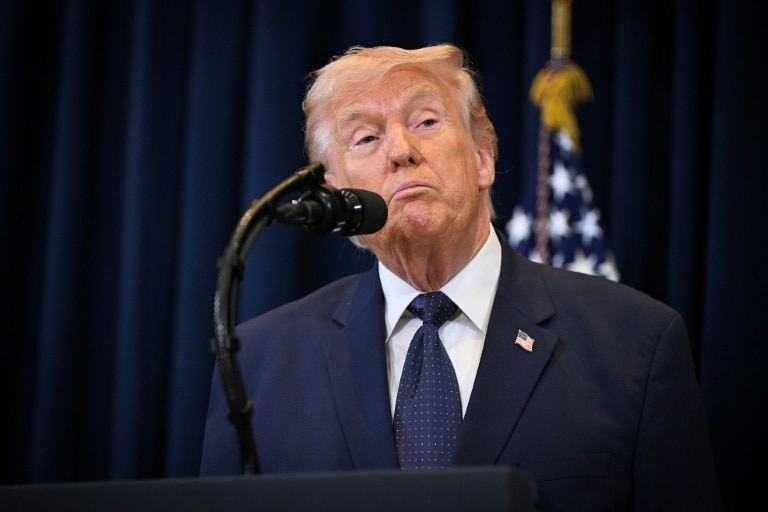
  • Trump backs Chagos handover deal, says No 10

    Trump backs Chagos handover deal, says No 10

    The United States has formally endorsed the United Kingdom’s landmark agreement to transfer sovereignty of the Chagos Islands to Mauritius while securing a long-term lease for the strategic military installation on Diego Garcia. This development follows weeks of diplomatic uncertainty after former President Donald Trump’s contradictory statements regarding the arrangement.

    In a significant diplomatic reversal, Trump publicly expressed support for Prime Minister Keir Starmer’s negotiated settlement, characterizing it as “the best he could make” during their recent discussions. This endorsement came as a relief to British officials who had grown concerned when Trump previously denounced the agreement as an “act of great stupidity” and “total weakness” last month.

    The complex arrangement, initially announced last year, facilitates the formal transfer of Chagos Islands sovereignty to Mauritius while guaranteeing continued UK and US military access to the Diego Garcia base through a 99-year leaseback provision. This joint UK-US facility serves as a critical strategic asset for both nations’ military operations in the Indian Ocean region.

    Downing Street confirmed that both leaders “agreed on the importance” of maintaining the base’s operational security during their Thursday conversation. A spokeswoman emphasized that the two nations would “continue to work closely on the implementation of the deal,” signaling ongoing cooperation despite previous tensions.

    Trump’s conditional support, communicated via his Truth Social platform, included a significant caveat: “If the lease deal, sometime in the future, ever falls apart, or anyone threatens or endangers US operations and forces at our base, I retain the right to militarily secure and reinforce the American presence in Diego Garcia.”

    White House Press Secretary Karoline Leavitt clarified the administration’s position, stating that while Trump understands and supports Starmer’s position, the United States “reserves the right to protect our assets.” This sentiment was echoed by US Ambassador to the UK Warren Stephens, who acknowledged that while maintaining UK sovereignty would be the “ideal” outcome, the current arrangement represents the “best deal on the table.”

    The agreement has faced substantial domestic criticism in the UK, particularly from Conservative and Reform UK parties who argue that Mauritius’s ties to China pose national security risks. Shadow Foreign Secretary Dame Priti Patel characterized Trump’s statement as recognizing “a critical weakness in the surrender deal” and pledged continued opposition.

    A draft law to ratify the Chagos Islands agreement is currently progressing through Parliament, though the legislative process experienced delays following Trump’s previous critical comments. Prime Minister Starmer has consistently maintained that the arrangement is necessary to protect the base’s continued operation amid previous legal challenges from Mauritius regarding British sovereignty.

  • Trump’s nuclear arms control push with Russia hinges on China

    Trump’s nuclear arms control push with Russia hinges on China

    The expiration of the New Strategic Arms Reduction Treaty (New START) has created an unprecedented nuclear governance vacuum between the United States and Russia, marking the first time in the 21st century that the world’s two largest nuclear powers operate without major arms control constraints. President Donald Trump’s administration now seeks to negotiate a comprehensive trilateral agreement involving China, a proposition that experts warn faces formidable diplomatic and technical challenges.

    The treaty’s lapse has triggered international concerns about potential nuclear proliferation and heightened geopolitical tensions. Former Obama administration negotiator Rose Gottemoeller characterized the situation as “a dangerous moment” due to the absence of concrete follow-up arrangements. The expiration eliminates critical verification mechanisms, including on-site inspections and data sharing protocols that enabled mutual monitoring of nuclear arsenals.

    Trump’s unconventional negotiation approach, deploying son-in-law Jared Kushner and envoy Steve Witkoff for arms control discussions in Abu Dhabi, has raised questions about the administration’s capacity to handle complex technical negotiations. Experts emphasize that establishing compliance and verification frameworks typically requires years of specialized diplomacy, not improvisational bargaining.

    The geopolitical landscape presents additional complications. Russia’s deepening alliance with China and ongoing Ukraine conflict have strained relations with Western powers. Meanwhile, China maintains its refusal to participate in trilateral talks until the US and Russia significantly reduce their existing arsenals. Beijing’s nuclear expansion program, projected to reach 1,000 warheads by 2030, adds urgency to arms control efforts.

    Historical precedent offers limited comfort. While brief gaps in arms control occurred during the Cold War, current tensions involving three nuclear powers create unprecedented complexity. The absence of restrictions on tactical nuclear weapons in Europe further compounds security concerns, especially given Russia’s ambiguous nuclear posture regarding Ukraine.

    The administration’s consideration of separate bilateral tracks with Russia and China suggests recognition of the trilateral approach’s difficulties. However, with both Moscow and Washington declaring themselves free from New START obligations, the path toward a new comprehensive treaty appears increasingly uncertain, potentially ending five decades of continuous bilateral nuclear arms control.

  • Venezuela advances amnesty bill that could lead to mass release of political prisoners

    Venezuela advances amnesty bill that could lead to mass release of political prisoners

    CARACAS, Venezuela — Venezuela’s National Assembly has taken significant steps toward approving a sweeping amnesty bill that could result in the liberation of hundreds of political prisoners, including opposition figures, journalists, and human rights activists detained under controversial circumstances.

    The legislation, proposed by Acting President Delcy Rodríguez, passed its initial legislative hurdle on Thursday and now awaits a second debate before potentially becoming law. The move comes just weeks after the dramatic capture of former President Nicolás Maduro by U.S. military forces, marking a potential turning point in Venezuela’s prolonged political crisis.

    While human rights organizations and opposition groups have long demanded such amnesty measures—a position strongly supported by the United States—the specific contents of the bill remain undisclosed to the public. This lack of transparency has prompted cautious optimism among advocacy groups, who simultaneously call for greater disclosure about the legislation’s exact provisions.

    In a pre-recorded television address late last month, Rodríguez addressed gathered justices, magistrates, ministers, military leaders, and government officials, emphasizing the urgency with which the ruling party-controlled legislature would handle the bill. “May this law serve to heal the wounds left by the political confrontation fueled by violence and extremism,” she stated. “May it serve to redirect justice in our country, and may it serve to redirect coexistence among Venezuelans.”

    According to available reports, the proposed amnesty would cover a extensive period spanning from 1999 through the current year, encompassing both the administration of late President Hugo Chávez and his successor Maduro. The legislation would reportedly exclude individuals convicted of murder, drug trafficking, and serious human rights violations.

    Human rights organizations including PROVEA (Venezuelan Program for Education-Action in Human Rights) have issued statements stressing the urgent need for public disclosure of the bill’s contents, citing its profound potential impact on victims’ rights and Venezuelan society at large. These groups express particular concern that certain political detainees might be excluded from amnesty protections and are demanding detailed information about eligibility requirements before any final legislative vote.

  • Libya: Gaddafi supporters left without rallying figure after Saif al-Islam’s killing

    Libya: Gaddafi supporters left without rallying figure after Saif al-Islam’s killing

    The confirmed assassination of Saif al-Islam Gaddafi, son of the late Libyan leader Muammar Gaddafi and his designated successor, has ignited widespread agitation across Libyan social media and raised profound questions about the nation’s political future. Libya’s attorney general officially confirmed the killing in the early hours of Wednesday, following hours of intense speculation and the subsequent circulation of graphic images showing Gaddafi’s lifeless body in a desert area.

    According to political advisers close to the former heir apparent, the operation was conducted by a four-man commando unit that breached his residence, disabled security systems, and executed him during a direct confrontation. The incident occurred in the Zintan region, approximately 100 kilometers south of Tripoli, where Saif al-Islam had been detained following the 2011 revolution that overthrew his father’s regime.

    Saif al-Islam, born in 1972, stood apart from his siblings as the only member of the Gaddafi family to play a significant political role during the Jamahiriya era. Educated with a PhD from the London School of Economics, he positioned himself as a reformist and operated through the Gaddafi International Charity and Development Foundation, which served as an instrument of parallel diplomacy to counter his father’s pariah status in Western nations.

    Despite being subject to an International Criminal Court arrest warrant for crimes against humanity during the 2011 uprising, and subsequent psychological trauma from his imprisonment, Saif al-Islam had announced intentions to contest the presidential election originally scheduled for 2021. His potential candidacy, which reportedly garnered substantial popular support, was among the factors that led to the election’s cancellation.

    The United Nations Support Mission in Libya has strongly condemned what it described as a ‘targeted killing,’ while the attorney general’s office has opened an investigation. However, many analysts express skepticism about the prospect of accountability, given Libya’s entrenched culture of impunity regarding political assassinations.

    The assassination has exposed the deep divisions within Libyan society. While segments of the population, particularly in historic Gaddafi strongholds like Sirte, have openly mourned his death, his existence had long represented a political embarrassment for most armed factions. His strategy of positioning himself outside the two dominant power structures—Prime Minister Abdul Hamid Dbeibah’s internationally recognized government in Tripoli and the Haftar family’s administration in Benghazi—ultimately isolated him from centers of power while appealing to those disillusioned with post-revolutionary elites.

    The attribution of responsibility remains intensely contested. Social media speculation initially pointed toward Mahmoud Hamza, commander of the 444 Brigade and a key Dbeibah ally, though his forces promptly denied involvement. Alternative unverified claims suggest possible responsibility from Saddam Haftar, son of eastern commander Khalifa Haftar, while Gaddafi loyalists have even suggested foreign involvement linked to French political scandals involving Libyan financing.

    Analysts at the Royal United Services Institute suggest the operation likely resulted from local tensions within Zintan rather than a broader conspiracy. The city has long been characterized by internal divisions between factions aligned with either Tripoli or Benghazi, and Saif al-Islam’s presence under the protection of his own armed brigade had created growing tensions over years.

    The elimination of Saif al-Islam removes a central figure from Libya’s political narrative, particularly for pro-Gaddafi elements and non-aligned groups seeking alternatives to the dominant power structures. With all of Muammar Gaddafi’s other children either deceased or exiled, the event leaves pro-Gaddafi sentiments without any symbolic leadership, potentially altering the political calculations of various security actors who had instrumentalized residual sympathy for the former regime.

  • Argentina and US sign free trade deal in breakthrough for Milei

    Argentina and US sign free trade deal in breakthrough for Milei

    In a significant diplomatic development, the United States and Argentina have formally concluded a comprehensive trade agreement, marking a milestone in President Javier Milei’s ambitious campaign to liberalize Argentina’s historically insulated economy. The pact, finalized during high-level discussions in Washington on Thursday, symbolizes the deepening political and economic partnership between the libertarian Argentine leader and former U.S. President Donald Trump.

    Argentine Foreign Minister Pablo Quirno celebrated the achievement by posting a triumphant social media photograph featuring himself and diplomatic staff following the signing ceremony. Both the Argentine government and the Office of the U.S. Trade Representative independently verified the completion of negotiations that began with an initial framework announced in November.

    The agreement substantially reduces Argentina’s protective barriers against American agricultural and industrial products, including beef, dairy commodities, pharmaceuticals, industrial machinery, and automotive imports. This represents a fundamental shift for Argentina’s domestic industries, which have historically operated behind substantial tariff protections.

    In reciprocal arrangements, the United States will eliminate tariffs on select Argentine natural resources and pharmaceutical ingredients not readily available domestically. This bilateral arrangement originated from broader White House efforts to expand market access for U.S. companies across Latin America, with similar frameworks previously established with Ecuador, Guatemala, and El Salvador.

    The trade pact reinforces the unusual political alignment between Trump and Milei, who has dramatically reoriented Argentine foreign policy toward Washington. The relationship has yielded substantial economic benefits for Argentina, including a critical $20 billion credit line extended by the Trump administration that stabilized Argentina’s volatile financial markets and strengthened Milei’s political standing.

    However, the alliance has generated significant controversy in the United States, drawing criticism from both sides of the political spectrum. Trump’s supporters have questioned subsidizing a nation that competes with American agricultural exports, while prominent Democrats like Senator Elizabeth Warren have demanded explanations for the ongoing financial commitment to Argentina’s economic stabilization efforts.

  • Israel ‘exploring opportunities’ to benefit economically from rebuilding Gaza

    Israel ‘exploring opportunities’ to benefit economically from rebuilding Gaza

    Senior Israeli officials are actively formulating strategies to secure economic advantages from the impending reconstruction of Gaza, as revealed in a recent Haaretz report. High-level discussions between Finance Ministry representatives and military commanders have centered on infrastructure projects that would simultaneously benefit Israel while addressing Gaza’s humanitarian needs.

    One prominent proposal involves constructing an Israeli highway network with direct access points to Gaza, financed by nations seeking transit routes through Israeli territory. This plan specifically includes extending the southern Route 232 to improve Palestinian travel connectivity between Gaza and the West Bank.

    The energy sector presents another area of potential Israeli involvement. While international donors contemplate building power plants either within Gaza or in neighboring Egypt, Israel is advancing a third alternative: supplying electricity directly from its territory. This approach would require donor countries to fund the expansion of Israel’s Ashkelon power facility near the Gaza border, subsequently enhancing Israel’s own energy capacity.

    A dedicated international coordination center in Kiryat Gat has established at least six specialized working groups focusing on Gaza’s reconstruction. These teams—covering stabilization, security, intelligence, humanitarian aid, and engineering—include representatives from 28 nations, with Israeli participation in each committee.

    The reconstruction challenge remains monumental, with UN estimates projecting a $70 billion cost over decades following Israel’s bombardment that reduced Gaza’s economy by 87%. The territory’s current GDP per capita stands at a mere $161, among the world’s lowest.

    Controversial redevelopment visions have emerged, including Jared Kushner’s proposal to transform Gaza into a free-market hub featuring skyscrapers and commercial districts. Critics have condemned this approach as cultural erasure and profit-seeking from humanitarian catastrophe. Meanwhile, practical steps are underway, with UAE-funded construction approved for a new neighborhood in Rafah to house approximately 25,000 residents.

  • Saudi Arabia may invest in Turkish fighter jet Kaan ‘any moment’, Erdogan says

    Saudi Arabia may invest in Turkish fighter jet Kaan ‘any moment’, Erdogan says

    Turkish President Recep Tayyip Erdogan has announced that Saudi Arabia is poised to become a strategic partner in Turkey’s ambitious fifth-generation Kaan fighter jet program. The revelation came during Erdogan’s return journey from diplomatic visits to Egypt and Saudi Arabia, where defense cooperation emerged as a cornerstone of bilateral discussions.

    “We are executing substantial defense industry collaboration agreements with Saudi Arabia and remain committed to enhancing these partnerships further,” Erdogan stated to accompanying journalists. He emphasized that a joint investment framework for the Kaan initiative is under active consideration, with implementation potentially imminent.

    Turkey’s pursuit of advanced aerial capabilities gained urgency following its 2019 expulsion from the U.S.-led F-35 program, a consequence of Ankara’s controversial acquisition of Russian S-400 missile defense systems that triggered Congressional sanctions. The Kaan project, while technologically ambitious, presents significant financial challenges that have prompted Turkey to seek international investment partners.

    The program recently secured a major endorsement through Indonesia’s commitment to acquire 48 Kaan aircraft in a landmark $10 billion agreement spanning ten years, which includes localized co-production components. Several nations including Qatar and Azerbaijan have additionally expressed procurement interest.

    Technologically, the Kaan prototype achieved its inaugural flight in February 2024 utilizing temporary General Electric F110-GE-129 engines—the same powerplants employed by Turkey’s F-16 fleet. Turkish Aerospace Industries (TAI), the program lead, is concurrently developing indigenous engine technology to achieve full operational independence.

    Delivery timelines project the first Kaan jet joining the Turkish Air Force by 2028, though analytical assessments suggest potential delays until 2030. Initial production models (Block-1 variants) are scheduled for deployment between 2030 and 2033, representing a critical milestone in Turkey’s defense industrialization strategy.

  • Republic of Congo’s president says he will run for reelection, possibly extending decades-long rule

    Republic of Congo’s president says he will run for reelection, possibly extending decades-long rule

    BRAZZAVILLE, Republic of Congo — President Denis Sassou N’guesso, who has dominated Congolese politics for over four decades, formally declared his candidacy for the March 15 presidential election during an appearance at an agricultural exhibition in Bambou Mingali. The 82-year-old leader’s announcement sets the stage for what appears to be another extension of his prolonged tenure in the Central African nation.

    Sassou N’guesso’s political journey represents one of Africa’s most enduring leadership narratives. Initially assuming power in 1979, he governed until 1992 when electoral defeat temporarily removed him from office. His return to prominence occurred through military means following the 1997 civil conflict, after which he secured victory in four consecutive presidential contests against a divided opposition bloc.

    The constitutional landscape shifted significantly in 2015 when a national referendum eliminated presidential term limits and age restrictions, effectively removing legal barriers to Sassou N’guesso’s continued rule. The ruling Congolese Labor Party has officially endorsed his candidacy, while the primary opposition force, the Pan-African Union for Social Democracy, has withdrawn from the electoral process, citing fundamental concerns.

    Approximately twelve lesser-known contenders have entered the race, including independent candidate Alexis Bongo and former rebel commander Frederic Bintsamou, commonly referred to as Pastor Ntoumi. The government’s unexplained decision to advance the election date from March 22 to March 15 has added another layer of intrigue to the political proceedings.

    Despite the country’s status as an oil-producing nation, socioeconomic challenges persist dramatically. World Bank data indicates youth unemployment approaching 42%, while rural electrification remains accessible to merely 15% of the population outside urban centers, highlighting the development paradox facing the nation of 5.61 million people.

  • UAE eliminates 4,000 government procedures, unlocks Dh1 billion annually

    UAE eliminates 4,000 government procedures, unlocks Dh1 billion annually

    In a radical transformation of its governance model, the United Arab Emirates has achieved unprecedented success through its Zero Government Bureaucracy Programme, eliminating more than 4,000 administrative procedures and reducing service delivery times by over 70%. The comprehensive reform has yielded extraordinary results: saving 12 million work hours annually and unlocking approximately Dh1 billion in economic value each year.

    Huda Al Hashimi, UAE Deputy Minister of Cabinet Affairs for Strategic Affairs, revealed these groundbreaking achievements during her address at the World Government Summit in Dubai. She presented bureaucracy not as a peripheral administrative concern but as a fundamental economic variable that directly impacts national competitiveness. “Every unnecessary procedure is a hidden tax on entrepreneurship,” Al Hashimi asserted. “Every fragmented approval process represents a significant barrier to investment.”

    The Zero Government Bureaucracy Programme stands as the central pillar of the UAE’s innovative governance framework, designed specifically to enable economies to “design forward” rather than merely playing catch-up with global standards. Al Hashimi emphasized that ambitious national strategies frequently fail because “the machinery of implementation was too heavy,” warning that “you cannot outgrow your own friction.”

    The UAE’s approach is built upon a sophisticated four-pillar strategy for economic resilience and competitiveness:

    First, the principle of ‘Know Your Competitive Advantage’ encourages economies to concentrate on their unique strengths rather than attempting excellence across all sectors. For the UAE, this strategic focus on openness, private sector development, and financial system strength has produced remarkable results, including achieving 95% of non-oil foreign trade targets five years ahead of schedule.

    Second, ‘Clarity as an Economic Asset’ demonstrates how well-defined national visions like the ‘We the UAE 2031’ plan generate market confidence and direct investment flows toward strategic objectives. Al Hashimi explained that clarity actively removes economic friction, contrasting it with the confusion that undermines confidence when governments pursue multiple competing strategies simultaneously.

    Third, ‘Data and Strategic Intelligence’ addresses the challenges of radical uncertainty through substantial investments in artificial intelligence and data analytics. The UAE’s commitment of over Dh180 billion in AI since 2024 represents a strategic effort to enable superior intelligence, enhanced services, and improved outcomes across all sectors.

    Fourth, ‘Simplicity as a Growth Strategy’ forms the cornerstone of the entire approach, where treating bureaucracy as a core economic problem has directly empowered entrepreneurship and facilitated investment. By embedding simplicity into its governance DNA, the UAE has created an environment where operational speed generates opportunity, and opportunity drives sustainable growth.

    Al Hashimi concluded with a powerful statement on modern economic competitiveness: “The old advantages—natural resources, geography, population—still matter, but they are no longer decisive. What is decisive is the ability to see clearly, adapt quickly and execute with discipline.”

  • US and Russia agree to resume regular military contact

    US and Russia agree to resume regular military contact

    In a significant diplomatic breakthrough, the United States and Russia have agreed to restore high-level military communications following a crucial meeting in Abu Dhabi. The discussions occurred alongside broader talks addressing the ongoing conflict in Ukraine, marking a notable step toward de-escalation between the world’s two foremost nuclear powers.

    U.S. European Command confirmed the development in an official statement, emphasizing that the reestablished dialogue aims to foster “consistent military-to-military contact” as both nations work toward achieving a durable peace. This move aligns with former President Donald Trump’s repeatedly stated objective of normalizing U.S.-Russia relations.

    The timing of this announcement is particularly critical, coinciding with reports that both countries are negotiating an extension of the New START nuclear arms reduction treaty, which is set to expire imminently. Historically, even during periods of intense confrontation, Washington and Moscow have maintained open channels between their armed forces to prevent misunderstandings and reduce escalation risks. However, these communications were severed in 2021, just prior to Russia’s full-scale invasion of Ukraine.

    Since the suspension, several incidents have heightened tensions, including Russian drones and warplanes entering NATO airspace, and U.S. unmanned aircraft operating over Syria and the Black Sea. The new agreement was finalized during talks in the United Arab Emirates, involving U.S. General Alexus Grynkewich—America’s and NATO’s top general in Europe—along with senior Russian and Ukrainian military officials.

    U.S. European Command underscored the importance of this renewed engagement, stating, “Maintaining dialogue between militaries is an important factor in global stability and peace, which can only be achieved through strength, and provides a means for increased transparency and de-escalation.” The primary objective is to minimize miscalculation and prevent unintended escalation by either side.

    While limited contact between U.S., NATO, and Russian military officers has occurred in recent years, this agreement institutionalizes a regular, high-level dialogue. Meanwhile, Russia expressed regret over the impending expiration of New START but affirmed its readiness to engage in discussions. The Kremlin has proposed extending the treaty, and spokesman Dmitry Peskov indicated that Russia would respond positively to U.S. cooperation.

    According to Axios, negotiations intensified over the past 24 hours in Abu Dhabi, with both countries nearing an agreement to uphold key provisions of New START. The treaty, originally signed in 2010, limits each side to 1,550 strategic nuclear warheads and 700 bombers or missiles. Its expiration would mark the first time in half a century that no legal framework exists to curtail the nuclear ambitions of either nation.