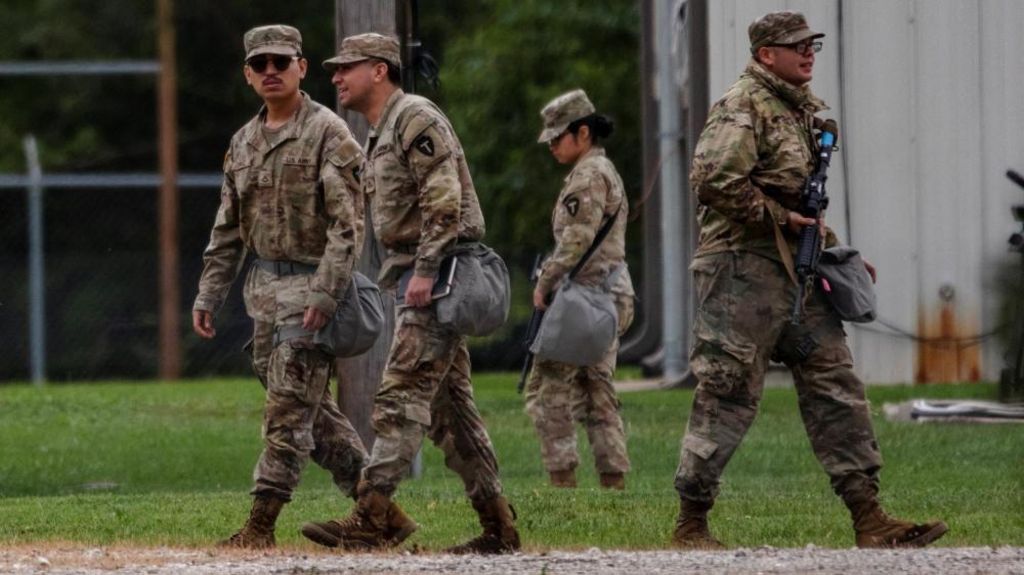
President Donald Trump has escalated tensions with Illinois officials, calling for the imprisonment of Chicago Mayor Brandon Johnson and Illinois Governor JB Pritzker. In a fiery social media post, Trump accused the Democratic leaders of failing to protect federal immigration officers conducting raids in Chicago, labeling the city a ‘war zone’ due to ongoing protests against immigration enforcement. This rhetoric comes as hundreds of National Guard troops have been deployed to Chicago as part of Trump’s immigration crackdown, mirroring similar actions in Los Angeles, Washington DC, Memphis, and Portland. A judge has temporarily blocked the deployment to Portland but allowed it in Chicago, prompting Illinois and Chicago to file a lawsuit to halt the move. Trump has threatened to invoke the Insurrection Act, potentially using the military if courts intervene. Meanwhile, protests in Chicago turned violent last weekend, with immigration authorities reporting an armed woman allegedly ramming her car into law enforcement vehicles, leading to an exchange of gunfire. The woman’s condition remains unclear. Pritzker and Johnson have vehemently opposed Trump’s actions, with Pritzker calling them ‘authoritarian’ and Johnson accusing Trump of targeting him unjustly. The standoff highlights the deepening divide between Trump and Democratic-led cities and states.
分类: politics
-
Ethiopia accuses Eritrea of preparing for war as Red Sea tensions rise
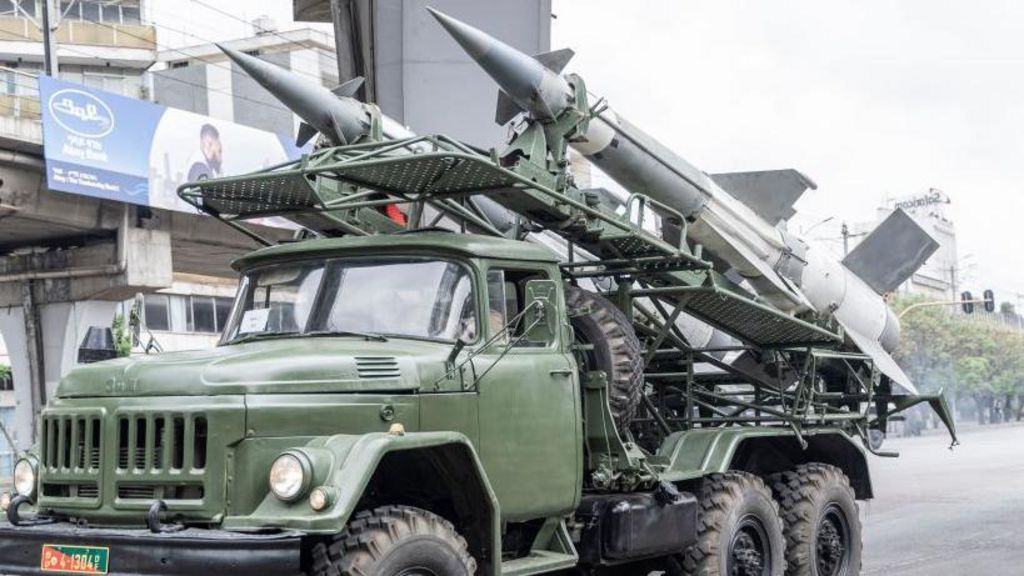
In a dramatic escalation of tensions between Ethiopia and Eritrea, Ethiopia has accused its northern neighbor of conspiring with opposition groups to wage war, according to a letter sent by Ethiopian Foreign Minister Gedion Timothewos to UN Secretary-General Antonio Guterres. The letter alleges that Eritrea, in collaboration with a hardline faction of the Tigray People’s Liberation Front (TPLF), is actively funding and mobilizing armed groups in Ethiopia’s Amhara region. This accusation comes amid growing friction over Ethiopia’s bid to regain access to the Red Sea, a move that has alarmed Eritrea, which controls the coastline since its independence in 1993. The two nations previously fought a brutal border war from 1998 to 2000, which claimed tens of thousands of lives. Although relations improved after Ethiopian Prime Minister Abiy Ahmed took office in 2018, recent developments have reignited hostilities. Ethiopia’s push for Red Sea access has been met with sharp criticism from Eritrea, with its Information Minister Yemane Gebremeskel dismissing Ethiopia’s claims as ‘bizarre and mind-boggling.’ Meanwhile, Ethiopia faces internal unrest, particularly in the Amhara region, where the Fano militia, previously allied with Abiy’s government, is now opposing federal forces. The situation remains volatile, with fears of a broader conflict looming.
-
Crunch moment in French crisis as outgoing PM tries to avert new election
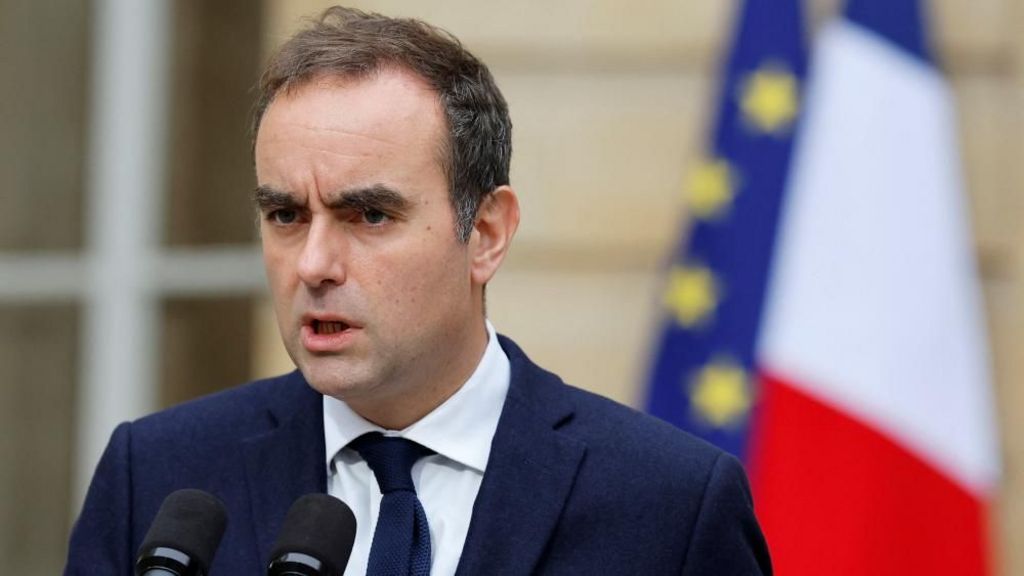
In the midst of France’s deepening political crisis, outgoing Prime Minister Sébastien Lecornu expressed cautious optimism about the possibility of passing a budget before the year’s end. Lecornu, who became the third French prime minister to resign in less than a year, has been tasked with finding a solution to stabilize the country by Wednesday evening. His resignation on Monday plunged France into renewed political uncertainty, just 18 months before President Emmanuel Macron’s second term concludes. Macron’s decision to call snap elections in mid-2024 resulted in a hung parliament and a series of minority governments, further complicating the political landscape. Lecornu, who served only 26 days before his government collapsed, has been engaging with various political parties to forge a path forward. He noted a ‘willingness’ among parties to pass a budget by December 31, which could reduce the likelihood of dissolving parliament. However, challenges remain, as Socialist leader Olivier Faure ruled out his party’s participation in any government led by Macron’s allies, citing irreconcilable differences over the budget plan. Meanwhile, the hard-right National Rally, led by Marine Le Pen, has called for new parliamentary elections. Lecornu’s best hope appears to be forming a centrist coalition with the conservative Republicans, though their participation is uncertain. National Assembly President Yaël Braun-Pivet warned of ‘very serious consequences’ if a budget deal is not reached soon. Lecornu emphasized the importance of reducing France’s budget deficit, which currently stands at 5.4% of GDP, to maintain the country’s credibility and borrowing capacity. Additionally, he highlighted the need to address the future of New Caledonia, France’s South Pacific territory, which has been seeking greater autonomy. The planned 2026 budget included financial aid for New Caledonia following last year’s riots, but Lecornu’s resignation has delayed the referendum and provincial elections scheduled for next year.
-
Greenland’s leader hails EU as trusted friend and urges investment in its minerals
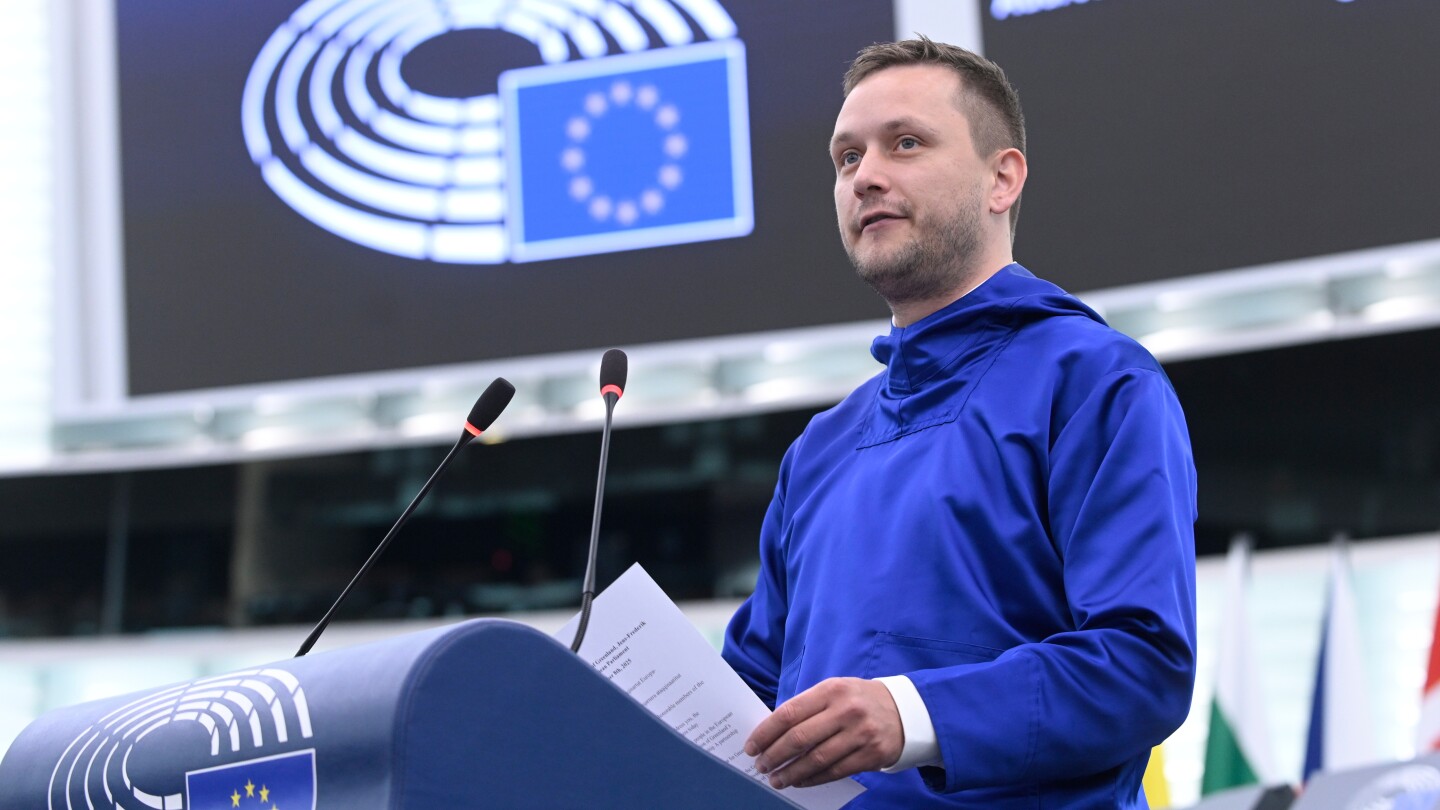
In a significant address to the European Parliament in Strasbourg, Greenland’s Prime Minister Jens-Frederik Nielsen expressed gratitude to the European Union for its enduring partnership and called for increased investment in the Arctic island’s mineral resources, renewable energy, and infrastructure. Nielsen, 34, described 2025 as a pivotal year for Greenland, emphasizing the challenges posed by climate change while avoiding mention of former U.S. President Donald Trump’s controversial remarks about acquiring the territory. He highlighted the EU’s role as a “stable, reliable, and important partner” for over four decades, extending a heartfelt thanks for its support during challenging times. Greenland, once a Danish colony, became a self-governing entity in 2009 but remains part of the Danish realm. Nielsen underscored the island’s abundance of critical raw minerals sought by the EU, noting the capital-intensive nature of mining. He also urged investment in hydroelectricity, telecommunications, and the construction of two regional airports, emphasizing the need for trusted operators to ensure infrastructure stability. The speech concluded with a standing ovation from lawmakers as Nielsen thanked the EU for being a “trusted friend of Greenland.”
-
Hundreds of US National Guard troops arrive in Chicago
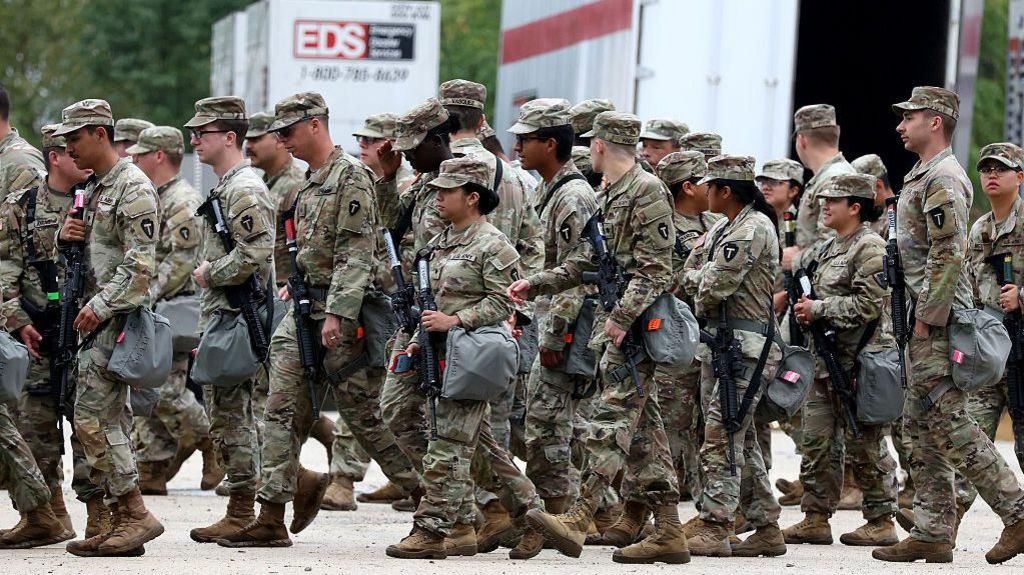
In a controversial move, hundreds of National Guard troops from Texas have been stationed at an Army Reserve Training Center near Chicago, as part of President Donald Trump’s intensified immigration enforcement efforts. Trump has labeled Chicago a ‘war zone’ following recent protests against federal immigration officials in the city, which ranks as the third-largest in the U.S. The deployment has sparked significant opposition from local leaders, including Illinois Governor JB Pritzker, who criticized the Trump administration for what he called an ‘authoritarian march’ and vowed to use all available resources to halt the initiative. Sources from CBS News, the BBC’s U.S. partner, indicate that some troops could begin their duties as early as Wednesday. Temporary living quarters have been established at the training center, located approximately 50 miles southwest of Chicago, with fencing erected around the facility late Tuesday. Local officials have expressed frustration over the lack of detailed information regarding the troops’ assignments. Trump has defended the deployment as necessary to address violence in Democratic-controlled cities, combat crime, and support his deportation policies. However, National Guard troops have limited authority and are primarily tasked with protecting federal officers and property, rather than enforcing laws or making arrests. This deployment follows similar actions in Los Angeles, Washington, D.C., Memphis, and Portland, though a federal judge temporarily blocked the Portland deployment. Chicago has witnessed a surge in protests against immigration enforcement, particularly outside U.S. Immigration and Customs Enforcement (ICE) facilities. Last weekend, a woman was injured when U.S. Border Patrol personnel fired shots after a group rammed cars into immigration enforcement vehicles, though her lawyer disputes the government’s account. A hearing is scheduled for Thursday in a lawsuit filed by Illinois and Chicago, seeking to prevent the federalization of National Guard troops from Texas and Illinois. Chicago Mayor Brandon Johnson condemned the deployment as ‘illegal, unconstitutional, and dangerous,’ and signed an executive order banning ICE agents from operating on city-owned properties. The situation raises significant legal and constitutional questions, as National Guard troops are typically deployed by state governors, and century-old laws restrict the federal government’s use of the military for domestic matters. Trump has hinted at invoking the Insurrection Act of 1807, which allows the president to use active-duty military personnel for law enforcement within the country, if federal courts obstruct his plans. In the Oval Office on Tuesday, Trump emphasized his determination to act if state governors fail to maintain order.
-
Nigerian minister accused of forging qualifications resigns
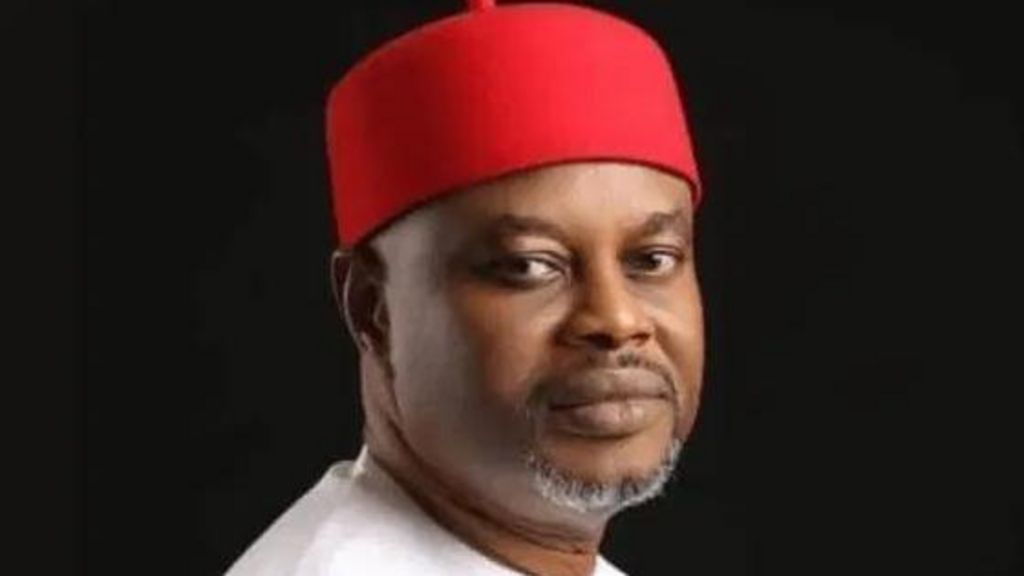
Nigeria’s Minister of Innovation, Science, and Technology, Uche Nnaji, has stepped down from his position following allegations of academic credential forgery. The controversy arose after a newspaper investigation revealed that Nnaji had allegedly submitted falsified certificates to President Bola Tinubu during his ministerial appointment in 2023. Presidential spokesperson Bayo Onanuga confirmed the resignation in a post on X, quoting Nnaji as stating he had become ‘a target of blackmail by political opponents.’ Nnaji has vehemently denied the accusations, maintaining that he graduated from the University of Nigeria, Nsukka (UNN) with a degree in Microbiology/Biochemistry. However, UNN reportedly informed the publication that it had no records confirming his graduation in 1985, as claimed. Additionally, the National Youth Service Corps (NYSC) stated that the mandatory national service certificate Nnaji presented in April 2023 could not be verified. This resignation marks a rare occurrence in Nigerian politics, as Nnaji is only the second minister to leave office since President Tinubu assumed power in May 2023. The scandal has sparked public outrage, highlighting ongoing concerns about transparency and accountability in the nation’s political landscape.
-
EU chief says Russia is waging a ‘gray zone campaign’ and Europe must meet the challenge
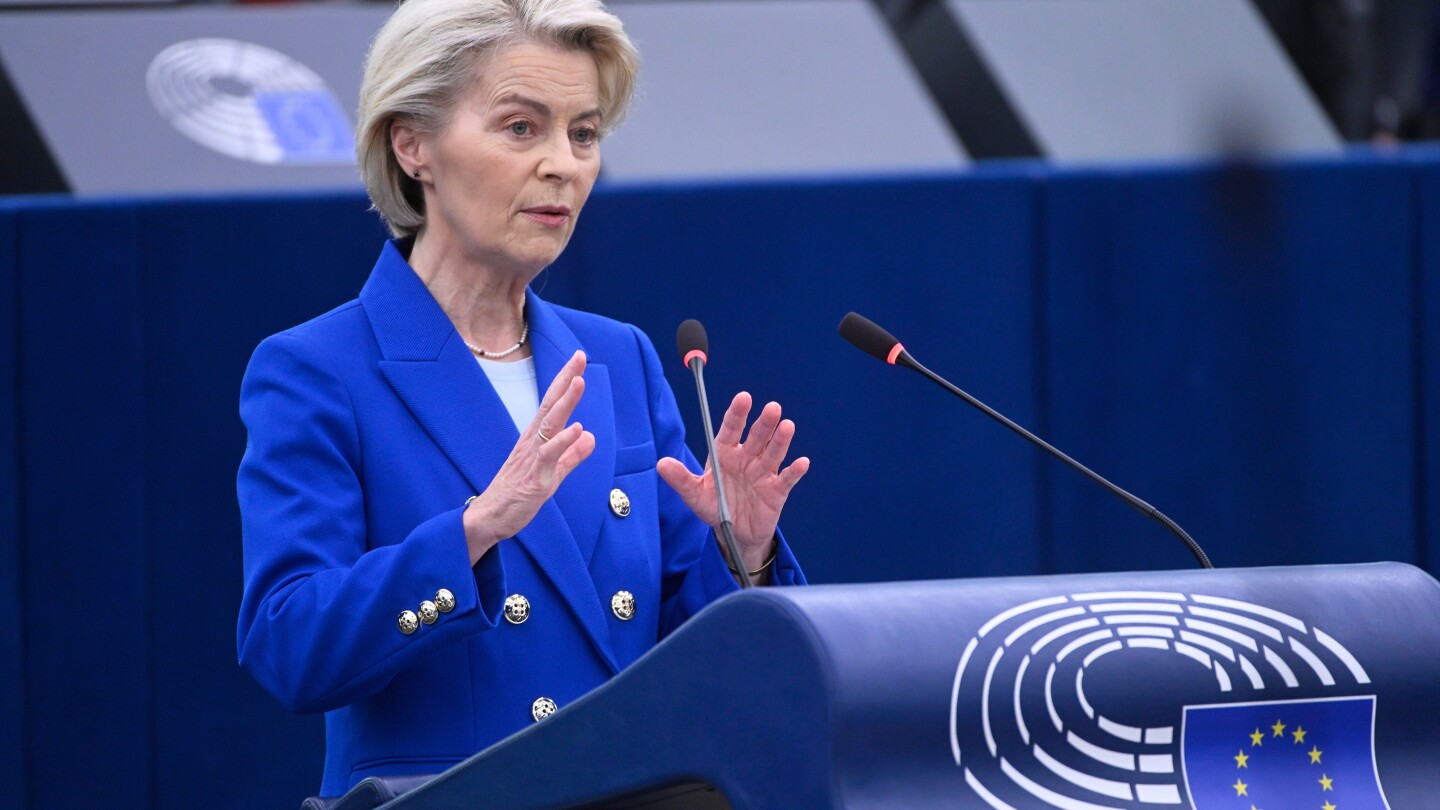
BRUSSELS (AP) — The European Union’s top official, European Commission President Ursula von der Leyen, issued a stark warning on Wednesday, asserting that Russia is orchestrating a “targeted gray zone campaign” against Europe. This campaign includes airspace violations, sabotage, and cyberattacks, which are expected to intensify if the Kremlin is not confronted. Von der Leyen emphasized that Europe must respond decisively to these threats to safeguard its territory and security. In just two weeks, incidents such as fighter jets breaching Estonia’s airspace and drones overflying military bases and critical infrastructure sites in Belgium, Denmark, Germany, Poland, and Romania have been reported. Von der Leyen urged EU lawmakers in Strasbourg, France, to investigate every incident and attribute responsibility without hesitation. She stressed that every square centimeter of European territory must be protected and safe, warning that inaction would only allow the gray zone to expand. Under von der Leyen’s leadership, the EU’s executive branch is developing a comprehensive plan to address these challenges by 2030. This plan includes the creation of a “drone wall,” a high-tech system designed to detect, track, and neutralize drones, as well as disrupt their operating systems or ground-based pilots. EU officials believe Russia could potentially launch an attack on another European country within three to five years. Von der Leyen also highlighted the need for an affordable and effective anti-drone system, pointing to lessons from Ukraine. She argued that European countries must invest more in defense, ensuring that such investments create jobs and benefit the continent’s economy. The commission insists that at least 65% of any EU-funded defense project should be based in Europe, countering the current trend where most defense investments go to U.S. companies. At a recent summit in Copenhagen, EU leaders appeared to adopt a tougher stance on drone incidents, sabotage, cyberattacks, and sanction-busting. French President Emmanuel Macron advocated for a more aggressive approach, including shooting down drones entering European airspace and intercepting shadow fleet ships illicitly transporting oil to deprive Moscow of war revenue.
-
Gaza ceasefire talks enter 2nd day in Egypt as Hamas demands permanent end to war
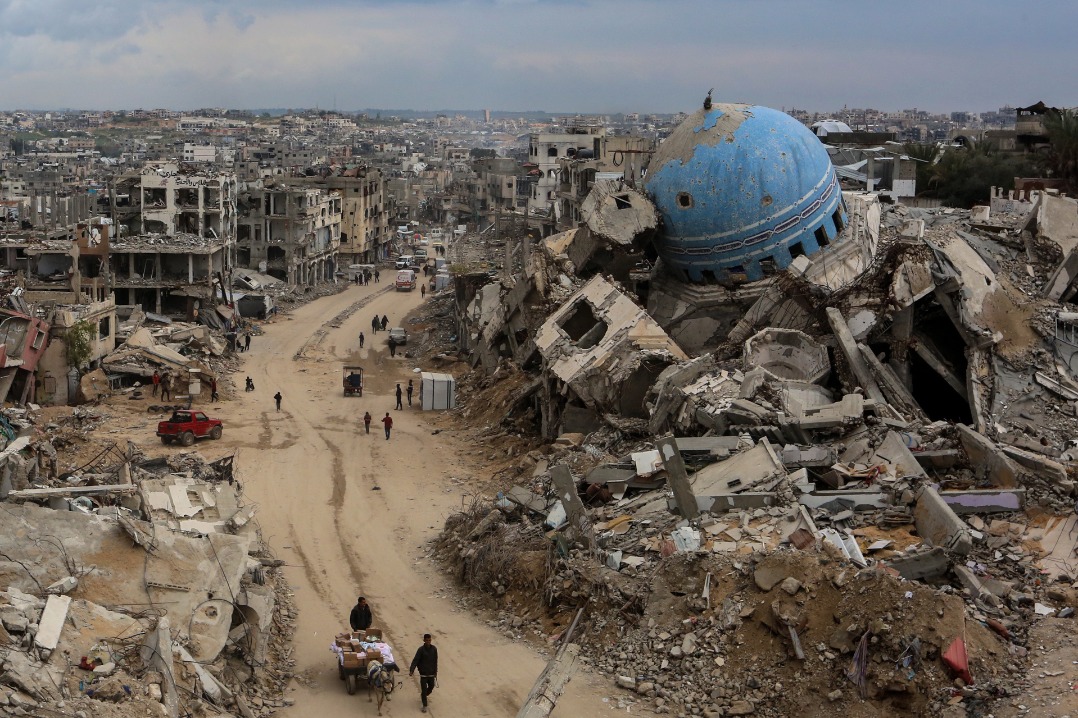
The second day of indirect ceasefire negotiations between Hamas and Israel, mediated by Egypt and Qatar, commenced on Tuesday in Sharm el-Sheikh, Egypt. According to an Egyptian source, the discussions focused on critical issues such as a hostage-prisoner exchange, humanitarian aid access to Gaza, and the future governance of the Gaza Strip. Hamas reiterated its demand for US and Israeli guarantees of a permanent cessation of hostilities, which remains the primary obstacle in the talks. The negotiations are based on the 20-point peace plan proposed by US President Donald Trump, which Hamas has conditionally accepted. The first phase of the plan includes an immediate ceasefire and the release of all Israeli hostages, both living and deceased. Israel estimates that 48 hostages remain in Gaza, with 20 still alive. Hamas stated that it would only begin collecting hostages once Israel’s military operations cease, citing safety concerns for its operatives. Additionally, Hamas insisted on the release of prominent Palestinian leader Marwan Barghouti as part of the prisoner exchange. Regarding Gaza’s future governance, Hamas rejected the deployment of foreign forces but expressed openness to Arab forces coordinating with the Palestinian Authority. The group also opposed the appointment of former British Prime Minister Tony Blair to lead post-war governance. The conflict, which began on October 7, 2023, following a Hamas attack on southern Israel, has resulted in significant casualties and a severe humanitarian crisis in Gaza, with over 67,000 Palestinian deaths reported.
-

‘I sleep with a gas mask on’ – Life next to Portland protest angering Trump
The South Waterfront neighborhood of Portland has become a battleground, with nightly clashes between federal agents and protesters opposing immigration arrests. Brennah Hammar, a 57-year-old resident of Gray’s Landing, describes her street as a ‘war zone,’ where tear gas infiltrates her apartment complex, located across from an Immigration and Customs Enforcement (ICE) building. The unrest, centered on a single city block, has drawn national attention, with President Donald Trump proposing to deploy the National Guard to protect federal officers and buildings. However, a federal judge has temporarily halted this plan, citing concerns over constitutional overreach. Trump’s hyperbolic claims that ‘Portland is burning to the ground’ have been widely mocked by the city’s residents. Meanwhile, the community remains divided, with some blaming Antifa for the violence and others pointing fingers at federal agents. The Cottonwood School, adjacent to the ICE building, relocated in August after munitions were repeatedly found in its playground. Amidst the chaos, residents like Cindy Colgrove carry weapons for self-defense, while others, like Mai Tai Boyd, question the necessity of deploying combat-trained troops. Despite the turmoil, life continues in other parts of Portland, with events like the Portland Marathon proceeding without incident. Most residents blame Trump for the unrest, recalling his controversial decision to send National Guard troops during 2020 protests. As industrial air scrubbers work to cleanse the air of tear gas, Hammar, a Portland native, finds herself reluctantly supporting Trump’s plan to send in the National Guard, feeling abandoned by the city and determined to protect her rights.
-
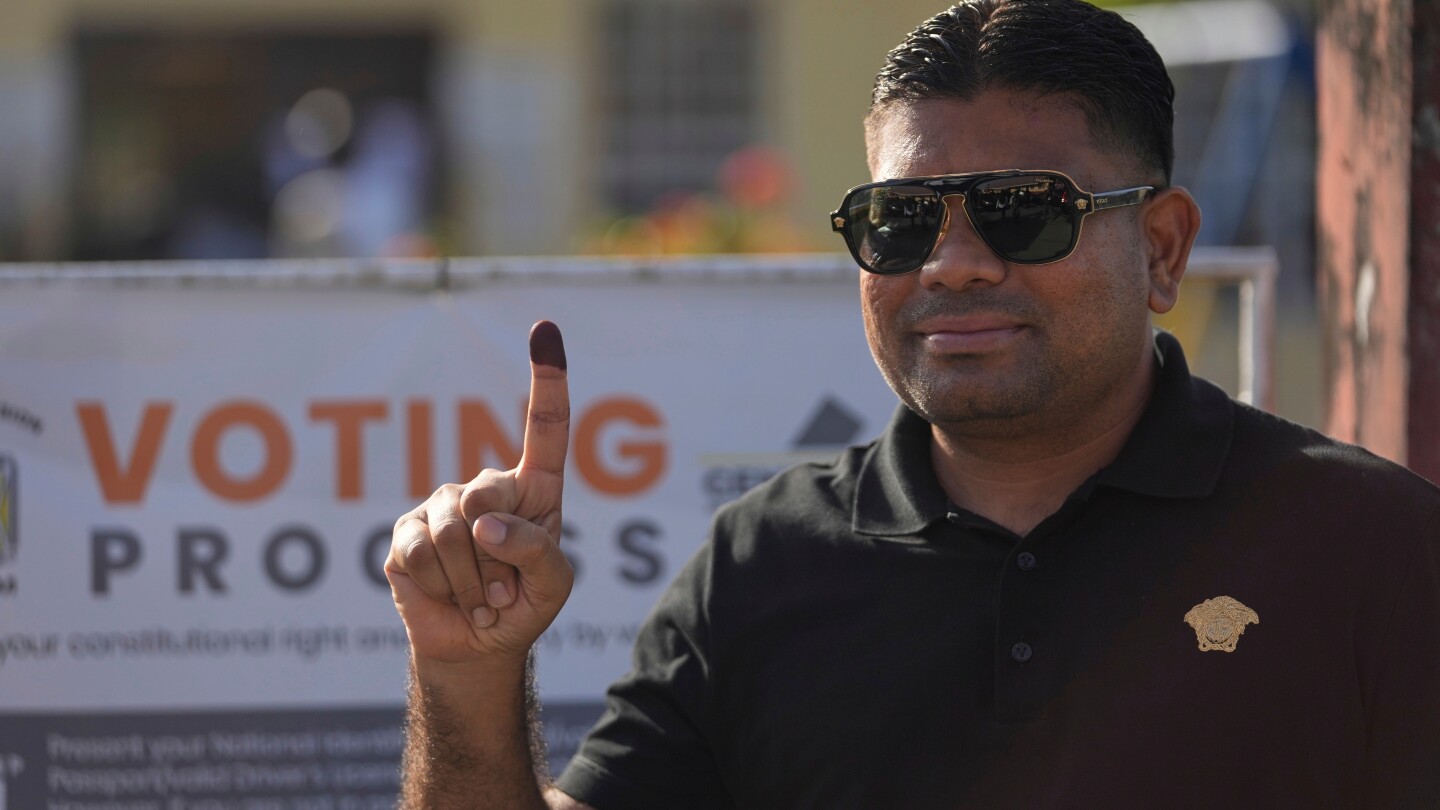
US corruption indictment of billionaire politician won’t block him from Guyana’s parliament
GEORGETOWN, Guyana — Despite facing a U.S. indictment on multiple corruption charges, billionaire businessman Azruddin Mohamed is set to assume his role as Guyana’s legislative opposition leader, legal experts confirm. The 38-year-old, part of a prominent family dynasty with vast interests in gold trading, foreign currency, and oil, secured significant political influence after his newly-formed party, We Invest in Nationhood (WIN), won 16 of 65 parliamentary seats in September’s elections. However, a grand jury in Florida’s Southern District recently unsealed documents accusing Mohamed and his father, Nazar Mohamed, of money laundering, bribery, tax evasion, and wire and mail fraud, among other charges. The case highlights the pervasive corruption in Guyana’s oil-rich government. Despite the allegations, Sherlock Isaacs, Clerk of the Guyanese parliament, stated that Mohamed can legally serve in Parliament unless convicted. Mark Kirton, former Director of the Institute of International Relations at the University of the West Indies, noted that the legal process could be lengthy, allowing Mohamed to retain his position until the case concludes. In his first public remarks since the indictment, Mohamed dismissed the charges as politically motivated. The U.S. Treasury Department previously sanctioned Mohamed and his family for allegedly smuggling gold and evading taxes, citing bribery schemes involving Guyanese officials. The indictment also accuses the Mohameds of reusing official revenue-sealed boxes to ship gold fraudulently. While extradition to the U.S. remains a possibility, Mohamed’s political trajectory appears undeterred for now.