分类: politics

  • Israel’s Ben Gvir wears noose pendent as he pushes death penalty bill for Palestinians

    Israel’s Ben Gvir wears noose pendent as he pushes death penalty bill for Palestinians

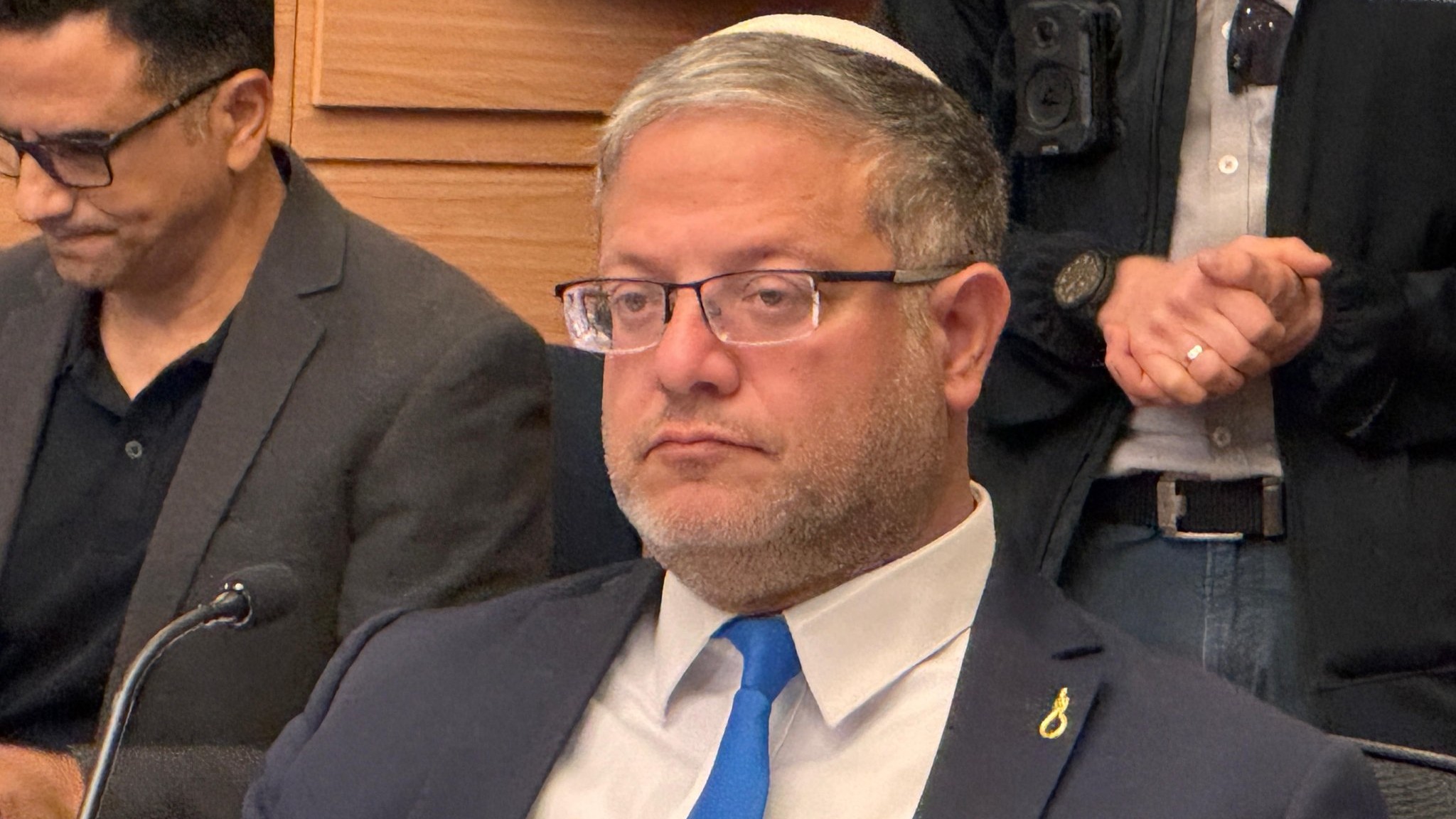
    In a provocative parliamentary display, Israel’s far-right National Security Minister Itamar Ben Gvir appeared at Monday’s legislative session wearing a hangman’s noose pendant on his lapel. The symbolic accessory accompanied his ongoing campaign to institute capital punishment for Palestinian prisoners convicted of attacks against Israelis.

    Ben Gvir publicly celebrated the gesture on social media platform X, alongside fellow members of his Otzma Yehudit (Jewish Power) party, who similarly wore noose imagery. The minister declared this visual demonstration represented their “commitment to passing the law and as a clear message that terrorists are sons of death.” His post concluded with the emphatic statement: “The time has come for the death penalty for terrorists!”

    This theatrical political statement follows last month’s preliminary approval of controversial death penalty legislation that passed its first reading with 39 votes in favor and 16 against within the 120-member Knesset. The proposed bill specifically targets Palestinians convicted of lethal attacks motivated by “nationalistic” reasons, while notably exempting Israeli citizens who commit similar offenses against Palestinians.

    The legislation requires two additional parliamentary readings before becoming law. If implemented, it would mark a dramatic shift in Israel’s judicial approach, as the state has executed only one person since its establishment—Nazi war criminal Adolf Eichmann following his 1962 civilian trial.

    During National Security Committee deliberations, Ben Gvir elaborated on execution methods, mentioning gallows, electric chairs, and euthanasia as potential options. The initiative has drawn sharp international criticism, with Hamas condemning it as “fascist and sadistic” and Palestinian Islamic Jihad labeling it a “dangerous criminal escalation.” Human rights organizations have universally opposed the measure, anticipating significant constitutional challenges should it advance further.

  • Defense ministry launches its official account on X

    Defense ministry launches its official account on X

    In a significant move toward global digital engagement, China’s Ministry of National Defense has officially established its presence on the social media platform X (formerly Twitter). The account, operating under the handle @MND_China and bearing the name ‘Ministry of National Defense of China,’ went live on Monday, December 8, 2025.

    The debut post, written in English, announced: ‘History in the making! Here we come. Hi, the official account of the Ministry of National Defense of the People’s Republic of China goes live today.’ The ministry committed to using the platform to share narratives about China and its military operations.

    Accompanying the announcement was a compelling one-minute video emphasizing China’s dedication to global peace, featuring the slogans: ‘Upholding justice; Safeguarding peace; Serving the people.’ The visual presentation showcased various activities of the Chinese military, including training exercises, United Nations peacekeeping missions, anti-piracy escort operations in the Gulf of Aden and waters off Somalia, medical assistance programs, and domestic disaster relief efforts.

    This development represents the latest in a series of strategic digital expansions by Chinese military entities. Previous initiatives include the PLA Navy’s launch of overseas social media accounts in April, the establishment of the PLA’s news communication center accounts in September 2024, and the consistent social media presence maintained by the PLA National Defense University’s International College of Defense Studies.

    Military analyst Zhang Junshe, formerly of the PLA Naval Research Academy, characterized this digital expansion as reflecting ‘a more open, transparent and confident attitude of the Chinese military.’ He noted that these platforms allow global netizens to better understand the PLA’s development, strategies, and policies while providing opportunities for direct interaction and clarification of misconceptions.

    The initiative aims to foster greater international understanding of China’s defense policies and counter what Chinese officials describe as misinformation about the country’s military objectives and operations.

  • Former national political advisor expelled from CPC, public office

    Former national political advisor expelled from CPC, public office

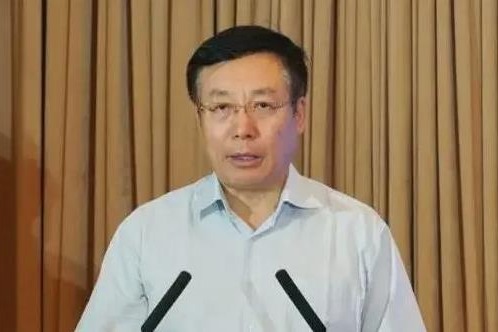
    BEIJING – In a significant demonstration of China’s ongoing anti-corruption campaign, former senior political figure Bi Jingquan has been removed from both the Communist Party of China and public office following confirmed violations of party discipline and national laws. The decision was formally announced on Monday by the country’s top disciplinary watchdog.

    The Central Commission for Discipline Inspection (CCDI) and National Commission of Supervision (NCS) conducted a comprehensive investigation into Bi’s conduct with authorization from the CPC Central Committee. Bi previously held a prominent position as a member of the Standing Committee of the National Committee of the Chinese People’s Political Consultative Conference, an advisory body within China’s political framework.

    According to the official statement, investigators determined that Bi had abandoned his ideological principles and failed to cooperate with the disciplinary review process. The former official was found to have repeatedly violated the Party Central Committee’s eight-point directive on improving governmental conduct, specifically through accepting inappropriate banquet invitations and participating in recreational activities including golf outings and sightseeing tours that could compromise official impartiality.

    The investigation further revealed that Bi abused his administrative authority to secure business advantages and employment opportunities for associates in exchange for substantial monetary gifts and other valuable considerations. His actions represented a severe breach of trust and party regulations.

    In accordance with established disciplinary procedures and legal statutes, authorities have mandated Bi’s expulsion from all official positions, confiscation of illicit assets, and transfer of his case to judicial authorities for potential criminal proceedings. This development underscores China’s continued commitment to enforcing accountability among public officials.

  • US: Tom Barrack says ‘benevolent monarchies’ work best in Middle East

    US: Tom Barrack says ‘benevolent monarchies’ work best in Middle East

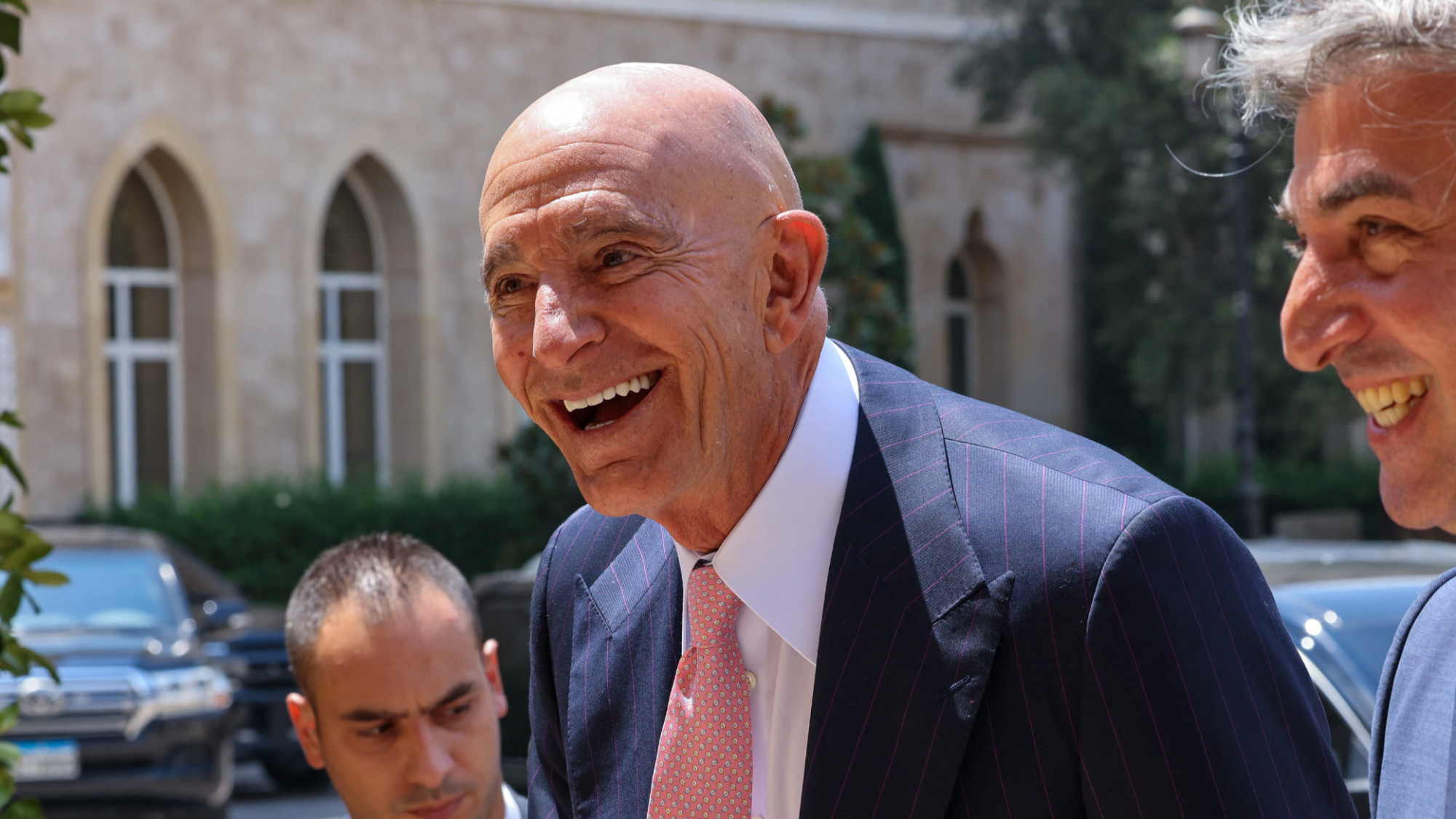
    In a striking departure from conventional diplomatic rhetoric, US Special Envoy for Syria Tom Barrack has articulated a controversial vision for Middle Eastern governance during the Doha Forum. The billionaire diplomat asserted that Western-imposed democratic models have consistently failed in the region, while suggesting that benevolent monarchies have demonstrated greater effectiveness.

    Barrack, appointed by former President Donald Trump, delivered his assessment during a panel discussion on Syria’s future. He characterized the post-Assad administration under President Ahmad al-Sharaa as achieving ‘epic’ and ‘heroic’ accomplishments since assuming power in December 2024. The envoy specifically criticized Western interventionist policies, stating that ‘almost every decision that the West has imposed on the region, rather than allowing it to evolve on its own, has been a mistake.’

    Drawing from recent historical examples, Barrack noted that Western efforts in Libya, Iraq, and other nations have resulted in political paralysis rather than sustainable governance. He advocated for international support that empowers Syrians to establish their own sovereign government without external pressure or unrealistic timelines.

    Regarding ongoing Syrian-Israeli border tensions, Barrack proposed resolving conflicts through incremental ‘baby steps’ rather than comprehensive imposed solutions. In a particularly provocative statement, he questioned Israel’s democratic credentials, suggesting that monarchical systems have proven more successful in the region despite democratic claims.

    The envoy’s comments align with his unconventional diplomatic approach, having previously described himself as an ‘events-driven mercenary’ during an August interview. Barrack has consistently challenged established geopolitical narratives, including describing regional peace as ‘an illusion’ and questioning the relevance of Sykes-Picot established borders in contemporary Middle Eastern politics.

  • Hong Kong’s Legislative Council  election held successfully

    Hong Kong’s Legislative Council election held successfully

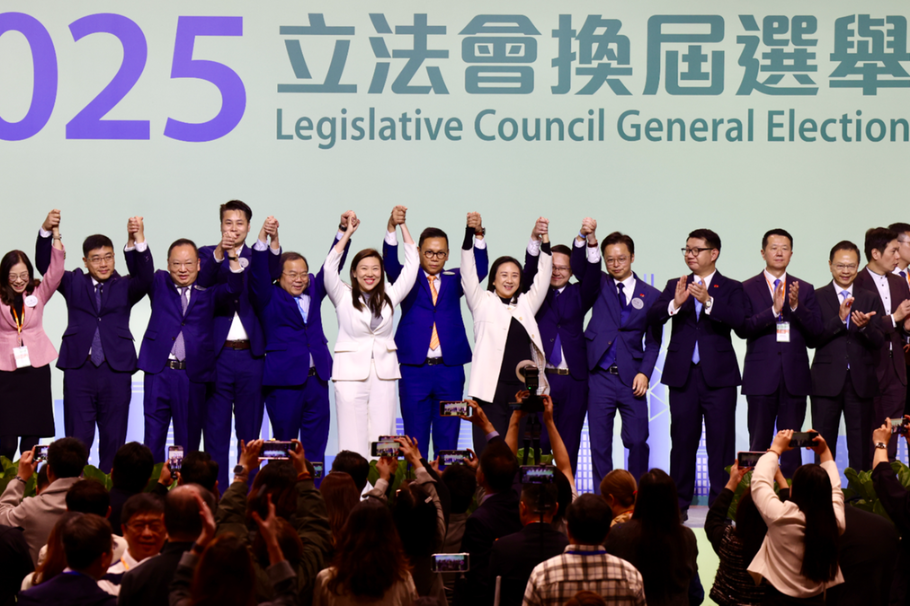
    Hong Kong has successfully concluded its eighth-term Legislative Council election, marking a significant democratic milestone for the Special Administrative Region. The election, held on December 7, 2025, demonstrated robust public participation with voter turnout across all constituencies substantially exceeding previous records.

    The Hong Kong and Macao Affairs Office of the State Council issued an official statement Monday congratulating the successful electoral process, noting that the high participation rates reflected broad societal recognition and strong support for the new political framework. The statement emphasized that the election results genuinely represent the will of Hong Kong citizens while advancing democratic development under the ‘one country, two systems’ principle.

    Despite challenges including a recent devastating fire in Tai Po during the campaign period, the election proceeded smoothly through effective coordination between government agencies and emergency services. Chief Executive John Lee Ka-chiu and the SAR government implemented numerous innovative measures to ensure electoral arrangements complied strictly with legal requirements while simultaneously managing disaster relief operations.

    The newly structured Legislative Council comprises 90 members representing three electoral pathways: 40 selected by the Election Committee, 30 from functional constituencies, and 20 through geographical constituency direct elections. All elected members have been characterized as patrions committed to Hong Kong’s prosperity, with demonstrated capabilities, sense of responsibility, and dedication to public service.

    The central government expressed confidence that incoming legislators will uphold national sovereignty and security interests while supporting the executive-led governance structure. Expectations include effective management of executive-legislative relations, responsiveness to public needs, and consensus-building to drive post-disaster recovery, governance reform, and long-term stability. The eighth-term Legislative Council will commence its four-year mandate on January 1, 2026.

  • European leaders walk tightrope between backing Ukraine and keeping US on board

    European leaders walk tightrope between backing Ukraine and keeping US on board

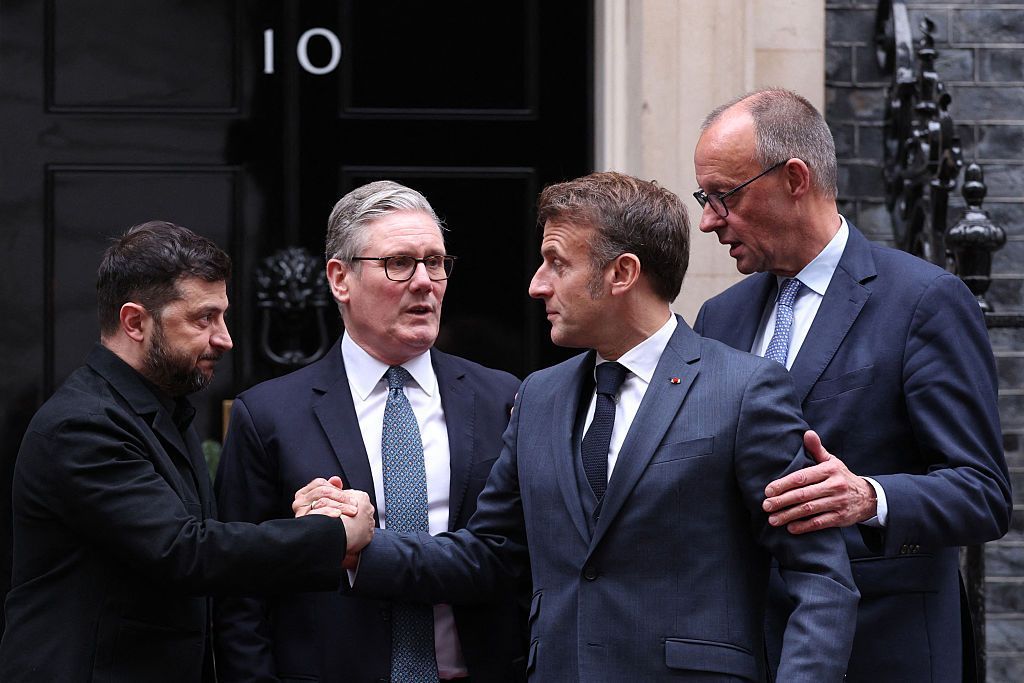
    Ukrainian President Volodymyr Zelensky convened with key European leaders in London on Monday amid growing American pressure to accelerate peace negotiations with Russia. The high-stakes meetings with British Prime Minister Sir Keir Starmer, French President Emmanuel Macron, and German Chancellor Friedrich Merz occurred against a backdrop of significant geopolitical tensions regarding Ukraine’s future.

    The discussions centered on two critical challenges: potential territorial concessions to Russia and obtaining ironclad security guarantees to prevent future Russian aggression. Prime Minister Starmer reiterated Britain’s position that Ukraine must determine its own future without external impositions, emphasizing the necessity of “hard-edged security guarantees” for any viable peace agreement.

    This show of European solidarity contrasts sharply with recent developments from Washington. The newly published US National Security Strategy explicitly criticizes European allies for harboring “unrealistic expectations” about the conflict’s resolution. European leaders privately express concerns that the Trump administration seeks a rapid settlement to redirect attention elsewhere, potentially at the expense of lasting peace.

    The security situation across Europe has intensified these apprehensions. Recent destabilizing incidents—including drone disruptions at civilian airports in Germany, Denmark, and Belgium, railway sabotage in Poland, and widespread cyber-attacks—have been attributed to Russian operations. These events have made the distant conflict feel increasingly immediate to European citizens and governments alike.

    Despite fundamental differences in approach to Moscow, European leaders maintain diplomatic caution in their public statements. Chancellor Merz acknowledged skepticism regarding certain US proposal details while emphasizing the need for continued dialogue. Prime Minister Starmer notably credited President Trump with advancing peace negotiations “the furthest we’ve got in the four years” within just weeks of his administration.

    The underlying reality remains Europe’s military dependence on the United States. Decades of defense underinvestment have left European nations incapable of supporting Ukraine independently or ensuring continental security without American intelligence, command capabilities, and air support. Even recent NATO commitments to increase defense spending cannot overcome immediate budgetary constraints faced by governments like France, which has allocated merely €120 million for Ukrainian aid in next year’s draft budget.

    This delicate balancing act—supporting Ukrainian sovereignty while avoiding alienation of their most powerful ally—represents the central diplomatic challenge for European leadership as they navigate increasingly divergent transatlantic approaches to Russian relations.

  • Secretariat for Global South alliance launched in Shanghai

    Secretariat for Global South alliance launched in Shanghai

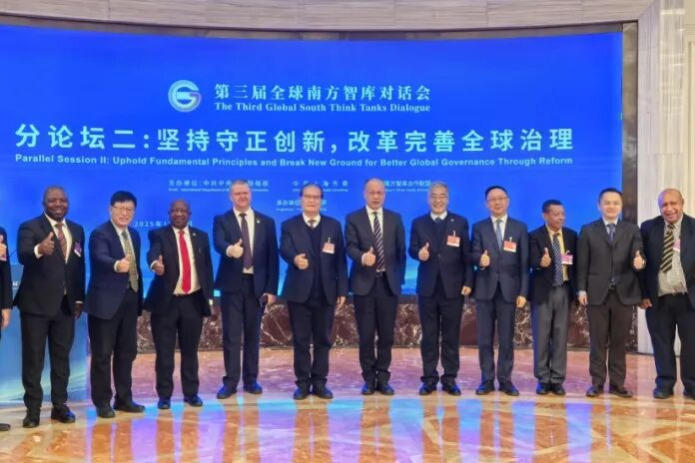
    Shanghai’s Fudan University has become the permanent home for a new international intellectual cooperative as the Secretariat of the Global South Think Tanks Alliance was formally inaugurated on Thursday. The establishment occurred during the third Global South Think Tanks Dialogue, marking a significant advancement in South-South cooperation frameworks.

    The alliance, initially proposed during the ‘BRICS Plus’ leaders’ dialogue in Kazan, Russia in October 2024, represents a strategic initiative to strengthen collaborative networks among developing nations. Its core mission centers on advocating for a more balanced multipolar world order and promoting inclusive global governance structures that better represent Global South interests.

    Operating under the auspices of Fudan University’s School of International Relations and Public Affairs, the Secretariat will function as the central coordinating body for member institutions worldwide. It will facilitate academic exchanges, joint research initiatives, and expert personnel deployments across the alliance network. The Secretariat will additionally serve as a knowledge repository and resource hub supporting collaborative projects among participating think tanks.

    A distinctive feature of the initiative involves leveraging Fudan University’s artificial intelligence capabilities to address development challenges specific to Global South nations. The Secretariat will pioneer innovative cooperation models through technological integration, positioning AI as a transformative tool for southern hemisphere development.

    Fudan University President Jin Li emphasized the institution’s longstanding commitment to Global South studies during the launch ceremony. ‘Our university has cultivated specialized expertise in Global South research and educated generations of students dedicated to southern hemisphere development,’ Jin stated. He further committed to deepening collaboration with alliance members to advance modernization efforts across developing nations and establish a more equitable international architecture.

  • ‘Record high’ number of Palestinians died in Israeli prison as a result of Ben Gvir’s policies

    ‘Record high’ number of Palestinians died in Israeli prison as a result of Ben Gvir’s policies

    Israeli media outlet Walla has revealed a disturbing surge in Palestinian fatalities within Israeli detention facilities, documenting 110 deaths over the past two and a half years under the restrictive policies of far-right National Security Minister Itamar Ben Gvir. This figure represents a dramatic escalation when compared to historical data, which recorded approximately 187 Palestinian detainee deaths between 1967 and 2007—an average of fewer than five per year. The current rate equates to nearly one death per week, a pace described as a “record high” by the report.

    The investigation attributes this alarming mortality rate to a series of severe measures implemented by Ben Gvir. These include significantly reduced food rations, deprivation of sunlight, limitations on warm clothing and access to showers and hygienic products, and systematic violent beatings and cell raids. While Walla’s data indicates that most deaths occurred in hospitals during treatment rather than inside detention centers, the conditions leading to these medical emergencies are directly linked to prison policies.

    Human rights organizations have long documented the mistreatment of Palestinian detainees, but reports confirm that abuses have intensified sharply since the onset of Israel’s war on Gaza in October 2023. Systemic torture and abuse have reached unprecedented levels, with at least 100 prisoner deaths documented under these conditions. Both international and Israeli human rights groups, including B’Tselem, have condemned the situation, with the latter referring to the prisons as “torture camps.”

    Israel’s Public Defender’s Office recently reported on deteriorating conditions, noting that Palestinians endure extreme hunger, overcrowding, and systematic violence by prison staff. This assessment was corroborated by a UN Committee Against Torture report last month, which found the use of torture by the Israeli state to be “organised and widespread” and noted a grave intensification since October 2023.

    An estimated 9,250 to 10,000 Palestinians are currently held in Israeli prisons, with nearly half detained without charge or trial under indefinitely renewable administrative detention orders. This reporting on prison deaths emerges alongside deliberations on a new bill, championed by Ben Gvir, that would allow the death penalty for Palestinian prisoners convicted on “nationalistic” grounds—a penalty that would not apply to Israelis under similar circumstances. The bill has advanced through a preliminary reading in the Knesset, with Ben Gvir symbolically wearing a noose pendant during discussions to emphasize his commitment to the legislation.

  • ‘We got rid of a tyrant’: Syria’s tumultuous first year without Assad

    ‘We got rid of a tyrant’: Syria’s tumultuous first year without Assad

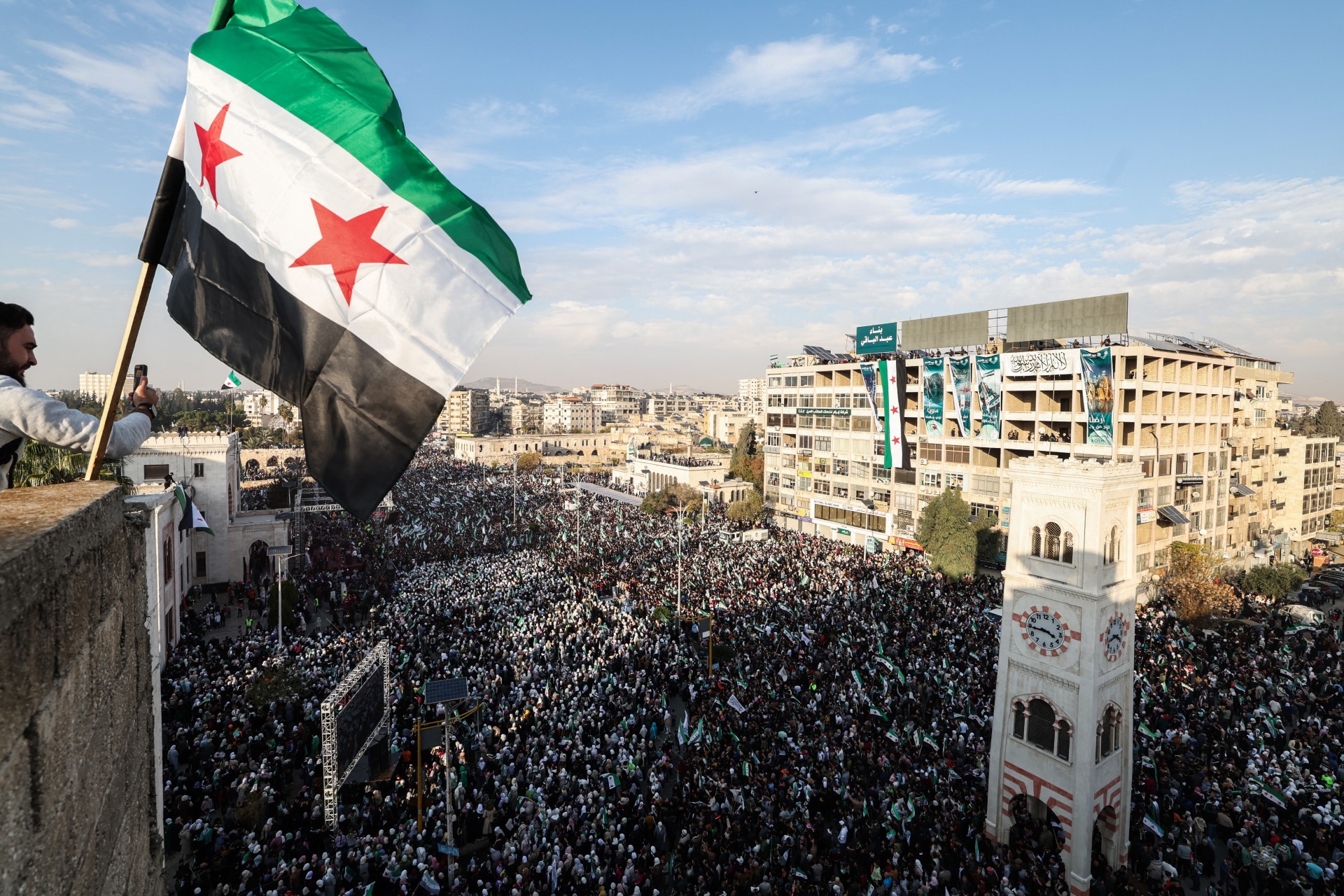
    December 8, 2024, marked a seismic shift in Syrian history as Bashar al-Assad’s five-decade dynastic rule abruptly collapsed under a lightning rebel offensive. The overnight disappearance of his regime transformed Damascus from a surveillance state to a city of liberation, with Assad’s omnipresent portraits replaced by revolutionary martyrs’ memorials.

    The initial euphoria saw prisoners emerging from notorious detention centers while citizens celebrated in streets once patrolled by leather-jacked security forces. Yet this victory remains bittersweet for families like that of content creator Abd al-Hadi Safi, whose brother vanished into Assad’s prison system in 2012. “We got rid of a tyrant, but without justice, this story isn’t finished,” Safi told Middle East Eye, echoing sentiments of thousands seeking accountability.

    President Ahmad al-Sharaa’s transitional government faces monumental challenges in reconciling sectarian divisions that erupted violently throughout the year. Alawi communities suffered retaliatory massacres despite comprising only 10-15% of the population, while July’s Sweida province operations triggered catastrophic Druze-Bedouin violence that killed hundreds and required tribal peace agreements.

    The Kurdish northeast presented different complications, with nominal reintegration agreements masking deep distrust between the Syrian Democratic Forces and Damascus. While Sharaa’s administration canceled millions of Assad-era travel bans and formed transitional justice committees, many victims’ families perceive continued impunity for former regime officials.

    Internationally, Syria’s diplomatic transformation has been remarkable. Sharaa’s pragmatic approach—dismantling Assad’s captagon empire, confronting Hezbollah supply lines, and cooperating on counterterrorism—earned him an unprecedented Oval Office meeting and gradual sanctions relief. Analyst Kamal Alam notes: “Sharaa understood the previous regime never compromised and paid the price. He has been the opposite—flexible, pragmatic.”

    One year into this transition, Syria stands between celebration and reckoning—having toppled a dictator but not yet built a fully just state from the ruins of his police regime.

  • US Supreme Court hears fight over Trump’s power to fire federal agency official

    US Supreme Court hears fight over Trump’s power to fire federal agency official

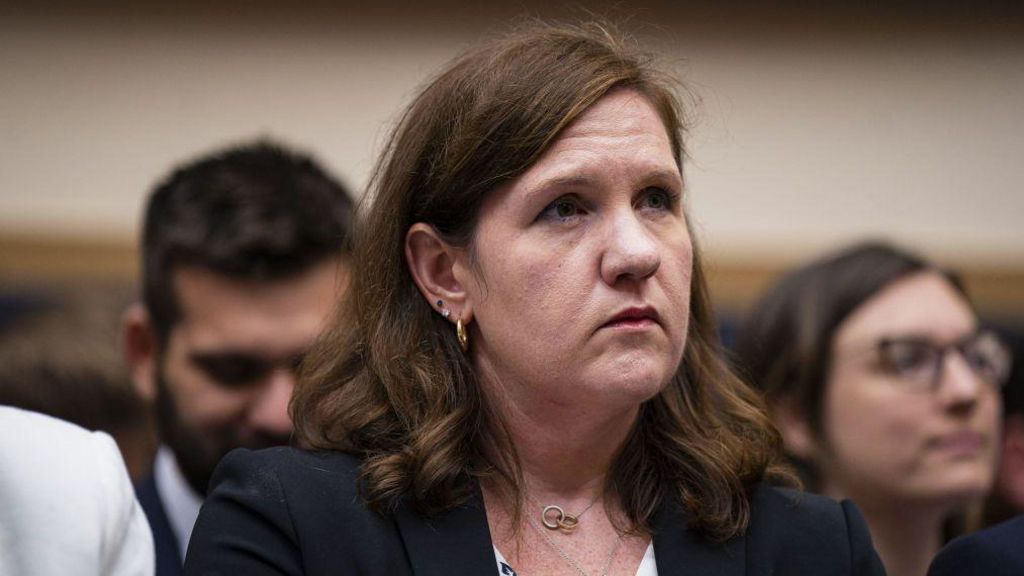
    The U.S. Supreme Court commenced hearings on Monday in a pivotal case that challenges the traditional independence of federal regulatory agencies from presidential control. The litigation, formally designated as Trump v. Slaughter, originated from President Donald Trump’s March termination of Rebecca Kelly Slaughter, a Democratic commissioner of the Federal Trade Commission (FTC).

    Central to the legal dispute is the interpretation of statutory provisions that restrict presidential removal of FTC commissioners solely to instances of ‘inefficiency, neglect of duty, or malfeasance in office.’ Trump dismissed Slaughter citing her stance as ‘inconsistent with [the] Administration’s priorities,’ prompting her to initiate legal action against the former president.

    A lower court previously determined that Slaughter’s removal violated established law, a decision that the Trump administration subsequently appealed to the nation’s highest court. In a preliminary 6-3 ruling in September, the conservative-majority bench issued an emergency order sustaining Slaughter’s dismissal pending full judicial review.

    The case represents a significant constitutional confrontation regarding the extent of presidential authority over independent agencies created by Congress to operate with limited executive interference. Established in 1914, the FTC was designed to protect consumers from deceptive business practices and anti-competitive behavior through bipartisan leadership—its five-member commission structure prohibits more than three commissioners belonging to the same political party.

    This legal challenge revisits foundational administrative law principles established in Humphrey’s Executor v. United States (1935), wherein the Supreme Court affirmed that certain federal agencies exercise ‘quasi-judicial and quasi-legislative’ functions distinct from purely executive operations, thereby limiting presidential removal authority.

    The Court’s decision could potentially reshape the operational independence of numerous federal agencies, including the National Labor Relations Board and others with similar statutory protections. Concurrently, the justices are preparing to review a related case concerning Trump’s removal of Lisa Cook from the Federal Reserve Board of Governors, indicating broader implications for administrative governance structures.