分类: politics

  • Former Inner Mongolia Party chief under investigation

    Former Inner Mongolia Party chief under investigation

    China’s top anti-corruption authorities have launched a formal investigation into Sun Shaocheng, former Communist Party secretary of Inner Mongolia Autonomous Region, for alleged serious violations of Party discipline and national laws. The announcement was made public through an official online statement released by the Central Commission for Discipline Inspection (CCDI) and the National Commission of Supervision on Thursday, January 29, 2026.

    The brief notification provided no specific details regarding the nature of the alleged violations, maintaining the characteristic opacity typical of such high-level disciplinary investigations within the Chinese political system. The development marks another significant case in China’s ongoing anti-corruption campaign that has persisted for over a decade.

    Sun Shaocheng, a 65-year-old native of Shandong province, boasts an extensive political career spanning more than four decades. His professional journey began in July 1984, with his Party membership commencing in May 1986. His administrative experience includes substantial tenure at the Ministry of Civil Affairs, where he ascended to vice-ministerial rank in 2009. Subsequent postings saw him serve as deputy governor of Shandong province in 2012, followed by a transfer to Shanxi province where he assumed deputy gubernatorial responsibilities in 2016.

    His portfolio later expanded to include roles within the Ministry of Natural Resources and the Ministry of Veterans Affairs, demonstrating his broad administrative capabilities. Most recently, in October 2025, Sun was appointed deputy head of the 14th National People’s Congress Social Development Affairs Committee, a position he held concurrently with his Party responsibilities until the investigation was announced.

  • Exclusive: Meet the frontrunners to be Green candidate in crucial UK by-election

    Exclusive: Meet the frontrunners to be Green candidate in crucial UK by-election

    The upcoming parliamentary by-election in Greater Manchester’s Gorton and Denton constituency, scheduled for February 26th, has emerged as a critical juncture in British politics. This contest represents a significant referendum on Labour Prime Minister Keir Starmer’s leadership while simultaneously testing the electoral viability of both the anti-immigration Reform UK party and the left-wing Green Party.

    The political landscape intensified when Labour’s National Executive Committee blocked Greater Manchester Mayor Andy Burnham—widely perceived as a potential challenger to Starmer—from contesting the seat. This development occurred alongside Reform UK’s nomination of GB News presenter Matt Goodwin as their candidate, a figure whose history of controversial statements regarding ethnicity and Islam has drawn sharp criticism from Green Party leader Zack Polanski, who accused Goodwin of demonstrating ‘a track record of anti-Muslim bigotry.’

    These dynamics hold particular significance in a constituency where demographic data reveals more than 25% of voters identify as Muslim and approximately 44% belong to ethnic minority groups.

    The Green Party’s selection process has narrowed to two prominent figures: Hannah Spencer, a plumber and Trafford council leader, and Fesl Reza-Khan, a former soldier and party international coordinator. Spencer, a lifelong Manchester resident who entered politics post-COVID due to frustration with wealth inequality, emphasizes representing working-class voices. Reza-Khan, who joined the Greens following Israel’s military actions in Gaza, cites his personal journey from Pakistani immigrant to British army officer as foundational to his political perspective.

    Both candidates frame the election as a pivotal opportunity to challenge divisive rhetoric and offer an alternative to established political narratives. They specifically position their campaign against Reform UK’s messaging, which they characterize as scapegoating immigrants and minority communities. The election now serves as a microcosm of broader national debates surrounding identity, representation, and the future direction of British politics.

  • How Trump’s demands on Iran have shifted over time

    How Trump’s demands on Iran have shifted over time

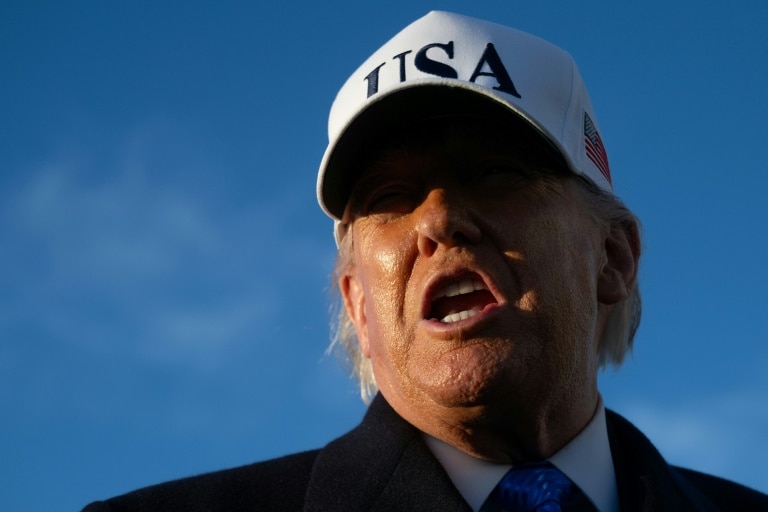
    Former U.S. President Donald Trump has intensified his confrontational stance toward Iran through a series of escalating threats delivered via his Truth Social platform. On Wednesday, he declared that a substantial naval fleet was en route to Iranian waters, prepared to execute military operations with “speed and violence” if Tehran refuses to negotiate a nuclear agreement.

    Drawing parallels to recent U.S. operations targeting Venezuelan leadership, Trump asserted this naval presence surpassed the scale of forces deployed in South America earlier this month. His statements emphasized readiness for rapid military engagement while simultaneously urging Iranian officials to return to diplomatic negotiations for a “fair and equitable” agreement prohibiting nuclear weapons development.

    This latest threat represents another evolution in Trump’s longstanding adversarial position toward Iran. His justification for potential military action has shifted repeatedly—from opposing Iran’s nuclear program to condemning its domestic crackdown on protesters—creating confusion among observers. The nuclear weapons reference appears particularly noteworthy given that Iran’s current uranium enrichment remains below weapons-grade levels according to international monitors.

    Central to Trump’s Iran policy remains his alignment with Israeli interests. Prime Minister Benjamin Netanyahu has consistently reinforced Trump’s hostility toward Iran, reportedly sharing intelligence regarding alleged assassination plots and nuclear advancements. This alliance culminated in coordinated airstrikes last June targeting Iranian nuclear facilities, which Trump publicly celebrated as exceptional military achievements.

    The former president’s approach contrasts sharply with the Obama administration’s diplomatic efforts, having unilaterally withdrawn from the 2015 nuclear agreement to implement a “maximum pressure” campaign featuring extensive sanctions. Despite this abandonment of diplomatic channels, Trump continues demanding renegotiation of nuclear terms while increasing military posturing.

    Regional stability concerns have occasionally tempered Trump’s rhetoric, as evidenced by his abrupt January reversal on military intervention following appeals from Middle Eastern allies. However, his latest ultimatum returns focus exclusively to nuclear capabilities without reference to human rights issues, suggesting strategic prioritization of nonproliferation objectives in current threat formulations.

  • Trump says Putin agreed not to attack freezing Kyiv for a week

    Trump says Putin agreed not to attack freezing Kyiv for a week

    In a surprising diplomatic development, former U.S. President Donald Trump has asserted that Russian President Vladimir Putin consented to suspend military operations against Kyiv and other Ukrainian urban centers for one week. This announcement came during a White House cabinet meeting where Trump emphasized his personal intervention regarding the ongoing conflict.

    The timing of this claimed agreement coincides with Ukraine experiencing its most severe winter since the invasion began, with temperatures forecasted to plummet to life-threatening lows of minus 30 degrees Celsius. Russian strikes on critical energy infrastructure have already created a humanitarian emergency, leaving millions without reliable access to electricity, heating, and clean water during these extreme conditions.

    Trump elaborated on his conversation with Putin, stating: ‘Given the extraordinary cold weather—record-setting conditions similar to what we’re experiencing in Washington—I personally requested President Putin refrain from attacks on Ukrainian population centers for this seven-day period. He agreed to this arrangement, which I consider a humanitarian gesture.’

    The Kremlin has not immediately verified Trump’s account of the agreement. This would represent a significant development given that previous diplomatic engagements between Trump and Putin, including their Alaska summit in August, failed to produce substantial breakthroughs in the conflict.

    Meanwhile, Ukrainian President Volodymyr Zelensky has warned of continued Russian targeting of energy facilities, even as emergency services work to restore critical infrastructure. Regional authorities reported that Russian attacks resulted in six civilian fatalities in central and southern Ukraine on Thursday alone.

    Trump additionally suggested that U.S.-mediated negotiations between Kyiv and Moscow have shown ‘considerable progress’ toward resolving the conflict, which approaches its fifth year of ongoing hostilities.

  • Turkey’s President Erdogan offers Trump a teleconference with Iran

    Turkey’s President Erdogan offers Trump a teleconference with Iran

    Turkish President Recep Tayyip Erdogan has formally proposed hosting a direct teleconference between U.S. President Donald Trump and Iranian President Masoud Pezeshkian in a bold diplomatic effort to de-escalate mounting tensions between the two nations. This mediation offer comes amid heightened military threats from Washington toward Tehran, with Trump explicitly warning of imminent offensive actions.

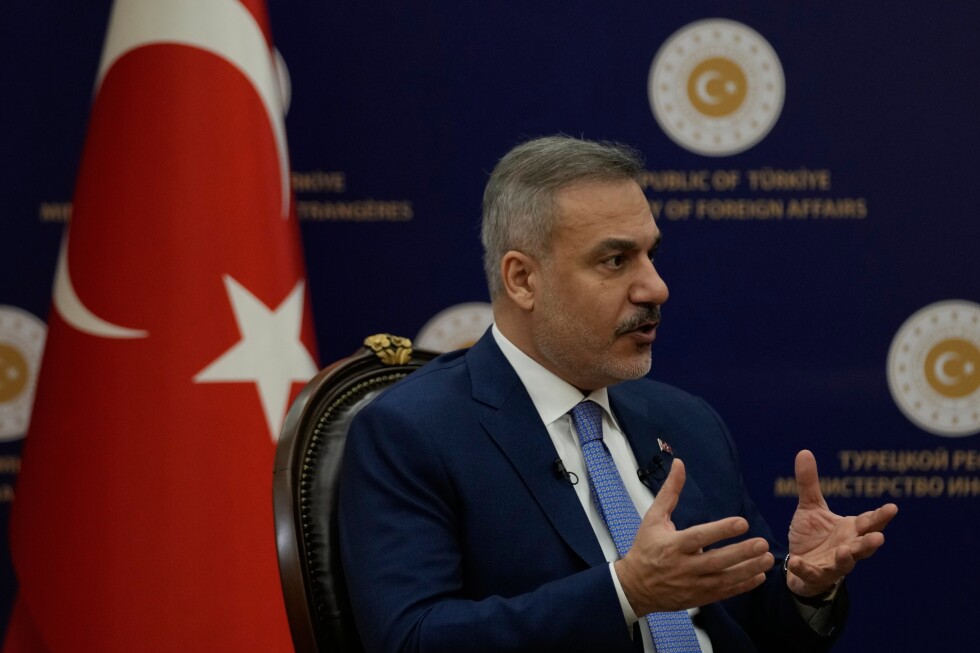
    The initiative emerged during a Monday phone conversation between Erdogan and Trump, where the Turkish leader emphasized diplomatic solutions as the paramount priority. While President Trump reportedly expressed interest in the proposed dialogue format, Iranian leadership has yet to formally respond to the offer. Diplomatic sources indicate that Iranian Foreign Minister Abbas Araghchi, scheduled to visit Istanbul on Friday for bilateral discussions with Turkish counterpart Hakan Fidan, may deliver Tehran’s official response during these talks.

    This marks Ankara’s second mediation attempt this year, following a similar unsuccessful offer during the 12-day conflict in June that Tehran declined with apparent dismay. Turkey has consistently opposed foreign intervention in Iran, with Foreign Minister Fidan advocating for gradual, file-by-file resolution of disputes between the nations.

    The current crisis is significantly influenced by Israel’s strategic concerns regarding Iran’s ballistic missile program and nuclear research activities. Prime Minister Benjamin Netanyahu, facing domestic electoral pressures, has been actively advocating for U.S. intervention against Tehran.

    In parallel to Turkey’s diplomatic efforts, other regional nations have engaged in shuttle diplomacy. Columnist Hande Firat of Turkey’s Hurriyet newspaper reported that Ankara’s persistent messaging emphasizes diplomacy as the only viable path forward, crediting these efforts with temporarily postponing—though not resolving—the brewing crisis.

    The situation escalated dramatically when Trump publicly warned via his Truth Social platform of a ‘massive armada’ positioned to strike Iran with ‘speed and violence’ unless Tehran agrees to nuclear negotiations. Drawing comparisons to Venezuelan operations, Trump referenced previous military actions against Iranian nuclear sites in June 2025, threatening significantly more destructive consequences if Iran refuses to negotiate.

    According to intelligence reports, the Trump administration is considering precision strikes against high-value Iranian officials allegedly connected to protester deaths during recent anti-government demonstrations. This potential military action represents the latest development in weeks of intensifying tensions between the United States and Iran.

  • Trump says he’s instructed US officials to reopen Venezuelan airspace for commercial travel

    Trump says he’s instructed US officials to reopen Venezuelan airspace for commercial travel

    WASHINGTON — In a significant diplomatic shift, the Trump administration has initiated steps to normalize relations with Venezuela. President Donald Trump confirmed Thursday that he has directed authorities to reopen all commercial airspace over Venezuela, with American citizens expected to gain travel access shortly.

    Trump stated he personally communicated this development to Venezuelan official Delcy Rodríguez and has tasked Transportation Secretary Sean Duffy alongside military leadership with executing the airspace reopening by day’s end. “American citizens will be very shortly able to go to Venezuela, and they’ll be safe there,” the President asserted.

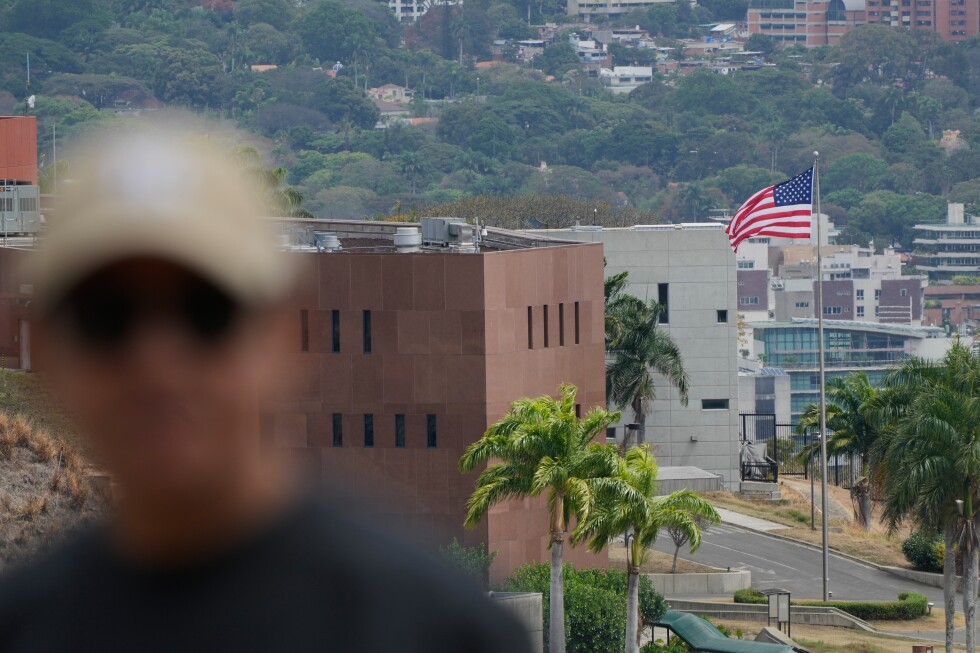
    This announcement coincides with broader efforts to restore diplomatic ties severed in 2019. Earlier this week, the State Department notified Congress of its intention to implement a phased approach toward potentially resuming operations at Embassy Caracas. Official correspondence to ten House and Senate committees revealed plans to deploy temporary staff for selective diplomatic functions, marking the initial phase of this normalization process.

    The diplomatic rupture originated from the 2019 U.S. military operation that ousted former President Nicolás Maduro. Since then, travel advisories have remained at the highest alert level, with explicit warnings against travel due to risks including wrongful detention, torture, and kidnapping. As of Thursday, the State Department’s “Do Not Travel” advisory remained officially active despite the announced policy changes.

    This policy reversal represents one of the most substantial developments in U.S.-Venezuela relations in recent years, suggesting a potential thaw in longstanding tensions between the nations.

  • Trump’s wide ambitions for Board of Peace sparks new support for the United Nations

    Trump’s wide ambitions for Board of Peace sparks new support for the United Nations

    In a significant diplomatic setback, former President Donald Trump’s ambitious proposal to expand his ‘Board of Peace’ beyond Gaza mediation has encountered widespread international resistance. Major global powers including China, France, Russia, and the United Kingdom have unanimously declined participation in what many perceive as an attempt to undermine the United Nations’ authority.

    The board, initially conceived as a limited framework for overseeing Gaza’s post-conflict future, underwent substantial mission creep under Trump’s direction. The controversial charter granted Trump permanent leadership with veto powers over membership and actions, while envisioning a global conflict mediation role that directly challenged the UN Security Council’s mandate.

    Secretary of State Marco Rubio attempted damage control, emphasizing that “this is not a replacement for the UN” and narrowing the board’s immediate focus to Gaza ceasefire implementation. However, Trump’s simultaneous promotion of the board as a potential UN alternative created diplomatic friction that overshadowed its original purpose.

    The rejection manifested through multiple channels: formal Security Council statements, public declarations, and private diplomatic communications. French President Emmanuel Macron characterized the initiative as raising “serious questions regarding UN principles,” while Spain’s refusal cited the exclusion of Palestinian Authority representation. British Prime Minister Keir Starmer explicitly reaffirmed Britain’s “enduring support for the UN and international rules-based system” before declining membership.

    Despite attracting approximately 26 of 60 invited nations—primarily Muslim countries seeking influence in Gaza discussions—the board failed to secure endorsement from any permanent Security Council members or major European economies. Human Rights Watch’s UN director Louis Charbonneau dismissed the initiative as a “pay-to-play club of human rights abusers” rather than a legitimate international organization.

    Analysts from the International Crisis Group suggest the expansion fundamentally compromised the board’s credibility, transforming what might have been a viable Gaza-focused initiative into a perceived “Trump fan club” that deterred potential supporters. While eight Muslim nations joined to advance Palestinian interests, experts doubt the board’s capacity to evolve into a meaningful alternative to UN mechanisms.

  • US Senate vote to avert government shutdown expected to fail

    US Senate vote to avert government shutdown expected to fail

    The United States Senate faces an imminent legislative deadlock as Democrats pledge to obstruct a critical government funding package, escalating tensions over immigration enforcement policies. The Republican-controlled chamber requires 60 votes to advance a comprehensive six-bill spending measure designed to fund approximately 75% of federal operations through fiscal year 2026. However, Democratic opposition remains steadfast unless Homeland Security funding undergoes separate consideration with enhanced restrictions on Immigration and Customs Enforcement (ICE) operations.

    This political confrontation gained intensity following recent fatalities involving federal agents. The shooting deaths of two activists—Alex Pretti, an intensive care nurse in Minneapolis, and Renee Good—during immigration enforcement actions have dramatically reshaped the funding debate. Senate Minority Leader Chuck Schumer articulated the Democratic position, stating: ‘While Americans support border security, they reject ICE terrorizing communities and killing citizens. This agency must adhere to standard law enforcement accountability measures.’

    Democratic negotiators demand structural reforms including termination of roving ICE patrols, strengthened warrant requirements, standardized use-of-force protocols, prohibition of facial concealment during operations, and mandatory body camera implementation. Republican leadership resists decoupling Homeland Security from the broader package, warning that procedural delays could precipitate the very shutdown both parties ostensibly seek to avoid.

    With the House of Representatives in recess until after Friday’s funding deadline, legislative options appear constrained. Emerging proposals suggest advancing five non-controversial spending bills alongside a temporary Homeland Security funding extension, though Democrats emphasize requiring statutory reforms rather than executive assurances. The White House has intensified engagement in negotiations, exploring stopgap solutions while agencies like FEMA face potential operational paralysis during severe winter conditions.

    The impasse carries significant electoral implications as all House seats and one-third of Senate positions approach contested elections. Should funding lapse, hundreds of thousands of federal employees face furloughs or uncompensated work, potentially triggering widespread economic disruption across government services.

  • EU adds Iran’s Revolutionary Guards to terrorist list

    EU adds Iran’s Revolutionary Guards to terrorist list

    The European Union has formally designated Iran’s Islamic Revolutionary Guard Corps (IRGC) as a terrorist organization in response to Tehran’s violent suppression of recent protests. This landmark decision places the powerful Iranian military force on the EU’s terror list alongside groups like al-Qaeda and Islamic State.

    EU foreign ministers unanimously approved the measure, with bloc diplomat Kaja Kallas characterizing it as a ‘decisive step’ against ongoing repression. ‘Repression cannot go unanswered,’ Kallas stated, emphasizing that regimes that kill their own people are working toward their demise.

    The designation follows what French Foreign Minister Jean-Noel Barrot described as ‘the most violent repression in Iran’s modern history,’ with human rights groups estimating thousands of protesters were killed by security forces during December and January unrest. The EU simultaneously imposed new sanctions on six entities and 15 Iranian officials, including Interior Minister Eskandar Momeni and Prosecutor General Mohammad Movahedi Azad, for their roles in suppressing peaceful demonstrations.

    Notably, France reversed its previous hesitation about blacklisting the IRGC over concerns about severing diplomatic channels. Italy led the push for designation, ultimately gaining unified European support.

    The IRGC, established after Iran’s 1979 revolution to defend its Islamic system, represents Iran’s most powerful military force with approximately 190,000 active personnel across land, air, and sea domains. The organization wields substantial economic and political influence while directing overseas operations through allied governments and armed groups. Domestically, it controls the Basij Resistance Force paramilitary group, which has been instrumental in suppressing dissent.

    EU terrorist designations trigger automatic sanctions including travel bans and asset freezes aimed at dismantling support networks. Despite the move, Kallas indicated expectations that diplomatic channels with Iran would remain open.

    The development occurs alongside heightened tensions with the United States, where President Donald Trump has warned that ‘time is running out’ for Iran to negotiate on its nuclear program. Trump threatened military action ‘far worse’ than previous strikes if no agreement is reached, claiming a ‘massive Armada’ was advancing toward Iran.

    Iranian officials have responded defiantly, with Foreign Minister Abbas Araghchi stating Iran’s armed forces were ready ‘with their fingers on the trigger’ to respond to any aggression. Army chief Amir Hatami vowed a ‘crushing response’ following reports that military regiments had received 1,000 new drones.

    International assessments of the crackdown’s human toll vary significantly due to internet restrictions imposed by Iranian authorities. While US-based HRANA confirms over 6,301 deaths including 5,925 protesters, Norway-based IHR estimates the final toll could exceed 25,000. Iranian authorities acknowledge approximately 3,100 fatalities but claim most were security personnel or bystanders attacked by ‘rioters.’

    The EU joins Australia, Canada, and the United States in designating the IRGC as terrorist, while the United Kingdom maintains its policy of not commenting on potential proscriptions.

  • US Senator Amy Klobuchar announces bid for Minnesota governor

    US Senator Amy Klobuchar announces bid for Minnesota governor

    Amid escalating political tensions and security concerns in Minnesota, Democratic Senator Amy Klobuchar has officially announced her gubernatorial campaign. The four-term senator positioned herself as a unifying force capable of bridging political divides in a state grappling with multiple crises.

    Klobuchar’s Thursday campaign video emphasized bipartisan cooperation and Minnesota values, stating: “We cannot sugarcoat how hard this is. But in these moments of enormous difficulty, we find strength in our Minnesota values of hard work, freedom, and simple decency and goodwill.” Her entry follows Governor Tim Walz’s unexpected decision to terminate his re-election campaign following criticism of his administration’s handling of a fraud scandal.

    The political landscape has been further complicated by recent violent incidents involving federal immigration agents. The fatal shooting of Alex Pretti on Saturday, occurring just two weeks after another citizen’s death, has intensified scrutiny of federal force deployment. Approximately 3,000 federal agents have been deployed throughout Minnesota, a move Klobuchar characterized as orchestrated by “an administration that relishes division” without directly naming President Trump.

    Additional tragedies have shaken the state, including the murder of a state legislator and her spouse, along with a church shooting that claimed two children’s lives. Klobuchar addressed these events while positioning herself as a centrist alternative to more combative Democratic contenders.

    The senator pledged rigorous anti-corruption measures, vowing to “make sure the people who steal taxpayer money go to jail and root out the fraud”—a clear reference to the scandal that undermined Walz’s administration. Meanwhile, Governor Walz maintains he is concentrating on governmental duties rather than campaigning.

    Political analysts regard Klobuchar as the immediate frontrunner given her national profile and Minnesota’s Democratic leanings. The Republican field appears weakened following Chris Madel’s withdrawal from the race, who denounced the immigration enforcement operation as an “unmitigated disaster.” Minnesota Republicans haven’t secured a statewide victory since 2006.

    Klobuchar brings substantial legislative experience to her campaign, having chaired the Senate Rules Committee and served on multiple committees since her 2007 swearing-in. Her campaign emphasizes her record of bipartisan collaboration amid heightened political polarization.