分类: politics

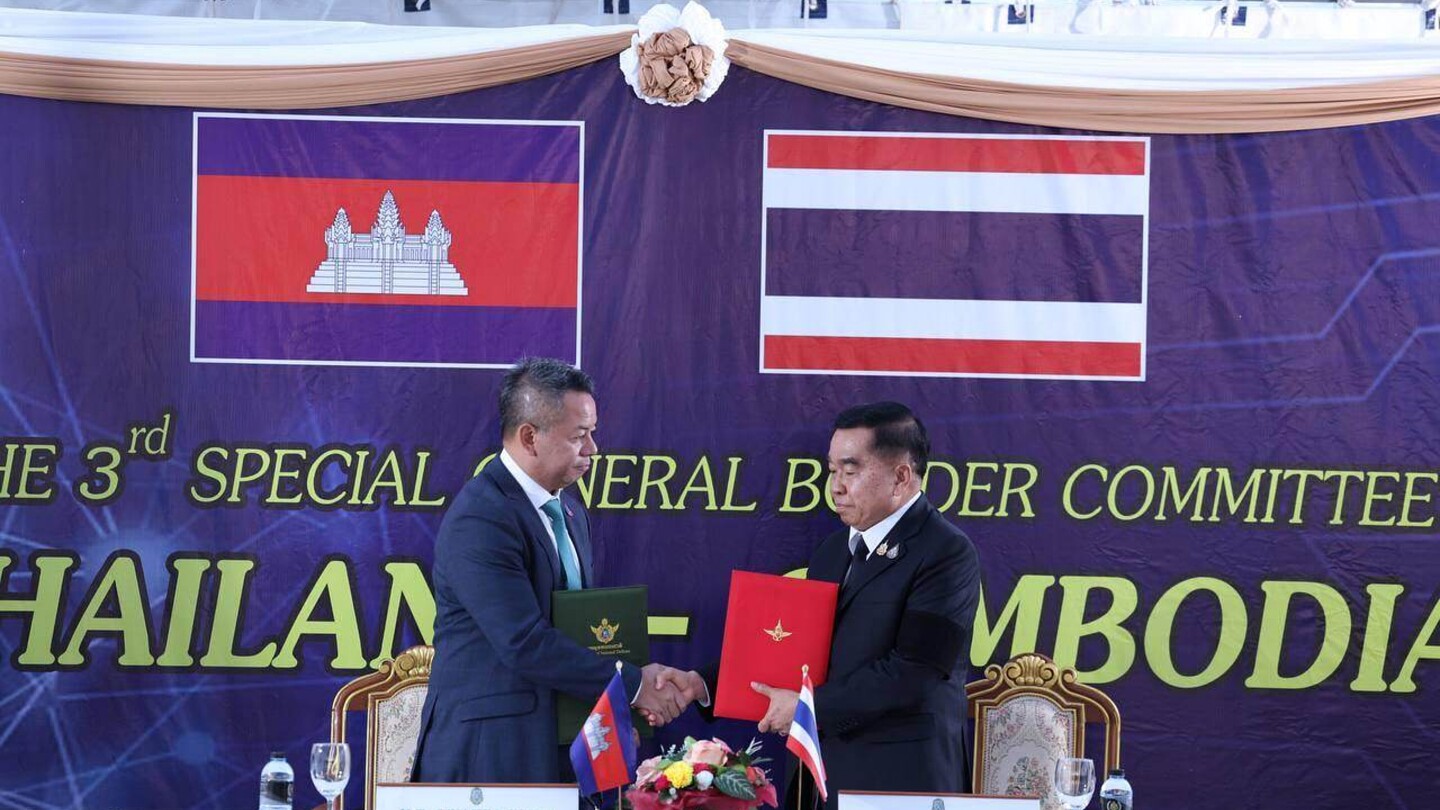
  • Thailand and Cambodia sign new ceasefire agreement to end border fighting

    Thailand and Cambodia sign new ceasefire agreement to end border fighting

    BANGKOK — In a significant diplomatic breakthrough, Thailand and Cambodia formalized a ceasefire accord on Saturday, effectively terminating weeks of intense military confrontation along their disputed border region. The pact, which became operational at noon local time, establishes stringent measures to prevent further escalation.

    The agreement explicitly prohibits all military movements and bans any incursions into either nation’s airspace for combat purposes. This provision holds particular significance given Thailand’s acknowledged use of airstrikes against Cambodian positions, with the most recent offensive occurring just hours before the ceasefire implementation, as confirmed by Cambodia’s defense ministry.

    A pivotal component of the arrangement mandates Thailand’s repatriation of 18 Cambodian soldiers detained since July’s initial hostilities, contingent upon the ceasefire remaining intact for 72 consecutive hours. The prisoners’ release had emerged as Cambodia’s primary negotiating objective throughout the discussions.

    Both nations have reaffirmed their commitment to previous de-escalation frameworks, including the July ceasefire mediated by Malaysia under substantial international pressure. That initial agreement gained momentum after U.S. President Donald Trump threatened trade sanctions against both countries unless they pursued peaceful resolution. The terms were further elaborated during an October regional summit in Malaysia attended by Trump.

    Despite these earlier diplomatic efforts, bilateral relations deteriorated through aggressive propaganda campaigns and persistent low-level border incidents throughout autumn. This friction culminated in early December with a severe outbreak of large-scale combat operations, necessitating the current reinforced ceasefire agreement.

  • Kosovo heads to a snap vote to end political deadlock

    Kosovo heads to a snap vote to end political deadlock

    PRISTINA, Kosovo — Citizens of Kosovo are heading to the polls for the second time this year in a crucial snap parliamentary election aimed at breaking a political impasse that has plunged the Balkan nation into its most severe governmental crisis since declaring independence in 2008. The extraordinary Sunday vote follows Prime Minister Albin Kurti’s Self-Determination Movement’s inability to form a governing coalition despite securing a plurality in February’s ballot.

    This electoral deadlock represents unprecedented political paralysis for Kosovo, which hasn’t faced such governmental formation difficulties throughout its fifteen-year history as an independent state. Current projections suggest Kurti’s party remains the frontrunner, though political analysts question whether it can secure the necessary 61-seat majority in the 120-member Assembly.

    The prolonged political vacuum has prevented legislative approval of next year’s national budget, raising concerns about potential economic repercussions for one of Europe’s poorest nations. The crisis compounds existing challenges for Kosovo’s 2 million citizens, who already grapple with soaring inflation and economic instability.

    Further complicating the political landscape, lawmakers must elect a new president by March as current President Vjosa Osmani’s term concludes in early April. Failure to reach consensus on presidential selection could trigger yet another snap election, extending the period of governmental uncertainty.

    Regional security concerns loom large over the electoral process. Serbia continues to reject Kosovo’s sovereignty, while Russia’s invasion of Ukraine has heightened anxieties about potential instability in the volatile Balkans region, where Moscow maintains influence through its Serbian alliance.

    In February’s contest, Self-Determination captured approximately 42% of votes, narrowly outpacing the combined opposition bloc of the Democratic League of Kosovo and Democratic Party of Kosovo, which secured about 40%. Political analyst Leart Hoxha notes that marginal voting shifts could dramatically alter power dynamics, potentially enabling Kurti to form minority coalitions or forcing him into opposition.

    Kurti faces criticism from mainstream opposition parties accusing him of authoritarian tendencies and damaging relations with key Western allies. The United States and European Union have imposed punitive measures in response to Kurti’s uncompromising stance in EU-mediated normalization talks with Belgrade.

    Despite these challenges, Kurti has campaigned vigorously, urging Kosovo’s 1.9 million voters to deliver a decisive mandate. “We must achieve another victory that ensures rapid constitution of the national assembly and a stable government with full mandate,” he declared at a recent campaign rally.

    The campaign has centered on Kosovo’s persistent economic difficulties and national security concerns. Bedri Hamza, former governor of the Kosovo National Bank, highlighted widespread public frustration: “Wherever I go, citizens tell me the same thing—life has become too expensive, salaries are insufficient, prices rise daily.”

    Security remains paramount following 2023’s violent clashes with ethnic Serb communities in northern Kosovo, which injured numerous NATO peacekeepers. A recent positive development saw ethnic Serb mayors assume power peacefully after municipal elections.

    In a controversial move, Kurti’s administration has agreed to accept third-country migrants deported from the United States under Trump-era immigration policies, with one individual already transferred according to authorities.

    As one of six Western Balkan nations pursuing EU membership, Kosovo faces the additional requirement of normalizing relations with Serbia before accession talks can advance—a diplomatic challenge that will confront whichever government eventually emerges from this electoral process.

  • One general, one mathematician: The men competing for power in two African elections

    One general, one mathematician: The men competing for power in two African elections

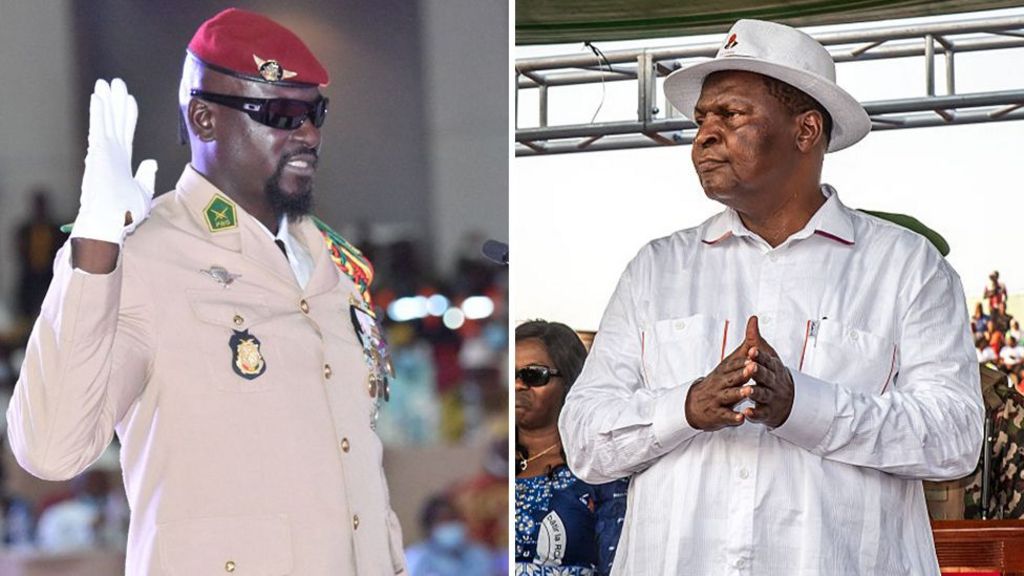
    This Sunday marks a pivotal moment for two African nations as Guinea and the Central African Republic (CAR) conduct presidential elections under dramatically different political circumstances, yet with striking parallels in their incumbents’ pursuit of extended power.

    In the Central African Republic, President Faustin-Archange Touadéra seeks a controversial third term following constitutional amendments that eliminated term limits. The mathematician-turned-politician, initially elected as a consensus figure following periods of rebel rule, now faces opposition boycotts despite the unexpected participation of his main rival, Anicet-Georges Dologuélé. The landlocked nation, among Africa’s poorest, has endured decades of instability but maintains fragile multi-party politics with recent progress in rebel disarmament and a hybrid national-international court addressing human rights crimes.

    Meanwhile, Guinea presents a contrasting narrative of military transition. General Mamadi Doumbouya, who seized power in a 2021 coup that ousted 83-year-old President Alpha Condé, now seeks constitutional legitimacy through elections. Despite allowing eight challengers, Doumbouya has dominated the campaign while excluding prominent opposition leader Cellou Dalein Diallo. His methodical constitutional review and maintained Western relations distinguish him from neighboring juntas that have embraced Russian partnerships.

    The elections carry significant implications for regional stability. The Economic Community of West African States (ECOWAS) views Guinea’s electoral process with relief following the withdrawal of Mali, Burkina Faso, and Niger from the bloc. Both nations’ transitions—despite concerns about democratic backsliding and human rights records—represent cautious steps toward normalization in a region battered by coups and jihadist insurgencies. International partners appear inclined to support these imperfect processes rather than risk further destabilization, particularly with Sudan’s conflict looming near CAR’s border and security challenges persisting across the Sahel.

  • Israel recognises Somaliland as ‘sovereign state’; Somalia denounces move

    Israel recognises Somaliland as ‘sovereign state’; Somalia denounces move

    In a groundbreaking diplomatic maneuver, Israel has formally acknowledged the Republic of Somaliland as a sovereign independent nation. Prime Minister Benjamin Netanyahu’s office confirmed this historic recognition on Friday, December 26, 2025, accompanied by an agreement to establish comprehensive diplomatic relations between the two states.

    This declaration positions Israel as the first nation to officially recognize Somaliland’s statehood, marking a significant departure from international consensus. The Israeli government framed this decision within the context of the Abraham Accords, the normalization agreements brokered during former U.S. President Donald Trump’s administration that established diplomatic ties between Israel and several Arab nations.

    Somaliland President Abdirahman Mohamed Abdullahi enthusiastically welcomed the development, characterizing it as the foundation of a strategic partnership. Through his official social media channels, Abdullahi expressed readiness to join the Abraham Accords framework and normalize relations with Israel.

    The northwestern region of Somaliland declared independence from Somalia in 1991 following the collapse of Siad Barre’s regime. Despite maintaining its own government, currency, and security forces for over three decades, the territory has struggled to achieve widespread international recognition.

    Israeli Foreign Minister Gideon Saar announced immediate plans to institutionalize bilateral relations, including mutual embassy establishments and ambassador appointments. Prime Netanyahu has extended an official invitation for President Abdullahi to visit Israel.

    The recognition has triggered strong regional opposition. Foreign ministers from Somalia, Egypt, Turkey, and Djibouti collectively condemned Israel’s move during an emergency conference call. These nations reaffirmed their commitment to Somalia’s territorial integrity and unity, rejecting what they characterize as a violation of international norms.

    This development represents both a diplomatic breakthrough for Somaliland’s longstanding sovereignty aspirations and a potential geopolitical flashpoint in the Horn of Africa region.

  • ‘We will vote but not with our hearts’: Inside the election staged by Myanmar’s military rulers

    ‘We will vote but not with our hearts’: Inside the election staged by Myanmar’s military rulers

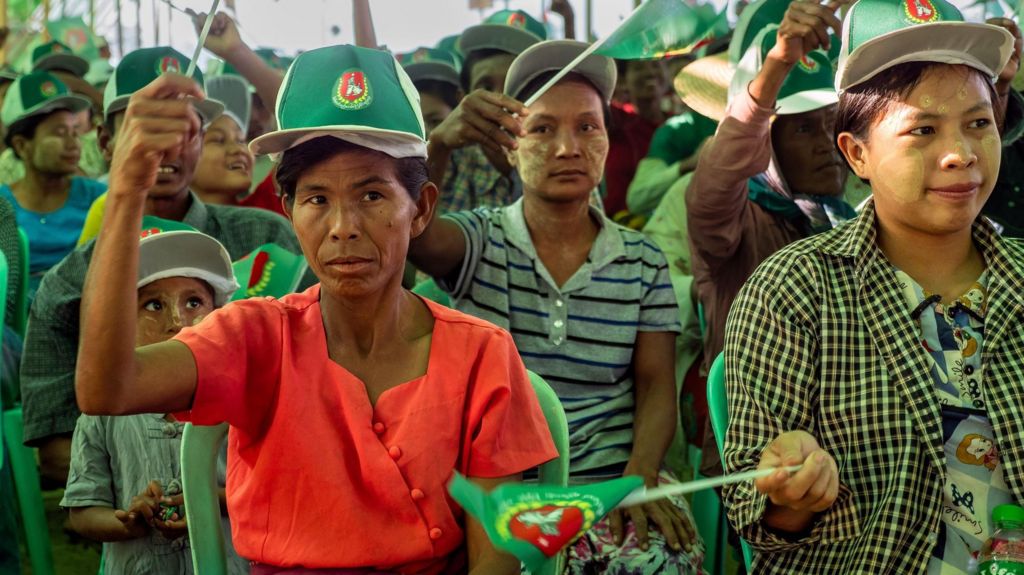
    In a carefully staged political performance ahead of Myanmar’s December 28 election, retired Lieutenant-General Tayza Kyaw attempted to generate enthusiasm among a modest crowd in Mandalay. The military-backed Union Solidarity and Development Party (USDP) candidate addressed approximately 300-400 attendees, many of whom were earthquake victims seeking assistance rather than political engagement. The event exposed the profound challenges facing what international observers have universally condemned as a illegitimate electoral process.

    This marks Myanmar’s first voting opportunity since the military seized power nearly five years ago, triggering a devastating civil war that has claimed approximately 90,000 lives according to ACLED data analysis. The election proceeds under circumstances that fundamentally undermine its credibility: the popular National League for Democracy has been dissolved, its leader Aung San Suu Kyi remains imprisoned, and voting cannot occur in extensive regions still engulfed in conflict.

    The climate of intimidation permeates every aspect of the process. When BBC journalists attempted to gather opinions at the rally, party officials intervened, citing concerns about attendees “saying the wrong thing.” This apprehension stems from the visible presence of plain-clothes intelligence officers and draconian laws that criminalize dissent. A July statute prohibits any speech or action deemed destructive to the electoral process, with violators facing extreme penalties—three Yangon residents recently received 42-49 year sentences for merely posting stickers combining bullet and ballot box imagery.

    Despite these conditions, junta leader Min Aung Hlaing appears confident the election will provide the legitimacy that has eluded him during five catastrophic years of rule. His confidence stems from several factors: diplomatic support from China, which is providing technical and financial assistance despite being a one-party state itself; recent military gains achieved with Chinese and Russian weapons; and the elimination of meaningful political opposition.

    The reality on the ground reveals a nation deeply fractured. Even near Mandalay’s apparent normality, the conflict’s scars remain visible. Areas like the spectacular Mingun temple complex, once a tourist destination, have become contested territory where volunteer People’s Defence Forces control villages and ambush military convoys. A young police commander interviewed by the BBC revealed the constant danger facing security forces, describing shoot-on-sight relationships with guerrilla groups.

    General Tayza Kyaw, when confronted about civilian casualties and air strikes against schools and hospitals, deflected responsibility entirely onto those resisting military rule, labeling them “terrorists” rather than citizens. This rhetoric reflects the regime’s uncompromising position and explains why many Burmese will participate in the election not out of conviction but fear. As one woman summarized: “We will vote, but not with our hearts.”

  • Israel becomes first country to officially recognise Somaliland

    Israel becomes first country to officially recognise Somaliland

    In a groundbreaking diplomatic development, the State of Israel has formally extended recognition to the breakaway territory of Somaliland as an independent and sovereign nation. This decision, announced on Friday by Israeli Prime Minister Benjamin Netanyahu, marks the first instance of any country granting full sovereign recognition to the region since it declared independence in 1991.

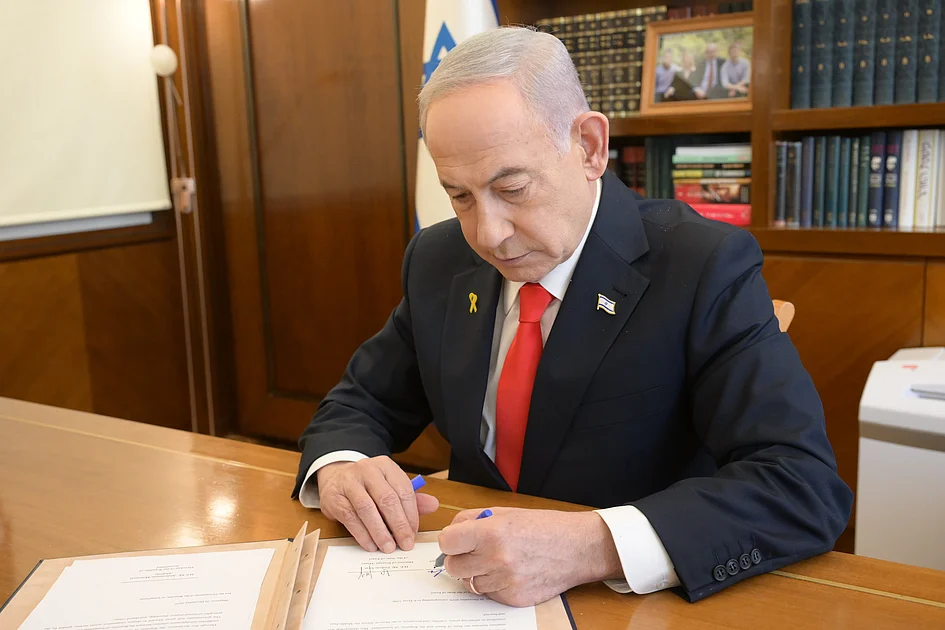
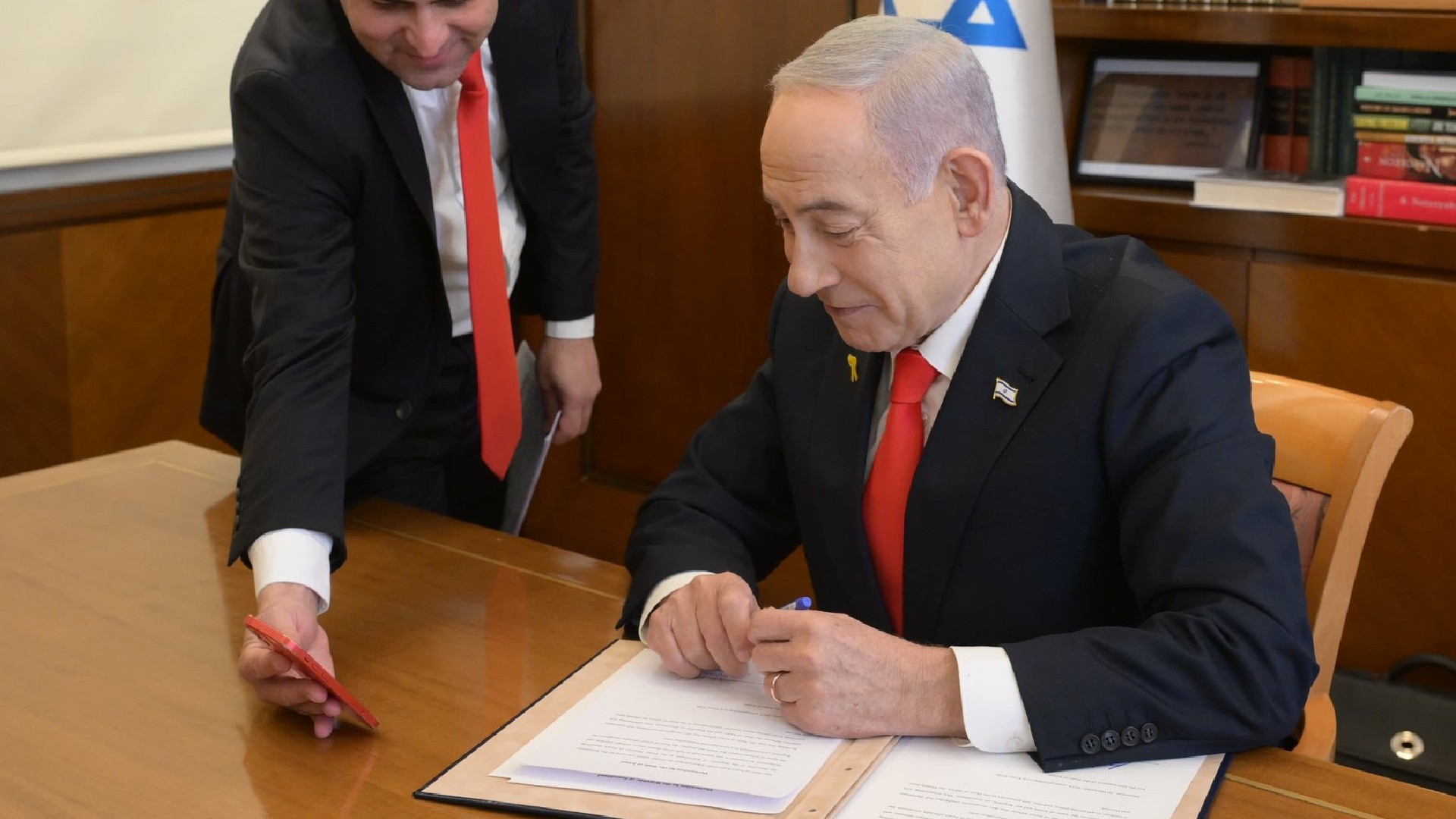
    The formal recognition was cemented through a mutual declaration signed by Prime Minister Netanyahu, Israeli Foreign Minister Gideon Saar, and Somaliland President Abdirahman Mohamed Abdullahi. The signing ceremony was conducted via video conference, with Netanyahu characterizing the agreement as both ‘seminal and historic’ in nature.

    Somaliland, which initially united with the Somali republic in 1960, has operated as a de facto independent state for over three decades following its declaration of independence during Somalia’s civil conflict. Despite maintaining unofficial diplomatic channels with several nations, the territory had previously failed to gain recognition from any permanent members of the United Nations Security Council.

    The Israeli Prime Minister’s office indicated that this diplomatic breakthrough aligns with the spirit of the Abraham Accords, the normalization agreements established between Israel and several Arab states in 2020. Netanyahu specifically referenced former U.S. President Donald Trump during the announcement, expressing intentions to communicate Somaliland’s ‘willingness and desire’ to join the Accords framework.

    Both leaders expressed commitment to expanding bilateral cooperation across multiple sectors including economic development, agricultural innovation, and social advancement. President Abdullahi accepted Netanyahu’s invitation for an official visit to Jerusalem, stating he would ‘be glad to be in Jerusalem as soon as possible’ to further solidify the new diplomatic relationship.

  • UAE President, Pakistani PM hold talks to strengthen ties in investment, economy

    UAE President, Pakistani PM hold talks to strengthen ties in investment, economy

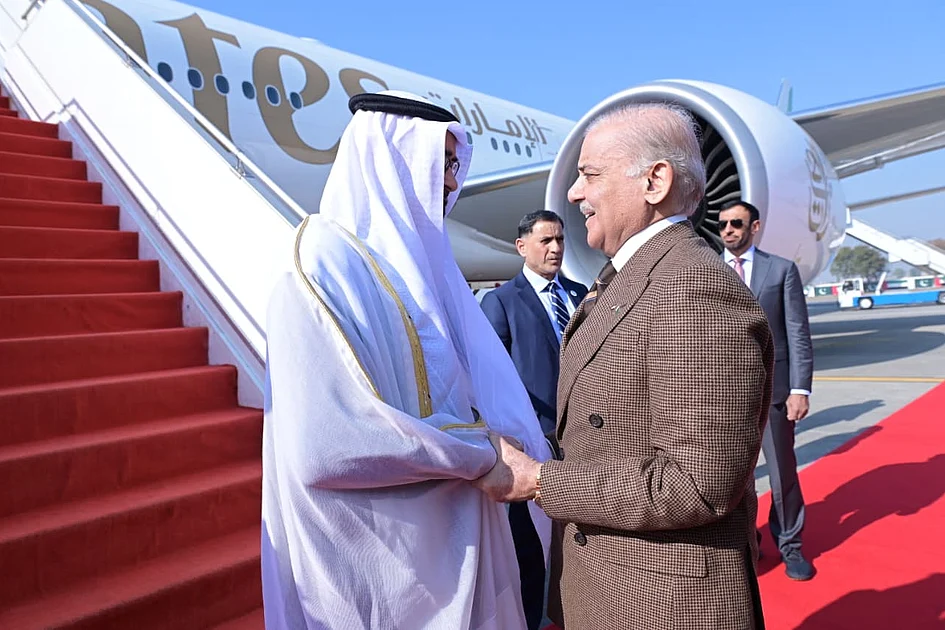
    In a significant diplomatic engagement, UAE President Sheikh Mohamed bin Zayed Al Nahyan embarked on an official visit to Pakistan on Friday, where he was formally received by Prime Minister Muhammad Shehbaz Sharif at Islamabad’s Nur Khan Airbase. The high-level meeting marked a pivotal moment in bilateral relations between the Gulf nation and the South Asian country.

    The two leaders conducted comprehensive discussions focused on expanding cooperation across multiple strategic sectors, with particular emphasis on economic development, energy infrastructure, technological innovation, and investment opportunities. President Sheikh Mohamed emphasized the UAE’s commitment to deepening collaboration with Pakistan in development-focused areas that align with mutual national interests and shared prosperity objectives.

    Beyond economic matters, the dialogue extended to regional and international affairs of mutual concern. Both leaders highlighted the critical importance of supporting initiatives that promote peace, security, and stability across the region and globally. The UAE President specifically noted the significance of continued coordination between the two nations, particularly given Pakistan’s current position on the UN Security Council, which presents a valuable platform for enhanced collaborative efforts in global peacekeeping initiatives.

    President Sheikh Mohamed reiterated the UAE’s consistent foreign policy approach of resolving international disputes through diplomatic channels and constructive dialogue, emphasizing that these methods represent the most effective pathway toward overcoming challenges and achieving sustainable development.

    Prime Minister Sharif expressed appreciation for the UAE’s ongoing developmental initiatives within Pakistan and welcomed the strengthening bilateral relationship. He acknowledged the UAE President’s influential role in fostering regional stability and international cooperation.

    The high-profile meeting was attended by distinguished delegations from both nations, including Sheikh Sultan bin Hamdan Al Nahyan and Sheikh Mohammed bin Hamad bin Tahnoun Al Nahyan, both Advisers to the UAE President, along with several ministers and senior officials. The Pakistani delegation included Field Marshal Asim Munir, Chief of Army Staff of Pakistan, alongside various ministers and government officials.

  • Salary increases, perks: Amended HR law in Fujairah to improve job security for govt employees

    Salary increases, perks: Amended HR law in Fujairah to improve job security for govt employees

    FUJAIRAH – In a significant move to enhance public sector welfare, His Highness Sheikh Hamad bin Mohammed Al Sharqi, Supreme Council Member and Ruler of Fujairah, has promulgated Law No. (2) of 2025, introducing comprehensive amendments to the emirate’s Human Resources Law for government employees. The legislation, formally announced in mid-December, is scheduled to take effect on January 1, 2026, following its publication in the Official Gazette.

    The groundbreaking reforms specifically address the stability of both legal and financial conditions for civil servants, incorporating substantial revisions to job grading structures, various allowances, and employee benefits. These changes build upon previously approved salary increases authorized under Law No. (1) of 2025, creating a cohesive framework for improved compensation packages.

    Mohammed Saeed Al Dhanhani, Director of the Fujairah Amiri Diwan, emphasized that these amendments reflect Sheikh Hamad’s ongoing commitment to strengthening job security and living standards for government personnel. This initiative aims to establish greater work-life balance while simultaneously elevating the quality of public services delivered to the community.

    From a strategic perspective, Mohammed Khalifa Al Zeyoudi, Director of Human Resources at the Government of Fujairah, highlighted the legislation’s dual purpose of attracting top-tier professional talent while motivating existing staff across local departments. The reforms apply equally to both Emirati citizens and foreign residents, demonstrating the emirate’s inclusive approach to workforce development.

    The enhanced benefits package is expected to play a pivotal role in supporting Fujairah’s comprehensive development agenda across multiple sectors by ensuring dignified living standards for its public servants. This legislative advancement positions Fujairah as a progressive employer within the UAE’s public sector landscape, potentially setting benchmarks for other emirates to follow.

  • Venezuelan migrants sent to El Salvador demand justice after US judge ruling

    Venezuelan migrants sent to El Salvador demand justice after US judge ruling

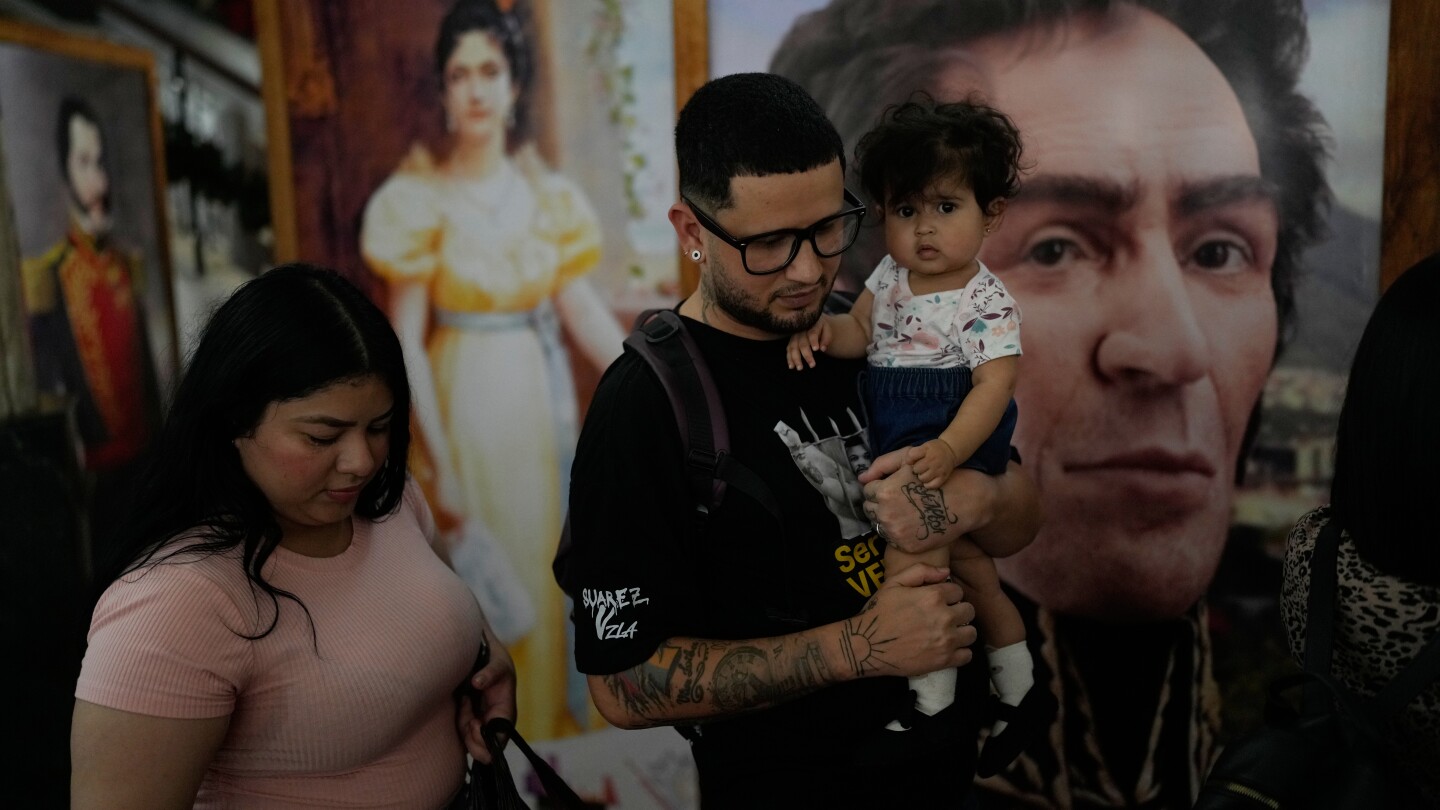
    CARACAS, Venezuela — A group of Venezuelan migrants who were transferred by the U.S. government to a high-security prison in El Salvador earlier this year have publicly demanded justice and accountability for alleged human rights violations. Their outcry comes days after a federal judge in Washington ruled that the Trump administration must provide them with proper legal due process.

    Approximately two dozen of the 252 Venezuelan men held a press conference in Venezuela’s capital on Friday, organized by the government of President Nicolás Maduro. They detailed experiences of physical and psychological torture during their detention at the notorious Salvadoran prison facility.

    Andry Blanco, speaking on behalf of the group, stated: “We are here to demand justice before the world for the human rights violations committed against each of us, and to ask for help from international organizations to assist in our defense so that our human rights are respected and not violated again.”

    The legal development occurred on Monday when U.S. District Judge Timothy Kelly ordered the U.S. government to either provide court hearings or return the men to the United States. This ruling creates a pathway for the migrants to challenge the Trump administration’s allegations that they are members of the Tren de Aragua criminal gang and subject to removal under an 18th-century wartime law.

    Many of the men described ongoing psychological trauma and daily struggles, including fear of leaving their homes or encountering law enforcement. While not all expressed interest in returning to the U.S., they uniformly seek accountability for their treatment.

    Venezuelan Vice Minister of Foreign Affairs for International Communications Camilla Fabri announced that the Maduro government is collaborating with U.S. legal associations and human rights organizations to prepare a major lawsuit against former President Trump and the U.S. government. The migrants were initially flown to El Salvador in March and returned to Venezuela in July as part of a prisoner exchange between the two governments.

  • Exiled Assad loyalists plot to destabilise Syria’s new government, report says

    Exiled Assad loyalists plot to destabilise Syria’s new government, report says

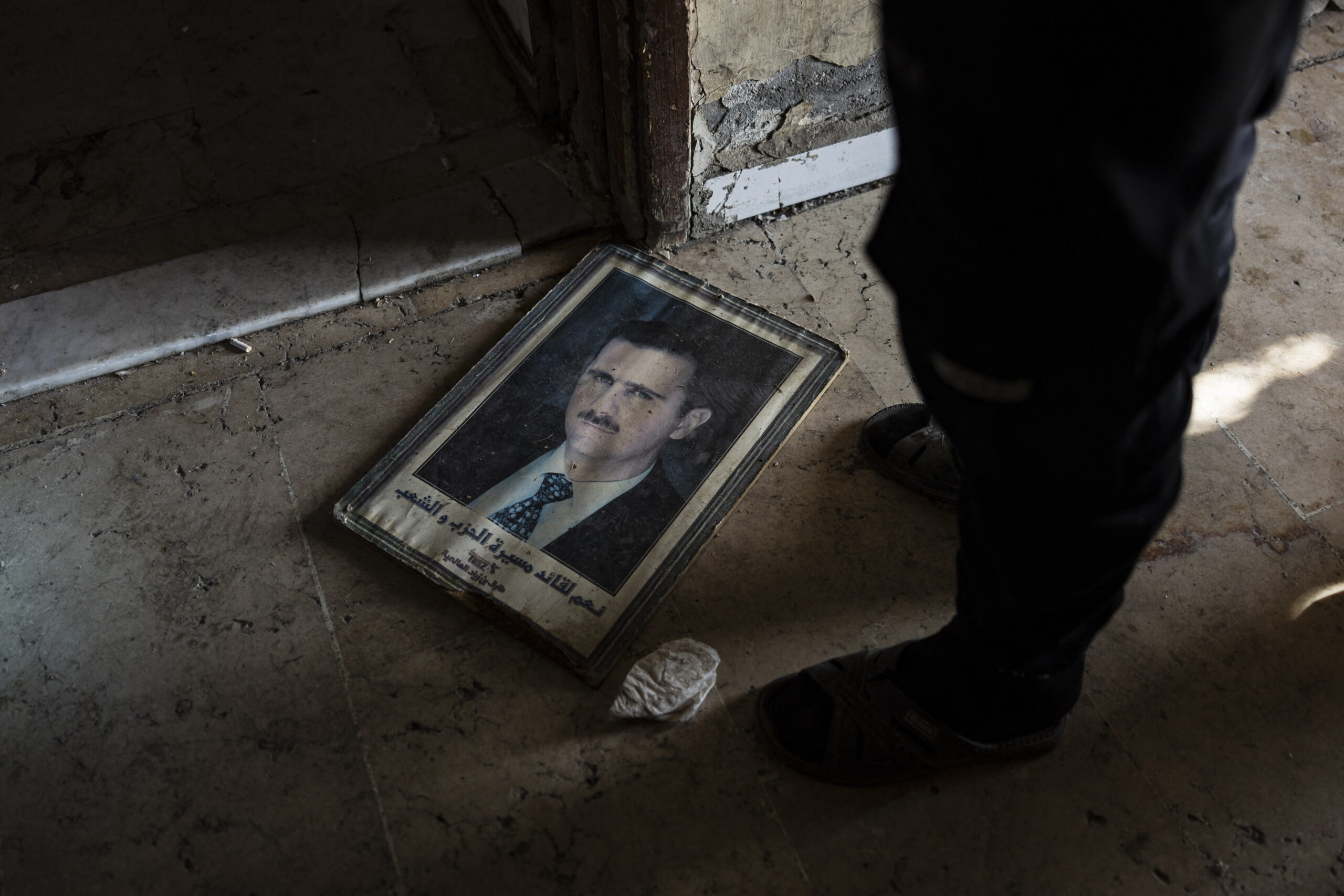
    A sophisticated network of exiled Syrian figures with close ties to former strongman Bashar al-Assad is actively working to undermine the country’s new government and seize control of strategic coastal regions, according to intercepted communications obtained by The New York Times.

    The investigation reveals that former intelligence chiefs and military commanders, now primarily based in Russia and Lebanon, are quietly reconstructing loyalist networks within Syria’s Alawi community—the sectarian foundation that previously supported Assad’s regime. Central to these efforts are Suhail al-Hassan, the former special forces commander known as “The Tiger,” and Major-General Kamal Hassan, the former head of military intelligence. Both relocated to Moscow with Assad but maintain active involvement in Syrian affairs.

    Intercepted text messages indicate al-Hassan has met with collaborators across Lebanon, Iraq, and inside Syria over the past year. These communications include detailed charts enumerating fighters and weaponry available in coastal villages, with claims of being able to mobilize tens of thousands of combatants. Al-Hassan has signed several messages as a “holy warrior,” indicating the ideological motivation behind these efforts.

    The operation appears financially supported by Rami Makhlouf, Assad’s billionaire cousin who also resides in Moscow. Makhlouf has reportedly channeled funds to impoverished Alawi families along the coast while positioning himself as a community protector. Another key figure, Ghiyath Dalla, a former commander in the disbanded Fourth Division, is coordinating efforts from Lebanon. In an intercepted April 2025 phone call, Dalla stated: “We will not begin until we are fully armed.”

    Financial records show Dalla distributing approximately $300,000 monthly to potential fighters and local commanders, with individual payments ranging from $200 to $1,000. He has also sought approval to acquire satellite communications equipment valued at over $130,000 to enhance operational capabilities.

    The communications further reveal coordination with Iran-aligned Iraqi militia leaders to discuss weapons smuggling routes into Syria while avoiding detection by Israeli air strikes or Syrian authorities. Additional messages reference aborted assassination plots and efforts to procure drones and anti-tank missiles, including weapons allegedly hidden within Syria.

    These developments follow April’s sectarian violence along Syria’s Mediterranean coast that resulted in over 1,600 fatalities, predominantly Alawi. The coordinated attacks by former security forces against new government troops served as a rallying point for ex-regime figures seeking to mobilize fighters.

    Simultaneously, Hassan is backing the Beirut-based Foundation for the Development of Western Syria, which presents itself as an advocate for Syrian minorities and displaced Alawis. According to U.S. disclosure filings, the foundation hired lobbying firm Tiger Hill Partners and former Trump adviser Joseph Schmitz on a $1 million contract. The organization has publicized meetings with several U.S. lawmakers’ offices, though aides characterize these as routine staff engagements.

    Associates indicate Hassan appears more focused on building long-term political leverage than launching an immediate insurgency, including promoting calls for “international protection” for Syria’s Alawi-majority coastal regions. Syrian officials monitoring former regime figures have downplayed the threat of a coordinated armed uprising, while diplomats express greater concern about overseas lobbying efforts that could normalize calls for fragmentation or semi-autonomy if Syria’s political transition falters.

    Complicating the situation, Israeli authorities have intensified air strikes across Syrian territory, targeting military sites and key infrastructure while signaling openness to working with armed actors in southern Syria—a move analysts say compounds efforts by former government figures to destabilize the country.