分类: politics

  • Corbyn slams UK for £240m deal with Israel-linked US tech giant Palantir

    Corbyn slams UK for £240m deal with Israel-linked US tech giant Palantir

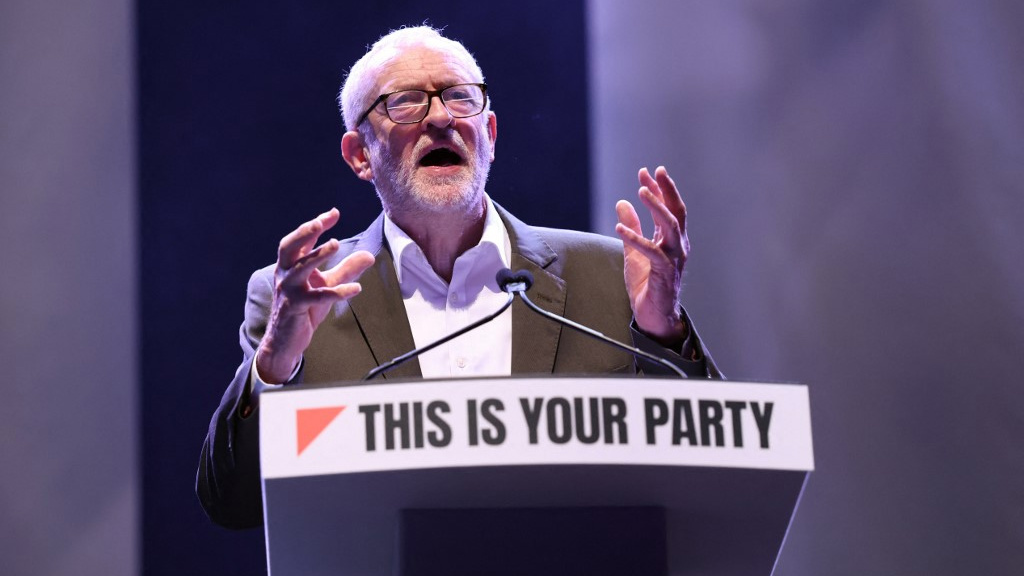
    Former Labour leader Jeremy Corbyn has launched a scathing critique against the current UK Labour government for awarding a substantial £240 million contract to US technology firm Palantir, citing the company’s controversial associations with the Israeli military. The agreement, finalized by the Ministry of Defence (MoD) in December, secures Palantir’s data analytics capabilities for strategic and operational military decision-making over a three-year period.

    This new contract triples the value of a previous 2022 arrangement and positions Palantir as a key partner in modernizing Britain’s armed forces. The government has further committed to investing up to £750 million in collaborative opportunities with Palantir over the next five years.

    Corbyn, now representing the left-wing Your Party, condemned the partnership in remarks to Middle East Eye, stating: “From Trump’s anti-migrant authoritarianism to Israel’s genocide in Gaza, Palantir has enabled abominable human rights abuses worldwide. It is truly shameful that this government treats crimes against humanity as business opportunities.”

    The controversy extends beyond defense applications. Last summer, Palantir’s separate £330 million agreement to process National Health Service data drew significant criticism from medical professionals, including the British Medical Association, which warned the deal “threatens to undermine public trust in NHS data systems.”

    Palantir’s extensive government partnerships include a strategic alliance with Israel’s defense ministry established in January 2024 and ongoing collaboration with the US Immigration and Customs Enforcement (ICE) agency. The company’s technology was reportedly deployed in Israel’s September 2024 pager attacks in Lebanon, which resulted in 42 fatalities and thousands of injuries, including many civilians.

    According to UN Special Rapporteur Francesca Albanese’s July report, there are “reasonable grounds to believe Palantir has provided automatic predictive policing technology, core defence infrastructure for rapid and scaled-up construction and deployment of military software, and its Artificial Intelligence Platform, which allows real-time battlefield data integration for automated decision making.”

    The criticism transcends party lines, with former Conservative Defence Secretary Ben Wallace questioning the authenticity of the partnership, describing it as “some fake London office with a few PR people and ad campaigns abusing our Union Jack” rather than genuine defense collaboration.

    Palantir did not respond to requests for comment regarding these allegations.
  • Trump proposes massive increase in 2027 defense spending to $1.5T, citing ‘dangerous times’

    Trump proposes massive increase in 2027 defense spending to $1.5T, citing ‘dangerous times’

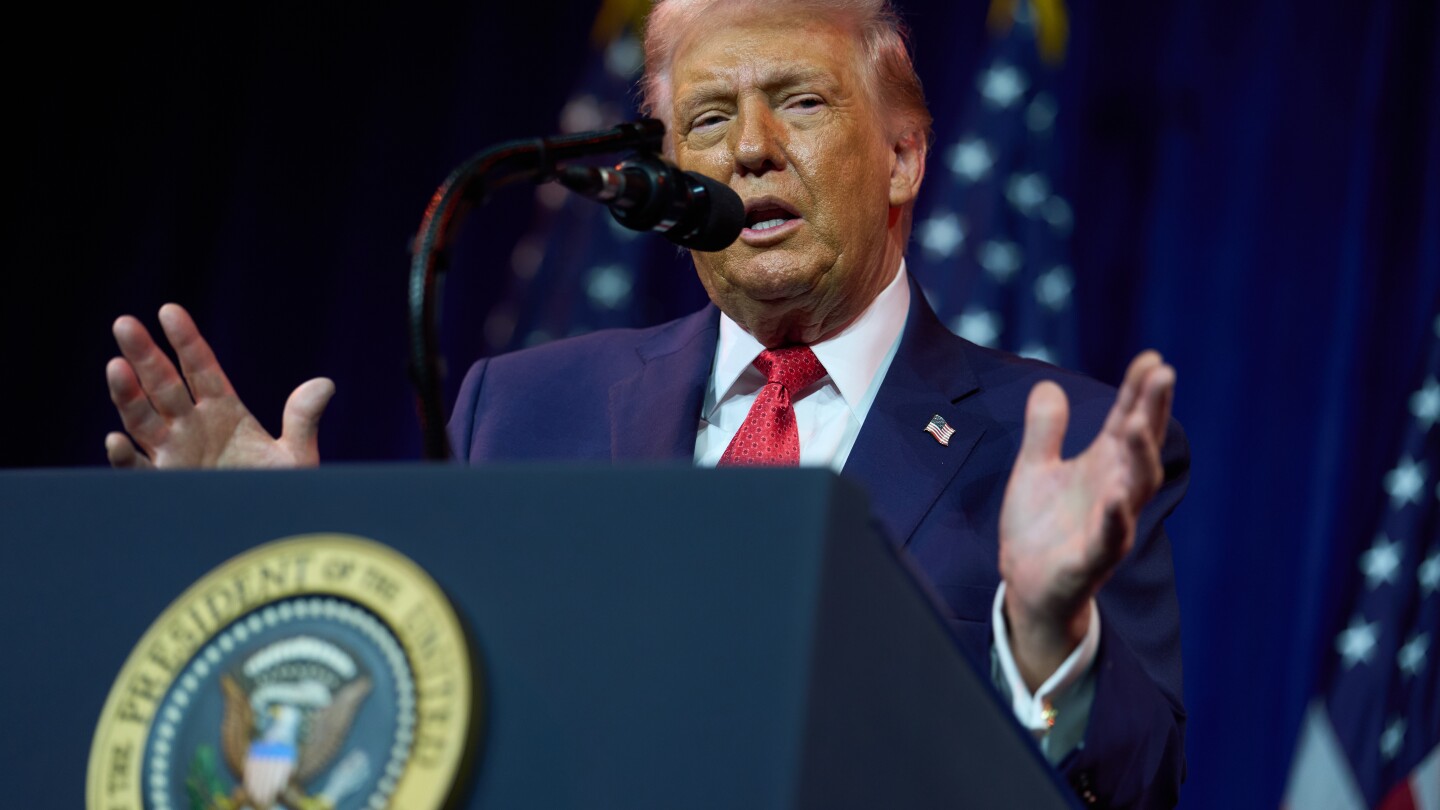
    WASHINGTON — In a significant policy announcement, President Donald Trump has unveiled an ambitious proposal to escalate United States military expenditure to an unprecedented $1.5 trillion by 2027. The declaration, made via his Truth Social platform on Wednesday, frames this monumental budget surge as an essential response to contemporary global threats that characterize what he termed “troubled and dangerous times.”

    The proposal arrives amidst a series of assertive geopolitical maneuvers by the Trump administration. These include a recent military operation aimed at apprehending Venezuelan leader Nicolás Maduro to face drug trafficking charges in the U.S., which has resulted in a continued massing of American forces in the Caribbean Sea. Furthermore, the President has expressed strategic interest in acquiring Greenland from Denmark for national security purposes and has hinted at potential military engagements in Colombia. Echoing this hardened stance, Secretary of State Marco Rubio issued a stark warning concerning Cuba, indicating a period of intensified foreign policy pressure.

    President Trump justified the colossal funding increase, a significant jump from the 2026 budget of $901 billion, by stating it would enable the construction of a ‘Dream Military’ to ensure national safety and security. He attributed the financial feasibility of this plan to heightened revenue streams generated by his administration’s widespread tariff policies imposed on both allied and adversarial nations since his return to office.

    Concurrently, the administration has adopted a confrontational posture toward the defense industry. President Trump explicitly threatened to sever Pentagon contracts with major defense contractor Raytheon unless it ceases its stock buyback programs and redirects profits toward expanding its weapons manufacturing infrastructure. This ultimatum, delivered on social media, criticized defense firms for perceived delays in critical weapons deliveries while simultaneously rewarding investors and executives with substantial dividends and salaries.

    The financial markets reacted promptly to this aggressive rhetoric, with shares of leading defense contractors like Northrop Grumman, Lockheed Martin, and RTX Corp. (Raytheon’s parent company) experiencing notable declines. This series of announcements signals a profound shift in U.S. defense strategy, prioritizing massive budgetary expansion and demanding greater industrial capacity from private sector partners.

  • Algeria could sever ties with UAE ‘in the coming days’ amid links to separatists

    Algeria could sever ties with UAE ‘in the coming days’ amid links to separatists

    Algeria stands on the precipice of severing diplomatic ties with the United Arab Emirates amid escalating allegations that Abu Dhabi is actively destabilizing Algerian national unity through support of a designated terrorist organization. According to El-Khabar, a publication with established links to Algerian authorities, the UAE stands accused of backing the Movement for the Autonomy of Kabylia (MAK)—a Paris-based separatist group seeking independence for the northern Kabylia region.

    The newspaper reports that Algeria’s diplomatic relationship with the UAE has deteriorated significantly compared to its ties with other Arab nations. Official sources cite ‘hostile’ Emirati actions conducted without consultation or Arab consensus, which allegedly endanger broader Arab interests and promote fragmentation agendas benefiting only external enemies.

    President Abdelmadjid Tebboune previously delivered veiled criticisms toward an unnamed Gulf state, questioning, ‘Why are you interfering in our internal issues?’ and emphasizing that national sovereignty remains a ‘red line.’ Algerian official circles have repeatedly accused the UAE embassy of ‘suspicious moves’ and described its ambassador as being ‘on a mission to destabilize’ the country.

    The allegations extend beyond bilateral tensions. Reports indicate the UAE has established communications with MAK, which also receives support from Israel and Morocco—both rivals of Algeria. French judicial authorities are reportedly investigating suspicious financial transfers worth millions of euros to MAK leaders through a non-profit cultural association.

    This situation reflects broader regional concerns about UAE foreign policy. Abu Dhabi faces accusations of supporting insurgencies and separatist movements across multiple countries including Libya, Sudan, Yemen, Somalia, and Syria. In Yemen specifically, UAE backing of Southern Transitional Council separatists has created tensions with Saudi Arabia.

    Algeria additionally expresses concern about the UAE’s expanding military presence across Africa, its support for Morocco, and its developing relations with Israel—all positions that contradict Algeria’s historical support for Palestinian sovereignty. El-Khabar concludes that continued ‘conspiracy-minded’ policies from the UAE could push bilateral relations to a point of no return, potentially resulting in a permanent diplomatic break.

  • US suspends assistance to Somalia’s federal government, alleging it seized food aid

    US suspends assistance to Somalia’s federal government, alleging it seized food aid

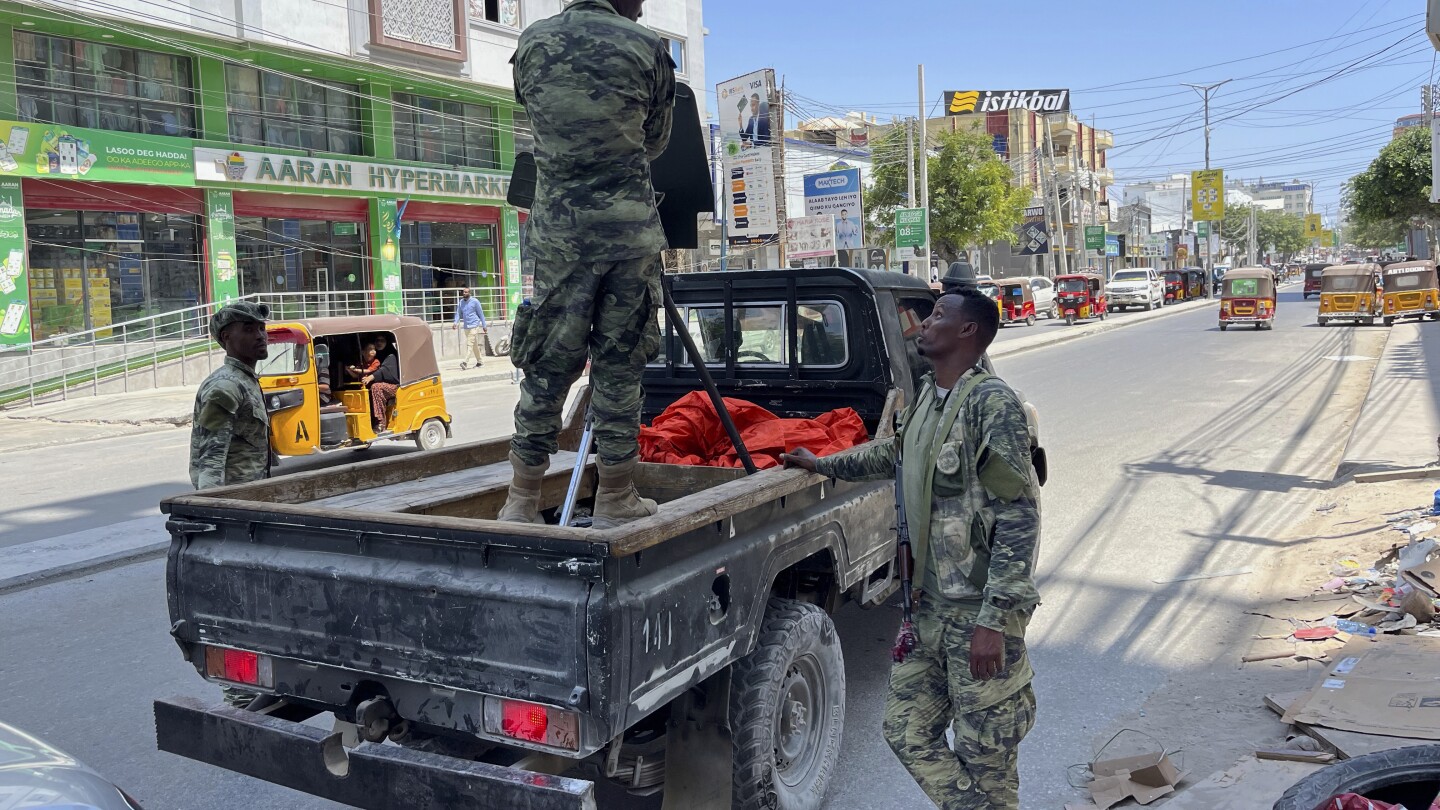
    The United States has implemented an immediate suspension of all assistance programs benefiting Somalia’s federal government following confirmed reports that Somali authorities confiscated 76 metric tons of American-funded food aid and destroyed a World Food Program warehouse. The State Department announced this decisive action on Wednesday, characterizing it as a response to unacceptable diversion of life-saving resources intended for vulnerable civilians.

    This development occurs amidst escalating tensions between the two nations, with the Trump administration simultaneously intensifying criticism of Somali refugee communities within American borders. Recent months have witnessed heightened scrutiny regarding fraud allegations connected to childcare centers in Minnesota and the implementation of stricter immigration controls affecting Somali nationals.

    While the precise financial impact remains unclear due to the administration’s broader reductions in foreign aid expenditures and restructuring of international development agencies, the suspension represents a significant diplomatic rebuke. Historical data indicates that during the final year of the Biden administration, the U.S. allocated approximately $770 million toward Somali assistance projects, though only a minor portion was channeled directly through governmental structures.

    Somalia’s strategic position within the Horn of Africa places it among the world’s most impoverished nations, where persistent conflict and recurring natural disasters have created one of the most challenging humanitarian environments globally. This aid suspension threatens to exacerbate an already critical situation for civilians dependent on international support.

  • Who is Aidarous al-Zubaidi, Yemen’s southern separatist leader?

    Who is Aidarous al-Zubaidi, Yemen’s southern separatist leader?

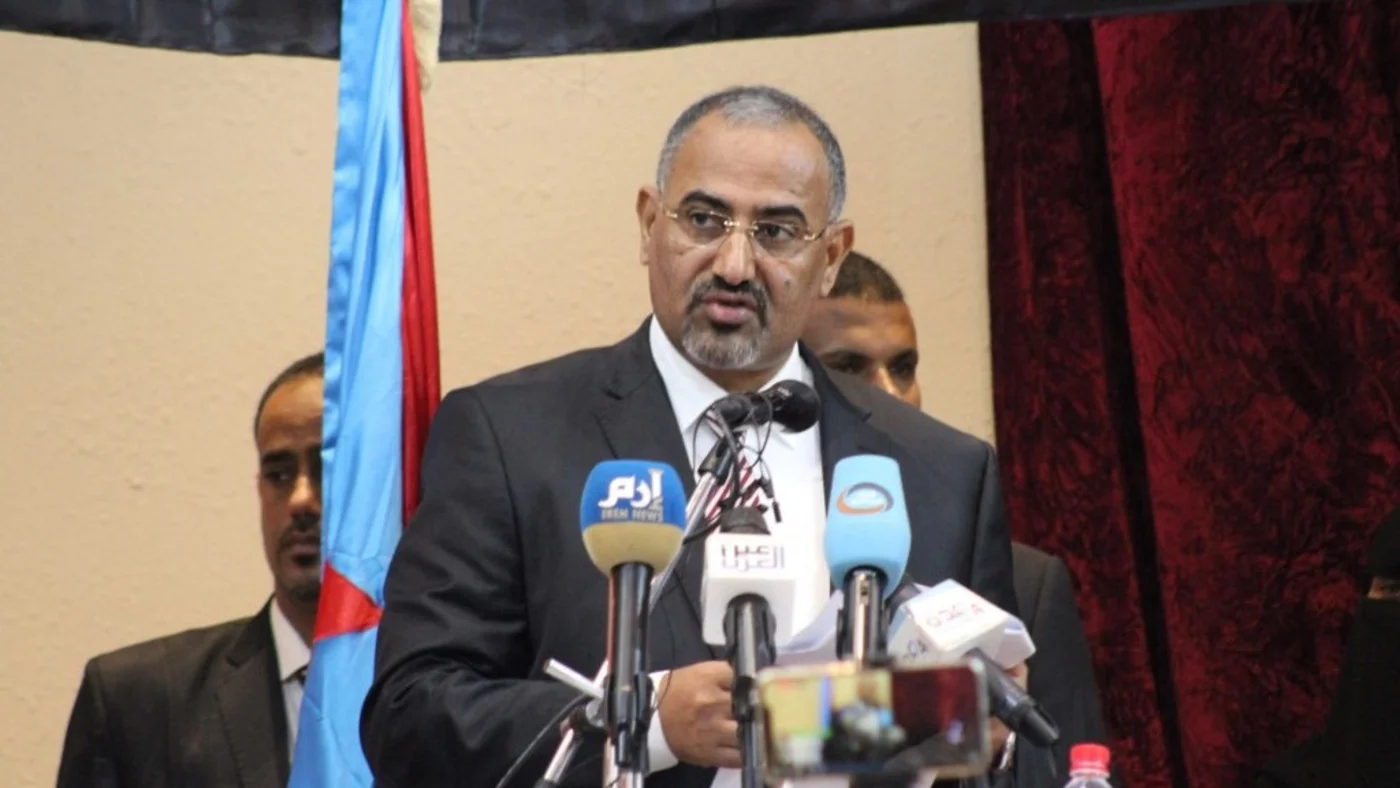
    In a dramatic political upheaval, Yemen’s internationally recognized Presidential Leadership Council (PLC) has formally expelled Aidarous al-Zubaidi, head of the UAE-backed Southern Transitional Council (STC), charging him with high treason. The PLC announced on Wednesday that Zubaidi was personally—not the STC collectively—responsible for actions damaging Yemen’s political and military standing, including forming unauthorized armed groups, committing civilian atrocities, and sabotaging military installations.

    Zubaidi, among Yemen’s most polarizing figures, has long championed southern secession. His political trajectory reached its zenith when appointed Aden’s governor in 2015, surviving two assassination attempts shortly thereafter. He established the STC in 2017, consolidating southern separatist ambitions, and secured a vice-presidential role within the PLC upon its 2022 formation—a position now revoked.

    The immediate catalyst appears to be Zubaidi’s unilateral January 2nd ‘constitutional declaration’ proposing a two-year transition toward an independence referendum. This move exacerbated tensions already heightened by STC forces claiming control over Hadhramaut and al-Mahra governorates in December after Saudi-backed troops withdrew from Aden bases.

    Saudi Arabia, leading the coalition opposing Houthi rebels, had summoned Zubaidi to Riyadh for crisis talks regarding escalating violence. However, coalition spokesman Major General Turki al-Maliki reported Zubaidi avoided the scheduled flight, instead ‘fleeing to an unknown location’ after distributing weapons in Aden.

    Zubaidi’s ideological stance—advocating popular sovereignty contrary to the Houthis’ theocratic governance vision—and his 2023 remarks to Middle East Eye describing the PLC as a fragile ‘coalition of different agendas’ underscore the profound divisions. His recent controversial expression of willingness to join the Abraham Accords with Israel conditional on southern independence further illustrates his contentious international posture.

    Born in 1967 during Yemen’s partition era, Zubaidi consistently opposed unification, leading armed group ‘Hatm’ post-1994 civil war to ‘defend the south.’ His removal signals critical fractures within the anti-Houthi alliance, threatening to destabilize Yemen’s precarious political equilibrium further.

  • Report reveals ‘secret web’ of unlisted sites linked to pro-Israel doxxing company

    Report reveals ‘secret web’ of unlisted sites linked to pro-Israel doxxing company

    A groundbreaking digital forensics investigation has uncovered the clandestine operational infrastructure of Canary Mission, an anonymous doxxing platform with ties to Israel that has been utilized to target pro-Palestine advocates in the United States. The probe, conducted by Drop Site News throughout 2025, exposed multiple concealed websites and content management systems employed by the shadow organization.

    Forensic analysts working over a three-month period recovered extensive internal documentation including strategic planning materials, internal communications regarding meetings and quarterly objectives, employee identities, contractor information, and assessments of the group’s political influence. The findings, published this week, provide unprecedented visibility into the mechanics of this controversial operation.

    One discovered platform, BlackNest, functioned as an unlisted dashboard celebrating the deportation and professional dismissal of pro-Palestine academics and students as measurable achievements. This internal system categorized the organization’s impact on suppressing criticism of Israel within US policy frameworks through multiple metrics: behavioral modification, employment termination, US entry denials, arrests, and forced deportations.

    According to the investigation, BlackNest operated a daily updated interface featuring infographics and media compilations designed to demonstrate the platform’s policy influence. This included documentation of an NBC report revealing that Department of Homeland Security officials testified in court proceedings that ‘most’ deportation targets for pro-Palestine activism were identified through Canary Mission’s database.

    The core Canary Mission website maintains an extensive repository profiling students, professors, and organizations accused of expressing anti-Israel or antisemitic views. Their stated mission involves ‘documenting individuals and organizations that promote hatred of the USA, Israel and Jews on North American college campuses.’ Targeted groups include the Palestinian Youth Movement, Students for Justice in Palestine, and Jewish Voice for Peace.

    The investigation revealed that over thirty operatives employ fabricated social media accounts to harvest personal information and monitor pro-Palestine individuals. Internal performance metrics highlighted specific achievements, including one staff member credited with ‘identifying an activist’ from viral online content and another praised for completing ‘Stanford Arrest Profiles.’

    A recovered 21-page strategic document outlined the organization’s 2025 objectives, which included brand differentiation, data sharing with donors, operational scaling plans, and a weekly target of 150 new profiles. The document explicitly described ‘anonymity as a tool to scare the enemy’ and a ‘bottom-up approach: Using individuals to take down organizations.’

    Technical evidence indicated the organization developed facial recognition software combined with data scraping to automatically identify persons of interest. Investigators also uncovered an attempted but largely abandoned project called Museum of Online Antisemitism (MOA), which included code designed to protect doxxers’ anonymity.

    The digital trail led to an Israeli company called Shefing, based in a Jerusalem WeWork facility and owned by French-Israeli entrepreneur Philippe Cohen, which appears to have developed software for both Canary Mission and MOA.

    This investigation builds upon previous reporting that attempted to trace the organization’s funding, which is deliberately obscured through complex financial channels. Previous investigations by The Forward magazine in 2018 revealed that a US Jewish charity designated $100,000 for ‘Canary Mission for Megamot Shalom,’ an Israeli charity with minimal digital presence. Evidence suggests Canary Mission is likely operated by Megamot Shalom, owned by British-born Israeli Jonathan Bash, with funding channeled through American nonprofit structures to Israeli entities.

    Despite these findings, the individuals ultimately funding and directing this extensive doxxing operation remain largely concealed behind sophisticated digital and financial obfuscation techniques.

  • Syrian army shells Kurdish areas of Aleppo declared ‘closed military zones’

    Syrian army shells Kurdish areas of Aleppo declared ‘closed military zones’

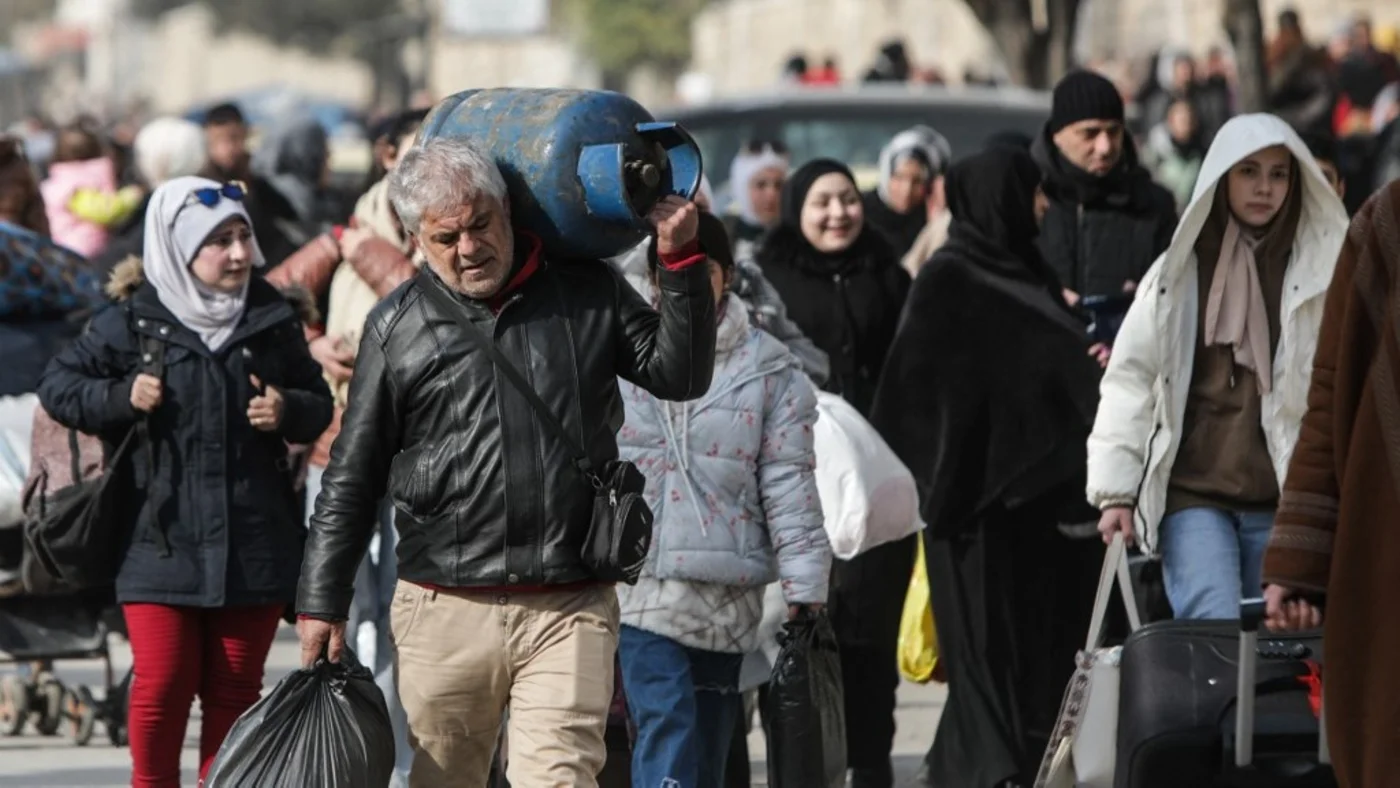
    The Syrian military has officially designated the Kurdish-controlled neighborhoods of Aleppo as closed military zones, marking a significant escalation in the ongoing conflict. In a statement issued Wednesday, the army announced the establishment of two humanitarian corridors from areas held by the Kurdish-led Syrian Democratic Forces (SDF) to facilitate civilian evacuations, while simultaneously declaring the Sheikh Maqsud and Ashrafieh districts as prohibited military areas effective 3pm local time.

    According to AFP correspondents, artillery bombardments had already commenced in these neighborhoods by Wednesday afternoon, signaling an intensification of hostilities. This development occurs against the backdrop of heightened tensions between the SDF—which controls substantial territory in northeastern Syria—and the administration of President Ahmed al-Sharaa, who assumed power following the overthrow of Bashar al-Assad in December 2024.

    The Syrian military has accused the SDF of perpetrating civilian massacres in Aleppo and conducting artillery strikes against government-controlled areas—allegations that Kurdish forces vehemently deny. Conversely, the SDF has condemned what it characterizes as indiscriminate artillery and missile attacks against its positions, including the deployment of drone warfare, sniper fire, and heavy weaponry.

    Complicating the situation further, Turkish authorities maintain their longstanding position that the People’s Protection Units (YPG)—the dominant faction within the SDF—represent an extension of the Kurdistan Workers Party (PKK). Despite the PKK’s formal declaration ending its conflict with Turkey in May 2025, Ankara continues to demand complete disarmament of all Kurdish-affiliated groups in Syria.

    Turkish Defense Minister Yasar Guler reiterated this position Tuesday, stating: ‘The PKK and all affiliated groups must immediately cease all terrorist activity in regions where they are present, including in Syria, and lay down their weapons without condition.’

    The political landscape remains equally complex. While SDF leader Mazloum Abdi signed a landmark agreement with the Damascus government in March 2025 regarding integration, implementation has stalled over constitutional disagreements and debates concerning decentralized governance structures.

    Meanwhile, Turkey’s pro-Kurdish Peoples’ Equality and Democracy Party (DEM Party) has accused Damascus of conducting what it describes as an ‘extermination operation’ against Kurds in Aleppo, advocating instead for comprehensive democratization as the pathway to sustainable peace in Syria.

  • Saudi strikes Yemen after separatist leader skips talks

    Saudi strikes Yemen after separatist leader skips talks

    Tensions in Yemen’s protracted conflict have reached a critical juncture as the Saudi-led coalition conducted aerial strikes against the home province of UAE-backed separatist leader Aidaros Alzubidi. This military action follows Alzubidi’s failure to attend crucial reconciliation talks in Riyadh, prompting his subsequent dismissal from Yemen’s Presidential Leadership Council on charges of high treason.

    The escalation began when the Southern Transitional Council (STC), which Alzubidi leads, seized substantial territories last month, triggering a 48-hour ultimatum from the coalition for negotiations. Despite sending a delegation to Saudi Arabia, Alzubidi himself refused to participate upon learning the discussions would demand the dissolution of his separatist movement. Coalition spokesperson Major General Turki al-Maliki asserted that Alzubidi had instead distributed weapons and ammunition throughout Aden while mobilizing significant forces in al-Dhale province.

    In response to the deteriorating situation, STC officials implemented a nighttime curfew in Aden from 9:00 pm to 6:00 am local time, citing imminent clashes with Saudi-backed forces. The separatist group further alleges that Saudi authorities have arbitrarily detained more than 50 STC officials, demanding their immediate release.

    The confrontation has exposed deepening fractures within the anti-Houthi alliance, particularly between Saudi Arabia and the United Arab Emirates, which have historically supported rival factions within Yemen’s government. The coalition and allied Yemeni forces have reportedly reversed most of the STC’s recent territorial gains, while Saudi-backed National Shield forces are advancing toward Aden from Shabwa province.

    This crisis emerges against the backdrop of Alzubidi’s recent declaration of a two-year transition plan to establish an independent “South Arabia” in Yemen’s southern regions, further complicating peace efforts in the conflict-ravaged nation.

  • US says to dictate Venezuela decisions and oil sales

    US says to dictate Venezuela decisions and oil sales

    In a striking declaration of hemispheric dominance, the Trump administration has formally announced its intention to directly dictate policy decisions for Venezuela’s interim government and assume indefinite control over the nation’s oil exports. The policy shift follows Saturday’s dramatic capture of former President Nicolas Maduro, who was extracted from Caracas by U.S. special forces and transported to New York to face narcotics charges.

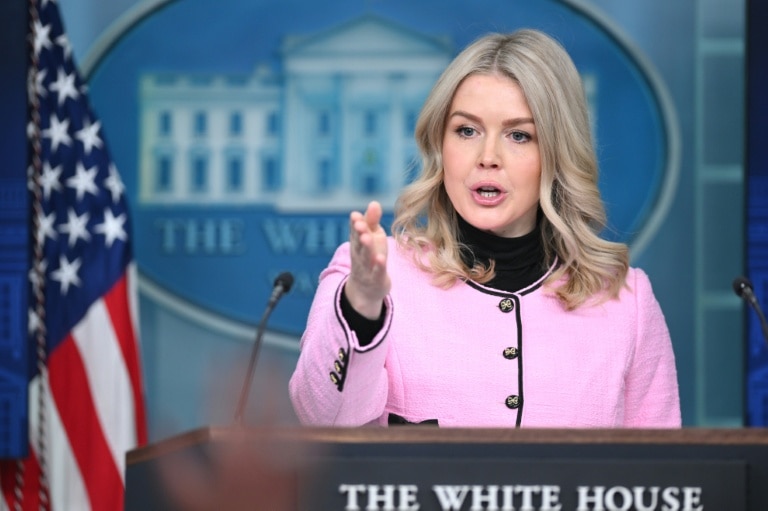
    White House Press Secretary Karoline Leavitt articulated the administration’s position with remarkable candor during a Wednesday briefing, stating, ‘We obviously have maximum leverage over the interim authorities in Venezuela right now. Their decisions are going to continue to be dictated by the United States of America.’ This assertion of control comes despite interim President Delcy Rodriguez’s insistence that Venezuela remains free of ‘foreign agents’ governing the country.

    The economic dimensions of this geopolitical maneuver are particularly significant. Energy Secretary Chris Wright revealed plans for the United States to market Venezuelan crude ‘indefinitely, going forward,’ beginning with the sale of 30-50 million barrels of stockpiled oil. The White House has concurrently moved to waive certain oil sector sanctions to facilitate exports of Venezuela’s extra-heavy crude, with President Trump scheduled to meet Friday with U.S. oil executives to discuss investment opportunities in Venezuela’s deteriorating energy infrastructure.

    Military enforcement complements economic control, as demonstrated by Wednesday’s seizure of a Russian-linked oil tanker in the North Atlantic. U.S. authorities pursued the vessel from Venezuelan waters, declaring it ‘stateless after flying a false flag’ despite Moscow’s condemnation of the interception. The naval blockade forms part of a broader strategy to prevent Caracas from selling oil to allies including Russia, China, and Iran.

    The administration faces domestic scrutiny regarding its long-term planning. Secretary of State Marco Rubio assured critics that the United States was ‘not just winging it,’ though Democratic Congressman Shri Thanedar noted insufficient congressional consultation regarding the operation. The emerging framework suggests Washington will maintain interim President Rodriguez while sidelining opposition figures, including Nobel Peace Prize laureate Maria Corina Machado, as it consolidates control over the nation holding the world’s largest proven oil reserves.

  • Trump’s Greenland idea isn’t new. The US has pursued it at least 3 times before

    Trump’s Greenland idea isn’t new. The US has pursued it at least 3 times before

    The recent resurgence of American interest in acquiring Greenland represents a continuation of longstanding geopolitical strategy rather than a novel political notion. Historical archives reveal that multiple U.S. administrations have pursued Arctic territorial expansion, with Greenland consistently emerging as a prized strategic asset throughout different eras of American foreign policy.

    This territorial ambition first surfaced during the Reconstruction era following the Civil War. Secretary of State William Seward, architect of the Alaska Purchase from Russia in 1867, initiated internal discussions regarding Greenland’s acquisition. His diplomatic correspondence highlighted the territory’s substantial natural resources, particularly coal deposits, and its strategic Arctic positioning. However, congressional reluctance to pursue additional northern territories prevented these deliberations from evolving into formal negotiations.

    In 1910, the William Howard Taft administration engineered an elaborate territorial exchange proposal involving Greenland. American diplomats conceptualized a complex land-swap arrangement that would transfer Danish sovereignty of Greenland to the United States in return for strategic concessions in other regions. The Danish government promptly rejected this unconventional proposal, causing its immediate collapse.

    The most substantial effort materialized in 1946 amid escalating Cold War tensions. President Harry Truman’s administration formally offered Denmark $100 million in gold bullion (equivalent to approximately $1.4 billion today) for outright ownership of Greenland. This proposition followed the successful wartime collaboration wherein American engineers constructed critical airfield infrastructure that served as essential refueling hubs for transatlantic military operations. Although Denmark again declined the substantial offer, the negotiation secured continued U.S. military access rights.

    This military presence endures today at Pituffik Space Base (formerly Thule Air Base), the Defense Department’s northernmost installation, serving both strategic surveillance and aerospace defense functions. The persistent pattern of acquisition attempts demonstrates how successive American administrations have valued Greenland’s geographic position and resources within broader national security frameworks.