
German Chancellor Friedrich Merz has firmly dismissed appeals from within his Christian Democratic Union (CDU) to reconsider its stance against collaborating with the far-right Alternative for Germany (AfD). Speaking on Monday, Merz emphasized that the AfD, which has seen rising support in recent polls, shares no common ground with his conservative party. The AfD, known for its anti-migration policies, secured second place in Germany’s February national election and continues to gain traction, particularly in the eastern states where regional elections are slated for next year. Despite pressure from some CDU members, including former General Secretary Peter Tauber and ex-Defense Minister Karl-Theodor zu Guttenberg, Merz reiterated the party’s 2018 resolution to avoid coalitions or cooperation with the AfD. He described the far-right party as fundamentally opposed to decades of policies that have shaped modern Germany’s success. Merz also acknowledged internal challenges within his coalition government with the Social Democrats, citing public disagreements that have frustrated voters. However, he defended the coalition’s progress on key issues like economic revitalization and migration control. The AfD, classified as a right-wing extremist organization by Germany’s domestic intelligence agency, continues to challenge this designation in court while pushing for the CDU to dismantle its so-called ‘firewall’ against far-right collaboration. Merz dismissed these overtures, stating that the AfD’s ‘outstretched hand is, in reality, a hand that wants to destroy us.’
分类: politics
-
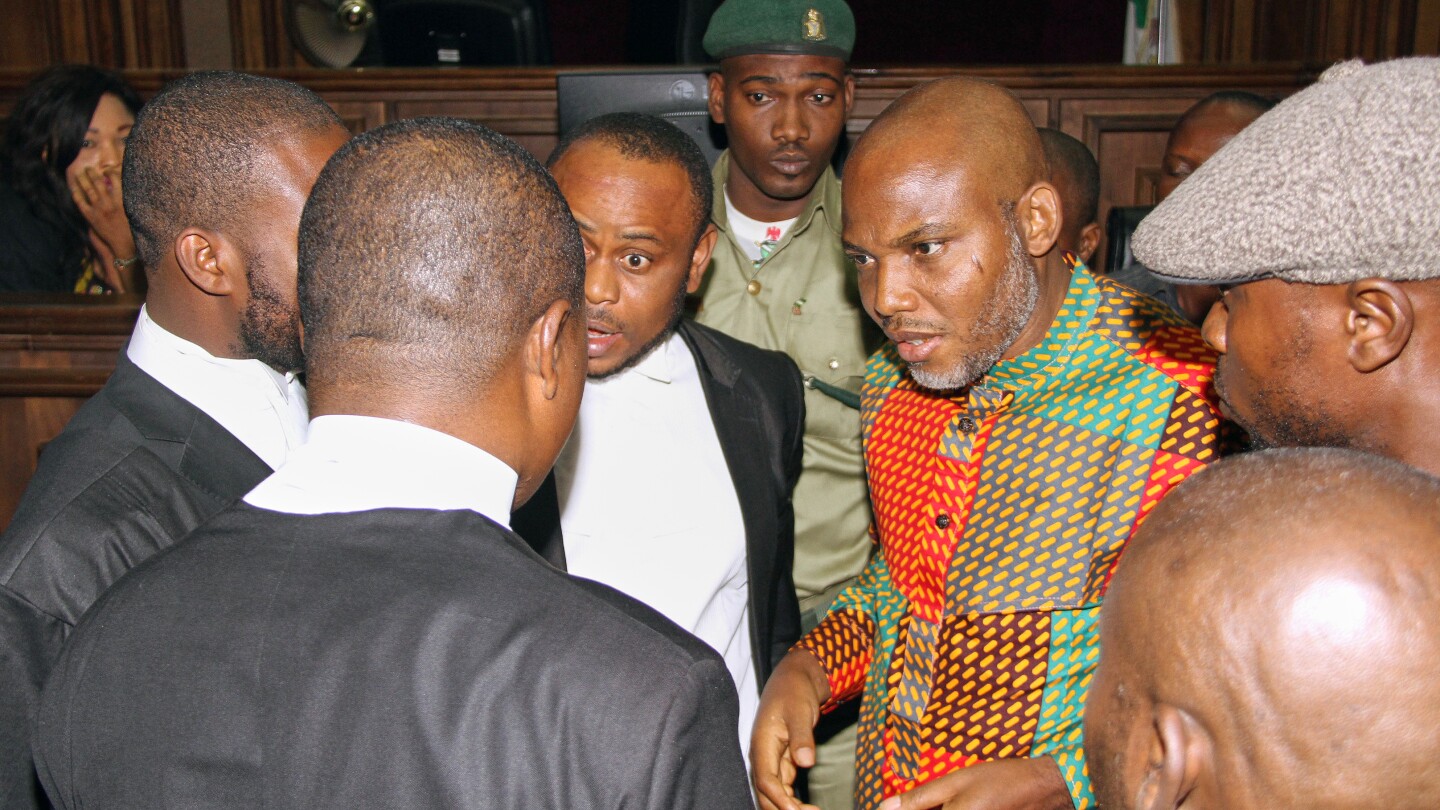
Nigeria police fire tear gas and arrest dozens as protesters demand release of separatist leader
In a tense escalation of tensions, protests demanding the release of Nnamdi Kanu, leader of the Indigenous People of Biafra (IPOB), turned violent in Nigeria’s capital, Abuja, on Monday. Security forces deployed tear gas, water cannons, and electric barriers to disperse demonstrators, leading to widespread clashes. Witnesses reported hearing gunshots as police arrested dozens of protesters, including a journalist from Agence France-Presse (AFP), who was later released but had his equipment destroyed. The unrest disrupted traffic across major roads, leaving commuters stranded. Kanu, a British citizen and prominent figure in the secessionist movement in southeastern Nigeria, has been in and out of detention since 2015 on charges of terrorism and treason. His case has become a focal point for grievances among the Igbo ethnic group, who allege marginalization by the Nigerian government. Aloy Ejimakor, one of Kanu’s lawyers, confirmed his arrest during the protests. The incident underscores the deepening divide between the government and separatist groups advocating for an independent Biafra.
-
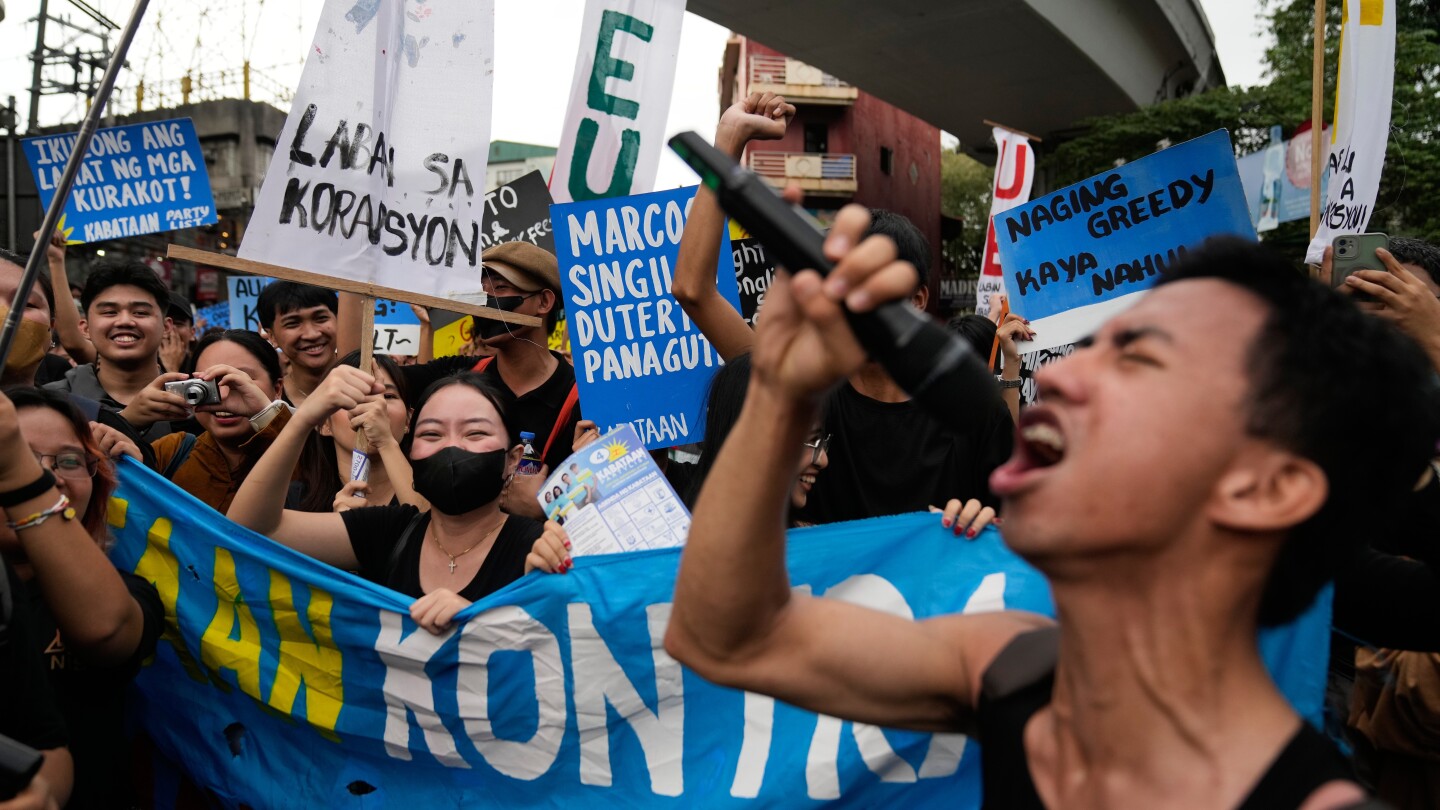
Philippines unveils a new jail for legislators who may face corruption trial
In a significant move to address public outrage over a sprawling corruption scandal, the Philippines has inaugurated a new detention facility in metropolitan Manila capable of housing up to 800 detainees. The jail, showcased to the media by Interior Secretary Jonvic Remulla, is expected to accommodate powerful legislators, public works officials, and others implicated in alleged irregularities tied to flood control projects. This initiative is part of President Ferdinand Marcos Jr.’s administration’s efforts to restore public trust and ensure accountability.
-
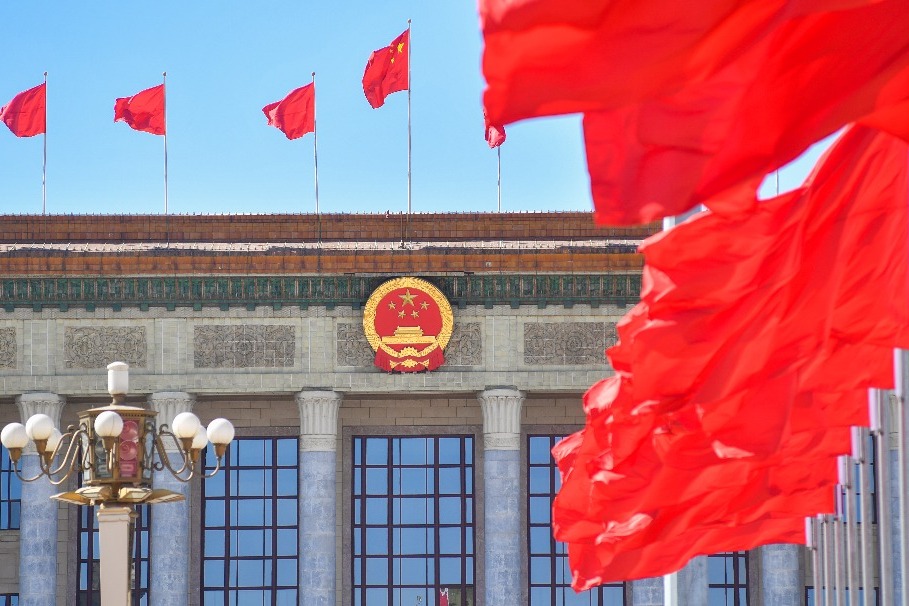
20th CPC Central Committee starts fourth plenary session
The 20th Central Committee of the Communist Party of China (CPC) commenced its fourth plenary session in Beijing on Monday, marking a pivotal moment in the nation’s political calendar. The session, led by Xi Jinping, General Secretary of the CPC Central Committee, focused on critical discussions surrounding China’s strategic direction for the coming years. Xi presented a comprehensive work report on behalf of the Political Bureau, outlining the Party’s vision and priorities. A key agenda item was the formulation of the 15th Five-Year Plan (2026-2030), which will guide China’s economic and social development over the next half-decade. The draft proposals underscored the CPC’s commitment to sustainable growth, technological innovation, and national rejuvenation. This plenary session is a testament to the Party’s proactive approach to governance, ensuring China remains on a trajectory of stability and prosperity. The outcomes of this meeting are expected to have far-reaching implications for both domestic policy and China’s role on the global stage.
-
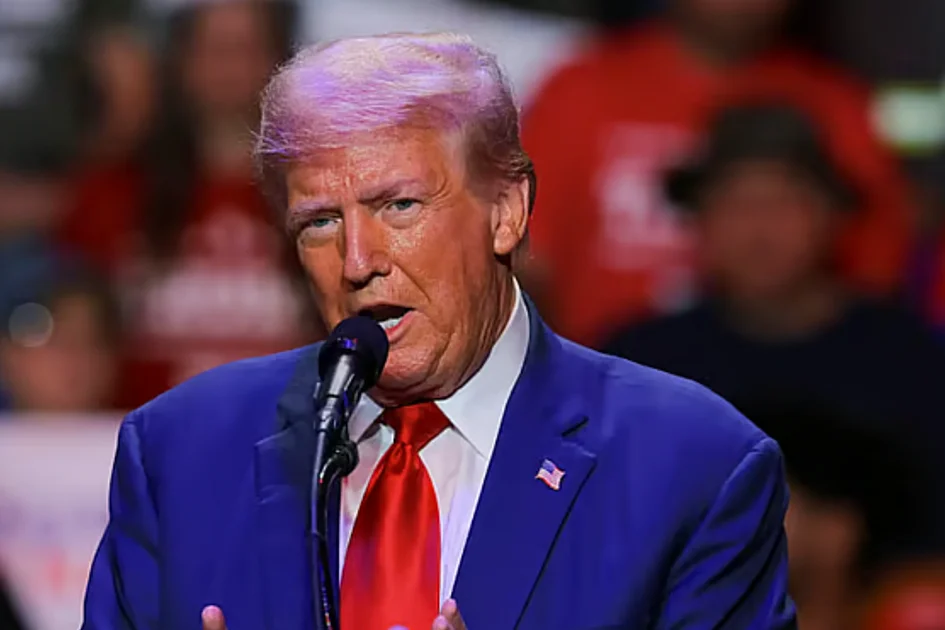
Trump says India to continue paying ‘massive’ tariffs if Russian oil imports unrestricted
US President Donald Trump has reiterated his stance that India will face significant tariffs if it continues unrestricted imports of Russian oil. Speaking to reporters aboard Air Force One on Sunday, Trump claimed that Indian Prime Minister Narendra Modi assured him that India would limit its purchases of Russian oil. ‘I spoke with Prime Minister Modi of India, and he said he’s not going to be doing the Russian oil thing,’ Trump stated, echoing comments he made earlier in the week. However, the Indian government has denied any such conversation took place. Trump responded to this denial by asserting that India would continue to pay ‘massive tariffs’ if it did not comply with the restrictions. This development highlights the ongoing diplomatic and economic tensions between the US and India, particularly in the context of global energy markets and international trade policies.
-
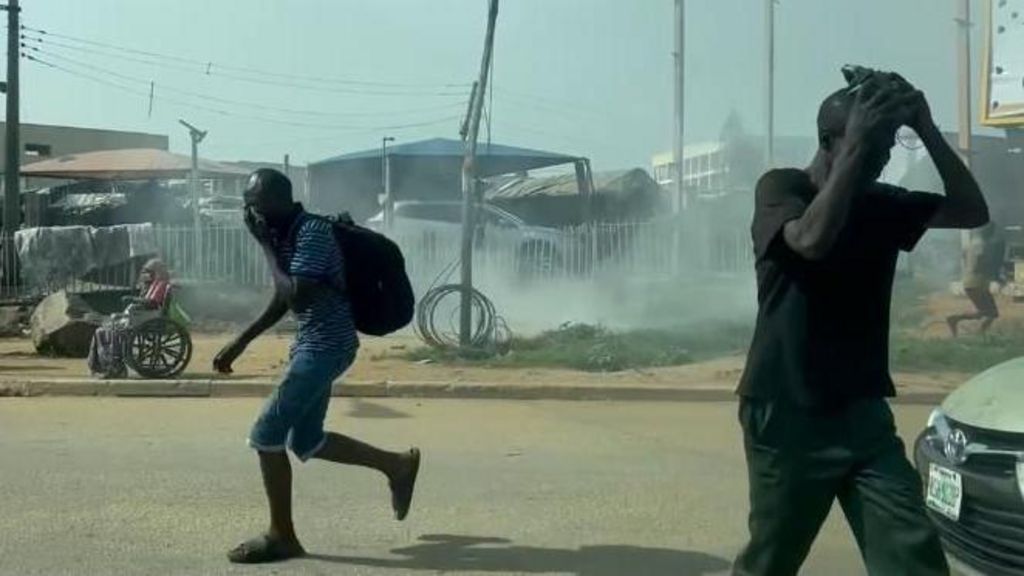
Nigerian police fire tear gas as protesters gather over separatist leader
In a tense confrontation in Nigeria’s capital, Abuja, police resorted to firing tear gas to disperse a crowd of protesters demanding the release of separatist leader Nnamdi Kanu. The demonstration, organized by activist Omoyele Sowore, publisher of the Sahara Reporters, began as early as 07:00 local time. Kanu, the head of the outlawed Indigenous People of Biafra (Ipob), has been detained since 2021 on terrorism charges, which he denies. Ipob advocates for the independence of the Biafran region in southeastern Nigeria. Eyewitnesses reported that police fired multiple rounds of tear gas at the gathering crowd, while also blocking major roads, causing significant traffic disruptions and confusion across the city. Sowore, in a post on X, alleged that security forces had arrested several individuals, including Kanu’s family members and legal team. The police have yet to comment on these claims. The protest highlights ongoing tensions surrounding Kanu’s detention and the broader issue of Biafran separatism in Nigeria.
-

Chinese president appoints new ambassadors
In a significant diplomatic reshuffle, Chinese President Xi Jinping has announced the appointment of new ambassadors to several key international posts. The decision, made in accordance with the Standing Committee of the National People’s Congress, China’s top legislative body, was officially disclosed on Monday. The new appointments include Yu Jinsong as ambassador to Morocco, Chen Feng to Romania, Jiang Xiaoyan to North Macedonia, Zhang Zuo to Malta, Yang Shu to Grenada, and Sun Xiangyang to Ecuador. Additionally, Li Yongjie has been named China’s permanent representative and ambassador to the World Trade Organization, as well as deputy permanent representative to the United Nations Office at Geneva and other international organizations in Switzerland. These changes reflect China’s ongoing commitment to strengthening its diplomatic presence and fostering international relations across various regions.
-
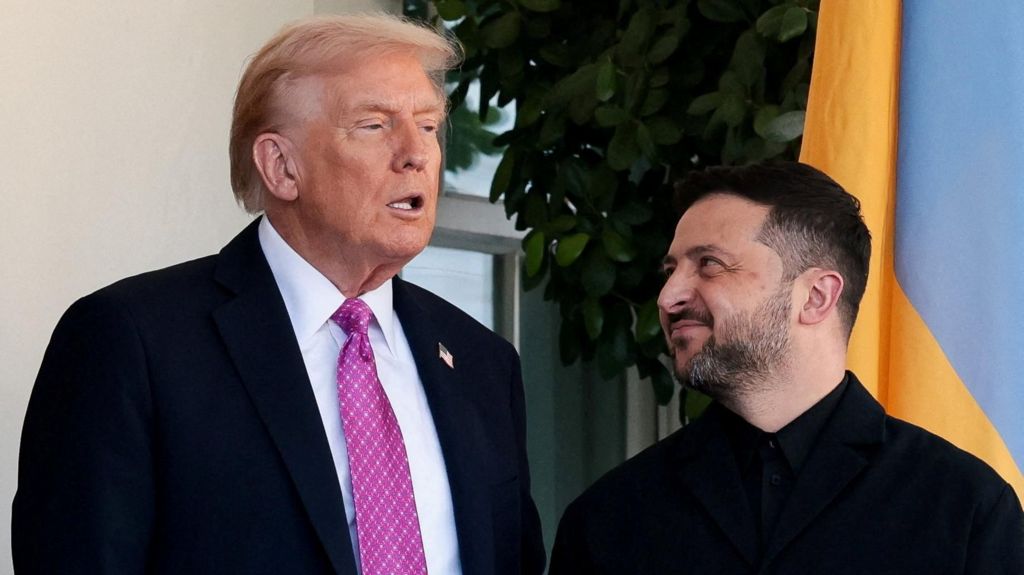
Zelensky ready to join Trump-Putin talks after ‘frank’ White House meeting
Ukrainian President Volodymyr Zelensky has expressed willingness to participate in a proposed summit involving US President Donald Trump and Russian President Vladimir Putin in Hungary, provided he receives an invitation. The announcement of the planned talks, aimed at addressing the ongoing war in Ukraine, was made by Trump and Putin on Thursday, with Budapest as the potential venue in the coming weeks. Zelensky, in comments released on Monday, indicated his readiness to engage in a three-way dialogue or shuttle diplomacy format, emphasizing his commitment to a just peace rather than a hasty resolution.
However, recent reports suggest that Zelensky’s meeting with Trump at the White House last Friday was far from cordial, with accounts of a heated exchange. The US reportedly urged Ukraine to accept Russia’s terms to end the conflict, a stance Zelensky firmly opposes. During his first press briefing since the talks, Zelensky described the meeting as frank but highlighted significant disagreements between the two sides. He criticized Hungary as the location for the Trump-Putin talks, questioning Prime Minister Viktor Orban’s ability to contribute positively to Ukraine’s interests.
Trump, when asked about Zelensky’s involvement in the Budapest meeting, stated his intention to make the talks ‘comfortable for everybody,’ suggesting a possible separation of discussions. Zelensky had hoped to secure US Tomahawk missiles during the talks but left empty-handed as Trump remained non-committal. Media reports on Monday revealed that the atmosphere during the US-Ukraine leaders’ meeting was more acrimonious than previously understood, with Trump allegedly warning Zelensky that Putin would ‘destroy’ Ukraine if it did not agree to Russia’s terms.
Trump’s shifting stance on the war has added complexity to the situation. Last month, he suggested that Ukraine could ‘win all of Ukraine back in its original form,’ a departure from his earlier position that Ukraine might need to cede territory. Trump has also been pressuring NATO nations, China, and India to halt purchases of Russian oil to increase economic pressure on Moscow. Despite threats of tougher sanctions, he has not followed through on these measures.
The relationship between Trump and Zelensky has seen ups and downs, with a notable improvement since a contentious Oval Office meeting in February. During his re-election campaign, Trump claimed he could end the war in Ukraine within days but has since acknowledged the conflict’s complexity, describing it as one of the most challenging issues he has faced since returning to office.
-
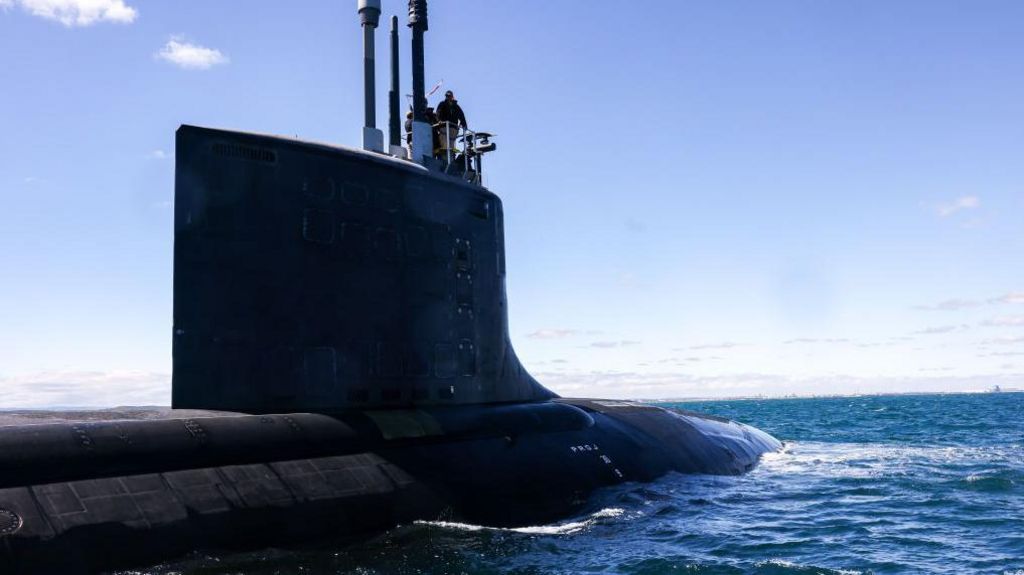
What is Aukus, the submarine deal between Australia, the UK and US?
A landmark defense agreement between Australia, the United States, and the United Kingdom, known as the Aukus pact, is under scrutiny as the Trump administration evaluates its alignment with the ‘America First’ policy. The deal, valued at £176 billion over 30 years, aims to bolster Australia’s naval capabilities by supplying nuclear-powered submarines and fostering advanced military collaboration. Australia is set to acquire up to five Virginia-class submarines from the US, with plans to co-develop a new submarine model for both the UK and Australian navies. The pact also includes joint efforts in cutting-edge technologies such as hypersonic missiles, undersea robotics, and artificial intelligence. While the review has raised concerns about potential delays or cancellations, both the UK and Australia have dismissed these fears, emphasizing the routine nature of such evaluations during a new administration. The deal is widely perceived as a strategic move to counter China’s growing influence in the Indo-Pacific region, particularly in contested areas like the South China Sea. Despite criticism from China, which labeled the pact ‘extremely irresponsible,’ the Aukus partners have underscored the necessity of addressing escalating regional security threats. The agreement, unveiled in September 2021, represents a significant upgrade for Australia’s military, enabling long-range strike capabilities and enhancing its strategic presence in the region. Additionally, the pact is expected to create thousands of jobs in the UK and strengthen trilateral defense ties. The review’s outcome will likely be a focal point during upcoming discussions between US President Donald Trump and Australian Prime Minister Anthony Albanese in Washington, DC.
-
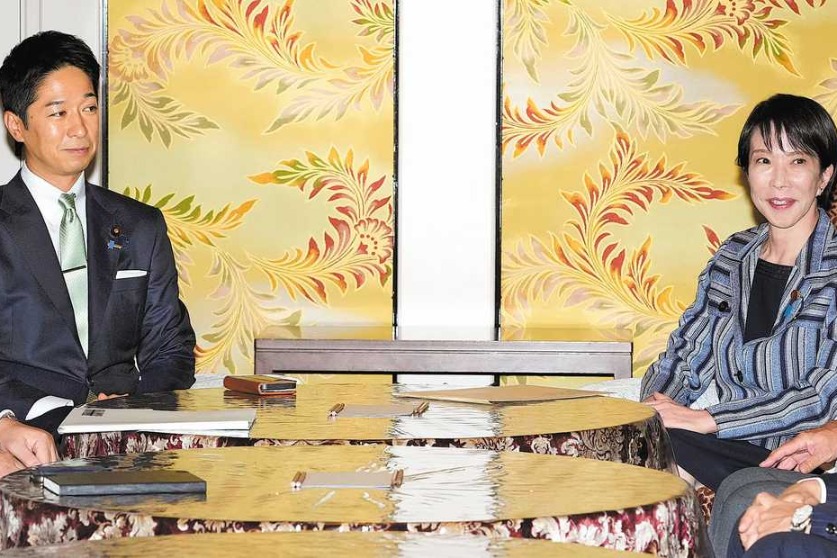
Deal puts Takaichi on track to be Japan’s 1st woman PM
In a groundbreaking political development, Japan’s ruling Liberal Democratic Party (LDP) is poised to sign a coalition agreement with the opposition Japan Innovation Party (JIP) on Monday, setting the stage for Sanae Takaichi to become the nation’s first female prime minister. This historic move comes after the collapse of the LDP’s previous coalition with the Komeito party, which had been in place for 26 years, triggering a political crisis. Takaichi, who recently ascended to the leadership of the LDP, saw her initial bid for the premiership derailed by the coalition’s dissolution. However, the LDP’s efforts to forge a new alliance with the JIP have reignited her prospects. According to Kyodo News, Takaichi and JIP co-leader Hirofumi Yoshimura are expected to formalize the coalition agreement following policy talks on Monday. The deal includes key concessions such as reducing the consumption tax on food to zero and eliminating corporate donations, as well as Yoshimura’s demand to cut the number of parliamentary seats. While the LDP-JIP alliance is still two seats short of a majority in the lower house, Takaichi could secure the premiership in a potential second-round runoff by garnering more support from lawmakers. This pivotal agreement marks a significant step toward breaking Japan’s long-standing gender barrier in its highest political office.