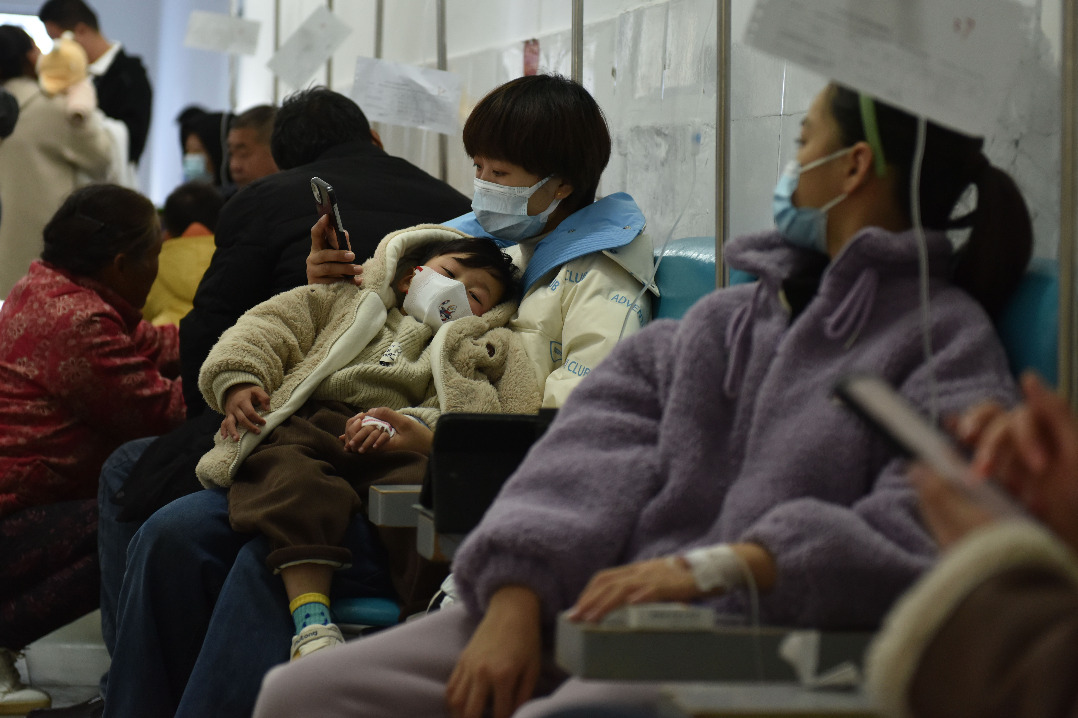
As China steps into the winter flu season, health authorities are calling for heightened vigilance and proactive measures to curb the spread of influenza. Peng Zhibin, a prominent researcher at the Chinese Center for Disease Control and Prevention, highlighted that the current surge in flu cases is primarily driven by the H3N2 subtype of influenza A. While infections from the H1N1 subtype and influenza B viruses are less prevalent, the overall situation remains concerning. Peng confirmed that no novel influenza strains or new respiratory pathogens have been detected so far. However, she emphasized that flu activity is rapidly escalating across most regions, with childcare facilities and schools being particularly affected. Data reveals that children aged five to 14 are experiencing significantly higher flu detection rates compared to other age groups. To mitigate the spread, Peng urged the public to get vaccinated promptly and adhere to personal protective measures such as wearing masks and ensuring proper ventilation. She also stressed the importance of health monitoring and maintaining hygienic environments in schools and other key facilities. Schools are advised to track student absences due to illness and encourage sick individuals to stay home.
分类: health
-

WHO declares end of Indonesia’s poliovirus outbreak following yearslong vaccination campaign
Indonesia has successfully overcome its recent polio outbreak, as declared by the World Health Organization (WHO) on Friday. This milestone follows nearly three years of rigorous efforts to combat the resurgence of the highly contagious disease, which had been officially eradicated in the country in 2014. The outbreak emerged in 2022 in Aceh province, driven by low immunization rates and poor environmental conditions. At the time, only 50.9% of infants in Aceh received polio vaccinations, a figure significantly lower than the national average. Misinformation about vaccine compatibility with religious beliefs further hindered immunization efforts, compounded by the government’s focus on COVID-19 vaccinations. Over the next two years, cases spread to multiple provinces, including Banten, West Java, Central Java, East Java, North Maluku, Central Papua, Highland Papua, and South Papua. In response, nearly 60 million additional doses of polio vaccine were administered to children. The last confirmed case was reported in South Papua in June 2024, and no poliovirus has been detected since. WHO’s declaration marks a critical step toward global polio eradication. Indonesian Health Minister Budi Gunadi Sadikin attributed the success to the dedication of health workers and community commitment, while WHO’s Western Pacific Regional Director Saia Ma’u Piukala emphasized the need for continued vigilance. Sadikin pledged to maintain Indonesia’s polio-free status through strengthened immunization programs, enhanced surveillance, and cross-sectoral collaboration. UNICEF Indonesia Representative Maniza Zaman highlighted the importance of sustained momentum to ensure all children receive necessary immunizations.
-

Macaque survives over a year after pig kidney transplant in China
Chinese researchers have marked a significant milestone in xenotransplantation, as a gene-edited pig kidney has successfully functioned in a macaque for over a year. This groundbreaking achievement was announced by a team from a hospital affiliated with Tongji Medical College at Huazhong University of Science and Technology in Wuhan. Led by Professor Chen Gang, the experiment underscores China’s emergence as a global leader in this cutting-edge field, paving the way for future clinical applications. Xenotransplantation, which addresses the critical shortage of human organs, often relies on pigs due to their physiological similarities to humans and fewer ethical concerns compared to human gene editing. However, overcoming immune rejection across species remains a major challenge. Chen’s team tackled this by sourcing specific pathogen-free ‘clean pigs’ to eliminate porcine cytomegalovirus, a common cause of rejection. Additionally, they developed a precise immunosuppression protocol to balance rejection prevention and infection risk. With an estimated 2 million people worldwide needing organ transplants annually, this breakthrough offers hope for end-stage patients. ‘Xenotransplantation is a beacon of hope for life extension,’ Chen emphasized. This achievement builds on earlier successes by U.S. researchers and positions China at the forefront of this vital medical research.
-

Chinese scientists develop broad-spectrum nanobodies for tick fever treatment
A groundbreaking development in the fight against Severe Fever with Thrombocytopenia Syndrome (SFTS), commonly known as tick fever, has been achieved by a Chinese research team. Led by Professor Wu Xilin from Nanjing University Medical School, the team has created a combination of nanobodies that demonstrate broad and potent efficacy against the disease. This innovation is particularly significant as SFTS cases are on the rise globally, and no specific treatments have been available until now. The study, published as the cover story in the journal Science Translational Medicine, highlights the collaborative efforts of multiple domestic institutions. SFTS, transmitted through tick bites, causes severe symptoms such as high fever and a drastic reduction in platelet count, often occurring between April and September. The research team initially isolated first-generation nanobodies from alpacas, which showed promise in mouse trials. To combat the challenge posed by the virus’s multiple subtypes, the team developed a ‘cocktail therapy’ approach. This involved immunizing alpacas with antigens from different viral subtypes and identifying two potent nanobodies that target conserved viral sites, effectively blocking infection. When tested on infected ferrets, the nanobody cocktail led to complete survival, undetectable viral loads, improved platelet counts, and reduced tissue damage. The team has now initiated preclinical research, with Professor Wu expressing hope for a drug that can both treat and prevent SFTS.
-

Daily pill helps people lose 10% of weight in 18 months: Study
A groundbreaking study published in The Lancet reveals that a new daily oral medication, orforglipron, could revolutionize weight loss treatment. Developed by Eli Lilly, the drug helped participants lose approximately 10% of their body weight over 18 months, offering a simpler and more affordable alternative to existing injectable treatments like Ozempic and Mounjaro. The study involved over 1,500 adults across 10 countries with obesity and type 2 diabetes, who took the pill alongside lifestyle changes. While the weight loss is slightly less than that achieved with injectable GLP-1 agonists, the convenience and potential cost reduction make it a promising option. If approved by the FDA, orforglipron is expected to hit the market in 2026 at a significantly lower price. Side effects, including nausea and constipation, were consistent with those of injectable GLP-1 drugs. With obesity-related illnesses claiming over 3.7 million lives globally in 2021, this innovation could have a profound impact on public health.
-

Dubai gears up for the 4th Annual Movember ride to champion men’s health awareness
Dubai is set to host the 4th Annual Movember Ride on November 23, 2025, a collaborative effort by STITCH and Enigmas Motorcycle Club to champion men’s health awareness. This year’s event, presented by L’Oréal Paris Men Expert, underscores the brand’s global dedication to men’s well-being. The initiative focuses on the critical importance of early detection for prostate cancer, one of the most treatable cancers when identified promptly. Prostate cancer screening, which begins with a simple PSA (Prostate-Specific Antigen) blood test, is widely accessible and can detect abnormalities before symptoms manifest. Movember encourages men to engage in open discussions with their physicians and understand when to start screening—typically between ages 45–50, or earlier for those with higher risk factors. Sara Sakaya of L’Oréal Paris Men Expert emphasized, ‘Movember is more than a campaign; it’s a reminder that men’s health deserves open discussion, early action, and sustained awareness.’ Participants will gather early morning for the convoy, led by Enigmas Motorcycle Club. Rony Metri, president of Enigmas MC, highlighted the event’s deeper purpose: ‘Movember isn’t just a ride; it’s a call to stand up, get checked, speak up, and watch out for our brothers.’ The ride will conclude at the Harley-Davidson Sheikh Zayed Road Showroom, where Allo Beirut will host the riders and guests. Paul O’Callaghan, General Manager of Harley-Davidson UAE, expressed pride in supporting the cause, stating, ‘Harley-Davidson stands for community and freedom—and there’s no better demonstration of that spirit than supporting a cause that empowers men to take control of their health.’ STITCH, a key organizer, continues to reinforce its commitment to health advocacy. Nael Basily, managing director of STITCH, noted, ‘The Movember Ride is a testament to what partners, brands, and communities can achieve when they unite for a cause.’
-

Flying hospital now ready for eye and ENT surgeries
China’s pioneering ‘flying hospital,’ a collaborative initiative between the Eye and ENT Hospital of Fudan University and the Commercial Aircraft Corporation of China, has achieved a significant milestone. Equipped with a newly upgraded Class 1 clean operating room, the aircraft is now capable of performing both ophthalmology and otorhinolaryngology surgeries. This advancement marks a critical step in China’s efforts to establish a high-level aviation medical system and enhance precision healthcare delivery via air platforms. The project, which began with a focus on ophthalmology, has now expanded to include ENT services, setting a global precedent in aviation medicine. The flying hospital, operating from a domestically manufactured aircraft, completed its first mission on September 5, transporting over 30 medical professionals from Shanghai to Shihezi in Xinjiang. During this mission, the aircraft provided advanced diagnostic services to nearly 50 patients, leveraging 5G technology for remote consultations with specialists in Shanghai. The addition of the operating room aligns with directives from the National Health Commission to improve cataract surgery capabilities in rural areas and accelerate in-flight surgical development. The operating room features customized domestic equipment and a bolt-free design, enabling rapid installation within eight hours. Innovations such as a variable wind speed laminar flow module have overcome technical challenges, making it possible to integrate surgical functions into the aircraft cabin. The hospital plans to begin with cataract surgeries, addressing high demand in underserved regions, and expand to common ENT procedures like nasal polyp and sinusitis operations. This initiative not only improves access to quality healthcare in remote areas but also strengthens China’s emergency medical response capabilities.
-

Study finds young-onset dementia outpacing late-onset dementia in China
A groundbreaking study published in *The Journal of Prevention of Alzheimer’s Disease* has unveiled a concerning trend in China: the growth rate of young-onset dementia (YOD) is now significantly outpacing that of late-onset dementia (LOD). The research, which analyzed data from the Global Burden of Disease study spanning 1990 to 2021, highlights a critical shift in the burden of dementia across age groups. While the total number of LOD cases remains higher, the incidence and prevalence of YOD—defined as onset before age 65—have surged more sharply since 2012. This alarming trend underscores the urgent need for early intervention and preventive measures. Dr. Han Ying, a leading cognitive disorders specialist at Xuanwu Hospital in Beijing, emphasized that dementia prevention must begin as early as age 40, particularly for individuals in the prime of their careers and family responsibilities. The study also identified key modifiable risk factors for both YOD and LOD, including tobacco use, high fasting plasma glucose, and high body mass index (BMI). Notably, these risk factors exhibit significant gender-based variations, with tobacco use posing a greater threat to men and high glucose levels and BMI affecting women more severely. Dr. Han urged the public to adopt healthier lifestyles and prioritize brain health from midlife to mitigate these risks.
-

Irish government approves plans to ban disposable vapes
The Irish government has taken a decisive step to curb nicotine addiction among young people by approving a comprehensive ban on disposable vapes and introducing stringent regulations on other nicotine products. This move follows Northern Ireland’s earlier prohibition on the sale and supply of single-use vapes in April 2025. Under the new legislation, retailers in the Republic of Ireland found selling disposable e-cigarettes could face severe penalties, including up to two years in prison and fines of up to £5,000. Health Minister Jennifer Carroll MacNeill emphasized that the Public Health (Single Use Vapes) Bill 2025 aims to shield children from the allure of nicotine products. The government also plans to restrict the sale of nicotine pouches to individuals under 18 and ban advertising for such products in retail outlets. These measures will be integrated into the Public Health (Tobacco Products and Nicotine Inhaling Products) (Amendment) Bill, which will regulate packaging, flavors, and product displays. Both Carroll MacNeill and Minister of State Jennifer Murnane O’Connor pledged to expedite the implementation of these laws, highlighting their commitment to safeguarding the health of future generations.
-

Fitness center targets seniors with chronic conditions
In response to China’s rapidly aging population and the increasing prevalence of chronic diseases, a community fitness center in Tianjin’s Hedong district is leading the charge in senior health management. Launched in August 2025, the Fuminlu Community Health Service Center has introduced tailored exercise programs designed to address chronic conditions such as cardiovascular disease, diabetes, and respiratory illnesses. With over 1,000 participants already enrolled, the center combines medical expertise with fitness training to offer a holistic approach to health.