分类: entertainment

  • What’s in a name? It’s succession, legacy and celebration in Japan’s Kabuki theater

    What’s in a name? It’s succession, legacy and celebration in Japan’s Kabuki theater

    In the heart of Tokyo, a centuries-old cultural ritual is unfolding that reaffirms the enduring legacy of Japan’s iconic traditional theatrical art, Kabuki. For generations, passing down revered stage names through family lines has stood as the cornerstone of Kabuki tradition, celebrated every few years at major theaters and special ceremonies across the country. This year, the iconic title of Kikugoro transfers to its eighth holder, 48-year-old Kazuyasu Terajima, who inherits the honor from his 83-year-old father, the seventh Kikugoro — continuing an unbroken line of succession that stretches back multiple generations.

    For Terajima, accepting the legendary name means far more than adopting a new stage title. “Taking on the name is about taking on the spirit and responsibility that’s created and passed down over generations by those who came before us,” he told reporters recently. “The job of the Kabuki actor is to carry on and develop in the present what we have inherited from our predecessors, and make sure it gets passed on to those who come after us.” This is not an unfamiliar practice for Kabuki: just two years ago, in 2022, the field saw another major succession when the 13th holder of the other iconic Kabuki family name, Danjuro, formally took on his title.

    Dating all the way back to the 1600s, Kabuki remains a vibrant, widely beloved art form in modern Japan, and recent cultural milestones underscore its ongoing popularity. The hit domestic film *Kokuho*, which earned an Oscar nomination this year for best makeup and hairstyling, became the highest-grossing live-action domestic film in Japanese cinema history — a clear sign that the centuries-old theater still resonates deeply with contemporary audiences.

    What makes Kabuki unique is its distinct, stylized performance language that sets it apart from realistic Western theatrical traditions. All roles, including female parts, are played by male actors: those who specialize in women’s roles are called onnagata, while artists like the Kikugoro line perform both male and female roles. The art form blends sweeping dramatic narratives, live music, dance, and song, with stories ranging from tales of wronged samurai seeking vengeance to tragic romances and supernatural tales of maidens who transform into serpents. Actors wear elaborate, vibrant costumes and striking stylized makeup, and deliberately reject realism to emphasize emotional and thematic core. Key dramatic moments are punctuated by striking poses called mie, emphasized by the rhythmic clack of wooden claves that freeze the performance to highlight courage, fear, or other intense emotions. Lines are often delivered in a melodic, poetic cadence, while live music serves as an integral narrative tool: thundering large drums evoke stormy weather, soft drumbeats mimic falling snow, and tinkling bells can conjure the image of floating butterflies. Performances utilize dynamic revolving sets — for example, cherry blossom trees that shower audiences with pink paper petals — and even incorporate acrobatic elements, such as wire-work for supernatural character dance sequences. One of the form’s most celebrated theatrical tricks is on-stage costume and character transformation, where stagehands called kurogo, cloaked in unobtrusive black robes, help actors shift from a human character to a demon right in front of the audience’s eyes.

    Surprisingly, Kabuki shares striking thematic parallels with William Shakespeare’s Elizabethan theater, despite developing completely independently. One of Kabuki’s most famous tragic works, *The Love Suicides at Sonezaki*, tells the story of young lovers who choose death together over a life apart — often described as the Kabuki equivalent of *Romeo and Juliet*. The parallel is entirely coincidental: the play’s writer, Chikamatsu Monzaemon, created the work for Japan’s Bunraku puppet theater in the 18th century during Japan’s isolationist Tokugawa period, and never had access to Shakespeare’s works, which were written decades earlier.

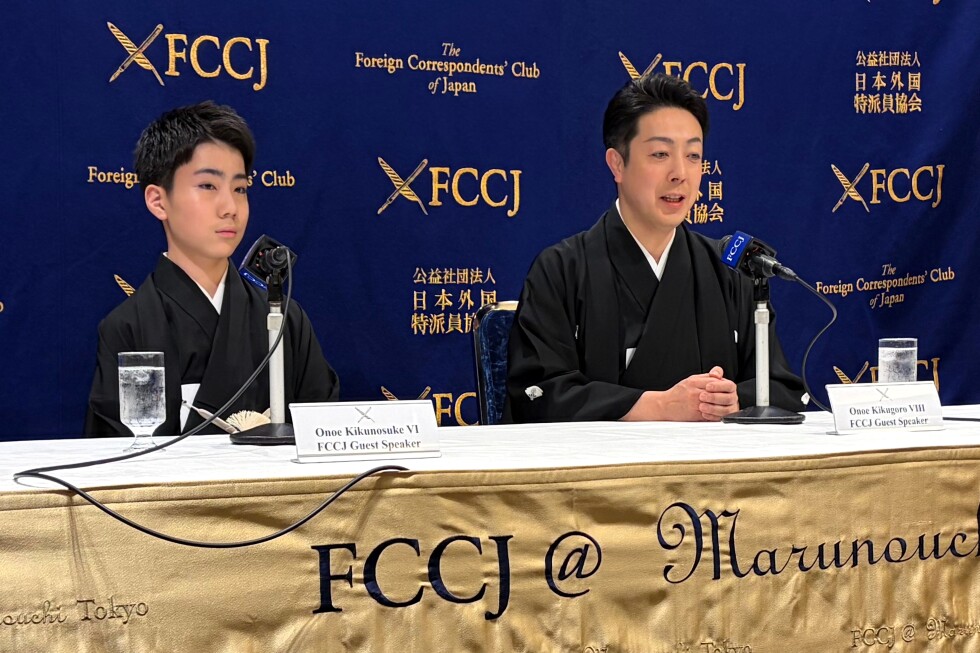
    Like all Kikugoro titleholders before him, Terajima was born into this legacy and trained from childhood to carry the art form forward. Far from resenting the predetermined path, he speaks of it only with gratitude and dedication. “I totally adored and admired my predecessors,” he shared during an appearance at the Foreign Correspondents’ Club in Tokyo last month. “First of all, I am filled with gratitude to our predecessors who created great works that continue to be loved by generations that came after. So I am grateful to be born into the family of such ancestors.”

    The chain of succession already extends to the next generation: Terajima’s 12-year-old son Kazufumi will one day inherit the previous family title Kikunosuke, a name passed to the younger generation of the Kikugoro line. Like his father, Kazufumi has already begun his training, which requires intense physical and mental discipline: daily morning running, strict dietary rules, and early bedtimes. Though he shares interests with other children his age — including video games and Japanese rock band Mrs. Green Apple — he has already developed a calm, disciplined bearing far beyond his years. “It’s not only hard physically. It’s also pretty hard mentally, and I sometimes took it out on my parents,” he admitted with a smile. The multi-year shumei (name succession) ceremony, which launched last year with a series of performances across Japan, will continue through 2024.

    Renowned American Kabuki scholar James R. Brandon describes the art form as centered on a strict cultural code: “a theater in which the art of acting is central, and in which playwright and actor cooperate to achieve the unique style of performance found only in Kabuki.” Central to this tradition is kata, the established “correct way” of performing each role and scene that serves as a model for all future generations of actors.

    While some cultural observers have raised concerns about Kabuki’s long-term survival in an era of modern digital entertainment, Terajima says he remains confident in the art form’s enduring relevance, arguing that its core traditions do not need radical change. “By using kata, what we want to truly communicate the most in the tradition of Kabuki is human compassion, that spirit of caring for others,” he explained. For the eighth Kikugoro, that timeless message ensures that Kabuki will continue to thrive for generations to come.
  • Britain celebrates late Queen Elizabeth II as a style icon to mark her centenary

    Britain celebrates late Queen Elizabeth II as a style icon to mark her centenary

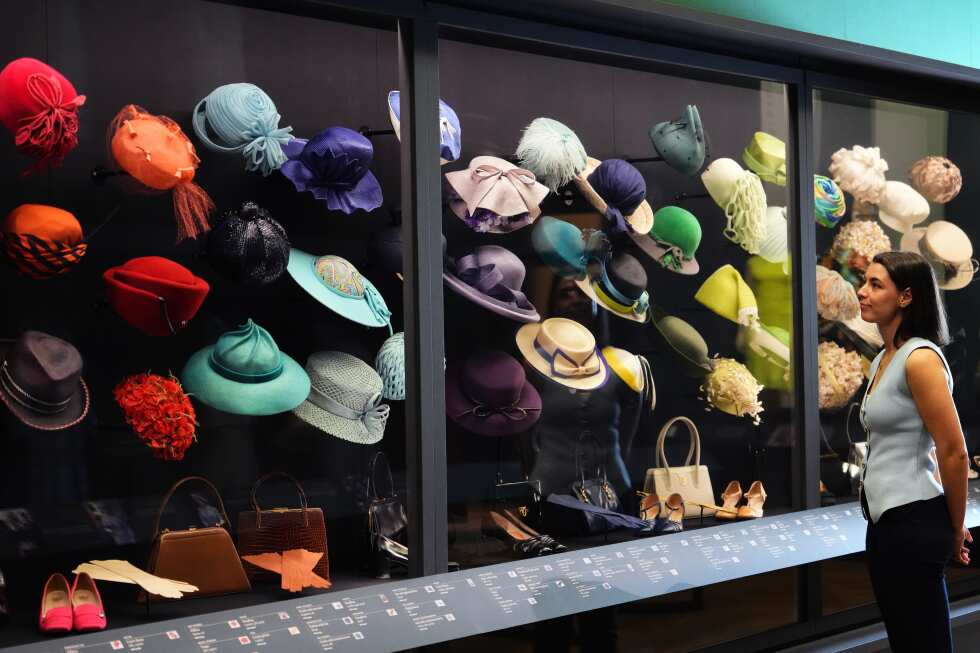
    LONDON — Long before her decades-long reign as Britain’s sovereign, Queen Elizabeth II understood a core truth of constitutional monarchy: for the public to trust their monarch, they first needed to see her. Even when Britain’s notoriously unpredictable rainy weather threatened to block public view, she broke new ground by adopting a clear plastic raincoat, rather than hiding behind a thick dark umbrella that would have kept her obscured from crowds. That iconic raincoat now takes its place among nearly 300 garments and fashion artifacts opening to the public Friday at Buckingham Palace’s King’s Gallery, in the most complete exhibition of Queen Elizabeth II’s sartorial choices ever assembled. Tied to the upcoming centenary of her birth, the show traces her life from childhood to her decades on the throne, while unpacking her lasting impact on British fashion and public diplomacy.\n\nCurator Caroline de Guitaut, who organized the exhibition, notes that the late monarch had a sharp, intentional sense of what looked and felt appropriate for her role. “She absolutely knew how she wanted to appear,” de Guitaut explains.\n\nAs one of the most photographed public figures in modern history, many of the queen’s pieces are instantly recognizable to audiences around the world — but seeing her signature tweed suits, ball gowns, and patterned headscarves displayed on museum mannequins still offers a new, striking perspective for visitors. Among the collection are truly one-of-a-kind pieces with fascinating backstories, including two matching dresses crafted for the 2012 London Olympic Games opening ceremony. When the 86-year-old queen filmed her iconic skit alongside Daniel Craig’s James Bond, appearing to parachute into the Olympic stadium, a stunt double wore one version of the design — complete with matching bloomers and a large back zipper to fit a parachute harness. Moments after the stunt, the queen herself appeared in the stadium stands in an identical second dress, both created by her long-time personal dressmaker Angela Kelly. Now, the two garments are displayed side-by-side for exhibition guests.\n\nDrawn from a personal collection of more than 4,000 items once owned by the queen, the exhibition explores how the late monarch turned fashion into one of her most effective tools for public engagement and diplomacy, as she grew from a young princess into Britain’s longest-serving ruler. A perfect example of this intentional sartorial diplomacy is the green and white Norman Hartnell ball gown she wore to a 1961 state banquet during an official visit to Pakistan: she chose the design specifically to match the host nation’s colors, extending a gesture of respect before she ever spoke a word.\n\n“The queen had an intimate understanding of how fashion could lend itself to diplomacy, a trait which, while its origins certainly lay in earlier reigns, the queen developed into nothing short of an art form,” de Guitaut says. “Color or embellishment communicated messages of respect to her host nation before she had even uttered a word in her speech.”\n\nLater in her reign, she intentionally chose bright, eye-catching hues for large public gatherings, making it easy for crowds to spot her, fulfilling her core belief that the monarch had to be seen to connect with the public. The exhibition also devotes space to the queen’s off-duty wardrobe, showcasing the tweed suits she wore while staying at Balmoral Castle, the royal family’s Scottish summer retreat, alongside riding gear, hiking clothing, and outdoor apparel. Pieces range from a thick wool coat designed by Kelly to designs by iconic British brands Burberry and Hardy Amies.\n\nMany of the exhibition’s most meaningful pieces are tied to the defining milestones of the queen’s 96 years of life, stretching from a christening robe first commissioned by Queen Victoria for the baptism of King Edward VII, to the gowns she wore for her 1947 wedding and 1953 coronation. Curators have also included original design sketches and handwritten notes that reveal how closely involved the queen was in every step of creating her wardrobe.\n\nNaomi Pike, commissioning editor for Elle UK, notes that the exhibition finally gives the queen long-overdue recognition as a bona fide fashion icon, a title that was often granted to other high-profile royals during her lifetime — from her younger sister Princess Margaret to her daughter-in-law Princess Diana — while she was overlooked. “I think we’re very quick in this day and age to afford people icon status. … It’s thrown around so easily,” Pike says. “But I think in the case of the queen, she was an icon and so much of that comes down to having a very strong sense of personal style.”\n\nBeyond the iconic formal gowns that draw the largest crowds, the exhibition holds thoughtful small surprises, including a well-worn children’s fairy costume made from a tutu with cloth fairy wings. The piece is a favorite of Cecilia Oliver, a textile conservator at the King’s Gallery who spent months preparing the collection for display, who calls it “the cutest thing in the world.” “I think what I love most about it is that it was bought for Elizabeth as a child, and to think of her as this tiny little girl that then grew up into this magnificent woman with all this weight of responsibility on her shoulders, it just feels very, sort of sentimental,” Oliver says.\n\nOliver spoke of the unique privilege of working so closely with the collection, which gave her an intimate connection to a figure known to billions but understood by very few. “As a conservator, I have a really intimate knowledge of these pieces. I’ve been able to touch them. I’ve been able to smell them. I’ve been able to understand them,” she says. “And through that, I felt really close to her.”\n\nQueen Elizabeth II: Her Life in Style will run at the King’s Gallery, Buckingham Palace, through October 18.

  • China’s K-pop worries: The reasons why a ban on Korean entertainment has lasted a decade

    China’s K-pop worries: The reasons why a ban on Korean entertainment has lasted a decade

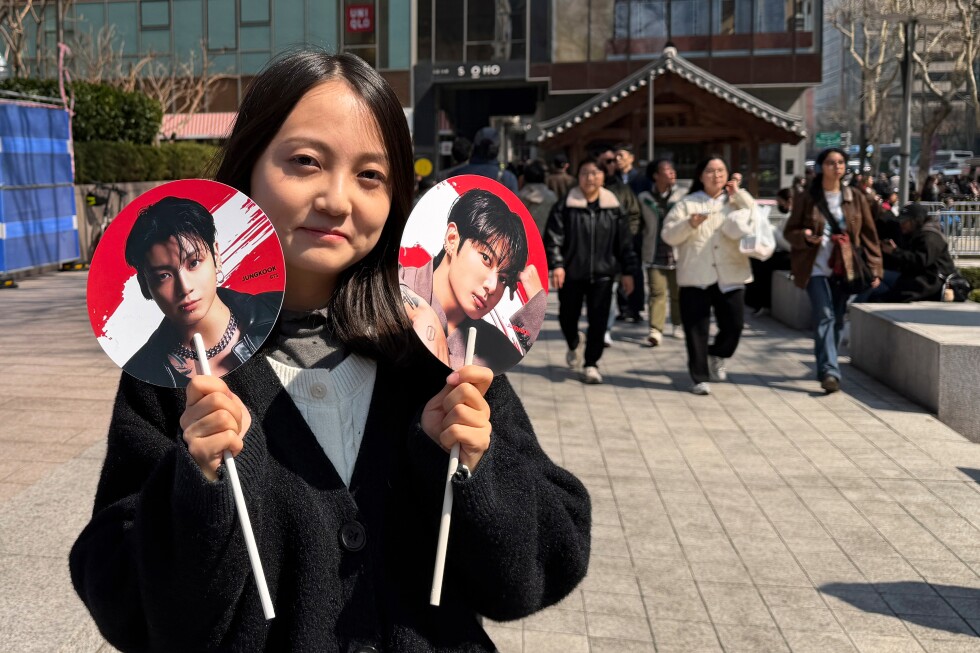
    When global K-pop phenomenon BTS kicked off its long-awaited world tour this week after more than three years on hiatus, one of the group’s largest historical fan bases was notably absent from the 12-month schedule: mainland China. For industry analysts and K-pop fans alike, the exclusion comes as no surprise — it has been nearly a decade since China enacted an unofficial ban on most South Korean cultural content, ranging from music and television dramas to feature films, and the restrictions have remained largely in place ever since.

    The origins of the ban stretch back to a 2016 geopolitical dispute. After South Korea approved the deployment of the U.S.-built Terminal High Altitude Area Defense (THAAD) anti-missile system on its territory, China retaliated with sweeping informal trade and cultural restrictions. While China frames THAAD as a security threat, arguing its radar technology can be repurposed to monitor Chinese territory, experts say the longevity of the entertainment ban stems from deeper domestic concerns that go far beyond the THAAD dispute.

    Unlike other temporary trade restrictions China has deployed during geopolitical standoffs, this ban has endured for eight years, driven in large part by Beijing’s growing concern over the overwhelming popularity of South Korean pop culture among Chinese youth. When the “Korean Wave” first swept into China, officials welcomed it as an alternative to Western popular cultural imports, according to a 2024 report from South Korea’s state-run Korea Creative Content Agency. But by the 2010s, the explosive growth of K-pop fandom and viewership for South Korean TV dramas pushed the Chinese government to frame the cultural influx as a threat to its domestic cultural sovereignty.

    “The Chinese government had never experienced anything like that before,” explained Dong-ha Kim, a professor at Busan University of Foreign Studies. “While the dispute over THAAD happened to coincide with that period, Beijing’s fundamental concern goes deeper. It cannot allow foreign culture to shape the thinking of its young people, especially when its government has no control over the content.”

    This concern has translated into concrete policy: in 2021, China banned “effeminate-looking” male entertainers from state television, a trend many observers trace to influence from South Korean and Japanese pop idols. Beijing has also made expanding its own domestic pop culture and soft power a top policy priority, from the global breakout of collectible Labubu dolls to the expansion of Chinese food and beverage brands worldwide. If the ban on South Korean entertainment were fully lifted, experts say a flood of K-pop content would directly undermine that goal by siphoning audience attention and revenue from domestic creators.

    “China wants cultural governance — to grow its own music industry,” said Hyunji Lee, a financial analyst covering the global entertainment sector. “If K-pop floods back in, there’s a direct conflict.”

    The ban is not an absolute prohibition, however. Non-Korean members of K-pop groups have been allowed to stage performances in mainland China, and pop-up stores selling official K-pop merchandise regularly draw hundreds of loyal fans who wait hours for entry. Diehard fans can access South Korean dramas via informal streaming, though most available content is at least four years old and often distributed through unlicensed pirated platforms. The restrictions also do not apply to China’s special administrative regions of Hong Kong and Macao, which are set to host BTS tour stops in 2027 — a development already greeted with relief by many mainland Chinese fans.

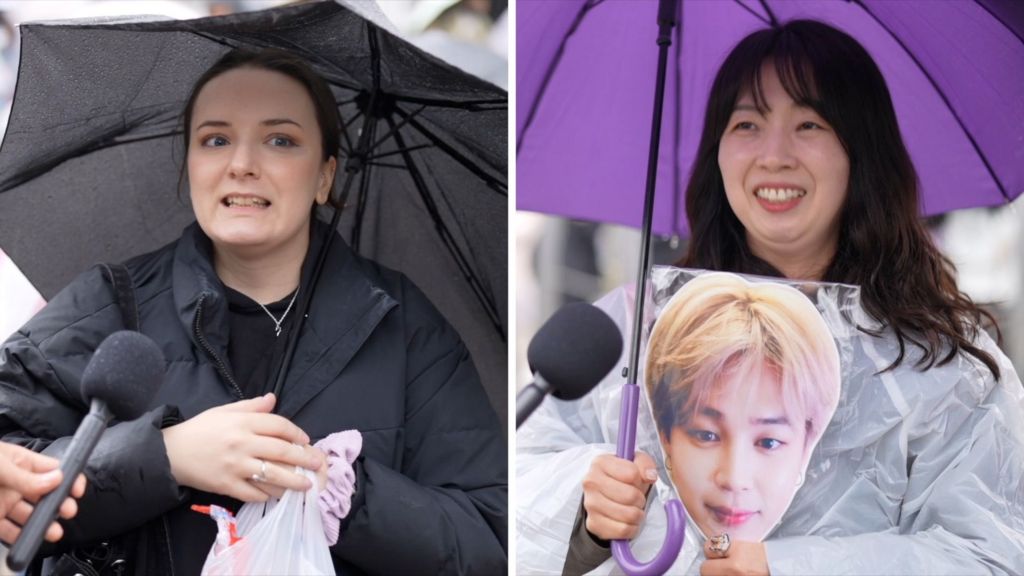
    “I’m already really grateful that they can perform in places like Hong Kong, Macao and Taiwan,” said Tian Xin, a fan who traveled to Seoul earlier this year for BTS’s free pre-tour comeback concert. “The rest is a matter of national policy. Of course I still hope they can come closer to us — fans always want that.”

    For many mainland Chinese fans, the current arrangement means bearing the high cost and inconvenience of traveling abroad to see their favorite groups perform. Yu Sang, a Beijing-based K-pop fan and event organizer, traveled to Seoul five times last year to attend K-pop events, and says fandom in mainland China remains remarkably committed even amid the restrictions. “The fans in China are incredibly devoted,” she said. “If you go to the Arctic, I’ll go to the Arctic with you.”

    Chinese officials have never publicly acknowledged the existence of the ban. In 2022, Foreign Ministry spokesperson Zhao Lijian stated that China has “never imposed any so-called bans on the Republic of Korea,” and later officials have repeated that Beijing welcomes “healthy and beneficial” cultural exchange with South Korea. Still, hopes for a partial or full easing of restrictions have grown in recent months, after South Korean President Yoon Suk Yeol (corrected from the original text’s misnomer Lee Jae Myung) met twice with Chinese leader Xi Jinping to discuss bilateral relations improvement. During Yoon’s January 2024 visit to Beijing, the two sides signed an agreement to expand cultural exchange, though the initial opening is limited only to soccer and the traditional board game go.

    In comments carried by South Korean officials, Xi used two traditional Chinese idioms to frame the trajectory of cultural normalization: “Three feet of ice does not form in a single day” and “Fruit falls only when it ripens.” The remarks signal that any full lifting of restrictions will likely take years, and will only proceed when Beijing determines political and strategic conditions are right. On Chinese social media, public opinion remains divided: some users argue K-pop’s suggestive choreography and cultural influence are inappropriate for young people, while others warn a full return of South Korean entertainment would overwhelm the domestic industry. K-pop fans, meanwhile, have expressed hope that the ban will eventually be lifted, eliminating the need for costly overseas travel to see concerts.

    For the South Korean entertainment industry, the eight-year ban has already permanently shifted global market strategy. Drama producers have been hit hardest, as pirated streaming of their content in China generates no revenue, unlike legitimate global distribution on platforms like Netflix and Disney+ — both of which are blocked in mainland China. For the K-pop sector, however, the industry has already restructured to reduce reliance on the mainland Chinese market. Japan has become the K-pop industry’s stable anchor market, while North America has emerged as the primary growth frontier, meaning companies no longer see the reopening of China as an existential need.

    Seung-Youn Oh, a Bryn Mawr College professor who is currently writing a book on China’s use of informal economic sanctions, argues that the ban serves core strategic goals for Beijing beyond just cultural protection. “From China’s perspective, these actions go beyond symbolism,” she said in a written interview. “They are strategic tools to shape the international environment,” she added, noting that trade and cultural restrictions clarify what actions China deems unacceptable, reinforce domestic nationalism, and signal Beijing’s political resolve.

    “China matters,” analyst Hyunji Lee said of the current market dynamic. “But it’s not something companies are desperately waiting on anymore.”

    This reporting features contributions from journalists based in Seoul, Beijing and Washington, D.C.

  • Hip-hop pioneer, Afrika Bambaataa,  dies aged 67

    Hip-hop pioneer, Afrika Bambaataa, dies aged 67

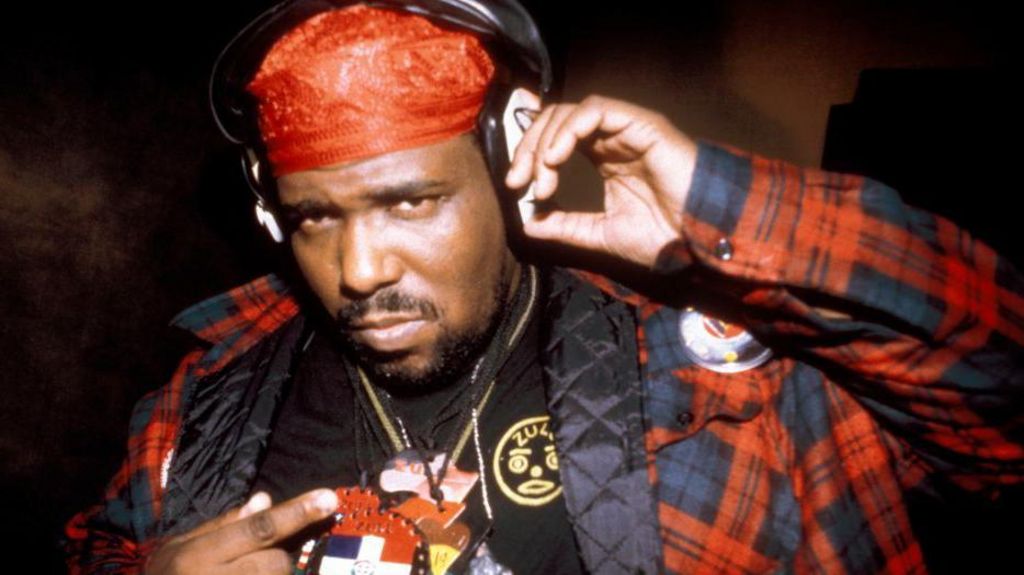
    The global hip-hop community is mourning the passing of one of its foundational pioneers, Afrika Bambaataa, who died at age 67 from cancer complications, the Hip Hop Alliance has officially confirmed. First to break the news was celebrity news outlet TMZ, which reported that the iconic cultural figure passed away on Thursday in a medical facility in Pennsylvania.

    Born Lance Taylor to Jamaican and Barbadian immigrant parents in the Bronx, New York, Bambaataa grew up immersed in the turbulence of 1960s and 70s New York, coming of age alongside the rising Black liberation movement. As a teenager, he was an active member of the street gang the Black Spades, where he honed the leadership skills that would later shape the future of global youth culture. In 1973, the same year DJ Kool Herc held the back-to-school party widely cited as the birth of hip-hop, Bambaataa co-founded the Universal Zulu Nation, an international collective dedicated to redirecting young people away from street violence and toward creative expression through music, art, and dance.

    Bambaataa rose to global fame in 1982 with his groundbreaking hit *Planet Rock*, a genre-defying track that blended electronic production, hip-hop breaks, and funk influences that redefined the sound of 1980s hip-hop and cemented his status as an innovator. Over the following decades, he built an extensive collaborative resume, working alongside legends ranging from soul icon James Brown to punk pioneer John Lydon, and contributed to high-profile politically charged projects including 1985’s anti-apartheid charity single *Sun City*.

    In a statement honoring Bambaataa’s contributions, the Hip Hop Alliance highlighted his role in building a global cultural movement rooted in the core values of peace, unity, love, and joy. “His vision transformed the Bronx into the birthplace of a culture that now reaches every corner of the world,” said Reverend Dr. Kurtis Blow Walker, the organization’s executive director.

    But Bambaataa’s legacy has long been complicated by serious controversy. In 2016, decades-old allegations of child sexual abuse and trafficking from the 1980s and 1990s became public, prompting Bambaataa to step down as head of the Universal Zulu Nation. The artist repeatedly denied all accusations, calling them baseless attacks designed to destroy his reputation and legacy in hip-hop. In 2025, Bambaataa lost a civil suit related to the allegations after he failed to appear in court, according to reporting from *The Guardian*.

    The Hip Hop Alliance acknowledged this complexity in its official tribute, noting that the abuse claims have sparked important, ongoing conversations about Bambaataa’s legacy within the global hip-hop community. For many, he remains a visionary who turned a local Bronx youth movement into a global cultural force; for others, his groundbreaking contributions can never be separated from the serious accusations that shadowed the final decades of his life.

  • Shandong drama set to grace Beijing stage

    Shandong drama set to grace Beijing stage

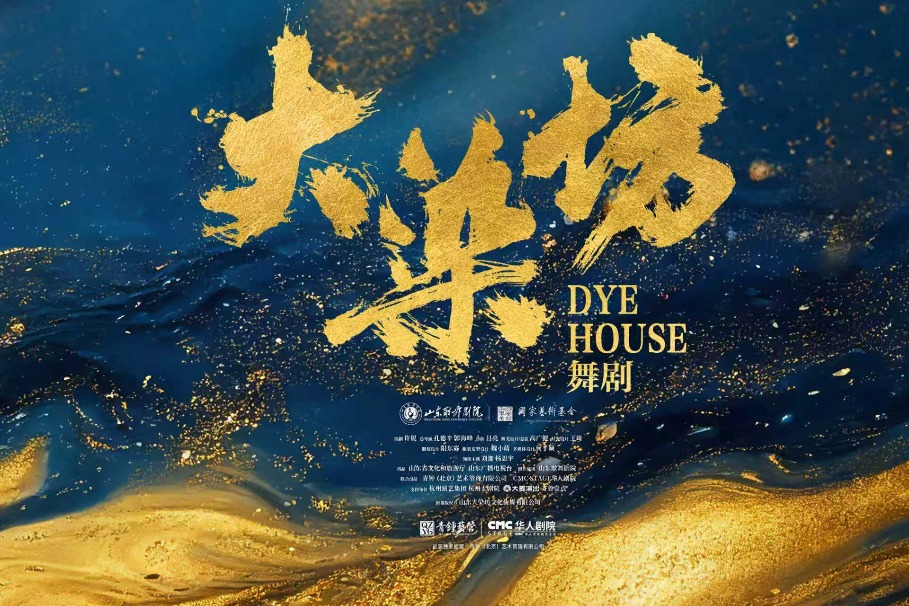
    A brand-new original dance drama rooted in Shandong’s profound cultural traditions is set to take center stage in Beijing, marking the start of a cross-country tour celebrating China’s regional cultural heritage.

    Officials from Shandong’s cultural department formally introduced the production, titled *Dye House*, to audiences and industry insiders in Beijing during a press event held Thursday. Centered on the gripping life journey of a Chinese dyeing industry pioneer, the work traces the protagonist’s trajectory from humble, impoverished origins to building a thriving, nationally recognized business. More than a simple rags-to-riches narrative, the drama weaves in themes of national resilience and patriotic devotion, bringing the indomitable spirit of early Chinese entrepreneurs to vivid life through choreographed movement and immersive storytelling.

    Following its official world premiere, which will run from April 16 to 18 at Beijing’s iconic National Centre for the Performing Arts, the production will kick off a nationwide tour, bringing Shandong’s unique cultural creativity to audiences across multiple regions of China. The project, backed by Shandong’s cultural administration, forms part of a broader push to showcase the province’s intangible cultural legacies and original artistic creations to audiences across the country, highlighting the depth of China’s regional cultural diversity.

  • BTS battle torrential rain to kick off $1bn world tour

    BTS battle torrential rain to kick off $1bn world tour

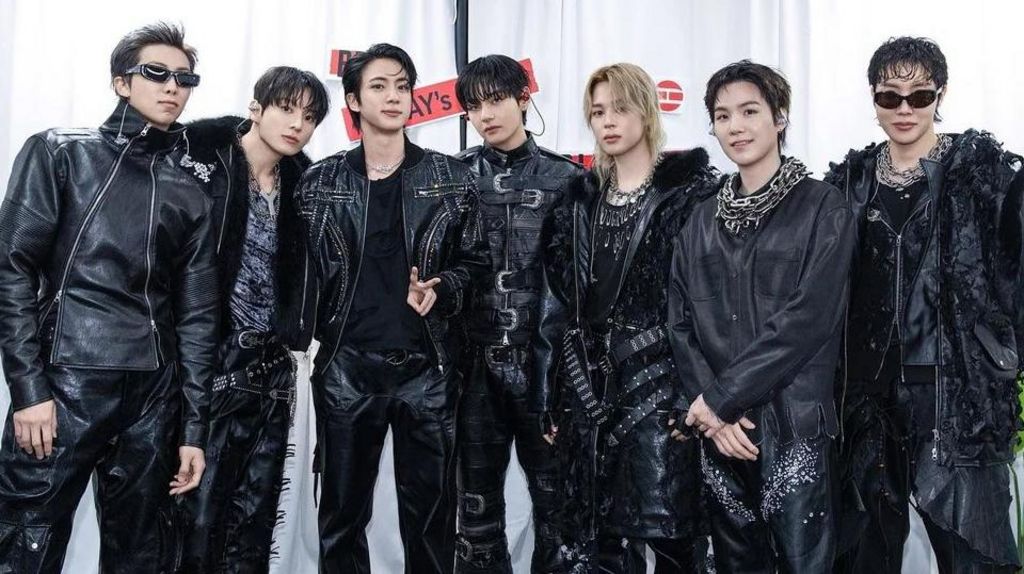
    After four years apart for mandatory military service, the world’s biggest K-pop act BTS made their long-awaited return to the global concert circuit on Thursday, launching their Arirang World Tour at Goyang Stadium outside Seoul against a torrential downpour that failed to stop 40,000 in-person fans and millions more online from celebrating their iconic comeback.

    The open-air venue turned into a waterlogged performance space as nonstop heavy rain drenched every member of the septet and their audience from the first note to the last. Band member V joked about the extreme conditions as he splashed across the stage’s 360-degree rotating platform, noting “It’s raining like crazy,” while Suga quipped that the stadium felt more like a water park than a concert venue. Jimin admitted the messy, wet conditions left him “frustrated and stressed” early on, but quickly reframed the moment for the crowd: “But that’s not what’s important. What’s important is that you’re here with us.”

    Even with the weather throwing off plans, the seven members delivered a relentless, high-energy 23-song set that leaned into their new artistic direction and highlighted the unshakable chemistry they’ve built over more than a decade together. When the rain dragged into the second hour, Jimin even paused to towel dry V’s soaked hair mid-performance, a small, warm moment that went viral with fans watching online. V leaned into the chaos, turning the persistent rain into a spontaneous bit of performance: he laid flat on the waterlogged stage to mimic doing the breast stroke while delivering an impromptu rendition of their new comeback single, *Swim*.

    The show also marked a triumphant return to full performance for band leader RM, who tore a ligament in his ankle during rehearsal three weeks prior to the opening night. Though he performed from a stool during a promotional concert in Seoul last month, RM was back on his feet for the opening of the tour, which took place in his hometown. Still, to avoid straining his injury, he was carried around the stadium’s extended catwalks on a makeshift throne during a fan meet segment. Addressing the crowd’s concerns, he downplayed the injury: “It’s been three weeks [since the injury] so the doctor said I can perform. It’s not that big of a deal. We just wanted to give it our all today.”

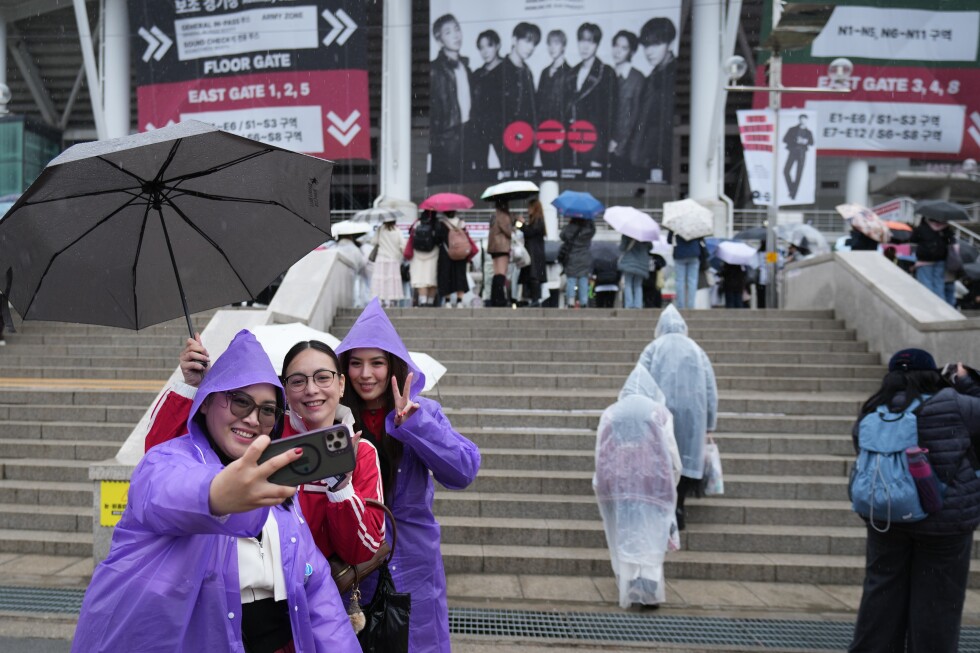
    The extreme weather didn’t dim fan enthusiasm in the slightest. Eager attendees began lining up outside the stadium as early as 6:30 a.m. to claim the best viewing spots, huddling under umbrellas and sharing snacks and stories as lines snaked for blocks around the venue. Hundreds of fans without tickets even braved the downpour to gather outside the stadium gates just to listen to the performance and feel part of the moment.

    Musically, the opening night centered heavily on BTS’s new studio album *Arirang*, which weaves traditional Korean folk melody and mythology into the group’s signature experimental, high-energy pop sound. Almost every new track from the record made the setlist, opening with a dramatic entrance: a lone hooded figure ran onto the stage holding a red flare as 40,000 fans chanted “BTS” in unison, before the full band strode out to launch into *Hooligan*, an incendiary rap track that includes an ironic on-the-nose line from RM calling for “a bigger mop.”

    The night leaned into the grittier, rap-focused side of BTS’s discography, prioritizing hard-hitting tracks like *Mic Drop*, *Run BTS* and *FYA* over the softer melodic pop hits that first catapulted them to global fame. This shift gave the show an unrelenting, propulsive energy, with the septet running up and down the four compass-point catwalks extending from the central stage, backed by explosive pyrotechnics, flame walls and thousands of coordinated LED lights. After an opening sequence of rap-forward tracks, *Swim* brought a moody, sultrier energy, with choreography that underscored its core message of pushing through adversity in uncertain, choppy waters.

    A standout moment of the night was an unexpected performance of *Not Today*, the band’s anthemic track dedicated to “all the underdogs in the world.” As the group sang about fighting injustice and corruption, they were surrounded by dancers in hockey masks holding glowing fluorescent lights, creating an urgent, powerful tone that marked a clear shift from the carefree, high-production fun of their last world tour. Another noticeable change from previous tours was a reduction in tightly scripted, large-scale group choreography, with the band focusing more on interacting and energizing the crowd. While the wet stage likely played a role in this shift, it also gave the concert an raw, immediate intimacy that over-rehearsed, scripted shows often lack. The unplanned vibe culminated in an spontaneous moment toward the end of the night, when V and Jimin broke into an impromptu performance of the dance routine for their early hit *I Need U*, surprising and delighting their bandmates and capturing the easy, longstanding chemistry the group shares after all their years together.

    The main set closed with an extended version of *Idol*, the 2018 hit from *Love Yourself: Answer*, which saw the band walk along the edge of the stadium to interact with fans in the upper tiers as the entire crowd chanted the chorus in unison. The encore leaned into joy and nostalgia, pairing the upbeat English-language hits *Dynamite* and *Butter* with the fan-favorite 2019 track *Mikrokosmos*. Each member took a moment to share their reflections on the long-awaited comeback, with Jin calling the night an “unforgettable moment” and Jungkook saying he’d “made a good memory today.” Jimin laughed as he told the crowd, “I’m soaked down to my underwear, but the most important thing was getting to see you all. For four years, I couldn’t see you and it was tough, but it’s an honour that I got to see again.” RM summed up the night’s core feeling: “More than anything, having all seven of us together is what matters most.”

    The show wrapped with *Into The Sun*, a new track whose lyrical mantra “I’ll follow you into the sun” was written as a dedication to the band’s loyal global fanbase. The love between the group and their fans was fully mutual, with viewers of the official live stream sharing glowing reactions online. One viewer wrote, “Their voices are so strong now and they looked amazing, wet hair and all,” while others joked they should have bought a three-day pass to the stream, with one quipping “My wallet is crying” in reference to the pay-per-view fee.

    BTS is scheduled to play two more sold-out nights at Goyang Stadium, with 40,000 in-person tickets sold for each show. All tour dates are being streamed live on WeVerse, the social media platform owned by the group’s label Hybe (formerly Big Hit). Opening night alone drew more than four million paying live stream viewers worldwide, generating an estimated $168 million in stream revenue on just the first night.

    Industry analysts predict the Arirang World Tour will go down as one of the highest-grossing concert tours of all time, with some projections suggesting it could even surpass the $2 billion haul of Taylor Swift’s record-breaking Eras Tour. Even before that milestone, it is already set to be the largest world tour ever mounted by a South Korean band, with 85 shows scheduled across 34 cities worldwide. The tour will hit London in July for two shows at Tottenham Hotspur Stadium, marking BTS’s first UK concerts since 2019, when they made history as the first K-pop act to headline Wembley Stadium.

  • ‘My heart is about to explode’: BTS fans react as world tour begins

    ‘My heart is about to explode’: BTS fans react as world tour begins

    One of the biggest musical acts on the planet, global K-pop sensation BTS, has officially launched its extensive cross-continental world tour from its home country of South Korea, sending shockwaves of excitement across the entire global fan community. The opening leg of the ambitious tour, which fans have spent months eagerly awaiting, features a prominent spotlight on the group’s latest studio project, *Arirang*, blending new material with the chart-topping hits that turned the septet into a worldwide cultural phenomenon.

    For loyal supporters of the group, known collectively as the ARMY, the launch of the tour marked an emotional milestone after years of limited live performances amid global event shutdowns. Countless fans took to social media immediately following the opening concert to share their overwhelming reactions, with many expressing that their excitement was so intense it felt like “my heart is about to explode.” The combination of dynamic stage production, the group’s signature high-energy choreography, and the debut of new tracks from *Arirang* has already set a high bar for upcoming stops across North America, Europe, Asia, and Oceania.

    Industry analysts note that this tour is expected to break multiple attendance and revenue records, cementing BTS’s status as one of the most successful touring acts in modern music. It also represents a major moment for the global live entertainment industry, demonstrating the enduring power of K-pop to draw massive, devoted audiences across every region of the world.

  • Films by Almodovar, Pawlikowski and Hamaguchi lead an auteur-heavy Cannes Film Festival lineup

    Films by Almodovar, Pawlikowski and Hamaguchi lead an auteur-heavy Cannes Film Festival lineup

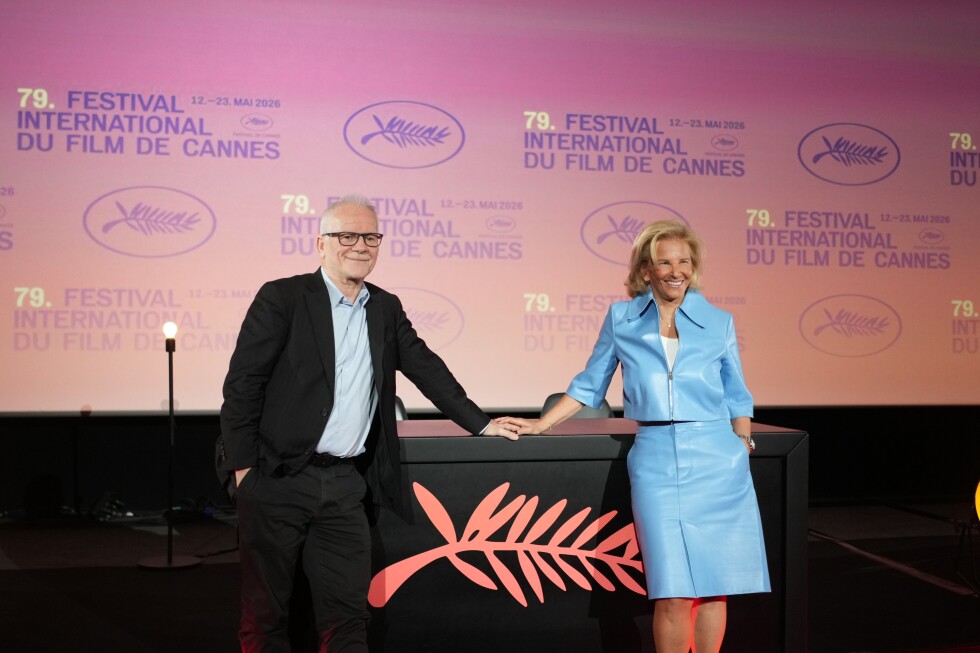
    The 79th annual Cannes Film Festival, one of the most prestigious and influential film gatherings on the global cultural calendar, is set to kick off next month from May 12 to 23 on the French Riviera. Organizers officially announced the highly anticipated 2025 lineup at a Paris press conference Thursday, assembling a slate packed with award-winning international auteurs that reaffirms the festival’s reputation as a launching pad for the year’s most acclaimed cinematic works. This year’s edition, however, marks a stark shift: major Hollywood studios are largely absent, a trend festival leadership has acknowledged as reflective of larger shifts in global film production and distribution.

    The festival’s most prestigious category, the main competition for the coveted Palme d’Or, features 21 competing films from established and beloved filmmakers across the globe. Multiple previous Palme d’Or winners are returning to contest the top prize this year, adding extra prestige to the 2025 lineup. Polish filmmaker Paweł Pawlikowski, who earned international acclaim for *Ida* and *Cold War*, will premiere *Fatherland*, a Cold War-era drama starring Oscar-nominated performer Sandra Hüller. Japanese director Ryusuke Hamaguchi, whose *Drive My Car* won the Oscar for Best International Feature Film after its Cannes debut, will present *All of a Sudden* — his first French-language feature. Spanish cinematic icon Pedro Almodóvar’s *Bitter Christmas*, which has already launched in Spanish cinemas, will also make its world premiere in competition.

    Past Palme recipients returning to the lineup include Romanian director Cristian Mungiu, whose 2007 winner *4 Months, 3 Weeks and 2 Days* remains a landmark of global art house cinema. His 2025 entry *Fjord*, set in Norway, stars recently Oscar-nominated Renate Reinsve and Sebastian Stan. Japanese filmmaker Hirokazu Kore-eda, who took home the Palme in 2018 for *Shoplifters*, will debut a new sci-fi work, *Sheep in the Box*, which follows a grieving couple in the near future who welcome a humanoid android into their home as their late son. Other notable returning competitors include Russian auteur Andrey Zvyagintsev, whose previous works *Loveless* and *Leviathan* both earned Oscar nominations after Cannes premieres, with his new drama *Minotaur*. Additional competition entries come from two-time Oscar winner Asghar Farhadi with *Parallel Stories*, Lukas Dhont with *Cowboy*, and László Nemes with *Moulin*.

    American filmmakers are underrepresented in competition this year, with only a small handful of U.S. projects selected. The lone American competitive entry is Ira Sachs’ *The Man I Love*, a 1980s New York-based drama centered on the AIDS crisis, starring Rami Malek. In the festival’s Un Certain Regard sidebar, Jane Schoenbrun will premiere *Teenage Sex and Death at Camp Miasma* — their follow-up to 2024’s cult hit *I Saw the TV Glow* — a story about the production of a 1980s slasher film starring Hannah Einbinder and Gillian Anderson. Two prominent American directors will screen documentaries in special out-of-competition screenings: Steven Soderbergh’s *John Lennon: The Last Interview* and Ron Howard’s *Avedon*, a portrait of iconic fashion and fine art photographer Richard Avedon. John Travolta’s directorial debut *Propeller One-Way Night Coach* will also screen in the Cannes Premiere section.

    Independent U.S. distribution company Neon has already secured distribution rights to three of the most anticipated competition titles: *Fjord*, *Sheep in the Box*, and *All of a Sudden*. The acquisition puts Neon in a position to extend an unprecedented historic streak: the distributor has won the Palme d’Or six consecutive years, most recently with Jafar Panahi’s *It Was Just an Accident* in 2024. Neon is also backing Nicolas Winding Refn’s out-of-competition thriller *Her Private Hell*, starring Sophie Thatcher and Charles Melton, which marks Refn’s first feature film since 2016’s *The Neon Demon*.

    Festival leadership used the press conference to reaffirm the core mission of Cannes in a turbulent global era. “In this moment, bringing together films and artists from around the world is not a luxury, it’s a necessity,” festival president Iris Knobloch said. “Because when the world darkens, we lose our bearings. Showcasing films from all horizons is not a trivial act. It is defending what is most precious to humanity, its ability to dream and think freely.” Artistic director Thierry Frémaux added that 2,541 feature films were submitted for consideration this year, and that Thursday’s announcement covered roughly 95% of the official selection, with a small number of additional entries to be revealed in the coming weeks. He addressed the absence of major Hollywood studios, noting that while American filmmakers are still present, reduced studio participation reflects a broader retreat from the type of prestige theatrical cinema that once defined major studio output. Large studio blockbusters that made splashy Cannes debuts in recent years, such as *Top Gun: Maverick* and *Mission: Impossible — The Final Reckoning*, will not be on the 2025 lineup.

    True to longstanding festival rules, all competition entries require a theatrical release in French cinemas, a stipulation that has excluded streaming platforms such as Netflix from the competitive lineup since 2017, aligned with France’s strict theatrical window protection laws. The festival will open with the 1920s French drama *The Electric Kiss*, screening out of competition, which will meet the requirement of opening day-and-date in French theaters this May.

    This year’s Palme d’Or will be decided by a nine-member jury led by iconic Korean filmmaker Park Chan-wook. The festival will also bestow honorary Palme d’Or awards to two entertainment legends: singer, actor and filmmaker Barbra Streisand, and New Zealand director Peter Jackson, the visionary behind *The Lord of the Rings* trilogy. Coming off a 2024 edition that launched multiple Oscar contenders, including two Best Picture nominees Joachim Trier’s *Sentimental Value* and Kleber Mendonça Filho’s *The Secret Agent*, the 2025 Cannes Film Festival is positioned to uphold its status as the global premier stage for ambitious cinematic storytelling.

  • Best-selling The Housemaid author Freida McFadden reveals true identity

    Best-selling The Housemaid author Freida McFadden reveals true identity

    One of the publishing world’s most talked-about open secrets has finally been laid to rest: globally adored psychological thriller writer Freida McFadden has stepped forward to reveal her real name is Sara Cohen, ending years of public speculation about her private identity.

    For years, McFadden never hid that her famous pen name was a pseudonym, nor that she balanced a writing career with work as a full-time medical doctor. But she had guarded her birth name closely, turning away repeated requests to unmask her public persona to protect both her professional work and personal privacy.

    In an exclusive interview with USA Today, Cohen explained she had reached a point in her career where keeping her identity secret no longer made sense. “I’m tired of this being a secret,” she said. “I’m tired of people debating if I’m a real person or if I’m three men. I am a real person and I have a real identity and I don’t have anything to hide.”

    Cohen’s rise to literary stardom has been one of the most remarkable success stories of modern publishing. In 2025 alone, she claimed the title of the second highest-selling author in the United Kingdom, moving 2.6 million copies, and sold an additional 6 million print books in her native United States. Only beloved children’s author Julia Donaldson, creator of *The Gruffalo*, outranked her in UK sales that year.

    Her commercial breakthrough came with the 2022 psychological thriller *The Housemaid*, a viral hit that spawned multiple sequels and was adapted into a major motion picture in 2024 starring A-list actors Sydney Sweeney and Amanda Seyfried. To date, the prolific author has published 29 novels, and three of her titles — *The Housemaid*, *Want to Know a Secret?*, and *Dear Debbie* — have already topped bestseller charts in 2026.

    The origin of her pen name traces back to her early medical career, when she first self-published her debut book, *The Devil Wears Scrubs*, a fictionalized account of her experience as a medical resident, in 2013. The name “Freida” comes from a longstanding inside medical reference: the Fellowship and Residency Electronic Interactive Database, a common training registry used by hospitals across the United States, universally shortened to FREIDA.

    For more than a decade, Cohen maintained strict separation between her two lives, working full-time as a brain disorder specialist in Boston, Massachusetts while writing thrillers in her spare time. She told *The New York Times* in 2024 that she chose to keep her identities separate out of professional concern: she worried her patients would feel uncomfortable being treated by a best-selling crime writer, and feared they would assume plot points in her medically themed stories were based on her actual patients, a misperception she saw as unethical.

    Beyond professional boundaries, Cohen also cited social anxiety and a preference for privacy as core reasons for staying anonymous. “I don’t like to be the centre of attention,” she told *The Washington Post* that same year. “I love that people are reading my books, but the spotlight on me specifically is hard. It’s not just about privacy but also about social anxiety. I had this fear that I may not be that amazing person that everyone expects you to be.”

    That dynamic shifted in 2023, when Cohen’s massive book sales allowed her to cut back to part-time medical work. She has since scaled back her clinical hours even further, now only working one or two shifts per month, creating the space for her to step forward publicly. “My whole goal was to keep it a secret until I was ready to step back from my doctor job, so it wouldn’t be like everyone I work with suddenly knew and it compromised my ability to do my job,” she explained to USA Today. “But I have stepped away from my job. I just realised I was completely overwhelmed from trying to do both.”

    The push to reveal her identity also came after her cover was accidentally blown by a colleague earlier this year. She told *The New York Times* in January 2026: “One of my colleagues at the hospital recently recognised me in a Freida photo, and told everyone, so the cat is out of the bag. But they’ve been really respectful about not posting anything about me on social media, and I tried to repay them with a book signing at work.”

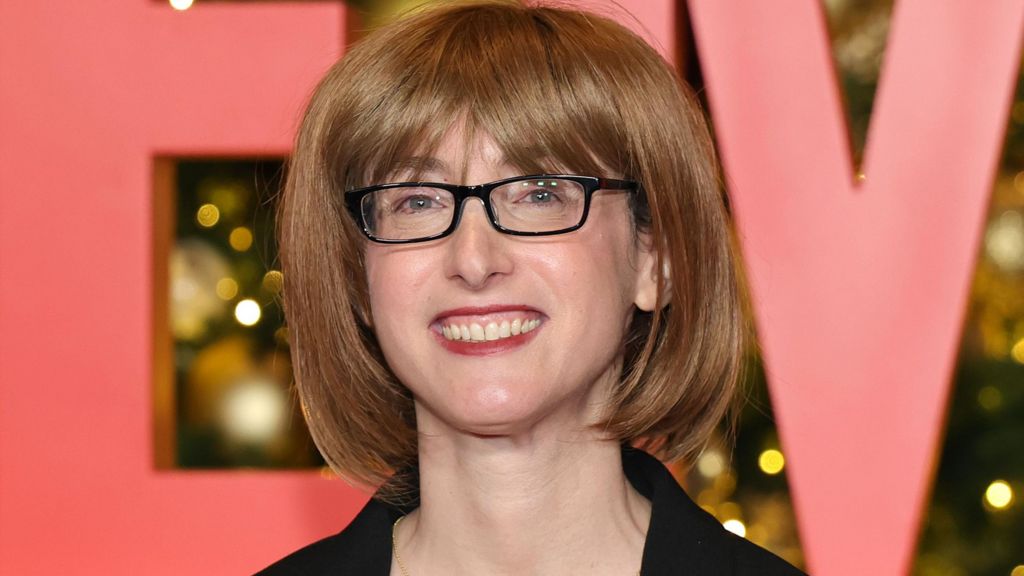
    Addressing one more lingering fan rumor, Cohen clarified that the wig she has worn during all public appearances as Freida McFadden is not an attempt to further hide her identity — it is simply because she has no idea how to style her own hair.

    Even as she reveals her real name, Cohen says she expects her loyal fanbase, who call themselves “McFans” and “Freida Readahs,” to continue connecting with her work under the pen name they know and love. “Even though I haven’t told my real name until now, I feel like I have shared the real me all along and everything I’ve told them has been the truth,” she said. “Even though the name will be a surprise, nothing else will. I’ve always been genuine with my readers.”

  • Thousands of fans gather as BTS launches world tour in South Korea

    Thousands of fans gather as BTS launches world tour in South Korea

    SEOUL, South Korea – Thousands of dedicated BTS fans defied pouring rain Thursday to fill a Seoul-area stadium and witness the K-pop global supergroup officially open their first world tour in nearly four years, marking the band’s full return after all members completed South Korea’s mandatory military service requirements.

    The seven-member ensemble – RM, Jin, Suga, j-hope, Jimin, V and Jung Kook – has prepared a career-spanning performance setlist that pulls from their years of hit records alongside their brand-new fifth studio album *ARIRANG*, the group’s first full release since every member finished their compulsory service. Six of the seven members completed active military duty, while Suga fulfilled his requirement as a social service agent due to a pre-existing shoulder injury; he was the final member to be discharged in June 2025.

    This opening show marks BTS’ first headlining tour stop since their 2021–2022 *Permission to Dance on Stage* tour. Even with steady downpour, the 40,000-capacity venue reached full occupancy, a testament to the unwavering loyalty of the group’s global fanbase, known officially as ARMY. The Seoul tour run is scheduled to continue through April 12, kicking off a global itinerary that includes dozens of shows across the United States, Europe, Asia, North America, South America and Australia. Industry analysts project the tour could generate hundreds of millions of dollars in quarterly revenue, a staggering figure that underscores the band’s enduring commercial power years after their last group performances.

    The stadium launch comes less than one month after BTS first celebrated their full group comeback with a free open-air concert at Seoul’s iconic Gwanghwamun Square, drawing hundreds of thousands of fans from across the globe to the city center. Their new album *ARIRANG*, named for the centuries-old Korean folk song widely considered the unofficial anthem of the Korean peninsula, has already claimed the number one spot on the Billboard 200 album chart, while the record’s lead single “Swim” has also topped the Billboard Hot 100 singles chart.

    For context, South Korea’s mandatory conscription system requires all able-bodied men between the ages of 18 and 28 to complete up to 21 months of military service, a policy designed to maintain national defense readiness amid ongoing tensions with North Korea. The requirement had forced BTS to pause group activities starting in 2022, as members entered service one by one over the following years.

    First debuting in June 2013 under South Korea’s Big Hit Music, BTS – short for Bangtan Sonyeondan, translated as “Bulletproof Boy Scouts” – built their global following gradually. The group launched with the hip-hop focused single album *2 Cool 4 Skool*, released three full-length projects, and earned their first major career momentum with the 2016 album *Wings*. Their global breakthrough arrived in 2017, when their hit single “DNA” became the first track by a Korean boy band to enter the Billboard Hot 100 chart. A subsequent performance at the American Music Awards cemented their international popularity, turning their fanbase ARMY into one of the most engaged and widespread fan communities in the world.

    Following the conclusion of the South Korea shows, BTS will next travel to Tokyo for the next leg of the tour, before continuing on to stops across North America, Europe, South America, and the rest of Asia. The tour is scheduled to wrap in Manila next March, after a run of Australian shows scheduled for early 2027.