分类: entertainment

  • Megan Thee Stallion pulls out of Moulin Rouge show

    Megan Thee Stallion pulls out of Moulin Rouge show

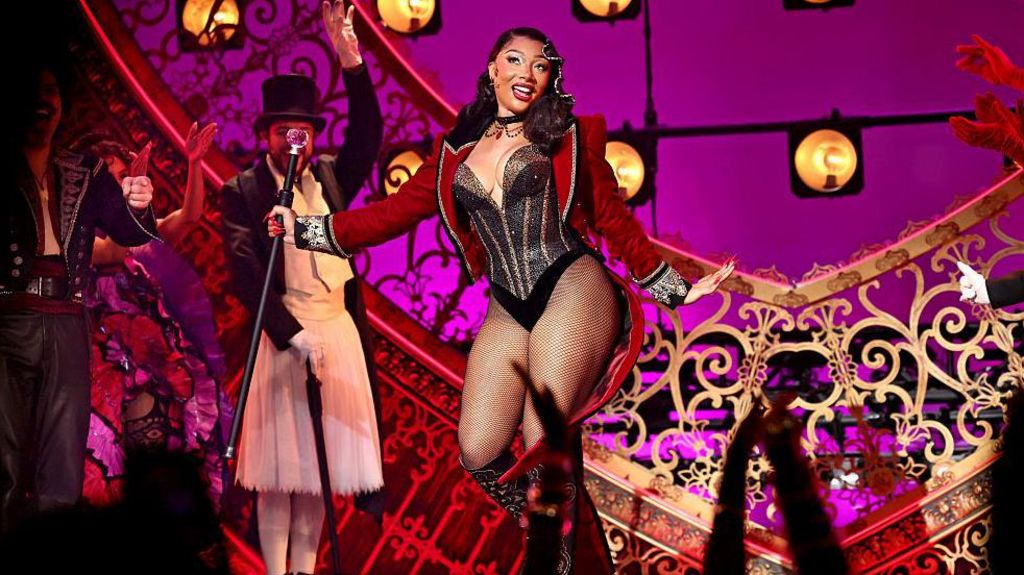
    Grammy-winning rapper Megan Thee Stallion has brought an early close to her highly anticipated Broadway debut, exiting *Moulin Rouge! The Musical* nearly three weeks ahead of her scheduled final performance. The 31-year-old hip-hop star, who made history as the first woman to take on the role of boisterous nightclub impresario Zidler at the Al Hirschfeld Theatre, originally was contracted to remain with the production through May 17. However, she announced via Instagram last week that her closing performance would instead take place on May 1.

    Megan’s sudden early departure comes on the heels of two major disruptive events in her personal life in recent weeks. At the end of March, just weeks after her opening night in the role, the rapper was rushed to a hospital mid-performance after falling ill on stage. At the time, she shared with fans that she had been overextending herself for weeks, running “on empty” until her body ultimately forced her to stop. “I thought I was gonna faint on stage, I really tried to push through my performance but I just couldn’t,” she wrote in a post-show update. “It honestly scared me.”

    More recently, Megan confirmed that she has ended her high-profile relationship with 36-year-old NBA star Klay Thompson. Multiple U.S. media outlets have connected her early exit from the Broadway run to the split, after the rapper posted (and later removed) an Instagram Story that appeared to accuse Thompson of infidelity. Thompson has not yet released any public statement responding to the split or the allegations, and representatives for the athlete have not replied to requests for comment from BBC Newsbeat.

    To date, Megan herself has not shared an explicit reason for cutting her Broadway run short. Both fans and entertainment commentators have speculated that a combination of lingering health concerns from her March medical incident and emotional upheaval from her breakup could have prompted the decision. In her announcement confirming the exit, Megan expressed gratitude for the opportunity to join the Broadway production, saying, “It’s been such an honor to be part of the Moulin Rouge family.”

    During her time with the show, Megan’s casting drew massive mainstream attention and reinvigorated ticket sales for the long-running musical. As documented by *Rolling Stone*, the star’s name drew crowds of onlookers who gathered outside the Al Hirschfeld Theatre daily in hopes of catching a glimpse of her, and devoted fans traveled from across the United States to see her turn as Zidler, a role traditionally performed by male actors. Her performance earned largely positive critical reviews from both theater outlets and hip-hop commentators.

    For long-time followers of the rapper, Megan’s Broadway bow marked another major milestone in a rapid and eventful rise to fame. Born Megan Pete, she first built a grassroots fanbase between 2016 and 2017 with the release of her debut EP *Make It Hot*. She earned her first spot on the Billboard Hot 100 with her 2019 hit *Hot Girl Summer*, before breaking through to global mainstream success in 2020 when her track *Savage* claimed the number one spot on the chart. That single would go on to win the Grammy Award for Best Rap Song in 2021.

    Her career has not been without high-profile personal and legal turmoil, however. In 2022, she took the stand in a widely publicized criminal trial against her former partner, rapper Tory Lanez. Lanez was ultimately found guilty of shooting Megan in the foot during an altercation in 2020, and was sentenced to 10 years in prison.

  • What happened when Rebel Wilson gave evidence in court?

    What happened when Rebel Wilson gave evidence in court?

    Court proceedings have unfolded involving high-profile Hollywood comedian Rebel Wilson, who has been dragged into a legal dispute over alleged defamatory comments brought by Australian counterpart Charlotte MacInnes. As the case moves through the judicial system, all eyes have turned to the witness stand where Wilson has delivered her sworn testimony to answer the accusations leveled against her.

    MacInnes, who works alongside Wilson in the entertainment industry, claims that Wilson made statements that damaged her professional reputation and personal standing, forming the basis of the defamation claim filed against the Pitch Perfect star. Legal analysts note that defamation cases in the entertainment space often hinge on proving whether the comments in question meet the legal criteria for harm, and that the outcome of this case could set quiet precedent for similar celebrity disputes moving forward. At this stage of proceedings, both legal teams have presented their initial arguments, with Wilson’s legal team defending her statements and pushing back against MacInnes’ claims of reputational damage.

  • Prada launches Indian-made sandals after cultural appropriation backlash

    Prada launches Indian-made sandals after cultural appropriation backlash

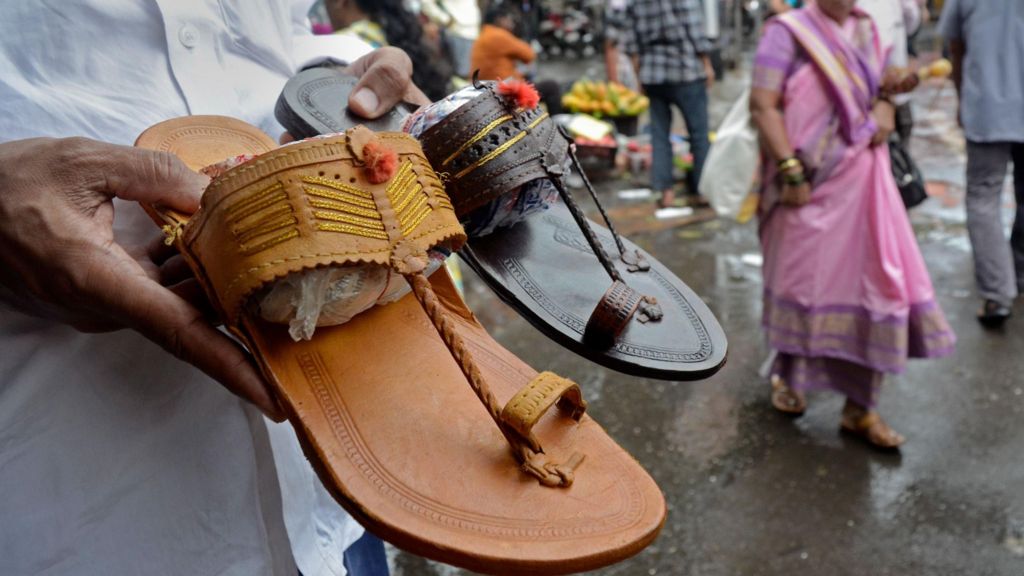
    Nearly 12 months after drawing widespread public criticism for failing to credit the Indian origins of a similar footwear design, Italian luxury fashion house Prada has officially released a limited-edition collection of sandals drawing inspiration from India’s centuries-old traditional Kolhapuri sandal craft.

    Rooted in a craft tradition stretching all the way back to the 12th century, authentic Kolhapuri sandals take their name from Kolhapur, a city in India’s western state of Maharashtra, where the style first emerged. The handcrafted leather footwear, traditionally produced by local artisans across Maharashtra and neighboring Karnataka, earned Geographical Indication (GI) status from the Indian government in 2019, a legal designation that protects the product’s regional authenticity and origin. For decades, mass-produced and authentic traditional versions of the sandals have retailed in local Indian markets for between 500 and 1,000 Indian rupees, equal to roughly $5 to $10. By contrast, Prada’s new luxury iteration carries a retail price of €750, or approximately $881, per pair.

    The controversy that preceded this launch dates back to June 2024, when Prada first unveiled a nearly identical toe-loop sandal design during its Milan Fashion Week presentation. At that time, the brand labeled the item simply as “leather sandals,” making no mention of its connection to the traditional Indian craft, sparking broad backlash across social media and fashion circles over accusations of cultural appropriation. Prada later issued a public acknowledgment confirming the design’s roots in the Indian Kolhapuri tradition.

    For this official commercial release, Prada has emphasized its commitment to centering the original craft and its creators. The company confirms that every pair of the new limited-edition sandals is handcrafted by experienced artisans based in Maharashtra and Karnataka, the traditional home of the craft. The collection is currently available for purchase through 40 Prada retail locations around the world, as well as via the brand’s global e-commerce platform. In a public statement, Prada framed the new line as a deliberate cross-cultural collaboration, noting that the collection “combines traditional techniques with contemporary design and premium materials,” creating what the brand describes as “a dialogue between Indian heritage and modern luxury expression.”

    Beyond the new sandal line, Prada has also announced a multi-year initiative to invest directly in the Kolhapuri artisan community. In partnership with two leading Indian design institutes, the brand is launching a three-year skills training program for artisans working in eight Indian districts with deep ties to Kolhapuri sandal production. The program will deliver six-month structured training modules to a total of 180 participating artisans, with a select group of top participants offered the opportunity to pursue advanced training at the Prada Group Academy based in Italy.

    Lorenzo Bertelli, head of corporate social responsibility for the Prada Group, explained that the core goal of the initiative is to empower local craft communities. “This project aims to support artisans by strengthening skills, preserving traditional knowledge and helping local communities sustain the craft,” Bertelli said. Tanu Kashyap, director general of the National Institute of Fashion Technology — one of the Indian partner organizations for the training program — added that the collaboration will also create new global opportunities for traditional Indian craft. The program will help open access to international luxury markets, raising global awareness of India’s rich handicraft heritage, Kashyap noted.

    The Prada collaboration has reignited long-running debates within the global fashion industry about the ethical use of traditional South Asian crafts by large international luxury brands. For years, designers and cultural heritage advocates have raised concerns that international brands often draw on traditional craft and design motifs from South Asia without providing adequate credit, compensation, or support to the original communities that developed and preserved those practices over generations.

  • Rebel Wilson says claims she bullied women on her film are ‘absolute nonsense’

    Rebel Wilson says claims she bullied women on her film are ‘absolute nonsense’

    One of Hollywood’s most recognizable comedic stars, Rebel Wilson, has forcefully rejected allegations that she bullied female colleagues on the set of her directorial debut, calling the claims “absolute nonsense” during her first day of testimony in a high-stakes defamation trial unfolding in Sydney. The legal action against the *Bridesmaids* actor was brought by 26-year-old Australian performer Charlotte MacInnes, who appeared in Wilson’s first feature film as director, *The Deb*. The case centers on a string of Instagram posts Wilson published between 2024 and 2025 that MacInnes argues have irreparably damaged her professional reputation.

    At the core of the dispute is how MacInnes described a 2023 incident involving producer Amanda Ghost, who also worked on *The Deb*. In her posts, Wilson alleged MacInnes had initially complained of sexual harassment by Ghost during a post-swim encounter at Bondi Beach, only to withdraw the claim to advance her own career. MacInnes vehemently denies ever making a sexual harassment allegation against Ghost, saying Wilson’s version of events is entirely fabricated.

    The incident that sparked the entire conflict dates to September 2023, when MacInnes and Ghost joined for an late-afternoon swim at Sydney’s iconic Bondi Beach. Ghost suffered a sudden and severe allergic reaction to cold water, a rare condition called cold urticaria that left her covered in painful red welts and shaking uncontrollably, the court heard during earlier proceedings. The pair hurried back to Ghost’s nearby beachside apartment, where MacInnes drew a hot bath to help ease Ghost’s symptoms. After Ghost got into a shower to warm up first, MacInnes stepped into the bath to warm herself; Ghost later joined her, and both remained in their swimsuits. Ghost’s assistant eventually brought hot drinks to the bathroom, where the three spoke briefly before the assistant left.

    After the incident, Wilson spoke with MacInnes about what happened, and while both sides agree the conversation took place, they offer vastly conflicting accounts of its content. Wilson maintains MacInnes told her the encounter left her feeling “uncomfortable”, while MacInnes says she only ever described the situation as “weird” and “bizarre”, never indicating she felt sexually threatened or uncomfortable. Text messages presented to the court show Wilson told Ghost immediately after the conversation that “Charlotte says all good” and “She just meant ‘it was a bizarre situation’ not that she personally felt uncomfortable.”

    When cross-examined by Sue Chrysanthou SC, MacInnes’ lead barrister, Wilson was pressed on her public self-identification as a “champion of women” — a label Wilson affirmed she still embraces. Chrysanthou challenged Wilson on this stance, pointing to accusations that the actor had publicly and privately mistreated MacInnes, Ghost, and a female writer on the set of *The Deb. “That’s absolute nonsense,” Wilson told the packed courtroom, which was filled with reporters, supporters from both sides, and multiple witnesses including Ghost. Wilson also pushed back on claims that her critical public social media posts about the women constituted mistreatment, arguing the statements were truthful, not malicious.

    Throughout hours of questioning, Wilson repeatedly said she could not recall key details related to the case, including widespread backlash she received in 2018 after claiming she was the “first ever plus-sized girl” to lead a romantic comedy. She also denied any involvement in anonymous websites that have spread damaging rumors about both Ghost and MacInnes. Prosecutors have previously alleged Wilson hired a U.S. public relations firm to create websites that compared Ghost to disgraced sex trafficker Ghislaine Maxwell, who is currently serving a 20-year prison sentence for her role in Jeffrey Epstein’s criminal ring. Prosecutors have also raised the issue of a nude photo of MacInnes that was leaked online after her social media accounts were hacked, though no link between Wilson and the hack has been proven in court.

    Wilson’s legal team has argued MacInnes has not suffered any professional harm from the Instagram posts, pointing instead to a string of career advances she has secured since the posts were published: MacInnes recently signed a record deal with major label Atlantic Records and landed a role in a new U.S. theater production being produced by Ghost. MacInnes is seeking aggravated damages for the alleged defamation and a court order to stop Wilson from repeating the claims on any public platform.

    Wilson’s testimony is scheduled to continue on Wednesday, as the high-profile trial progresses through Sydney’s court system.

  • Philippine museum brings deadly, lucrative galleon trade to life

    Philippine museum brings deadly, lucrative galleon trade to life

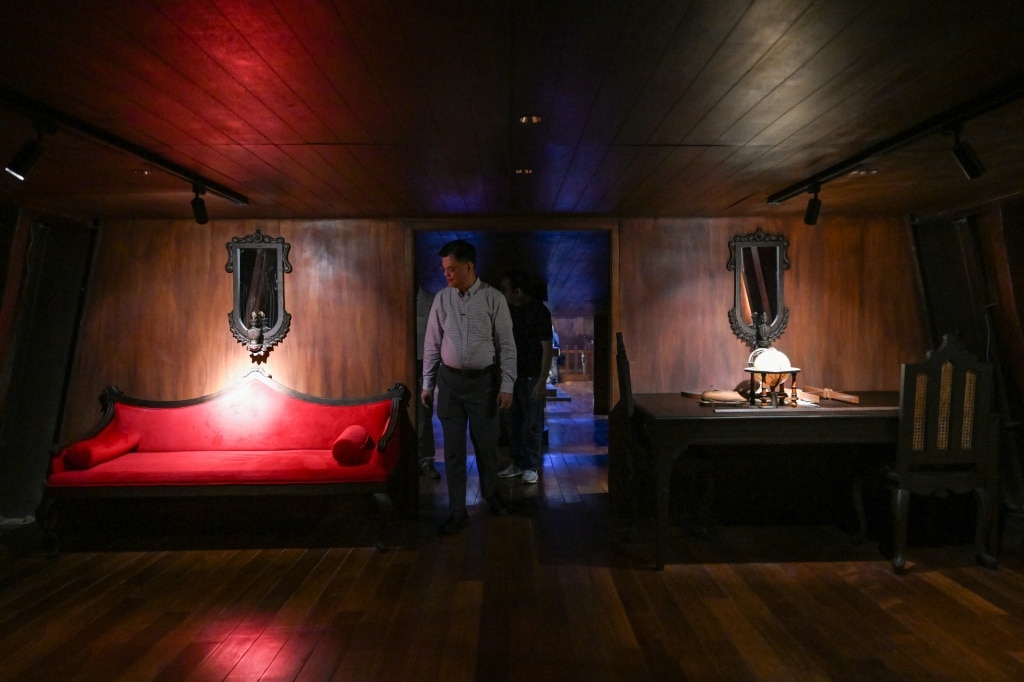
    Manila, Philippines – A striking new cultural landmark has opened on the shores of Manila Bay, inviting visitors to step back into one of the most transformative yet under-told chapters of global history: the 250-year era of Spanish Pacific galleon trade. At the heart of the newly opened Museo del Galeon sits a full-scale, meticulously crafted replica of the *Espiritu Santo*, a 17th-century galleon that once plied the deadly trade route connecting Manila, Acapulco, and Spain.

    Unlike many historical accounts of the galleon trade that center on European colonial powers, this new museum deliberately frames the story through the experiences of the Filipino people who built, crewed, and suffered under the colonial enterprise. From 1565 to 1815, 181 galleons completed hundreds of trans-Pacific crossings, forging the first sustained interconnected trade network linking Asia, the Americas, and Europe – a milestone many historians recognize as the dawn of early modern globalization. The *Espiritu Santo*, constructed with forced Filipino labor in 1603, was one of the most formidable vessels of its era.

    Manuel Quezon, the museum’s executive director and a noted historian, emphasizes that the institution does not shy away from the brutal human and environmental cost of the galleon trade. For centuries, Spanish colonial authorities required able-bodied Filipino men to complete 40 days of unpaid forced labor annually felling old-growth hardwoods and constructing the massive ships. Many others were conscripted to serve as crew for voyages that could last more than a year, with death tolls averaging one out of every three sailors per crossing.

    Cramped, overcrowded hulls loaded with luxury cargo left crewmembers surviving on a meager, often rotten diet of hardtack, spoiled salted meat, and rotting fish. Disease and starvation were rampant, and deadly uprisings against the exploitative system broke out across multiple shipbuilding sites, including the Cavite coast near Manila. Even as the trade reshaped global commerce and introduced new foods, religions, cultural practices, and ideas to the Philippines that shape modern Filipino identity today, it left a trail of environmental destruction, decimating local old-growth forests and shattering Indigenous communities.

    “It was the first global trade, connecting three continents. It made the world smaller,” explained Francis Navarro, archives director at Manila’s Ateneo de Manila University, of the trade’s historical significance. Quezon added that the long legacy of Filipino seafaring persists to this day: Filipinos still make up one quarter of the world’s merchant sailors, a tradition rooted in the exploitative galleon era that has never been fully highlighted in mainstream historical narratives.

    After 14 years of planning and development, the museum opened its doors to the public on May 1. Visitors can walk the decks of the replica *Espiritu Santo*, surround by immersive, wraparound LED displays that recreate the open Pacific skies. Artifacts recovered from actual galleon wrecks line the surrounding exhibit halls, including a fragment of a Chinese tomb stone once used as ballast in a 17th-century ship’s hold.

    The $16.5 million (billion-peso) project ultimately secured funding from some of the Philippines’ wealthiest families after attempts to secure government financing and support from a Mexican billionaire fell through. Unlike the original *Espiritu Santo*, the modern replica is not built from native hardwood – a choice made out of environmental responsibility. The original 1,000-ton galleon required 800 mature old-growth water-resistant hardwood trees, a stock that has been completely wiped out in the Philippines due to centuries of unsustainable logging for shipbuilding. Today, those trees can only be found in remote Myanmar forests, and clearing that many ancient trees to build a static display would have been unethical, Quezon explained. Instead, the replica was constructed from fiberglass and other synthetic materials while remaining scrupulously accurate to the original ship’s design and dimensions.

    Quezon notes that the museum fills a critical gap in Philippine historical memory. “We’re filling the blanks in with this museum,” he said during a pre-opening tour. “The child who comes through, we want them to realise that many of the things that they take for granted have absolutely amazing stories behind them.”

  • Taylor Swift files to trademark her voice amid AI clone boom

    Taylor Swift files to trademark her voice amid AI clone boom

    As artificial intelligence cloning technology grows more accessible and unregulated, global pop superstar Taylor Swift has taken official steps to shield her distinctive voice from unauthorized exploitation, joining a small but growing group of high-profile creators fighting to protect their intellectual property in the AI age.

    Swift has filed two trademark applications with the United States Patent and Trademark Office (USPTO) centered on her voice, according to filings first uncovered by intellectual property attorney Josh Gerben. The submissions include two separate sound recordings that each open with the singer’s recognizable greeting “Hey, it’s Taylor” before promoting her recently released October album *The Life of a Showgirl*. A third filing submitted Friday includes an official promotional photograph of Swift performing on stage. No additional details about the scope of the requested trademark protections have been made public in the filings, and Swift’s publicist did not immediately provide comment when reached by Agence France-Presse.

    Swift’s move mirrors a similar step taken by Academy Award-winning actor Matthew McConaughey in recent years, who filed his own USPTO application to protect his voice from unauthorized AI replication. McConaughey’s filings include audio of two of his most iconic lines: the oft-quoted “Alright, alright, alright!” from his 1993 breakout role in *Dazed and Confused*, as well as his personal mantra “Just keep livin’, right?” alongside a collection of other short signature phrases.

    The growing push for voice protection from A-list creators comes as rapid advances in generative AI have drastically lowered the barrier to creating convincing deepfake vocal clones. Where replicating a person’s voice once required hours of source recordings and days of processing, modern AI models can generate a nearly indistinguishable synthetic voice from a 30-second clip in mere seconds.

    This technological leap has sparked widespread anxiety among performers and creators, who warn that unregulated AI can duplicate their voice and likeness for unauthorized commercial use, scams, or deepfake content without any compensation or consent. In response, a handful of U.S. state legislatures have begun updating privacy and intellectual property laws to address the gap. Most existing state laws only ban malicious or for-profit unauthorized use, but a small number of regions have adopted broader protections — most notably Tennessee’s 2024 ELVIS Act, named for music icon Elvis Presley, which extends sweeping intellectual property protections to creators’ likenesses and voices.

    To date, legal action by performers against unauthorized AI cloning remains relatively rare. The highest-profile case came in 2023, when A-list actor Scarlett Johansson filed a lawsuit against the developer of the Lisa AI app. Johansson alleged the app created an unauthorized AI avatar matching her likeness to use in a commercial advertisement without her permission or compensation.

  • Man pleads guilty to murder 2 decades after death of Run DMC’s Jam Master Jay

    Man pleads guilty to murder 2 decades after death of Run DMC’s Jam Master Jay

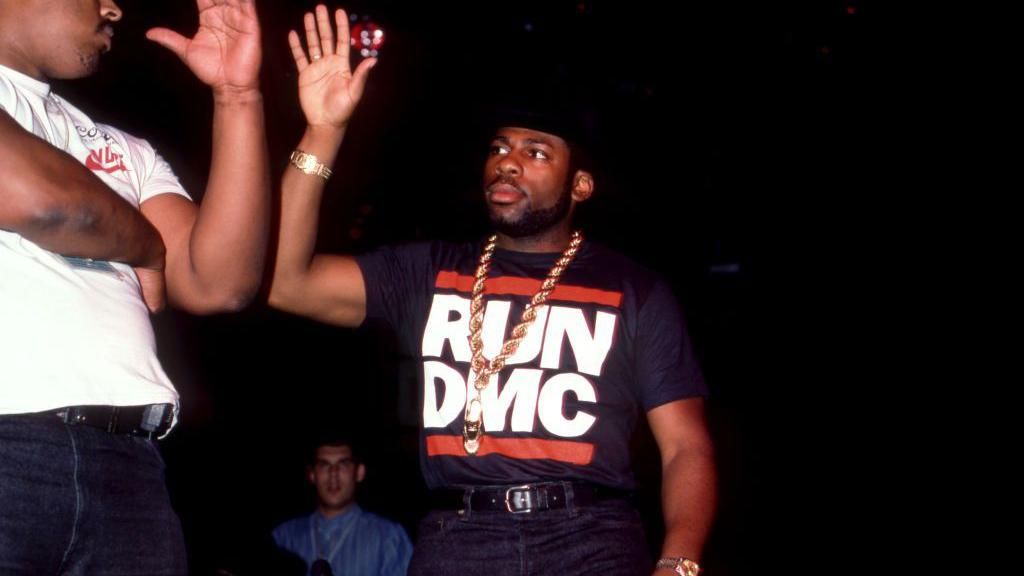
    It has been 21 years since one of hip-hop’s most iconic pioneers was gunned down in a Queens recording studio, and the long-running legal saga over his killing has taken a major turn. On Monday, 52-year-old Jay Bryant entered a guilty plea to a murder charge in connection with the 2002 ambush shooting of Jason “Jam Master Jay” Mizell, the legendary DJ of groundbreaking rap group Run-DMC.

    Bryant’s plea reversal marks a major development in a case that stumped investigators for nearly two decades. According to court proceedings, Bryant admitted to federal magistrates in New York that he aided the two co-defendants who planned the killing by helping them sneak into the studio building undetected. Prosecutors allege Bryant unlocked a back fire door to let the gunmen enter, avoiding the standard studio buzz-in system that would have alerted Mizell to their arrival. Crucially, Bryant acknowledged he knew the pair intended to use a gun to kill the 37-year-old rapper that day, and he issued an apology in court, per US media reports. He stopped short of naming any additional co-conspirators in the killing.

    DNA evidence linked Bryant to the crime scene: investigators found his genetic profile on a hat left inside the recording studio shortly after the shooting. Bryant originally pleaded not guilty when he was formally indicted in 2023, and court documents filed late last week were the first public signal that he planned to reverse his plea as part of an ongoing negotiation deal with federal prosecutors.

    The killing of Jam Master Jay has a tangled procedural history. In 2002, Mizell was shot in the head inside his Queens recording studio, a killing that sent immediate shockwaves through the global music industry. As a founding member of Run-DMC — the genre-shaping group that produced 1980s hits including *It’s Tricky*, *It’s Like That*, and the genre-bending Aerosmith collaboration *Walk This Way* that brought hip-hop to mainstream American audiences — Mizell’s death cut short a transformative career and pushed the iconic group to disband. The case went cold for nearly 20 years, before federal prosecutors finally brought charges against three men: Bryant, Mizell’s godson Karl Jordan Jr., and Mizell’s childhood friend Ronald Washington.

    In 2024, both Jordan and Washington were convicted of murder by a jury. Prosecutors argued the pair planned the “execution-style” killing as an act of revenge, after Mizell cut them out of a nearly $200,000 drug deal, framing the murder as driven by greed and vengeance. Both men have always denied any involvement in the killing. Last year, a judge threw out Jordan’s conviction, ruling that prosecutors had failed to sufficiently prove the alleged motive that was central to their case. Washington has also filed a legal challenge to overturn his own conviction.

    Bryant, who was accused of acting solely as an accomplice to Jordan and Washington, now faces a sentence of 15 to 20 years in prison. This sentence accounts for both the murder charge and separate, unrelated weapons and drug offenses he is also charged with. Hip-hop communities and music industry observers have continued to follow the case closely for decades, as the slow unraveling of the 20-year-old mystery brings the closest thing to closure for Mizell’s legacy, 21 years after his sudden death.

  • Construction of the stage for Shakira’s concert in Brazil resumes after worker’s death

    Construction of the stage for Shakira’s concert in Brazil resumes after worker’s death

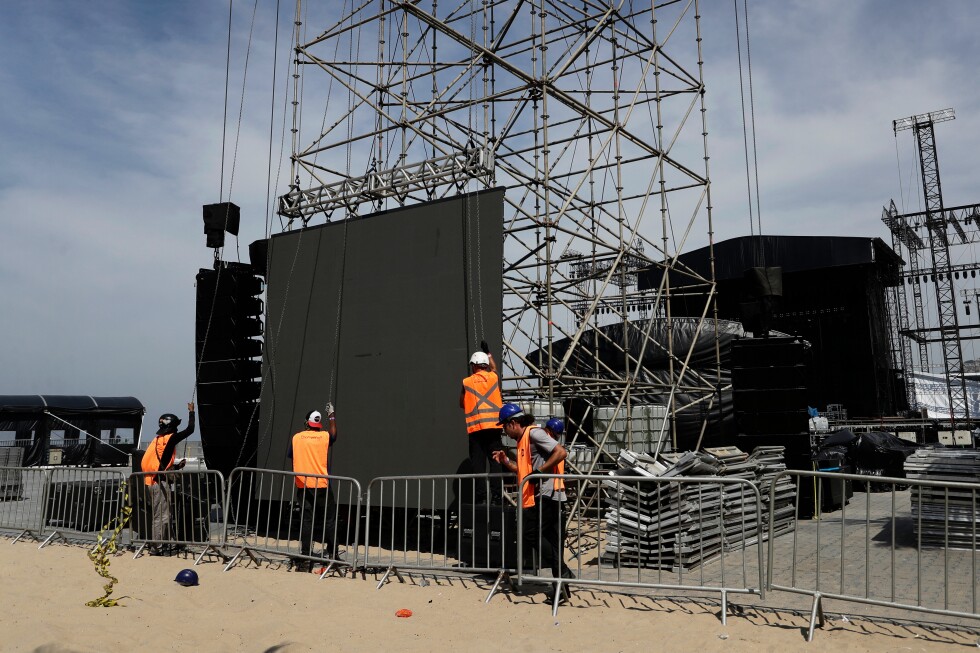
    RIO DE JANEIRO — Construction work on the concert stage for global pop icon Shakira’s upcoming performance at Rio de Janeiro’s iconic Copacabana Beach has restarted, just one day after a fatal on-site accident forced a temporary halt to preparations. The 28-year-old victim, locksmith Gabriel de Jesus Firmino, was killed Sunday when he was crushed between two moving stage elevators after the equipment was mistakenly activated by another construction worker, law enforcement officials confirmed.

    Local lead investigator Ângelo Lenges confirmed that the Brazilian construction company contracted to build the open-air stage is now the subject of an official probe, with investigators focusing on allegations that the firm failed to meet mandatory Brazilian workplace safety standards. As of Tuesday, the boundary-breaking Colombian superstar, who is wrapping her first global tour in six years, has not issued any public statement regarding the tragedy.

    Shakira’s free concert, scheduled for next Saturday evening on Copacabana’s world-famous shoreline, is expected to draw a massive crowd, following in the footsteps of Lady Gaga’s 2023 free performance that brought more than 2 million fans to the beach in what became the largest show of her career. This stop will cap off the singer’s first world tour since 2018, a run that has broken multiple attendance records across the globe.

    Public reaction to the accident among Rio residents and beach visitors has been marked by grief for the victim combined with broad support for keeping the concert on its original calendar. Walking along the beach near the construction zone Monday morning, 41-year-old local singer Anita Costa shared a common sentiment. “It is a sad thing that this happened,” she told reporters. “But the concert should go on.”

    Concert organizers have released an official statement extending their condolences and solidarity to the construction firm, its on-site staff, and the family of Firmino, who lost his life in the lead-up to the event. The Associated Press continues to cover developments across Latin America and the Caribbean, with full coverage available on its dedicated regional hub.

  • East Meets West: Learn Baduanjin

    East Meets West: Learn Baduanjin

    Nestled within the historic Seventy-Two Sages Corridor at Nishan Sacred Land — the birthplace of Confucianism in Qufu, Shandong Province — a captivating cross-cultural exchange unfolded recently as two international social media influencers tried their hand at one of China’s most enduring traditional wellness practices. Chaimaa Souhail, a content creator hailing from Morocco, and Alonzi Quentin, a French digital creator, stepped onto the sacred grounds to learn and practice Baduanjin, the centuries-old Chinese mind-body exercise rooted in traditional Chinese health philosophy.

    As the pair moved through Baduanjin’s eight signature sections of slow, intentional movements, their practiced, graceful coordination blended seamlessly with the tranquil, culturally rich surroundings of the site. What emerged was more than just a wellness demonstration: it was a living fusion of centuries-old Eastern wellness wisdom and global cultural curiosity, bridging geographic and cultural divides through a shared interest in traditional practices.

    The moment, captured in on-site photos, highlights the growing global interest in Chinese traditional wellness practices, as cultural exchanges like this turn local heritage into a shared global experience. Located in the heart of China’s cradle of Confucian culture, Nishan Sacred Land provided the perfect backdrop for this cross-cultural encounter, tying together the legacy of Chinese philosophical thought and the living tradition of traditional Chinese health cultivation.

  • Huangshan: Where heritage, natural charm and wellness converge

    Huangshan: Where heritage, natural charm and wellness converge

    Tucked away in the southern tip of East China’s Anhui Province, the city of Huangshan stands as a breathtaking fusion of millennia-old cultural heritage, unparalleled natural beauty, and time-honored holistic wellness traditions. Far more than just the home of the iconic Yellow Mountain peaks that draw global visitors each year, this region weaves together human history, artisanal craft, fertile land, and wellness practices into a one-of-a-kind travel experience that highlights the deep harmony between people and the natural world.

    One of the most immersive windows into Huangshan’s living history is Tunxi Old Street, a centuries-old commercial hub that retains all the bustle and charm of its golden age. As visitors step onto the uneven cobblestones that have been worn smooth by generations of footsteps, they are surrounded by traditional wooden archways and century-old storefronts that once hosted silk and tea merchants traveling along ancient trade routes. The air here is thick with the inviting scents of local Anhui cuisine: savory braised chicken simmered for hours, the bold, distinctive aroma of stinky mandarin fish, a beloved local specialty, and the sweet, floral fragrance of freshly baked osmanthus pastries.

    Beyond its food offerings, Tunxi Old Street is a living repository of Huangshan’s world-famous traditional craftsmanship. Most notable among these are the ink stones carved from unique stone deposits in nearby Shexian County. For centuries, these ink stones have been prized not just as essential tools for Chinese calligraphy and ink painting, but also as intricate collectible works of art. Learning the painstaking, detail-oriented process of crafting these ink stones offers a deep look into the region’s centuries-long commitment to preserving traditional artistry.

    Neighboring storefronts along the old street also showcase exquisitely crafted Huangshan lacquerware, adorned with intricate hand-carved patterns and glossy, durable finishes that reflect hundreds of years of refined craftsmanship. These handcrafted pieces are far more than generic travel souvenirs; they carry the intangible cultural spirit that has been passed down through generations of local artisans.

    Huangshan’s natural bounty extends far beyond its dramatic mountain landscapes. Mist-shrouded terraced plantations spread across the region’s hillsides, producing some of the most revered teas in the world. Iconic varieties including Huangshan Maofeng green tea and Qimen black tea, also known as Keemun, draw tea connoisseurs from across the globe, drawn by their delicate flavors and the generations of cultivation knowledge that go into every harvest. For international visitors like British journalist Joe Burns, who tried traditional Chinese pulse diagnosis at Huangshan’s Xin’an Wellness Center during an April 22 visit, the region offers more than scenic views — it offers a chance to experience holistic wellness traditions rooted in thousands of years of Chinese medicine.

    For travelers seeking an experience that blends history, natural beauty, culture, and relaxation, Huangshan emerges as a standout destination that captures the very best of China’s diverse cultural and natural heritage.