分类: entertainment

  • Marilyn Monroe’s jewellery, dresses and letters auctioned for her 100th birthday

    Marilyn Monroe’s jewellery, dresses and letters auctioned for her 100th birthday

    To mark what would have been the 100th birthday of one of Hollywood’s most enduring and iconic stars, hundreds of Marilyn Monroe’s personal belongings — ranging from her fine jewelry and beloved everyday dresses to intimate handwritten letters — have been put up for public auction at a venue in California.

    Monroe, who transformed from a troubled young model into a global cultural phenomenon in the mid-20th century, still captivates public imagination decades after her tragic death in 1962. This special centenary auction has drawn intense interest from entertainment memorabilia collectors, Marilyn superfans, and investment buyers from across the globe, all eager to own a one-of-a-kind piece of the star’s personal history.

    Each item up for bid carries unique glimpses into Monroe’s private life, far from the glitz and glamour of her on-screen persona. The jewelry collection includes pieces she wore regularly off-camera, while the wardrobe lots feature casual dresses and undergarments that offer a rare unpolished look at the star. Her personal letters, written in her own hand, contain unfiltered thoughts about her career, relationships, and inner struggles — content that has not been widely shared publicly before the auction.

    Auction organizers note that the event is timed intentionally to coincide with the 100th anniversary of Monroe’s birth, turning the sale into a celebration of her lasting legacy as a cultural figure. Unlike some celebrity auctions that focus only on high-profile red carpet items, this sale prioritizes personal possessions that highlight the human side of the world-famous star, attracting a new generation of fans who continue to find resonance in Monroe’s story decades after her passing.

  • Oscar-nominated Persepolis author Marjane Satrapi dies aged 56

    Oscar-nominated Persepolis author Marjane Satrapi dies aged 56

    Marjane Satrapi, the trailblazing French-Iranian graphic novelist, filmmaker, and activist whose semi-autobiographical masterpiece *Persepolis* captivated readers and audiences across the globe, has died at the age of 56. France’s Élysée Palace, the official residence of the French president, has officially confirmed the passing.

    Hailing Satrapi as a towering icon of French cultural life and an unwavering advocate for artistic freedom, the palace highlighted that her work carried a universally resonant message that earned her extraordinary international acclaim. A close source from her inner circle told French news agency AFP that Satrapi’s death came roughly 15 months after the passing of her beloved husband Mattias Ripa, a Swedish producer, actor, and screenwriter. The source described her death as a passing “of sadness” following the loss of her life partner.

    Born and raised in Tehran during the upheaval of the 1979 Islamic Revolution, Satrapi drew deeply from her own life to craft *Persepolis*, which first hit bookshelves in 2000. The groundbreaking graphic novel traces the coming-of-age of a young girl navigating shifting social and political tides after the revolution, chronicling her early years of resistance to new Islamic regime rules before her parents sent her to exile in Europe for safety. Eight years after its publication, Satrapi co-directed the animated film adaptation of *Persepolis*, which earned an Academy Award nomination for Best Animated Feature. The film cast Chiara Mastroianni as the young Marjane and Catherine Deneuve as her mother, cementing the story’s place in global popular culture.

    In a statement posted to X, Studio Canal UK paid tribute to Satrapi, remembering her as a brilliant and extraordinary artist. The studio noted that through her deeply intimate and politically sharp work, Satrapi delivered a timeless story of identity, freedom, exile, and resistance that still resonates deeply with audiences worldwide decades after its release.

    Satrapi’s life trajectory reflected the disruptions and resilience that shaped her work. As a teenager, she moved to Austria to study for four years at the renowned Lycée Français de Vienne, before returning to Tehran after a severe case of bronchitis. Upon her return, she found a drastically altered city, a experience captured in the second installment of the *Persepolis* series. She went on to earn a master’s degree in visual communication from Tehran’s Islamic Azad University, and after a short early marriage that ended in divorce, her parents encouraged her to resettle in Europe permanently. She moved to France to continue her artistic training at the Haute École des Arts du Rhin in Strasbourg, and became a naturalized French citizen in 2006 after more than a decade of living in the country. Just last year, she made headlines when she declined France’s prestigious Legion of Honor, the country’s highest order of merit, citing what she called the “hypocrisy” of her adopted nation’s diplomatic dealings with her home country Iran.

    A relentless, outspoken critic of the Iranian government, Satrapi remained actively engaged in pro-freedom protests supporting Iranian citizens for decades. In the wake of the 2022 “Woman, Life, Freedom” protests that erupted across Iran over mandatory hijab rules, Satrapi told outlet *Deadline* that her own parents had marched in the streets opposing the same mandate as early as 1983. She recalled her father, one of the few men to join that early demonstration, and reflected that the fight for women’s rights is a fight for the rights of all society. Over her decades of activism, Satrapi said she had faced repeated threats and smears from the Iranian regime, which labeled her a liar and a spy for her work. “It’s not that you don’t feel fear; you feel the fear, but then you decide whether you care about it or not,” she once said. “It’s not that I’m fearless or careless but there are kids in my country who are being shot and they are 17 years old, while I have lived for more than half a century.”

    In 2023, Satrapi led a high-profile demonstration outside the Iranian Embassy in Paris in solidarity with five teenage girls from Tehran who were arrested after posting a TikTok video of themselves dancing to the hit song “Calm Down” by Rema and Selena Gomez. Of her activism, she said at the time: “We artists must be humble but doing nothing is worse, being indifferent is worse. I don’t think what I’m doing is huge or immense but I have a voice, I have a face and I’m known in France, I’m just doing what I have to do.”

    Beyond her defining work *Persepolis*, Satrapi built a diverse body of creative work across graphic novels and film. Her other graphic novels include *Embroideries* and *Woman, Life, Freedom*. As a filmmaker, she directed a range of projects across genres: the 2011 feature *Poulet aux Prunes*, the 2012 documentary *La Bande des Jotas*, the 2014 dark horror comedy *The Voices* starring Ryan Reynolds as a schizophrenic factory worker undone by hallucinatory urges, and the 2019 biographical drama *Radioactive*, which told the story of pioneering Polish-French scientist Marie Curie.

    In the months after Ripa’s 2024 death, Satrapi shared a series of emotional, heartfelt posts on her Instagram account writing, “For I Lost the love of my life,” marking her public grief over the loss of her partner.

  • ‘Nothing left to chance’ for Bayeux Tapestry’s journey to London

    ‘Nothing left to chance’ for Bayeux Tapestry’s journey to London

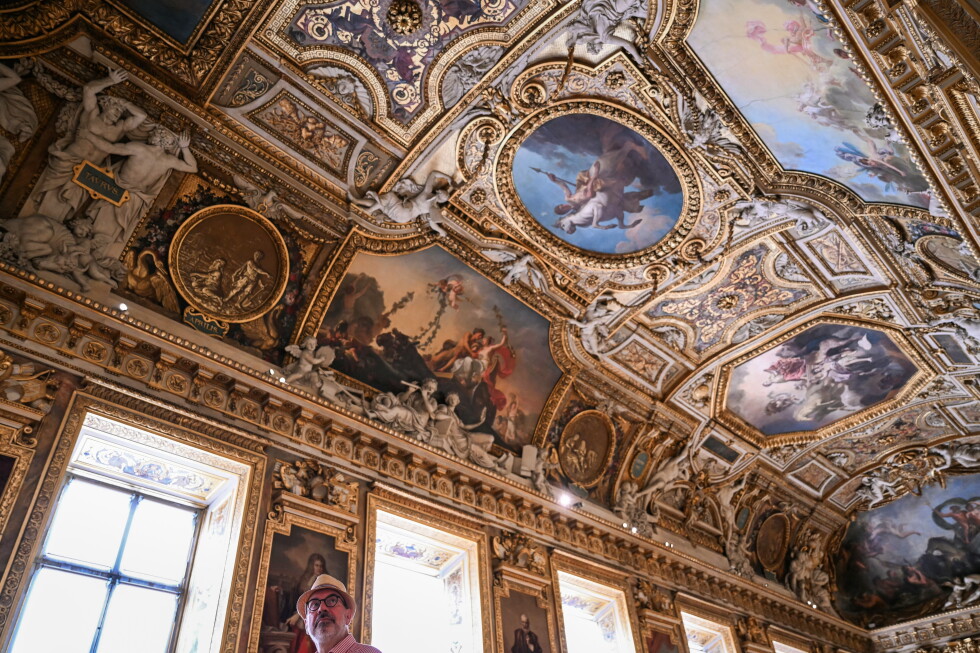
    Nearly a millennium after it was stitched to recount one of the most transformative events in European history, the 950-year-old Bayeux Tapestry is preparing for only its third departure from its long-term home in the French town of Bayeux, for a nine-month unprecedented exhibition at London’s British Museum next month. As one of the most culturally significant medieval artifacts in existence, the embroidery’s cross-Channel journey has sparked heated debate across France’s art and heritage communities, with many critics warning the fragile 70-meter work is too precious and delicate to survive the 560-kilometer trip.

    But French cultural authorities say years of rigorous planning and testing have eliminated all major risks, positioning the tapestry for a safe journey that will be as gentle as rocking a cradle. Delphine Christophe, head of heritage and architecture at France’s Ministry of Culture, says she has full confidence in the transport plan: “I am extremely serene. Nothing has been left to chance.”

    The complex transport system, designed to eliminate vibration and shock damage, relies on a multi-layered protective setup. After being carefully removed from its permanent Bayeux display last September by a team of 90 specialists and mounted to a custom collapsible folding stand at an undisclosed secure location, the tapestry will be moved to London in a climate-controlled aluminum inner crate that regulates temperature and humidity. This crate will then be placed inside a rigid outer shell, fitted with 12 metal shock-absorbing springs above and below the inner container. The entire assembly will be transported by heavy goods vehicle, which will then cross the Channel via the Eurotunnel shuttle.

    Cecilia Gauvin, a leading art conservation expert, explained the innovative mechanics of the protective system: “The idea is that the vertical shocks which will occur are transformed into horizontal shocks, causing the inner crate to rock to and fro like a baby in a cradle.” Two full dry runs with a full-size facsimile of the tapestry, completed in February and April, found the system absorbs 96% of all road and rail vibrations, reducing movement to the same level that artworks experience during routine display in a museum. Kerstin Kracht, a vibration reduction specialist, noted that even static museum displays are subject to minor vibrations from visitor foot traffic, so the tapestry will experience no more stress during transit than it would standing still in Bayeux. While teams found UK roads have slightly more uneven surfaces and potholes than French routes, the difference was not large enough to disrupt the carefully calibrated safety calculations.

    The exact date of the journey remains undisclosed for security reasons, with transport scheduled to take place sometime in July. Once it arrives at the British Museum, the tapestry will be unpacked with the same level of careful manpower used to store it in Bayeux, and displayed flat rather than vertically for the duration of the nine-month exhibition.

    Despite the extensive testing and planning, skepticism remains among some French heritage specialists. Didier Rykner, a prominent French arts journalist and heritage commentator, has questioned both the safety and the motivation for the journey, pointing to unforeseen risks: “What happens if there is a problem in the tunnel and the lorry gets stuck there? These technical reports they have produced are meaningless – they’re just there to justify the political decision that’s already been taken.”

    The historic loan, which has been requested by successive UK governments for decades, was first announced by French President Emmanuel Macron in 2025, with an explicit political goal: strengthening post-Brexit Franco-British relations at a time of growing global instability. As a reciprocal gesture, the UK will loan a collection of iconic medieval artifacts to Normandy museums, including the 12th-century Lewis chessmen and Anglo-Saxon treasures from the famous Sutton Hoo burial mound. The exhibition comes ahead of 2027, when Normandy will mark the 1,000th anniversary of the birth of William the Conqueror, the Norman leader whose 1066 conquest of England is the tapestry’s central subject.

    For context, the Bayeux Tapestry is technically an embroidered linen work, not a woven tapestry, created in the years immediately following the 1066 Norman Conquest to illustrate the lead-up to the Battle of Hastings. It was housed in Bayeux Cathedral for centuries, only rediscovered in the 1700s, and has left Bayeux just twice before: once in 1803, when Napoleon brought it to Paris to use as propaganda for his planned invasion of Britain, and again during World War Two, when it was moved to Paris for safekeeping.

  • Iranian-French cartoonist and filmmaker Marjane Satrapi has died at 56

    Iranian-French cartoonist and filmmaker Marjane Satrapi has died at 56

    PARIS (AP) – The global art and cultural community is mourning the loss of Marjane Satrapi, the celebrated Iranian-French cartoonist, filmmaker, and outspoken women’s rights advocate, who passed away at the age of 56, the French presidency confirmed in an official statement released Thursday. In the official announcement, the presidency remembered Satrapi as a defining voice of contemporary French culture, an artist unwaveringly committed to the cause of freedom whose work carried a universal resonance that earned her widespread acclaim across the world. President Emmanuel Macron and First Lady Brigitte Macron paid tribute to Satrapi’s extraordinary legacy, noting that she turned her deeply personal experience of growing up in Iran into a story that resonated with audiences across every border.

    Close sources to the artist told French media outlets including broadcaster BFM TV that Satrapi’s death comes just over a year after the passing of her husband, Mattias Ripa, a Swedish film producer and actor, with reports indicating she never recovered from the grief of losing her life partner.

    The French Academy of Fine Arts, which counted Satrapi among its elected members, shared a heartfelt message of mourning on social media, honoring her as a passionate champion for cinema and film education. Earlier this year, Satrapi launched a dedicated foundation to support international film students coming to Paris to pursue their studies.

    Satrapi’s most iconic work remains *Persepolis*, the black-and-white autobiographical graphic novel that she later adapted into an acclaimed feature film. The coming-of-age narrative is set against the turbulent upheaval of the 1979 Islamic Revolution in her native Iran, tracing her journey as a strong-willed young woman growing up in a family of leftist intellectuals. The film earned the prestigious Film Critics Grand Prix at the 2007 Cannes Film Festival, the César Award for Best Adapted Screenplay in 2008, and a nomination for Best Animated Feature at the 2008 Academy Awards.

    In a 2007 interview with the Associated Press at Cannes, Satrapi explained that *Persepolis* was crafted to challenge harmful stereotypes about Iranians. “What we wanted to say is, if these people scare you, look closer: They have parents, they have lovers, they have hope, they have stories,” she said. At the time, Iranian authorities formally protested the film’s selection for the Cannes program, sending an official letter of objection to the French Embassy in Tehran.

    Born in Rasht, Iran, in November 1969, Satrapi was sent by her parents to Vienna, Austria, to complete her secondary education in 1983, as rising religious extremism following the 1979 revolution made life increasingly unsafe for her family. After struggling to adapt to life in Austria and grieving the distance from her family, she returned to Iran in 1989 to enroll at Tehran University, where she earned a degree in visual communications. Upon graduating, she made the decision to build her life abroad, relocating to France in 1994. She studied in Strasbourg before settling permanently in Paris, the city that would become her creative home for the rest of her life.

    Beyond *Persepolis*, Satrapi built an extensive body of work, including the graphic novels *Embroideries* and *Chicken with Plums*, the latter of which was also adapted into a feature film. As a director, her credits include *The Gang of Jotas* and *Radioactive*, a biographical drama about pioneering Polish physicist Marie Curie.

    A lifelong advocate for democratic change and women’s rights in Iran, Satrapi co-ordinated the 2023 collection *Woman, Life, Freedom*, created alongside a collective of artists and academics to document the nationwide protests that erupted across Iran following the 2022 death of Mahsa Amini in the custody of Iran’s morality police. According to Satrapi’s foundation, the book is a sharp rebuke of systemic repression and human rights abuses against Iranian women and society at the hands of the Iranian government.

    Satrapi’s career was marked by consistent recognition for both her art and her activism: she was elected to the French Academy of Fine Arts in 2024, and that same year she was awarded Spain’s Princess of Asturias Foundation Award for Communication and Humanities. The award committee described her as “an essential voice in the defense of human rights and freedom” and “a symbol of civic engagement led by women.” When France offered her the Legion of Honor, the country’s highest civilian award, in 2025, Satrapi declined the honor, arguing that the French government was not doing enough to support Iranians fighting for democratic reform. In a January 2025 letter to French authorities, she wrote, “Supporting the women’s revolution in Iran cannot be reduced to photos or speeches. When people are fighting for democracy, we should support them.”

    Ripa, Satrapi’s husband, died in April 2024 at the age of 53. In a post shared to her Instagram account after his passing, Satrapi wrote simply, “Because I have lost the love of my life.”

  • Artists threaten legal action against Venice Biennale over inclusion in visitors’ ballot

    Artists threaten legal action against Venice Biennale over inclusion in visitors’ ballot

    The 2025 edition of the Venice Biennale, one of the world’s most prestigious contemporary art events, has devolved into the most contentious iteration in recent decades, as more than 100 participating artists, curators and pavilion commissioners are pushing forward with legal threats over a flawed visitor-voted award system that replaced traditional jury-selected Golden Lion prizes. Tensions erupted at the event even before its public opening on May 9, when the entire panel of jurors stepped down in a dramatic act of political protest, citing International Criminal Court investigations into alleged crimes against humanity linked to Russia’s full-scale invasion of Ukraine and Israel’s military campaign in Gaza. The jury’s resignation forced Biennale organizers to scrap the iconic Golden Lion awards and implement a last-minute replacement: public voting by visitors at the show’s two core venues, the Giardini and Arsenale, to select winners in two categories — best national pavilion, and best participant in the central exhibition *In Minor Keys*, curated per the vision of the late curator Koyo Kouoh. Winners of the visitor-voted awards are scheduled to be announced on the Biennale’s closing day, November 22. In the lead-up to the public opening, intense protests also unfolded outside the Russian and Israeli national pavilions during the press preview week, amplifying the political friction that has defined this year’s event. On Wednesday, the protesting artists published an open letter leveling sharp criticism at the replacement voting process, arguing it lacks basic transparency and accountability. The group first requested that their names be removed from the public ballot back on May 20, but say Biennale leadership failed to respond to their initial demand, prompting them to initiate formal pre-litigation procedures. As of the letter’s publication, the coalition includes roughly 70 artists taking part in the central exhibition and organizers from nearly 40 national pavilions. High-profile participants backing the demand include the national pavilions of Iceland, Norway and Denmark — all of which have previously been at the forefront of calls to bar Russia from the Biennale, following Moscow’s 2022 full-scale invasion of Ukraine. Prominent Austrian artist Florentina Holzinger, whose acclaimed installation using recycled wastewater from portable toilets outside the Austrian Pavilion has become one of the most talked-about works of this year’s show, is also among the signatories. In its official response to the coalition’s demands, the Biennale circulated a May 28 letter clarifying that it would retain all names on the public ballot “to guarantee all visitors have the freedom of expression.” However, organizers confirmed that none of the artists who requested removal would actually be eligible to win the awards. The protesting coalition dismissed this compromise as meaningless, calling the arrangement a “waste of time” that forces visitors to cast votes that will never be counted toward final results.

  • Indian film union drops boycott call against Bollywood star Ranveer Singh

    Indian film union drops boycott call against Bollywood star Ranveer Singh

    A high-profile drama unfolding in India’s iconic Bollywood film industry has taken a new turn, with the Federation of Western India Cine Employees (FWICE) reversing its earlier call for industry members to stop working with A-list actor Ranveer Singh, following his unexpected departure from the much-anticipated action sequel *Don 3* just weeks before a scheduled overseas production shoot.

    The union first rolled out the informal ban last month, after production team behind *Don 3* filed an official complaint alleging that Singh had walked away from the project unexpectedly. At the time of his exit, producers had already poured roughly 450 million Indian rupees (equivalent to $4.7 million USD) into pre-production work for the big-budget franchise installment.

    The reversal of the boycott came only after Singh reportedly submitted a formal legal notice to the film industry body, though the BBC has not independently obtained or verified a copy of this document. In public comments released this week, FWICE president BN Tiwari affirmed the union’s support for Singh, noting that the Indian film community stands behind the star and that the federation’s legal team will prepare an official response to the notice.

    FWICE chief adviser Ashoke Pandit clarified that the decision to lift the ban came after multiple leading industry organizations pushed for a de-escalation of the conflict. Pandit also extended an invitation to Singh for in-person talks to resolve the underlying dispute. “We celebrate his stardom… We don’t have any authority to ban anyone. We are hopeful that there will be a positive reaction from Ranveer,” Pandit told Indian broadcaster NDTV.

    To date, Singh has not issued any public statement addressing the *Don 3* conflict directly. His spokesperson previously released a brief comment noting that Singh holds the Indian film industry and the *Don* franchise in the “highest regard” and had chosen to refrain from public comment on the matter amid ongoing discussions.

    The *Don* franchise is one of Bollywood’s most valuable and long-running action intellectual properties. It first launched back in 1978, with Bollywood legend Amitabh Bachchan in the titular lead role. Filmmaker Farhan Akhtar, who is attached to direct *Don 3*, rebooted the franchise in the early 2000s with global superstar Shah Rukh Khan headlining the new installments. When *Don 3* was formally announced in 2023, Ranveer Singh was tapped as the new lead to carry the franchise forward into its next era.

    Singh is one of Bollywood’s biggest contemporary leading men, famous for his over-the-top public persona and a string of commercially successful critical hits including *Padmaavat* and *Gully Boy*. His most recent release, the two-part spy thriller *Dhurandhar*, ranks among the highest-grossing Indian films of recent years.

    This is not the first time FWICE has taken coordinated action against high-profile industry figures, though such moves remain rare. The organization has previously called for Indian artists to avoid working with Pakistani performers during periods of heightened cross-border tension, and in 2025 it issued a similar non-work directive against popular actor-singer Diljit Dosanjh after he appeared alongside Pakistani actor Hania Aamir in a Punj-language film.

    This current controversy is also not the first public pushback Singh has faced in his career. In 2025, he drew widespread criticism for mimicking a sacred cultural ritual sequence from the hit Kannada film *Kantara* during a public film festival appearance. Critics accused him of disrespecting the sequence’s cultural significance, and Singh ultimately issued a public apology to resolve the backlash.

  • Bayeux Tapestry to be moved in secret to British Museum: minister

    Bayeux Tapestry to be moved in secret to British Museum: minister

    One of Europe’s most iconic medieval cultural artifacts, the 11th-century Bayeux Tapestry that chronicles the 1066 Norman Conquest of England, is set to make a historic journey from its permanent home in the French town of Bayeux to London’s British Museum for a major exhibition opening this September. French Culture Minister Catherine Colonna confirmed the unprecedented loan in a Wednesday press conference in Paris, noting that the landmark arrangement was agreed by President Emmanuel Macron to strengthen ties between France and the United Kingdom.

    To safeguard the fragile 70-meter embroidery, which has already sustained more than 24,000 stains, 9,000 holes and 30 tears after nearly a thousand years of existence, every possible protective measure has been put in place. The exact travel date will remain undisclosed to the public for security reasons, and the artifact will be transported in a custom-built shock-absorbent container specifically engineered to minimize vibration and absorb harmful impacts. Officials revealed that experts completed a full trial run last month using a full-scale replica of the tapestry to test the logistics of the move, with a second round of testing carried out in April.

    A newly published culture ministry study of the April trial found that the specially designed crate can absorb up to 96 percent of force from any major impact encountered along the entire route. While Minister Colonna acknowledged that absolute zero risk can never be guaranteed for any cross-border movement of ancient art, she emphasized that this relocation has undergone more pre-transport testing, protocol development and risk assessment than any single artwork relocation in modern history. She compared the custom crate to a carefully prepared cradle for a newborn baby, rejecting recent suggestions from skeptical experts that the French cultural authorities have acted incompetently in approving the move as “particularly unfair.”

    After its exhibition run at the British Museum concludes, the Bayeux Tapestry will return to France in late 2027, at which point it will undergo a long-planned major restoration project that was delayed to accommodate the cross-Channel loan.

  • CBS News fires correspondent Scott Pelley from 60 Minutes

    CBS News fires correspondent Scott Pelley from 60 Minutes

    In a high-profile shakeup that has sent ripples through American media, veteran ’60 Minutes’ anchor Scott Pelley was terminated by CBS News on Tuesday evening, becoming the latest high-profile departure amid sweeping organizational changes pushed by new ownership and leadership. Pelley’s immediate termination for cause was outlined in a formal letter from new ’60 Minutes’ executive producer Nick Bilton, who accused the long-serving anchor of open hostility, refusal to collaborate, and a stated lack of investment in the program’s future under new management. Tensions between the two dated back to Bilton’s arrival at the helm of the iconic news magazine in late May, with Bilton claiming Pelley rejected an introductory dinner invitation and displayed consistent coldness from the outset. The conflict boiled over during a Monday staff meeting, where Bilton alleged Pelley hijacked the discussion to launch a public, uncivil attack on his credentials, leadership, and vision for the program. Bilton added that even after the heated exchange, Pelley refused to engage in productive dialogue to resolve their differences, making his antipathy toward the new direction of the show undeniable. In a separate internal memo to the full ’60 Minutes’ staff, Bilton emphasized he had made repeated attempts to open lines of communication with Pelley but was unable to reach any mutually acceptable middle ground, framing the termination as an unavoidable outcome after Pelley rejected efforts to find common ground. This latest staff shakeup is far from an isolated incident: organizational upheaval at CBS began months before Pelley’s ousting, tracing back to August 2025 when David Ellison, a close political ally of former U.S. President Donald Trump, completed his acquisition of Paramount Global, CBS’s parent company. Last week alone, three other key figures exited the program: Tanya Simon, Bilton’s predecessor as executive producer, and veteran ’60 Minutes’ correspondents Sharyn Alfonsi and Cecilia Vega, all of whom were terminated. The sweeping changes are being spearheaded by Bari Weiss, who was installed as CBS News’ editor in chief immediately following Ellison’s takeover. According to media outlet Status, which first reported details of the Monday confrontation, Pelley publicly accused Weiss of destroying the legacy of ’60 Minutes’ during the staff meeting clash, claiming she lacked the professional qualifications to lead the iconic program. The BBC, which maintains a content-sharing partnership with CBS News while retaining full editorial independence, has reached out to both CBS and Pelley to request comment on the termination, with no official response from either party released as of yet. The series of abrupt terminations at one of America’s most respected and long-running news programs has sparked widespread discussion about the impact of new ownership and political alignment on editorial independence in mainstream U.S. media.

  • Rare albino buffalo named after Donald Trump for its golden locks draws crowds at Bangladesh zoo

    Rare albino buffalo named after Donald Trump for its golden locks draws crowds at Bangladesh zoo

    A rare albino buffalo with a striking tuft of golden-blond hair and a 1,500-pound frame has become the most unexpected viral sensation in Bangladesh, packing the Dhaka National Zoo with curious visitors nearly a week after the animal was relocated from a rural farm to the capital’s public facility.

    The unusual saga began when a local farmer noticed the buffalo’s pale coat and distinctive hairstyle bore an uncanny resemblance to the signature look of former U.S. President Donald Trump. The farmer shared a short clip of the horned mammal to social media, and the video spread like wildfire across regional platforms, drawing hundreds of sightseers to the small farm located on the outskirts of Dhaka in the days that followed.

    What makes the story even more surprising is the buffalo’s original fate: the animal had been purchased ahead of Eid al-Adha, the annual Muslim Festival of Sacrifice, and was marked for slaughter. Instead, Bangladesh’s Ministry of Home Affairs ordered the buffalo seized and transferred to the Dhaka zoo, citing growing public safety risks from the uncontrolled crowds gathering at the rural farm. Authorities issued a full refund to the buyer who had purchased the buffalo for the holiday ritual to finalize the transfer.

    Since the move, hundreds of visitors have continued to brave sweltering, humid Bangladeshi summer temperatures each day to catch a glimpse of the viral buffalo. On Tuesday, crowds pressed against the railings of the animal’s enclosure, many holding up smartphones to capture footage, with parents lifting small children onto their shoulders to get a clearer view of the attraction. Zoo staff have rolled out special pampering care for the new star: keepers regularly style its blond hair, spray it down with cool water, and set up fans nearby to help it beat the heat.

    Many visitors who traveled from across the country say the comparison to the former U.S. president is impossible to miss. “There is a clear resemblance to Donald Trump in its eyes, hairstyle, and skin color,” said Mohammed Nasim, a university student based in Dhaka. “And just as Donald Trump has a one-of-a-kind personality and lives a life that’s always in the spotlight, this buffalo, after going viral, is living a similar life now – it gets endless attention and special treatment that no other animal here gets.”

    Not everyone has welcomed the joke, however. Initially, the zoo posted a display sign next to the enclosure that openly labeled the buffalo “Donald Trump,” but that signage has since been removed. The zoo’s head curator was fired from their post the previous Saturday, with no official explanation released for the dismissal, a move widely linked to backlash over the naming.

    Critics argue that attaching the name of a prominent global political leader to a farm animal is a disrespectful misstep. “Giving a farm animal the name of one of the world’s most influential leaders was certainly the wrong thing to do,” said Mohammad Joynal Adedin, a Dhaka resident who still visited the zoo to see the buffalo despite his objection. “It seems disrespectful. I think the farmer who did this made a poor decision.”

    For many other visitors, though, the viral fame of the buffalo was reason enough to make the trip. “Since before Eid, I had been seeing posts on Facebook saying that ‘Donald Trump’ would be sacrificed. Later, I heard that instead of being slaughtered, it had been placed in the zoo,” said Mohammad Habibur Rahman, a traveler who made the trip to Dhaka from Jashore, a city in southwestern Bangladesh. “So, I thought I would come to the zoo and see ‘Donald Trump’ for myself.”

  • Turkey raps Kanye West for offending ‘spiritual sensitivities’

    Turkey raps Kanye West for offending ‘spiritual sensitivities’

    Controversial American rapper Kanye West has once again found himself at the center of global criticism, this time from Turkish officials who have publicly denounced his recent sold-out weekend performance in Istanbul, which drew nearly 120,000 attending fans. Unlike multiple European nations that have blocked West’s tour stops over well-documented antisemitic and pro-Nazi remarks, Turkey’s objections center on claims that the show included content that violates the country’s deeply held spiritual and cultural values.

    In an official statement posted to the social platform X, Oktay Saral, senior chief advisor to Turkish President Recep Tayyip Erdogan, outlined the government’s concerns, noting that the performance featured rhetoric and symbolic imagery that directly clash with Turkey’s national faith and foundational civilizational principles. Saral highlighted one particularly alarming moment: the crowd of tens of thousands of concertgoers enthusiastically chanting lyrics from West’s 2013 track “I Am a God,” a moment he described as a serious issue requiring immediate and thorough review.

    Saral further argued that the Istanbul show was far more than a standard commercial music event, pointing to the participation of 82-year-old eccentric French designer Michele Lamy. Known for her signature gothic aesthetic, heavy kohl eye makeup, full-body tattoos, and ink-stained hands from her work as a designer, Lamy was framed by Saral as connected to occult practices and dark ideological symbols that run counter to Turkish cultural norms. Most concerning, Saral added, was what he framed as infiltration of this “cultural siege” into conservative segments of Turkish society. He called on Turkey’s Ministry of Tourism to implement much stricter scrutiny for future large-scale events that could impact the nation’s shared spiritual and cultural sensitivities.

    West’s 2024 planned tour has faced repeated cancellations and bans across Europe over his pattern of inflammatory, extremist remarks. In recent years, the rapper has sparked global outrage for comments glorifying Nazi dictator Adolf Hitler and repeated antisemitic rants, behavior he has repeatedly attributed to his well-documented diagnosis of bipolar disorder. Last year, West released a track titled “Heil Hitler” and sold swastika-branded T-shirts through his official website, triggering a widespread backlash that has derailed most of his European tour schedule this year.

    In April, United Kingdom border officials barred West from entering the country to headline a major music festival, forcing organizers to scrap the entire set. Just one week later, he postponed a planned performance in Marseille after reports emerged that France’s interior minister was moving to block the show. A Polish stadium canceled a scheduled June 19 performance, with the country’s culture minister stating Poland would refuse to host an artist who promotes Nazism. Italy followed suit weeks later, banning a planned July 18 concert over cited public safety concerns.

    In a bid to repair his reputation earlier this year, West published a full-page open advertisement in *The Wall Street Journal* in January, where he stated publicly: “I am not a Nazi or an antisemite” and “I love Jewish people.” He again framed his past harmful comments as the result of a manic episode connected to his bipolar disorder. Despite the string of cancellations, West still has several un-canceled European performances scheduled: two shows in the Netherlands set for June 6 and 8, a performance in the Albanian capital of Tirana on July 11, and a show in Prague scheduled for July 25.