分类: crime

  • SantaCon organiser charged with wire fraud in New York

    SantaCon organiser charged with wire fraud in New York

    One of New York City’s most iconic annual holiday traditions has become the center of a major federal fraud case, after the president of the event’s organizing body was arrested on charges of stealing hundreds of thousands of dollars in charitable donations for personal use.

    Stefan Pildes, a 50-year-old New Jersey resident, faces a single count of wire fraud over his alleged misuse of funds raised through SantaCon, the hugely popular December pub crawl that draws tens of thousands of costumed participants each year. Prosecutors from the U.S. Attorney’s Office for the Southern District of New York unveiled the charges this week, laying out a years-long scheme that they say exploited the holiday generosity of participants and local business owners across the city.

    Every year, SantaCon draws roughly 25,000 attendees, who purchase tickets to take part in the bar crawl while dressed as Santa Claus and other seasonal characters. The event has long been marketed to the public as a large-scale charity fundraiser, with proceeds from ticket sales and partnerships pledged to local nonprofits.

    According to the official charging document, Pildes raised approximately $2.7 million through the event between 2019 and April 2026. Instead of directing the bulk of these funds to charitable causes, prosecutors allege that Pildes diverted more than half of the total revenue into a personal “slush fund” that he used to cover a wide range of extravagant personal expenses.

    Court filings detail that the accused spent hundreds of thousands of dollars of stolen charity money on everything from luxury vacations and fine dining to concert tickets and major home renovations. Among the most high-value purchases outlined in the charges are $365,000 in renovations for a private lakefront property Pildes owns in New Jersey, $124,000 in costs related to a luxury Manhattan apartment, and nearly $3,000 for a single birthday dinner at a Michelin-starred restaurant in Manhattan.

    Only a tiny fraction of the $2.7 million raised was ever donated to registered charities, according to the documents filed in court.

    “Stefan Pildes promoted SantaCon as an event grounded in charitable giving, but instead of donating the millions of dollars he raised, he ran his own con game,” U.S. Attorney Jay Clayton said in an official statement announcing the charges. “He took advantage of New Yorkers’ generous holiday spirit to finance his lifestyle through personal expenses, big and small.”

    As of the release of the charging documents, no defense attorney has been listed for Pildes in official court records. If convicted on the wire fraud charge, Pildes faces a maximum penalty of up to 20 years in federal prison.

  • Private school graduate admits deepfake offence

    Private school graduate admits deepfake offence

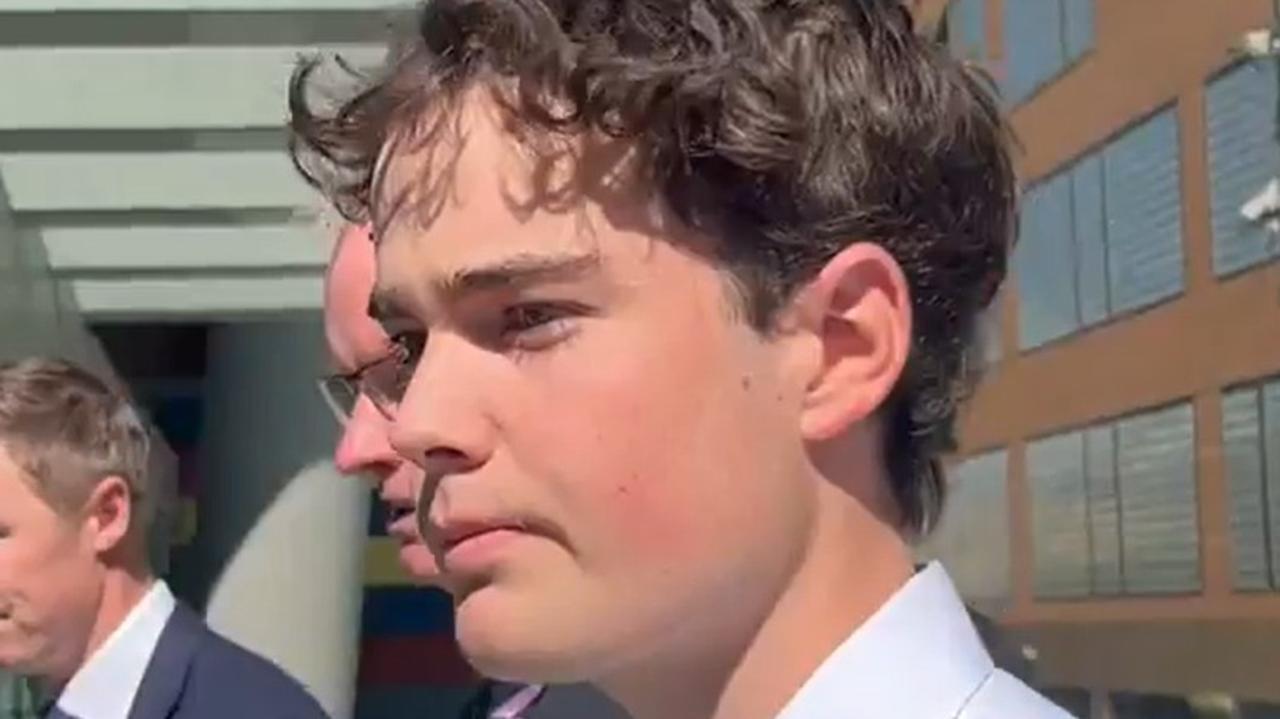
    In a landmark legal moment for South Australia, a 19-year-old former private school student has made history as the first person in the state to plead guilty to newly enacted charges related to the creation and distribution of non-consensual sexually explicit deepfake images. William Yeates, an alumnus of Mercedes College — an elite Adelaide institution where annual tuition fees reach as high as $20,000 — entered guilty pleas to four counts under the recently implemented deepfake legislation during a hearing at Adelaide Magistrates Court on Wednesday. This appearance also marks him as the first individual in South Australia to be charged under these new regulations.

    Court records detail that Yeates, who was 18 at the time of the offenses, shared manipulated deepfake content on X, the social media platform formerly known as Twitter. Between September 19, 2024, and December 25, 2025, he repeatedly distributed fabricated images that falsely depicted the victim’s explicit body parts, all without her knowledge or consent. Originally, Yeates faced 24 separate charges before the magistrate Justin Wickens, but prosecutors withdrew and dismissed the remaining 20 counts after he pleaded guilty to four specific offenses.

    The four confirmed charges to which Yeates admitted guilt are two counts of misuse of a communications service for harassing and offensive purposes, dated September 19, 2024, and December 25, 2025, and two counts of creating and altering sexual explicit material without consent, dated October 28, 2024, and February 8, 2025. Following the short hearing, Yeates left the courthouse without speaking to assembled reporters, declining all requests for comment.

    Magistrate Wickens has adjourned the proceedings, with a committal for sentencing scheduled to take place on May 29. The new federal offense targeting non-consensual explicit deepfakes was first introduced at the national level in 2024 as part of a broader government push to curb the spread of harmful manipulated content online. South Australia followed with its own aligned legislation in late 2025, and anyone convicted under the law faces a maximum penalty of seven years imprisonment.

  • ‘Cold as ice’: Serial killer admits to eight murders in case that haunted Long Island for years

    ‘Cold as ice’: Serial killer admits to eight murders in case that haunted Long Island for years

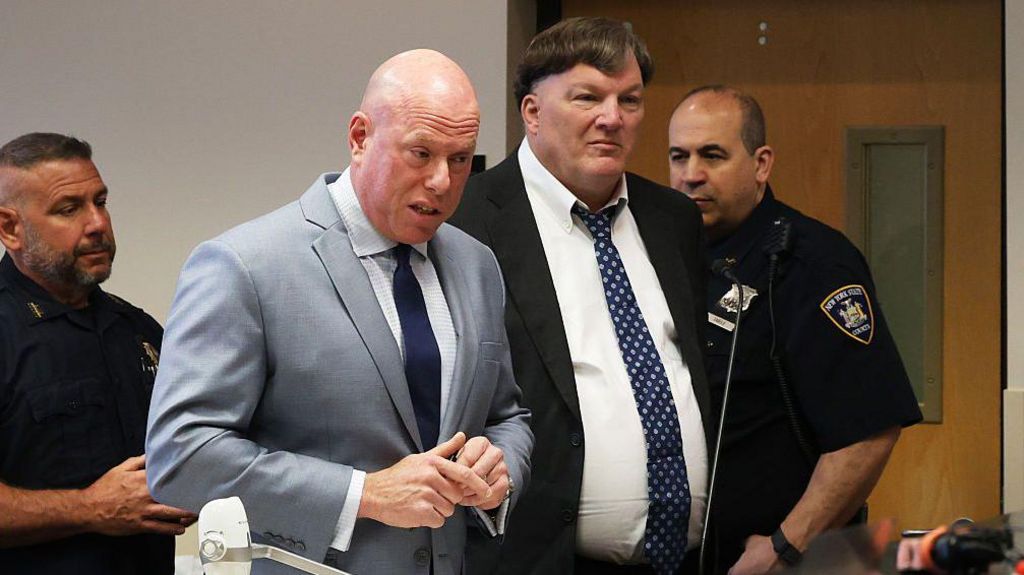
    After more than 13 years of fear, uncertainty and delayed investigation, one of Long Island’s most notorious cold crime sagas reached a pivotal turning point this Wednesday, as 62-year-old architect Rex Heuermann pleaded guilty to the murders of eight women in a packed Suffolk County courtroom. The story that stunned and haunted the region for more than a decade closes a major chapter with Heuermann’s confession, though lingering questions and unresolved wounds still remain for communities and victims’ loved ones.

    Dressed in a tailored black suit and blue tie, the 6-foot-4 Heuermann stood stone-faced before Judge Timothy Mazzei, answering “yes” to nearly every question about the details of his brutal crimes. He confirmed he used the promise of payment to lure each victim, bound and strangled them to death in an identical pattern, then discarded their dismembered remains along remote, brush-lined stretches of Long Island’s Gilgo Beach. He never turned to face the gallery filled with victims’ family members, some of whom choked back sobs as the graphic details of his crimes were laid out. “There wasn’t a jot of remorse in that man’s face,” said John Ray, attorney representing multiple victims’ families, after the hearing. “He was as cold as ice.”

    All eight of Heuermann’s victims were sex workers, most of whom he contacted through advertisements posted on Craigslist. The case first emerged into public view in 2010, when investigators searching for a missing woman stumbled across four sets of human remains within a quarter-mile of each other along Ocean Parkway. Over subsequent years, more remains were uncovered, eventually totaling 11 sets of remains found across the coastal scrubland. Heuermann was first identified as a suspect and arrested in 2023, when investigators connected him to the crimes using DNA recovered from a discarded pizza box. Initially, he was charged with seven murders; Wednesday’s guilty plea added an eighth killing dating back to 1996. The full eight victims confirmed Wednesday are Melissa Barthelemy, 24, Megan Waterman, 22, Amber Costello, 27, Maureen Brainard-Barnes, 25, Jessica Taylor, 20, Valerie Mack, 24, Sandra Costilla, 28, and Karen Vergata, 34. Heuermann will receive multiple consecutive life sentences, to be formally handed down during a sentencing hearing scheduled for June 17.

    The case was marked by years of investigative missteps and institutional failure that delayed justice by more than a decade. In its early stages, the investigation was led by former Suffolk County Police Chief James Burke, who was arrested in 2015 and later convicted of obstruction of justice. Former Suffolk District Attorney Thomas Spota, who also oversaw the probe, was ultimately brought down by the same corruption scandal that took down Burke. For years, the investigation made little tangible progress, and many victims’ family members have accused law enforcement of deliberately dragging their feet because all the victims were sex workers, noting officers frequently dismissed the women by labeling them “prostitutes.”

    It was not until 2022, when new county leadership launched a multi-agency task force including both local and federal investigators, that the case moved forward rapidly. Investigators acted on a tip first given to police back in 2010 by Dave Schaller, roommate of victim Amber Costello, who described a large, intimidating client that matched Heuermann’s description driving a rare first-generation Chevrolet Avalanche. The tip led investigators to Heuermann, and further evidence—including burner phone communications, cell tower data, and hair DNA matching the DNA from his discarded pizza—solidified the case against him. Law enforcement also reported finding handwritten guides Heuermann created on how to carry out the killings stored on a computer in his basement.

    Heuermann was a married father of two living a quiet double life in the Long Island suburb of Massapequa Park, residing in the dilapidated, run-down childhood home where he grew up. For neighbors, the crumbling red-shuttered house always stood out among the well-maintained homes and manicured lawns of the quiet village, but few suspected what lay inside. “It doesn’t fit in the neighbourhood, but what are you going to do? You don’t think anything of it,” one long-time neighbor told reporters, noting that most residents just wanted to move past the case now that Heuermann has confessed. The home has become a magnet for media and true crime enthusiasts, and the day before the plea hearing, reporters swarmed the property after it emerged Heuermann’s ex-wife and children were filming a documentary there.

    During Wednesday’s hearing, Heuermann’s ex-wife Asa Ellerup sat in the back of the courtroom dressed in black, showing no expression while her daughter held tissues. Outside court after the hearing, Ellerup expressed her sympathy for the victims’ families, calling their loss “immeasurable.” She and her legal team have repeatedly denied any involvement in Heuermann’s crimes, a position supported by law enforcement. However, Benjamin Torres, son of victim Valerie Mack, has filed a wrongful death lawsuit against Heuermann and his family, seeking to seize any profits the family earns from their upcoming documentary.

    Even with Heuermann’s guilty plea, open questions continue to hang over the case. Police do not believe Heuermann was responsible for the death of Shannan Gilbert, the missing woman whose 2010 disappearance led to the initial discovery of the other victims’ remains. Authorities have said her death was likely an accidental drowning in the marsh where her body was found, but her family and supporters still question that finding. Many locals also wonder whether more undiscovered victims are still buried in the coastal marshes and brush near Gilgo Beach. For Sandra Symon, a high school classmate of Heuermann who now boats near the area where the remains were found, the case has left an indelible mark. “How could you not think of them? What a terrible, scary thing that happened,” she said.

  • NSW Police arrest man over Cronulla RSL theft allegations, club confirms multi-year financial loss

    NSW Police arrest man over Cronulla RSL theft allegations, club confirms multi-year financial loss

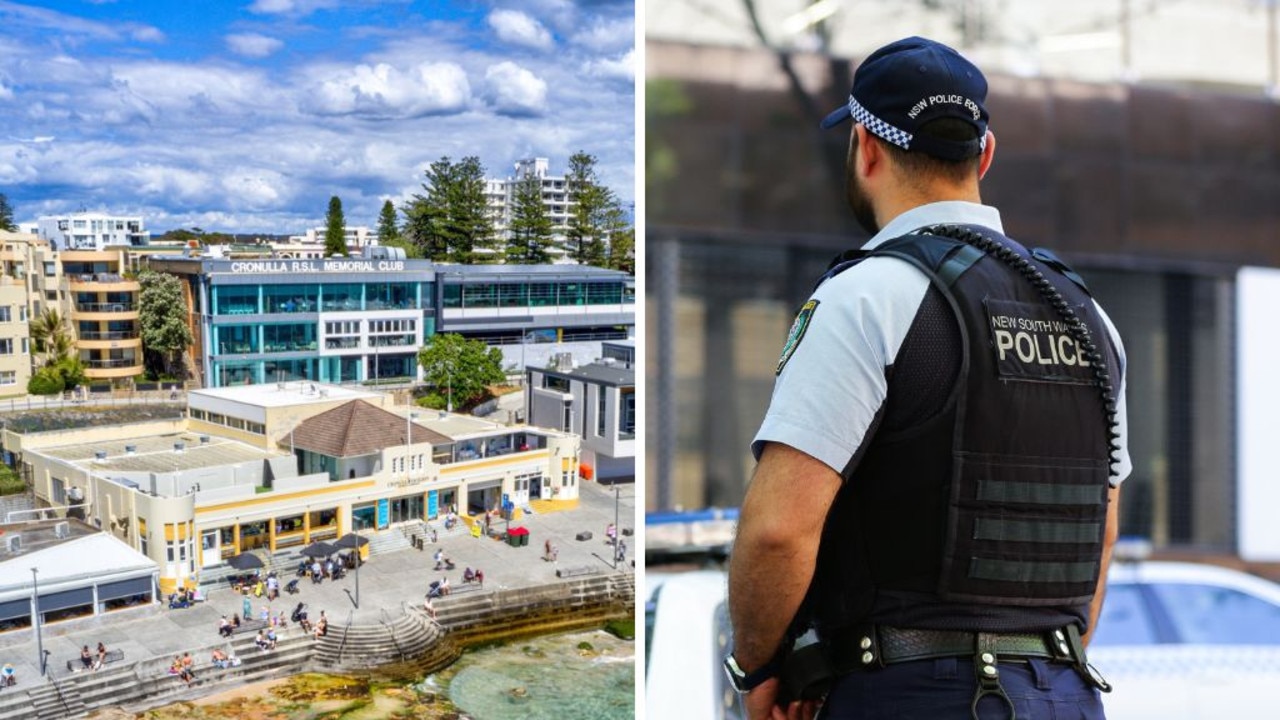
    A former 26-year-old staff member of the Cronulla Returned and Services League (RSL) club in New South Wales, Australia, has been arrested and slapped with multiple criminal charges in connection with an alleged multi-hundred-thousand-dollar fraud scheme that unfolded during his employment at the venue.

    New South Wales Police confirmed that the suspect turned himself in at Kogarah Police Station on Wednesday morning, wrapping up an ongoing probe led by detectives from the Sutherland Shire Police Area Command. He now faces two formal charges: dishonestly obtaining a financial advantage through deceptive practices, and intentionally handling proceeds linked to criminal activity. The accused made his first court appearance at Sutherland Local Court on the same day of his arrest, and the case has been scheduled for a next hearing at Downing Centre Local Court on June 4.

    Investigators allege that all fraudulent transactions took place between October 27, 2025, and February 14, 2026, while the man was still employed by the Cronulla RSL. The alleged illegal activity caused an immediate documented loss of AU$367,230 to the club, according to police allegations.

    In an official notification sent to its members, Cronulla RSL shared that internal management first flagged the suspicious activity before formally reporting the alleged stolen funds to NSW Police. In a joint statement released by club president John Brown and chief executive officer Nathan Whiteside, the pair confirmed that law enforcement had completed their initial arrest and laid multiple theft and fraud charges against the former employee.

    The club also revealed a far larger total loss than the figure cited in initial police documents: the alleged misappropriation of funds over a two-year period totals AU$1.46 million. The full details of the loss will be disclosed in the organization’s annual report, which is set to be published to members in the coming weeks. NCA Newswire has reached out to Cronulla RSL representatives to request additional clarification on the discrepancy between the two reported loss figures, but no further comment has been issued as of publication.

    Acknowledging the impact of the revelation on club members, Brown and Whiteside noted that the news will likely be upsetting for many people part of the Cronulla RSL community. “At this stage we are unable to share further details about the alleged theft, but will be sure to update members on this matter at the appropriate time,” the statement added. The leadership team also reaffirmed the club’s ongoing commitment to delivering high-quality events, facilities and services to its members, visitors and the local Cronulla community moving forward.

  • Gilgo Beach serial killings suspect to be charged in death of eighth victim

    Gilgo Beach serial killings suspect to be charged in death of eighth victim

    More than three decades after a New York woman vanished without anyone reporting her missing, the accused Gilgo Beach serial killer is set to face an eighth murder charge, the BBC has confirmed. Rex Heuermann, a 62-year-old New York architect already charged with seven killings linked to the Long Island Gilgo Beach serial murder case, will be formally charged with the death of Karen Vergata, attorney John Ray – who represents multiple victims’ families in the case – confirmed to media outlets.

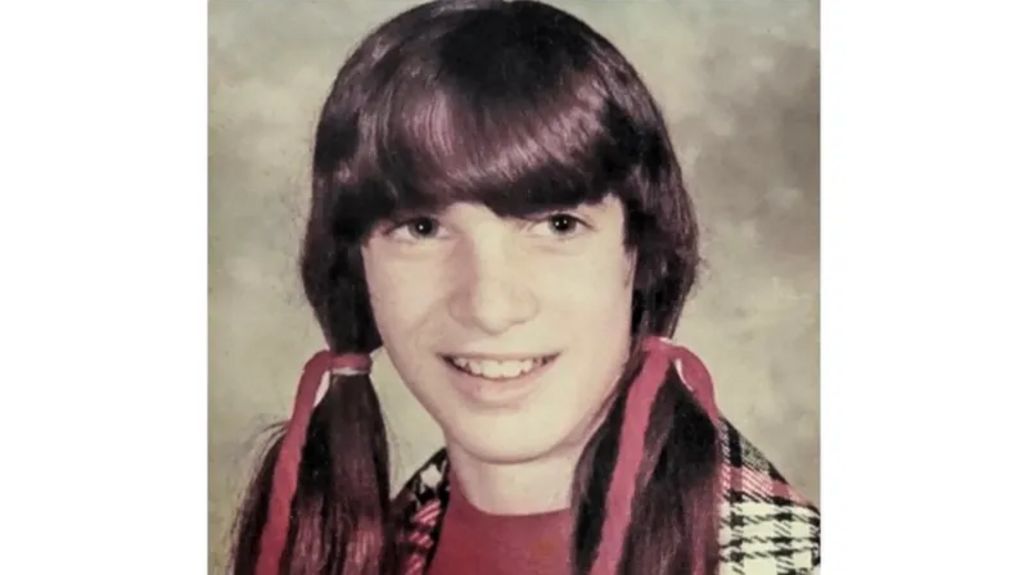
    Vergata disappeared on Valentine’s Day in 1996 at the age of 34, and unusually, no one ever filed a missing person report for her after her vanishing. Partial remains of her body were first discovered that same year on Fire Island, with additional remains located later at Gilgo Beach, and her remains were formally identified through DNA testing in 2023.

    Heuermann was first taken into custody outside his Manhattan office in July 2023, initially charged with the murders of three sex workers: 24-year-old Melissa Barthelemy, 22-year-old Megan Waterman, and 27-year-old Amber Costello. Over the subsequent 18 months, prosecutors added four more murder charges to his indictment, covering the deaths of Maureen Brainard-Barnes, 25, Jessica Taylor, 20, Valerie Mack, 24, and Sandra Costilla, 28. All seven victims were confirmed to be sex workers, and most of their remains were found within a short distance of Heuermann’s Long Island residence.

    Heuermann has previously pleaded not guilty to all seven existing murder charges, but court sources indicate he is expected to change his plea to guilty during a scheduled court appearance on Wednesday. The Suffolk County District Attorney’s office announced via social media on Tuesday that it would host a press conference immediately after Wednesday’s court proceeding to share details of a “major development” in the long-running homicide investigation.

    The sprawling investigation into the Gilgo Beach killings first launched in 2010, when police stumbled upon the remains of 18 people while searching for a missing woman along the coastal stretch of Long Island. Prosecutors have laid out extensive evidence collected during their probe, including a handwritten planning document found in Heuermann’s possession that detailed pre-crime preparation. The document was split into columns labeled “problems” and “supplies,” with DNA evidence, tire tracks, and blood stains listed as potential risks to mitigate. It also documented killing methods Heuermann had researched and takeaways from his previous alleged murders. Investigators also seized more than 300 firearms and hundreds of electronic devices from Heuermann’s home as part of evidence gathering.

  • French jury upholds jail terms for three rugby players over gang rape

    French jury upholds jail terms for three rugby players over gang rape

    In a closely watched legal outcome that closes one chapter of a high-profile sexual assault case, a French appellate court has upheld severe prison sentences for three former professional rugby players convicted of the 2017 gang rape of a 20-year-old female student, rejecting their challenges to the original 2024 guilty verdict.

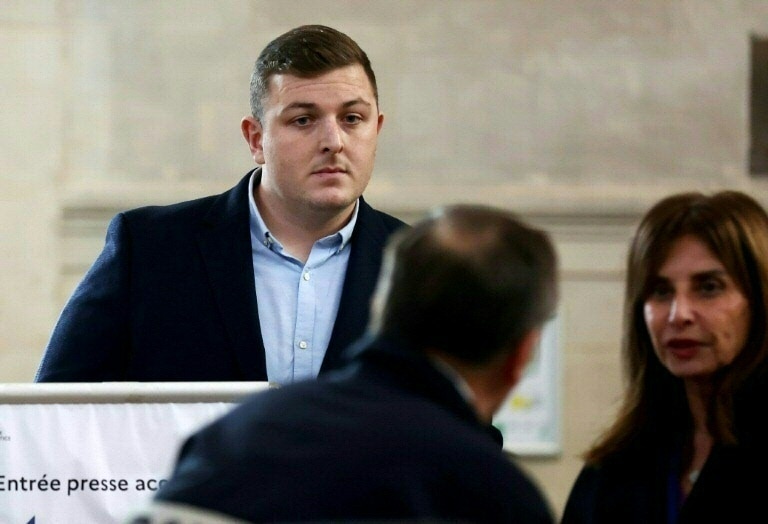
    The three defendants—31-year-old Irish national Denis Coulson, 31-year-old French native Loick Jammes, and 36-year-old New Zealander Rory Grice—all former members of France’s Grenoble Rugby Club, received the same penalties handed down in their initial 2024 Bordeaux trial: 14 years behind bars for Coulson and Jammes, and a 12-year sentence for Grice. Delivering the ruling from the bench in the southwestern French city of Angouleme, the presiding judge confirmed that no substantial new evidence or material change to the case justified altering the original conviction, noting the court found “an absence of significant evolution compared to the previous decision.”

    The courtroom was marked by raw emotion when the verdict was read. The three defendants remained silent and motionless in the dock before conferring with their legal teams, while several of their family members in the gallery were visibly overcome with tears. The victim, who has only been publicly identified by the initial V. to protect her privacy, was not present for the appellate ruling.

    The case traces back to the early hours of March 12, 2017, shortly after Grenoble lost a Top 14 French league match against Bordeaux-Begles. The victim told investigators she met the three players at a local bar with friends, accompanied the group to a nearby nightclub where all attendees consumed large amounts of alcohol, and has no memory of traveling from the nightclub to an outskirt Bordeaux hotel where the Grenoble team was staying overnight. She told police she woke up naked in a hotel bed with a crutch inserted inside her vagina, and spotted two naked men in the room alongside other fully dressed individuals before leaving the hotel in tears. She filed an official police complaint shortly after the attack.

    Throughout both the original trial and appellate proceedings, the three defendants maintained that all sexual contact with V. was consensual, claiming the student had initiated the encounter. Their legal team relied on a video recording of the incident filmed by one of the defendants to support their claim of consent.

    Following the appellate ruling, defense attorneys announced they would take the case to France’s Court of Cassation, the country’s highest judicial body that reviews questions of legal procedure and lower court rulings. Coulson’s lawyer called the verdict a shock, describing the upheld sentence as a “repetition of an excessive and disproportionate punishment.” Jammes’s attorney, Denis Dreyfus, argued his client had been penalized for refusing to admit guilt, adding, “If this is how the appeals process is conceived, it’s frightening.”

    For the victim and her legal team, the ruling brought a sense of closure after years of legal wrangling. The victim’s lawyer described the nine-year legal battle as “a terrible journey, marked by repeated setbacks” and said the defense team was relieved by the appellate court’s decision.

    Two other Grenoble teammates who were convicted for failing to intervene in the attack did not challenge their original convictions. Irish player Chris Farrell received a four-year prison sentence with two years suspended, while New Zealander Dylan Hayes was handed a two-year fully suspended sentence.

  • BlueChip scam: Indian police seek court nod to examine phones in $41-million fraud

    BlueChip scam: Indian police seek court nod to examine phones in $41-million fraud

    Indian authorities are pursuing a crucial judicial authorization to forensically examine mobile devices belonging to Ravindra Nath Soni, founder of the collapsed BlueChip investment scheme. The Special Investigation Team (SIT) intends to formally request court permission next week to analyze electronic evidence seized during Soni’s November 30 arrest in Dehradun, where police located him through a food delivery order.

    The investigation centers on tracing approximately $41.35 million transferred to unidentified cryptocurrency wallets shortly before BlueChip’s sudden March 2024 collapse. Deputy Commissioner of Police Satyajit Gupta confirmed that seized devices would be presented to the court as evidence once judicial approval is obtained, following India’s legal requirements for examining digital devices containing personal or encrypted information.

    Evidence collected from complainants includes transaction screenshots, wallet details, and encrypted messaging records that investigators believe correspond to data on Soni’s devices. The forensic examination aims to establish connections between Soni and multiple cryptocurrency wallets, banking transactions, and communication platforms allegedly used to move investor funds.

    The probe has identified 26 Indian bank accounts, eight cryptocurrency wallets, and approximately 20 companies potentially linked to the scheme. Initial estimates suggest losses exceeding Dh400 million, though authorities anticipate this figure may increase as more victims come forward. Numerous UAE-based investors have traveled to India to provide statements, while others have filed complaints remotely regarding the Bur Dubai-based operation that abruptly ceased payments.

    Soni faces multiple charges in Dubai related to cheque defaults and investor complaints. The court-approved device examination represents a pivotal development in unraveling the cross-border financial and cryptocurrency aspects of one of South Asia’s most significant investment fraud cases.

  • Dubai: Woman jailed, to be deported for over Dh3-million theft in crypto wallet swap

    Dubai: Woman jailed, to be deported for over Dh3-million theft in crypto wallet swap

    In a landmark ruling that underscores the legal protection of digital assets, a Dubai court has sentenced a woman to imprisonment, deportation, and a substantial financial penalty for orchestrating a sophisticated cryptocurrency theft. The defendant was found guilty of defrauding an investor of digital assets valued at approximately Dh3.1 million ($1 million) through an audacious hardware wallet swap during a business meeting.

    The case originated when an investor was approached by a man purporting to represent an investment company. This individual expressed interest in financing a business project but first demanded proof of the investor’s financial capability, specifically requesting a demonstration of substantial cryptocurrency holdings. A verification meeting was subsequently arranged in Dubai.

    At the scheduled meeting, the man failed to appear, citing last-minute complications, and instead dispatched his wife as his representative. During the verification process, the woman covertly substituted the investor’s legitimate hardware wallet—a device containing the private keys necessary to access the digital currency—with an identical, pre-prepared counterfeit. This deceptive maneuver allowed the perpetrators to transfer the entire cryptocurrency balance out of the investor’s control without his immediate knowledge.

    Following the discovery of the theft, authorities launched a comprehensive criminal investigation. The Dubai Misdemeanours and Infractions Court convicted the woman of theft, delivering a sentence of two months’ imprisonment. The court also imposed a fine equivalent to the value of the stolen assets at the time of the offense and ordered her deportation from the UAE upon completion of her jail term. This criminal ruling was later upheld by the Dubai Court of Appeal.

    In a subsequent civil proceeding, the victim sought compensation for both his direct financial loss and the lost potential profits, arguing that the value of the cryptocurrency had appreciated significantly after the theft. The civil court ruled in the investor’s favor, ordering the defendant to pay Dh4.3 million in compensation plus 5% annual legal interest until the amount is settled in full. This civil judgement is particularly significant as it explicitly recognizes digital currencies as protected financial property under Emirati law.

    The mastermind of the scheme, identified in court documents as the woman’s husband, remains at large and is wanted by authorities.

  • Dubai BlueChip scam estimated at Dh400 million; 10 bank accounts of owner frozen

    Dubai BlueChip scam estimated at Dh400 million; 10 bank accounts of owner frozen

    Authorities have significantly expanded their probe into the massive BlueChip investment fraud case, now estimated at approximately Dh400 million ($109 million), following the dramatic capture of its Dubai-based mastermind. Ravindra Nath Soni, the alleged architect of the sophisticated financial scheme, was apprehended in Dehradun on November 30th after an extensive 18-month manhunt, culminating when investigators tracked a food delivery order to his hideout.

    Indian police officials have confirmed the freezing of at least ten bank accounts linked to Soni across multiple cities, with the investigation now extending beyond traditional banking channels into complex cryptocurrency transactions and informal hawala networks. Kanpur Police Commissioner Raghubir Lal revealed that forensic accounting has uncovered transactions worth Rs970 crore layered through numerous accounts before being converted into digital currencies via international partners.

    The case has taken on transnational dimensions with the identification of twelve overseas associates, primarily based in Dubai, who allegedly facilitated the movement of illicit funds. Commissioner Lal emphasized that the operation’s scale far exceeds initial estimates and now presents potential national security concerns due to the anonymous, cross-border nature of the financial movements.

    Additional Deputy Commissioner of Police Anjali Vishwakarma indicated that India’s Enforcement Directorate, the country’s premier financial crimes agency, is poised to join the investigation once preliminary financial mapping is complete. The probe will incorporate advanced financial forensics and digital analysis to trace the complex money trail.

    The collapse of BlueChip in March 2024 left numerous investors across the UAE facing devastating losses, with many losing life savings after the company’s Bur Dubai office abruptly closed. Victims who were promised monthly returns of 3 percent found themselves with bounced checks and unanswered calls as the operation vanished overnight.

    Legal experts stress that recovering the misappropriated funds will require unprecedented international cooperation. Mumbai-based lawyer Dr. Sujay Kantawala emphasized the necessity of worldwide asset tracing and freezing measures, noting that given the sophisticated layering techniques employed, a coordinated multinational task force may be essential for any meaningful financial recovery for victims.

  • Food-delivery order led to arrest of Dubai-based BlueChip scam mastermind in India

    Food-delivery order led to arrest of Dubai-based BlueChip scam mastermind in India

    Indian authorities have apprehended Ravindra Nath Soni, the alleged architect behind one of the UAE’s most substantial investment fraud schemes, following an intensive 18-month international manhunt. The decisive breakthrough occurred in Dehradun, Uttarakhand, when police traced a food delivery order to his concealed location on November 30.

    Soni, owner of the collapsed BlueChip Group, faces multiple fraud allegations after his company abruptly ceased operations in March 2024, leaving hundreds of UAE investors facing collective losses estimated to exceed $100 million. The company had promised investors 36% annual returns through various investment verticals, including a cryptocurrency token launched with celebrity appearances.

    Kanpur Nagar Additional Deputy Commissioner of Police Anjali Vishwakarma confirmed the unusual apprehension method, stating: “He was caught through a food-delivery order. This is a big catch.” The arrest comes after a Delhi resident filed a formal complaint in January, alleging Soni had defrauded his family of Dh4 million with promises to double their investment within three years.

    Legal proceedings have commenced with Soni’s bail plea rejected on Wednesday as investigators work to trace the complex money trail. Authorities revealed that Soni had transferred $41.35 million to an unidentified cryptocurrency wallet shortly before BlueChip’s collapse.

    The case demonstrates transnational jurisdictional complexities. Dubai-based legal consultant Farhat Ali Khan explained that while multiple complaints have been filed in UAE courts, Indian law under Section 48 of the Bharatiya Nyaya Sanhita, 2023, enables prosecution in India for offenses committed abroad.

    For affected investors, the arrest brings mixed emotions. While relieved that Soni is in custody, many express skepticism about financial recovery. An Excel spreadsheet shared with investigators reveals approximately $17 million in losses from just 90 individuals, though victims estimate the actual total is significantly higher with investors spanning from Japan to Pakistan.

    Investors now face a protracted legal battle as authorities widen their investigation into what many describe as a sophisticated “double-your-money” scheme that utilized celebrity endorsements and business awards to gain credibility.