分类: business

  • Time to buy? Dubai gold prices plunge nearly Dh18 per gram in 24 hours

    Time to buy? Dubai gold prices plunge nearly Dh18 per gram in 24 hours

    Dubai’s gold market experienced significant volatility this week, with prices plummeting dramatically before staging a notable recovery in early Tuesday trading. The precious metal witnessed a steep decline of over Dh22 per gram on Monday, pushing global rates to a two-week low, primarily driven by profit-taking activities among investors.

    According to the latest data from the Dubai Jewellery Group, 24K gold opened at Dh525.75 per gram on Tuesday morning, representing a recovery of Dh4.5 per gram from Monday’s closing price of Dh521.25 per gram. This rebound followed a substantial 24-hour loss of nearly Dh18 per gram, highlighting the market’s extreme volatility.

    Other gold variants similarly showed positive movement in early Tuesday trading. The prices for 22K, 21K, 18K and 14K gold rose to Dh486.75, Dh466.75, Dh400.0 and Dh312.0 per gram respectively, indicating broad-based recovery across the precious metals market.

    Internationally, spot gold was trading at $4,375.86 per ounce at 9:30 AM UAE time on Tuesday, registering a 1.1 percent increase. This recovery came after Monday’s session saw gold lose over 4.5 percent, hitting its lowest point in two weeks.

    Market analysts remain optimistic about gold’s underlying strength. Ahmad Assiri, Research Strategist at Pepperstone, noted that despite the recent volatility, metals have demonstrated their bullish structure remains firmly intact. “Gold is retesting the $4,500 level as a consolidation zone, suggesting the market is leaning toward digesting gains,” Assiri commented.

    The fundamental drivers supporting gold and silver demand remain unchanged, rooted in persistent geopolitical tensions and policy-related risks. Expectations for a softer US dollar and potential Federal Reserve easing later in the new year continue to enhance gold’s relative appeal. Additionally, underlying tensions in US-China relations regarding critical minerals continue to provide structural support for metals demand without attracting excessive political attention for now.

  • Protecting what matters: The new rise of home insurance

    Protecting what matters: The new rise of home insurance

    The United Arab Emirates is witnessing a significant transformation in residential risk management as comprehensive home insurance emerges as a critical safeguard for property owners and tenants. This shift reflects growing awareness of diverse threats ranging from structural damage to digital vulnerabilities in an increasingly connected society.

    Modern home insurance policies in the UAE now extend beyond traditional property protection to address contemporary challenges. Standard coverage typically includes structural damage from fires, electrical faults, burst pipes, and natural events like sandstorms—particularly relevant in the region’s climate. The policies also protect valuable contents including electronics, furnishings, and personal items that represent substantial financial investments for most households.

    A notable evolution in coverage includes personal liability protection, which addresses accidents occurring within insured premises. This provision covers medical expenses, legal fees, and compensation costs when visitors sustain injuries or neighboring properties experience damage originating from the insured home.

    For severe incidents that render properties uninhabitable, insurance providers now offer temporary accommodation coverage. This benefit ensures residents can maintain housing continuity during repairs without bearing unexpected hotel or rental expenses—particularly valuable in a market with seasonal price fluctuations.

    The market has responded to specialized needs through innovative add-ons. Domestic helper coverage addresses medical emergencies and repatriation costs for household staff. Cyber protection safeguards against identity theft and online fraud, while worldwide coverage extends protection to valuables during international travel. Tenant-specific options also protect security deposits against accidental damage to rental properties.

    Financial institutions have reinforced this trend by requiring home insurance as part of mortgage agreements, ensuring collateral protection while encouraging responsible ownership. Premium structures remain accessible relative to coverage breadth, making comprehensive protection economically viable for most residents.

    This insurance evolution parallels the UAE’s growing real estate market and increasing asset values within homes. As households accumulate smart technologies, premium appliances, and high-value possessions, insurance provides a logical risk management solution. The convergence of frequent travel, digital dependency, and valuable residential investments has positioned home insurance as an essential component of modern living in the Emirates.

  • Why sustainability is no longer optional in the Gulf

    Why sustainability is no longer optional in the Gulf

    Across the Gulf Cooperation Council (GCC) nations, sustainability has undergone a fundamental transformation from aspirational ideal to operational necessity. What was once primarily viewed through an environmental or ethical lens has emerged as a compelling business case, driven by economic pressures, regulatory mandates, and practical realities.

    The region’s rapid urban development has placed unprecedented strain on infrastructure and resources, particularly evident in energy consumption patterns. Cooling systems alone account for a substantial portion of electricity demand, reaching nearly 70% of peak usage in the UAE. Despite this, many buildings continue to operate with energy-intensive, outdated systems that necessitate frequent maintenance and deliver suboptimal efficiency.

    Governments throughout the GCC have responded with updated building codes, labeling schemes, and high-ambient performance standards that make compliance mandatory rather than voluntary. These regulatory frameworks have established sustainability as the fundamental requirement for market access and professional credibility.

    The persistent misconception that sustainable solutions are inherently more expensive requires correction through a shift in perspective from short-term price to long-term value. While energy-efficient technologies may involve higher initial investments, they deliver superior longevity, reliability, and operational efficiency. When evaluated through the Total Cost of Ownership (TCO) lens, sustainable solutions consistently demonstrate greater financial value over their lifecycle.

    For building owners and developers, failure to adapt carries significant financial consequences. Those who delay sustainability investments will ultimately pay twice—first for outdated systems, and again when retrofitting becomes unavoidable. Sustainability represents a strategic commitment to resilience, enabling structures to withstand economic, environmental, and social changes while delivering comfort, productivity, and profitability over decades.

    The benefits extend across all stakeholders: occupants enjoy healthier indoor environments and reduced utility costs; manufacturers and consultants drive innovation and market leadership; governments advance toward net-zero targets. As the Gulf continues its transition toward a diversified, low-carbon economy, sustainability has become inseparable from long-term competitiveness and regional prosperity.

  • Why 2026 may be the year investors need to revisit the bond side of their portfolio

    Why 2026 may be the year investors need to revisit the bond side of their portfolio

    Financial experts are identifying 2026 as a potential watershed moment for bond investments, particularly within emerging markets, creating what industry specialists describe as a “generational opportunity” for portfolio diversification. While equity markets captured global attention with record-breaking performances throughout 2025, fixed income sectors quietly generated exceptional returns that warrant investor consideration for the coming year.

    According to comprehensive market analysis, emerging market debt instruments significantly outperformed most other credit asset classes during 2025. J.P. Morgan indices reveal that EM hard currency sovereign bonds delivered approximately 13.8% returns through mid-December, while local currency debt instruments achieved an impressive 18% return. The high-yielding EM hard currency sovereign debt segment particularly excelled with 17% returns.

    Cathy Hepworth, head of PGIM’s emerging market debt team, attributes this performance to “the significant resilience exhibited by emerging market countries despite persistent headwinds throughout the year.” The weaker US dollar and less detrimental US policy impacts than initially feared contributed to this strong performance.

    Marc Seidner, Chief Investment Officer of Non-traditional Strategies at Pimco, emphasizes that fixed income currently presents investors with the opportunity to “lock in 6.5% or maybe 7.5%” returns through carefully constructed bond portfolios. He particularly favors bonds with durations in the two-to-five-year range, suggesting they can generate solid, “equity-like” returns without substantial exposure to lower-quality credits.

    Geographic opportunities appear concentrated in specific regions. Investment experts highlight promising prospects in Latin American nations including Dominican Republic, Guatemala, and Costa Rica, alongside opportunities in South Africa, Ivory Coast, Turkey, and Serbia. In the Middle East, quasi-sovereign entities in both UAE and Saudi Arabia present attractive options, with examples including Mubadala, TAQA, DP World, Saudi Aramco, and the Saudi Public Investment Fund.

    Peter Boockvar, CIO at One Point BFG Wealth Partners, notes the particular advantage of emerging markets regarding debt concerns: “If the world is worried about debts and deficits, much of the emerging markets don’t have those problems.” He cites Brazilian two-year bonds yielding approximately 10% in mid-December, with real yields exceeding 10% due to benchmark rates of 15% against 4.5% inflation.

    The market has responded with substantial issuance activity. EM sovereigns, quasi-sovereigns, and corporates issued over $600 billion in debt during 2025, with Saudi Arabia’s $12 billion sovereign offering in January representing the Middle East’s largest single issue. Kuwait followed with an $11.3 billion offering in September.

    Looking toward 2026, Hepworth anticipates continued elevated issuance levels, particularly from quality Middle Eastern bonds driven by infrastructure investment needs. She identifies specific opportunity areas including “transmission grids, renewable power, telecom fibre, and transportation.”

    Investment vehicles for bond exposure vary from closed-end and open-end funds to Exchange Traded Funds and individual securities. The Chimera JP Morgan UAE Bond UCITS ETF, which tracks the J.P. Morgan MECI UAE Investment Grade Custom Index, delivered approximately 8% returns through mid-December 2025.

    Experts caution that bond allocation should align with investor age and risk tolerance. Younger investors might maintain smaller fixed income allocations, while middle-aged and older investors should consider increasing fixed income exposure over time, potentially beginning with traditional 60% stocks/40% bonds allocations.

    While emerging market bonds present compelling opportunities, investors must remain mindful of currency risks, political uncertainties, and the potential impact of elections on fiscal outlooks. As 2026 approaches, the fixed income market, particularly in emerging economies, offers sophisticated investors unique opportunities for diversification and yield generation in an otherwise equity-dominated landscape.


  • Connection seen as key to sustained trade growth

    Connection seen as key to sustained trade growth

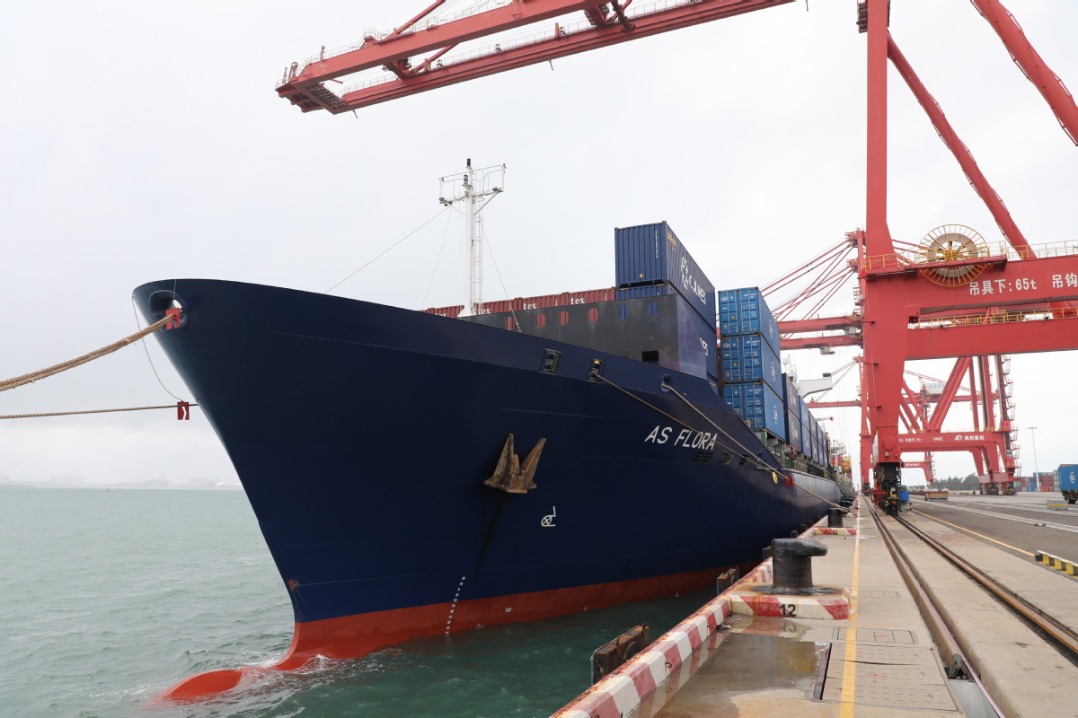
    Economic experts across Asia project sustained growth in regional trade throughout 2026, emphasizing that enhanced connectivity and cooperation will be crucial for building economic resilience. This development comes as Asian nations increasingly look inward to strengthen supply chains and reduce dependency on Western markets amid growing trade barriers.

    According to Park Chonghoon, Standard Chartered’s head of research in South Korea, the upward trajectory in intraregional trade will persist as supply chain networks continue expanding across Asia. He stressed that deeper integration should extend beyond imports and exports to include consumption of end products, creating more robust regional markets capable of withstanding external trade pressures.

    Recent data supports this optimistic outlook. A United Nations Trade and Development report from early December indicates global trade in goods and services is poised to surpass $35 trillion for the first time this year, marking a substantial 7% year-on-year increase. The report highlighted East Asia’s exceptional performance, with exports growing by 9% over the past four quarters and intraregional trade expanding by an impressive 10%.

    ING Think, the research division of Dutch bank ING, forecasts Asia’s trade in commercial services to grow 5.5% year-on-year in 2026, outpacing this year’s 4.6% growth rate despite slowing goods trade reducing demand for transport and logistics.

    Japan’s Infinity LLC Chief Economist Hidetoshi Tashiro advocates for Asian countries to gradually decrease their reliance on the United States while working toward establishing a comprehensive regional free trade zone. He noted that while US manufacturing declines and export constraints increase, East Asia’s manufacturing sector continues to serve as a fundamental support for the US economy.

    Tashiro emphasized the need for the region to conceptually reject external pressure while deepening economic ties to create trust-based systems resilient to outside interference. This perspective finds practical application across various Asian initiatives, including ongoing cooperation among Association of Southeast Asian Nations members and Central Asian countries’ recent agreement to nearly double mutual trade to $20 billion.

    Suriyan Vichitlekarn, executive director of the intergovernmental Mekong Institute, echoed these sentiments, noting that escalating global conflicts further underscore the importance of strengthening interdependence among neighboring nations. Representing all six Greater Mekong Subregion countries (Cambodia, China, Laos, Myanmar, Thailand, and Vietnam), Suriyan emphasized that mutual reliance is essential for regional stability.

    He specifically highlighted the potential for Thailand and Cambodia to collaborate on building regional resilience once border demarcation issues are resolved. Current tensions have already significantly impacted trade, with Oxford Economics reporting a 66% plunge in Thailand’s deliveries to Cambodia in October, creating a 2.5 percentage point drag on total goods export growth.

    Amitendu Palit, senior research fellow at Singapore’s Institute of South Asian Studies, pointed to the successful performance of existing economic frameworks like the Regional Comprehensive Economic Partnership—the world’s largest trade agreement. He anticipates Asian economic integration becoming increasingly issue-based, with regional economies collaborating more extensively on challenges including climate change, digital trade, and enhanced connectivity.

  • Asia’s economic divide forecast to widen in 2026

    Asia’s economic divide forecast to widen in 2026

    The Asian economic landscape is projected to experience significant divergence throughout 2026, creating a tale of two regions within the continent. Advanced semiconductor manufacturers and technology hubs are positioned to capitalize on the ongoing artificial intelligence revolution, while export-dependent emerging markets face mounting pressures from trade restrictions and domestic instability.

    Technology powerhouses including South Korea, Singapore, and Malaysia are experiencing substantially improved economic prospects driven by unprecedented demand for sophisticated chips and AI infrastructure. These nations, deeply integrated into global AI supply chains, are witnessing accelerated growth trajectories as investments pour into their technology sectors.

    Meanwhile, China, India, Indonesia, and Japan demonstrate economic resilience supported by robust domestic consumption patterns that provide a buffer against global market volatility. Their diversified economic foundations continue to fuel steady growth despite external challenges.

    Conversely, several Southeast Asian and South Asian economies confront a more challenging outlook. Thailand, the Philippines, Bangladesh, and Nepal face headwinds from softening international demand for their non-technology exports. The implementation of United States tariff policies has particularly impacted export-oriented industries in these nations.

    Compounding these economic pressures, political uncertainty in several vulnerable economies creates additional obstacles to stable growth. Analysts note that this combination of external trade pressures and domestic instability could widen the developmental gap between technology-forward economies and those reliant on traditional manufacturing and commodity exports.

    The emerging divide highlights how technological advancement and global trade policies are reshaping economic hierarchies within Asia, potentially creating lasting implications for regional economic cooperation and development strategies.

  • As a property slump drags on, China’s economy looks more resilient than it feels

    As a property slump drags on, China’s economy looks more resilient than it feels

    While China’s official economic indicators project resilience with record-breaking exports and technological advancements, a stark contrast emerges in the daily experiences of ordinary citizens grappling with financial pressures. The nation’s export sector achieved an unprecedented $3.4 trillion in shipments during the first eleven months of 2025, driven by growing demand from Southeast Asia and Europe that compensated for declining U.S. trade. Simultaneously, breakthroughs in artificial intelligence and electric vehicle technologies demonstrate China’s progressive shift toward high-tech industries.

    Despite these macroeconomic strengths, small business owners and urban professionals report severe financial constraints. Beijing billiards hall proprietor Xiao Feng exemplifies this struggle, noting that after covering operational costs including rent and labor, he merely breaks even. “The affluent appear too occupied while common people lack disposable income,” Feng observed, revealing he has drawn no personal income for six consecutive months despite his wife’s stable nursing salary supporting their family.

    Commercial real estate agent Zhang Xiaoze, who previously earned approximately 3 million yuan annually during the mid-2010s peak, now generates about 100,000 yuan yearly. “The fundamental issue is that people lack financial resources,” Zhang noted, referencing frequent reliance on personal savings to sustain his household.

    This economic divergence has prompted analysts to question official growth statistics. Capital Economics analyst Zichun Huang suggests actual expansion “may be well below” reported figures, with independent estimates ranging from 2.5% to 3.5% compared to the official 5% target. Retail sales growth decelerated to 1.3% year-on-year in November, while fixed-asset investments declined 2.6% through the first eleven months.

    The property sector’s persistent slump continues to undermine consumer confidence, with housing values depreciating over 20% since their 2021 zenith. New home sales plummeted 11.2% by value year-on-year, with property investments contracting nearly 16%. This downturn has virtually eliminated previous wealth gains from real estate, according to HSBC economists.

    While the International Monetary Fund recently upgraded China’s growth forecast to 5%, matching official projections, numerous challenges persist. Excess industrial capacity across automotive, steel, and consumer goods sectors suppresses prices and profitability. China’s substantial trade surplus exceeding $1 trillion potentially invites protectionist responses from trading partners.

    Economists including Carnegie Endowment’s Michael Pettis argue that fundamental structural reforms enabling broader wealth distribution remain politically challenging. As budget hotel owner Zhai from Shijiazhuang summarized: “I anticipate no immediate economic recovery. With limited education, transitioning industries proves nearly impossible when all sectors face difficulties.”

  • World shares are mixed in the final stretch of 2025

    World shares are mixed in the final stretch of 2025

    Global financial markets concluded the final trading sessions of 2025 with divergent performances across major indices amid characteristically thin year-end trading volumes. European shares opened with minimal movement Tuesday following modest declines across Asian markets, with numerous exchanges preparing for New Year closures.

    Japanese Prime Minister Sanae Takaichi presided over the Tokyo Stock Exchange’s traditional year-end bell ceremony, emphasizing the government’s commitment to “realizing a Japanese economy that earns the global investment community’s trust.” Despite closing 0.4% lower at 50,339.48, the Nikkei 225 achieved its first year-end close above the historic 50,000 threshold, registering an impressive annual gain of nearly 25%.

    European trading saw Germany’s DAX essentially flat at 24,348.38, while Britain’s FTSE 100 edged upward 0.1% to 9,876.73. France’s CAC 40 remained virtually unchanged at 8,112.37. Asian markets displayed variability with Hong Kong’s Hang Seng advancing 0.9% to 25,854.60, while mainland China’s Shanghai Composite held steady at 3,965.51. Australia’s S&P/ASX 200 dipped marginally, and South Korea’s Kospi declined 0.2%.

    The technology sector continued experiencing volatility as investor skepticism mounted regarding artificial intelligence investments’ long-term profitability. Market heavyweights Nvidia and Broadcom declined 1.2% and 0.8% respectively, reflecting concerns about whether AI-focused companies can justify their substantial valuations.

    Precious metals demonstrated remarkable resilience with gold prices rebounding 0.7% after Monday’s 4.6% decline, maintaining an extraordinary 64% annual appreciation. Silver staged a dramatic recovery, surging 4.4% following an 8.7% previous-day slump, more than doubling in value throughout 2025. These recoveries occurred despite the Chicago Mercantile Exchange’s increased margin requirements for metals trading.

    Energy markets witnessed modest gains with U.S. crude oil advancing to $58.22 per barrel and Brent crude reaching $61.61. Currency markets displayed minimal fluctuation as the U.S. dollar held near 156.00 yen while the euro dipped slightly against the dollar.

    Treasury yields continued their descent with the 10-year note falling to 4.11%, reflecting the Federal Reserve’s interest rate cuts implemented throughout the year to address employment market softening. This monetary policy shift has generated concerns about potential inflationary pressures exceeding the central bank’s 2% target, creating economic uncertainty heading into 2026.

  • China’s BYD poised to overtake Tesla in 2025 EV sales

    China’s BYD poised to overtake Tesla in 2025 EV sales

    Chinese automotive giant BYD is positioned to surpass Tesla as the world’s premier electric vehicle manufacturer by annual sales volume as 2025 concludes. Final sales figures expected imminently will likely confirm this seismic shift in the global EV landscape, marking the first time Tesla has relinquished its leadership position since dominating the market.

    Based on cumulative data through November 2025, Shenzhen-based BYD has achieved remarkable sales of 2.07 million electric vehicles, including both pure EVs and hybrid models. In contrast, Tesla reported 1.22 million deliveries by the end of September. Industry analysts project Tesla’s fourth-quarter performance will decline significantly, with consensus estimates hovering around 449,000 vehicles according to FactSet analysis. This would bring Tesla’s total 2025 sales to approximately 1.65 million units, representing a 7.7% decrease year-over-year.

    Several factors have contributed to this market realignment. Tesla experienced a temporary sales surge in Q3 2025, reaching nearly half-a-million deliveries, largely driven by the impending expiration of a US tax credit for electric vehicle purchases. This incentive program was terminated under legislation supported by former President Donald Trump. Deutsche Bank forecasts an even more substantial downturn for Tesla, projecting only 405,000 vehicles sold in the fourth quarter with declines of approximately one-third in both North American and European markets, and a 10% reduction in China.

    Beyond fiscal policy changes, Tesla has faced market headwinds related to CEO Elon Musk’s political endorsements of Trump and far-right figures, alongside intensifying competition from Chinese manufacturers and European automakers. Industry analyst Dan Ives of Wedbush Securities noted that while fourth-quarter deliveries might show weakness, Wall Street remains focused on Tesla’s autonomous driving initiatives scheduled for 2026.

    BYD’s ascendancy hasn’t been without challenges. Facing compressed profitability in China’s price-sensitive domestic market, the company has aggressively pursued international expansion. Jing Yang, Director of Asia-Pacific Corporate Ratings at Fitch Ratings, highlighted BYD’s pioneering efforts in establishing overseas production capacity and supply chains, noting that ‘geographical diversification is likely to help it navigate an increasingly complicated global tariff environment.’

    This global expansion occurs amid rising trade barriers, including 100% tariffs on Chinese EV imports implemented during the Biden administration and additional European tariffs. In response, BYD is developing manufacturing capabilities in Hungary to circumvent these trade restrictions.

    While Tesla’s immediate prospects in pure EV sales appear challenged, the company maintains potential growth avenues through autonomous driving technology. Analyst Michaeli of TD Cowen suggests breakthroughs in Tesla’s ‘full self-driving’ capabilities could significantly boost demand. The anticipated April 2026 production start of the Cybercab robotaxi and recently introduced lower-priced Models 3 and Y variants provide additional pathways for Tesla’s market repositioning.

  • US economy to ride tax cut tailwind but faces risks

    US economy to ride tax cut tailwind but faces risks

    The US economy is positioned for accelerated growth in 2026, propelled by multiple tailwinds including President Trump’s tax legislation, diminishing trade policy uncertainties, sustained artificial intelligence investments, and the Federal Reserve’s recent interest rate reductions. This follows a volatile 2025 characterized by initial contraction and subsequent recovery.

    Economists identify enhanced consumer spending as the primary growth catalyst, fueled by increased tax refunds and reduced paycheck withholdings resulting from the ‘One Big Beautiful Bill’ legislation. KPMG Chief Economist Diane Swonk projects these fiscal measures alone could contribute至少 half a percentage point to first-quarter GDP expansion.

    The corporate sector stands to benefit significantly from expanded tax credits and full expensing provisions for business investments. While AI infrastructure spending dominated 2025 capital expenditures, technology giants including Amazon and Alphabet have signaled continued substantial investments in this domain.

    Trade policy impacts reached their zenith during the first half of 2025, with average import levies surging from below 3% in 2024 to approximately 17% according to Yale Budget Lab data. As these pressures gradually recede, economists anticipate improved wage growth relative to inflation, further strengthening household financial positions.

    Nevertheless, substantial risks persist. Labor market softening remains evident through reduced monthly job gains and an elevated November unemployment rate of 4.6%—though data collection disruptions during the six-week federal government shutdown may have distorted this figure. Inflation, while moderating in the third quarter, continues to exceed target levels, creating policy dilemmas for the Federal Reserve.

    The central bank faces additional uncertainty with Chair Jerome Powell’s term concluding in May 2026. Market expectations universally anticipate the incoming chair, selected by President Trump, will advocate for additional rate reductions.

    Consumer sentiment reflects these mixed conditions, with Conference Board data indicating labor market perceptions have deteriorated to early-2021 levels. This cautious outlook might lead households to prioritize saving rather than spending their tax cut windfalls.

    Goldman Sachs economist David Mericle notes: ‘While we project unemployment stabilizing at 4.5% alongside strengthened final demand, further labor market softening represents our forecast’s primary downside risk. AI’s productivity benefits might paradoxically constrain hiring momentum despite economic expansion.’