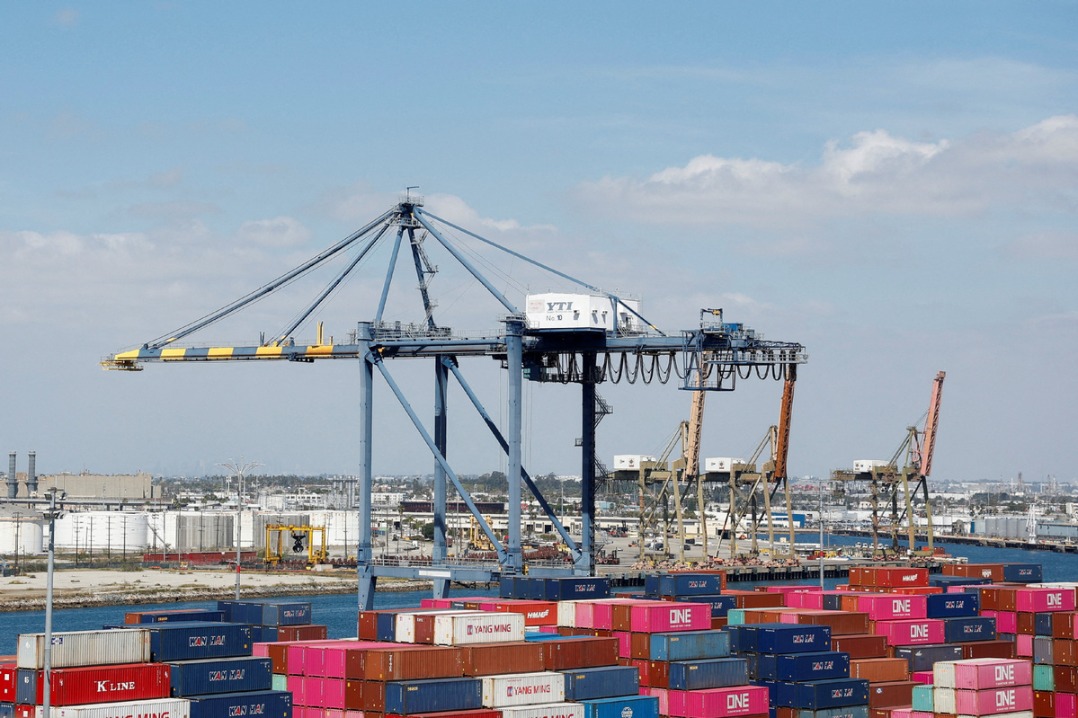
Global agricultural markets and everyday consumers across the world are facing growing strain from two overlapping sources of instability: escalating geopolitical tensions in the Middle East and persistent uncertainty around United States trade policy, industry and policy experts warned during a recent media briefing held at the Port of Los Angeles. The event brought together top port leadership and international relations scholars to examine how regional conflict, disrupted shipping corridors, and unpredictable tariff policies are sending new ripple effects through economies far beyond coastal cargo terminals and port infrastructure.
分类: business
-
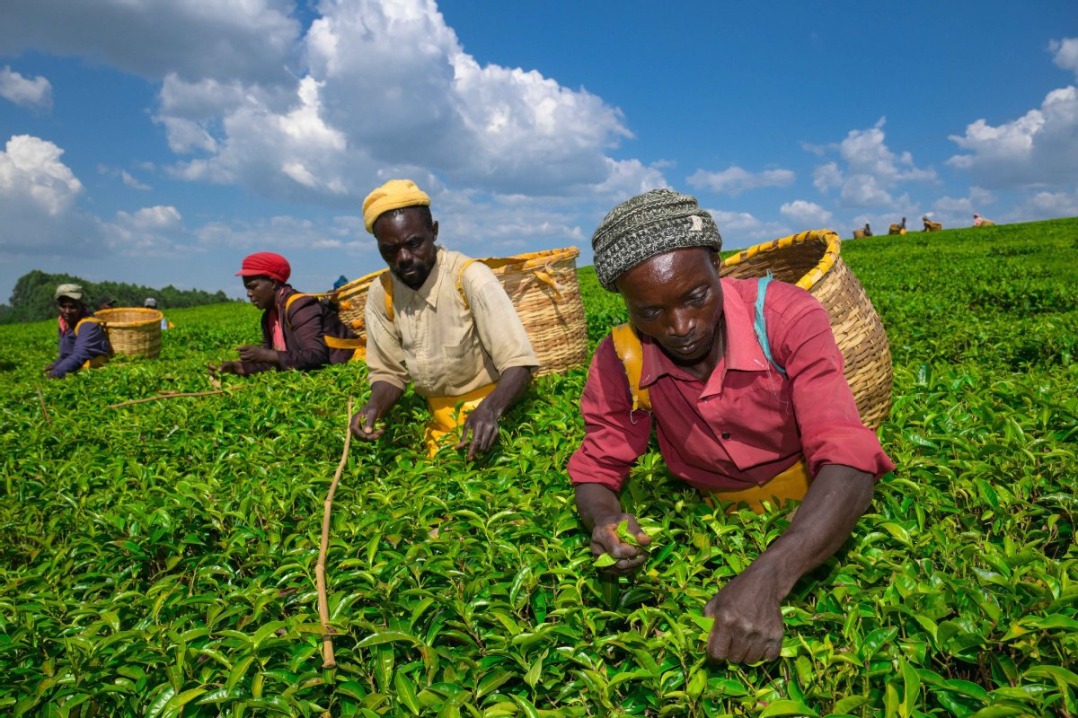
Kenya eagerly awaits zero-tariff export boom to China
Across Kenya’s sprawling agricultural and manufacturing export sectors, anticipation is reaching a fever pitch as China prepares to implement a sweeping zero-tariff policy for most African exports starting May 1. Industry leaders across the East African nation say this landmark trade measure has the potential to reshape bilateral trade routes and unlock unprecedented opportunities for small and large producers alike, granting unrivaled access to one of the world’s largest and fastest-growing consumer markets.
For many Kenyan exporters, the policy shift is far more than a simple reduction in shipping costs: it removes a longstanding trade barrier that has kept many competitive Kenyan goods out of reach for most Chinese buyers. Joel Mwiti Kobia, managing director of Kenyan agro-exporter Nutri Nuts and Fruits, noted that the combination of zero tariffs and China’s 1.4 billion consumers creates an unparalleled growth opportunity for African agricultural producers.
Kenya already launched its first zero-tariff test shipment to China in late March, loaded with high-demand fresh products including avocados, coffee, and green beans. For Kobia’s firm, which focuses on nut and fruit exports, early forays into the Chinese market have already exceeded expectations. The company began shipping macadamia nuts to China in 2021 with a single 16-metric-ton container; by 2025, annual exports had skyrocketed to 120 tons. With the existing 15 percent tariff set to drop completely, Kobia projects exports will more than double again, hitting nearly 250 tons in the next few years, while also creating new formal jobs at local processing facilities.
Shifting consumption trends in China are working heavily in Kenyan producers’ favor. Kobia pointed out that China’s rapidly expanding middle class, driven by rising disposable incomes, rapid urbanization, and growing public focus on health and wellness, is driving soaring demand for high-quality, nutrient-dense premium food products. This changing demand landscape has created a particularly fertile market for unique African agricultural exports.
Margaret Njoki, commercial manager for fresh and frozen produce at Vertical Agro Group, said Kenyan avocado exporters are already positioning for a major breakthrough in the Chinese market. Currently, Kenya competes with established avocado exporters like Peru and Mexico for Chinese market share, but Njoki said the elimination of tariffs will cut her product prices enough to expand both the volume and quality of avocado shipments to China.
The benefits of the policy are expected to ripple across the entire Kenyan agricultural value chain, from large exporting firms down to smallholder farmers. Njoki explained that higher export demand will encourage more Kenyan smallholders to plant avocado orchards, boosting household incomes and creating new rural employment opportunities across growing regions.
Even Kenyan tea producers, who have long been sidelined in the Chinese market due to uncompetitive pricing, are newly optimistic about their prospects. Kelvin Mbugi, a representative of Kenya Tea Packers, noted that zero tariffs will finally give quality Kenyan tea a fair shot at gaining traction in the world’s largest tea consumer market. “Currently we are unable to export tea to China because we are not competitive in prices. However, with zero tariffs, we will now have a chance not only to deliver quality, but also to have a competitive advantage in pricing,” Mbugu said.
Kenyan exporters are specifically targeting China’s growing cohort of health-conscious consumers with unique specialty tea offerings. Products like antioxidant-rich purple tea and antiaging-focused white tea, which are already produced in Kenya at scale, align perfectly with shifting Chinese consumer preferences, and producers say they are already prepared to meet rising demand.
The new zero-tariff framework opens doors beyond traditional agricultural food exports too. Small-scale Kenyan manufacturers are already exploring entry to the Chinese market with niche products, including premium pet food, that would become far more price competitive with tariffs eliminated. Irene Nzovo, a Kenyan manufacturer focused on pet food, said the policy will allow her to secure larger bulk orders and expand her customer base across China.
While industry leaders widely welcome the policy, they also emphasize the work that remains to help Kenyan producers fully capitalize on the opportunity. Erick Rutto, president of the Kenya National Chamber of Commerce and Industry, stressed that targeted training is critical to help smallholder farms and small exporting companies meet China’s strict sanitary and phytosanitary standards, ensuring their products can clear customs and access the mainstream Chinese market.
As the May 1 implementation date approaches, the entire Kenyan export sector is poised to test the transformative potential of this new trade arrangement, with many expecting long-term benefits for both bilateral trade and Kenyan economic growth.
-
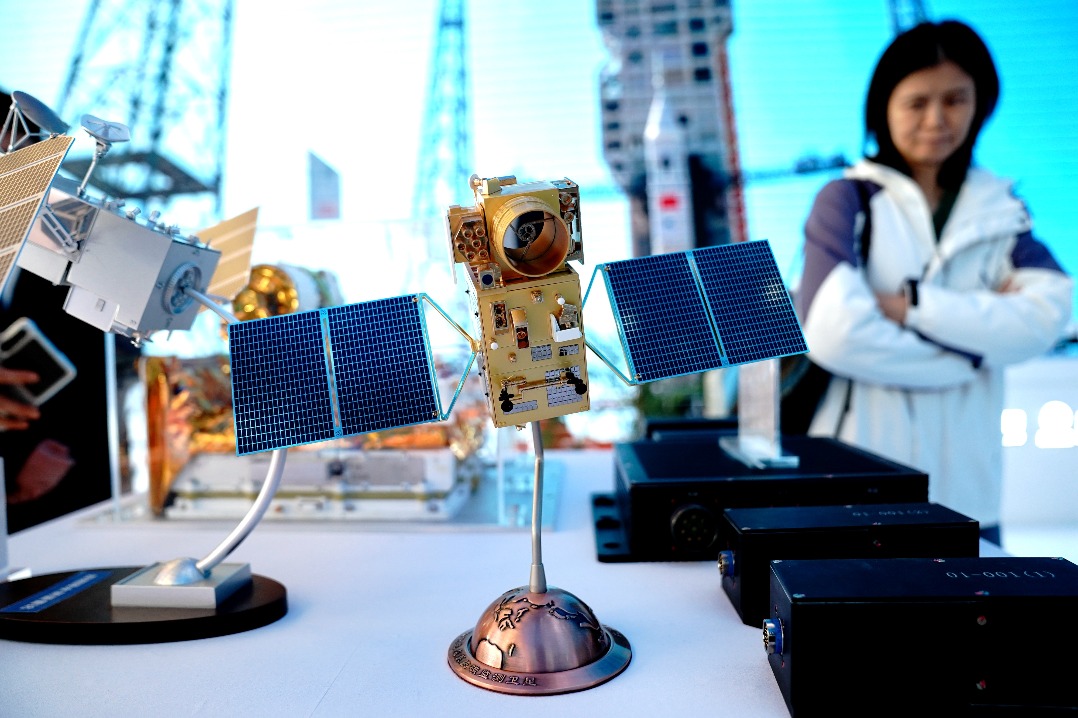
Rise in satellite demand fuels growth
China’s commercial satellite sector is accelerating toward a new era of large-scale growth, driven by exploding corporate demand for advanced satellite services and expanding government support at both national and local levels, industry insiders and analysts have confirmed.
One of the clearest examples of this rapid expansion is Shanghai-based satellite manufacturer Orbital Voyager Technology Co., founded in August 2024. The firm turned a profitable position within just 12 months of launching operations, and has already deployed seven satellites into orbit covering multiple specialized use cases: infrared satellites for disaster mitigation monitoring, meteorological observation satellites, hyperspectral remote sensing satellites, and space debris situational awareness satellites. According to Xia Yiwen, head of the company’s operations department, Orbital Voyager plans to launch an additional 17 satellites in 2026, with 60 percent of these new craft classified as innovative computing power satellites.
The rising demand for these cutting-edge satellites stems directly from corporate needs for faster, more cost-effective data collection and processing across a wide range of industries. Satellite-generated data supports critical applications from international trade maritime monitoring and carbon emissions tracking to urban infrastructure planning. Unlike traditional satellites, which must send raw data back to Earth for processing — a delay that can take several hours — computing power satellites process data directly in orbit, delivering actionable results in real time and drastically boosting operational efficiency. Xia also noted that satellite-based data gathering is far more economical than alternatives such as drone surveys, which require hundreds of individual devices and far more time to collect a comparable volume of data.
Currently, 80 percent of Orbital Voyager’s client base is made up of private Chinese enterprises. Many of these companies already have in-house capacity for data processing and payload development, but lack the ability to manufacture complete, functional satellites — a market gap that Orbital Voyager has tailored its services to fill. The company can complete the full process from initial demand identification to final contract signing in as little as one month, Xia added. Through the adoption of mature commercial off-the-shelf components and localized domestic supply chains, paired with competitive market dynamics, Orbital Voyager has cut per-satellite manufacturing costs to roughly 10 million yuan ($1.4 million), a stark drop from the 50 million yuan price tag common for satellites built at traditional public research institutions. To date, the firm holds 170 million yuan in active orders, and leadership remains bullish on future growth.
Industry analysts echo this optimism. In 2025, Chinese satellite manufacturers posted some of the strongest performance across all high-tech sectors, with combined total sales revenue surpassing 25 billion yuan ($3.7 billion), according to data from CCID Consulting. Analysts there attribute this strong showing to supportive national policies that have driven rapid technological upgrades and expanded production delivery capacity.
Analysts from CITIC Securities note that computing power satellites are emerging as a critical new form of global infrastructure, with expanded space-based computing capacity now widely recognized as a strategic priority worldwide. They project that China’s national government will soon introduce more explicit policy frameworks for the sector, relax regulatory restrictions on commercial satellite manufacturing, and direct more state-backed investment into the growing industry. CITIC’s analysis also predicts that 2026 will mark a key inflection point for China’s commercial space industry, as it transitions from a phase of early technology validation to full large-scale industrialization. As China’s network of commercial space launch sites matures and reusable commercial launch vehicle technology advances, total payload capacity will rise while launch costs fall, creating outsize benefits for key segments including satellite manufacturing, launch services, and ground terminal infrastructure.
Policy support has already expanded dramatically at all levels of government. During this year’s annual Two Sessions legislative meetings, the central government reclassified the commercial space sector from an “emerging industry” to a formal “pillar industry”, signaling its commitment to long-term sector growth. At the local level, Shanghai’s Songjiang District — where Orbital Voyager is headquartered — has built a tightly integrated, supportive industrial ecosystem for commercial aerospace. “Upstream and downstream industry partners are literally just upstairs and downstairs,” Xia explained, noting that a space-based energy firm operates in the next building, and all suppliers for structural components and thermal control products are located within the district. The district government also offers substantial launch subsidies: 10,000 yuan per kilogram of satellite mass, capped at 500,000 yuan per satellite. Since most of Orbital Voyager’s satellites weigh more than 50 kilograms, each qualifies for the full 500,000 yuan subsidy, which has helped the company accelerate its launch timelines.
Early 2026 data underscores the sector’s rapid expansion. Figures from the China National Space Administration show that in the first 45 days of 2026 alone, China completed 18 total space launches, 11 of which were commercial missions. A total of 127 commercial satellites were successfully placed into orbit during this period, accounting for 91 percent of all satellites launched by the country year-to-date.
Looking ahead, industry leaders like Xia hope to see further progress that can unlock even faster growth, particularly expanded launch access for private companies and accelerated development of fully reusable rocket technology. Achieving a “flight-like” launch frequency — with 10 to 20 launches per month nationwide — would trigger exponential growth in overall satellite deployment, Xia said, forcing satellite manufacturers across the country to ramp up production to meet demand.
-
Queensland reveals plans for new $11bn Gladstone oil refinery amid national fuel crisis
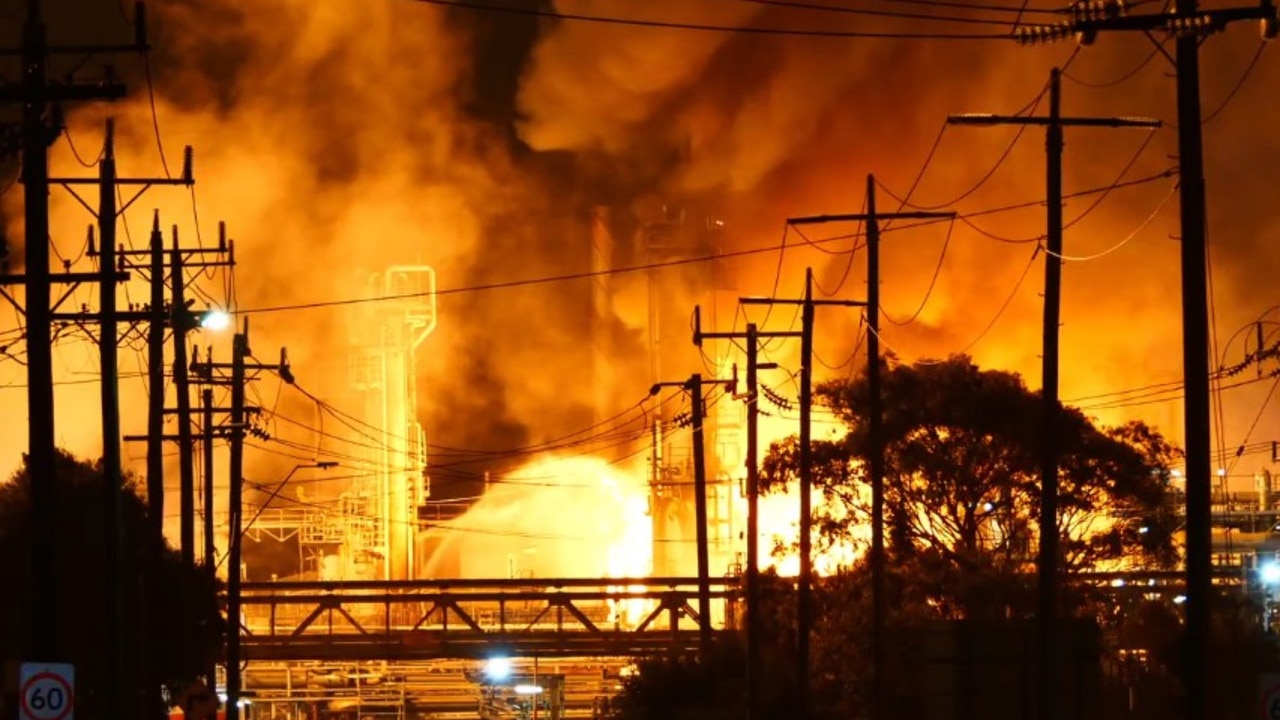
A week after a destructive fire damaged one of Australia’s only two remaining operational oil refineries, Queensland’s state government has launched a proactive, home-grown plan to strengthen the nation’s fuel security amid a growing national supply crisis. The proposal, unveiled Friday by Queensland Premier David Crisafulli, comes just days after the Wednesday night blaze that tore through VIVA Energy’s Geelong refinery, leaving only Ampol’s Lytton facility in Brisbane fully operational across the country.
Crisafulli confirmed that state authorities are already in active discussions with multiple project backers to develop a new refinery in Queensland’s industrial Gladstone region, a move designed to let Australia take greater control of its domestic fuel supply chain. “For a long time, I have highlighted that Queensland needs to control its own energy destiny — that means we need to drill, refine and store our own fuel right here,” the premier stated during the announcement. “Today I can confirm we are in formal talks with several proponents to build a fuel refinery here in Queensland. We have the right regulatory framework, the right approach, and we are open for investment.”
The proposal lands as Australia confronts a growing national fuel crisis, triggered by escalating geopolitical tensions between the United States and Iran in the Middle East that have disrupted global energy supply chains. The country’s refining capacity has shrunk drastically over the last three years: two major facilities in Kwinana, Western Australia and Altona, Victoria closed permanently in 2021 and were converted into import-only storage terminals, leaving just the Geelong and Lytton plants online. This recent fire at Geelong has amplified concerns about overreliance on imported fuel and exposure to global market volatility.
When pressed for a concrete timeline for the Gladstone project, Crisafulli declined to share a specific completion date, framing the initiative as a long-term investment in national energy resilience. “This is a long-term vision for fuel security,” he said. “We also have critical work to deliver in the short and medium term to address immediate supply risks.”
Queensland Deputy Premier Jarrod Bleijie added that the state government is prioritizing speed for the project, having already directed Economic Development Queensland and the state’s Coordinator-General to fast-track all approval processes. “I have instructed these agencies to move every possible obstacle out of the way for the companies we are talking to, to fast-track approvals, secure suitable land, and get this refinery built as quickly as possible,” Bleijie explained.
One proponent already confirmed to be in talks is Resilient Energy Australia, whose chair David Goodwin told the Australian Broadcasting Corporation that the group has put forward a $11 billion proposal for the Gladstone site. If completed, the facility would have the capacity to process 210,000 barrels of crude oil per day, with between 60 and 70 percent of output dedicated to diesel. The refinery would also produce other critical fuel products including automotive gasoline, aviation gasoline, kerosene and jet fuel to meet domestic demand across multiple sectors.
-

ASX 200 slips as Middle East caution outweighs strong tech surge
On Friday, a strong five-day rally in Australia’s technology sector failed to offset broader investor caution tied to unresolved Middle East peace negotiations, leaving the country’s key sharemarket benchmark in negative territory. The benchmark S&P/ASX 200 closed down 8.10 points, or 0.09%, at 8946.90, while the wider All Ordinaries index retreated 5 points, or 0.05%, to settle at 9168.60.
Trading was split across the market’s 11 sectors, with six closing in positive territory and five ending the session lower. Technology stocks emerged as the clear outperformer, with the sector’s index notching a 12.99% gain over the previous five trading days, and extending upward momentum into Friday. Standout gainers in the space included logistics software firm WiseTech Global, which rose 2.85% to $46.18, data center operator Next DC Limited, which climbed 1.58% to $14.12, and communications technology firm Codan, which added 0.89% to $33.97.
These gains were more than offset by pullbacks in consumer discretionary shares and financial stocks. Retail conglomerate Wesfarmers, the country’s largest retailer by revenue, dropped 1.63% to $72.85, electronics retailer JB Hi-Fi fell 0.50% to $76.07, and home goods chain Harvey Norman slid 2.97% to $4.57. Australia’s big four banks also posted a mixed performance: Commonwealth Bank of Australia eked out a 0.07% gain to $178.23, and ANZ Group added 0.50% to $37.92, while Westpac Banking Corporation fell 0.72% to $39.73, and National Australia Bank slumped 1.98% to $42.55.
Beyond equities, the Australian dollar saw slight downward movement after hitting a four-year high in the previous session. During Thursday’s Asian trading window, the currency briefly touched a peak of 71.97 U.S. cents before retreating marginally to 71.63 U.S. cents by Friday’s close. Commonwealth Bank senior economist Kristina Clifton projected that the local currency could receive a short-term 1-2 U.S. cent boost if the Strait of Hormuz, a critical global oil chokepoint currently disrupted by regional tensions, reopens to full commercial traffic. Clifton noted that a full reopening remains 3 to 4 weeks away based on current projections.
Investor anxiety over the trajectory of Middle East peace talks and the ongoing uncertainty around maritime access through the Strait of Hormuz has left market strategists warning of elevated downside risk for Australian and global equities. AMP chief economist and head of investment strategy Shane Oliver noted that while major markets have likely absorbed the worst impacts of the regional conflict and associated oil price shock if oil shipments resume quickly, the unresolved uncertainty around peace talks and Strait access means a full 15% peak-to-bottom market correction remains a distinct possibility. Oliver also flagged stretched equity valuations, U.S. political uncertainty tied to former President Donald Trump and upcoming midterm elections, growing concerns over the private credit sector, and unquantified risks tied to artificial intelligence adoption as additional headwinds for markets in the coming months.
In individual company news, buy now, pay later provider Zip emerged as the session’s top gainer, jumping 13.66% to $2.33 after reporting a 41.5% year-over-year surge in third-quarter cash earnings before interest and tax, driven primarily by strong revenue growth across its U.S. operations. Civil contractor NRW Holdings also climbed 2.18% to $6.10 after announcing its fully owned subsidiary Fredon had secured A$160 million in new electrical and mechanical infrastructure contracts. On the downside, online furniture retailer Temple & Webster was the session’s largest loser, sliding 6.45% to $6.66 despite no new public announcements from the company to explain the pullback.
-

Chinese carmaker patents voice-controlled ‘in-vehicle toilet’
In a move that highlights the fierce innovation race unfolding in China’s hyper-competitive electric vehicle market, Chongqing-based automaker Seres has submitted a patent application for a novel, space-efficient in-vehicle toilet designed to meet driver and passenger needs during long trips, roadside camping, and extended stays inside the vehicle.
Filed with China’s National Intellectual Property Administration on April 10, the patent outlines a compact toilet system that stows completely beneath a passenger seat when not in use, eliminating the need for extra cabin space that would compromise vehicle design. The unit can be deployed either via a manual push or hands-free voice activation, and comes equipped with built-in ventilation features: a connected fan and exhaust pipe that redirect unpleasant odors outside the vehicle. For waste management, the system uses a removable collection tank that requires manual emptying, alongside a rotating heating component that evaporates liquid waste and speeds up drying of solid waste.
Seres, a manufacturer best known for its electric sport utility vehicles (SUVs) sold under its core brand and subsidiary Aito, has not yet announced any production models that will integrate this toilet feature. As of press time, it remains unclear whether the concept will ever move from patent filing to mass-produced vehicle integration.
The new patent is far from an outlier in China’s fast-growing EV sector, where manufacturers have been rolling out a wave of unconventional, comfort-focused features to differentiate their offerings in an increasingly saturated market. Many new Chinese electric vehicles already come equipped with premium add-ons including heated massage seats, in-car karaoke entertainment systems, built-in refrigerators, and other lifestyle-focused features designed to appeal to domestic consumers.
While on-board toilets are a standard fixture in long-distance commercial coaches, they remain extremely rare in passenger cars – though not unprecedented. Automotive history records show that a custom 1950s Rolls-Royce Silver Wraith included an under-seat toilet alongside a built-in television, according to auction house Sotheby’s.
Seres currently sells the vast majority of its vehicles in mainland China, but has already expanded its international footprint to markets across Europe, the Middle East, and Africa. China’s overall EV market has become heavily saturated in recent years, sparking a brutal price war that has eroded profit margins for most industry players. Notably, Seres is one of the small handful of domestic EV manufacturers that currently turn a profit, joining global industry leader BYD. Many market analysts have warned that a large share of smaller Chinese EV firms face significant risk of collapse amid the ongoing industry shakeout.
-
Iran war energy shock drives nuclear power plans in hard-hit Asia and Africa
The ongoing conflict between Iran and Western powers has sent shockwaves through global fossil fuel markets, triggering ripple effects that are reshaping long-term energy policy across two of the world’s fastest-growing regions: Africa and Asia. Disruptions to key shipping lanes for Middle Eastern oil and natural gas – which supplied the bulk of Asia’s energy demand – have sent energy prices soaring worldwide, with both developing Asian and African economies feeling the strain earliest and most acutely. Even wealthy Western nations including the United States and across Europe have not escaped the pressure of inflated energy costs driven by the conflict.
Against this backdrop of market volatility, nations across both continents are moving rapidly to expand nuclear power generation. Countries with existing nuclear infrastructure are ramping up output to address immediate short-term energy gaps, while nations with no operational nuclear capacity are accelerating long-term nuclear development plans to insulate themselves against future fossil fuel supply shocks. Experts note that while nuclear energy cannot resolve the current energy crisis overnight, as new nuclear projects can take decades to complete for first-time nuclear nations, today’s policy commitments will permanently embed atomic power in many countries’ future energy portfolios.
“The war has accelerated a global ‘nuclear renaissance,’ as countries seek an escape from the volatility of global fossil fuel markets,” explained Rachel Bronson, executive director of the Bulletin of the Atomic Scientists. Data from the International Atomic Energy Agency underscores this growing momentum: 31 countries currently operate nuclear power plants, which generate roughly 10% of the world’s total electricity, and an additional 40 nations are either exploring nuclear technology or actively preparing to break ground on their first facilities.
In hard-hit Asia, the shift toward nuclear power is already well underway. Across the region, where governments have turned to emergency measures from increased coal burning to discounted Russian crude imports to shore up supplies, nations with existing reactors are maximizing output from their current fleets. South Korea has boosted generation at all operational plants and fast-tracked maintenance work on five idled reactors, with restarts scheduled for May. Both Taiwan and Japan are rolling back post-Fukushima policies that shuttered large numbers of nuclear facilities after the 2011 earthquake and tsunami that triggered the catastrophic Fukushima Daiichi meltdown.
Taiwan is now launching the multi-year process of restarting two mothballed reactors, a move that requires extensive safety inspections, system upgrades and regulatory approval. In Japan, Prime Minister Sanae Takaichi has moved aggressively to expand nuclear power since the outbreak of the Iran war, signing a $40 billion reactor development deal with the United States, a nuclear fuel recycling agreement with France, and a new cooperation pact with Indonesia. Japan also restarted the world’s largest nuclear facility, the Kashiwazaki-Kariwa plant, in January. While the conflict has also boosted public and policy support for renewable energy, historically high electricity prices have swung Japanese public opinion firmly in favor of nuclear acceptance, according to Michiyo Miyamoto of the U.S.-based Institute for Energy Economics and Financial Analysis. Critics, however, note that renewables remain a more affordable and secure long-term solution.
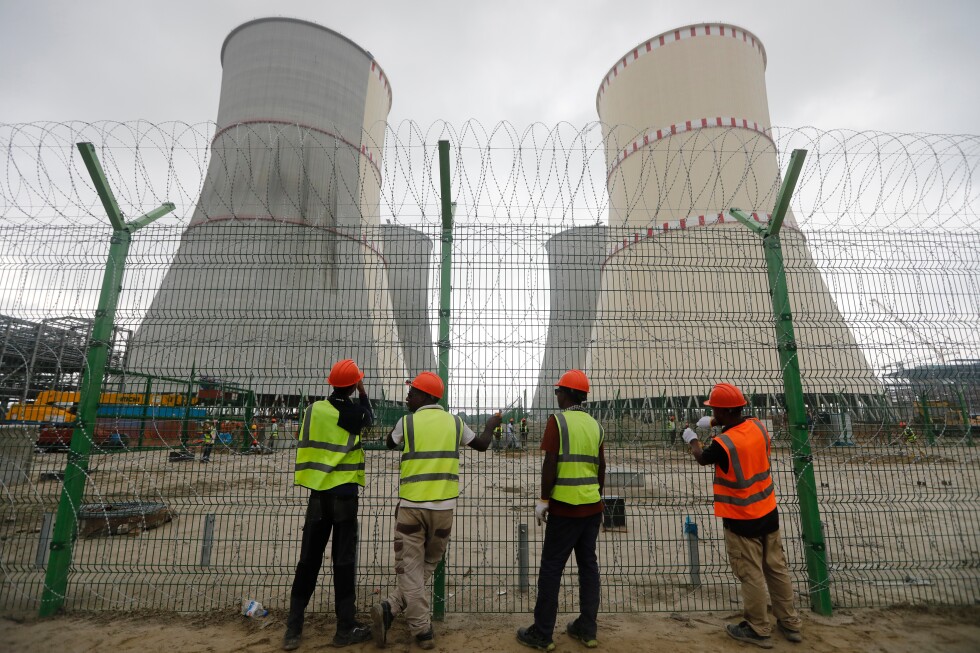
Further south in Asia, Bangladesh is rushing to commission two new reactors built by Russia’s state-owned nuclear giant Rosatom, with plans to connect 300 megawatts of capacity to the national grid by summer to ease crippling domestic gas shortages. Vietnam signed an agreement with Moscow in March to develop two Russian-designed reactors, while the Philippines – which declared a national energy emergency earlier this year – is weighing plans to activate a half-built nuclear plant constructed after the 1973 oil crisis but never brought online. “The Iran war is providing a needed push for nuclear,” said Alvie Asuncion-Astronomo of the Philippine Nuclear Research Institute.
Across Africa, the energy crisis triggered by the Iran conflict has reinvigorated long-dormant nuclear energy plans, with more than 20 of the continent’s 54 nations now advancing atomic energy projects. Global nuclear powers including the United States, Russia, China, France and South Korea have identified Africa as a key growth market for nuclear technology, and are pitching small modular reactors (SMRs) as a flexible solution to the continent’s widespread energy shortages. Unlike large conventional nuclear plants, SMRs offer a cheaper, more compact alternative that can be scaled to meet weak grid capacity.
While proponents frame SMRs as a faster path to nuclear deployment, projects still require years of planning and regulatory work: Kenya for example, which launched its first nuclear planning phase in 2009, targets bringing an SMR online only by 2034. Even so, African leaders frame nuclear power as an urgent strategic priority. “Nuclear energy is no longer a distant aspiration for African countries; it is a strategic necessity,” said Justus Wabuyabo of Kenya’s Nuclear Power and Energy Agency. Speaking at a March summit hosted by the U.N.’s nuclear watchdog, Rwandan President Paul Kagame predicted Africa will become “one of the most important global markets” for small modular reactors in the coming decades. SMRs are seen as a particularly strong fit for Africa, as they can deliver low-emission baseload power that matches the continent’s rapidly rising electricity demand, addresses underdeveloped national grids, and reduces overreliance on expensive imported diesel. South Africa, which hosts the continent’s only operational nuclear plants, plans to grow nuclear’s share of its energy mix from roughly 5% today to 16% by 2040, with SMRs playing a central role.
The race to develop nuclear energy in Africa has also intensified great power competition between the United States and Russia, which are both vying for market share as leading nuclear exporters. Russia’s Rosatom already holds a dominant position, building Egypt’s first operational reactor and signing cooperation agreements with Ethiopia, Burkina Faso, Ghana, Tanzania and Niger covering everything from full-scale plant construction to research facilities and workforce training. The U.S., which has only secured commitments from Kenya and Ghana to join its American-led modular reactor initiative, is working to close the gap, hosting a high-level nuclear development conference in Nairobi last month alongside South Korea. “Washington is working with African nations to rapidly develop secure and safe civil nuclear reactors,” said Ryan Taugher of the U.S. State Department.
Despite the growing momentum for nuclear expansion, critics and experts continue to highlight the significant risks that accompany the technology. Beyond the persistent threats of catastrophic meltdowns and long-term radioactive waste management, nuclear development also carries proliferation risks, as civilian nuclear programs can provide a pathway to developing nuclear weapons. Advocacy groups also note that most countries remain reliant on imported enriched uranium for nuclear generation, keeping them exposed to global supply chain volatility. “Nuclear is very risky,” said Ayumi Fukakusa of Japanese environmental advocacy group Friends of the Earth Japan.
Critics add that because nuclear projects take decades to deliver, governments should prioritize rapid expansion of renewable energy to achieve long-term energy security. Bronson also notes that nuclear plants themselves are vulnerable targets during conflict, pointing to targeted attacks on reactors during both the ongoing Iran war and the Russia-Ukraine conflict as a stark reminder of this risk. Even so, Bronson acknowledged that for many developing nations facing immediate fossil fuel disruptions, the tradeoffs are clear: “Countries are now weighing those kinds of risks against the other risks, which Asia and Africa are seeing first and foremost, about what happens when gas and oil stops.”
This reporting from the Associated Press, with contributions from correspondents based in Bangkok, Seoul, Tokyo and Hanoi, is supported by private foundation grants, with the AP retaining full editorial control over all content.
-

Airline adding bunk beds for economy travelers but bans snacks, smells and cuddling
For millions of air travelers, catching uninterrupted, restful sleep while crammed into an economy seat on a 16+ hour long-haul flight has long been nothing more than a distant dream. Now, New Zealand’s flag carrier Air New Zealand is preparing to turn that dream into a accessible reality with the upcoming launch of Skynest, the world’s first purpose-built lie-flat sleep pods designed exclusively for budget economy passengers.Starting this November, the triple-tier bunk bed-style pods will be available exclusively to economy and premium economy passengers flying on Air New Zealand’s new Boeing 787-9 Dreamliner aircraft operating the high-demand Auckland to New York route — one of the planet’s longest commercial air routes, where passengers are forced to remain seated upright for a grueling 16 to 18 hours straight.
Travelers can pre-book a private, four-hour block of time in one of the curtained berths, with pricing starting at 495 New Zealand dollars (equivalent to roughly $291 USD), charged as an add-on separate from the base economy ticket price. The carrier has installed six Skynest pods on each of the route’s Dreamliners, arranged in a stacked triple-bunk configuration between standard passenger cabins. Due to the tight shared space arrangement, Air New Zealand has released a clear set of etiquette and usage rules for pod users.
The rules prohibit children from using the pods, ban outside visitors, outlaw snacking inside the enclosed space to avoid crumbs and pest risks, and restrict each booking to a single passenger only. “That means solo snoozes only please, no musical nests or tag-teaming,” the company explains on its official website. Travelers must also change into special disposable socks provided by the airline before entering the pod, and are forbidden from wearing heavily scented perfumes or body products to avoid disturbing nearby sleepers. To address passenger concerns around hygiene, Air New Zealand confirms that all pillows, blankets and fitted sheets are completely replaced and refreshed between every four-hour booking. At the end of the pre-booked block, users are woken first by a gradual adjustment in cabin lighting, with flight attendants on hand to give a more firm wake-up call for any travelers who sleep through the soft alert.
In terms of dimensions, each berth matches the length of a standard twin mattress at 80 inches (203 centimeters), but the compact design means there is no headroom for sitting upright. Accessing the pod requires users to bend, kneel, crawl or climb into the space, and the width tapers from 25 inches (64 centimeters) at shoulder height down to just 16 inches (41 centimeters) at the foot of the bunk. The airline also anticipates that snoring will be a common occurrence in the shared pod space, so complimentary earplugs are provided for all users. “Statistically, someone’s going to do it. It might be you,” the website notes dryly.
While lie-flat convertible seats and beds have been a standard premium offering for first and business class travelers for decades, Air New Zealand’s Skynest marks the first time a major carrier has offered purpose-built lie-flat sleeping accommodation for economy passengers. The new product is part of a broader industry trend among global airlines, which are increasingly offering paid add-ons and upgrades to economy passengers to boost ancillary revenue beyond base ticket sales. Air New Zealand first publicly announced the Skynest concept was in development back in 2020.
The launch comes at a challenging time for the carrier, which has had to adjust its operations amid ongoing global fuel price volatility tied to the ongoing conflict in the Middle East. In response to spiking jet fuel costs, Air New Zealand has raised base fares, cut underperforming domestic routes, and suspended its official earnings outlook back in March, warning that further route adjustments could be necessary in coming months. Even with these headwinds, the carrier is betting that its innovative sleep pod offering will fill a long-unmet need for passengers enduring ultra-long-haul budget travel, making the long trip between New Zealand and the United States far more comfortable.
-

Major refinery fire won’t lead to fuel rationing, Australian PM says
A devastating 13-hour blaze triggered by equipment failure has disrupted output at one of Australia’s only two operating oil refineries, deepening existing strain on the nation’s fuel market that has already been roiled by global supply shocks tied to the ongoing Iran conflict. Prime Minister Anthony Albanese has moved quickly to reassure the public, confirming that strict fuel rationing will not be introduced despite the production cuts.
The fire broke out at Viva Energy’s Corio Refinery, located just outside the regional Victorian city of Geelong, shortly before midnight on Wednesday. When extinguishing operations concluded 13 hours later, the facility faced significant output reductions. As one of just two domestic refineries still operating in Australia, the Corio site plays an outsize role in national fuel supply: it meets half of Victoria’s fuel demand and roughly 10 percent of the entire country’s total requirements.
During an on-site visit Friday — which required Albanese to cut short a Southeast Asian diplomatic tour focused on shoring up alternative fuel supplies — the prime Minister outlined the current production status. According to official assessments, 80 percent of the refinery’s usual diesel and aviation fuel output remains online, while 60 percent of petrol production is still operational. Albanese noted that both the government and Viva Energy expect production volumes to gradually ramp up in the coming days and weeks as repairs progress.
Australia currently operates at level two of a four-stage national fuel security framework that was finalized by federal, state and territory leaders just one month ago. The third tier of this plan introduces binding restrictions on fuel consumption, including formal rationing. Albanese confirmed that the damage from the fire does not warrant an escalation to this higher alert level, and urged Australian motorways and businesses to avoid panic buying or unnecessary stockpiling.
While ruling out immediate rationing, the government has acknowledged that the refinery damage will likely put additional upward pressure on already elevated fuel prices and tighten domestic reserves. Australia has long been heavily dependent on imported refined fuel, making it particularly vulnerable to global supply disruptions. Earlier this week, ahead of his interrupted tour, Albanese announced that the government had secured an additional 100 million liters of diesel from suppliers in Brunei and South Korea to offset existing gaps. Speaking to reporters after his site visit, the prime Minister also affirmed that Australia needed to expand domestic refining capacity to reduce its exposure to international market volatility moving forward.
-
Experts call for stable Sino-US trade ties
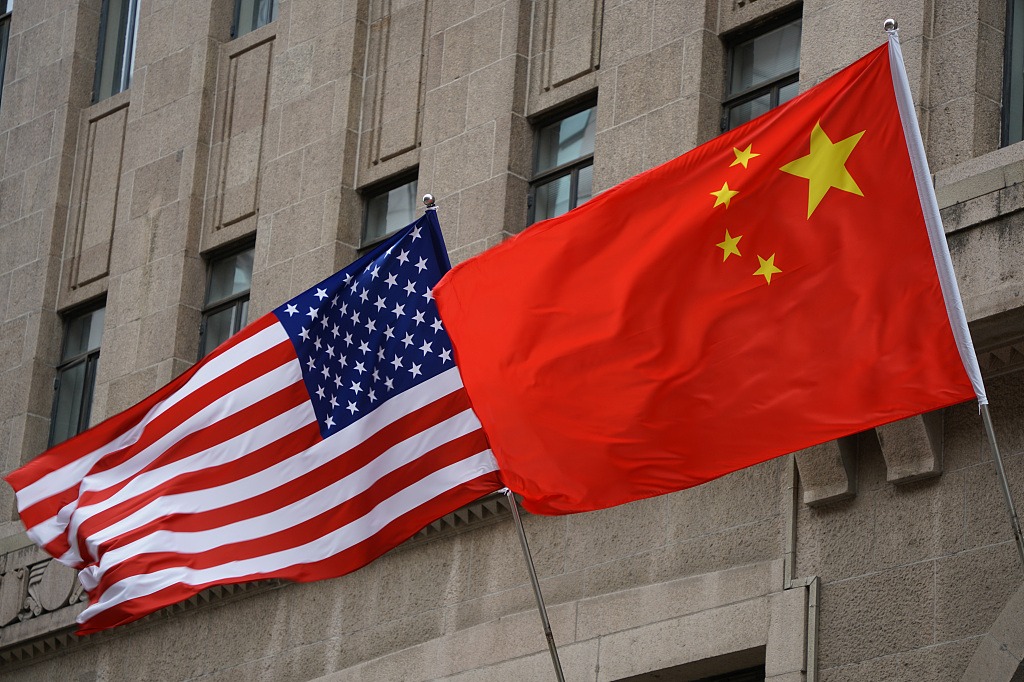
Against a shifting backdrop of global trade rebalancing, leading economists, business leaders and policy analysts are calling on China and the United States — particularly Washington — to build a more stable and predictable policy environment that can underpin mutually beneficial bilateral commercial cooperation, noting the two global economic powers still hold massive untapped potential to deepen cross-border business ties.
New data released by China’s General Administration of Customs reveals that Sino-US bilateral trade fell 16.6 percent year-on-year to $128.68 billion in the first quarter of 2026, a decline that comes as China reshapes its trade portfolio toward faster-growing emerging markets and regional trade partners. Over the same period, China’s trade with the European Union expanded 17.6 percent year-on-year in U.S. dollar terms, while trade with the Association of Southeast Asian Nations (ASEAN) rose 18.4 percent, according to the official statistics.
Li Wei, a professor of international relations at Renmin University of China, attributes the sharp Q1 contraction in Sino-US trade to mounting structural challenges facing the bilateral economic relationship. He explained that Washington’s increasing reliance on national security justifications for restrictive trade measures against China has disrupted established cross-border trade flows and injected widespread uncertainty into global commodity and supply chains.
China’s Ministry of Commerce has repeatedly emphasized the country’s openness to strengthening trade collaboration with the United States, while cautioning that unilateral trade restrictions and inconsistent policy frameworks have created measurable headwinds for bilateral commerce. The ministry has repeatedly called for collaborative action to establish a more stable policy landscape that can rebuild business confidence on both sides.
Sean Stein, president of the US-China Business Council, stressed that targeted, pragmatic action is needed to address legitimate national security concerns without undermining the foundation of bilateral trade, with the goal of building a more resilient and sustainable bilateral trade relationship. “We should rationalize security concerns and make it the right size, not over-blow it,” he said. Stein pointed out that as the world’s two largest economies and two largest consumer markets, China and the United States carry an outsize responsibility for shaping global economic growth, cross-border research and development, and the stability of global supply chains.
Looking beyond the dynamics of the bilateral relationship, Robert Koopman, former chief economist of the World Trade Organization, noted that trade policy is not the primary determinant of long-term global trade expansion. “Tariffs and related measures account for only a part of trade dynamics, while broader factors such as technological change and innovation play a far more significant role,” he explained.
Lynn Song, chief China economist at Dutch financial group ING, projected that the economic drag from U.S. trade restrictions will likely ease over the course of 2026, and external demand for Chinese goods will remain a key driver of China’s economic growth this year — barring the introduction of new, large-scale tariff shocks.
Louise Loo, head of Asia Economics at Oxford Economics, a leading British think tank, added granular context to China’s shifting trade trends: while Chinese exports to ASEAN members, South Korea and India have outpaced 2025’s average growth rate, and sequential monthly growth has returned for exports to the EU, the U.S. and Canada, U.S.-bound shipments still remain below year-earlier levels. Loo noted that since Washington first rolled out new tariff measures against China in February 2025, U.S.-bound exports have declined, but this gap has been more than offset by surging trade volumes with ASEAN and Northeast Asian partners.
This reorientation of China’s trade flows underscores a broader regional rebalancing of trade, as supply chains and demand patterns continue to evolve across the Asia-Pacific. Even amid geopolitical headwinds, regional economic ties have demonstrated unexpected resilience: despite strained Sino-Japanese diplomatic relations dating back to November 2025, bilateral trade between China and Japan grew 17.8 percent year-on-year to $85.19 billion in the first quarter of 2026, according to customs data, highlighting the deep economic complementarity between the two economies.
Chen Zilei, a professor of Japanese studies at Shanghai University of International Business and Economics, said that against the backdrop of strained political ties, Tokyo must recognize how critical bilateral trade with China is to Japan’s own domestic economic growth and long-term industrial competitiveness.
This perspective aligns with on-the-ground business sentiment. A February 2026 survey from the Japanese Chamber of Commerce and Industry in China found that despite ongoing geopolitical tensions, roughly 59 percent of Japanese member companies plan to either increase or maintain their current investment levels in China in 2026 — a 3 percentage point increase from the chamber’s previous survey.
Stephen Ma, chairman of Nissan Motor China, noted that China’s vast consumer market and rapidly expanding domestic demand are opening new growth opportunities for the global automotive sector. He added that these opportunities reflect China’s maturing market, rising operational efficiency, and growing investor confidence. The Japanese automaker sold 653,000 vehicles in China in 2025, with sales growing 4.5 percent year-on-year in the second half of the year.