
France has formally requested the European Union’s executive arm to investigate fast-fashion giant Shein for allegedly selling illegal items, including child-like sex dolls and weapons, on its expansive online marketplace. Two French ministers, Roland Lescure and Anne Le Henanff, have sent a letter to Henna Virkkunen, the European Commission’s executive vice-president for tech sovereignty, urging immediate action. The ministers emphasized that Shein must comply with the Digital Services Act (DSA), the EU’s regulatory framework aimed at ensuring online platform safety and user protection. The French government has initiated procedures to suspend access to Shein’s marketplace in France unless the platform demonstrates compliance with national laws. Authorities discovered not only child-like sex dolls but also significant quantities of illegal ‘Class A’ weapons, including firearms, knives, and war materials, on the platform. Shein, which was classified as a ‘very large online platform’ by the EU last year due to its 45 million European users, faces stringent regulatory requirements. Non-compliance could result in suspension and fines of up to 6% of its annual profits. The company, founded in China in 2012 and now headquartered in Singapore, has pledged to collaborate with French authorities to address concerns promptly.
分类: business
-

US and European energy leaders in Greece to talk ways to better supply Ukraine
ATHENS, Greece — Energy ministers from the United States and European nations convened in Athens on Thursday to strategize on leveraging a newly enhanced regional pipeline network to bolster gas supplies to war-torn Ukraine. The meeting, hosted by the Atlantic Council, a Washington-based think tank, saw the participation of U.S. Energy Secretary Chris Wright, Interior Secretary Doug Burgum, over 80 U.S. officials, EU energy ministers, and executives from leading American liquefied natural gas (LNG) companies.
President Donald Trump aims to capitalize on the United States’ status as the world’s leading LNG exporter to persuade the EU to increase its purchases of U.S. gas. This initiative is part of broader trade negotiations, with Europe already being the largest market for American LNG. The EU is also committed to eliminating all Russian gas supplies within the next two years, shifting focus to the Vertical Corridor, a north-south gas route connecting Greece with Bulgaria and Romania.
Greek Prime Minister Kyriakos Mitsotakis emphasized Greece’s strategic geographic position as the natural entry point for American LNG into Europe. ‘The Vertical Corridor is a project of great geopolitical and economic importance to us,’ Mitsotakis stated during talks with U.S. officials. ‘We’re happy that it’s becoming a reality.’
-
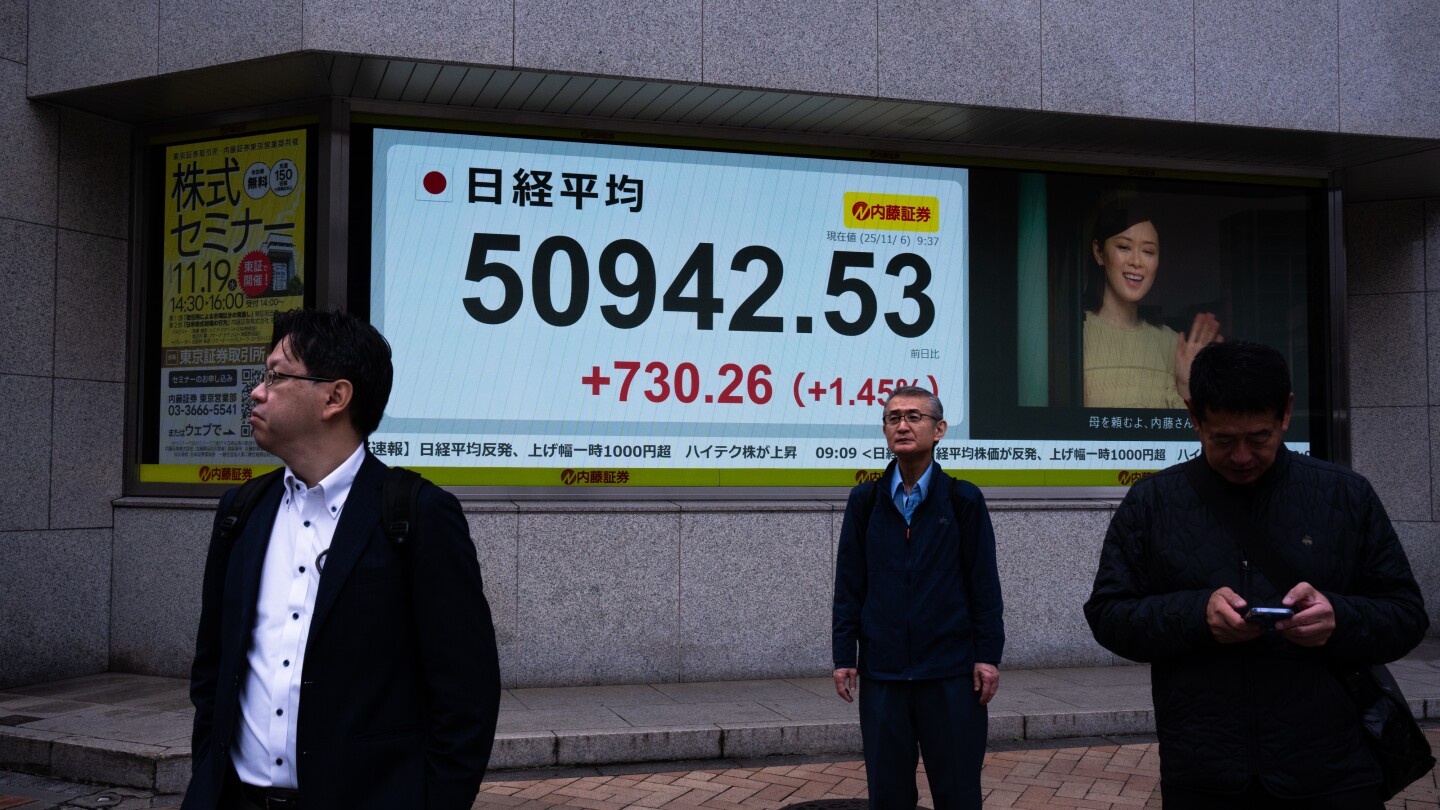
World shares are mixed after upbeat economic updates and earnings reports boost Wall St
European stock markets opened lower on Thursday, failing to sustain the momentum from a broad rally in Asian markets, which had been buoyed by a rebound on Wall Street. Despite positive economic updates and a steady stream of quarterly earnings reports from U.S. companies, concerns over surging valuations of Big Tech firms weighed on investor sentiment. Germany’s DAX dropped 0.2% to 24,003.24, while France’s CAC 40 fell 0.5% to 8,033.11. The UK’s FTSE 100 also slipped 0.2% to 9,761.18. Futures for the S&P 500 remained flat, while the Dow Jones Industrial Average futures edged down 0.1%. In contrast, Asian markets saw a strong recovery. Tokyo’s Nikkei 225 surged 1.3% to 50,883.68, and Hong Kong’s Hang Seng jumped 2.1% to 26,485.90. However, Nissan Motor Co. faced a 1.7% decline after announcing the sale of its Yokohama headquarters to raise cash, coupled with a reported loss of 221.9 billion yen ($1.4 billion) for April-September. South Korea’s Kospi rose 0.6%, and Taiwan’s Taiex gained 0.7%. Meanwhile, autonomous driving companies Pony.ai and WeRide saw their shares plummet by 9.3% and 10%, respectively, in their Hong Kong stock exchange debut. Cathay Pacific Airways, however, gained 4% following Qatar Airways’ decision to sell its 9.57% stake in the Hong Kong-based carrier. In the U.S., Wall Street had reversed its prior day’s dip on Wednesday, driven by gains in the technology sector. Alphabet, Broadcom, and Meta Platforms led the charge, offsetting losses from Nvidia and Microsoft. The S&P 500 rose 0.4%, the Dow industrials gained 0.5%, and the Nasdaq composite added 0.6%. Investors continued to focus on corporate earnings and forecasts, which provided critical insights into consumer behavior and economic trends amid a government shutdown that has halted key economic data releases. A weaker job market remains a concern for the Federal Reserve, which recently cut its benchmark rate for the second time this year to stimulate economic growth. In early Thursday trading, U.S. benchmark crude oil rose 26 cents to $59.86 per barrel, while Brent crude advanced 25 cents to $63.77. The U.S. dollar weakened against the Japanese yen, and the euro strengthened slightly against the dollar.
-
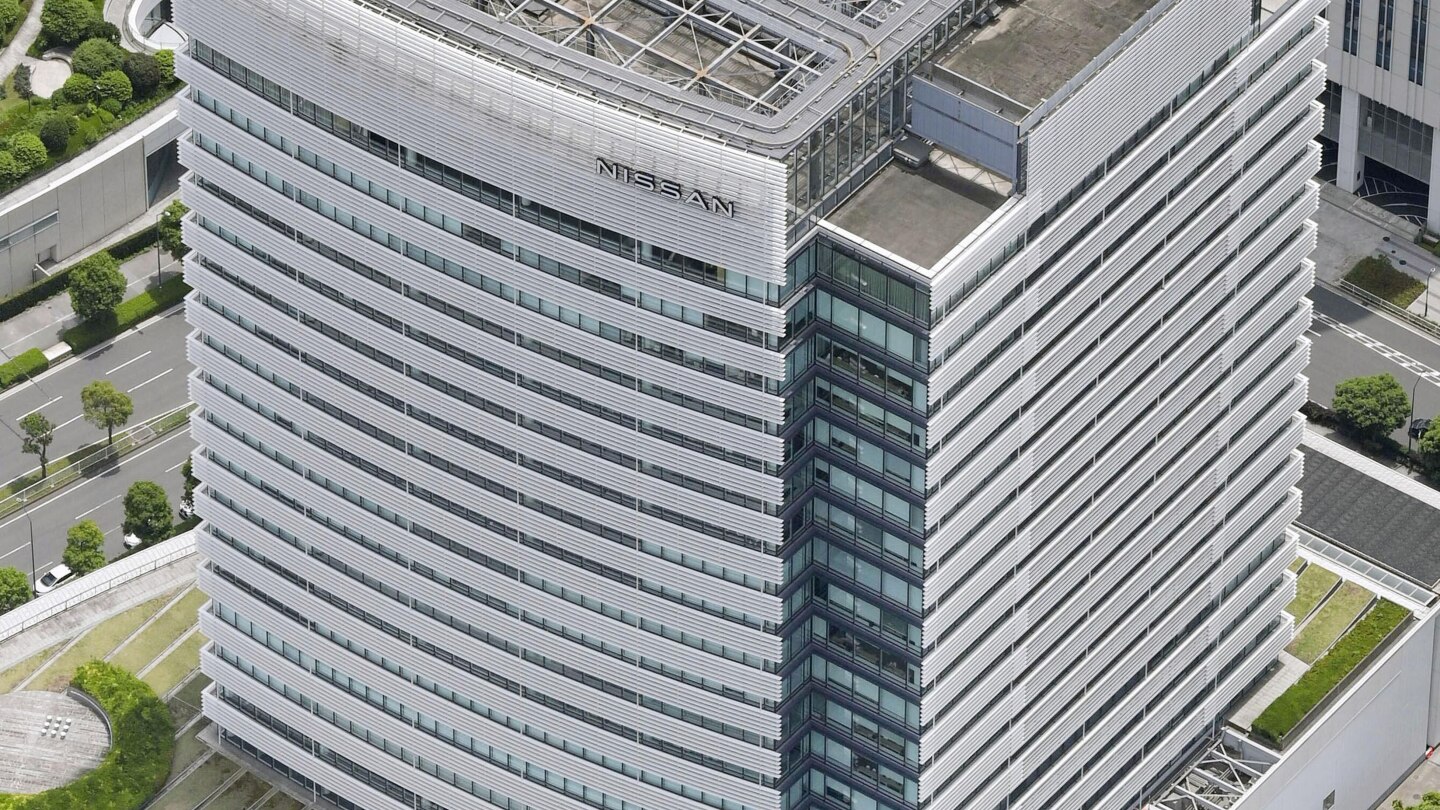
Money-losing Japanese automaker Nissan is selling its headquarters building to gain cash
In a strategic move to bolster its financial recovery, Nissan Motor Co. announced on Thursday the sale of its headquarters building in Yokohama for 97 billion yen ($630 million). The Japanese automaker, which has been grappling with significant financial losses, will lease back the property and continue to use it as its headquarters. The transaction with Tokyo-based real estate operator MJI Godo Kaisha, a subsidiary of Hong Kong-listed Minth Group, is expected to yield a gain of 73.9 billion yen ($480 million) for Nissan. The proceeds will be allocated toward modernizing internal systems, accelerating the adoption of AI-driven technologies, and enhancing digital operations across the company. Nissan, known for its March subcompact and Infiniti luxury models, has been striving to return to profitability after reporting a staggering 670.9 billion yen ($4.4 billion) loss for the fiscal year ending in March. Under the leadership of new CEO Ivan Espinosa, a seasoned Nissan executive with two decades of experience, the company is implementing a comprehensive turnaround strategy. This includes workforce reductions of 15%, affecting approximately 20,000 employees globally, and the closure of its flagship factory in Oppama, Japan. Nissan emphasized that the sale of its headquarters building aligns with its disciplined approach to capital efficiency, unlocking value from non-core assets to support its transformation during challenging times. The company remains committed to innovation, competitiveness, and aggressive research to secure future growth.
-

NRIs in UAE: India’s fintech sector continues on strong growth path
India’s fintech sector is experiencing unprecedented growth, driven by technological innovation and strategic government initiatives. With over 10,000 companies and $40 billion in investments, the sector has become a cornerstone of India’s digital economy. The Reserve Bank of India (RBI) recently unveiled the Unified Market Interface, a groundbreaking platform enabling instant trading of financial assets as digital tokens, settled through the central bank’s digital currency. This development marks a pivotal moment in India’s digital finance ecosystem, which is further bolstered by advancements in data integration, asset tokenization, artificial intelligence (AI), and cybersecurity. The account aggregator framework currently serves 160 million accounts, enhancing financial inclusivity and transparency. Additionally, the Unified Lending Interface has bridged India’s credit gap, sanctioning 3.2 million loans worth Rs. 1.7 trillion since its launch. The retail digital e-rupee, adopted by 19 banks and 7 million users, has also emerged as a critical component of India’s digital public infrastructure. Despite lower R&D spending compared to the US and China, India is leveraging AI to accelerate innovation in life sciences, climate resilience, and space technology. The automotive sector is also thriving, with vehicle exports growing by 20% in the first half of 2025, driven by global demand for electric vehicles and SUVs manufactured in India. Companies like Suzuki, Hyundai, and Nissan are leading this export surge, positioning India as a global manufacturing hub.
-
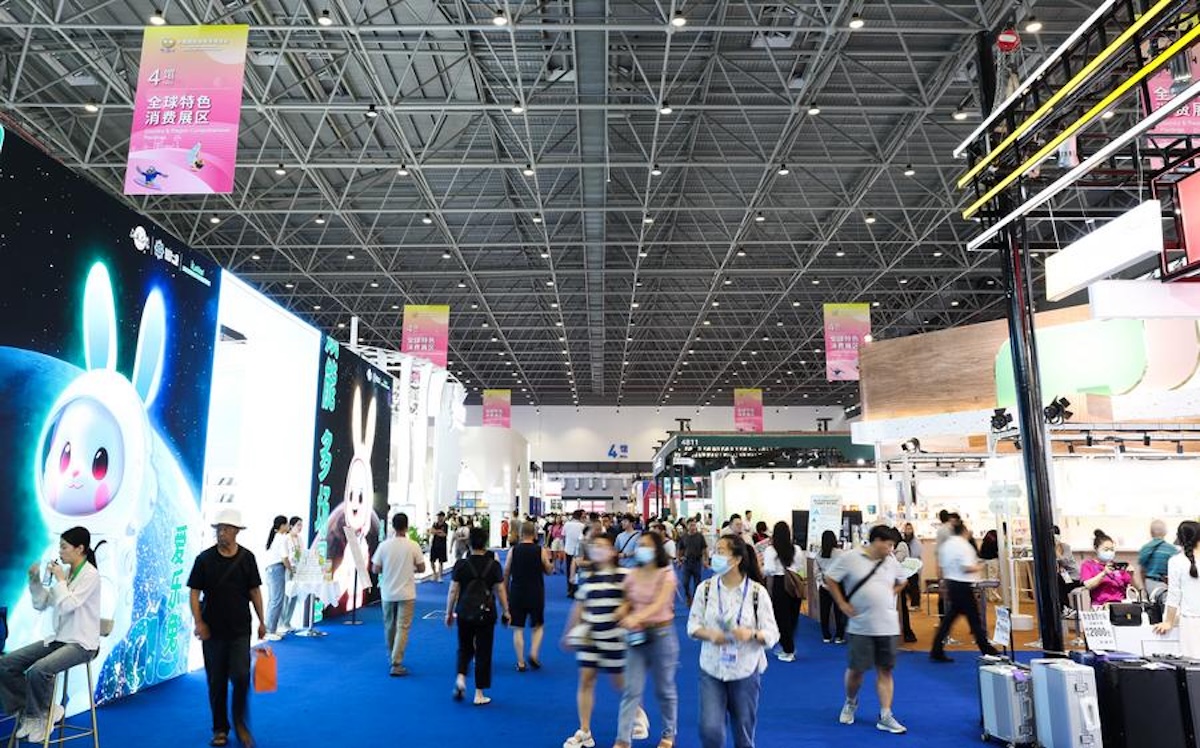
China’s bet on self-reliance won’t fix an unbalanced economy
Since 1953, China has periodically introduced five-year plans to guide its economic transformation. The 15th five-year plan, unveiled in October 2025, aims to address sluggish domestic growth and intensifying geopolitical rivalry by emphasizing technological self-reliance, industrial modernization, and expanded domestic demand. President Xi Jinping and other leaders are betting on innovation-driven growth to secure China’s future, despite concerns about weak consumer spending and economic risks. The plan prioritizes advanced manufacturing, tech innovation, and green industries, such as aerospace, renewable energy, and quantum computing. Beijing’s focus on indigenizing critical technologies and military-civil fusion underscores its dual goals of economic and national security. However, the plan’s limited attention to boosting domestic demand and household consumption raises questions about its ability to rebalance the economy. While China’s push for high-tech industries could reshape global supply chains, it may also exacerbate trade frictions with advanced economies. The success of this ambitious plan will ultimately depend on whether it improves the lives of Chinese citizens by 2030.
-
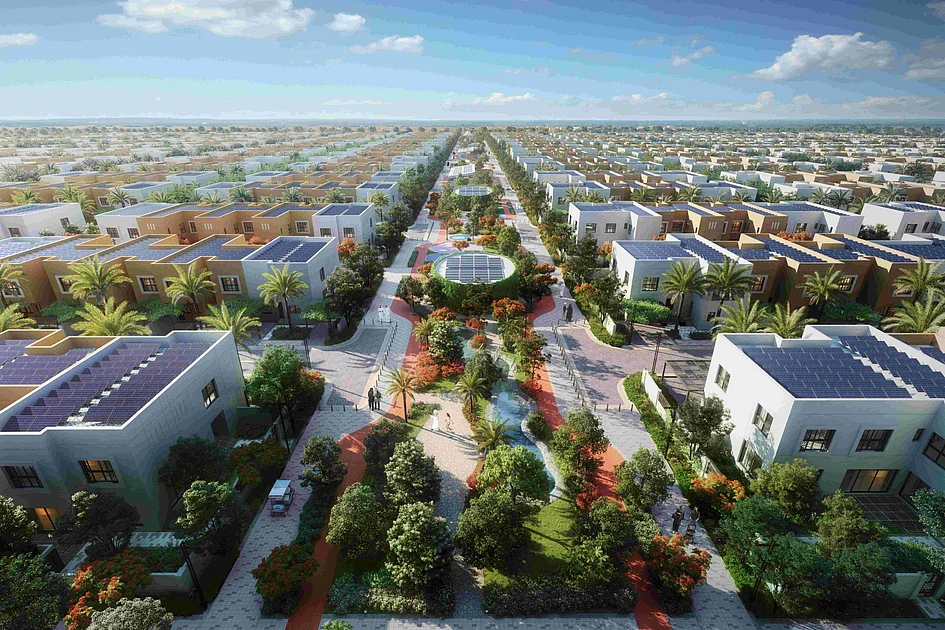
Why food-water-energy nexus must be at heart of tomorrow’s communities
As the world grapples with mounting pressures on water resources, escalating energy demands, and the increasing need for local food production due to global supply chain vulnerabilities, the UAE has positioned itself at the forefront of addressing these challenges. The concept of the food-water-energy nexus has emerged as a critical framework for building resilient and sustainable communities, particularly in the face of rapid urbanization and resource constraints. This approach, endorsed by the United Nations, underscores the interconnectedness of water, energy, and food security, which are central to achieving 14 out of the 17 Sustainable Development Goals. In the UAE, this interconnectedness is not merely theoretical but is actively integrated into strategic initiatives such as the UAE Food Security Strategy 2051, which aims to enhance domestic food production while mitigating the impacts of climate change-induced water scarcity. Sharjah, in particular, has become a hub for sustainable innovation, with projects like Sharjah Sustainable City exemplifying this commitment. Spanning 7.2 million square feet, this master-planned community features 1,250 villas powered by rooftop solar panels, treats 100% of its wastewater for irrigation, and incorporates urban farming and biodomes to promote local food production. The project also emphasizes behavioral change, engaging residents through workshops on urban farming, composting, energy conservation, and sustainable art. Sharjah’s broader sustainability vision, including initiatives like electrifying its public bus fleet with low-emission vehicles, further cements its leadership in regenerative urbanism. Moving forward, the challenge for real estate developers and policymakers lies in embedding the food-water-energy nexus into the core of new developments, ensuring that sustainable living becomes the default rather than the exception. As global milestones for food, energy, and sustainability are observed, the integration of these systems will be pivotal in shaping communities that are not only resilient but also economically, socially, and environmentally sustainable.
-
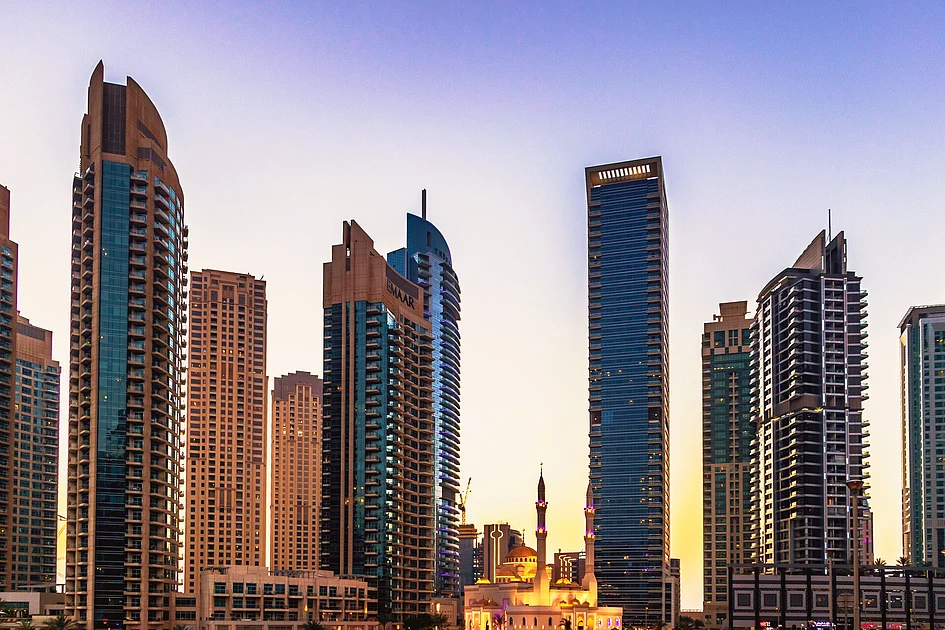
Dubai emerges as a global wealth nexus, bridging Asia and the Middle East
Dubai is rapidly emerging as a global nexus for wealth, strategically bridging the financial ecosystems of Asia and the Middle East. This transformation is driven by a surge in cross-border investments and the growing influence of globally minded families seeking diversified wealth management solutions. According to Derrick Tan, Group Executive Chairman of WRISE Group, Dubai is uniquely positioned to serve the next generation of Asian wealth, which is mobile, sophisticated, and increasingly interconnected.
-
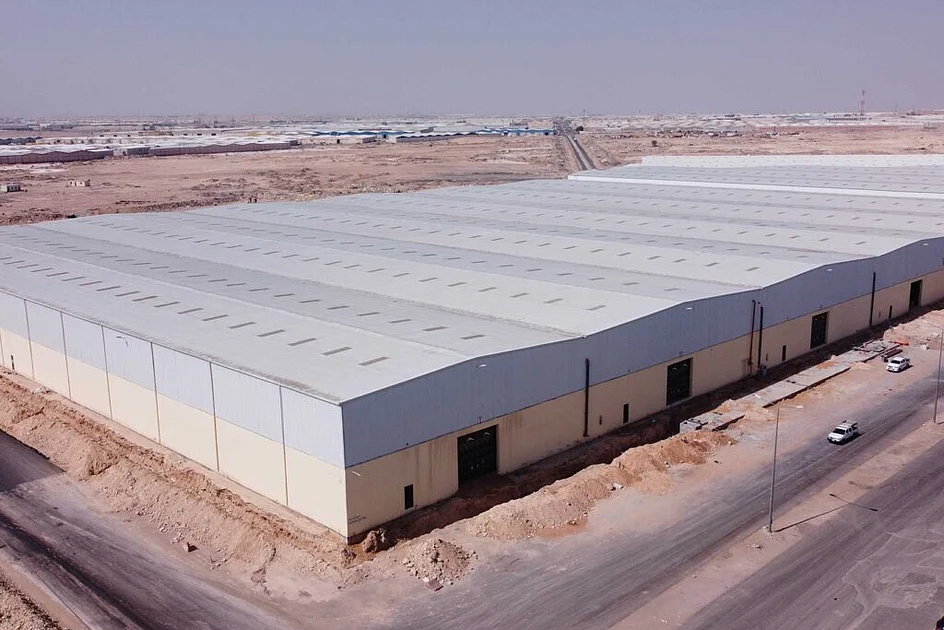
GFH Partners announces acquisition of Riyadh logistics asset
GFH Partners Ltd, a prominent institutional fund manager based in Dubai International Financial Centre and regulated by the DFSA, has announced a significant acquisition in the logistics sector. One of its advised real estate funds has secured a large-scale logistics property in Riyadh for approximately 200 million Saudi riyals. This strategic move underscores GFH Partners’ commitment to expanding its industrial and logistics investment platform in the GCC region, which now boasts assets worth around 1.5 billion riyals. The firm’s global assets under management (AUM) currently stand at an impressive 26 billion riyals. The newly acquired property, situated in Riyadh’s industrial and logistics zone, spans over 40,000 square meters and features state-of-the-art infrastructure, including 12-meter clear heights, truck docks, high power capacity, and direct access to Riyadh’s Eastern and Southern Ring Roads. Fully leased, the asset caters to leading logistics operators seeking scalable, high-quality infrastructure in one of the region’s most sought-after distribution hubs. This acquisition marks the fourth asset secured by GFH Partners in Saudi Arabia and the 34th property within its broader platform. The platform’s properties are leased to over 120 tenants across strategic industrial and logistics zones in Saudi Arabia and the UAE, benefiting from prime access to multi-modal transport corridors linking key regional markets, including JAFZA, Dubai South, and industrial cities in Dammam and Riyadh. Mohamed Ali, Head of GCC at GFH Partners, emphasized the firm’s optimistic outlook on the industrial and logistics sector in the GCC, citing strong growth driven by national initiatives to diversify economies and enhance supply chain infrastructure. Since launching its GCC platform in 2023, GFH Partners and its affiliates have managed three dedicated funds focused on industrial and logistics assets in Saudi Arabia and the UAE. The firm continues to expand its portfolio, with several built-to-suit and infrastructure-related development transactions underway in the logistics sector, alongside plans for additional acquisitions in the near future.
-
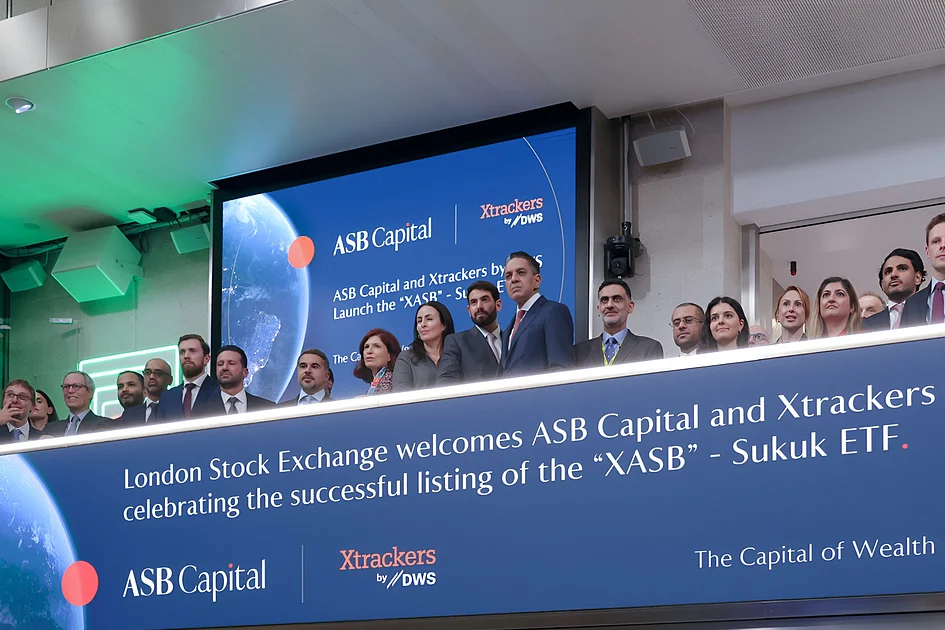
ASB Capital and Xtrackers by DWS launch XASB Sukuk ETF on London Stock Exchange
In a significant development for the global financial markets, ASB Capital, a purpose-driven asset management firm with $5.8 billion in assets under management (AUM), has partnered with Xtrackers by DWS, a leading European provider of exchange-traded funds (ETFs), to launch the XASB Sukuk ETF on the London Stock Exchange (LSE). This marks ASB Capital’s first Shari’a-compliant ETF and a milestone for Xtrackers by DWS, offering investors regulated, cost-efficient, and diversified access to the growing Sukuk market. The ETF provides exposure to over 150 Sukuk, addressing historical barriers such as high minimum investment requirements and limited product innovation. Sukuk, which represent 45% of the $2.5 trillion USD-denominated debt market, are forecasted to exceed $2 trillion by 2030, driven by their asset-backed nature and consistent performance. The partnership leverages Xtrackers’ expertise in ETF structuring and ASB Capital’s regional influence, creating a gateway for global investors to participate in this resilient asset class. Hichem Djouhri, Senior Executive Officer at ASB Capital, emphasized the firm’s commitment to innovative and accessible investment solutions, while Houda Ennebati, Head of Xtrackers ETF Sales – France & MENA, highlighted the ETF’s role in broadening investor participation in economic development. ASB Capital, licensed by the Dubai Financial Services Authority (DFSA), continues to strengthen its position as a regional leader with global reach.