分类: business

  • Dubai’s VARA: Regulating the future of virtual assets

    Dubai’s VARA: Regulating the future of virtual assets

    Dubai has solidified its position as a global leader in digital finance by establishing the Virtual Assets Regulatory Authority (VARA), the world’s first dedicated regulator for virtual assets. Since its inception in 2022, VARA has been at the forefront of shaping a regulatory framework that balances innovation, investor protection, and market integrity. Under the leadership of CEO Matthew White, VARA has evolved into a full-scale authority overseeing one of the most dynamic virtual asset markets globally.

    VARA’s approach is rooted in principles rather than rigid prescriptions, ensuring flexibility and clarity for market participants. The framework emphasizes activity-specific requirements, data-driven supervision, and global alignment. White highlights the importance of leveraging technology-enabled supervision, scaling innovation through sandboxes, and fostering cross-border cooperation. Collaborations with entities like the UAE Securities and Commodities Authority further strengthen Dubai’s unified national framework.

    Innovation remains a cornerstone of VARA’s strategy, but not at the expense of accountability. White asserts that compliance and innovation are complementary, benefiting investors, consumers, and innovators alike. The authority’s principles-based framework sets clear guardrails while allowing Virtual Asset Service Providers (VASPs) the flexibility to meet standards. Strict enforcement mechanisms, including fines up to Dh10 million, underscore VARA’s commitment to compliance.

    Engagement with the industry is central to VARA’s operations. Regular consultations with VASPs, tech experts, and investors ensure that regulations remain relevant and effective. Workshops and participation in major events like GITEX and TOKEN2049 further enhance VARA’s connection with the ecosystem. Dubai’s appeal as a virtual asset hub is bolstered by its world-class infrastructure, business-friendly policies, and lifestyle advantages, attracting institutional investors and major players in the industry.

    VARA is also pioneering the tokenization of real-world assets and exploring AI-powered Web3 platforms. The Dubai Land Department’s Property Token Ownership Certificate exemplifies this shift, linking tokenized assets to the land registry. Successful projects, such as Prypco Mint’s tokenized real estate, demonstrate the potential of these innovations. Additionally, VARA’s Pilot Framework allows for the safe testing of new products, ensuring responsible innovation.

    Looking ahead, VARA is preparing for the next generation of digital assets, focusing on robust governance and tech oversight. The Technology & Information Rulebook ensures firms meet stringent cybersecurity and data protection standards. White envisions Dubai as a global hub for virtual assets, driving economic growth, creating jobs, and competing on the international stage.

  • A bitter harvest for California vintners

    A bitter harvest for California vintners

    California’s wine industry, a cornerstone of the state’s agricultural economy, is grappling with one of its most challenging harvest seasons in decades. Vineyards across the Central Valley and Napa Valley are witnessing rows of unpicked grapes withering under the autumn sun, while bulldozers tear through once-thriving vineyards. This stark reality reflects the mounting pressures of oversupply, rising costs, and retaliatory tariffs that have left many growers in dire straits. Stuart Spencer, executive director of the Lodi Winegrape Commission, described the situation as a ‘crisis,’ with independent growers bearing the brunt of the fallout. Nearly 80% of California’s wine grapes are cultivated by independent farmers, many of whom are now abandoning their vineyards rather than face financial ruin. Jeff Bitter, president of Allied Grape Growers, echoed this sentiment, stating that the current crisis is the worst he has seen in his 30 years in the industry. The oversupply of wine, weakening consumer demand, and escalating costs due to inflation and labor shortages have compounded the industry’s woes. However, tariffs and trade policies have exacerbated these challenges, particularly in key export markets like Canada and China. Earlier this year, Canada imposed a 25% tariff on US wine in response to US tariffs on Canadian steel and aluminum, effectively shutting California producers out of their largest export market. While the retaliatory tariff was lifted in September, American wines have yet to return to Canadian shelves. Additionally, tariffs on imports such as glass bottles, corks, and packaging materials have driven up production costs, further squeezing wineries’ margins. Scott Meadows, CEO of Maxville Winery in Napa Valley, highlighted the long-term impact of these tariffs, noting that even essential equipment repairs have become prohibitively expensive. The industry’s struggles underscore the need for stable trade policies and a concerted effort to rebuild export markets, particularly in Asia, where trade tensions have hindered growth. As California’s wine growers navigate this turbulent period, the future of an industry that has long defined the state’s agricultural and cultural identity hangs in the balance.

  • US soybean farmers are dangerously overdependent on China

    US soybean farmers are dangerously overdependent on China

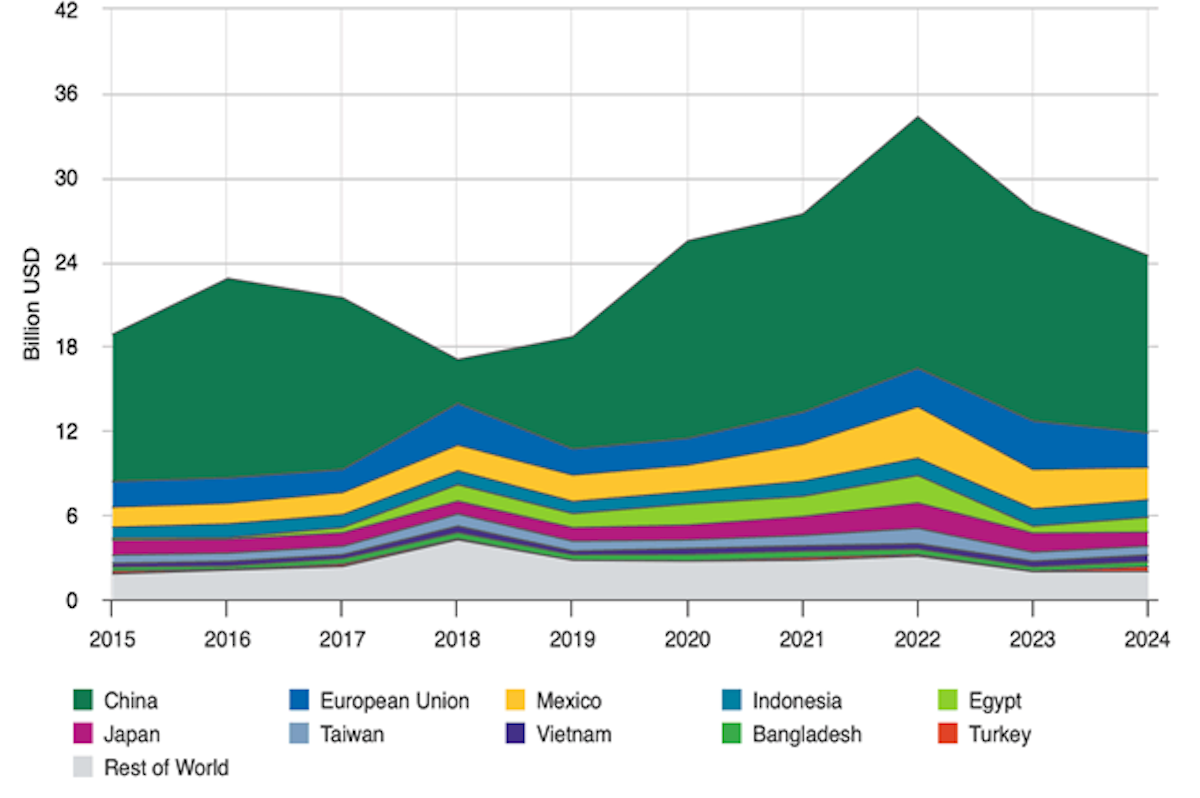
    In 2003, during my early days at DTN/The Progressive Farmer, I was invited to speak about China at a farmers’ meeting in Iowa. Though not an expert on Chinese agriculture, my 17 years living and working in Tokyo and Hong Kong allowed me to witness China’s extraordinary economic growth. I confidently declared, ‘China is the difference between $5 soybeans and $10 soybeans.’ This prediction proved accurate, as US soybean exports to China doubled in the following years, with prices soaring to $9–$15 per bushel. For decades, China has been the largest overseas buyer of US soybeans, accounting for over half of American exports in 2024, far surpassing the European Union’s 10% share. However, the trade war initiated by President Donald Trump in 2018 disrupted this relationship, prompting China to increasingly turn to Brazil as its primary supplier. Despite this shift, China continued to purchase significant quantities of US soybeans—until 2024. This year, China has drastically reduced its imports, buying only 200 million bushels in the first eight months, compared to 1 billion during the same period in 2023. In recent months, imports have dropped to zero. The American Soybean Association’s president, Caleb Ragland, expressed concern, stating, ‘The farm economy is suffering while our competitors supplant the United States in the biggest soybean import market in the world.’ While some analysts predict a potential rebound in Chinese purchases, the ongoing trade tensions, including Trump’s imposition of 100% tariffs on Chinese goods, cast doubt on this possibility. The situation underscores the urgent need for US farmers to diversify their markets and reduce reliance on China. Meanwhile, China is actively expanding its domestic soybean production and investing in alternative suppliers like Brazil and Russia. For US farmers, the loss of China as a major buyer is a stark reminder of the risks of overdependence on a single market. Developing new domestic and international markets is essential to ensure long-term stability and growth in the soybean industry.

  • Chinese airlines protest US plan to ban their flights over Russian airspace

    Chinese airlines protest US plan to ban their flights over Russian airspace

    Major Chinese state-owned airlines have strongly opposed a U.S. proposal to prohibit them from flying over Russian airspace on routes to and from the United States. The U.S. argues that this restriction would level the playing field, as American carriers are barred from Russian airspace due to sanctions imposed after Russia’s invasion of Ukraine in 2022. Air China, China Eastern, and China Southern are among six carriers that have filed formal complaints against the proposed ban, warning of significant disruptions to travelers and increased costs. China Eastern emphasized that the ban would harm public interest and inconvenience passengers, leading to longer flight times, higher fuel consumption, and elevated airfares. China Southern highlighted the potential impact on thousands of travelers, while Air China estimated that over 4,400 passengers could be affected during the upcoming holiday season. The Chinese Foreign Ministry also criticized the proposal, labeling it as punitive to global passengers. Aviation expert David Yu noted that U.S. carriers face increased costs due to longer flight paths, while Chinese airlines benefit from cost savings by using Russian airspace. Despite these advantages, Chinese carriers have faced financial challenges, particularly since the COVID-19 pandemic. The U.S. Department of Transportation defended the proposal, citing ‘competitive imbalances’ caused by Chinese airlines’ access to more efficient routes. European carriers, including Air France-KLM, have also expressed concerns, while United Airlines urged that Cathay Pacific, Hong Kong’s flagship carrier, be excluded from the ban.

  • Most US stocks rise after swinging through another erratic day

    Most US stocks rise after swinging through another erratic day

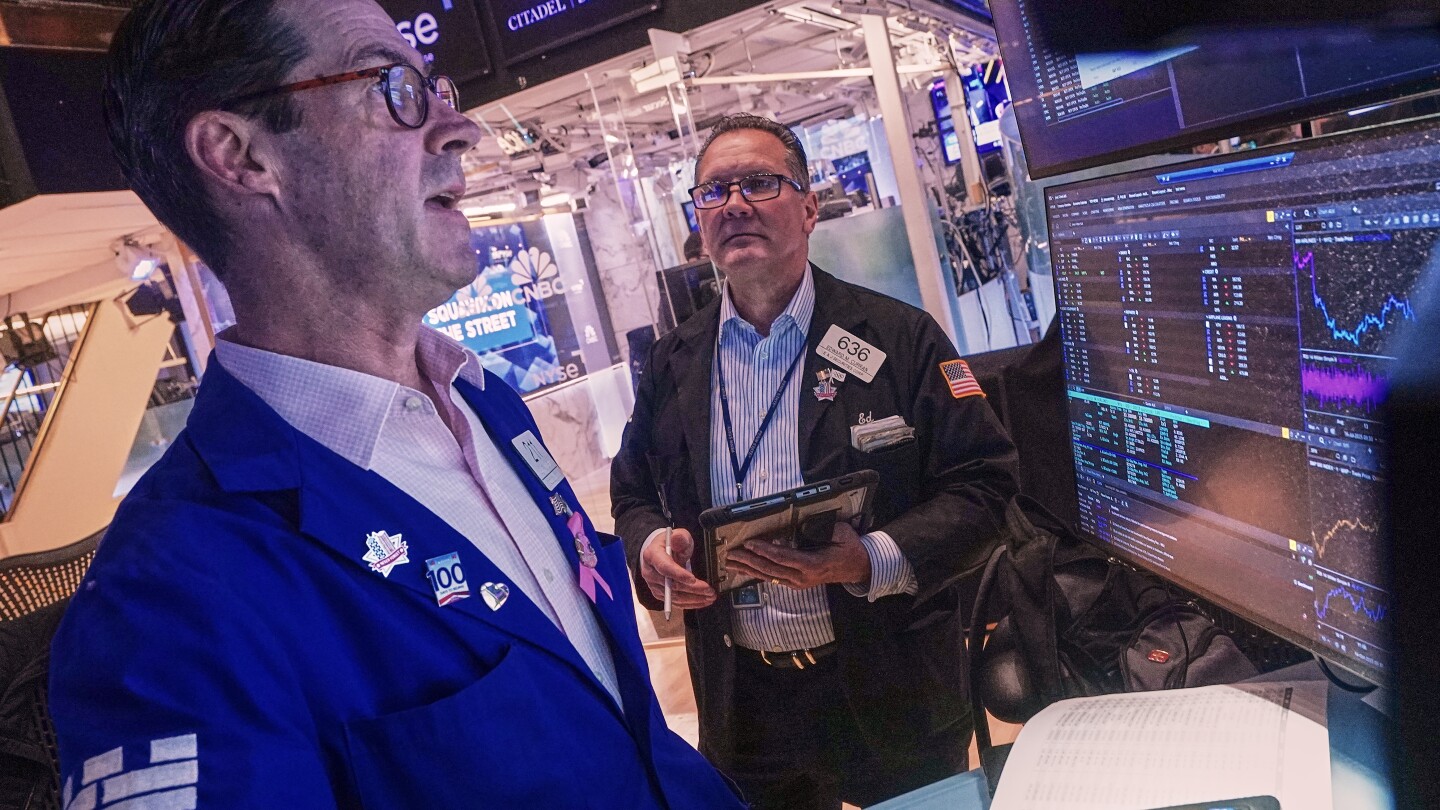
    Wall Street experienced another day of erratic trading on Wednesday, with major indices showing mixed results. The S&P 500 gained 0.4%, recovering from earlier fluctuations that saw it nearly erase a significant morning rally. The Nasdaq composite rose 0.7%, bouncing between a 0.4% drop and a 1.4% surge, while the Dow Jones Industrial Average dipped slightly by 17 points, or less than 0.1%. This volatility follows a turbulent Tuesday, where the Dow swung between a 615-point loss and a 455-point gain, reflecting ongoing market uncertainty. The recent instability traces back to President Donald Trump’s threat of higher tariffs on China, which disrupted a period of relative calm in the markets. Technology stocks led the charge on Wednesday, buoyed by a strong earnings report from ASML, a key player in the semiconductor industry. ASML projected a 15% revenue increase by 2025, with next year’s earnings expected to match or exceed this year’s. CEO Christophe Fouquet highlighted the growing momentum in AI investments, countering concerns of a potential bubble akin to the dot-com frenzy of 2000. Financial institutions also contributed to the market’s upward movement, with Bank of America and Morgan Stanley posting better-than-expected profits. However, PNC Financial and Abbott Laboratories faced declines due to underwhelming forecasts and revenue shortfalls. Corporate earnings are under heightened scrutiny as investors seek clarity on the U.S. economy’s health, especially with delayed government reports on inflation and other key indicators. The Federal Reserve’s recent rate cut and hints of further reductions add another layer of complexity, as policymakers balance inflation concerns with a slowing job market. In the bond market, the 10-year Treasury yield held steady at 4.03%, while gold prices surged 0.9% to over $4,200 per ounce, driven by global economic uncertainties. Overseas, Asian markets saw strong gains, with South Korea’s Kospi jumping 2.7%, while European indices showed mixed results.

  • IMF: China’s economy to grow at 4.8%

    IMF: China’s economy to grow at 4.8%

    The International Monetary Fund (IMF) has revised its economic growth projection for China, anticipating a 4.8% expansion in the coming year. This updated forecast, released in the IMF’s World Economic Outlook on Tuesday morning in Washington, marks a 0.3 percentage point increase from the previous year’s estimate. The upward adjustment reflects China’s robust economic performance in recent quarters, bolstered by fiscal expansion, resilient domestic consumption, and accelerated trade activities. These factors have effectively mitigated the adverse effects of elevated tariffs and persistent global uncertainties. The IMF’s optimistic outlook underscores China’s ability to navigate complex economic challenges while maintaining steady growth. (Reporter: Zhao Huanxin, Video: Bilin Lin)

  • China economy to stay growing, IMF forecasts

    China economy to stay growing, IMF forecasts

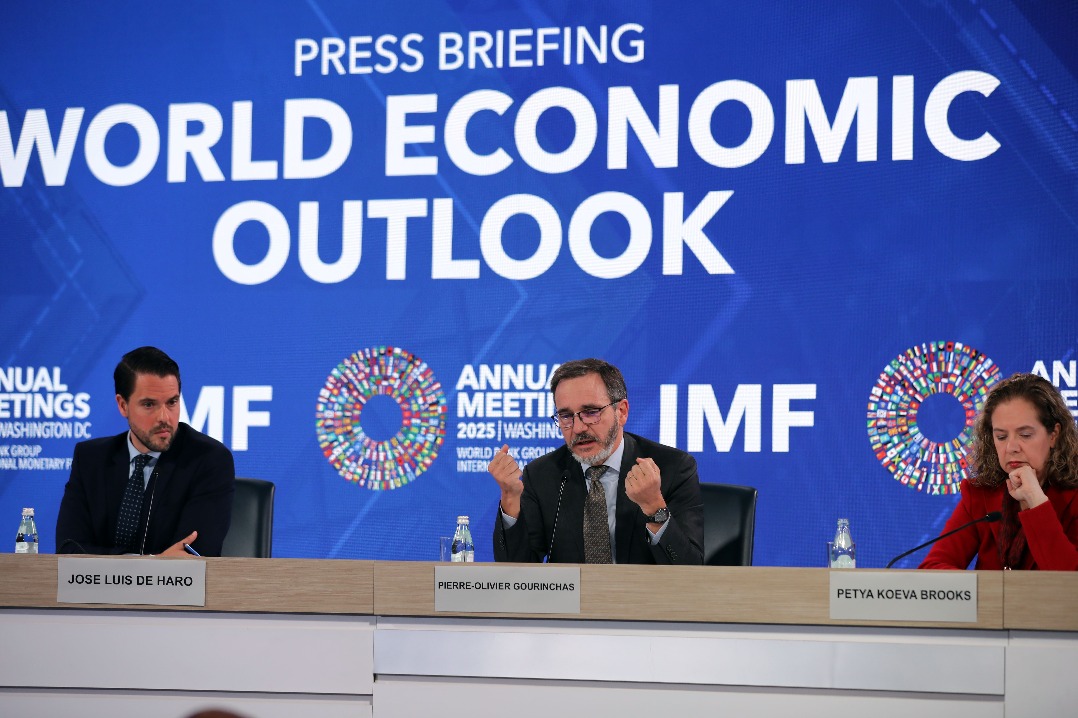
    The International Monetary Fund (IMF) has revised its growth forecast for China’s economy, projecting a 4.8% expansion in 2025, up 0.3 percentage points from its earlier estimate. This optimistic outlook comes despite global economic headwinds, including escalating trade tariffs and potential downturns in the technology sector. The IMF’s World Economic Outlook, released during the annual IMF/World Bank autumn meetings, also highlighted a slowdown in global growth, with projections of 3.2% for 2025 and 3.1% for 2026, marking a cumulative downgrade of 0.2 percentage points from previous forecasts. China’s resilience is attributed to robust domestic consumption, fiscal expansion, and strategic trade redirection to Asia and Europe. Premier Li Qiang emphasized the importance of counter-cyclical adjustments, policy support, and reforms to sustain economic momentum. Meanwhile, the U.S. economy is expected to grow at a slower pace of 2% in 2025, down from 2.2% in 2024, due to policy uncertainty and higher trade barriers. IMF Economic Counselor Pierre-Olivier Gourinchas warned that while the immediate impact of tariffs has been limited, their long-term effects could lead to efficiency losses and supply chain disruptions. He also cautioned against the risks of a technology sector downturn, reminiscent of the dot.com bubble, which could trigger a global slowdown. Despite these challenges, resolving policy uncertainty and fostering stable trade agreements could provide a significant boost to global output.

  • US charges Cambodian executive in massive crypto scam and seizes more than $14 billion in bitcoin

    US charges Cambodian executive in massive crypto scam and seizes more than $14 billion in bitcoin

    In a landmark crackdown on global financial crime, U.S. authorities have seized over $14 billion in bitcoin and charged Chen Zhi, the founder of Cambodia’s Prince Holding Group, with orchestrating a sprawling cryptocurrency scam. The indictment, unsealed by Brooklyn federal prosecutors on Tuesday, accuses Chen and unnamed co-conspirators of exploiting forced labor to defraud investors and laundering illicit proceeds to fund a lavish lifestyle, including the purchase of yachts, private jets, and a Picasso painting. Chen, 38, faces charges of wire fraud conspiracy and money laundering conspiracy, with potential penalties of up to 40 years in prison if convicted. The U.S. Treasury Department has designated Prince Holding Group, a conglomerate involved in real estate and financial services, as a transnational criminal organization, while sanctions have been imposed by both U.S. and British authorities. Chen, who remains at large, is alleged to have sanctioned violence against workers, authorized bribes to foreign officials, and used his businesses, including online gambling and cryptocurrency mining, to launder profits. The scam, described as one of the largest investment fraud operations in history, reportedly generated $30 million daily at its peak. U.S. authorities plan to use the seized bitcoins, currently valued at approximately $113,000 each, to compensate victims. The case highlights the growing threat of Southeast Asia-based scams, which cost Americans $10 billion in 2023 alone. Chen, a close associate of Cambodia’s ruling elite, has been under investigation by Chinese authorities since 2020 for cyber fraud and money laundering. Experts warn that while the indictment and sanctions disrupt the criminal network, dismantling the scam economy will require sustained international efforts.

  • Gulf job market adds 7 million workers as UAE leads shift toward gender-inclusive growth

    Gulf job market adds 7 million workers as UAE leads shift toward gender-inclusive growth

    The Gulf Cooperation Council (GCC) job market has witnessed a remarkable transformation over the past five years, with employment surging by nearly 7 million workers, according to the latest data from the Gulf Statistical Center. Between 2020 and 2024, the total workforce across the GCC grew from 28 million to 34.9 million, marking a 24.8% increase. This growth has been driven by robust labour market reforms, private-sector development, and a significant rise in female workforce participation, which expanded by 11.6% during the same period, from 2.8 million to 3.1 million women. The UAE has emerged as a regional leader in fostering a more dynamic, diversified, and inclusive labour market, particularly through its Emiratisation programme, Nafis, which has expanded to include small and medium enterprises (SMEs) and incentivised private-sector employment for Emiratis. Across the GCC, targeted reforms such as Saudi Arabia’s Saudisation policies, Kuwait’s private-sector incentives, and Bahrain’s flexible work permits have further bolstered workforce growth. Notably, women’s participation in the workforce has been a standout trend, with female nationals increasing from 2.2 million to 2.3 million between 2023 and 2024. However, challenges remain in achieving gender parity in leadership roles, as women still account for only 28% of promotions in top-performing companies. Despite this, 95% of leading companies in the region now offer leadership training for women, and 79% provide formal mentoring, signalling a cultural shift toward greater workplace inclusivity. Experts predict that the Gulf’s focus on integrating women into growth sectors like technology, finance, and renewable energy could mark a historic turning point for gender parity, with the UAE’s inclusive economic agenda serving as a model for the wider region.

  • IMF upgrades US growth outlook as Trump’s tariffs cause less disruption, for now

    IMF upgrades US growth outlook as Trump’s tariffs cause less disruption, for now

    The International Monetary Fund (IMF) has revised its global economic growth projections upward, citing resilience in the face of U.S. tariffs. In its latest World Economic Outlook report, the IMF forecasts the U.S. economy to expand by 2% in 2025, slightly higher than previous estimates of 1.9% in July and 1.8% in April. For 2026, U.S. growth is projected at 2.1%, a marginal increase from earlier predictions. Globally, the IMF anticipates a 3.2% growth rate for 2025, up from 3% in July, with 2026 holding steady at 3.1%. Despite these positive adjustments, the IMF warns that ongoing tariff threats and trade uncertainties continue to pose significant risks.