A surrealist painting by the iconic Mexican artist Frida Kahlo, titled *El sueño (La cama)*, has achieved a historic milestone in the art world, selling for $54.7 million (£41.8 million) at auction. This staggering sum not only sets a new record for the highest price paid for a work by a female artist but also surpasses the previous record for a Kahlo portrait, which stood at $34.9 million in 2021. The painting, created in the 1940s, depicts Kahlo asleep in a canopy bed beneath a skeleton entwined with dynamite, reflecting her deeply personal and psychologically charged artistic style. The artwork was sold after an intense bidding war between two collectors at Sotheby’s, marking a monumental moment in the recognition of women artists in the global art market. Anna Di Stasi, Sotheby’s head of Latin American art, emphasized the significance of this sale, stating, ‘This record-breaking result shows just how far we have come in appreciating Frida Kahlo’s genius and in recognizing women artists at the highest level of the market.’ *El sueño (La cama)* was initially auctioned in 1980 for $51,000, making its recent sale price over 1,000 times its original value. Kahlo, who passed away in 1954, is celebrated for her evocative self-portraits that often explore themes of pain, identity, and resilience. Her life and work continue to captivate audiences, as evidenced by the 2002 biographical film starring Salma Hayek. The painting’s sale also highlights the rarity of Kahlo’s works in the public market, as most of her pieces were declared artistic monuments by Mexican authorities in the 1980s, restricting their export.
分类: business
-

Japan’s exports to the world rise but drop to the US due to tariffs
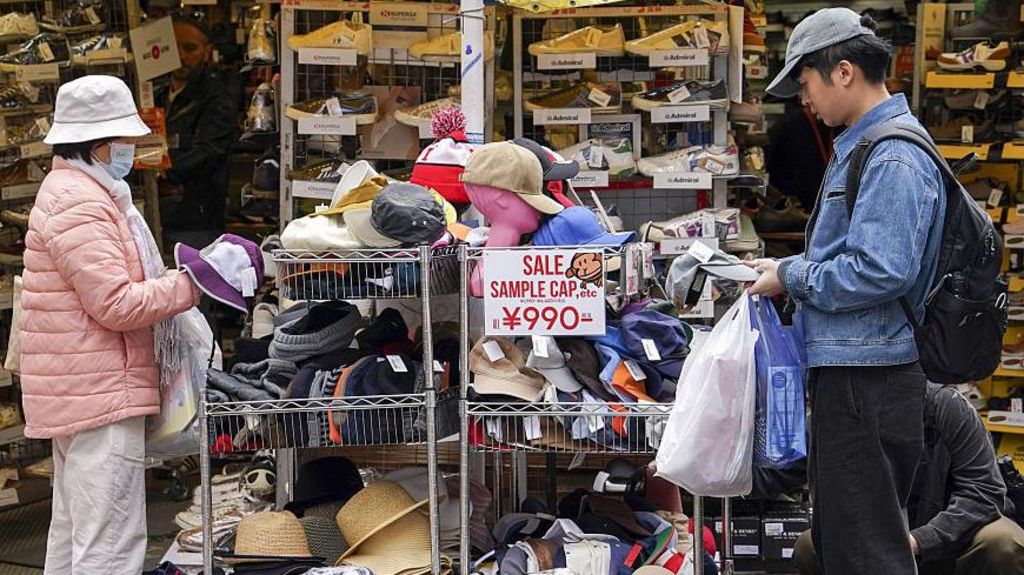
Japan’s trade landscape in October revealed a nuanced picture, with global exports rising by 3.7% year-on-year, while imports saw a modest 0.6% increase, according to the latest government data. However, exports to the United States declined by 3.1%, marking the seventh consecutive month of year-on-year drops. This downturn is attributed to ongoing concerns over U.S. tariffs, which have reshaped trade dynamics between the two nations. In July, President Donald Trump introduced a trade framework imposing a 15% tariff on Japanese goods, a reduction from the initially proposed 25%. Previously, tariffs on most goods stood at 2.5%. Despite these challenges, Japan’s trade deficit narrowed significantly to 231.77 billion yen ($1.5 billion) in October, down from 499.95 billion yen ($3.2 billion) a year earlier. Notably, soybean imports surged by 37.3%, while iron and steel products dipped by 17.1%. Imports from the U.S. jumped 20.9%, driven by food items like cereals and petroleum. Meanwhile, Japan’s exports to Asia showed resilience, with a 2.1% increase to China, a 19.2% surge to Hong Kong, and a 17.7% rise to Taiwan. However, new tensions with China emerged after Prime Minister Sanae Takaichi’s comments on Taiwan, prompting Beijing to issue a travel advisory against Japan. Analysts suggest Japan may increasingly pivot towards other Asian markets to sustain economic growth, reducing its reliance on U.S. exports.
-

Emirates agrees deal with Rolls-Royce to maintain its own A380 engines
Emirates Airlines has solidified a groundbreaking agreement with Rolls-Royce to undertake the maintenance, repair, and overhaul (MRO) of Trent 900 engines powering its A380 fleet, commencing in 2027. This strategic partnership, formalized through a memorandum of understanding, underscores Emirates’ commitment to extending the operational lifespan of its iconic A380 aircraft well into the 2040s. As the largest operator of the now out-of-production A380, Emirates is actively refurbishing its fleet to ensure its continued service beyond the next decade, following Airbus’ cessation of A380 production in 2021. The deal also includes an extension of the TotalCare service agreement with Rolls-Royce, further cementing the collaboration between the two aviation giants. This agreement follows Emirates’ recent move to establish a seat assembly line in Dubai in partnership with France’s Safran. While Emirates has expressed concerns over Rolls-Royce’s engine performance on the A350-1000, it has lauded the smaller A350-900, which it began incorporating into its fleet last year. This deal marks a significant step in Emirates’ strategy to optimize its fleet and maintain its leadership in the global aviation industry.
-

Abu Dhabi seeks $54 billion in infrastructure projects over 5 years
Abu Dhabi has announced an ambitious $54 billion infrastructure investment plan spanning the next five years, with a significant focus on social infrastructure. The initiative, led by the Abu Dhabi Projects and Infrastructure Centre (ADPIC), aims to double this investment by 2040, targeting national housing, schools, and community facilities, which constitute approximately 50% of the portfolio. ADPIC’s director, Maysarah Mahmoud Salim Eid, revealed these plans during a recent tour of Istanbul, where officials engaged with Turkish contractors, developers, and construction firms. The visit followed similar trips to Singapore and China, as part of a broader strategy to attract private sector participation. The projects, which include public-private partnerships, will be implemented across Abu Dhabi, Al-Ain city, and the Al-Dhafra region. Financing will be sourced through direct government funding, foreign consultants, and long-term partnerships with real estate developers and investors. Turkish contractors, who have already undertaken $6.1 billion worth of projects in the UAE in 2024, are among the key players being considered. The initiative aligns with the UAE’s economic diversification goals, with a particular emphasis on bridges, tunnels, and other infrastructure linked to broader growth strategies.
-

Nasdaq Dubai welcomes $500m sukuk listing by Islamic Corporation for Development of private sector
Nasdaq Dubai has announced the successful listing of $500 million Trust Certificates (Sukuk) issued by ICDPS Sukuk Limited, guaranteed by the Islamic Corporation for the Development of the Private Sector (ICD). The ICD, a prominent multilateral financial institution and member of the Islamic Development Bank (IsDB) Group, priced the five-year Reg S senior unsecured Sukuk at 65 basis points over US Treasuries, offering a profit rate of 4.391% paid semi-annually. The issuance witnessed overwhelming investor demand, with order books surpassing $2 billion, reflecting robust market confidence in ICD’s financial stability and developmental objectives. The Sukuk, set to mature in 2030, was issued under the ICDPS Sukuk Limited Trust Certificate Issuance Programme. Leading financial institutions, including Al Rayan Investment, Bank ABC, Dubai Islamic Bank, and HSBC Bank plc, served as Joint Lead Managers and Bookrunners. This marks ICD’s fourth Sukuk listing on Nasdaq Dubai, following previous issuances in 2016, 2020, and 2024. Dr. Khalid Khalafalla, Acting CEO of ICD, emphasized the significance of the oversubscribed issuance, stating that the proceeds will drive private sector growth in member countries while expanding Shariah-compliant financial solutions. Hamed Ali, CEO of Nasdaq Dubai and Dubai Financial Market (DFM), highlighted the transaction as a testament to Dubai’s leadership in Islamic capital markets and its ability to attract diverse investors. With this listing, the total value of Sukuk on Nasdaq Dubai has reached $102 billion, reinforcing its status as a global hub for Islamic finance.
-

Continental reports 77% premium growth, makes executive appointments to lead next phase of expansion
Continental, a DIFC-licensed financial advisory firm, has announced a remarkable 77% growth in premiums, marking a significant milestone in its 30-year legacy in the Middle East. The firm is now poised for its next phase of expansion, driven by a focus on technology, transparency, and trust. To spearhead this growth, Continental has appointed Lyndon D’Silva as Senior Executive Officer (SEO) and Member of the Board. With over 35 years of leadership experience at global institutions such as IBM, Standard Chartered, AIG, Morgan Stanley, and Concentrix, D’Silva brings a unique combination of financial expertise and technological insight to the role. His appointment underscores Continental’s commitment to innovation and long-term growth within the DIFC platform. Akshay Sardana, Managing Director of CFS DIFC Ltd., emphasized the alignment of values and vision with D’Silva, stating that his leadership will drive awareness, inclusion, and innovation across the wealth and insurance sectors. In his new role, D’Silva will oversee strategic direction, client and advisor relationships, and operational excellence, while advancing Continental’s legacy of trust and transparency. D’Silva expressed his enthusiasm for the opportunity, highlighting his goal to build on Continental’s strong foundation and position the firm as a catalyst for regional and global progress. Looking ahead, Continental plans to enhance its digital transformation agenda, modernize internal systems, and streamline client onboarding processes. The firm is also expanding its advisory network and insurer partnerships, ensuring faster and more responsive services for its clients. With these initiatives, Continental aims to consolidate its growth and expand its impact across the region.
-

US stocks slide as Wall Street’s AI jitters persist
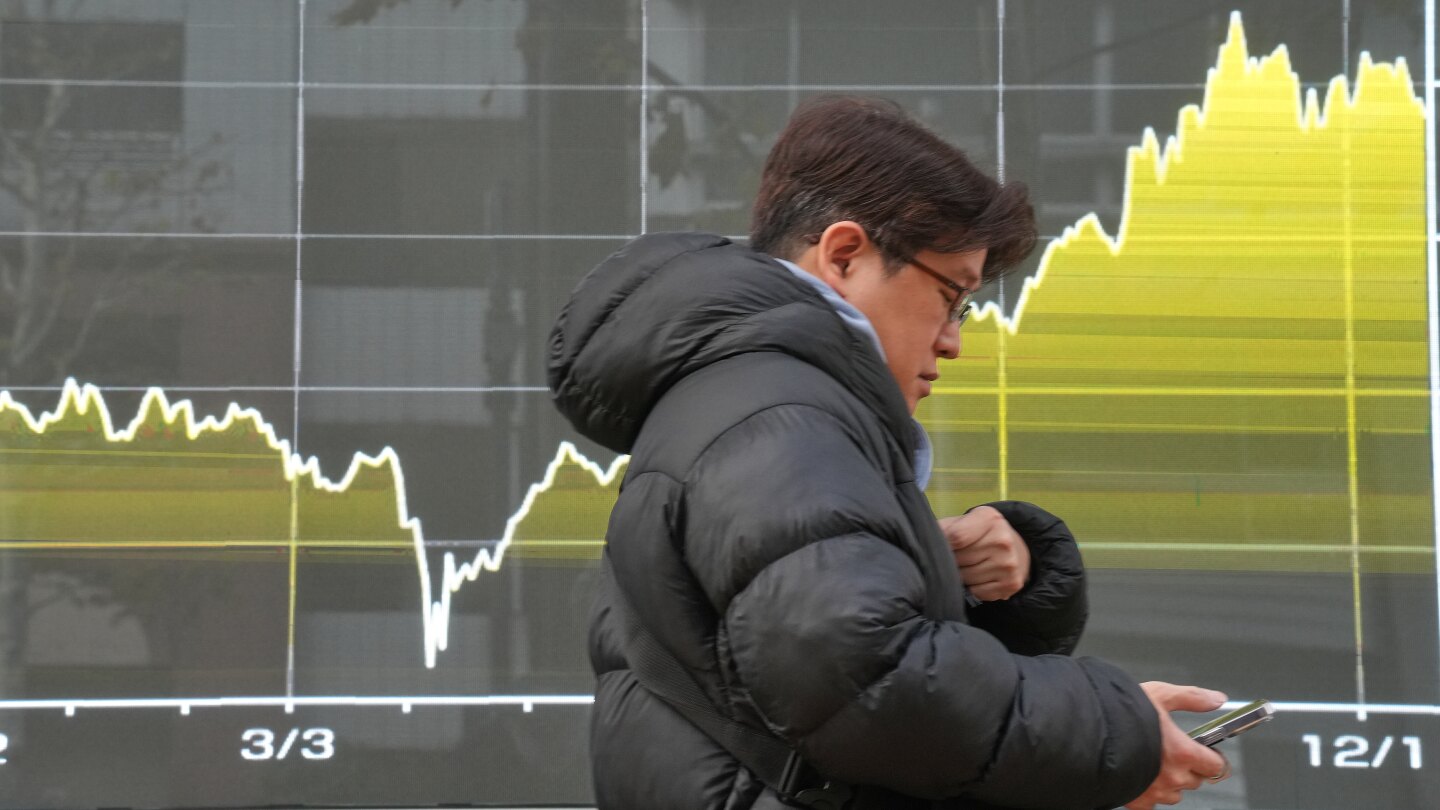
The US stock market experienced a significant downturn on Thursday, with major indexes reversing gains from an early morning rally. Despite positive business news, including strong sales from AI leader Nvidia and retail giant Walmart, better-than-expected hiring data, and a rise in home sales, investor anxiety remained high. The S&P 500 fell by 1.6%, the Dow Jones Industrial Average dropped 0.8%, and the Nasdaq closed down over 2%. Nvidia, which had initially surged, saw its shares decline by more than 3%. James Stanley, a senior analyst at StoneX, noted the unusual market reaction, stating, ‘The reaction is noteworthy because what should have happened, didn’t happen.’ Bitcoin also fell below $90,000, its lowest since April, partly due to concerns over AI valuations. Despite Nvidia’s robust earnings and CEO Jensen Huang’s dismissal of overvaluation fears, Wall Street remains wary of an AI bubble. Alphabet CEO Sundar Pichai recently warned of ‘irrationality’ in the AI boom, while Oxford Economics analysts described the tech sector’s decline as a ‘healthy correction.’ Investors are also uneasy about the Federal Reserve’s interest rate decisions, awaiting delayed inflation data that could influence future rate cuts. The S&P 500 is on track for its worst month since March, with investors grappling with economic uncertainty and potential inflation risks. Eric Teal, CIO at Comerica Bank, highlighted the mixed September jobs report, which added 119,000 jobs but saw unemployment rise to 4.4%, leaving questions about the Fed’s next moves. Teal emphasized that continued AI adoption and lower interest rates are crucial for sustaining market growth, but growing fears of an AI bubble and inflation could increase market volatility.
-

Dubai: Emirates Islamic Bank to close 5 branches amid rationalising network
Emirates Islamic Bank, a subsidiary of Emirates NBD, has announced the closure of five branches as part of its strategy to optimize its network in response to the growing trend of online banking in the UAE. Mohammed Kamran Wajid, Deputy CEO of Emirates Islamic, emphasized that the move is driven by technological advancements but assured that the bank remains committed to maintaining a physical presence. He stated, ‘We are rationalizing our branches as technology takes over, but we are not eliminating physical locations. We may reinvest the savings into further technological development to enhance customer service.’ The bank, which previously operated 45 branches, plans to complete the closures by the end of the year. Wajid also confirmed that the closures would not result in job losses, highlighting the bank’s focus on talent retention. Emirates Islamic employs over 30,000 people and is the largest financial services employer in the region. The bank reported a record Dh3.2 billion profit before tax for the first nine months of 2025, with total income rising 9% year-on-year to Dh4.5 billion. The UAE’s Islamic banking market, valued at $221 billion in 2024, is projected to grow to $352 billion by 2029, driven by the country’s role as a global financial hub. Wajid noted that the closures involve legacy branches located near Emirates NBD branches, allowing for better resource allocation and customer acquisition. The bank, which boasts a capital adequacy ratio of 18.8%, remains highly liquid and plans to focus on digitization and AI integration to strengthen its competitive edge in the corporate banking sector.
-

DEEPAL strengthens UAE presence as Super Hybrid and intelligent mobility demand accelerates in MEA
DEEPAL, the intelligent electric mobility brand under Changan Automobile, has significantly strengthened its presence in the UAE with the introduction of the G318, a Super Hybrid SUV. This strategic move, executed in collaboration with Al Tayer Motors, the brand’s exclusive distributor, underscores DEEPAL’s ambition to become a dominant player in the Middle East and Africa’s rapidly evolving mobility sector. The launch aligns with the UAE’s growing demand for hybrid and electric vehicles, driven by national policies promoting sustainable transport, advanced infrastructure, and innovation-focused consumer trends.
-

Valetax stands out as multi-award winner at Jeddah Fintech Week 2025
Valetax, a leading global trading solutions provider, made a significant impact at Jeddah Fintech Week 2025, held on November 16-17 at the Jeddah Hilton Hotel. As the Official Sponsor, the company showcased its innovative trading services, strengthened relationships with industry professionals, and reaffirmed its commitment to driving fintech growth across the MENA region. The event, themed ‘Reimagining Finance in the Digital Era,’ attracted over 40 global and regional experts and featured more than 50 educational workshops, focusing on open banking, digital currencies, Islamic fintech, regulatory technology, and AI in financial services. Valetax’s interactive booth, led by MENA leadership team members Muhammed Hussin and Ahmed Rehab, became a hub for traders and partners seeking insights into the company’s expanding services and regional strategies. The company also hosted thought leadership sessions, offering practical guidance on financial brokerage, stock market careers, and digital gold as a modern asset. Valetax’s excellence was recognized with three prestigious awards: Best Forex Broker Global, Best Copy Trading Platform, and Best Account Management Services. CEO Viktor Karpinski emphasized the company’s dedication to trust, innovation, and client empowerment, highlighting Jeddah Fintech Week as a pivotal moment for regional fintech development. Valetax’s participation underscores its mission to advance financial education, foster digital innovation, and expand global partnerships, solidifying its position as a key player in the MENA fintech landscape.