
In a significant move, credit rating agency Standard & Poor’s (S&P) has downgraded France’s credit rating from AA to A+, citing heightened risks of the government failing to substantially reduce its deficit in the coming year. The decision, announced on Friday, underscores growing concerns over France’s fiscal stability and its ability to meet budgetary targets. S&P highlighted that despite the recent submission of the 2026 draft budget to parliament, uncertainty surrounding the nation’s public finances remains alarmingly high. The agency expressed skepticism about the government’s ability to achieve significant deficit reduction without additional measures, projecting a slower-than-expected fiscal consolidation over the forecast horizon. French Finance Minister Roland Lescure responded to the downgrade by reaffirming the government’s commitment to meeting the 2025 deficit target of 5.4% of GDP. He emphasized the collective responsibility of both the government and parliament to adopt a budget aligned with this framework. Separately, the finance ministry revealed that the 2026 draft budget aims to accelerate the reduction of the public deficit to 4.7% of GDP while safeguarding economic growth. This initiative is seen as a critical step toward fulfilling France’s pledge to bring the deficit below 3% of GDP by 2029. The downgrade comes amid political challenges for President Emmanuel Macron, who faces a divided parliament as he seeks to implement deep spending cuts. His new Prime Minister, Sebastien Lecornu, recently backtracked on a contentious pension reform to avoid a no-confidence vote, further complicating fiscal reforms.
分类: business
-

GCC eyes slice of $2 trillion sports tourism market by 2030
The Gulf Cooperation Council (GCC) is positioning itself as a key contender in the rapidly expanding global sports tourism industry, which is forecasted to exceed $2 trillion by 2030. A recent report by PwC Middle East, titled ‘Game on for the GCC – Turning Sporting Ambition into Lasting Tourism Impact,’ highlights the region’s potential to capitalize on its increasing prominence as a host of world-class sporting events to foster a sustainable tourism economy. Currently, sports tourism represents 10% of global tourism expenditure, growing at a compound annual rate of 17.5%. The GCC’s strategic investments in sports infrastructure and events are setting the stage for substantial economic gains. Over recent years, the Middle East has successfully hosted major events such as the 2022 FIFA World Cup in Qatar and numerous Formula 1 Grand Prix weekends, significantly boosting the region’s global profile and contributing to a sports sector valued at $600 billion, with an annual growth rate of nearly 9%. Saudi Arabia is at the forefront of this initiative, with its sports market expected to triple to $22.4 billion by 2030, generating 39,000 jobs and adding $13.3 billion to the national GDP. Despite these advancements, the GCC currently captures only 5–7% of global sports tourism spending, indicating substantial growth potential. The report emphasizes the need for the GCC to transition from being a host of events to becoming a year-round destination for immersive sports experiences. Peter Daire, Senior Executive Advisor at PwC Middle East, stressed the importance of evolving beyond event hosting to create destinations that attract fans throughout the year through enriched experiences, enhanced digital engagement, and stronger regional connections. The report outlines three critical priorities for the region: developing experience-led destinations that integrate sport, retail, leisure, and culture to encourage longer stays and higher spending; fostering immersive fan engagement through digital platforms, storytelling, and multi-day festivals to turn spectators into repeat visitors; and building a connected regional ecosystem that links events and destinations across borders through streamlined travel and unified marketing. Jonathan Worsley, Chairman and CEO of The Bench, which organizes the Future Hospitality Summit, highlighted that sports tourism is now central to destination strategy and hospitality investment, driving infrastructure development, elevating brand visibility, and unlocking year-round demand. The report also advocates for increased investment in women’s sports, leisure activities, and workforce development, as well as better utilization of existing venues to extend the impact of flagship events. With over 60% of the region’s population under the age of 35, digital innovation and youth engagement are deemed crucial for shaping the future of sports tourism. As the GCC shifts its focus from hosting to experience creation, PwC suggests the region could emerge as one of the world’s most dynamic and resilient sports tourism hubs, attracting fans, athletes, and travelers who not only visit but return.
-

UAE’s digital payments boom gets a boost with Network International–Magnati merger
The United Arab Emirates (UAE) is rapidly advancing toward a cashless economy, with the recent merger between Network International and Magnati marking a significant milestone in the region’s digital payments evolution. This strategic consolidation aligns with the UAE’s ambition to become a global leader in digital finance, leveraging a tech-savvy population, high smartphone penetration, and robust regulatory support. Murat Cagri Suzer, Group CEO of Network International, emphasized that the merger transforms the company into a fintech platform capable of redefining digital commerce across the Middle East and Africa (MEA). The combined entity now serves over 250 financial institutions, 240,000 merchants, and 25 million cardholders across 50+ markets, positioning itself at the forefront of a region where digital payments are growing at twice the global average. The UAE’s card payments market is projected to grow by 10.6% in 2025, reaching Dh565.5 billion, while the Buy Now, Pay Later (BNPL) market is expected to double by 2030. Government initiatives, such as Dubai’s Cashless Strategy and national platforms like Aani and Jaywan, are driving this transformation. The merger enables Network International to offer a broader suite of services, including data analytics, small business lending, and advanced fraud prevention. The company is also investing in cutting-edge technologies like AI, biometrics, and tokenization to enhance security and customer experiences. As digital payments become increasingly embedded in daily life, Network International is prioritizing a ‘security-first’ culture, employing advanced encryption and AI-driven fraud detection to safeguard transactions. With the Middle East poised to lead the global shift toward digital finance, this merger represents a strategic step in shaping a future where smart, secure, and seamless payments are the norm.
-

India: Record gold prices shift Dhanteras demand toward coins over jewellery
The Dhanteras festival in India, a key event marking the start of Diwali and traditionally one of the busiest days for gold purchases, witnessed a significant shift in consumer behavior this year. Soaring gold prices led buyers to favor coins and bars over jewellery, despite the cultural significance of gold ornaments during the festival. Industry officials reported that while overall gold sales volume dropped by 10–15% compared to last year, the total value surged due to record-high prices. Rajesh Rokde, chairman of the All India Gem and Jewellery Domestic Council, noted that jewellery demand plummeted by nearly 30%, while coins and bars saw brisk sales. The price of gold in India reached an unprecedented 132,294 rupees per 10 grams, a 60% increase from last year’s Dhanteras. This spike has been attributed to global market trends and investor optimism about the precious metal’s continued rally. To sustain consumer interest, the industry is offering substantial discounts on jewellery making charges, particularly during the festive and wedding seasons. Meanwhile, silver also gained traction, with strong demand for coins, bars, and jewellery driven by its impressive price performance. Dealers anticipate that silver could outperform gold in the near future. The surge in precious metal prices has also boosted investments in gold and silver exchange-traded funds, reflecting a broader trend of investors seeking higher returns. With jewellery stores extending their hours to accommodate late-night shoppers, industry leaders expect the buying momentum to persist beyond Dhanteras.
-
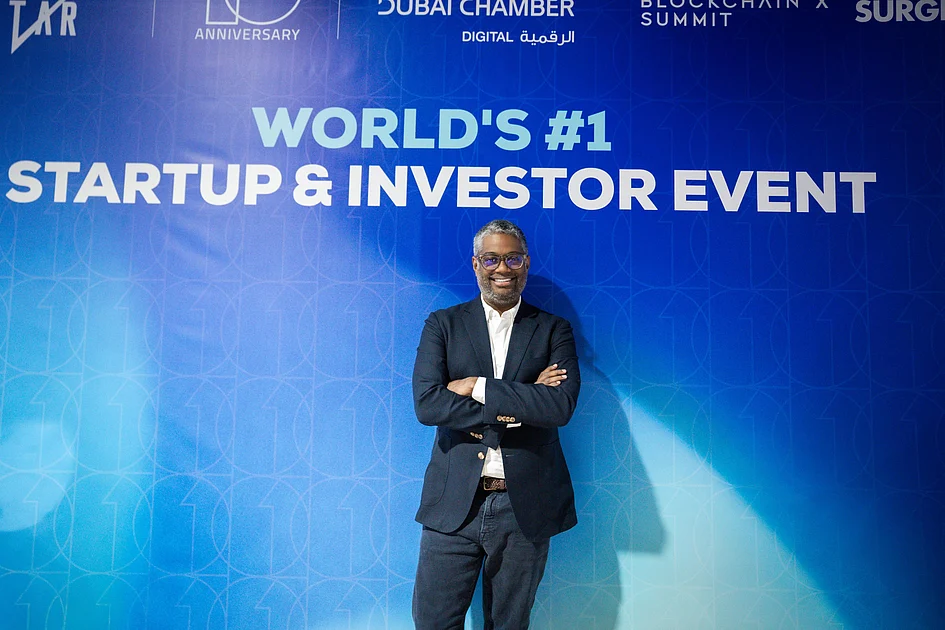
Crescent commits Dh250m to scale CE-Creates, building home-grown ventures with global potential
Crescent Enterprises has unveiled a Dh250 million investment initiative to expand CE-Creates, its venture-building platform dedicated to nurturing high-growth, impact-driven startups with global potential. This strategic move, coupled with new leadership, underscores CE-Creates’ mission to transform early-stage concepts into internationally competitive businesses, leveraging patient capital, operational expertise, and ecosystem access. The platform operates as a sector-agnostic venture studio, guiding ventures from idea validation to market entry and scaling, with a focus on the MENA region and beyond. Badr Jafar, CEO of Crescent Enterprises, emphasized the UAE’s role as a launchpad for global entrepreneurs, stating, ‘Our vision is for the UAE to be recognized as the start-up capital of the world.’ CE-Creates has already supported ventures like Kava & Chai, ION, and BreakBread, showcasing its commitment to fostering innovation. Tushar Singhvi, Deputy CEO and Head of Investments, highlighted the unique blend of capital deployment and operational support that sets CE-Creates apart from traditional venture funding models. Rakhil Fernando, the newly appointed Head of CE-Creates, brings extensive entrepreneurial experience to the role, having previously led ventures like Yabi, Koko, and Daraz. This investment marks a significant milestone in empowering regional founders to compete on the global stage.
-
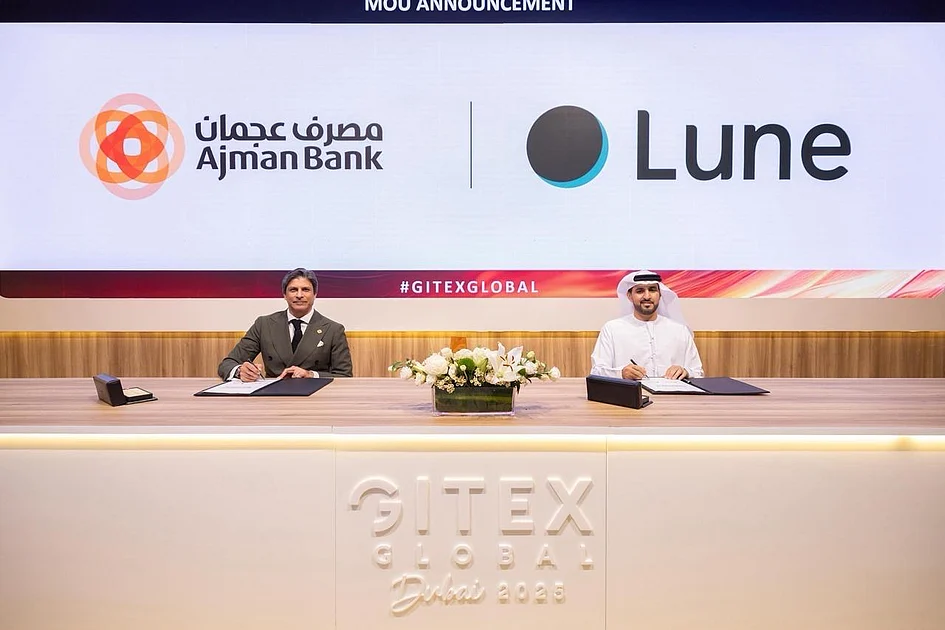
Ajman Bank taps Emirati fintech Lune to boost digital banking experience
Ajman Bank has forged a strategic partnership with UAE-based fintech Lune Technologies to elevate its mobile banking app with advanced AI-driven financial tools. This collaboration aims to enhance customer financial literacy and provide greater control over personal finances, marking a significant step in the bank’s digital transformation journey. The newly integrated features include transaction data enrichment and personal finance management (PFM) capabilities, offering users detailed insights into their spending patterns, merchant recognition, and a consolidated view of income, savings, and expenses. Faizal Kundil, Head of Consumer Banking at Ajman Bank, emphasized the bank’s commitment to empowering customers with tools for smarter financial decision-making. Helal Lootah, Co-Founder and Co-CEO of Lune, hailed the integration as a milestone in redefining how individuals interact with their finances. This initiative aligns with the UAE’s broader vision of fostering a connected, data-driven financial ecosystem, reflecting a growing trend among UAE banks to leverage AI and data analytics for personalized services.
-
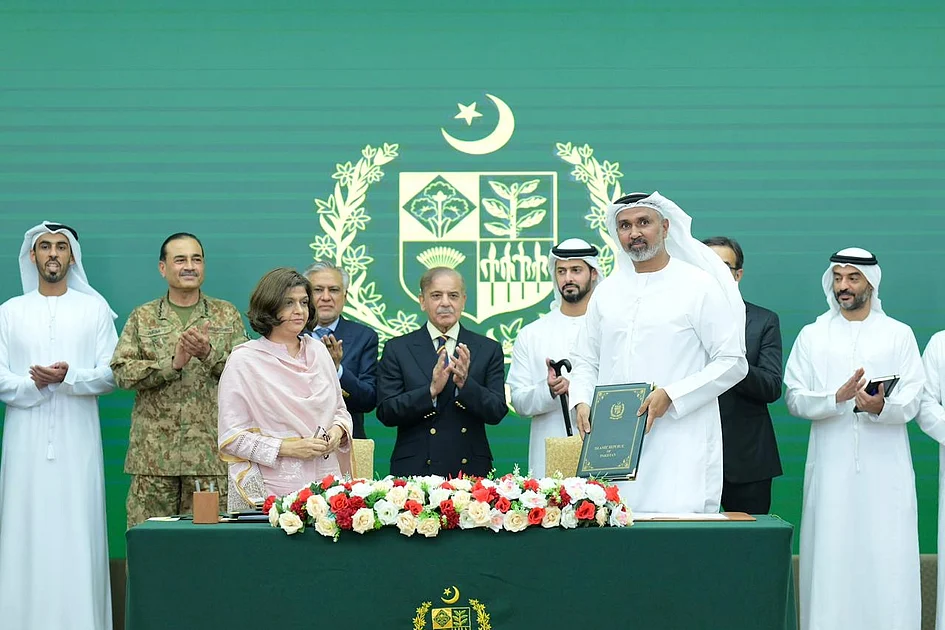
Abu Dhabi’s IHC acquires majority stake in Pakistan’s First Women Bank Limited
In a historic move, Abu Dhabi-based International Holding Company (IHC) has acquired a majority stake in Pakistan’s state-owned First Women Bank Limited (FWBL), marking the first privatisation of a bank in Pakistan under a Government-to-Government (G2G) framework. The transaction, conducted under Pakistan’s Inter-Governmental Commercial Transactions Act of 2022, highlights the deepening economic ties between the United Arab Emirates (UAE) and Pakistan. The announcement was made in the presence of Sheikh Zayed bin Hamdan bin Zayed Al Nahyan, Chairman of 2PointZero, and Pakistan’s Prime Minister Muhammad Shehbaz Sharif. Established in 1989, FWBL operates 42 branches nationwide, offering retail, SME, and corporate banking services. IHC’s investment underscores its commitment to strengthening Pakistan’s financial sector and supporting its reform agenda. Post-acquisition, IHC plans to modernise FWBL by integrating advanced technologies such as artificial intelligence (AI) and automation to enhance operational efficiency and expand its footprint across Pakistan. The transformation strategy also includes rebranding the bank to reflect its broader mandate of financial inclusion and societal service. Syed Basar Shueb, CEO of IHC, expressed confidence in Pakistan’s financial potential and the shared vision for sustainable economic growth. This acquisition follows IHC’s earlier joint venture with the Government of Balochistan, further solidifying UAE-Pakistan economic cooperation.
-
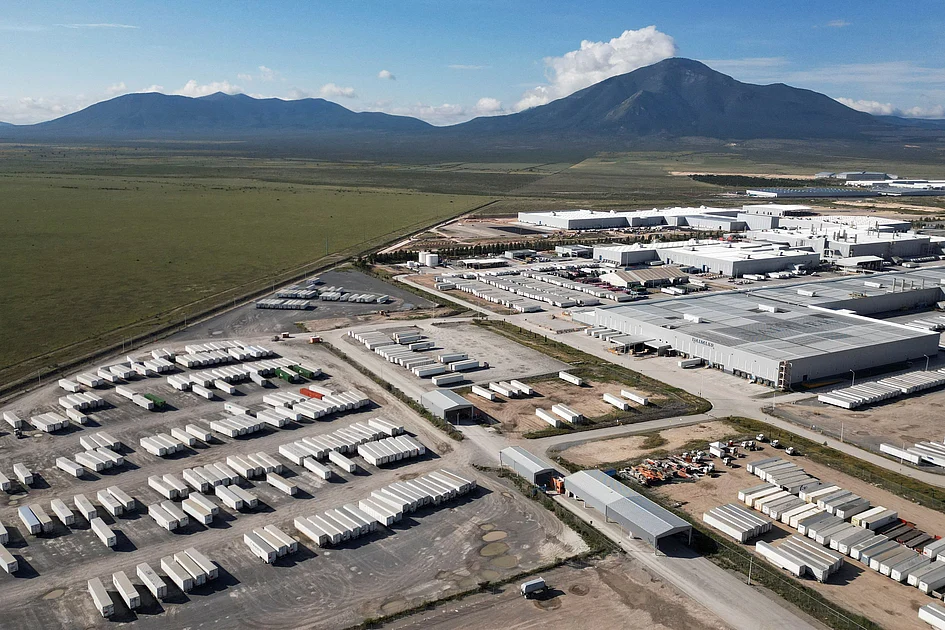
Trump extends tariff relief on imported auto parts, formalises truck duties
In a significant move impacting the automotive industry, former US President Donald Trump signed an executive order on Friday, October 18, 2025, extending tariff relief on imported vehicle parts while formalizing new duties on medium and heavy-duty trucks. The order prolongs the 3.75-percent offset program for automakers until 2030, maintaining the percentage without reductions. Simultaneously, a 25-percent tariff on imported trucks and their parts will take effect starting November 1, 2025. This decision follows a Section 232 investigation initiated earlier this year to assess the national security implications of truck imports. Trump has frequently utilized such probes, authorized under the Trade Expansion Act of 1962, to impose tariffs aimed at bolstering domestic manufacturing and addressing perceived trade imbalances. The automotive sector, alongside steel and aluminum industries, has been a focal point of these measures. The extension of the offset program is seen as a continuation of Trump’s April 2025 initiative to ease tariff burdens on US automakers. Under this program, companies importing parts for vehicles assembled in the US can offset 3.75 percent of a vehicle’s list price, a benefit now secured until 2030. Additionally, a similar offset framework is being established for medium and heavy-duty trucks, also extending through 2030. While the new tariff regime imposes steep duties on imported trucks, certain favorable treatments under the US-Mexico-Canada Agreement (USMCA) will remain. For instance, trucks qualifying for USMCA benefits will only face the 25-percent tariff on non-US content. However, imported buses will not receive such favorable treatment and will be subject to a 10-percent tariff. The trade pressures have already impacted Mexico, with its heavy vehicle exports to the US declining by nearly 26 percent year-on-year from January to August 2025. Canada and Mexico continue to negotiate with Washington to mitigate the effects of these tariffs.
-

Ras Al Khaimah: Why more young citizens are turning to entrepreneurship
Ras Al Khaimah, one of the UAE’s seven emirates, is rapidly becoming a focal point for youth-driven entrepreneurship, with 180 new youth-led projects launched this year alone. This surge in entrepreneurial activity highlights the emirate’s commitment to fostering innovation and financial independence among its young citizens. Youssef Muhammad Ismail, Chairman of the Supreme Committee of the Saud bin Saqr Foundation for Youth, revealed that the foundation has supported over 2,650 establishments to date, with 35% now fully operational and the remainder in various stages of development. Ismail emphasized that entrepreneurship offers young Emiratis a sustainable pathway to financial stability, enabling them to balance long-term income and retirement goals. He also stressed the importance of aligning small and emerging businesses with international standards and fostering global partnerships. By 2026, Ismail predicts increased collaboration between international firms and UAE-based startups, creating new opportunities for market expansion. Entrepreneurs are encouraged to focus on sustainable growth, form local alliances, and build robust internal structures to enhance global competitiveness. Ras Al Khaimah’s business-friendly environment, characterized by streamlined licensing processes and cross-ministry support, has been instrumental in transforming small home projects into fully established enterprises. Abdullah Al Balooshi, owner of T House, credited the emirate’s supportive ecosystem for his business’s success, noting faster licensing and priority processing as key advantages. Despite challenges in staffing and supply chain management, Al Balooshi plans to expand T House within the UAE and beyond. With continued institutional backing, Ras Al Khaimah is solidifying its position as a dynamic center for youth entrepreneurship and sustainable business growth in the UAE.
-
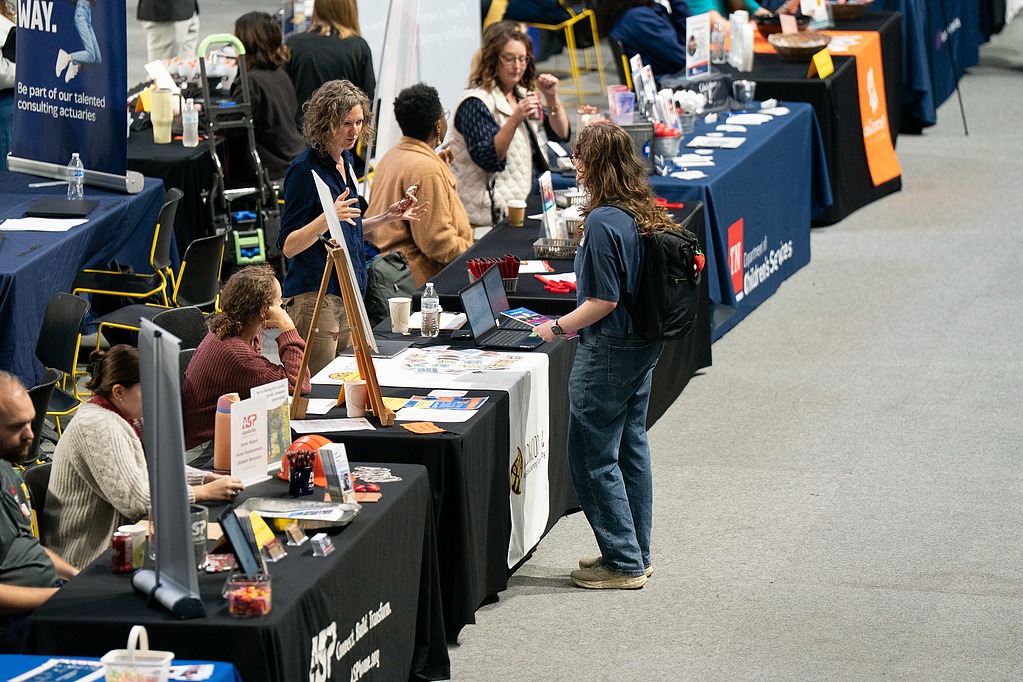
Many US job seekers find it tough to get work now
The US labor market is experiencing significant strain, with job seekers facing unprecedented difficulties in securing employment. While the September unemployment rate remains unavailable due to the federal government shutdown, the ADP National Employment Report revealed that the private sector cut 32,000 jobs in September compared to the same period last year. This report, produced by ADP Research and the Stanford Digital Economy Lab, highlights the cautious hiring practices of US employers despite strong economic growth in the second quarter. Nela Richardson, ADP’s chief economist, emphasized this trend in a statement, noting the ongoing challenges in the labor market. Major job posting site Indeed reported a 2.5% decline in job openings as of September 26, with nearly all sectors—except banking and finance—posting fewer jobs than a year ago. Scientific research and development saw the steepest decline, with nearly a quarter fewer job opportunities. The biotech and pharma sector is expected to lay off 24,000 employees in the third quarter, according to BioSpace. For job seekers like Chuck, a recent computer science graduate from the University of Texas at Austin, the situation is dire. Despite applying for hundreds of positions, he has received minimal responses and no job offers. Similarly, Timothy, a computer engineer in Dallas, regrets leaving his previous job, as he has struggled to re-enter the job market since April. Recruiters confirm the grim reality, with fewer job opportunities and declining salaries. David Leshowitz of Management Recruiters in Boston noted a significant drop in demand for workers, while a Reddit post described the current job market as one of the worst since 2008. Moody’s analysis indicates that 21 states and the District of Columbia, representing a third of US economic activity, are already in a recession, with another 13 states treading water. Economic uncertainty, fueled by tariff policies and unpredictable decisions, has led many companies to delay investments and hiring. Ed Hirs, an economics lecturer at the University of Houston, highlighted the impact of vague policies on business decisions, further exacerbating the challenges in the job market.