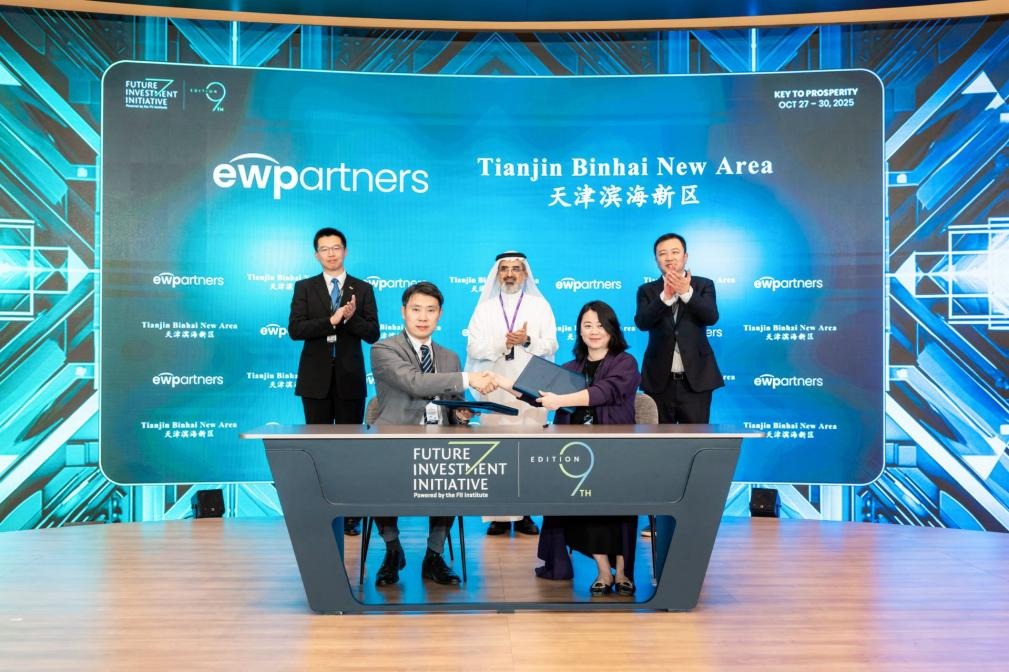
Tianjin’s Binhai New Area has forged an $80 million investment partnership with Saudi Arabia’s global investment firm, ewpartners, aiming to export China’s advanced industrial systems and supply chain capabilities to bolster Saudi Arabia’s manufacturing sector. The agreement was formalized during the 9th Future Investment Initiative in Riyadh, with key officials from Saudi Arabia’s Public Investment Fund and Jada Fund of Funds in attendance. This collaboration aligns with Saudi Vision 2030, a national strategy focused on economic diversification and industrial transformation, while also supporting ewpartners Fund II, which targets digital, advanced manufacturing, logistics, and consumer sectors. For China, this marks a significant milestone in Tianjin’s industrial expertise ‘going global’ and reinforces the Belt and Road Initiative. Binhai New Area, with a GDP of $108 billion and hosting over 240 Fortune Global 500 companies, is a hub for petrochemicals, electronics, new energy, smart manufacturing, and the digital economy. Its world-class ports serve as a vital link between Asian and Middle Eastern industrial clusters. Wu Di, vice-chairman of the administrative commission of Tianjin Binhai Hi-tech Industrial Development Area, expressed optimism about leveraging Tianjin’s strengths in smart manufacturing, technology, and port logistics to deepen cooperation with Saudi Arabia and the broader Middle East. The initiative aims to integrate Binhai’s expertise in new energy and industrial logistics with ewpartners’ regional network to accelerate technology transfer and industrial upgrades in Saudi Arabia and the Gulf region. Bandr Mohammed Alhomaly, CEO of Jada Fund of Funds, highlighted the shared commitment to Vision 2030 and building a robust private capital ecosystem in Saudi Arabia. Jerry Li, co-founder and managing partner of ewpartners, emphasized that the partnership goes beyond capital, focusing on connecting industries and innovation capabilities to drive high-quality regional development.
分类: business
-

Dubai: Gold prices climb slightly; analysts predict bullish market
Gold prices in Dubai experienced a modest uptick on Friday morning, with 24K gold rising to Dh482.75 per gram, up from Dh479 the previous day. Similarly, 22K, 21K, and 18K gold prices stood at Dh447, Dh428.50, and Dh367.50 per gram, respectively. Globally, spot gold prices reached $4,010 per ounce, while silver saw a slight increase to $49.12. Analysts remain optimistic about gold’s prospects, describing the market as ‘bullish’ despite recent corrections. Joseph Dahrieh, Managing Principal at Tickmill, highlighted that central bank demand for gold remained robust, with net buying reaching 220 tonnes in Q3 2025 and 634 tonnes year-to-date. This persistent demand is driven by central banks diversifying away from the US dollar. The World Gold Council reported that total gold demand, including over-the-counter transactions, hit a record 1,313 tonnes valued at $146 billion in Q3. Dahrieh noted that the Federal Reserve’s recent interest rate cuts and ongoing geopolitical tensions could further support gold prices. However, he cautioned that trade tensions might influence the metal’s performance. The US Federal Reserve announced its second consecutive quarter-point rate cut on Wednesday, adding to the favorable macroeconomic backdrop for gold.
-
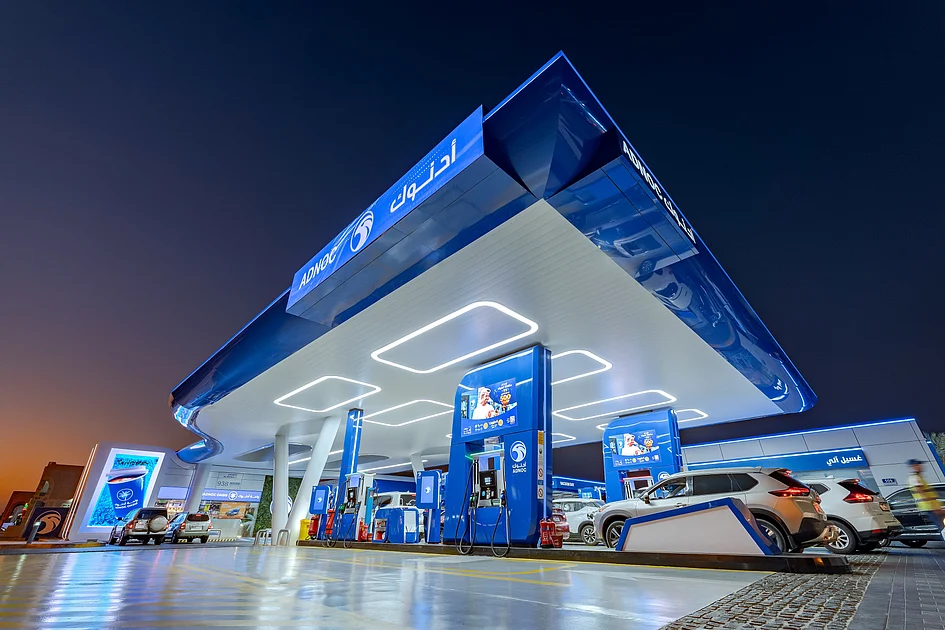
Adnoc Distribution raises expansion targets and dividend outlook
Adnoc Distribution, the UAE’s largest fuel and convenience retailer, has announced its strongest quarterly earnings since its 2017 IPO. For Q3 2025, the company reported a 15.9% year-on-year increase in EBITDA, reaching $319 million, while net profit surged 21.5% to $221 million. The first nine months of 2025 also saw record results, with EBITDA rising 12% to $885 million and net profit climbing 15.6% to $579 million. This performance was driven by robust fuel volumes, network expansion, and growth in non-fuel retail, with fuel volumes hitting a historic high of 11.7 billion litres. The company added 85 new service stations in the first nine months, including 72 in Saudi Arabia, marking a 150% year-on-year increase in its network there. Adnoc Distribution has now raised its full-year expansion target to 90–100 new stations, up from the previous guidance of 60–70. At its inaugural Investor Majlis event, the company announced plans to extend its dividend policy to 2030, subject to shareholder approval. Starting Q1 2026, dividends will be paid quarterly, with a minimum commitment of $4.9 billion between 2023 and 2030. CEO Bader Saeed Al Lamki attributed the success to the company’s transformation into a mobility and convenience retail leader, emphasizing its flexible platform and long-term growth strategy. Non-fuel retail also saw significant growth, with Q3 gross profit up 14.7% year-on-year and 39.6 million transactions recorded in the first nine months, a 10.2% increase. The company relaunched its convenience store brand as ‘Oasis by Adnoc’, offering upgraded food and beverage options, and expanded its lubricant brand, Adnoc Voyager, to 50 export markets. Additionally, its E2GO network of EV charging points grew to 368 across the UAE. With nearly 980 service stations across the UAE, Saudi Arabia, and Egypt, Adnoc Distribution is focused on innovation, regional growth, and customer-centric execution to redefine convenience and mobility in the region.
-
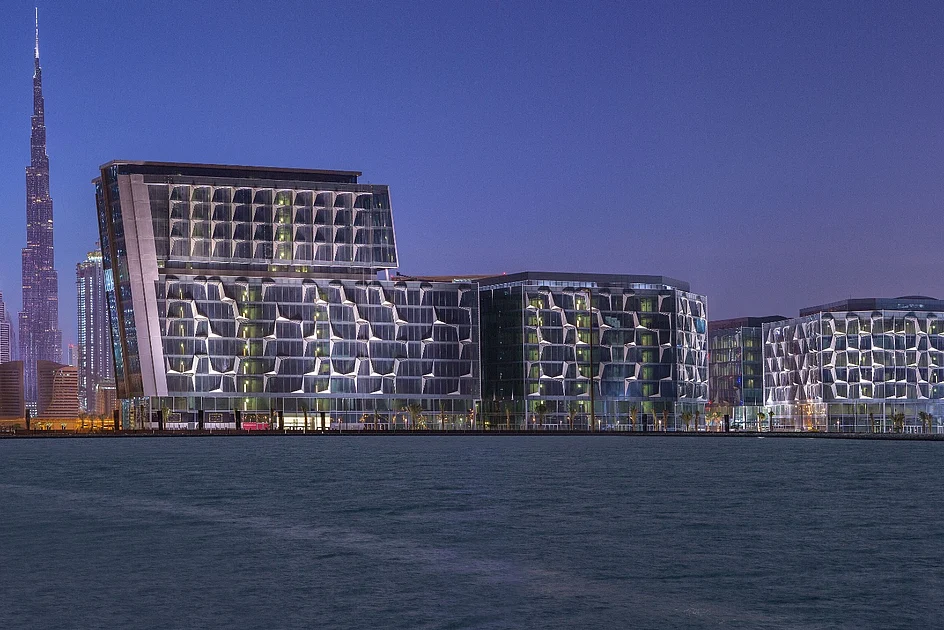
Tecom Group posts Dh1.1 billion net profit in nine months
Tecom Group PJSC, a leading Dubai-based developer and operator of specialised business districts, has announced impressive financial results for the first nine months of 2025. The company reported a net profit of Dh1.1 billion, marking an 18% year-on-year increase. This growth was fueled by higher occupancy rates, increased rental income, and strategic portfolio expansion. Revenue for the period surged by 20% to Dh2.1 billion, while EBITDA rose to Dh1.7 billion, maintaining a robust margin of 79%. Funds from operations also grew by 16%, reaching Dh1.5 billion. The Group’s operational performance was strong across its Commercial, Industrial, and Land Lease segments. Commercial and Industrial assets achieved a 96% occupancy rate, up 2% from the previous year, while Land Lease occupancy jumped 8% to 98%. Abdulla Belhoul, CEO of Tecom Group, attributed the success to the company’s agility in navigating market dynamics and its disciplined focus on delivering customer value. He highlighted the Dh4.3 billion strategic expansion plan and Dubai’s appeal as a top destination for Greenfield FDI projects as key drivers of momentum. In Q3 2025 alone, Tecom Group generated Dh724 million in revenue, a 19% year-on-year increase, with net profit rising 10% to Dh373 million. EBITDA for the quarter reached Dh563 million, up 13% from the same period last year. A significant milestone was the Dh1.6 billion acquisition of 138 land plots in Dubai Industrial City, adding 33 million sq.ft. to its portfolio. This expansion increased the Group’s total Land Lease holdings to over 209 million sq.ft., solidifying Dubai Industrial City’s position as a hub for manufacturing and logistics. The acquisition aligns with national initiatives such as Operation 300bn, Make it in the Emirates, and the Dubai Economic Agenda ‘D33’, which aim to accelerate industrial growth in the UAE. Additionally, Tecom concluded its dividend policy with a final Dh400 million payout for H1 2025, bringing the total dividends over three years to Dh2.4 billion, in line with its commitment to shareholder returns following its 2022 listing.
-

Fusion energy gains global momentum as CFS secures Dh3.17 billion in funding
Commonwealth Fusion Systems (CFS), a Massachusetts-based fusion energy startup, has successfully raised $863 million (Dh3.17 billion) in its Series B2 funding round, marking one of the largest deep tech clean energy investments outside the AI sector. The funding round attracted a diverse array of strategic investors, including tech giants like Google and NVIDIA, as well as major international banks and energy companies from Japan, Korea, Europe, and the UAE. This significant financial boost underscores the growing global interest in energy innovation, particularly at the intersection of AI and clean energy. CFS, a spin-off from MIT, is currently constructing its Sparc facility in Devens, Massachusetts, with supply chain partners from over 30 countries. The project, which is 70% complete, aims to demonstrate net energy gain—producing more power than it consumes—within the next two years. CFS’s approach combines proven Tokamak science with cutting-edge high-field magnets, which are now being mass-produced and installed in the Sparc facility. Fusion energy, which replicates the reaction powering stars, promises a future of abundant, clean, and dispatchable power. It offers energy independence by decoupling power generation from natural resources, making it ideal for urban centers and regions with limited land. CFS Co-Founder and CEO Bob Mumgaard highlighted the relevance of fusion energy to AI, which demands constant, high-volume energy. ‘AI is the fastest-growing energy consumer. Fusion pairs well with its needs—technically and philosophically,’ he said. Mumgaard also praised the UAE for its strategic vision and execution in energy infrastructure, from nuclear power to AI-driven innovation. ‘Energy is prosperity, and prosperity is change. The UAE understands this deeply and is well-positioned to lead the energy transition,’ he noted. With Sparc nearing completion and commercial fusion power on the horizon, CFS is not just chasing scientific milestones—it’s building the future of energy. The next step involves selling electricity from fusion, turning science fiction into reality.
-
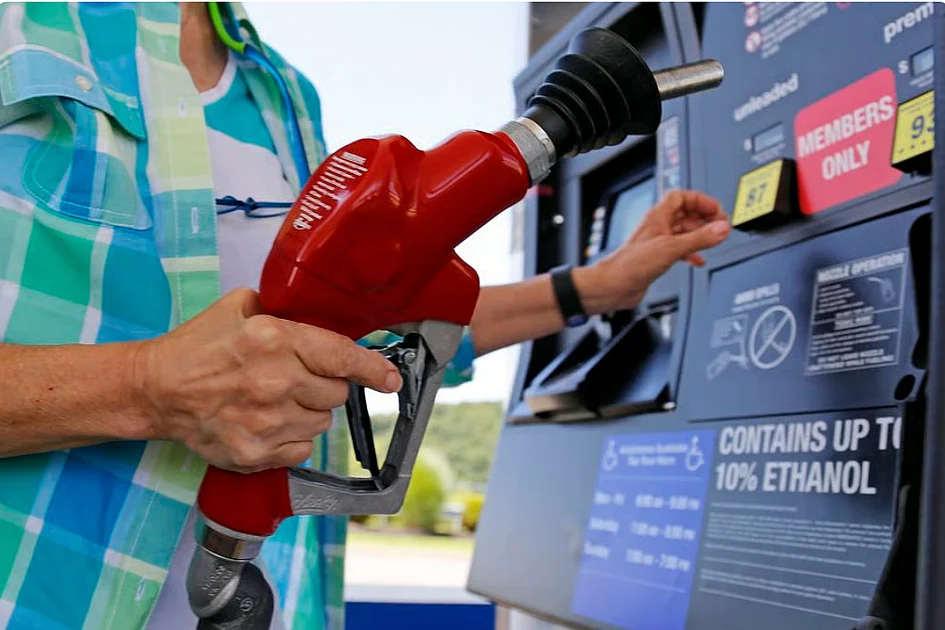
UAE petrol, diesel prices for November 2025 announced
The United Arab Emirates (UAE) has unveiled its fuel pricing structure for November 2025, marking a notable shift from the previous month’s rates. Effective from November 1, Super 98 petrol will be priced at Dh2.63 per litre, a decrease from October’s Dh2.77. Similarly, Special 95 petrol will cost Dh2.51 per litre, down from Dh2.66, while E-Plus 91 petrol will be available at Dh2.44 per litre, reduced from Dh2.58. Diesel prices will also see a slight adjustment, dropping to Dh2.67 per litre from Dh2.71. This announcement continues the UAE’s policy of deregulating fuel prices, a strategy implemented in 2015 to align domestic rates with international market trends. The move aims to ensure transparency and economic stability while reflecting global oil price fluctuations. The UAE’s fuel pricing mechanism remains a critical factor in its broader economic framework, influencing both consumer spending and business operations across the region.
-
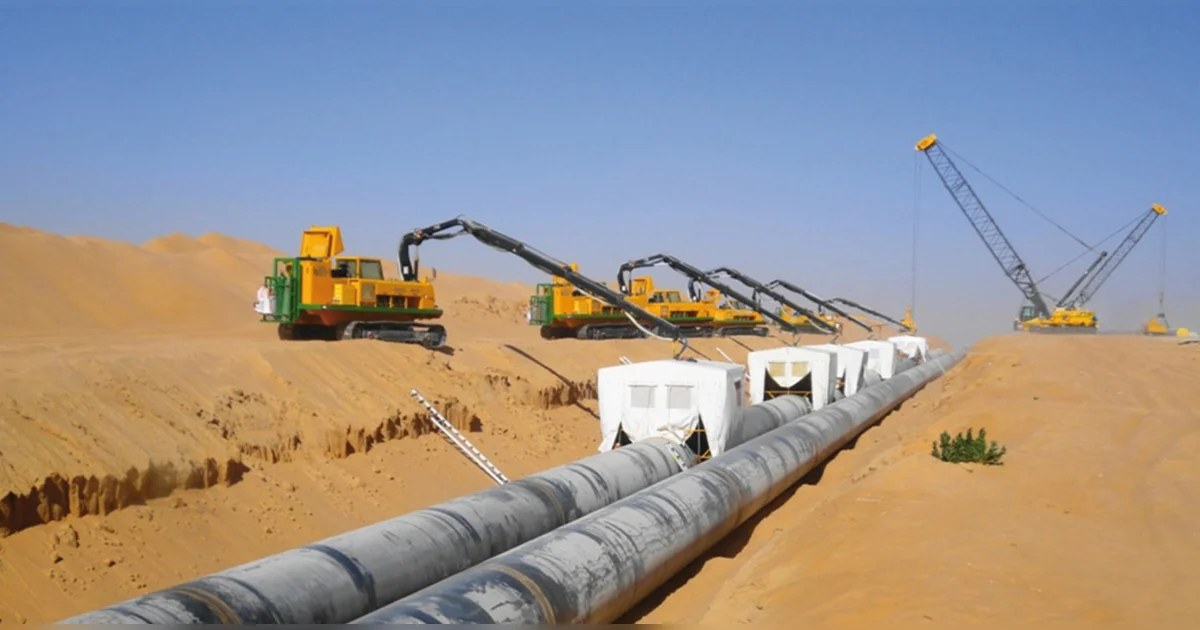
Aljomaih Energy and Water-led consortium achieves financial close for Jubail–Buraydah Water Transmission Project
A consortium led by Aljomaih Energy and Water, in collaboration with Buhur Investment Company and Nesma Group, has successfully achieved financial closure for the Jubail–Buraydah Independent Water Transmission Pipeline Project. The project, valued at SAR 8.5 billion ($2.26 billion), marks a significant milestone in Saudi Arabia’s efforts to enhance its water infrastructure. The financial close follows the signing of the Water Transmission Agreement between the project company, Stream Water Transmission Company, and the Saudi Water Partnership Company (SWPC). The ownership structure of the project is divided among Aljomaih Energy and Water (45%), Buhur Investment Company (35%), and Nesma Group (20%). The project, which will link the Eastern Province with the Qassim Region, is the Kingdom’s first independent water transmission initiative and features reverse pumping capabilities. Financing was secured through a consortium of prominent local and regional lenders, including Al Rajhi Bank, National Infrastructure Fund, and Abu Dhabi Commercial Bank, among others. The financing structure is entirely based on Islamic principles, a unique feature for projects of this scale. The Jubail–Buraydah project will transmit 650,000 cubic meters of desalinated water daily, supported by a storage capacity of 1,634,500 cubic meters, and will span 587 kilometers. Developed under a Build, Own, Operate, and Transfer (BOOT) model, the project has a 35-year concession period, with construction expected to be completed by 2029. Once operational, the project will serve over two million beneficiaries, providing a reliable and sustainable water source with an availability rate of up to 98%. The initiative aligns with Saudi Arabia’s National Water Strategy 2030 and Vision 2030 objectives, emphasizing long-term water security and infrastructure resilience. Key stakeholders, including Ibrahim Aljomaih, Eng. Adnan Buhuligah, and Faisal Alturki, highlighted the project’s strategic importance and the consortium’s commitment to innovation, sustainability, and local content development.
-
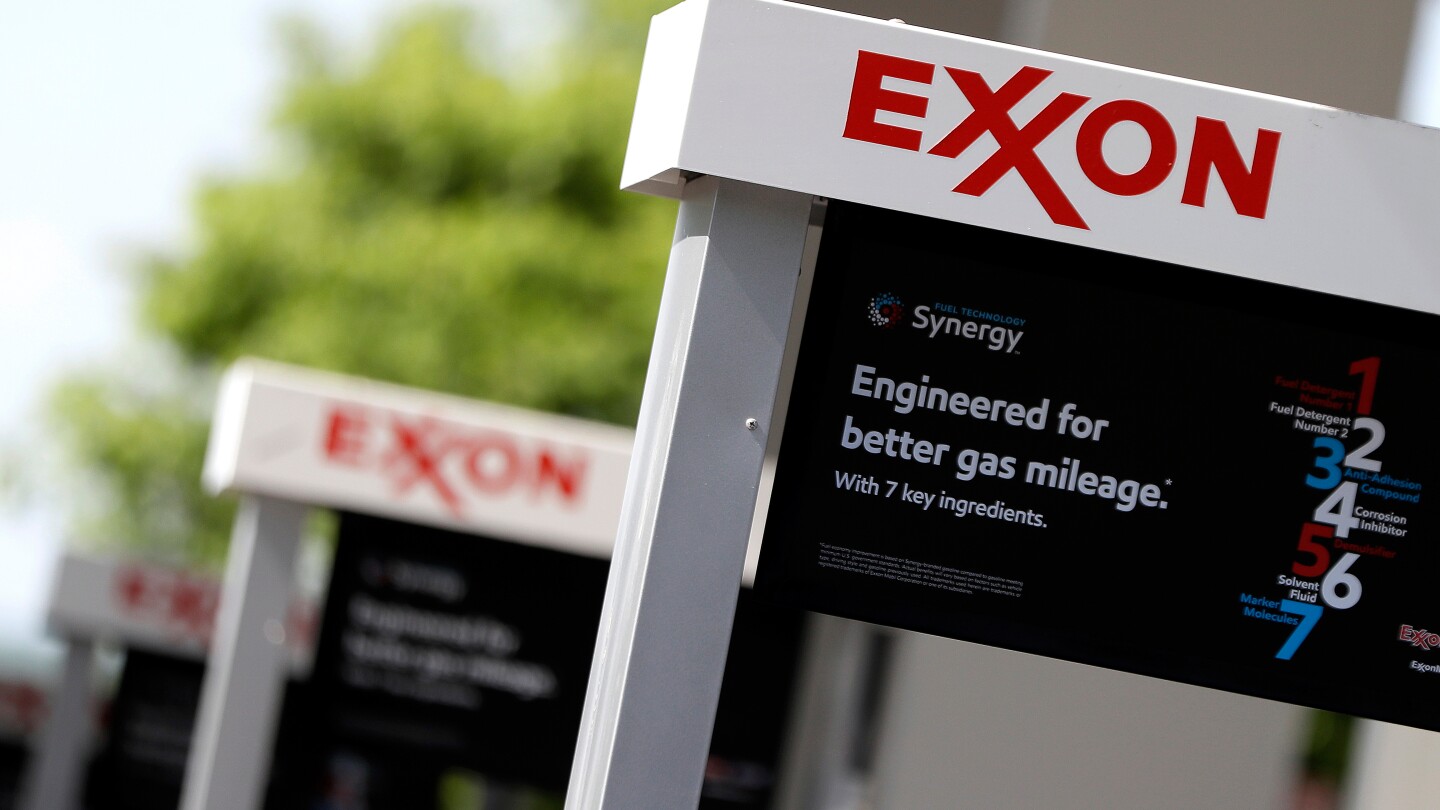
Exxon posts strong quarterly earnings with production in Guyana and the Permian Basin picking up
Exxon Mobil and Chevron delivered robust third-quarter performances, driven by record production levels in key regions. Exxon Mobil reported earnings of $7.55 billion, or $1.76 per share, for the quarter ending September 30. While this marked a slight decline from the $8.61 billion, or $1.92 per share, earned in the same period last year, adjusted earnings of $1.88 per share exceeded Wall Street’s expectations of $1.81 per share, according to Zacks Investment Research. Revenue stood at $85.29 billion, slightly below the projected $86.77 billion. Exxon’s net production surged to 4.7 million oil-equivalent barrels per day, a significant increase of 1.1 million barrels compared to the previous quarter. Notably, Guyana’s output exceeded 700,000 barrels per day, while the Permian Basin achieved a record-breaking 1.7 million oil-equivalent barrels per day. Chevron also posted strong results, with third-quarter earnings of $3.54 billion, or $1.82 per share. Adjusted earnings of $1.85 per share surpassed the anticipated $1.66 per share, though revenue of $49.73 billion fell short of the $53.58 billion forecast. The companies’ performances were bolstered by rising oil prices, which spiked following U.S. sanctions on Russia’s oil industry. OPEC+’s recent decision to increase production by 137,000 barrels per day in November has also contributed to market stability. Both Exxon and Chevron maintain a policy of not adjusting reported results for one-time events, such as asset sales.
-
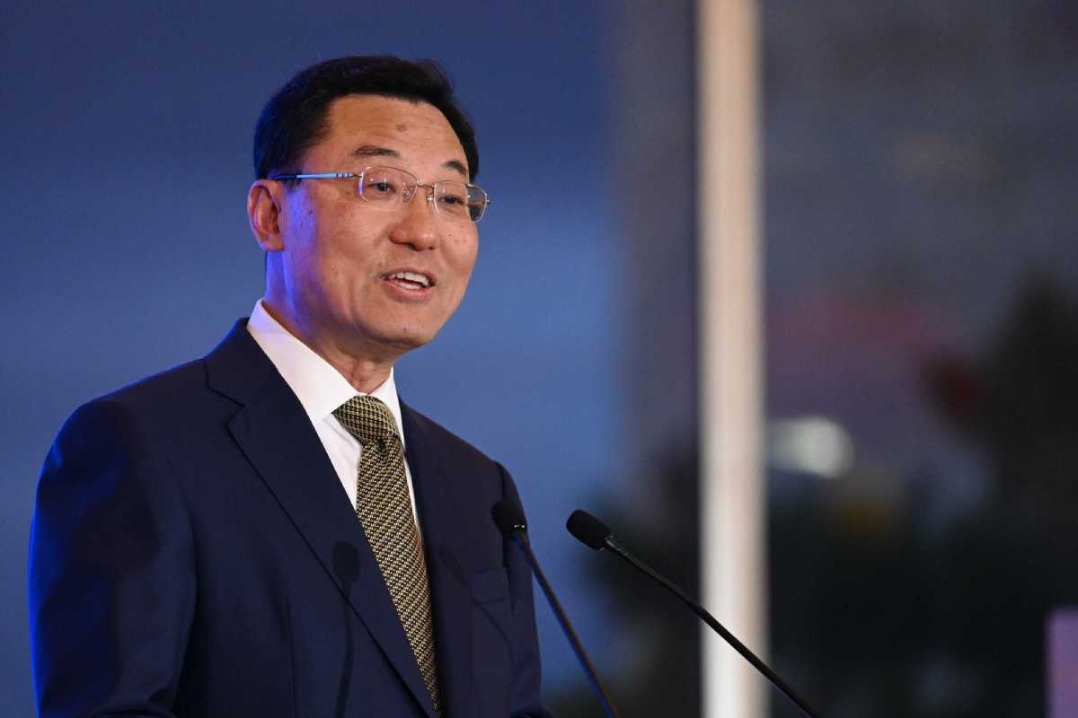
Envoy calls for fair treatment for Chinese financial institutions in US
Chinese Ambassador to the United States, Xie Feng, has called on the US government to ensure an equitable and non-discriminatory environment for Chinese financial institutions operating within its borders. Speaking at the New York Satellite Forum of the 2025 Financial Street Forum, Ambassador Xie highlighted the significant progress in financial cooperation between China and the US since the inception of China’s 14th Five-Year Plan (2021-2025). He noted that many US businesses have not only witnessed but also actively supported and benefited from these developments. Xie cited several milestones, including J.P. Morgan Securities becoming the first wholly foreign-owned securities company in China, American Express receiving approval for bank card clearing services, and BlackRock establishing the first wholly foreign-owned public equity mutual fund company. These achievements, he emphasized, underscore China’s commitment to opening its financial sector to American enterprises. Ambassador Xie urged the US to reciprocate by fostering a similarly open and fair environment for Chinese financial institutions. He stressed the importance of maintaining a stable and sustainable bilateral relationship, advocating for dialogue over confrontation, cooperation over decoupling, and stability over volatility. Xie expressed his hope that the US financial sector would continue to support the China-US relationship, contributing to its development and helping both nations navigate their interactions in the new era.
-
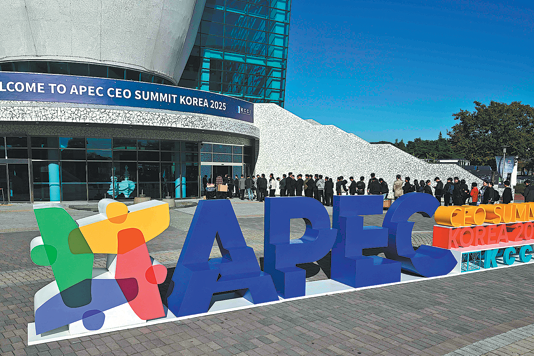
Stronger ties urged to spur trade growth
At the APEC CEO Summit held in Gyeongju, South Korea, leaders and business executives underscored the critical importance of fostering deeper partnerships to enhance trade, investment, and sustainable growth across the Asia-Pacific region. The event, attended by prominent figures from various nations, focused on addressing challenges such as supply chain resilience, digital trust, and regional cooperation. Thailand’s Prime Minister Anutin Charnvirakul emphasized the need for global collaboration to combat online scams and cybercrime, while Vietnam’s President Luong Cuong stressed the significance of maintaining a stable environment to facilitate free trade and investment. Thani bin Ahmed Al Zeyoudi, the UAE’s Minister of Foreign Trade, highlighted the nation’s commitment to openness as a cornerstone of its economic growth, advocating for increased global trade amidst rising protectionism. Eric Ebenstein, TikTok’s Senior Director of Public Policy, discussed the pivotal role of trust in the digital ecosystem, citing the economic impact of content creation, particularly the global influence of South Korean culture. He shared an example of a viral TikTok post about gimbap (seaweed rolls) that led to a nationwide sellout in the U.S. Other speakers, including Chang In-hwa, Chairman and CEO of Posco Group, called for multilateral partnerships to build resilient and green supply chains. Posco’s joint venture with Australia’s Hancock Prospecting, Japan’s Marubeni Corp, and China Steel Corporation was highlighted as a model of regional collaboration. Garry Korte, CEO of Hancock Prospecting, emphasized the high level of trust generated through such partnerships, while Paul Grimes, CEO of the Australian Trade and Investment Commission, described supply chains as the ‘lifeblood of modern economies,’ underscoring the need for sustainability and resilience. Masayuki Omoto, CEO of Marubeni, echoed the call for public-private partnerships to address global challenges effectively.