
Dubai’s real estate market is poised for a significant milestone in 2025, with 44,000 new residential units expected to be completed—the highest number in five years. This surge in supply is a result of projects initiated during the post-pandemic period reaching their final stages, according to a recent analysis by Cushman & Wakefield Core. The consultancy highlighted that Dubai’s residential market is currently experiencing a robust supply cycle, with a substantial pipeline of projects nearing completion. In the third quarter of 2025 alone, over 7,800 units were delivered, with an additional 14,900 units anticipated in the fourth quarter. Prathyusha Gurrapu, Head of Research and Consultancy at Cushman & Wakefield Core, noted that the market is transitioning into a more balanced phase, where factors such as location and quality will increasingly influence performance. Prime areas are expected to remain stable, while secondary locations may adjust to the influx of new supply. Looking ahead, completions are projected to rise further in 2026, with over 69,000 units anticipated. This near-term supply reflects the volume of projects launched in recent years, coupled with strong demand driven by record population growth. However, the increased stock is likely to moderate price and rental growth, contributing to a more tempered market. According to property portal Bayut, established areas with strong infrastructure and sustained luxury demand will continue to thrive, while mid-market apartment areas may face saturation. Haider Ali Khan of Bayut emphasized that Dubai’s real estate market is maturing, with overall price growth moderating due to increased supply and measured investor sentiment. Data from Cushman & Wakefield Core revealed that city-wide residential sales prices reached Dh1,871 per sqft in Q3 2025, marking a 13% year-on-year increase. However, growth is slowing, particularly in the apartment segment. Villa communities such as Palm Jumeirah and Dubai Hills continue to outperform, supported by limited supply and resilient demand. As the market evolves, pricing will increasingly be driven by fundamentals such as location, quality, and developer profile.
分类: business
-
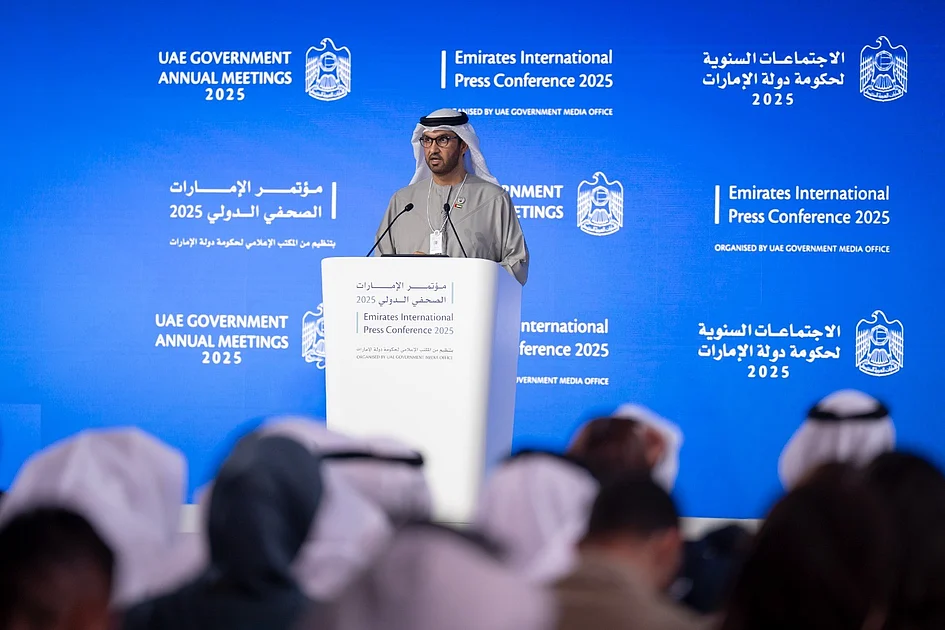
UAE shifts from traditional to smart manufacturing with AI, semiconductors focus
The United Arab Emirates (UAE) is undergoing a transformative industrial shift, transitioning from traditional manufacturing to cutting-edge, technology-driven sectors. This strategic pivot, unveiled at the seventh UAE Government Annual Meetings in Abu Dhabi, underscores the nation’s commitment to renewable energy, semiconductors, artificial intelligence (AI) components, and electric vehicles. Dr. Sultan Al Jaber, UAE Minister of Industry and Advanced Technology, articulated this vision, emphasizing the integration of the UAE’s existing strengths in petrochemicals, aluminum, and steel with emerging high-tech industries. Since the establishment of the Ministry of Industry and Advanced Technology in 2020, the industrial sector has seen a 62% surge in GDP contribution, reaching $120 billion, and a 68% increase in industrial exports, totaling $197 billion. A cornerstone of this success is the National In-Country Value (ICV) program, which redirected Dh210 billion into the national economy in 2024, fostering Emiratisation and supporting key sectors like energy, healthcare, and aviation. The ‘Made in the UAE’ initiative has further galvanized local manufacturing, identifying 4,800 products worth Dh168 billion for domestic production. The UAE’s global competitiveness has also been bolstered, with significant advancements in the Competitive Industrial Performance Index and the Quality Infrastructure Index. Dr. Al Jaber highlighted the shift towards smart manufacturing, leveraging AI and Fourth Industrial Revolution technologies to enhance production efficiency and global competitiveness.
-

Boeing criminal case linked to deadly 737 crashes dropped
Boeing has successfully avoided a criminal charge in the United States related to two fatal 737 Max crashes, following a court decision to dismiss the case. The ruling, issued by Judge Reed O’Connor, came in response to a request from the U.S. government to drop the charge. While Judge O’Connor expressed personal disagreement with the decision, stating that it did not align with the public interest, he acknowledged that his concerns were insufficient to override the government’s proposal. This outcome represents a significant victory for Boeing, which had faced renewed legal scrutiny after the government accused it of violating a prior settlement tied to the crashes. The dismissal, however, was met with opposition from families of the victims, who sought to hold Boeing accountable through a trial. Attorney Paul Cassell, representing some of the families, announced plans to appeal the ruling, emphasizing the need to address perceived injustices. In his decision, Judge O’Connor criticized the government’s rationale for avoiding a trial as ‘unserious’ and expressed doubts about the new agreement’s ability to ensure public safety. Nonetheless, he deferred to the government’s presumed ‘good faith’ in the matter. The Department of Justice (DOJ) defended the agreement, highlighting extensive consultations with victims’ families and asserting that the resolution provides closure and immediate action from Boeing. Boeing, in turn, reaffirmed its commitment to the agreement and ongoing efforts to enhance safety and compliance. The case stems from two catastrophic 737 Max crashes in 2018 and 2019, which claimed 346 lives. Boeing had previously admitted to criminal fraud conspiracy charges in 2021, paying $2.5 billion in fines and compensation while pledging to improve safety standards. The case was reopened in 2023 following another incident involving a 737 Max, leading to accusations of breaching the original settlement. Under a new proposal in 2024, Boeing agreed to plead guilty, pay an additional $243 million fine, and accept court oversight. However, Judge O’Connor rejected this deal in December 2023, citing concerns over the selection of the monitor. The latest settlement, which dropped the criminal charge, requires Boeing to hire an independent compliance consultant and commit $1.1 billion, including penalties and compensation to victims’ families. Prosecutors justified the dismissal by citing Boeing’s ‘meaningful progress’ in anti-fraud and conspiracy programs.
-

Investigators find ‘black boxes’ from UPS plane crash that killed 12
Federal safety investigators have successfully retrieved the ‘black box’ recorders from the wreckage of a UPS cargo plane that crashed in Louisville, Kentucky, claiming the lives of 12 individuals. The incident occurred during takeoff on Tuesday evening, when the 34-year-old MD-11 freighter, bound for Honolulu, burst into flames shortly after clearing the runway fence. The crash ignited a series of fires, including a petroleum recycling facility, and scattered debris across a half-mile radius. The Louisville airport reopened on Wednesday, but the affected runway will remain closed for ten days. Todd Inman of the National Transportation Safety Board (NTSB) confirmed that the flight data recorder and cockpit voice recorder were intact and will be analyzed in Washington, D.C. The NTSB aims to issue a preliminary report within 30 days, though a full investigation could take up to two years. Kentucky Governor Andy Beshear declared a state of emergency to expedite disaster response efforts. The crash disrupted operations at UPS Worldport, the company’s global air cargo hub, but services are expected to resume by Thursday morning. Investigators are focusing on the plane’s left engine, which detached during the crash, as a potential factor in the accident. Boeing and GE Aerospace have pledged support to the investigation. This marks the first UPS cargo plane crash since 2013.
-

APT Global publishes inaugural ESG report and unveils sustainable 400-person labour accommodation
APT Global, a Dubai-based marine and offshore engineering services provider, has taken significant strides in sustainability by releasing its inaugural Environmental, Social, and Governance (ESG) Report and inaugurating Hayat Haven, a state-of-the-art accommodation facility for 400 workers. These initiatives highlight the company’s dedication to reducing its environmental impact, enhancing governance transparency, and prioritizing employee welfare. The ESG report details APT Global’s achievements, including a 22% reduction in greenhouse gas emissions intensity, a 68% waste diversion rate from landfills, and a 19% decrease in water consumption per project. The company also introduced a Marine Habitat Protection Programme to minimize environmental harm from underwater operations. On the social front, APT Global invested over 45,000 hours in employee training, achieved zero lost-time injuries across major projects, and increased female representation in leadership roles to 27%. Governance improvements include quarterly ESG reporting with independent verification and enhanced anti-corruption policies. Hayat Haven, the new worker accommodation, features energy-efficient systems, modern amenities, and robust safety measures, reflecting APT Global’s commitment to workforce wellbeing. CEO Anil Abraham emphasized that sustainability is central to the company’s competitiveness and societal responsibility. The launch event in Dubai was attended by government officials, industry leaders, and sustainability experts, marking a pivotal moment in APT Global’s journey toward a greener, safer, and more inclusive maritime sector.
-
UAE inflation holds steady amid global uncertainty, GCC follows suit
In a testament to economic resilience, the United Arab Emirates (UAE) has sustained stable inflation levels despite global economic volatility. According to the International Monetary Fund’s (IMF) Regional Economic Outlook, the UAE’s inflation is projected to average 1.6% in 2025, slightly lower than the 1.7% recorded in 2024, with a modest rise to 2.0% anticipated in 2026. This trajectory remains well within the central bank’s target, underscoring the nation’s effective fiscal management and price stability. Dubai’s Consumer Price Index (CPI) rose to 2.9% year-on-year in September 2025, up from 2.4% in August, driven primarily by significant increases in the Housing, Water, Electricity, and Gas category, which surged by 5.8%. Other contributing factors included rebounds in Recreation and Culture, alongside modest rises in Education and Food & Beverages. However, declining Transport costs helped temper overall inflation. The broader Gulf Cooperation Council (GCC) region has mirrored this stability, with inflation expected to remain below or at the 2% target through 2026. Saudi Arabia, the GCC’s largest economy, recorded a 2.2% year-on-year inflation rate in September 2025, with notable increases in Personal Goods & Services and Housing. The Kingdom’s central bank aligned with the U.S. Federal Reserve’s rate cut, reducing its repo and reverse repo rates by 25 basis points. Other GCC nations, including Bahrain, Oman, and Qatar, reported mild inflation figures, supported by increased oil production and stabilized energy prices. Globally, inflation dynamics remain complex, with the U.S. experiencing a 3% year-on-year rise in September, prompting the Federal Reserve to cut rates. Meanwhile, declining global food prices, as indicated by the FAO Food Price Index, have provided some relief to import-dependent economies. However, geopolitical tensions and trade disruptions continue to pose risks. The GCC’s inflation outlook remains cautiously optimistic, with regional stability offering a buffer against global economic challenges.
-
Qatar Airways sells entire Cathay Pacific stake for $897 million
Qatar Airways has finalized the sale of its entire 9.7% stake in Cathay Pacific Airways for approximately $897 million (HK$6.97 billion), marking its complete withdrawal from Hong Kong’s flagship carrier after an eight-year investment. The transaction, announced late Wednesday, involves Cathay repurchasing the shares at HK$10.8374 per share, representing a 4% discount to its last closing price but a 35% premium over the original purchase price paid by Qatar Airways in 2017. The deal will be funded through Cathay’s internal resources and existing credit lines.
Qatar Airways initially acquired the stake in 2017, becoming Cathay’s third-largest shareholder after Swire Pacific and Air China. The Gulf carrier’s exit aligns with its disciplined portfolio strategy, aimed at optimizing investments and positioning itself for long-term growth, according to CEO Badr Mohammed Al-Meer. The move also reflects Qatar Airways’ broader strategy of divesting from certain global airline investments to focus on core operations.
For Cathay, the buyback is seen as a positive development, reducing the number of shares in circulation and potentially easing selling pressure on its stock. Cathay’s shares surged 4.8% following the announcement, with Air China and Swire Pacific also experiencing gains. The Hong Kong-based airline, one of Asia’s largest cargo carriers, has been recovering from pandemic-induced losses and recently reported a 20% increase in passenger numbers for September compared to the previous year.
Cathay Chairman Patrick Healy emphasized the buyback as a sign of strong confidence in the company’s future, which includes a HK$100 billion investment plan over seven years for fleet renewal and other upgrades. Despite the divestment, both airlines will maintain their partnership through the oneworld Alliance, ensuring continued collaboration in the global aviation sector.
-

UAE Islamic finance market poised for major expansion amid global momentum
The United Arab Emirates (UAE) is emerging as a global powerhouse in Islamic finance, with its sector poised for significant expansion. As of the first half of 2025, Islamic banking assets in the UAE reached $242.7 billion, accounting for 18% of the nation’s total banking assets. This growth is part of a broader global trend, with Islamic finance now valued at over $5.5 trillion worldwide. The UAE ranks as the fourth-largest Islamic finance jurisdiction globally, driven by a robust national strategy aiming to more than double Islamic banking assets and sukuk listings by 2031. The strategy includes increasing Islamic banking assets to Dh2.56 trillion ($697.5 billion) and boosting sukuk issuances to Dh660 billion ($179.8 billion).
Standard Chartered’s report, ‘Islamic Banking for Corporates: Broadening Horizons,’ highlights the UAE’s consistent outperformance of conventional banking growth. The report emphasizes the sector’s alignment with environmental, social, and governance (ESG) principles, making it increasingly attractive to global investors. Sustainable sukuk, for instance, saw subscription rates of 4.3 times their issuance value in 2024, compared to 3.1 times for traditional sukuk. This demand is driven by non-traditional investors, particularly from Europe.
Digital innovation is also reshaping the Islamic finance landscape. Tokenized sukuk and blockchain-enabled platforms are streamlining cross-border transactions and reducing costs. Malaysia is leading in integrating digital assets into Islamic finance, while the UAE is exploring similar advancements to enhance its financial infrastructure.
Corporate sectors such as real estate, logistics, and food production are leveraging Shariah-compliant financing to access new markets and diversify funding sources. In July 2025, UAE-based developer Arada raised $450 million through its largest sukuk issuance to date, oversubscribed 4.4 times. This underscores the growing investor demand for Shariah-compliant assets, which continues to outpace supply.
The UAE’s proactive approach and strategic investments are positioning it as a global hub for ethical and sustainable finance. For corporates navigating a values-driven world, Islamic banking is no longer just an alternative—it’s a competitive advantage.
-
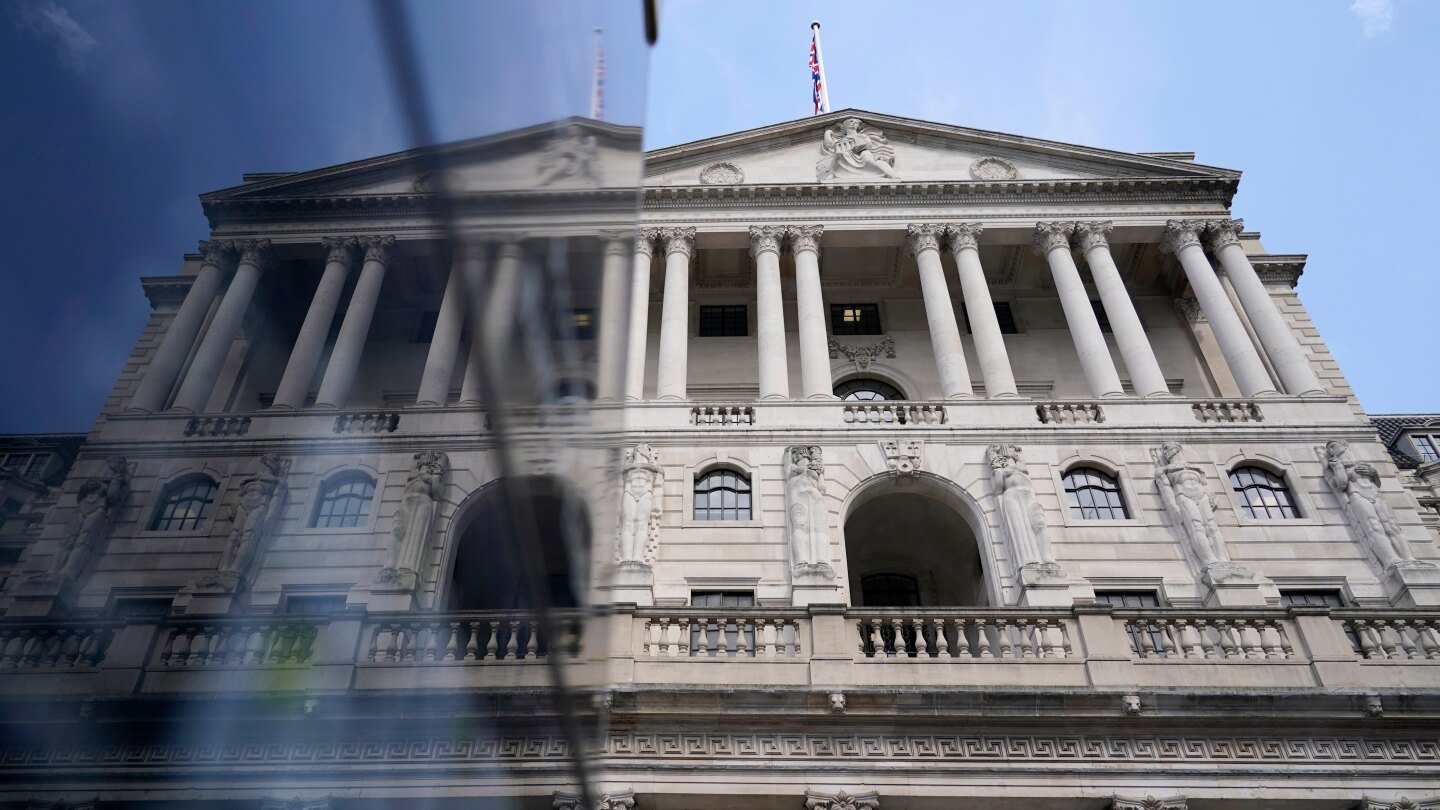
Divided Bank of England holds key interest rate at 4% despite hopes inflation has peaked
The Bank of England (BoE) has decided to maintain its benchmark interest rate at 4% during its latest policy meeting on Thursday. The decision, made by the nine-member Monetary Policy Committee (MPC), was widely expected, though some analysts had speculated on a potential quarter-point reduction to 3.75%. The vote was notably close, with five members favoring no change and four supporting a rate cut. Governor Andrew Bailey emphasized the need for greater certainty that inflation is on a sustainable path toward the bank’s 2% target before considering further reductions. Currently, the annual consumer price inflation rate stands at 3.8%, nearly double the BoE’s target. The MPC noted in its meeting minutes that inflation has likely peaked at a lower level than previously forecasted in August, when the last rate cut was implemented. Economists anticipate that inflation will continue to decline in the coming months, potentially reaching the target by next year, which could pave the way for a rate cut at the December meeting. The upcoming UK budget announcement on November 26 is expected to play a pivotal role in shaping economic policy, with Treasury chief Rachel Reeves signaling potential tax increases aimed at reducing inflation and stabilizing the economy. Since initiating rate cuts in August 2024, the BoE has adopted a cautious approach, adjusting rates every three months. Thursday’s decision marks the first time the bank has opted against a rate cut within this quarterly framework. Meanwhile, the US Federal Reserve recently reduced its key interest rate for the second time this year, though Chair Jerome Powell cautioned that further cuts are not guaranteed, citing economic uncertainties and internal divisions among policymakers.
-

France urges EU to investigate Shein for selling illegal items including child-like sex dolls
France has formally requested the European Union’s executive arm to investigate fast-fashion giant Shein for allegedly selling illegal items, including child-like sex dolls and weapons, on its expansive online marketplace. Two French ministers, Roland Lescure and Anne Le Henanff, have sent a letter to Henna Virkkunen, the European Commission’s executive vice-president for tech sovereignty, urging immediate action. The ministers emphasized that Shein must comply with the Digital Services Act (DSA), the EU’s regulatory framework aimed at ensuring online platform safety and user protection. The French government has initiated procedures to suspend access to Shein’s marketplace in France unless the platform demonstrates compliance with national laws. Authorities discovered not only child-like sex dolls but also significant quantities of illegal ‘Class A’ weapons, including firearms, knives, and war materials, on the platform. Shein, which was classified as a ‘very large online platform’ by the EU last year due to its 45 million European users, faces stringent regulatory requirements. Non-compliance could result in suspension and fines of up to 6% of its annual profits. The company, founded in China in 2012 and now headquartered in Singapore, has pledged to collaborate with French authorities to address concerns promptly.