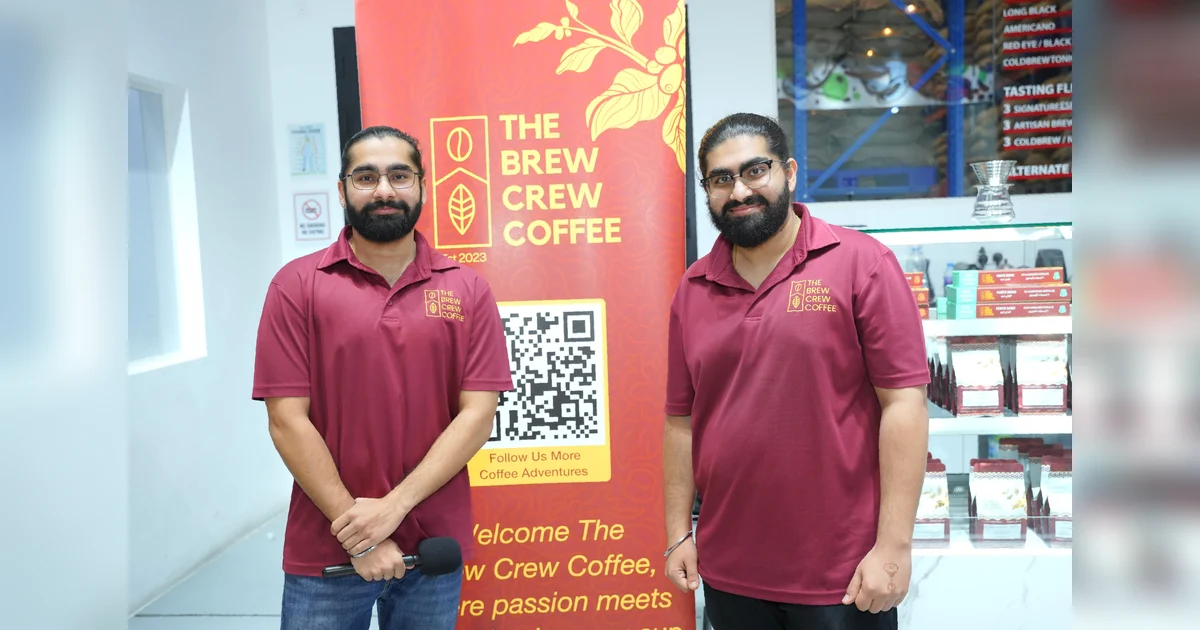
The Brew Crew Coffee, a UAE-based specialty coffee brand, recently hosted an interactive event to highlight its ‘Farm to Cup’ philosophy, emphasizing transparency, sustainability, and craftsmanship in coffee production. The event, held at the company’s flagship roastery and concept space, brought together media representatives, coffee enthusiasts, and hospitality professionals for an immersive experience into the brand’s sourcing, roasting, and flavor profiling processes. Unlike traditional press conferences, the showcase offered a hands-on journey through every stage of coffee production, from farm-level sourcing to final preparation. Founded by brothers Ashjeet Singh Talwar and Sukhjeet Singh Talwar, The Brew Crew Coffee leverages their multi-generational expertise in the international coffee trade to create a consumer-facing brand rooted in integrity and education. Ashjeet Singh Talwar emphasized the brand’s commitment to quality and traceability, stating, ‘Farm to Cup represents our dedication to showcasing the real story behind every roast.’ Sukhjeet Talwar added that the event aimed to engage audiences in the coffee-making process, differentiating the brand in the UAE’s growing specialty coffee market. Since its inception, The Brew Crew Coffee has expanded its presence by offering training workshops, cupping sessions, and customized roasting solutions for B2B and hospitality partners. The brand’s focus on education and collaboration continues to drive its growth in both retail and wholesale segments, reinforcing its vision of making specialty coffee accessible, authentic, and sustainable.
分类: business
-

Disney channels to return to YouTube TV after companies agree to end fee dispute
In a significant development for streaming services, YouTube TV and Walt Disney have resolved their fee dispute, ensuring the return of Disney-owned channels to the platform. The affected networks, including ABC, ESPN, FX, National Geographic, and Disney Channel, were restored starting Friday, November 15, 2025. The dispute, which began on October 30, had left millions of subscribers without access to crucial programming, such as US Election Day coverage and major live sports events. ESPN’s full sports lineup, including ESPN Unlimited content, will be available to base-plan subscribers at no extra cost by the end of 2026. The disagreement centered on carriage fees, the per-subscriber rates distributors pay to broadcast networks. Disney sought rates comparable to those paid by major distributors, reportedly around $10 per subscriber monthly for ESPN. YouTube TV, leveraging its rapid growth and Google’s financial resources, negotiated terms that avoid immediate price hikes for customers. Walt Disney CEO Bob Iger emphasized that the proposed deal was equitable, aligning with agreements made by other large distributors. The resolution alleviates investor concerns about Disney’s declining TV business, which recently missed quarterly revenue expectations despite strong performance in streaming and parks. Earlier, YouTube TV had faced similar disputes with NBCUniversal, Fox, and Paramount, successfully securing continued access to their networks. The platform also offered a $20 credit to subscribers if the Disney channels remained unavailable for an extended period.
-
Trump signs order to lower tariffs on beef, coffee, other goods
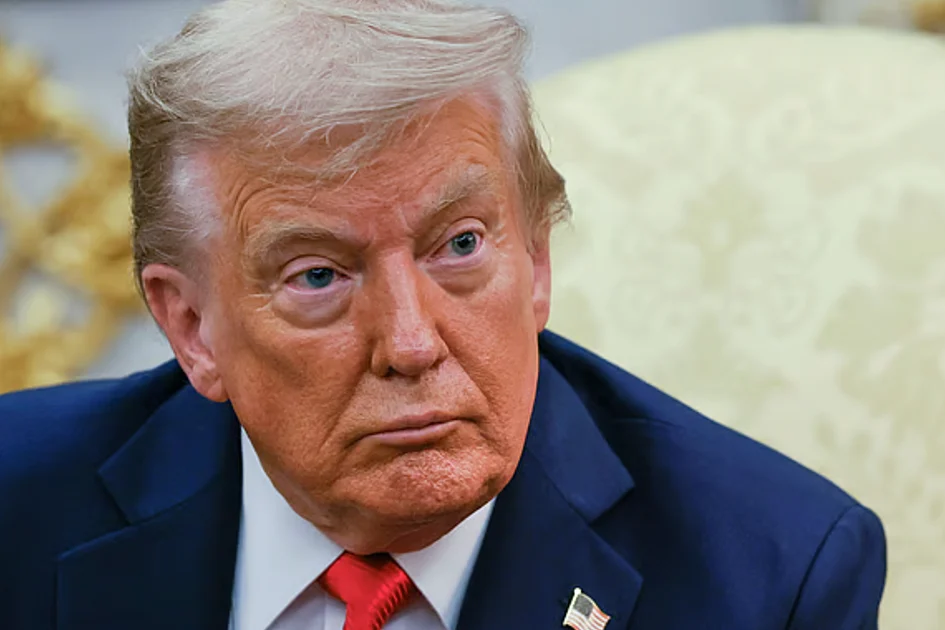
In a significant move to address escalating cost-of-living concerns, US President Donald Trump signed an executive order on Friday to reduce tariffs on essential agricultural imports, including beef, coffee, bananas, and tomatoes. This decision comes as the Trump administration faces mounting pressure from voters grappling with affordability issues, which played a pivotal role in recent elections for New York City mayor and the governors of New Jersey and Virginia. The new tariff exemptions, which are retroactively effective from Thursday, aim to alleviate price pressures on goods that the US cannot sufficiently produce domestically. Products such as avocados, coconuts, and pineapples are also included in the exemption list. The administration’s decision follows a series of trade agreements with Argentina, Guatemala, Ecuador, and El Salvador, which similarly aim to remove ‘reciprocal’ tariffs on goods the US cannot produce in adequate quantities. National Coffee Association president Bill Murray hailed the move, stating it would ease cost-of-living pressures for the majority of American adults who rely on daily coffee consumption. The administration has acknowledged the economic strain on Americans, with Trump’s top economic adviser, Kevin Hassett, vowing to address the issue promptly. While the broader impact of tariffs on inflation remains moderate, policymakers warn that higher levies could continue to affect prices across the economy.
-
India’s relief measure seen as helpful for exporters, insiders say
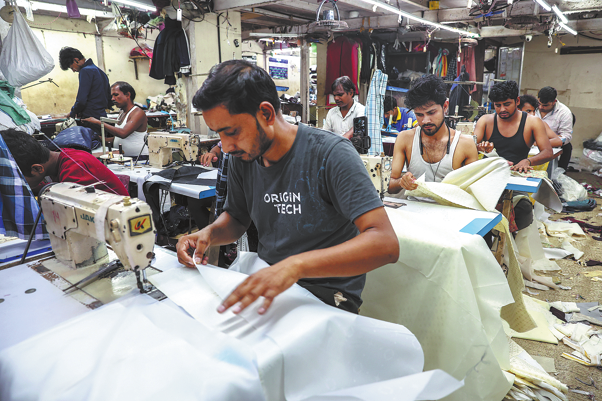
In a significant move to bolster its export sector, the Indian government has unveiled a comprehensive relief package exceeding $5 billion. Announced late on Wednesday and approved by the federal cabinet chaired by Prime Minister Narendra Modi, the initiative aims to mitigate the adverse effects of US-imposed tariffs and strengthen India’s export ecosystem. The package includes collateral-free loans worth $2.3 billion and a six-year disbursement of $2.82 billion through the Export Promotion Mission (EPM), a program designed to enhance export competitiveness, particularly for micro, small, and medium enterprises (MSMEs), first-time exporters, and labor-intensive sectors. Information and Broadcasting Minister Ashwini Vaishnaw emphasized that the EPM represents a strategic shift from fragmented schemes to a unified, outcome-based mechanism capable of swiftly addressing global trade challenges and evolving exporter needs. The move comes as Indian exporters grapple with a 50 percent tariff imposed by the US, including a 25 percent punitive levy over India’s purchase of Russian oil, which has significantly impacted sectors like textiles, jewelry, leather goods, and chemicals. Industry leaders and trade organizations have welcomed the relief measures, with the Federation of Indian Export Organisations President SC Ralhan praising the EPM for its pragmatic and forward-looking vision. Similarly, the Confederation of Indian Textile Industry Chairman Shri Ashwin Chandran highlighted the potential for the textile and apparel sector to become globally competitive and create better-quality jobs. The timing of the package is particularly crucial for the seafood industry, which is facing its most challenging phase, according to Seafood Exporters Association of India President Pawan Kumar G. While the EPM is seen as a positive step, its success will hinge on the swift issuance of detailed guidelines, adequate funding, and robust coordination mechanisms, as noted by Global Trade Research Initiative founder Ajay Srivastava. Meanwhile, US President Donald Trump has indicated that his administration is working on a ‘very different deal’ with India, signaling ongoing negotiations between the two nations.
-
China tops trade partners in Gulf region
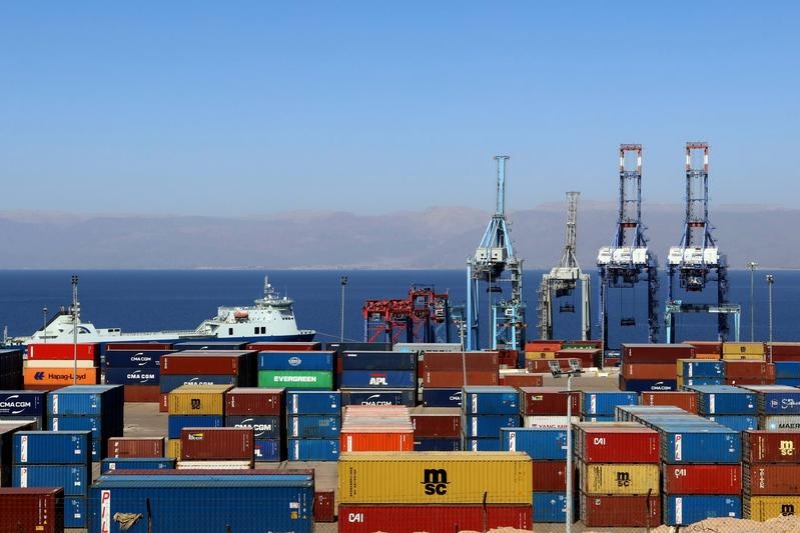
China has emerged as the Gulf region’s leading trading partner, surpassing Western nations for the first time in 2024, according to a report released by London-based think tank Asia House. The study reveals that trade between China and the six Gulf Cooperation Council (GCC) countries—Bahrain, Kuwait, Oman, Qatar, Saudi Arabia, and the United Arab Emirates—grew by 14.2% to reach $257 billion in 2024. This figure exceeds the combined trade volumes of the Gulf with the United States, the United Kingdom, and Eurozone countries, which declined by 4% to $256 billion during the same period. The report, titled *The Middle East Pivot to Asia*, forecasts that Gulf-China trade will expand further, reaching $375 billion by 2028, with the gap widening to $75 billion. Freddie Neve, the report’s author, emphasized that Gulf economies are deepening ties with Asia faster than with any other region amid global trade disruptions. Energy imports from the Gulf remain a cornerstone of this relationship, supported by long-term energy agreements and Gulf investments in China’s downstream refining and petrochemical sectors. The broader Gulf-Asia trade surged to $516 billion in 2024, marking a 14.4% increase and nearly doubling Gulf-West trade volumes. Asia House CEO Michael Lawrence noted that economic, diplomatic, and commercial ties have reached a pivotal inflection point. The report also highlights the growing integration of Gulf and Asian financial markets, increased cross-border capital flows, and the potential rise of renminbi-denominated trade, which could enhance the Gulf states’ geopolitical strategies and reduce trade costs.
-
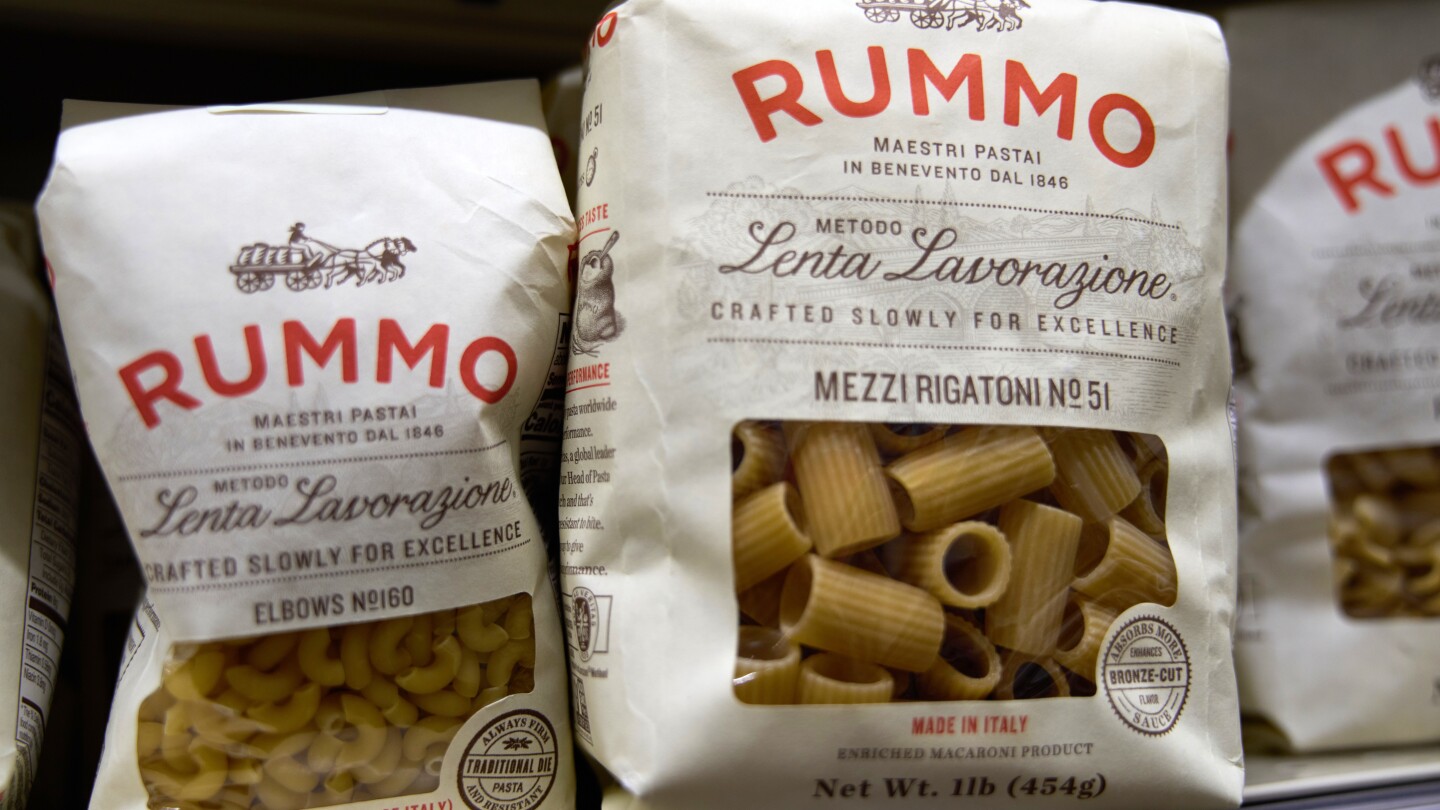
Aficionados fret as Trump moves to make pasta great again
The United States has proposed a staggering 107% tariff on Italian pasta imports, a move that has sent shockwaves through Italy’s food industry and sparked international trade tensions. The decision stems from a U.S. Commerce Department investigation alleging that Italian pasta producers, including major exporters La Molisana and Garofalo, engaged in anti-competitive practices by selling products in the U.S. at below-market prices. This 92% anti-dumping duty would be added to the existing 15% tariff imposed by the Trump administration on European exports, potentially doubling the price of Italian pasta for American consumers.
-
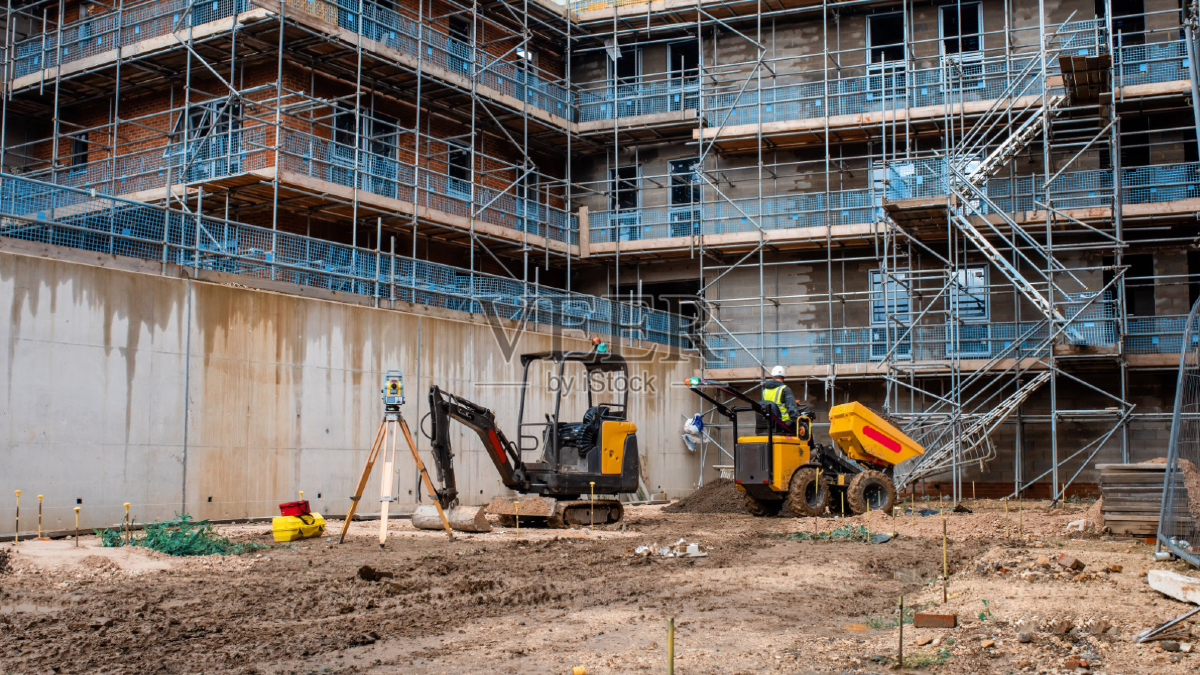
China’s investment drop highlights property-driven pressures
China’s fixed asset investment (FAI) experienced a significant downturn in October, reflecting mounting pressures on the real economy as the ongoing property crisis continues to dampen economic activity. According to the National Bureau of Statistics (NBS), the cumulative FAI for the first ten months of 2023 stood at 40.89 trillion yuan ($5.7 trillion), marking a 1.7% year-on-year contraction. This represents a sharp deterioration compared to the 0.5% decline recorded in the first nine months of the year. In October alone, FAI plummeted by 12% to 3.74 trillion yuan, down from 4.25 trillion yuan in the same period last year. All three major sectors—primary, secondary, and tertiary industries—registered declines, with residential property development investment dropping 13.8% year-on-year to 5.66 trillion yuan in the first ten months. The property sector’s slump has been a significant drag on overall investment, accounting for a three-percentage-point reduction in growth. Despite these challenges, NBS spokesperson Fu Linghui emphasized that excluding real estate, FAI grew by 1.7% during the same period. He also highlighted robust expansion in high-tech industries, with aerospace manufacturing up 19.7% and information services investment surging 32.7%. However, analysts caution that China’s economy is entering the final quarter on a weakening trajectory, with softer industrial output and sluggish household consumption exacerbating the slowdown. The property market’s downward spiral, triggered by the Evergrande Group debt crisis in 2020, continues to weigh heavily on consumer confidence and investment. Home prices in major cities have shown broad-based declines, with first-tier cities experiencing a 4.4% year-on-year drop in October. Experts predict further adjustments in housing prices over the next three years, with some regions potentially hitting historic lows. The prolonged correction in the property sector reflects a deliberate policy shift away from property-led growth, but a genuine recovery will depend on rebuilding fundamentals such as employment, income growth, and social protections. Meanwhile, falling home prices are eroding household wealth, with over 70% of family assets tied to property, leading to reduced consumption and job market pressures. As China navigates these challenges, policymakers face the delicate task of balancing structural reforms with short-term stabilization measures.
-
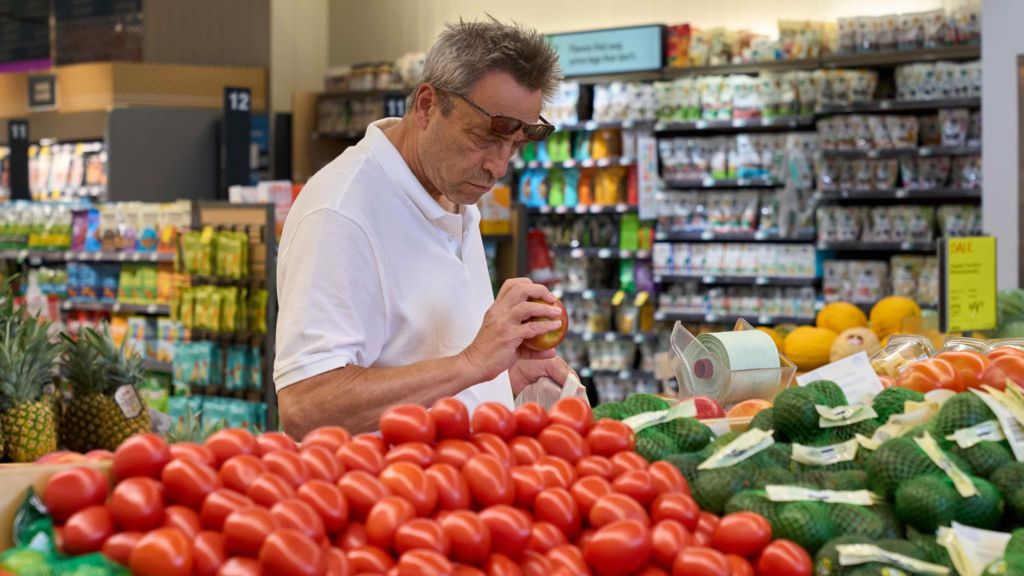
Trump rolls back tariffs on dozens of food products
In a significant policy shift, former US President Donald Trump has signed an executive order exempting a wide range of food products, including coffee, bananas, and beef, from his previously imposed tariffs. This decision arrives as the Trump administration grapples with escalating public and political pressure over rising inflation and the cost of living. The move follows the Republican Party’s underwhelming performance in recent elections, which has seemingly prompted Trump to address economic concerns more directly. The White House released a detailed list of exemptions on Friday, covering products such as avocados, tomatoes, coconuts, and mangoes. According to the administration, these items are essential imports as they cannot be sufficiently produced domestically. This development marks a notable pivot in Trump’s trade policy, which has long been characterized by aggressive tariff measures. The story is still unfolding, and further updates are expected shortly. For real-time updates, readers are encouraged to follow the BBC News App or @BBCBreaking on X.
-
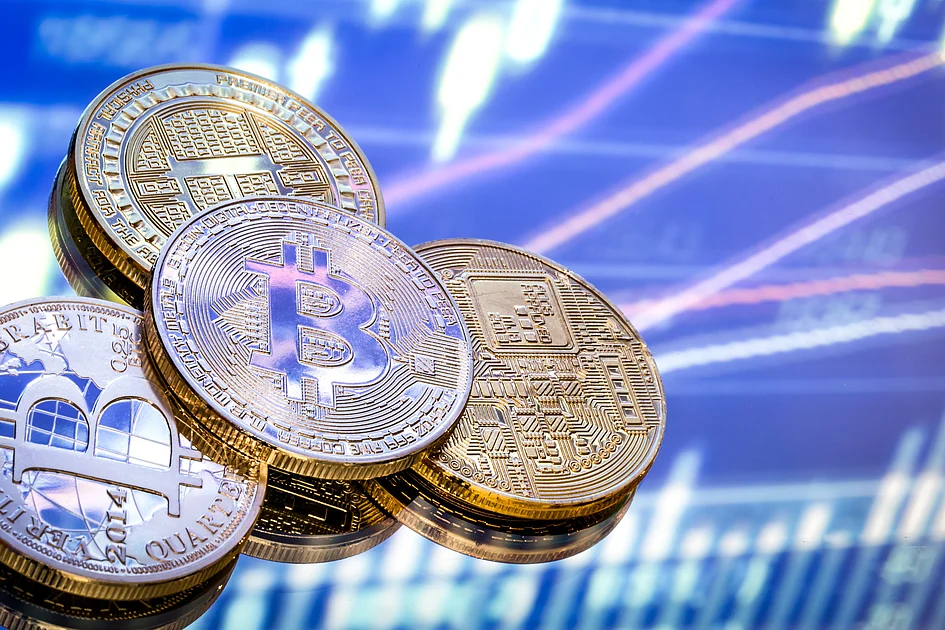
Why you’re your own best crisis manager in the world of Crypto
In the ever-turbulent realm of cryptocurrency, self-reliance emerges as the ultimate crisis management tool. Drawing inspiration from Reese Witherspoon’s advocacy for female agency in cinema, this narrative explores the parallels between personal empowerment and navigating the unpredictable crypto markets. Last week’s market downturn, which rattled even the most seasoned investors, served as a pivotal moment for one crypto enthusiast. Initially seeking reassurance from a male-dominated Telegram group, she found only silence and pessimism. This prompted her to take decisive action, selling a portion of her holdings not out of fear, but to strategically capitalize on the dip. Although the market stabilized sooner than expected, the experience underscored a profound lesson: the importance of trusting one’s instincts and taking ownership of financial decisions. The author reflects on her past tendency to seek external validation, a habit she now recognizes as counterproductive. Instead, she advocates for self-education, resilience, and the courage to make independent choices. This philosophy aligns with the ethos of the crypto community, which champions decentralization and personal sovereignty. A subsequent emergency call with a women’s crypto group reinforced this mindset, as participants collectively affirmed their commitment to their investments and beliefs. The author concludes with a forward-looking perspective, embracing the challenges and opportunities of a nascent financial system while vowing to rely solely on her own judgment moving forward.
-
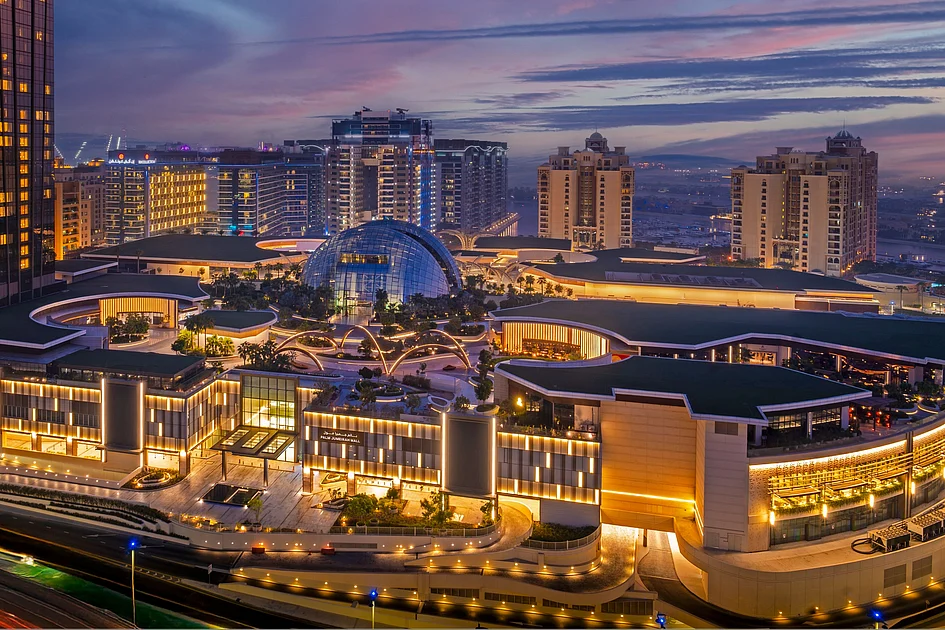
Inside Dubai’s skyrocketing ‘Mall Economy’ and what’s fuelling it
Dubai’s mall economy is experiencing an unprecedented boom, defying global trends where traditional malls struggle against e-commerce. The UAE’s retail landscape is undergoing a transformative phase, with new developments and ambitious refurbishments reshaping the city’s iconic shopping destinations. Unlike many global counterparts, Dubai’s malls are thriving, evolving into immersive, multi-sensory hubs that blend shopping, dining, entertainment, and culture. This growth is not just a retail phenomenon but a cornerstone of the city’s tourism and economic strategy. In 2024, Dubai Mall alone attracted 111 million visitors, solidifying its status as the world’s most visited place. The mall economy’s ripple effects extend beyond retail, anchoring real estate, boosting hospitality, and creating jobs. Developers are investing billions in expansions, such as Emaar’s Dh1.5 billion District project and Majid Al Futtaim’s Dh5 billion transformation of Mall of the Emirates. Community malls like Nad Al Sheba are also gaining traction, enhancing local living standards and real estate values. Dubai’s malls have successfully integrated digital innovations, creating a hybrid shopping experience that complements rather than competes with e-commerce. However, sustaining this growth poses challenges, including managing environmental impacts and ensuring continuous innovation. The future of Dubai’s malls lies in leveraging AI, AR, and IoT to create immersive, personalized experiences, cementing their role as lifestyle destinations rather than mere shopping venues.