分类: business

  • Parcel deliveries in China surpass 180 billion mark

    Parcel deliveries in China surpass 180 billion mark

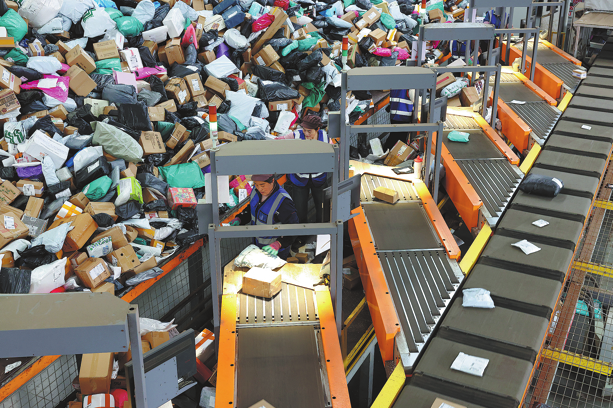
    China’s express delivery industry achieved an unprecedented milestone this week, with annual parcel volume exceeding 180 billion items for the first time in history. The State Post Bureau announced Monday that this record-breaking figure was reached on Sunday, highlighting the sector’s extraordinary growth trajectory and its increasing importance to the national economy.

    The landmark parcel—a smart learning device ordered by Shenzhen resident Li Xiaojun—underwent a fully automated journey representative of China’s advanced logistics infrastructure. Processed at JD.com’s automated warehouse, the package was transported via unmanned vehicle before final doorstep delivery, demonstrating the sophisticated integration of technology throughout the supply chain.

    At JD’s Pineshan grid warehouse station in Shenzhen, automation has become fundamental to operations. Station manager An Jixing reported handling approximately 15,000 parcels daily with five unmanned vehicles that manage over 1,000 orders. “These vehicles significantly reduce staff travel time, alleviate workload pressures, and enable longer community service hours, resulting in markedly improved customer experiences,” An explained.

    Recipient Li Xiaojun expressed surprise at his accidental role in the national milestone. “I placed the order yesterday and received it today—incredible efficiency for my child’s educational device,” he remarked. “Both my family’s shopping and factory business depend heavily on courier services, though I never realized annual volumes reached such astronomical levels.”

    Courier Zhang Fan, who delivered the historic package, described how automation has transformed his profession. Serving over 2,000 households, he noted that unmanned vehicles now bring parcels within hundreds of meters rather than requiring 6-kilometer trips for package retrieval. “This allows greater focus on delivery quality, customer interaction, and collection services,” Zhang emphasized.

    The industry’s technological transformation extends throughout the logistics chain: warehouse robots manage inventory operations, AI-powered vision systems scan parcels within milliseconds at sorting centers, and large language models optimize transportation routing. Drones and unmanned vehicles are expanding through pilot programs to further reduce operational costs.

    With monthly averages exceeding 16 billion parcels and peak daily volumes reaching 777 million items (over 6,200 parcels per second), China’s courier sector demonstrates extraordinary scale. Liu Jiang of the State Post Bureau’s research center attributed this growth to macroeconomic policies and national market integration. “The industry’s scale effect has made it crucial for driving consumption, domestic demand, and economic stability,” Liu stated, noting technology’s role as “a powerful engine injecting lasting vitality.”

    Shenzhen has emerged as an innovation leader within the sector, deploying 180 unmanned vehicles capable of handling 100,000+ daily parcels. According to Liu Xiaoqing of Shenzhen Municipal Postal Administration, the city has invested over 150 million yuan ($21 million) in equipment upgrades this year alone. Their drone delivery system now operates eight bases with 500+ routes, achieving two-hour intra-city delivery and three-hour service throughout the Guangdong-Hong Kong-Macao Greater Bay Area.

    The industry appears poised to exceed official 2025 targets of 190 billion parcels and 1.5 trillion yuan in revenue, having already surpassed the 180 billion mark within the first eleven months of 2025. This performance underscores the resilience and continued expansion of the world’s largest express delivery market.

  • Costco sues Trump administration for ‘full refund’ of tariffs

    Costco sues Trump administration for ‘full refund’ of tariffs

    In a significant legal confrontation with far-reaching implications for U.S. trade policy, multinational retail giant Costco has initiated litigation against the federal government to secure comprehensive refunds of import duties paid under President Donald Trump’s controversial tariff regime. The lawsuit, filed during the Thanksgiving holiday period, represents a critical challenge to presidential authority in international trade matters.

    The legal action centers on whether President Trump overstepped his executive powers by imposing emergency tariffs without congressional approval under the International Emergency Economic Powers Act (IEEPA). Costco’s filing with the U.S. Court of International Trade argues that these tariffs were unlawfully implemented and seeks judicial declaration of their illegality.

    This development comes as the Supreme Court prepares to rule on the fundamental constitutional question of presidential tariff authority. Two lower courts have already determined that Trump exceeded his authority, with the U.S. Court of International Trade first ruling the tariffs unlawful in May, a decision subsequently affirmed by the U.S. Court of Appeals.

    Costco’s legal team contends that separate judicial action is necessary because refunds are not automatically guaranteed even if the Supreme Court upholds previous rulings against the tariffs. The company expressed concern that without specific court-ordered relief, it might not recover substantial funds already paid to the government.

    According to U.S. customs data, importers have paid approximately $90 billion in IEEPA-related tariffs as of late September 2025. While Costco hasn’t specified the exact amount it seeks to recover, the company filed before a critical December 15, 2025 deadline after which recouping funds would become significantly more difficult.

    The White House has vigorously defended the tariffs, with spokesperson Kush Desai warning that an unfavorable ruling would hamper negotiation capabilities and cost the treasury billions already collected. ‘The economic consequences of the failure to uphold President Trump’s lawful tariffs are enormous,’ Desai stated, emphasizing the administration’s expectation of a ‘speedy and proper resolution’ from the Supreme Court.

    The case represents a pivotal moment in the ongoing debate over executive power versus congressional authority in trade policy, with numerous businesses awaiting the outcome to determine their own refund eligibility.

  • Indian rupee hits all-time low, holds above 90/USD mark with central bank help

    Indian rupee hits all-time low, holds above 90/USD mark with central bank help

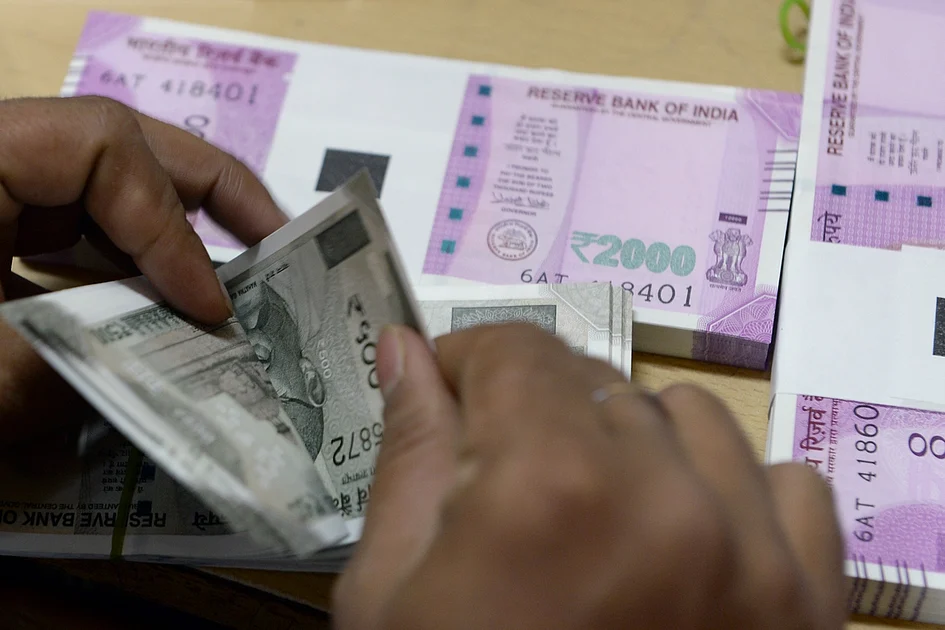
    The Indian rupee plummeted to an unprecedented record low during Monday’s trading session, intensifying concerns over the currency’s stability amidst challenging global trade dynamics. Despite intervention efforts from the Reserve Bank of India (RBI), the currency briefly touched 89.7575 against the US dollar before settling at 89.5475, reflecting a 0.1% daily decline.

    Market analysts attribute this deterioration primarily to India’s unique position as one of the few major economies without a comprehensive trade agreement with the United States. This structural disadvantage has created persistent bearish pressure on the currency throughout 2025, even as India maintains its status as the world’s fastest-growing major economy.

    The currency’s vulnerability was exacerbated by maturing non-deliverable forward (NDF) positions that triggered substantial selling pressure. Traders confirmed that only aggressive dollar-selling interventions by the central bank prevented the rupee from breaching the psychologically critical 90-per-dollar threshold.

    Recent data reveals the RBI’s intensified efforts to stabilize the currency, with short forward dollar positions surging to $63.6 billion in October. This represents the central bank’s most robust defensive maneuver against currency depreciation pressures.

    ANZ Bank analysts warn that without tariff reductions, the rupee could weaken further to approximately 91.30 by late 2026. They note that slowing export growth combined with tariffs reaching 50% on Indian exports creates significant risks to India’s current account and balance of payments. The analysis suggests that a potential trade deal reducing tariffs to 15-20% could catalyze a recovery to 88-88.50 levels, though the RBI might counter such strength to rebuild foreign exchange reserves, which currently stand at $688.1 billion.

    The rupee’s weakness extended to cross-currency benchmarks, hitting a record low of 12.69 against the offshore Chinese yuan. Meanwhile, the dollar index registered modest declines while Asian currencies displayed mixed performance throughout the trading session.

  • Hebei cooperative’s cabbage proving a hit across China

    Hebei cooperative’s cabbage proving a hit across China

    In the agricultural heartland of Yutian county, Hebei province, a quiet revolution is unfolding within the cabbage fields that promises to reshape regional farming economics. As winter’s harvest season reaches its peak, specialized cabbage varieties from local cooperatives are commanding unprecedented market attention, with demand extending far beyond the traditional Beijing-Tianjin-Hebei regional market.

    The Huayu Cabbage Cooperative reports exceptional market performance for their Lyusun 70 variety, with all 5.3 hectares completely pre-sold at prices exceeding double that of conventional cabbage. According to cooperative head Cai Lianzhu, the variety’s exceptional low-light tolerance and disease resistance have contributed significantly to its commercial success.

    This agricultural breakthrough stems from the scientific expertise of Dr. Zhang Shujiang and his research team at the Institute of Vegetables and Flowers under the Chinese Academy of Agricultural Sciences. Their Lyusun 70 hybrid, characterized by its upright growth pattern, tightly wrapped shell-shaped leaves, and dual-purpose culinary applications, earned national recognition earlier this year when it was included in China’s catalog of recommended crop varieties.

    The success story extends beyond Lyusun 70 to include Hongsunbao No 1, another innovative variety enabling Yutian farmers to break traditional seasonal constraints. This dual-season cultivar has created new summer market opportunities, effectively extending the county’s growing calendar and enhancing overall market competitiveness.

    Shi Dongyu, director of the Lanyu Cooperative, reports expanding Hongsunbao No 1 cultivation to two hectares following substantial buyer interest, particularly from southern markets where the variety’s compact size and superior flavor command premium prices exceeding 4 yuan per kilogram.

    Dr. Zhang observes that these developments reflect broader consumer trends favoring smaller, higher-quality produce over traditional large-head vegetables. This shift toward premiumization has driven significant varietal upgrades throughout Yutian’s vegetable industry, boosting both yields and profitability while strengthening supply chain resilience.

    The regional impact has been substantial, with Yutian Vegetables securing recognition as one of the top 50 public brands in the Beijing-Tianjin-Hebei region in 2025, demonstrating how scientific innovation and agricultural tradition can combine to create competitive advantage in modern markets.

  • Airbus faces new quality problem on dozens of A320 jets, sources say

    Airbus faces new quality problem on dozens of A320 jets, sources say

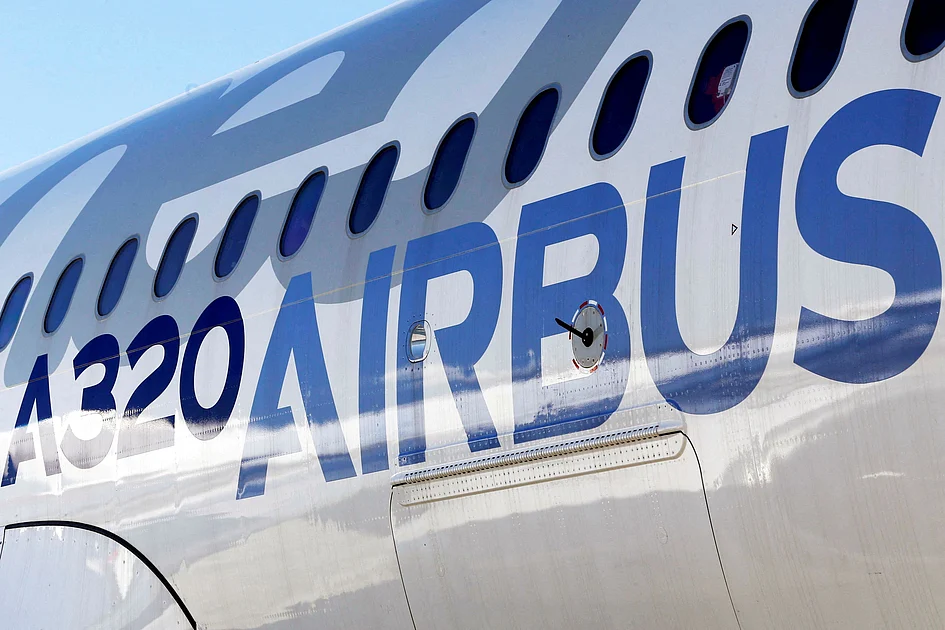
    European aerospace titan Airbus SE is navigating a newly identified industrial quality complication impacting multiple dozens of its best-selling A320neo-family aircraft, according to industry sources familiar with the matter. The issue, centered on potential flaws within specific fuselage panels, has initiated delays in handing over completed jets to airline customers. Investigations into the root cause are currently underway.

    While the discovery poses a significant challenge to the manufacturer’s ambitious year-end delivery objectives, sources indicate there is no immediate evidence suggesting the flaw has propagated to aircraft already in active commercial service. The company has maintained a position of no immediate public commentary on the developing situation.

    This production setback emerges at a critical juncture for Airbus, which is simultaneously managing the operational fallout from a separate weekend recall of jets to address an unrelated software anomaly. The confluence of these events is stretching the company’s industrial resources as it pushes to meet its stated annual target.

    Preliminary data suggests the disruption may already be materializing. November delivery figures, reported at 72 aircraft, fell short of many analyst projections. This brings the yearly total to approximately 657 jets. To achieve its publicly stated goal of ‘around 820′ deliveries for 2025, Airbus must now execute an unprecedented December, requiring the handover of over 160 aircraft—a figure that would surpass the current monthly record of 138 set in 2019.

    The financial implications are substantial, as a significant portion of an aircraft’s revenue is recognized upon delivery. Analyst sentiment on the feasibility of this year-end push is mixed. Some, like Jefferies’ Chloe Lemarie, acknowledge the November shortfall but suggest underlying production rates could still support the target. Others, including independent analyst Rob Morris, project a final tally closer to 800 deliveries, noting a tangible risk of the outcome falling marginally short of the official forecast.

  • UAE investors caught off-guard as forex office in Dubai shuts down

    UAE investors caught off-guard as forex office in Dubai shuts down

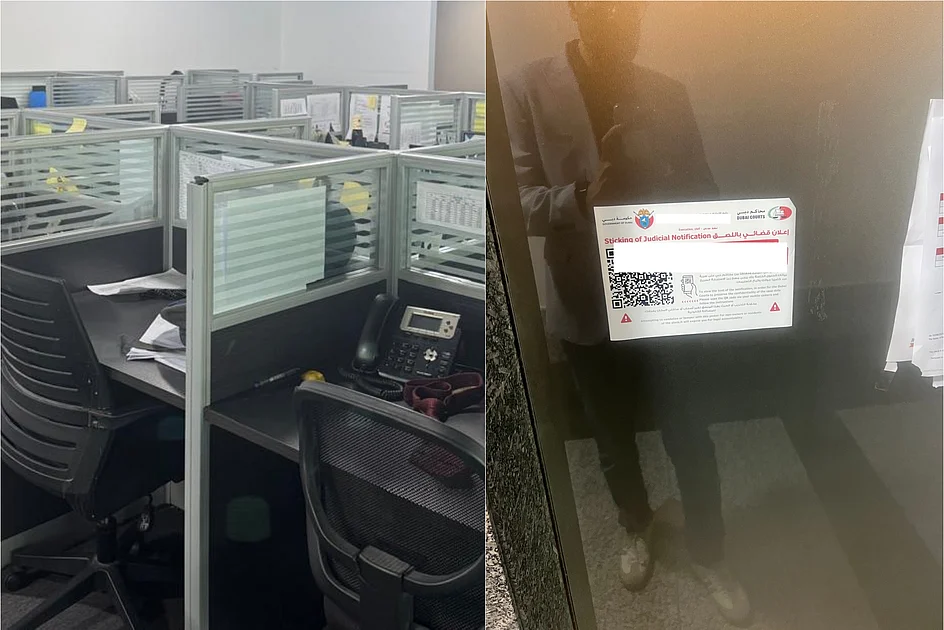
    A prominent foreign exchange trading office in Dubai’s Business Bay district has undergone sudden closure, leaving numerous investors financially stranded and triggering official legal proceedings. The ninth-floor premises, which previously housed nearly 100 employees actively soliciting UAE residents with promises of guaranteed returns, now stands deserted with Dubai Courts notices affixed to its glass entrance.

    Evidence suggests the operation was abandoned hurriedly, with personal belongings and work materials scattered throughout the office space. The closure has confirmed investors’ worst fears after weeks of unreturned calls and messages from their relationship managers. Multiple victims report significant financial losses ranging from Dh73,450 to over Dh624,325, with many having filed formal complaints with Dubai authorities.

    An investigation reveals that client funds were systematically diverted to accounts belonging to entities with deliberately similar names, including an events management company operating adjacent to the trading office. Rather than being deposited into regulated trading accounts as promised, investor capital was funneled into unrelated businesses through sophisticated financial deception.

    This case appears connected to a broader pattern of fraudulent operations targeting UAE residents. Previous investigations have identified multiple call centers across Dubai employing hundreds of agents using aggressive cold-calling tactics. Many of these operations have subsequently relocated to India following increased regulatory scrutiny, continuing their activities through VOIP technology that mimics legitimate UAE telephone prefixes.

    Financial experts caution that offshore-registered entities with limited operational history present substantial investment risks. The UAE authorities have repeatedly issued warnings regarding unlicensed trading platforms that utilize unsolicited contact methods and overseas registrations.

  • UAE flights: Air Arabia starts daily flights between Sharjah and Krabi in Thailand

    UAE flights: Air Arabia starts daily flights between Sharjah and Krabi in Thailand

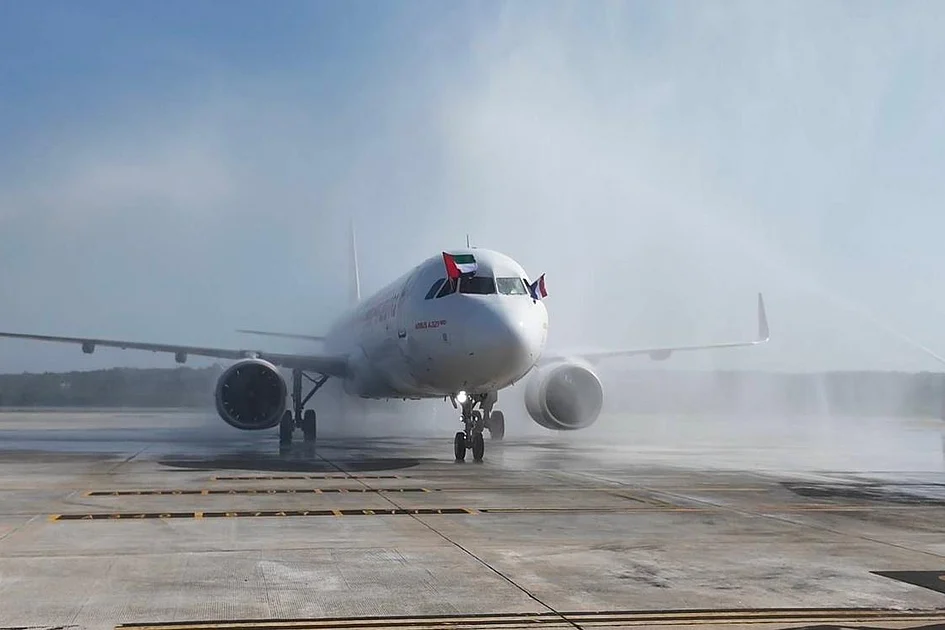
    Sharjah-based budget carrier Air Arabia has officially launched daily nonstop flights between Sharjah International Airport and Krabi, Thailand, marking a significant expansion of its Southeast Asian network. The inaugural flight departed on November 28, 2025, receiving an official welcome in Krabi attended by Thailand’s Deputy Prime Minister and Minister of Transport Phipat Ratchakitprakarn alongside senior airline and airport officials.

    This new route establishes the third Thai destination in Air Arabia’s network from Sharjah, complementing existing services to Bangkok and Phuket. The addition provides enhanced connectivity between the United Arab Emirates and Thailand’s renowned southern coastal province, known for its exceptional natural attractions including pristine beaches, coral reefs, and dramatic limestone formations.

    Adel Al Ali, Group Chief Executive Officer of Air Arabia, characterized the launch as a milestone in the airline’s regional expansion strategy. “This new daily service offers our customers greater convenience and strengthens the growing travel and trade links between the UAE and Thailand,” Al Ali stated. The executive emphasized that the route provides travelers with increased accessibility to one of Thailand’s most popular tourist destinations.

    Passengers aboard Air Arabia’s modern Airbus A320 and A321 aircraft will experience the carrier’s value-added amenities including ‘SkyTime’ complimentary in-flight streaming service and ‘SkyCafe’ onboard menu offerings. The airline’s regional loyalty program, ‘Air Rewards’, extends additional benefits to frequent flyers.

    Travelers can now access complete flight schedules and booking options through Air Arabia’s official website, contact center, or authorized travel agents. The new service responds to growing demand for travel between the Gulf region and Southeast Asia, particularly to Thailand’s southern resort destinations beyond the established hubs of Bangkok and Phuket.

  • Science or survival? Tobacco giants’ billions bet on ‘reduced-risk’ products

    Science or survival? Tobacco giants’ billions bet on ‘reduced-risk’ products

    Global tobacco corporations are executing a multi-billion dollar strategic transformation, channeling unprecedented resources into developing ‘reduced-risk’ nicotine products amid declining traditional cigarette sales and intensified regulatory pressures worldwide. This fundamental shift represents both a survival strategy and a controversial rebranding effort that public health experts view with deep skepticism.

    Japan Tobacco International exemplifies this industry-wide pivot, committing approximately $4.3 billion to its reduced-risk product portfolio between 2025-2027—more than doubling its previous three-year investment. The centerpiece of JTI’s strategy is the Ploom heated tobacco system, which company representatives describe as embodying ‘science-driven, consumer-centric innovation’ with ‘precision-heating technology’ developed through extensive research.

    The financial stakes are enormous industry-wide. Philip Morris International now derives over 40% of its revenue from smoke-free products like IQOS, while British American Tobacco’s ‘New Categories’ segment contributes nearly 18% of group revenue. The US tobacco market alone is projected to expand from $112.82 billion in 2024 to $180.48 billion by 2030, primarily driven by alternative nicotine products.

    Tobacco companies cite scientific evidence to legitimize their transformation, including BAT research suggesting oral nicotine pouches offer over 99% reduction in exposure to harmful toxicants compared to cigarettes. They reference Sweden’s experience with snus, which correlates with the EU’s lowest smoking prevalence (5.4%) and minimal tobacco-related cancer mortality. Regulatory acknowledgments include the FDA’s Modified Risk Tobacco Product designations and the UK NHS’s inclusion of vaping devices in smoking cessation recommendations.

    However, public health authorities maintain cautious skepticism. The World Health Organization emphasizes that complete cessation remains the optimal harm reduction approach and insists regulatory decisions must remain independent of tobacco industry influence. Independent analysis reveals significant evidence gaps, with a 2022 systematic review finding that 29 of 40 assessed clinical trials on heated tobacco products were industry-affiliated, raising questions about research objectivity.

    This strategic shift occurs against a backdrop of declining global cigarette volumes, projected to fall approximately 2% in 2025, creating powerful incentives for diversification. The central question remains whether this transformation genuinely serves public health interests or simply creates new markets for nicotine delivery under the guise of harm reduction. The ultimate impact on public health, industry profitability, and future nicotine consumers will require ongoing independent scientific scrutiny to properly assess.

  • Starbucks to pay NYC workers $35m after alleged labour law violations

    Starbucks to pay NYC workers $35m after alleged labour law violations

    Starbucks has reached a historic $35 million settlement with New York City authorities following allegations of systematic violations of the city’s Fair Workweek Law. The agreement, announced Monday, resolves claims that the coffee giant denied predictable schedules and arbitrarily reduced hours for thousands of employees across its NYC locations.

    More than 15,000 hourly workers will receive compensation of $50 for each week worked between July 2021 and July 2024, according to city officials. The settlement represents the largest worker protection agreement in New York City’s history, with investigators documenting over half a million violations of scheduling regulations.

    New York City Department of Consumer and Worker Protection Commissioner Vilda Vera Mayuga stated the investigation revealed ‘a pattern of systemic violations’ across all Starbucks locations in the city. ‘All workers deserve to be treated with dignity,’ Mayuga emphasized, ‘and we are proud to stand up for our neighbors when a multibillion-dollar company chooses to systematically violate their employees’ rights.’

    As part of the settlement, Starbucks must now comply with NYC’s worker protection laws requiring fast-food employers to provide regular schedules and opportunities for additional shifts. The company acknowledged the complexity of the city’s regulations while maintaining its commitment to compliance.

    In a statement, Starbucks noted the compensation represents ‘legal compliance, not unpaid wages’ and reiterated its commitment to ‘creating the best job in retail.’ The company recently announced plans to invest $500 million in coffeehouse staffing and training improvements nationwide.

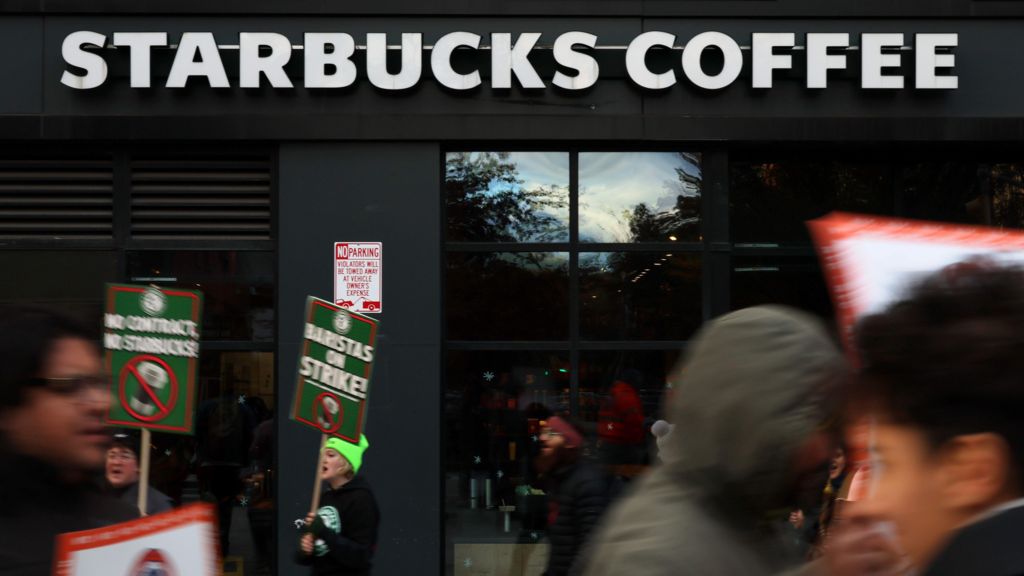
    The settlement occurs amid ongoing labor tensions between Starbucks and unionized workers. Starbucks Workers United continues to organize strikes across more than 120 stores in 85 cities, demanding better pay, improved staffing levels, and formal union contracts. The union has won representation elections at approximately 5% of company-owned U.S. locations since its formation four years ago.

    New York City Mayor Eric Adams characterized the agreement as a ‘landmark settlement’ that will ‘put tens of millions of dollars back into the pockets of hard-working New Yorkers and reinforce every New Yorker’s right to a reliable schedule, full hours, and basic dignity.’

    The resolution comes as Starbucks navigates multiple challenges including consumer boycotts, increased competition, pricing criticism, and leadership transitions. While the company reported its first quarterly sales growth in nearly two years this October, U.S. sales remained flat, indicating ongoing operational challenges.

  • PIA expands network with new weekly flights between Riyadh and Karachi

    PIA expands network with new weekly flights between Riyadh and Karachi

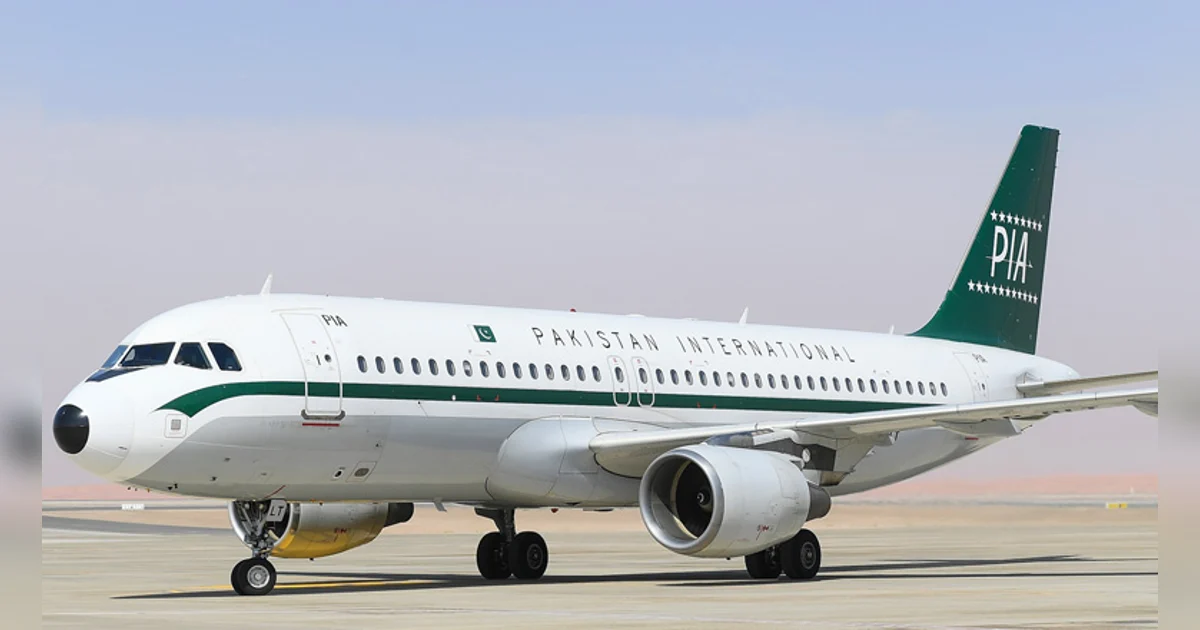
    Pakistan International Airlines (PIA) has announced the launch of a new weekly flight service connecting Karachi and Riyadh, marking a significant expansion of its Saudi Arabian network operations. The inaugural flight is scheduled for January 2, 2026, utilizing Airbus A320 aircraft for the route.

    The newly established service will operate according to the following schedule: Flight PK729 will depart Karachi every Friday at 8:45 PM, arriving in Riyadh at 10:45 PM after a four-hour journey. The return flight, PK730, will depart Riyadh on Saturdays at 12:05 AM and arrive in Karachi at 5:10 AM, with a flight duration of approximately three hours and five minutes.

    This expansion builds upon PIA’s existing connections to Riyadh from Islamabad and Lahore, strengthening aviation ties between Pakistan and Saudi Arabia. The route development comes alongside PIA’s recent reinstatement of direct flights to Britain following the lifting of a five-year suspension imposed by UK authorities over aviation safety concerns.

    The airline, which has faced substantial operational challenges including significant debt accumulation and management issues, continues to navigate a complex recovery path. The European Union, United States, and Britain had imposed flight bans on PIA in June 2020 following a tragic aviation incident that claimed nearly 100 lives when an Airbus A320 crashed in a Karachi neighborhood.

    Established in 1955 as a symbol of national pride and development, PIA has experienced considerable reputational challenges in recent decades due to financial difficulties and safety concerns. The Pakistani government has committed to privatizing the carrier, though previous attempts have stalled due to valuation discrepancies between potential buyers and government expectations.