分类: business

  • Farmers will get more money from Trump. They still have more problems

    Farmers will get more money from Trump. They still have more problems

    American agricultural producers are confronting a complex economic landscape as former President Donald Trump’s proposed $12 billion federal assistance package meets mixed reactions across the nation’s farming heartlands. The emergency relief comes as retaliatory trade measures from China continue to disrupt agricultural exports, particularly affecting soybean and sorghum growers who traditionally depend on international markets for over half their production.

    In Randolph, Minnesota, fourth-generation farmer Charlie Radman characterizes the government support as merely “a bridge” rather than a permanent solution. His sentiment echoes throughout agricultural communities where multigenerational farming operations face mounting pressure from declining commodity prices, escalating production costs, and shrinking international market access. Despite these challenges, many growers maintain political support for Trump while expressing concerns about the sustainability of federal stopgap measures.

    The agricultural sector’s predicament stems from China’s strategic shift toward Brazilian and other South American suppliers during recent trade disputes. Although the Trump administration negotiated commitments for China to purchase substantial American soybean volumes—12 million metric tons by February’s end with promised annual purchases of 25 million metric tons over three years—current fulfillment rates hover around merely 25% of these targets, raising doubts about the reliability of such trade agreements.

    Beyond immediate financial assistance, farmers are advocating for diversified market strategies. Minnesota grower Glen Groth emphasizes the need to “open up markets outside of China,” while agricultural organizations promote expanding domestic applications including biodiesel, ethanol, aviation fuel, and animal feed production. Southeast Iowa farmer Dan Keitzer notes that technological advancements and consistent bumper harvests have created surplus production capacities that require expanded demand rather than government subsidies.

    The current $12 billion aid package follows previous Trump-era agricultural bailouts totaling $22 billion in 2019 and $46 billion in 2020, with the latest initiative implementing a $155,000 per-farmer compensation cap and eligibility restrictions for operations exceeding $900,000 in adjusted gross income. Concurrently, the administration has initiated investigations into potential anti-competitive practices throughout the agricultural supply chain, addressing concerns about fertilizer, seed, equipment, and meatpacking conglomerates.

    As farmers finalize planting decisions and financing arrangements for the upcoming season, many express gratitude for governmental recognition of their challenges while maintaining that sustainable solutions must emerge from market access expansion rather than temporary fiscal interventions.

  • Mexico approves up to 50% tariffs on China and other countries

    Mexico approves up to 50% tariffs on China and other countries

    Mexico’s Senate has ratified a comprehensive tariff package targeting over 1,400 imported goods, with significant implications for Chinese manufacturers and other trading partners. The legislation, endorsed by President Claudia Sheinbaum as essential for strengthening domestic industries, will impose duties of up to 50% on products ranging from metals and automobiles to clothing and household appliances.

    The new tariffs, scheduled for implementation on January 1, 2026, will affect dozens of nations without existing free trade agreements with Mexico, including China, Thailand, India, and Indonesia. This strategic move occurs against the backdrop of ongoing negotiations between Mexican officials and the Trump administration regarding potential US import taxes targeting Mexican exports.

    Former President Donald Trump has threatened multiple tariff measures against Mexico, including proposed 50% duties on steel and aluminum, a 25% levy related to fentanyl trafficking prevention, and most recently, a 5% tariff accusation regarding water access for American farmers under an 80-year-old treaty. The United States remains Mexico’s predominant trading partner, adding complexity to these bilateral discussions.

    Beijing had previously cautioned Mexico to exercise careful consideration before implementing these tariffs, highlighting the delicate balance Mexico must maintain between protecting domestic production and managing international trade relationships.

  • Coca-Cola names a company veteran as its new CEO

    Coca-Cola names a company veteran as its new CEO

    In a significant corporate leadership announcement, Coca-Cola revealed Wednesday that Chief Operating Officer Henrique Braun will ascend to the chief executive role effective March 31, 2026. This carefully orchestrated transition will see current Chairman and CEO James Quincey move into the executive chairman position, ensuring continuity in the beverage giant’s strategic direction.

    The 57-year-old Braun brings three decades of extensive company experience to his future role, having most recently served as COO since earlier this year. His comprehensive career at Coca-Cola includes leadership positions across multiple international markets including Brazil, Latin America, Greater China and South Korea. Braun’s diverse expertise spans supply chain management, new business development, marketing innovation, and bottling operations management.

    Born in California and raised in Brazil, Braun’s educational background includes an agricultural engineering degree from the University Federal of Rio de Janeiro, complemented by a master of science degree from Michigan State University and an MBA from Georgia State University.

    David Weinberg, Coca-Cola’s lead independent director, praised outgoing CEO Quincey as a transformative leader who will maintain an active role in the business. During Quincey’s nine-year tenure, the company expanded its portfolio with over 10 additional billion-dollar brands including BodyArmor and Fairlife, while strategically entering the alcoholic beverage market with Topo Chico Hard Seltzer in 2021.

    Quincey’s leadership included a significant 2020 restructuring that streamlined operations by reducing the company’s brand portfolio by half and implementing workforce reductions. This strategic move aimed to focus investments on high-growth products such as Simply and Minute Maid juices.

    As this leadership transition unfolds, Coca-Cola faces ongoing challenges including subdued consumer demand in key markets like the United States and Europe, along with increasing scrutiny of product ingredients. Responding to market pressures, the company recently announced plans to introduce a cane sugar version of its flagship cola, moving away from high-fructose corn syrup.

    Weinberg expressed board confidence in Braun’s ability to leverage the company’s strengths and identify global growth opportunities. Market reaction remained neutral following the announcement, with Coca-Cola shares holding steady in after-hours trading.

  • The Swiss city that lets you pay for most things with bitcoin

    The Swiss city that lets you pay for most things with bitcoin

    Nestled amidst mountain-fringed lakes, the Swiss city of Lugano has transformed into a living laboratory for cryptocurrency adoption. At a local McDonald’s, customers now casually order coffee using bitcoin—a scene that would be extraordinary elsewhere but has become routine in this innovative financial ecosystem.

    The municipal government has spearheaded this digital transformation by distributing free cryptocurrency payment terminals to retail establishments. Approximately 350 shops and restaurants currently accept bitcoin alongside Swiss francs, with even municipal services like preschool childcare now payable in digital currency. The payment process involves simple contactless transactions from mobile bitcoin wallets, with one coffee purchase amounting to approximately 0.00008629 bitcoin ($8.80).

    French visitor Nicolas exemplifies the bitcoin evangelists drawn to Lugano. ‘The remarkable aspect of bitcoin payments is the profound sense of financial liberation,’ he explains. ‘You eliminate dependency on traditional banking systems with their intermediaries and associated costs.’ Nicolas utilizes bitcoin prepaid cards available in Switzerland—physical cards loaded with Swiss francs that convert to bitcoin in digital wallets.

    Luxury retailers along Lugano’s upscale shopping districts have embraced this financial innovation. Cherubino Fry, proprietor of Vintage Nassa luxury bags and watches, cites practical advantages: ‘Transaction fees for bitcoin typically remain below 1%, significantly lower than the 1.7-3.4% charged by credit card companies.’ Though current bitcoin transactions remain sporadic, Fry anticipates substantial growth: ‘Bitcoin adoption will resemble a growing tree—within five to ten years, this tree will become enormous.’

    The city’s ambitious Plan B initiative (B representing bitcoin), launched in 2022 through partnership with cryptocurrency platform Tether, aims to establish Lugano as Europe’s premier bitcoin hub. Director Mir Liponi conducted an eleven-day personal experiment using exclusively bitcoin after encountering traditional banking issues. ‘I successfully managed daily necessities including grocery deliveries and medical services,’ she reports, though noting limitations with public transportation, fuel, dental services, and energy bills.

    Liponi envisions future ‘circular economies where individuals earn, retain, spend, and pay for services entirely in bitcoin.’ This vision contrasts sharply with El Salvador’s troubled bitcoin adoption, where citizens reportedly converted government-distributed bitcoin to dollars and abandoned the cryptocurrency.

    Despite enthusiasm, significant skepticism persists. University of Lugano student Lucia expresses concerns about cryptocurrency associations with ‘criminal activities, dark web transactions, and speculative risks.’ This skepticism turned destructive when vandals demolished a Satoshi Nakamoto statue along Lugano’s lakefront in August—an unusual act of protest in this typically reserved community.

    Professor Sergio Rossi of the University of Fribourg highlights economic risks: ‘Bitcoin’s extreme volatility presents substantial merchant risks. Immediate conversion to stable fiat currencies becomes essential.’ He further warns about platform risks: ‘If digital wallet providers fail, cryptocurrencies disappear permanently—unlike Swiss bank deposits guaranteed up to 100,000 francs.’

    Mayor Michele Foletti dismisses concerns about attracting criminal elements: ‘Both fiat currency and bitcoin can facilitate legal or illegal activities. Criminal organizations actually prefer physical cash for money laundering due to greater anonymity.’ The mayor highlights tangible benefits: 110 cryptocurrency companies have either relocated or launched operations in Lugano, signaling successful economic diversification through digital currency innovation.

  • Expert: Decoupling disastrous for Japan

    Expert: Decoupling disastrous for Japan

    A prominent Japanese economist has issued a stark warning against economic decoupling from China, characterizing such a move as potentially disastrous for Japan’s economic future. Hidetoshi Tashiro, serving as chief economist at Japan’s Infinity LLC and CEO of Terra Nexus Project Management Services, emphasized that China represents an economic partner that Japan fundamentally “cannot decouple” from due to deeply intertwined supply chain dependencies.

    Tashiro’s analysis highlights China’s unique position as the world’s most extensive and comprehensive production ecosystem, making sustained cooperation not merely beneficial but essential for maintaining Japan’s economic vitality. The economist presented a grave assessment that deliberately undermining this established economic structure would constitute an act of economic “suicide” for Japan, given the catastrophic disruption it would cause to Japanese industries and trade networks.

    The warning comes amid ongoing global discussions about supply chain diversification and economic realignment. Tashiro’s comments serve as a counterpoint to those advocating for reduced economic interdependence with China, arguing instead that the existing manufacturing and supply infrastructure between the two nations has become too integrated and too vital to dismantle without severe consequences.

    This perspective underscores the complex reality facing many advanced economies that must balance geopolitical considerations with economic practicalities, particularly when dealing with a manufacturing powerhouse like China that occupies a central role in global supply chains.

  • Fed Reserve cuts interest rates despite growing divisions

    Fed Reserve cuts interest rates despite growing divisions

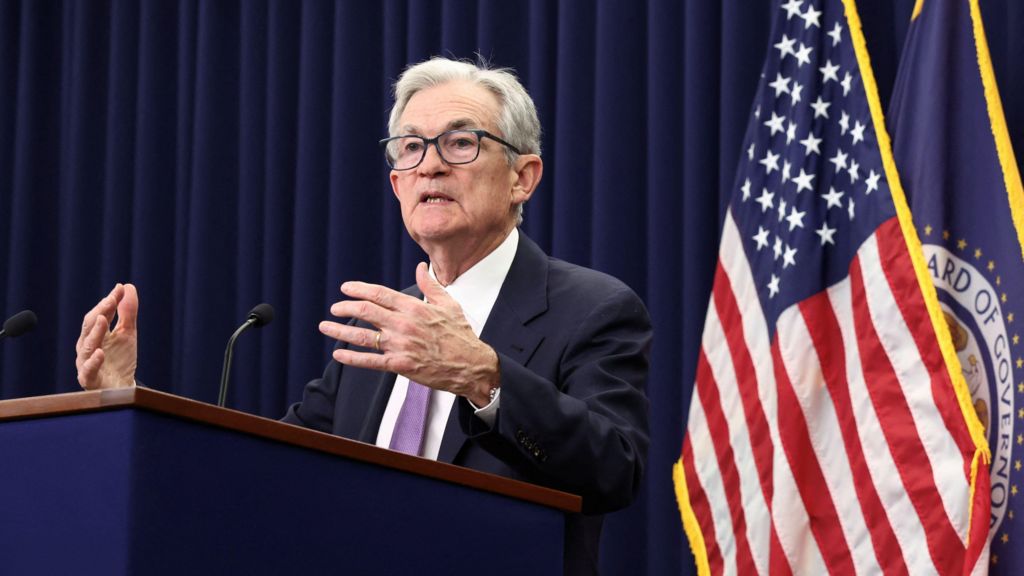
    The U.S. Federal Reserve has implemented its third interest rate reduction of the year, lowering the benchmark rate by 25 basis points to a range of 3.50%-3.75%, marking the lowest level in three years. The decision reveals significant fractures within the central bank’s leadership as policymakers grapple with conflicting economic signals: a deteriorating labor market versus persistent inflationary pressures.

    The rate cut approval was not unanimous, with three Federal Reserve officials dissenting from the majority decision. Stephen Miran, currently on leave from leading Trump’s Council of Economic Advisers, advocated for a more aggressive 50 basis point reduction. Conversely, Austan Goolsbee of the Chicago Fed and Jeffrey Schmid of the Kansas City Fed preferred maintaining the existing rate structure.

    This policy divergence occurs against a backdrop of economic uncertainty exacerbated by the recent prolonged government shutdown, which created data gaps that have left policymakers operating with incomplete information. Recent labor market statistics show unemployment rising to 4.4% in September, while inflation remains elevated at 3%, exceeding the Fed’s 2% target.

    The central bank’s updated economic projections indicate expectations for one additional rate cut in 2026, unchanged from previous forecasts. However, analysts note that incoming data, particularly next week’s November labor market and inflation reports, could significantly alter this outlook.

    Compounding the policy uncertainty, the Fed faces impending leadership changes with Chair Jerome Powell’s term concluding in May 2026. President Trump is expected to announce his nomination for Powell’s successor within weeks, with Kevin Hassett emerging as the leading candidate. Hassett, a longtime Trump economic adviser and former Council of Economic Advisers chair, has consistently defended the president’s economic policies and questioned official economic statistics.

    Market observers express concerns about potential political influence on Fed independence, noting that other candidates including Kevin Warsh, Christopher Waller, and Scott Bessent remain under consideration. The appointment decision could significantly impact market stability depending on the perceived independence of the selected candidate.

  • Shanghai Disney Resort unveils flexible ticket refund policy

    Shanghai Disney Resort unveils flexible ticket refund policy

    Shanghai Disney Resort has announced a significant overhaul of its ticket refund policy, transitioning from its current no-refund approach to a structured tiered system effective January 12, 2026. The updated policy introduces refund flexibility for standard-priced tickets purchased through official channels, marking a substantial shift in the resort’s visitor accommodation strategy.

    Under the new guidelines, guests will receive full refunds when canceling reservations at least seven days prior to their scheduled visit. For cancellations occurring between six days and one day before the planned visit date, an 80-yuan (approximately $11.30) service fee will be deducted per ticket. The policy maintains that no refunds will be processed on or after the scheduled visit date.

    The resort management stated that this policy revision aims to provide enhanced flexibility and convenience for visitors, allowing them to better manage unexpected changes to travel itineraries. The updated system applies to both one-day and two-day standard-priced tickets, including Disney Dream Day packages. For multi-day tickets, refund eligibility will be determined based on the first day of the planned visit.

    To facilitate the new refund process, the resort has established dual processing channels. Guests can initiate refunds through the resort’s digital platforms or seek assistance via the reservation center before their scheduled visit date. The policy also addresses supplementary products, allowing complimentary cancellation of additional services such as early park entry passes or Disney Premier Access purchased alongside refunded tickets.

    Important limitations apply to promotional tickets and previously modified reservations, which will remain ineligible for refunds. The policy covers tickets purchased through direct channels including the resort’s website, mobile application, official WeChat account, reservation center, and authorized flagship stores on major Chinese e-commerce platforms including Douyin, JD.com, and Fliggy. Visitors who purchased through authorized third-party partners are advised to consult their original point of purchase regarding applicable refund policies.

  • Tariffs add strain to US holiday season

    Tariffs add strain to US holiday season

    The traditional period from Thanksgiving through Christmas and New Year’s celebrations, typically marked by robust consumer spending in the United States, is experiencing unprecedented pressure due to ongoing tariff implementations. Recent policy measures have begun translating into tangible economic effects, with American shoppers confronting higher prices across numerous product categories during what is historically the nation’s most significant retail period.

    Market analysts observe that the cumulative impact of tariff structures is now permeating consumer markets, creating financial strain for households attempting to maintain their holiday shopping traditions. The increased costs, originating from international trade policy decisions, are affecting a wide spectrum of goods including electronics, clothing, and household items that typically see heightened demand during seasonal celebrations.

    Economic observers note that this development introduces additional complexity to consumer decision-making processes, potentially altering spending patterns and budget allocations for festive purchases. Retail sector representatives have expressed concern regarding the potential long-term implications for consumer confidence and spending behavior, particularly during this critical revenue generation window for many businesses.

    The situation presents a challenging environment for both retailers and consumers, as adaptation strategies are being implemented across the market ecosystem. Some retailers are absorbing portions of the cost increases while others are passing them along to consumers, creating a varied landscape of pricing approaches throughout the industry.

  • India orders IndiGo to slash flights as airline says operations ‘normalised’

    India orders IndiGo to slash flights as airline says operations ‘normalised’

    India’s dominant carrier IndiGo has announced the stabilization of its operations following a severe disruption that resulted in over 3,000 flight cancellations last week. The crisis, attributed by company officials to inadequate pilot roster planning, stranded thousands of passengers nationwide.

    In response to the operational breakdown, Indian aviation authorities have mandated a 10% reduction in IndiGo’s winter flight schedule—doubling the initially proposed cuts. This directive could lead to the cancellation of more than 200 daily flights. Federal Aviation Minister Ram Mohan Naidu stated that the ministry ‘deems it necessary to curtail the overall IndiGo routes’ to restore operational stability, while assuring that the airline ‘will continue to cover all its destinations as before.’

    The airline, which commands over 60% of India’s domestic market with approximately 2,200 daily flights, has been ordered to submit its revised schedule to regulators by Wednesday. Additionally, the carrier must implement fare caps, expedite refund processes, and accelerate baggage handling for affected customers.

    Aviation analysts warn that reducing IndiGo’s daily capacity by 10% could exacerbate India’s ongoing aviation crisis. Sanat Kaul, an industry analyst, noted that while the government’s intervention might benefit passengers long-term, immediate consequences could include heightened fares due to constrained capacity across competitors like Air India and SpiceJet, which lack surplus capacity.

    The operational turmoil has triggered financial repercussions, with IndiGo’s shares declining 15% since December 1st. Investors express concerns over rising costs stemming from operational disruptions and increased crew expenses under new regulatory frameworks. Aviation expert Mark Martin anticipates further penalties for the carrier in coming days.

    IndiGo CEO Peter Elbers, summoned by India’s aviation ministry on Tuesday to address crisis management and passenger complaint handling, asserted in a video message on social media platform X that operations had ‘fully stabilized.’

  • Canadian airline Air Transat and pilot union reach tentative agreement

    Canadian airline Air Transat and pilot union reach tentative agreement

    Canadian leisure carrier Air Transat has reached a pivotal tentative agreement with its pilot union, successfully avoiding an imminent strike that threatened to paralyze the airline’s operations. The breakthrough came after eleven months of contentious negotiations between the airline and the Air Transat ALPA Master Executive Council, representing over 750 pilots.

    The agreement follows a dramatic 99% strike authorization vote by union members on Sunday, which prompted Air Transat to begin preemptively scaling back flights in anticipation of a work stoppage scheduled to commence Wednesday. Captain Bradley Small, chair of the ALPA Master Executive Council, credited pilot solidarity for compelling management to engage in substantive negotiations.

    According to union statements, the new framework addresses critical concerns regarding compensation disparities, job security provisions, and scheduling flexibility that had fallen behind industry standards. The airline acknowledged the disruption caused by the negotiation uncertainty, extending apologies to customers affected by recent operational adjustments.

    “Our operations are returning to normal,” Air Transat confirmed in a Tuesday announcement, emphasizing their commitment to restoring service quality. The tentative agreement now proceeds to union membership for ratification in the coming days.

    This development marks the second major labor confrontation in Canada’s aviation sector this year, following an August strike by Air Canada flight attendants that required government mediation and resulted in widespread cancellations. The resolution underscores the ongoing tension between labor demands and operational sustainability in the post-pandemic aviation industry.