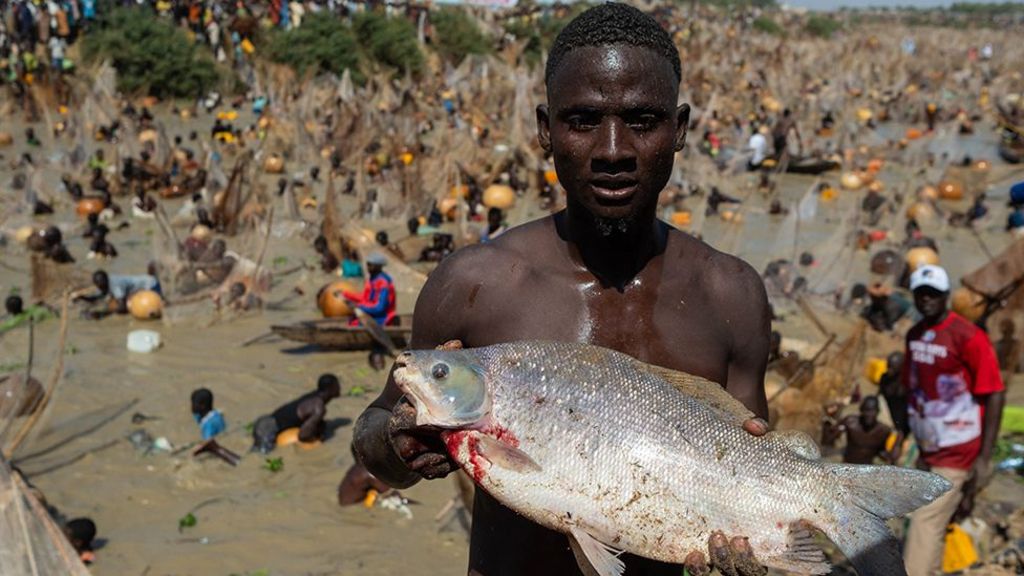
Northern Nigeria witnessed the spectacular revival of its renowned Argungu International Fishing and Cultural Festival last weekend, marking the event’s triumphant return following a six-year suspension due to pandemic restrictions and security challenges. Tens of thousands of participants and spectators gathered along the banks of the Matan Fada River in Kebbi State, where the ancient fishing competition resumed with unprecedented enthusiasm.
The festival commenced with traditional ceremonies presided over by the Sarkin Ruwan (Custodian of the River), who performed sacred rituals to bless the waters and participants. Drummers from the Kabawa ethnic group established the rhythmic backdrop as fishermen positioned themselves along the riverbanks, their nets poised for the signal to begin.
This year’s event gained particular significance with the attendance of President Bola Tinubu, highlighting the government’s endorsement of cultural preservation and regional stability. The main fishing competition saw participants plunging into the river with large gourds serving as both buoyancy aids and containers for their catch. Fishermen navigated chest-deep waters, dragging nets along the riverbed in pursuit of the largest specimens.
The competition culminated in an extraordinary catch—a massive croaker fish weighing 59 kilograms (130 pounds) secured by the grand prize winner, who received two automobiles and 1 million naira (approximately $740) in prize money. Judges meticulously weighed and verified each catch on traditional scales, with numerous other substantial fish being presented throughout the competition.
Beyond the primary fishing event, the four-day festival featured diverse cultural activities including traditional archery, dambe (a indigenous combat sport where fighters wrap rope around their striking hand), wild duck-catching competitions, and bare-handed fishing demonstrations by younger participants. The event also showcased vibrant musical performances that echoed throughout the celebration grounds.
With historical roots extending back a century, the Argungu Festival formally began in 1934 as a peace-building initiative between the Kebbi Kingdom and Sokoto Caliphate. UNESCO has recognized the festival as an intangible cultural heritage event, attracting international visitors from neighboring countries and beyond. Local organizers emphasized the festival’s role in promoting cross-cultural understanding and celebrating northern Nigeria’s rich traditions.