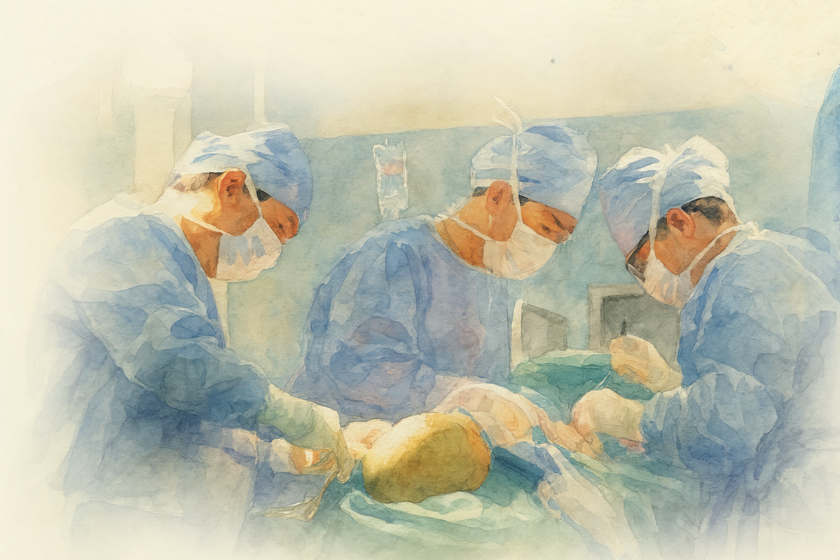
In the operating theaters of Shenzhen, Dr. Guo Shuzhong practices what can only be described as medical artistry. The 62-year-old chief plastic surgeon at Shenzhen United Family Hospital has dedicated three decades to perfecting the complex craft of ear reconstruction, bringing hope to thousands affected by microtia—a congenital condition affecting approximately 1 in 2,500 Chinese newborns that results in malformed or absent external ears.
Dr. Guo’s approach blends surgical precision with artistic sensibility. Using carefully carved rib cartilage harvested from patients, he sculpts intricate ear frameworks during procedures that demand both technical mastery and aesthetic judgment. ‘The ear is one of the most complex organs in the human body in terms of shape,’ explains Guo. ‘It demands careful observation and a deep understanding of the material.’
His innovative two-phase technique involves initially inserting a tissue expander under the skin to create space for the future ear framework. After several months of expansion, the second stage sees Guo removing the expander and implanting the meticulously crafted cartilage structure. His refinements have streamlined the process, reducing the overall surgical cycle to just three to four months while introducing new devices that allow patients to manage expander maintenance at home.
Beyond technical innovations, Guo emphasizes psychological healing. His team organizes communication workshops, language classes, and creative activities to support children through their transformation. ‘Doctors need to understand how to heal both the body and the heart,’ he notes.
Having established his career across multiple Chinese cities and international exchanges, Guo now sees Shenzhen as the ideal platform for global outreach. The Greater Bay Area’s unique advantages—including Shenzhen’s medical equipment manufacturing prowess and Hong Kong’s international connectivity—position the region to become a world-class center for ear reconstruction.
International interest is growing, with surgeons from New Zealand, India, and South America seeking training opportunities. Guo’s patients already include expatriates from Hong Kong, Mongolia, and Latin America, validating his vision of China becoming a destination for medical innovation rather than just a source of patients seeking treatment abroad.
As he trains the next generation of surgeons—still insisting they practice with vegetables and pork ribs as he once did—Guo remains driven by the profound satisfaction of restoring both form and confidence. His office filled with paintings from grateful young patients stands testament to the life-changing impact of his work, with dreams of eventually establishing a museum to preserve these precious tokens of transformation.