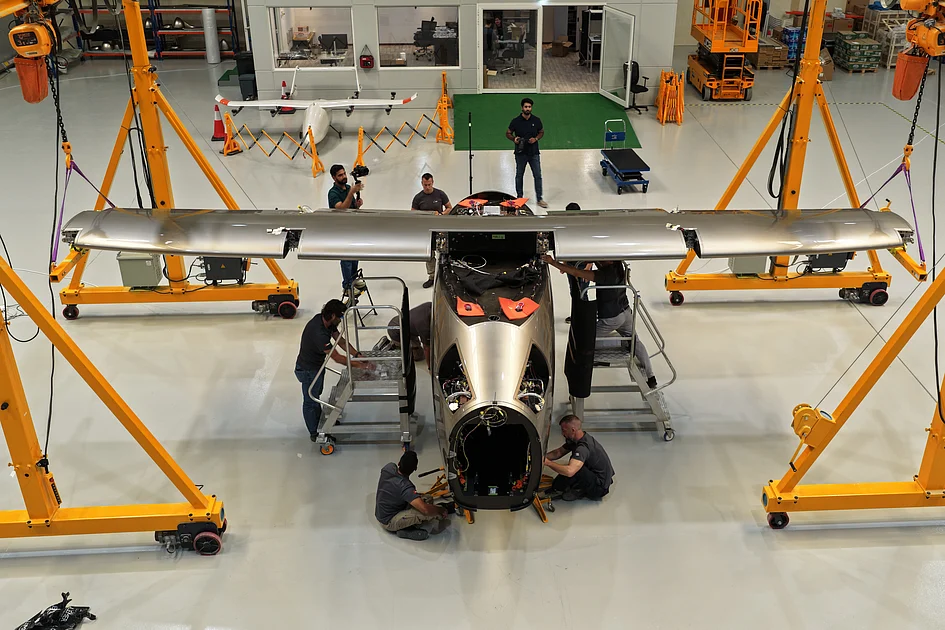
A groundbreaking aerospace innovation is emerging from Abu Dhabi as LODD Autonomous introduces ‘Hili,’ a medium-sized unmanned cargo aircraft designed to revolutionize regional logistics operations. This pioneering development specifically targets the often-overlooked ‘middle mile’ segment—the critical transportation phase between major logistics hubs and local distribution centers.
The company has secured significant commercial traction with pre-production agreements for over 200 aircraft from major air operators including Emirates, Etihad Cargo, and several international logistics providers. According to CEO Rashid Al Manai, this demand reflects growing market needs for rapid hub-to-hub connectivity amid booming e-commerce and increasing trade volumes that strain traditional infrastructure-heavy cargo solutions.
Unlike the saturated market of small delivery drones, LODD’s innovation focuses on medium-capacity operations capable of transporting hundreds of kilograms across hundreds of kilometers. The aircraft’s vertical take-off and landing capability eliminates dependency on traditional runway infrastructure, allowing operations directly from logistics facilities.
A key technological advancement is the hybrid propulsion system combining electric motors with a combustion engine that continuously recharges batteries during flight, effectively eliminating post-landing charging downtime. This engineering solution, developed by aerospace engineer Fatema Al Marzooqi and her team, enables sustained operational efficiency.
The development timeline itself represents a remarkable achievement in aerospace innovation, progressing from conceptualization to functional prototype within just 19 months. Current testing focuses on perfecting vertical take-off and landing maneuvers before transitioning to fixed-wing flight, with experimental operations planned for later this year.
While proudly developed within the UAE, the project has attracted international interest from cargo operators across Europe, Africa, and the United Kingdom, signaling global recognition of autonomous cargo solutions that reduce ground infrastructure investment requirements. The technology addresses both operational efficiency and the global shortage of cargo pilots through its ground-based supervision model where a single operator can monitor multiple aircraft simultaneously.