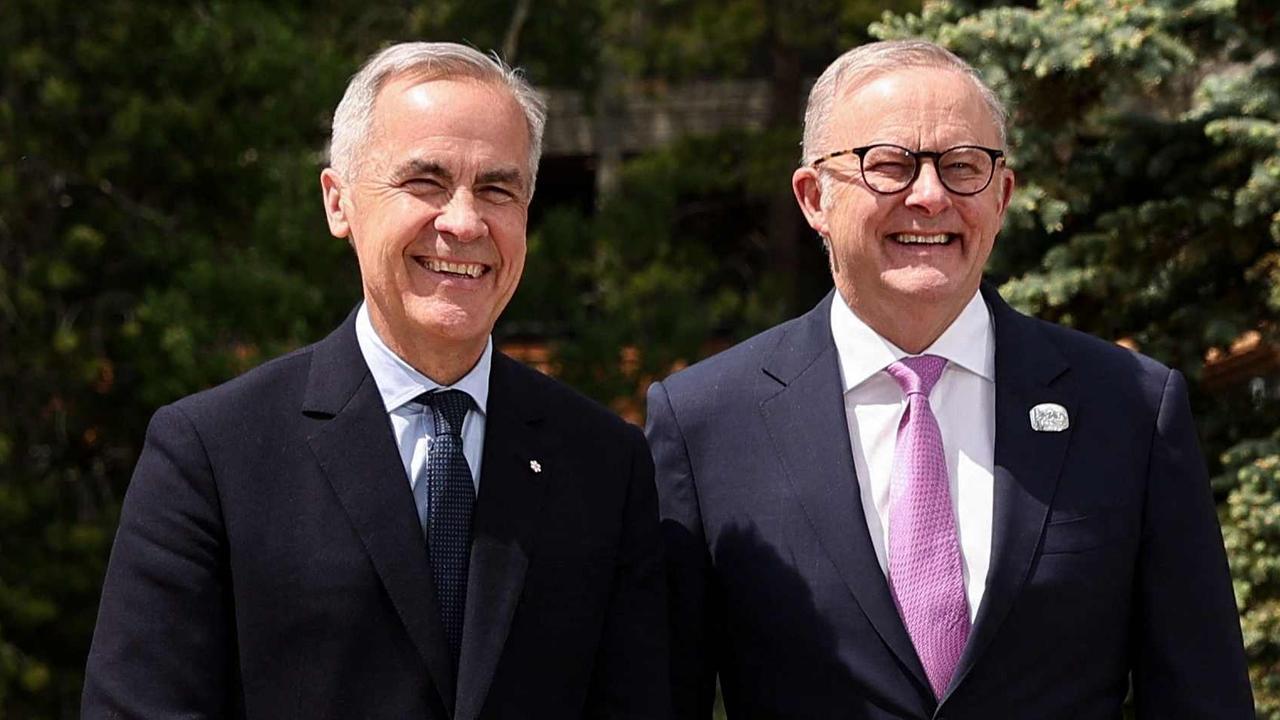
In a significant diplomatic move, Canadian Prime Minister Mark Carney is scheduled to undertake an official state visit to Australia next month. The March 3rd arrival in Canberra marks the beginning of a three-day summit with Australian counterpart Anthony Albanese, occurring against the backdrop of renewed global trade tensions sparked by former US President Donald Trump’s latest tariff announcements.
The visit, described by Australian officials as crucial for strengthening bilateral cooperation, will include an address to Australia’s parliament in the nation’s capital before Carney’s delegation proceeds to Sydney for further discussions. Prime Minister Albanese characterized the Canada-Australia relationship as fundamentally rooted in mutual trust and “a shared commitment to supporting stability across the Indo-Pacific and beyond.”
This diplomatic engagement takes on added significance following Trump’s recent proclamation of a 15% global tariff, reinstated after the US Supreme Court invalidated his previous 10% tariff framework. Both Commonwealth nations, despite their traditional alliance with the United States, face particular vulnerabilities to these protectionist measures. Canada continues to grapple with sector-specific tariffs targeting its automotive industry, despite Trump’s previous characterization of the nation as America’s “51st state.”
The Canberra meetings will focus on enhancing cooperation across multiple domains including investment security, defense coordination, and critical mineral supply chains. Prime Minister Carney’s visit follows his prominent appearance at the World Economic Forum in Davos, where he positioned himself as a leading voice for middle powers navigating an increasingly fragmented global order. In his notable address, Carney challenged the conventional rhetoric surrounding international systems, stating governments must “stop invoking rules-based international order as though it still functions as advertised,” instead characterizing the current environment as “a system of intensifying great power rivalry.”
This stance presents an interesting contrast to Albanese’s generally cordial relationship with the Trump administration, which has thus far exempted Australian beef exports from tariff measures. The upcoming discussions between the two leaders will likely explore coordinated responses to the shifting global economic landscape while strengthening bilateral ties independent of great power competition.