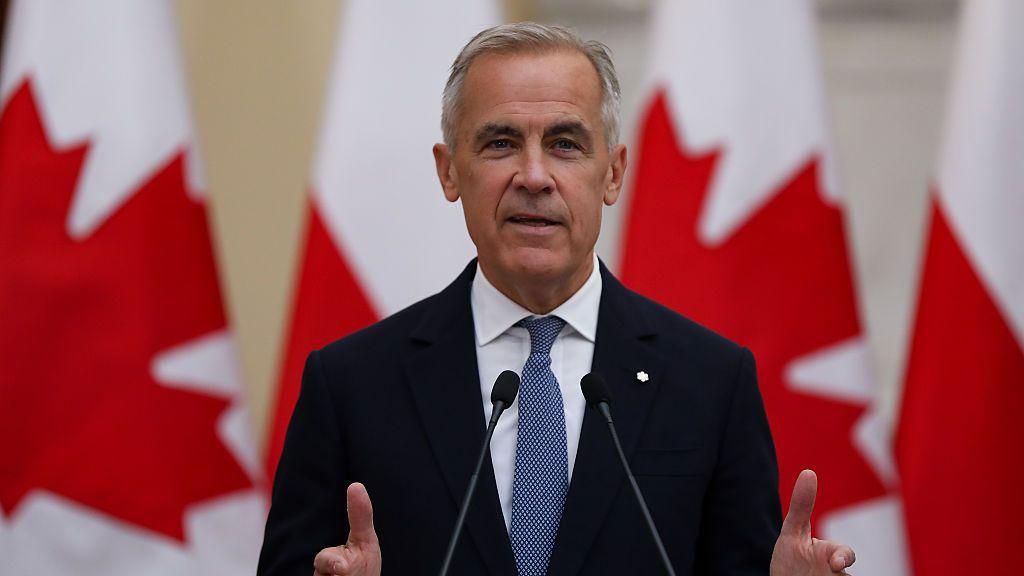
A coalition of prominent Canadian linguists and language authorities has formally requested Prime Minister Mark Carney to maintain Canadian English standards in all governmental communications, following the discovery of British spellings in key official documents. The controversy emerged after language specialists identified non-Canadian orthography in recent publications from the Carney administration, including the November fiscal budget and an October press release concerning diplomatic engagements in Washington, DC.
In a collectively signed open letter dated December 11th and obtained by BBC News, the language professionals emphasized that Canadian English represents a crucial element of national identity that reflects the country’s unique historical and cultural position between American and British influences. The signatories—including four distinguished linguistics professors from Canadian universities and the editor-in-chief of the Canadian English Dictionary—argued that governmental deviation from established Canadian spelling conventions could generate public confusion and diminish linguistic pride.
Canadian English incorporates distinctive characteristics that set it apart from both American and British variants. While it typically favors the British ‘ou’ construction in words like ‘colour’ rather than the American ‘color’, it consistently employs ‘z’ spellings in words like ‘organize’ and ‘analyze’ instead of the British ‘organise’ and ‘analyse’. The language also features uniquely Canadian terminology including ‘toque’ (a winter hat) and ‘washroom’ (restroom), which differ from both American and British equivalents.
Professor Stefan Dollinger of the University of British Columbia, one of the letter’s signatories, expressed concern that the Prime Minister’s Office might be reversing decades of linguistic evolution. “Language expresses identity,” Professor Dollinger stated, noting the symbolic importance of maintaining Canada’s distinct linguistic traditions rather than reverting to colonial-era conventions.
Some observers have speculated that Carney’s extended residence in the United Kingdom—where he served seven years as Governor of the Bank of England—might have influenced his linguistic preferences. Prominent linguist JK Chambers of the University of Toronto, another signatory, remarked via email that while Carney “obviously picked up some pretensions while he was there,” he had at least avoided using extreme British forms like ‘gaol’ for ‘jail’.
Editors Canada President Kaitlin Littlechild noted that it remains unclear whether the British spellings resulted from a procedural misunderstanding or represented a deliberate stylistic directive. The organization has sought clarification from the Prime Minister’s Office regarding its official language policy moving forward.