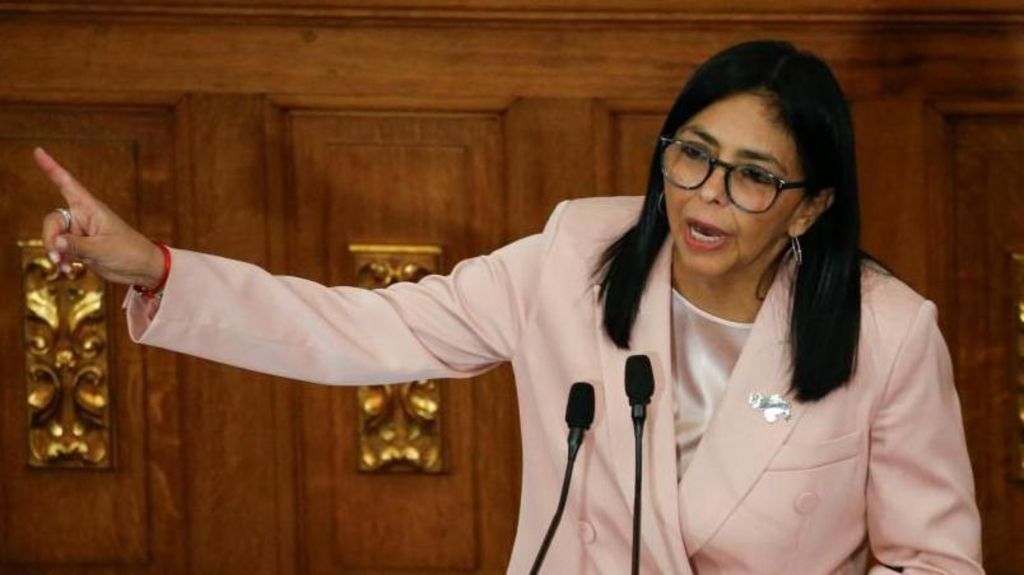
Venezuela plunged into a constitutional crisis following the dramatic capture of President Nicolás Maduro by U.S. forces, with conflicting power claims creating international uncertainty. While the Venezuelan Supreme Court declared Vice President Delcy Rodríguez acting president per constitutional protocol, the situation took unexpected turns when U.S. President Donald Trump announced America would “run” Venezuela during transition proceedings.
The complexity deepened as Trump revealed Secretary of State Marco Rubio had been negotiating with Rodríguez, whom he described as “essentially willing to do what we think is necessary.” This apparent cooperation contrasted sharply with Rodríguez’s subsequent public statements where she denounced Maduro’s capture as “a kidnapping” and vowed Venezuela would “never again be a colony of any empire.
The political vacuum follows years of disputed leadership. Maduro’s 2024 election victory was widely condemned as rigged, with the Carter Center’s analysis of opposition-obtained voting tallies suggesting opposition candidate Edmundo González had actually won by a landslide. The United States and numerous other nations consequently recognized González as legitimate president-elect, though he and prominent opposition leader María Corina Machado—who won the Nobel Peace Prize for her democratic efforts—were forced into exile and hiding respectively.
Trump’s dismissal of Machado as lacking “support or respect” to lead surprised observers, as did his administration’s alignment with Maduro’s inner circle. Rodríguez appeared alongside powerful regime figures including her brother Jorge Rodríguez (National Assembly president), Defense Minister Vladimir Padrino, and armed forces commander Domingo Hernández Lárez, suggesting their continued influence.
Secretary Rubio indicated the U.S. would assess Rodríguez based on actions rather than words, emphasizing retained leverage including oil quarantines. He called for “realism” in expecting delayed elections given Venezuela’s institutional challenges, acknowledging that organizing credible elections would require significant time amid entrenched Maduro loyalists in key institutions.
The emerging arrangement potentially disappoints opposition supporters who expected immediate power transfer to González and Machado. Rodríguez now faces the formidable challenge of balancing U.S. demands against the expectations of Maduro’s power base, finding herself in an increasingly precarious political position.