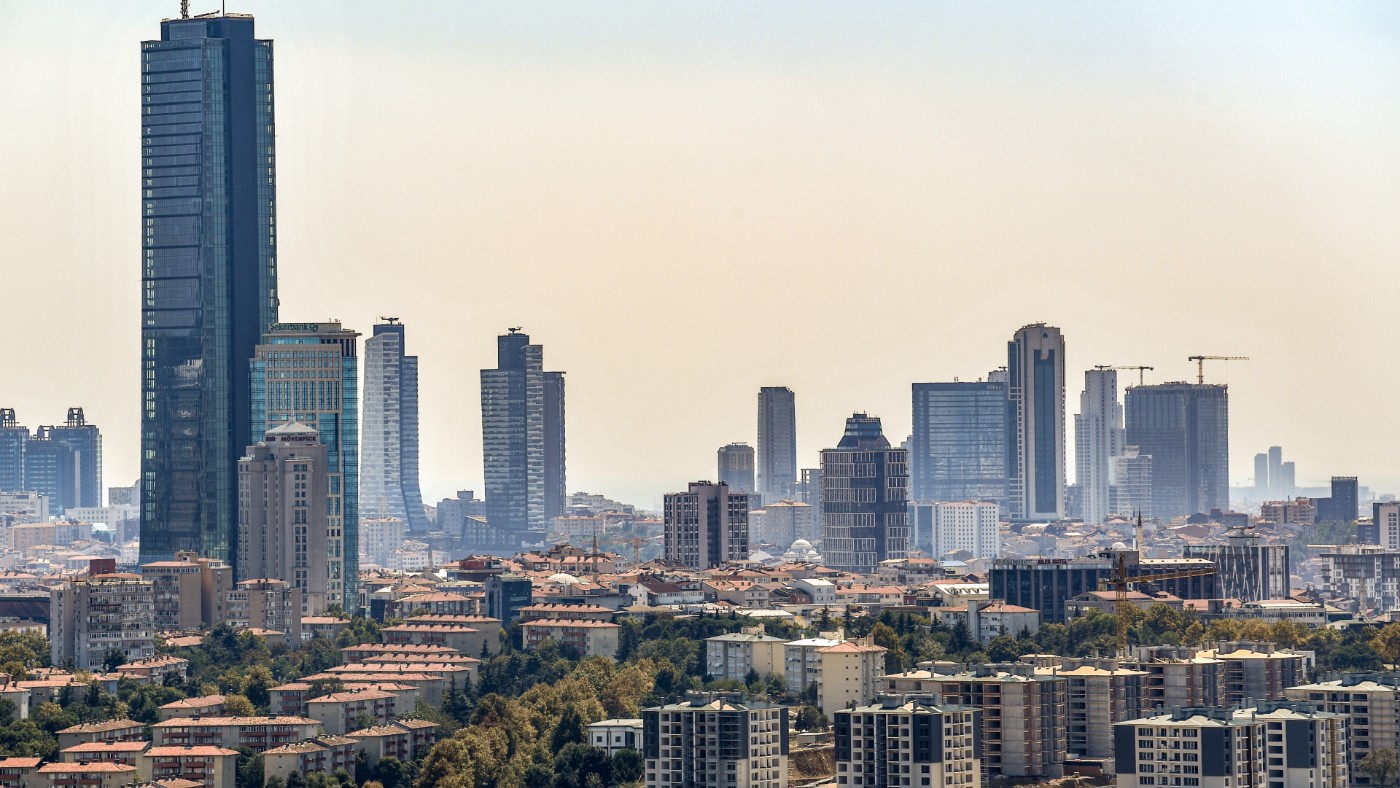
As escalating conflict around Iran exposes key Gulf financial hubs to unprecedented geopolitical risk, the Turkish government has launched a targeted campaign to lure international firms and investors currently based in the United Arab Emirates to relocate their operations to Turkish soil.
According to anonymous sources familiar with the plan who spoke to Middle East Eye, a senior Turkish official has informed international investors that Ankara intends to expand the generous tax incentives and business support schemes currently exclusive to the Istanbul Financial Centre (IFC) to a broader group of multinational corporations. The official noted that growing fears of potential Iranian strikes against UAE financial centers and international firms operating in Abu Dhabi and Dubai may push some companies to consider moving their regional bases to Turkey.
The Gulf region currently hosts a wide range of global economic players, from multinational banks and financial services providers to cutting-edge technology startups, artificial intelligence research firms, large-scale data centers and manufacturing facilities. The IFC, Istanbul’s purpose-built central business and finance district that already hosts dozens of global banks and multinationals, currently offers a robust suite of tax breaks: income earned from exported financial services is 100% deductible from corporate income tax, and all related transactions are exempt from government duties and charges.
Additional incentives include payroll tax breaks for globally experienced talent, with between 60% and 80% of an employee’s real net monthly salary exempt from income tax, depending on how many years of professional experience they gained working outside Turkey. Recent Bloomberg reporting confirms the Turkish government plans to roll these benefits out more broadly, with a proposed new rule that would allow companies to deduct 50% of income earned from selling or brokering goods sourced abroad without importing them into Turkey’s customs territory.
There are early tentative signals that foreign corporate interest in Turkey is starting to build. Earlier this month, Turkish President Recep Tayyip Erdogan hosted 40 global chief executives at a high-profile gathering in Istanbul organized by the World Economic Forum (WEF), with participating companies representing trillions of dollars in combined global market value. The meeting carried particular symbolic weight: Erdogan has not attended the WEF’s annual flagship Davos summit since 2009, when he pulled out following a very public dispute with then-Israeli President Shimon Peres over Israel’s military campaign in Gaza that killed hundreds of Palestinians.
Larry Fink, chair of the WEF’s board of trustees and CEO of BlackRock, the world’s largest asset manager, was among the key organizers of the Istanbul meeting. Alois Zwinggi, WEF’s interim president and CEO, noted that Turkey plays an increasingly strategic role in global trade, investment and production networks.
Ceren Kenar, a leading Turkey-based analyst, explained that the WEF organized the gathering as an effort to rebuild ties between Erdogan and the wider Davos community. “This should be interpreted, in a sense, as a demonstration of confidence in the Turkish economy, despite its vulnerabilities,” Kenar said. “Beyond this, it is important to understand the significance of the rational and strategic role that Turkey, under the leadership of Erdogan, plays in the global arena.”
Kenar added that Turkey has worked to position itself as an even-handed mediator in multiple regional conflicts over the past 15 years, from the Syrian civil war and the Russia-Ukraine war to the Nagorno-Karabakh dispute, the Israeli-Palestinian conflict and the current crisis around Iran. “Today, relations with the US are more stable than they have been in a long time, and relations with Europe are being redefined,” she said. “It is impossible to construct an equation in the Middle East that excludes Turkey.”
Ahmet Ihsan Erdem, chief executive of the IFC, confirmed earlier this month to Reuters that the center has already held exploratory talks with 40 companies from East Asia and the Gulf that are considering partial relocation to the IFC or expanding their existing Turkish operations specifically because of risks stemming from the Iran war.
Despite these early positive signs, multiple anonymous analysts and investors who spoke freely to Middle East Eye warn that Ankara faces steep, structural challenges to convincing UAE-based businesses to make the move. Most pressing is Turkey’s persistent high inflation, which is projected to hit 25% this year, alongside a rapidly widening trade deficit. Beyond macroeconomic headwinds, investors also point to high-profile actions such as the government’s seizure of Papara, Turkey’s first fintech unicorn valued at over $1 billion, which has sparked fears of arbitrary state action against foreign-owned firms.
A more fundamental concern cited by investors is uncertainty around the rule of law. “No one trusts the Turkish courts,” one senior international banker told Middle East Eye.
Guney Yildiz, senior adviser for geopolitics and strategic insights at Anthesis Group and a former official at the Abu Dhabi International Financial Centre (ADGM), noted that “The tide can turn in favour of the IFC only if Turkey’s macroeconomic performance improves.”
To put the competitive landscape in context: the Dubai International Financial Centre (DIFC), the UAE’s leading global financial hub, operates under its own independent civil and commercial legal framework separate from the UAE’s national legal system, built on English common law with an independent, internationally respected judiciary. Establishing a similar system in Turkey would face deep historical and political headwinds, as the modern Turkish republic was founded in part to end the unequal “capitulation” privileges granted to foreign powers during the Ottoman era that created separate legal systems for foreign entities.
“It would be a tough sell for the government,” said Guven Sak, a prominent Turkish economist with the Ankara-based TEPAV think tank. “But Ankara can still try to reassure financial companies within the existing legal structure.” A senior anonymous Turkish official confirmed that the government is exploring legal adjustments to address investor concerns without creating a separate free zone with independent courts, particularly to attract data center and AI investments that do not require the same full legal autonomy as traditional financial services. Sak even suggested that such autonomous zones might be more politically feasible in Northern Cyprus, which retains a legacy of English common law from British colonial rule.
Yildiz acknowledged that the tax incentives Turkey is offering are substantial and in some cases more generous than Gulf competitors. “Banks operating from the IFC campus pay effectively zero corporate tax on financial services exports through 2031,” he said. “On paper, that’s actually better than Dubai, because DIFC and ADGM offer zero tax on most activities but carve out banks and insurers, which pay the standard nine percent.”
Even so, Yildiz argued that Gulf firms are not prioritizing tax rates when comparing Turkey to the UAE. “They are more worried about lira depreciation, inflation risk and Turkey’s relatively low sovereign rating,” he said, while noting that Turkey’s current economic leadership has pursued a credible policy program. Since taking office in 2023, Turkish Finance Minister Mehmet Simsek has pursued a more orthodox fiscal and monetary policy agenda, though he has faced criticism for failing to bring inflation down to the single-digit target.
Another anonymous analyst noted that the UAE and Saudi Arabia have invested hundreds of billions of dollars in building out cutting-edge AI and technology infrastructure, while also offering reliable, low-cost energy supplies as major oil and gas exporters and world-class logistical connectivity. Turkey cannot match these advantages at present, the analyst added, and most multinationals that would consider relocation already maintain small operations in Turkey anyway, with little overlap in the key growth sectors of energy, AI and trade connecting China and India.
Sak, the veteran Turkish economist, pointed out that Turkey does hold a clear competitive advantage in manufacturing, where it remains one of the strongest and most diversified economies in the broader Middle East region. “Dubai filled the void left by Beirut, which was unable to realise its potential because of civil war,” he said. “With the right incentives, we can attract Chinese businesses that are heavily invested in the UAE’s Jebel Ali Free Zone, which sits directly across the Gulf from Iran.” The Jebel Ali zone currently hosts 507 Chinese companies, nearly double the 2021 count, including 11 Fortune 500 firms operating in automotive, logistics and technology. The expanded Turkish tax incentives could prove attractive to some of these firms looking to diversify their geopolitical risk.
Yildiz, however, warned that expanding the IFC’s incentive packages to cities outside Istanbul could weaken the coherent legal and logistical value proposition of a dedicated international financial center. That said, he proposed a more targeted alternative: “If Turkey positioned secondary cities as specialised back-office or fintech hubs with their own separate incentive schemes, while keeping regulated activity at the IFC, that could actually work.”
Yildiz also highlighted a unique advantage Turkey holds that Dubai cannot match: access to a large domestic market of 85 million people with vastly underpenetrated financial services. “The non-bank financial sector, everything from insurance to asset management to leasing, accounts for about a tenth of total financial assets,” he said. “In a normal developed economy, that figure is four or five times higher. Turkey’s conversation with the Gulf should be about access to that market, rather than trying to match Dubai on tax rates, which it probably can’t.”
A senior European investment consultant based in the region agreed that there is a narrow window of opportunity for Turkey to attract Gulf investors, but only with clear strategy, consistent execution and domestic political and economic reform. “And by putting the house in order in Turkey,” he added, referencing the Turkish government’s recent crackdown on opposition mayors, including the high-profile arrest of Istanbul’s main opposition mayor Ekrem Imamoglu. “That is unlikely to materialise as long as Erdogan’s personal agenda comes first.”