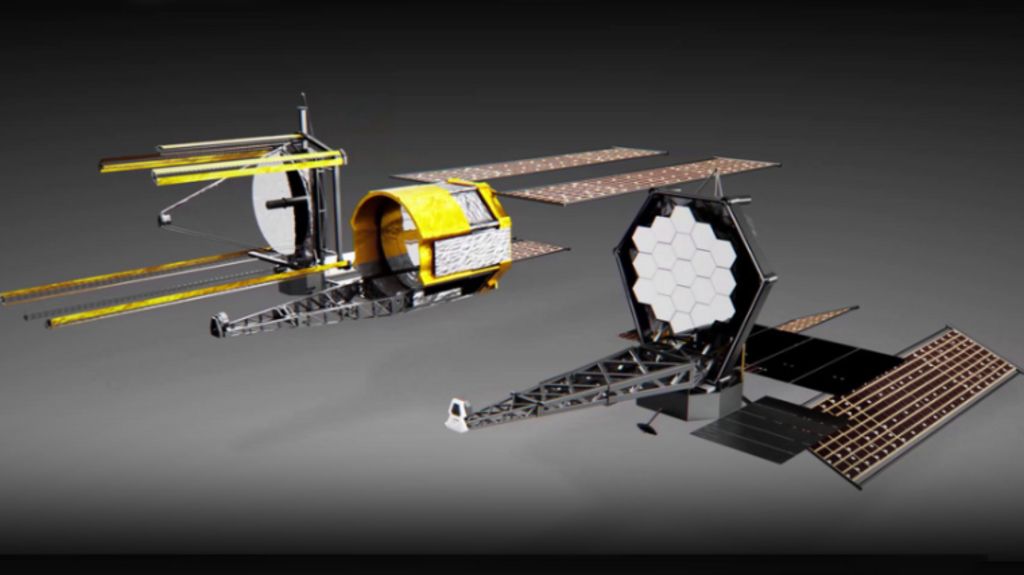
A groundbreaking camera, designed to detect signs of life on distant planets, is being developed by a consortium of UK scientists for NASA’s Habitable Worlds Observatory (HWO). This state-of-the-art imaging device, spearheaded by researchers at Durham University, will be a cornerstone of the HWO mission, set to launch in the early 2040s. The HWO will be the first telescope specifically engineered to identify Earth-like planets and scrutinize them for biological indicators. Professor Richard Massey of Durham University likened the new technology to the ’21st Century’s Hubble Space Telescope,’ emphasizing its potential to unlock numerous scientific mysteries. Beyond the search for extraterrestrial life, the telescope will observe asteroid collisions, delve into black holes, and investigate the enigma of dark matter. Rocky planets, similar to Earth, are notoriously challenging to study due to their proximity to bright stars. To overcome this, the HWO will employ a coronagraph to obscure the stellar glare, enabling the first-ever detailed observations of these planets. The camera will also measure planetary mass and analyze atmospheric chemistry for signs of life. The UK hardware team, led by University College London, includes experts from the University of Portsmouth, RAL Space, the UK Astronomy Technology Centre, and Durham University. This initiative is one of two groups funded by the UK Space Agency to explore the feasibility of a UK-led high-resolution imager, with the other group being led by the University of Leicester.