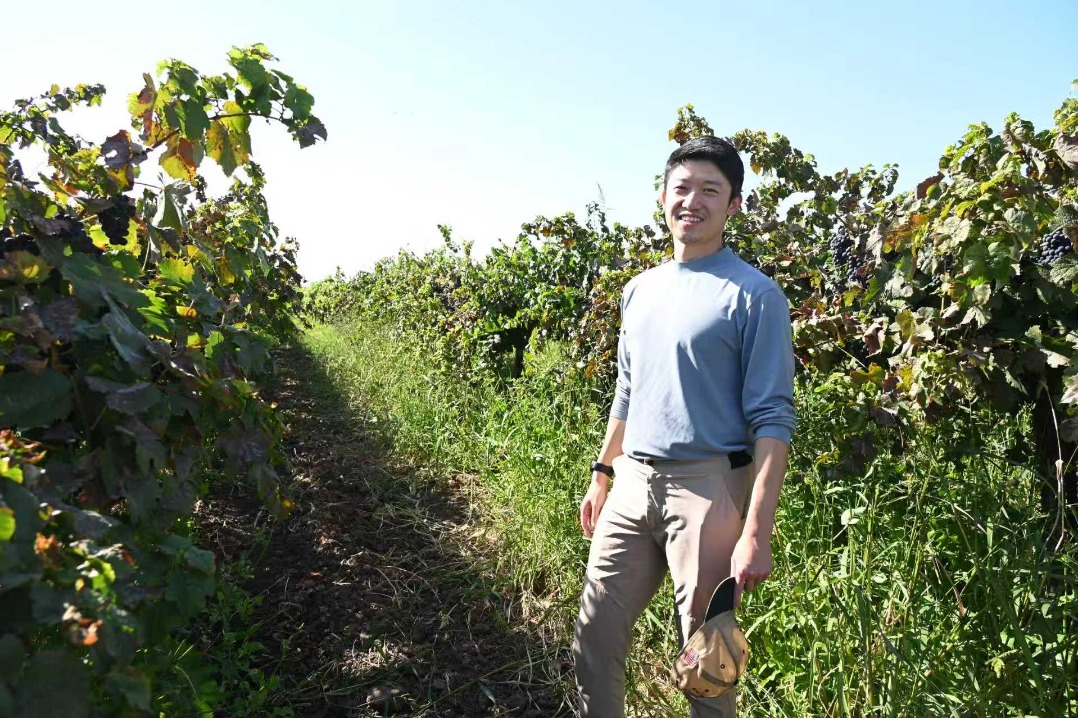
In the prestigious vineyards of California’s wine country, a significant transformation is underway as Han Han ascends to the role of Director of Winemaking at Bear Creek Winery in Lodi. His appointment marks both a personal achievement and a historical correction in an industry that has largely overlooked the foundational contributions of Chinese laborers.
More than a century ago, Chinese workers performed the backbreaking labor that established California’s premier wine regions—terracing hillsides, digging irrigation channels, and tending vines under discriminatory conditions. Despite their instrumental role, their stories were systematically erased from the industry’s narrative that primarily celebrated European vintners and American entrepreneurs.
‘It embodies the spirit of ‘chiku’—those Chinese laborers who endured immense hardship to build this industry,’ Han explained, referencing the Chinese concept of ‘eating bitterness’ to achieve future rewards. ‘Their legacy has been largely forgotten, yet they made contemporary California wine country possible.’
Han’s journey to leadership represents a challenge to the industry’s Eurocentric traditions. Born in Harbin, China, he immigrated with his parents to South Dakota in the 1990s, where he witnessed firsthand his parents’ embodiment of perseverance—working at a Chinese restaurant while pursuing engineering degrees with limited English proficiency.
‘Observing my parents overcome such obstacles taught me that determination can conquer any difficulty,’ reflected Han, now a father of two.
After initially pursuing biochemistry at UC Davis, Han discovered winemaking through a friend in the viticulture program. Despite sending 20 applications post-graduation, he received only one response—from Chateau St Jean Winery in Sonoma County. This single opportunity launched his career, beginning in 2012 as a lab technician at Bear Creek Winery where he rapidly advanced from enologist to his current directorship in just over a decade.
Han acknowledges the industry’s relational nature presented significant barriers: ‘Without established connections or family history in wine, building networks from scratch proved intimidating. The field heavily emphasizes who you know.’
His bicultural background has evolved into a professional advantage. Bear Creek now exports its Ironstone label to China, with Han creating Chinese-language promotional materials and leveraging his language skills—a capability he credits to his parents’ insistence on maintaining cultural ties.
Facing contemporary industry challenges including climate change and shifting consumer preferences, Han applies the long-term perspective inherited from his heritage: ‘During uncertain times, we focus not merely on immediate concerns but on five or ten years ahead. This industry requires patience and perseverance—the essence of ‘chiku’.’
Standing among the barrels at Bear Creek, Han embodies both the realization of immigrant dreams and the belated recognition of those Chinese workers whose contributions built an industry that once excluded them.