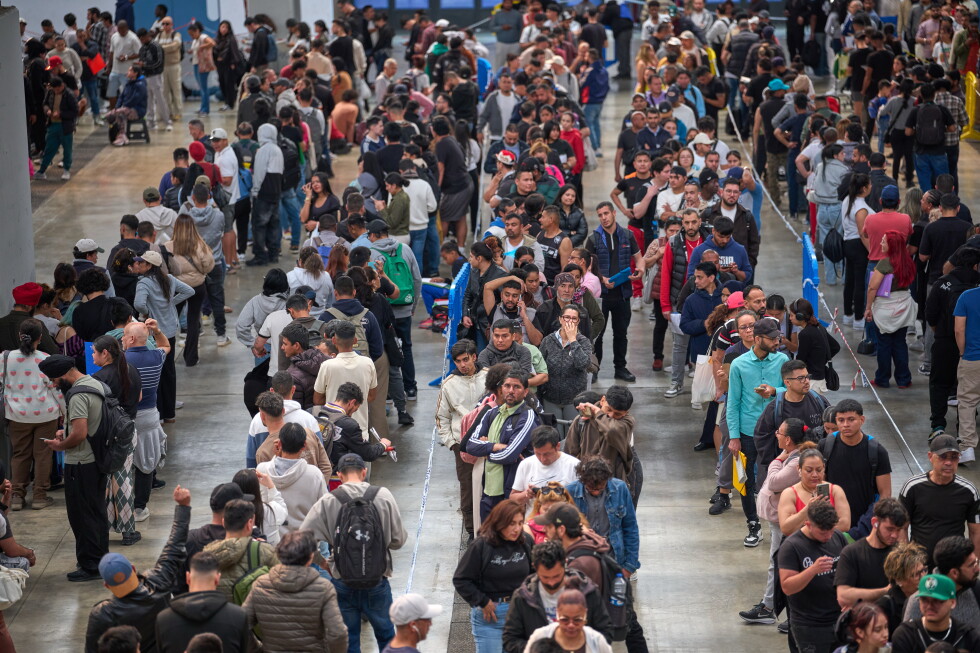
MADRID – Spain’s groundbreaking immigration regularization program, launched earlier this year to bring undocumented migrants living and working in the country into legal status, has drawn far more applicants than initial government projections, with nearly 1 million people submitting requests by mid-June ahead of this week’s application deadline.
Unveiled by Prime Minister Pedro Sánchez’s progressive government in January and opened for submissions in April, the initiative closes its application window on June 30. Eligible undocumented immigrants who have resided in Spain for a minimum of five years and hold a clean criminal record can receive a one-year renewable residence and work permit, allowing them to access public services and contribute legally to the Spanish economy. When the program was first introduced, Spanish officials projected that roughly 500,000 people would qualify for legal status. However, that estimate has already been blown past: by June 12 alone, the government confirmed it had received more than 900,000 applications, and immigration analysts forecast the final total will cross the 1 million threshold once all submissions are counted. This matches pre-program projections from independent think tanks and Spanish law enforcement, who long estimated the actual number of undocumented people living in Spain hovered around 1 million.
For Sánchez, a leading progressive figure in European politics, the regularization policy is both a moral and economic imperative. “This is an act of justice and a necessity,” the prime minister has argued, noting that migrants already residing and working in Spanish communities deserve the right to operate under equal legal conditions, and to contribute taxes to public systems that all Spaniards rely on.
This policy marks a clear break from the hardening immigration stance adopted by many other European Union member states and the United States, where stepped-up deportation operations have become the dominant policy response to undocumented migration in recent years. While this is the seventh mass immigration regularization initiative Spain has carried out since 1986, the volume of applicants for the 2024 program is unprecedented. Previous amnesty efforts never crossed the 600,000 application mark: the largest prior effort, held in 2005, resulted in roughly 576,500 immigrants gaining legal status. Three of the past six regularization programs were implemented under Socialist prime minister Felipe González starting in 1986, while conservative leader José Aznar’s government oversaw two more initiatives during the 2000s.
By mid-June, Spanish officials had already processed roughly 360,000 applications, with successful applicants approved for temporary legal status. The government retains a three-month window after the application deadline to process all submissions, so the final number of people granted status will continue to rise in the coming months.
Demographic breakdowns of applicants show that 30% of all requests come from Colombian nationals, reflecting the large Colombian-born community already resident in Spain – per the country’s National Statistics Institute, more than 980,000 Colombian-born people currently live in Spain. Moroccan applicants account for 14% of total submissions, followed by Venezuelans at 10% and Peruvians at 9%. These migration flows align with broader demographic shifts in Spain: today, roughly one in five of the country’s 50 million residents are foreign-born, totaling around 10 million people. Most of these residents arrived from Latin America and North Africa, fleeing political instability, violence, or economic hardship in search of better opportunities in Spain.
Industries at the core of the Spanish economy – including agriculture, tourism, and domestic services – rely heavily on migrant labor, a reality that supporters of the program cite as a key justification for bringing undocumented workers into the formal economy. Even so, the initiative has sparked significant public debate and scrutiny across Spain, dividing public opinion over the country’s approach to migration.
As of mid-June, 360,000 applicants have already been processed, and officials are working through the remaining backlogged submissions in the months following the deadline. Analysts widely expect the final count of approved applicants will make this the largest immigration regularization effort in Spanish history.