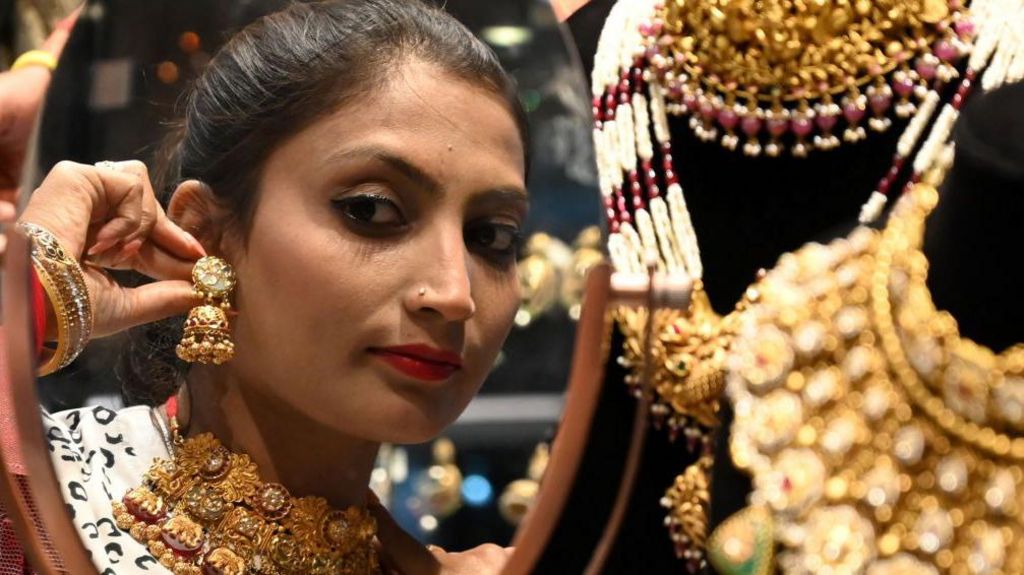
As the Hindu festival of Diwali approaches, India’s gold market is witnessing a significant transformation. Despite soaring prices—gold has surged by 60% and silver by 70% this year—Indians are flocking to markets, driven by cultural traditions and investment opportunities. In Delhi’s bustling Lajpat Nagar neighborhood, jewelry shops are packed with customers, even on holidays, as the festive spirit fuels demand for gold and silver coins, bars, and jewelry. While high prices have slightly dampened jewelry purchases, they have also sparked a fear of missing out (FOMO) among buyers, leading to a shift toward investment-driven acquisitions. Retailers like Prakash Pahlajani of Kumar Jewels report increased footfall, with customers opting for smaller, lighter pieces to manage budgets. The World Gold Council (WGC) notes a clear trend: investment demand for gold, particularly in bars, coins, and exchange-traded funds (ETFs), has risen sharply, now accounting for 35% of total demand, up from 19% in 2023. Meanwhile, jewelry’s share has declined to 64%. India’s central bank, the Reserve Bank of India (RBI), has also been a major player, increasing its gold reserves to 14% of foreign exchange holdings in 2025, aiming to diversify assets and reduce dollar dependency. Experts predict that despite record prices, demand will remain robust during the festive and wedding seasons, especially among affluent buyers. However, lower-income families are feeling the pinch, with some delaying purchases in hopes of price drops. India’s deep cultural affinity for gold, coupled with its role as a wealth-preserving asset, ensures its enduring appeal, even as prices take some shine off the festive season.