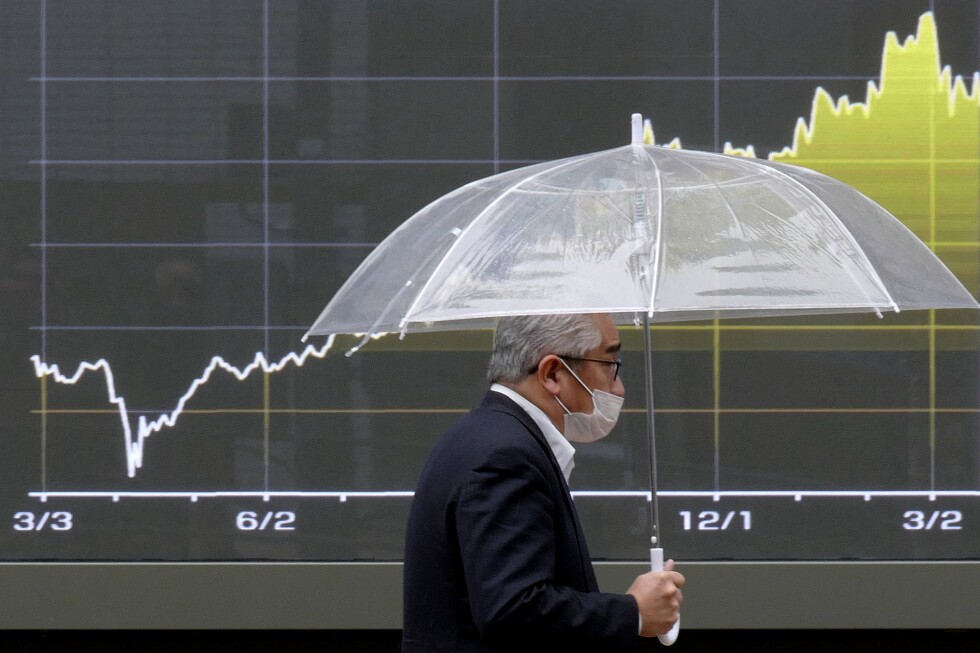
TOKYO – The Bank of Japan’s closely watched quarterly tankan survey, published Wednesday, has delivered a fourth consecutive quarter of improving business sentiment among the nation’s large manufacturing firms. The key diffusion index, which measures the gap between companies reporting positive business conditions and those forecasting a downturn, edged up to 17 in March, up one point from the December reading.
This modest uptick comes despite mounting global and domestic economic headwinds, fueled by the ongoing conflict in Iran that has stirred widespread anxiety over energy supply security and broader Japanese economic growth. Unlike the manufacturing sector’s gain, sentiment among large non-manufacturing businesses, spanning retail, hospitality and other service segments, held steady at 36, matching the previous survey’s reading.
While Japan’s overall inflation rate has stayed far more muted than in many other advanced economies, upward pressure on fuel prices and a range of consumer goods has accelerated concerns across markets and households. Geopolitical uncertainty surrounding the duration of the Iran conflict and unpredictable policy signals from former U.S. President Donald Trump have added to market volatility, pushing Japan’s benchmark Nikkei 225 index into sharp swings over recent weeks.
A depreciating yen and soaring energy costs have combined to push up living costs for ordinary Japanese consumers, leading a growing number of analysts to forecast that the Bank of Japan could move to raise interest rates at its upcoming monetary policy meeting. The central bank wrapped up years of negative interest rates, implemented to combat decades of stubborn deflation, when it normalized monetary policy in 2024. It has held its benchmark policy rate steady at 0.75% since the beginning of the year, and its next policy board gathering is scheduled for April 27-28.
Historically, a weaker yen has been a boon for Japan’s export-led economy, which built its global reputation on high-volume shipments of automobiles and consumer electronics. When the yen depreciates, overseas earnings earned in foreign currencies translate back to larger yen denominated profits for exporting firms. But in recent decades, Japan’s economic dynamics have shifted dramatically: as a resource-poor nation, Japan now imports nearly all of its energy needs, along with large volumes of food and critical manufacturing components. A weak yen now raises import costs sharply, eroding household purchasing power and cutting into corporate margins for import-dependent firms. The U.S. dollar has continued its rapid ascent against the yen in recent trading sessions, amplifying these inflationary pressures.