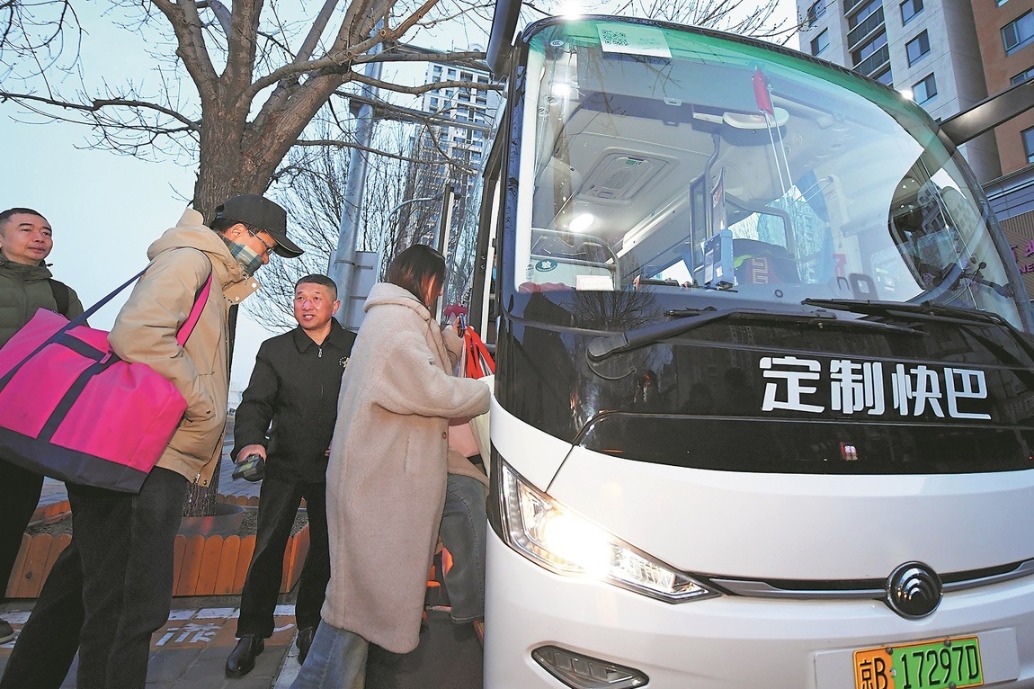
A transformative commuter bus service connecting Beijing with the rapidly developing Xiong’an New Area has officially commenced operations, marking a significant milestone in the Beijing-Tianjin-Hebei regional integration initiative. The service, which completed successful trial operations spanning more than a year, introduces an expanded network designed specifically to accommodate growing business travel demands between the two economic hubs.
The newly launched system features a strategic route expansion, including a specialized branch line that originates at Beijing’s Liuliqiao subway station, traverses the prominent Lize financial business district, and terminates at the Zhongguancun Science Park within Xiong’an. This carefully designed connectivity addresses the practical transportation needs of professionals and corporations operating across both locations.
According to Zhang Jingxing, an official with the Beijing Municipal Commission of Transport, the service formalization enables broader commuter benefits while substantially enhancing transport infrastructure for industrial collaboration. The network design incorporates data insights from over 8,500 trial passengers, ensuring optimal route efficiency and coverage.
The current operational framework includes three customized routes spanning 120 kilometers with a maximum travel duration of two hours. Priced at 50 yuan ($7.20) for a one-way journey, the service recorded promising initial metrics with 75 morning passengers on launch day and an average seat occupancy rate of 45%—surpassing projections by approximately 15%.
Operational advantages include dedicated bus lanes and expedited checkpoint processing, eliminating inspection stops at Beijing borders. Wang Zhen, general manager of the operating company, emphasized the service’s competitive positioning: “It offers greater economy than private driving and superior convenience compared to high-speed rail options.”
Passenger experience incorporates digital innovation through an official WeChat platform for ticket booking, with boarding facilitated via facial recognition or ID card authentication—eliminating traditional paper tickets. One commuter, identified as Li, praised the seamless integration with subway systems and direct workplace access without transfers.
The broader customized network now encompasses 12 main routes and 58 branch lines interconnecting Beijing with multiple cities across Hebei province and Tianjin municipality. Cumulative performance data reveals impressive scale: over 163,000 completed trips transporting more than 5.3 million passengers to date.
This development aligns with transportation objectives outlined in China’s 14th Five-Year Plan (2021-2025), which envisioned a “1 to 1.5-hour transportation circle” between major regional cities. With increasing corporate relocations to Xiong’an, including headquarters of major enterprises like China Satellite Network Group and Sinochem Group, demand is projected to grow substantially.
Future expansion plans already include additional routes connecting Beijing’s Shuangjing station with Xiong’an’s Xuanwu Hospital and university district, further reinforcing the commitment to convenient, efficient, and affordable cross-city mobility.