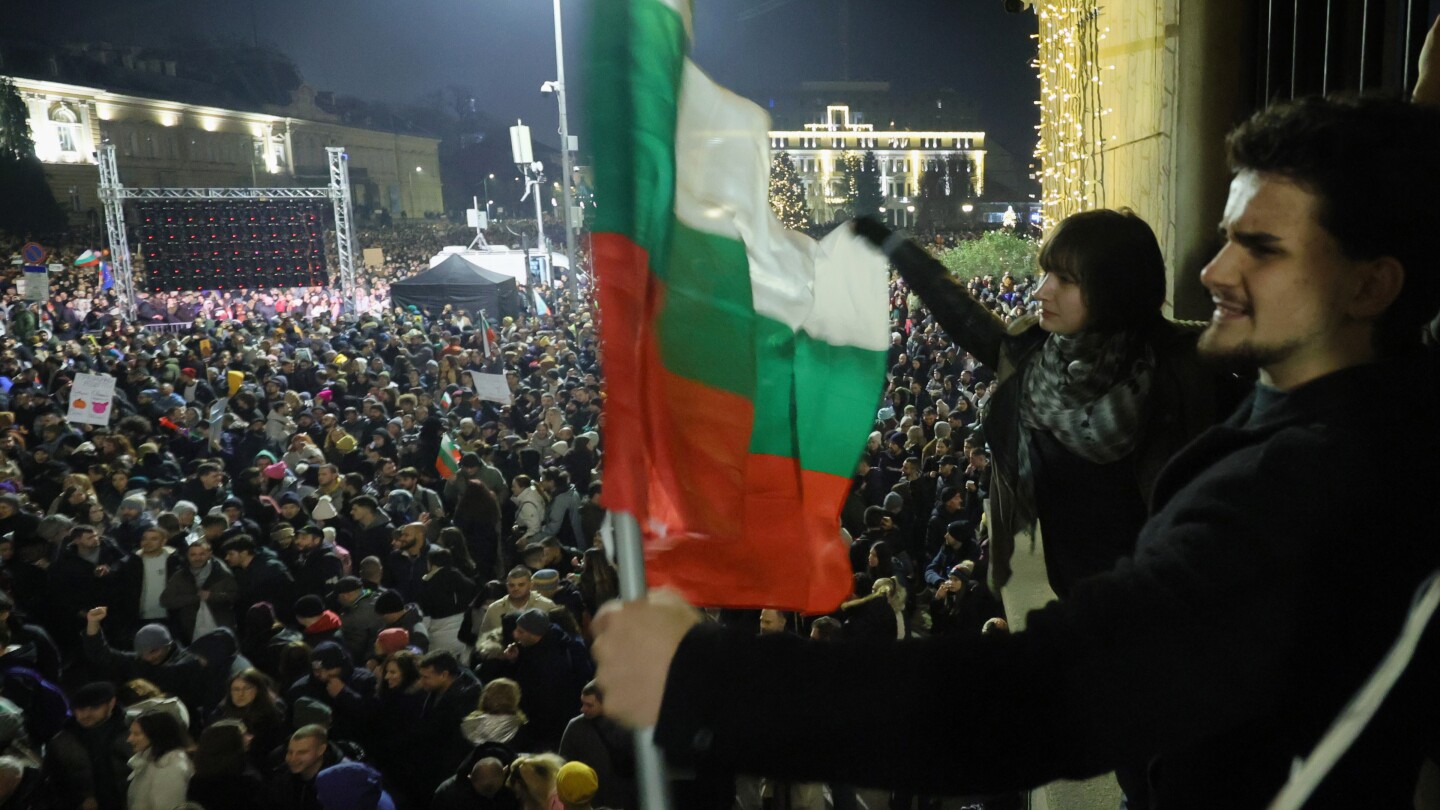
SOFIA, Bulgaria — Bulgaria has been plunged into a political crisis following the resignation of its government amid escalating public demonstrations. Tens of thousands of citizens flooded the streets of Sofia and other major urban centers on Thursday, demanding electoral integrity and an independent judiciary capable of confronting systemic corruption.
The widespread civic mobilization represents an extension of protests initially triggered by the government’s controversial budget proposal, which included plans for elevated taxes and increased public expenditures. Although authorities subsequently retracted the contentious 2026 fiscal blueprint, mounting public pressure ultimately compelled the coalition government to relinquish power.
This political upheaval has created a governance vacuum in the Eastern European nation, leaving it without an approved budget for the upcoming fiscal year and without a functioning administration. The crisis emerges at a particularly sensitive juncture as Bulgaria prepares to transition to the euro currency on January 1, 2023.
Protesters have articulated deep concerns regarding electoral malpractice, specifically highlighting vulnerabilities including vote manipulation, financial inducements for voters, and result falsification that allegedly compromised previous electoral processes.
Central to the public’s discontent is the influential role of Delyan Peevski, a sanctioned oligarch whose political entity, the MRF New Beginning party, provided crucial parliamentary support to the outgoing coalition government led by former Prime Minister Boyko Borissov’s GERB party. Both the United States and United Kingdom have imposed sanctions on Peevski for corruption allegations.
Constitutional protocols now require President Rumen Radev to appoint an interim administration and schedule early parliamentary elections—which would mark the country’s eighth snap vote since 2021. This persistent political instability threatens to complicate Bulgaria’s imminent adoption of the euro, despite its established timeline for integration into the Eurozone as its 21st member state.