Bulgaria has officially become the 21st nation to adopt the euro, marking a significant yet contentious milestone for the European Union’s most economically disadvantaged member state. This transition, which saw the Bulgarian lev replaced on January 1st, 2026, positions the nation ahead of wealthier Eastern European peers like Poland, Hungary, and the Czech Republic.
The move to the single currency has exposed a stark generational and geographic rift within the country. For younger, urban, and entrepreneurial citizens, euro adoption represents the final step in a long journey of European integration, following NATO and EU membership and entry into the Schengen zone. They view it as an optimistic leap toward greater economic opportunity and stability.
Conversely, for older, rural, and more conservative segments of the population, the abandonment of the historic lev—a national symbol since 1881—has provoked fear and resentment. The currency, whose name means ‘lion,’ was pegged first to the Deutschmark and then to the euro since 1997, but its physical replacement is seen by many as an erosion of national sovereignty.
This societal split is reflected in opinion polls, which indicate the nation’s 6.5 million people are almost evenly divided. The political landscape further complicates the transition. Prime Minister Rosen Zhelyazkov’s coalition government collapsed after a no-confidence vote on December 11th, 2025, following mass protests against the national budget. This event continues a pattern of extreme instability, with seven elections held in the past four years and an eighth likely imminent.
Interviews with citizens reveal the depth of this division. Todor, a 50-year-small business owner in Gabrovo, expressed strong opposition, stating he believed 70% would reject the euro in a referendum—a vote proposed by President Rumen Radev but rejected by the government. He blamed fears of the new currency for a decline in his sales amid already high inflation.
In contrast, Ognian Enev, a 60-year-old tea shop owner in Sofia, welcomed the change as a mere ‘technical’ shift. He noted that many Bulgarians, particularly the 1.2 million living abroad who send remittances in euros, are already accustomed to the currency. Like many retailers, he is prepared with euro coins and notes for the dual-currency period throughout January, where change will be given in euros, ahead of the lev’s complete retirement on February 1st.
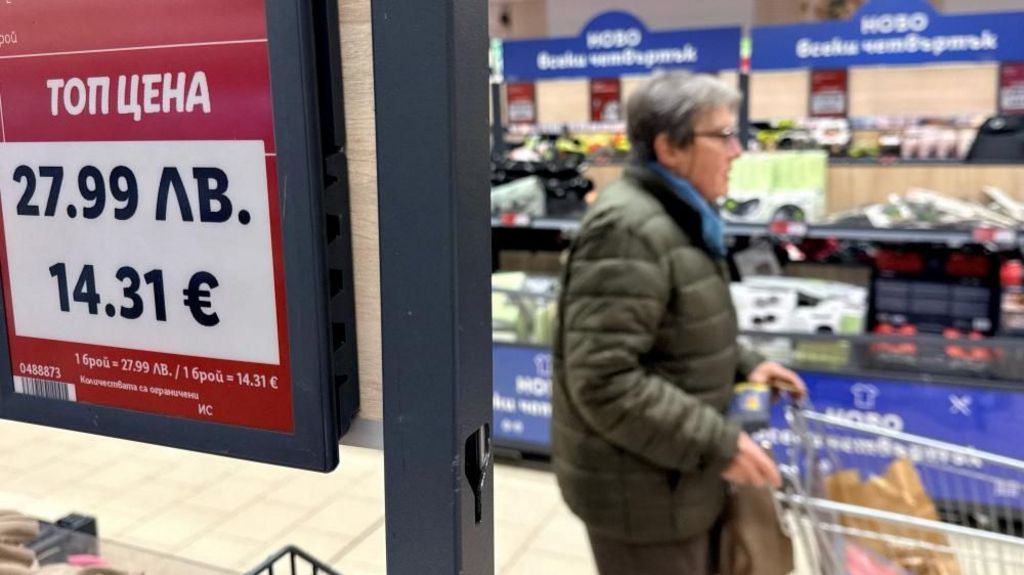
To ease the public’s fear of price gouging, a mandatory dual-pricing law has been in effect since August 2025. The near 1:2 conversion rate (€1 = 1.95583 lev) simplifies the transition. Elaborate consumer protection watchdogs have been established to prevent merchants from rounding prices up, with some, like Sofia’s public transport fares, being rounded down instead.
In a symbolic move to assuage concerns over lost identity, Bulgaria’s euro coins feature distinct national imagery: St. Ivan of Rila on the €1 coin, Paisius of Hilendar on the €2, and the ancient Madara Rider on the smaller denominations.
The ultimate economic impact remains the critical unknown. The country now faces two potential futures: the successful ‘Baltic model’ of Estonia, Latvia, and Lithuania, which combined euro adoption with robust reforms to spur investment and fight corruption, or the ‘Italian model’ of prolonged economic stagnation—an outcome some, including Mr. Enev, fear is more likely for Bulgaria.