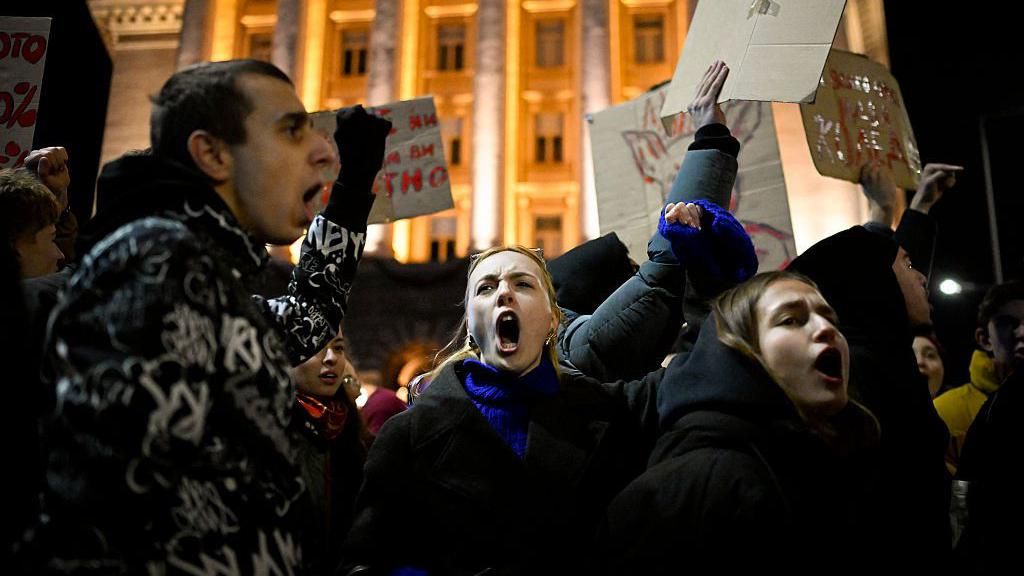
Bulgaria’s government has capitulated to public pressure by withdrawing its controversial 2026 budget proposal following the largest anti-government demonstrations the country has witnessed in decades. The decision comes after tens of thousands of citizens flooded streets across multiple cities on Monday night, with the capital Sofia witnessing particularly massive gatherings in front of parliament buildings.
The now-abandoned fiscal plan faced vehement opposition for its proposed tax increases and social security contribution hikes, which protesters argued served to mask systemic government corruption rather than address genuine economic needs. The demonstrations turned confrontational in Sofia where masked individuals clashed with riot police, damaged political party offices, and set fires, resulting in over 70 arrests according to local authorities.
President Rumen Radev condemned the violence as ‘mafia provocations’ while simultaneously acknowledging the legitimacy of public discontent. Through social media, Radev demanded governmental resignation and early elections, stating that Bulgarians had unequivocally rejected the current administration.
The political context underscores deeper tensions as Bulgaria prepares for its inaugural eurozone budget on January 1, 2026. Public opinion remains sharply divided on euro adoption, with many citizens in one of the EU’s poorest nations fearing potential inflationary consequences. The current minority coalition government under Prime Minister Rosen Zhelyazkov, formed after inconclusive 2024 elections, now faces intensified opposition calls for complete resignation rather than mere policy adjustments.
This episode continues Bulgaria’s pattern of political instability that has persisted since 2020, when previous anti-corruption protests toppled another GERB-led coalition government. The government has committed to initiating a new budget consultation process involving opposition parties, trade unions, and employer representatives.