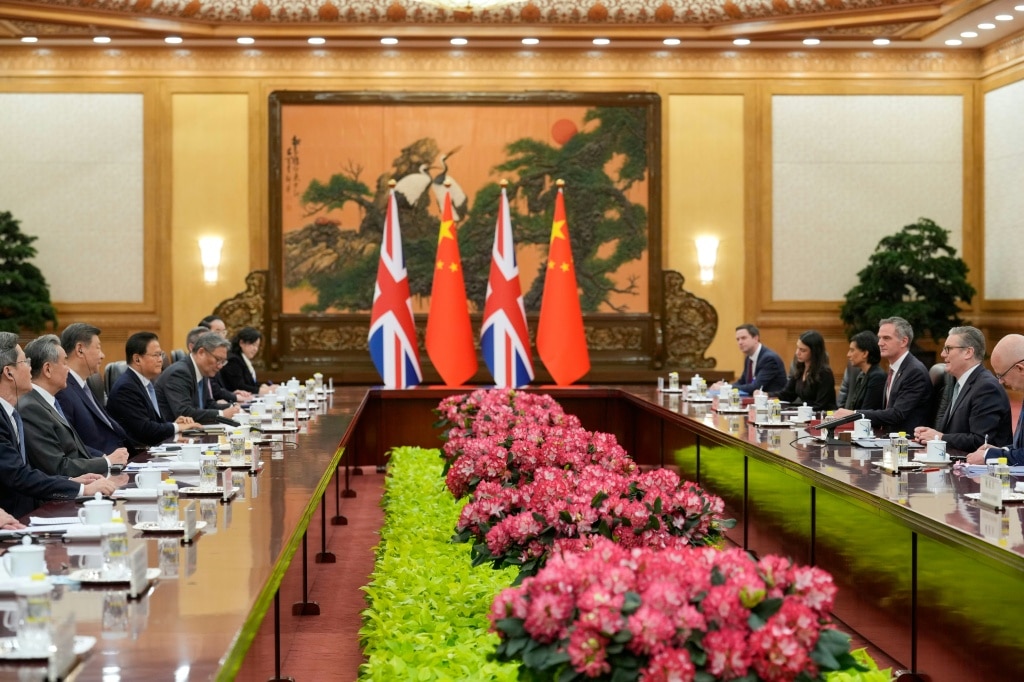
In a significant diplomatic engagement, British Prime Minister Keir Starmer convened with Chinese President Xi Jinping at Beijing’s Great Hall of the People on January 29, 2026. This high-stakes dialogue marked the first official visit by a UK premier to China since 2018, signaling a potential recalibration of bilateral relations amidst global geopolitical shifts.
The comprehensive agenda encompassed multifaceted issues including enhanced trade cooperation, national security considerations, and human rights discussions. The meeting occurred against the backdrop of Western nations increasingly seeking Beijing’s support amid uncertainties in traditional alliances, particularly with the United States.
Prime Minister Starmer’s delegation included approximately sixty prominent business leaders from finance, pharmaceuticals, automotive industries, alongside cultural representatives. This composition underscored Britain’s dual objectives of pursuing economic opportunities while addressing security apprehensions.
Prior to the presidential meeting, Starmer engaged with Zhao Leji, China’s third-ranking official, who characterized bilateral relations as progressing along ‘the correct track to improvement and development’ despite international turbulence. Subsequent discussions with Premier Li Qiang were scheduled to further elaborate on cooperative frameworks.
The diplomatic initiative follows Chancellor Rachel Reeves’ earlier trade mission to Beijing, highlighting the Labour government’s strategic priority of stimulating UK economic growth through international partnerships. Notably, both nations prepared to sign a cooperative agreement targeting human smuggling supply chains—a particularly sensitive issue for Starmer’s administration given domestic political pressures.
Historical context reveals a complex relationship trajectory, from the celebrated ‘Golden Era’ of Sino-British relations a decade ago to subsequent strains following Beijing’s implementation of national security legislation in Hong Kong and suppression of pro-democracy activists. Contemporary friction points include human rights cases such as imprisoned media magnate Jimmy Lai, alleged espionage activities, cyber intrusions, and China’s positioning regarding Russia’s conflict in Ukraine.
Despite these challenges, China maintains its status as Britain’s third-largest trading partner, though UK exports to the Asian giant witnessed a dramatic 52.6% year-on-year decline in 2025 according to official statistics. Starmer’s itinerary included subsequent visits to Shanghai—China’s financial hub—and a brief stop in Japan for discussions with Prime Minister Sanae Takaichi, illustrating Britain’s broader Indo-Pacific engagement strategy.
This diplomatic overture occurs concurrently with UK-US relations experiencing unusual strain following former President Trump’s territorial ambitions regarding Greenland and threatened tariffs against NATO allies, further contextualizing Britain’s geopolitical recalculations.