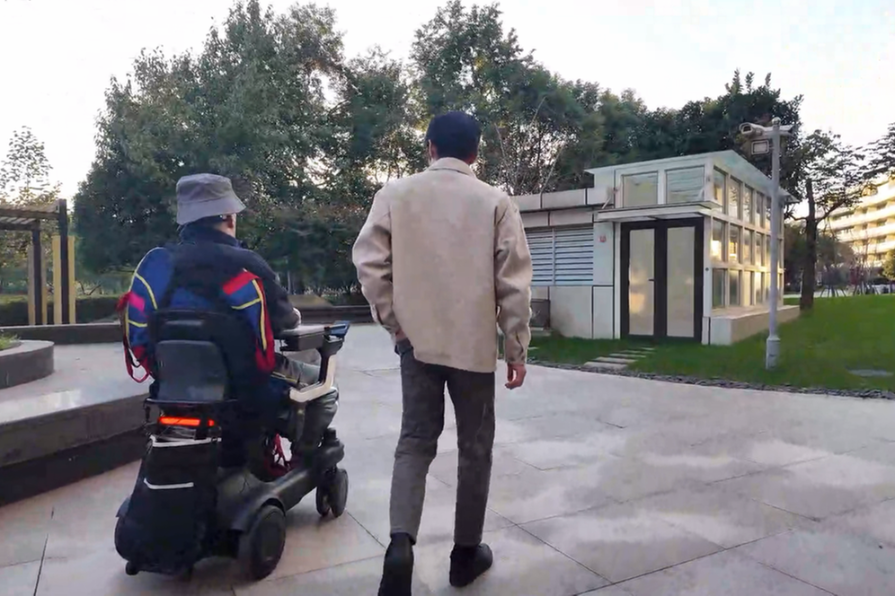
In a landmark advancement for neurotechnology, Chinese researchers have demonstrated unprecedented brain-machine interface (BMI) capabilities enabling paralyzed patients to interact with their physical environment through thought alone. Two individuals with high-level paralysis have successfully operated power wheelchairs, directed robotic dogs to retrieve objects, and manipulated robotic arms to perform tasks like drinking water—all without physical movement.
The achievement, announced by the Center for Excellence in Brain Science and Intelligence Technology of the Chinese Academy of Sciences, represents a significant leap beyond previous BMI applications that were limited to virtual interactions. The patients, both in their 30s, received minimally invasive neural implants developed through collaboration between the CAS center, Shanghai Huashan Hospital, and industry partners.
Technical innovations were crucial to this breakthrough. Researchers overcame substantial challenges including neural data compression, environmental noise interference, and maintaining ‘cross-day stability’ through neural manifold alignment techniques. Most impressively, the team achieved an end-to-end delay of under 100 milliseconds from neural signal to device execution—faster than the body’s natural neural transmission speed.
The system’s practicality is enhanced by its cost-effective design and minimal invasiveness. The implant requires only a 5-millimeter cranial puncture, the smallest reported globally, and is approximately half the size of Neuralink’s device. According to lead scientist Zhao Zhengtuo, the technology is progressing toward clinical applications with the goal of making implantation as simple as ear piercing.
Future development timelines anticipate motor and language function restoration within three years, sensory restoration and treatment for neurological disorders within five years, and highly minimally invasive systems for both medical and consumer applications within a decade. All procedures underwent rigorous ethical and technical reviews, with patients reported in good health throughout the trials.